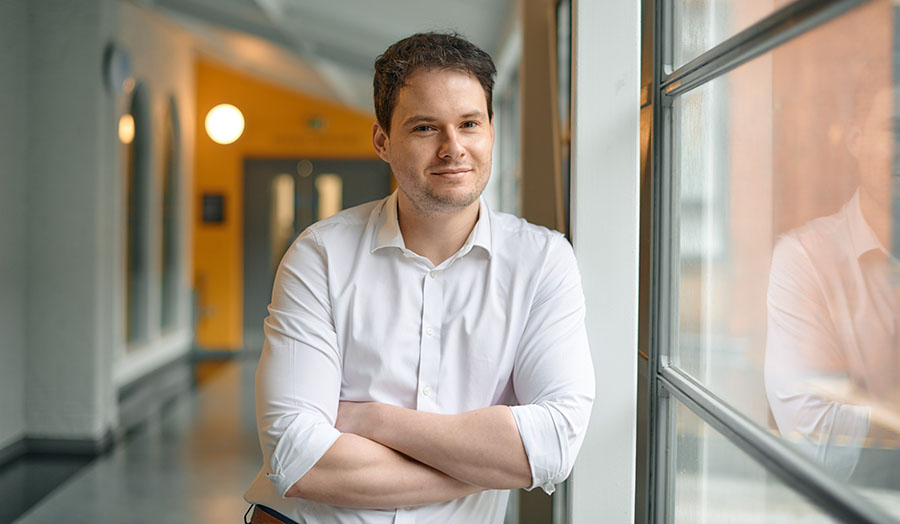
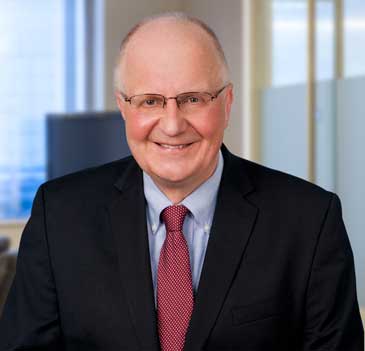
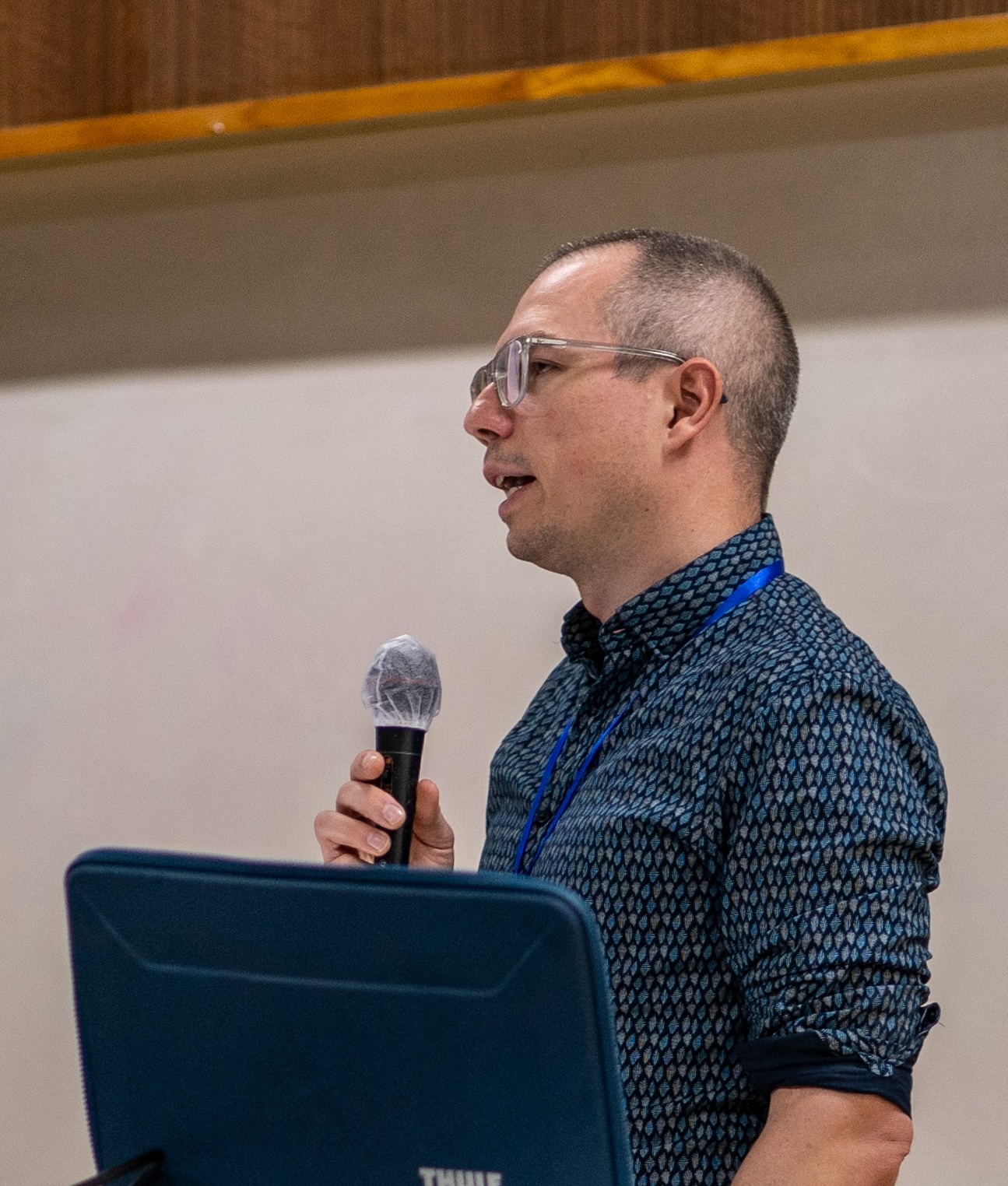
Dr. Mark Thompson is a Senior Lecturer in Psychology and Researcher of Sport Psychology at London Metropolitan University's School of Social Sciences and Professions. He holds a PhD from the University of Hull and is a Fellow of the Higher Education Academy (FHEA). His academic work bridges sport psychology, healthcare rehabilitation, and youth athlete development. Dr. Thompson's education includes a PhD in Psychology from the University of Hull. His research focuses on emotional processes in elite athletes, doping propensity in youth sports, and post-COVID-19 patient rehabilitation. Notable projects include NHS-funded studies on telerehabilitation and collaborations with the International Olympic Committee and World Anti-Doping Agency. Research Interests: Psychophysiological responses to stress in sports Emotional regulation strategies among athletes Anti-doping education and youth athlete behavior Telehealth applications in post-hospitalization recovery His publications emphasize qualitative methodologies, exploring topics like athlete performance under stress, doping prevention programs, and healthcare professional perspectives on self-management approaches. Awards: Fellow of the Higher Education Academy (FHEA). Dr. Thompson has delivered presentations at major conferences such as the American College of Sports Medicine and contributed to media discussions on doping in elite sport via LoveSport Radio. His teaching spans foundational psychology to advanced modules like cognition and behavior, often serving as module leader.
Robert Winter is a Full Professor of Business IT at the University of St. Gallen (HSG), Switzerland, and Director of the Institute of Information Management (IWI-HSG). He serves as Founding Director of HSG’s Executive MBA in Business Engineering and has led the School of Management’s Doctoral Program. His roles include Vice Editor-in-Chief of Business & Information Systems Engineering and current editorial board membership at MIS Quarterly Executive. Education M.Sc. Business Administration (1984), Goethe University, Frankfurt M.Sc. Business Education (1986), Goethe University, Frankfurt Ph.D. in Social Sciences (1989), Goethe University, Frankfurt Venia legendi (1995), Goethe University, Frankfurt Research Interests Focuses on Design Science Research, Enterprise Architecture Management, and governance of digital platforms. His work explores methodologies for collaborative innovation, data-driven transformation, and complexity management in large-scale systems. Key areas include enterprise transformation steering, data mesh adoption, and agile methodologies in public-sector contexts. Key Contributions Developed frameworks for enterprise architecture governance and digital platform ecosystems Authored influential papers on design science methodology and simulation-based research Recipient of AIS Senior Scholars’ Global Best Paper Award (2017) and Herbert A. Simon Award (2022) Professional Roles President of the School of Management Doctoral Program Member of editorial boards for leading journals (e.g., European Journal of Information Systems) Leadership in professional associations: VHB Board (2011–2014), AIS Swiss Chapter President (2012–2016)
H. Gerald Campano is a Professor in the Learning, Teaching, and Literacies Division at the University of Pennsylvania's Graduate School of Education (Penn GSE). He holds ancestral roots in the Philippines and has a decade-long career as a public-school teacher, earning district awards and recognition as a Carnegie Scholar. His work focuses on literacy education, critical ethnic studies, and community-based research methodologies emphasizing participatory approaches and educational justice. Campano leads a research-practice partnership with a South Philadelphia faith-based organization, supported by grants from the Spencer Foundation and the American Educational Research Association. This partnership involves families from diverse backgrounds addressing social inequities and co-creating visions of educational justice. He also collaborates with the University of Guadalajara on transnational literacy education initiatives. Campano has co-edited Research in the Teaching of English and served as president of the National Council of Research on Language and Literacy (NCRLL). His research emphasizes 'epistemic rights,' prioritizing community voices in inquiry. Awards include the David H. Russell Award (2009, 2018), Edward B. Fry Book Award (2017), and a Spencer Mentor Award (2021). Over 35 doctoral dissertations have been directed under his mentorship. Recent projects highlight his focus on community-based research, as seen in his 2024 book Methods for Community-Based Research , which advocates for ethical collaborations and equitable educational arrangements. Campano’s work bridges academia and practice, advocating for marginalized communities’ agency in shaping educational policies.
Dr. Omiros Georgiou is an Associate Professor in Accounting at the Department of Accounting, Birmingham Business School, University of Birmingham, where he also serves as the Research Lead. He has been a full-time academic since 2010, with prior appointments at the University of East Anglia, the London School of Economics, and the University of Manchester. He holds a PhD in Accounting from the University of Essex. His research focuses on the social and political dimensions of financial accounting regulation. Key themes include the use of accounting information by investment professionals, the ideological and legal influences on accounting standard development, and the role of accounting in financializing business and society. His work is published in leading journals such as Accounting, Organizations and Society , Critical Perspectives on Accounting , and Contemporary Accounting Research . Omiros has secured external funding from the Institute of Chartered Accountants of Scotland (ICAS) and the Social Sciences and Humanities Research Council of Canada (SSHRC). He contributes to the academic community through editorial board memberships at Accounting and Business Research , Accounting Forum , and Critical Perspectives on Accounting . His recent publications show a strong trend in critical accounting studies, particularly in fair value accounting, standard-setting controversies, and the socio-political legitimacy of financial reporting. The research spans both empirical and theoretical analyses, with increasing attention to emerging topics like sustainability reporting and the future of financial reporting in light of technology and global events. Omiros supervises MSc dissertations and teaches in areas such as Advanced Financial Accounting and Accounting and Finance practice. He has not received specific scientific awards mentioned in the text, but his sustained funding and publication record reflect scholarly recognition.
Associate Professor LIN Zhenhua serves as a Presidential Young Professor in the Department of Statistics and Data Science at the National University of Singapore (NUS), with additional affiliation at the Institute of Data Science since 2021. His research develops cutting-edge statistical methodologies for complex data structures across multiple domains. Dr. LIN completed his Ph.D. at the University of Toronto in 2017 under Fang Yao's supervision, following M.Sc. degrees from Simon Fraser University (2013, 2010) and a B.Sc. from Fudan University (2008). Ph.D., University of Toronto, 2017 (Advisor: Fang Yao) M.Sc., Simon Fraser University, 2013, 2010 B.Sc., Fudan University, 2008 His research program spans functional data analysis (developing techniques for curves and surfaces), non-Euclidean data analysis (statistical methods on manifolds), high-dimensional statistics (p > n problems), and constrained statistical modeling. LIN's work bridges theoretical statistics with practical applications through rigorous mathematical frameworks and computational implementations. Recent publications reveal strong emphasis on bootstrap methods for high-dimensional inference, Riemannian geometry approaches for manifold-valued data, and innovative functional data techniques. His research shows consistent output with multiple 2025 publications in top journals including Biometrika, Bernoulli, and Journal of the American Statistical Association. Professional Recognition Presidential Young Professor, NUS (2019-present) Associate Editor, Bernoulli (2022-2024) Associate Editor, Statistics (2023-present) Young Researchers Committee, Bernoulli Society (2020-2024) Professor LIN actively mentors graduate students as evidenced by numerous collaborative publications with trainees. He teaches advanced courses including ST5215 Advanced Statistical Theory, DSA4211 High-dimensional Statistical Analysis, and ST5223 Statistical Models across multiple academic years. His research group develops specialized software packages including hdanova, matrix-manifold, synfd, mcfda, and iRFDA, making advanced statistical methods accessible to practitioners.
Todd Collins is a Professor of Political Science and Public Affairs at the University of Western Carolina’s College of Arts and Sciences. He holds a Ph.D. in Political Science from the University of Georgia, a JD from the University of North Carolina at Chapel Hill, and a BA from the same institution. His research focuses on judicial decision-making, legal system biases, and the intersection of religion, politics, and policy. Key research interests include racial and gender disparities in legal contexts, media’s role in shaping public perception of courts, and religious influences on legislative behavior. Collins has extensively studied Supreme Court dynamics, appellate processes, and the interplay between public opinion and judicial rulings. His work bridges empirical legal studies with sociological and political frameworks, addressing issues such as courtroom fairness, attorney collaboration barriers, and the impact of religious affiliations on policymaking. Notable projects include analyses of case salience metrics and the role of precedent in judicial reasoning.
Bruce Grohsgal serves as the Helen S. Balick Professor in Business Bankruptcy Law at Widener University Delaware Law School, where he joined the faculty in July 2014 after over 30 years of legal practice. His primary academic affiliation is with Widener University's Law School, where he teaches Bankruptcy, Contracts I and II, Secured Transactions, International Bankruptcy, and Financial Regulation. Prior to academia, he practiced at Pachulski Stang Ziehl & Jones, LLP in Wilmington, Delaware, representing major entities in high-profile bankruptcy cases including Solyndra, Global Home Products, and Trans World Airlines. Professor Grohsgal's research focuses on bankruptcy law with particular expertise in business restructuring, student loan dischargeability, and financial institution insolvency. His work critically examines the absolute priority rule, structured dismissals, and the legislative history behind student loan nondischargeability. He has extensively analyzed how bankruptcy courts handle debtor-creditor agreements, lease rejections, and the recharacterization of debt claims as equity. His scholarship consistently bridges theoretical legal analysis with practical restructuring challenges faced by practitioners. As Editor-in-Chief of the Norton Journal of Bankruptcy Law and Practice and the Norton Annual Survey of Bankruptcy Law, Grohsgal significantly influences bankruptcy scholarship. His recent publications (2020-2023) demonstrate a concentrated focus on student loan bankruptcy discharge mechanisms, evolving interpretations of the absolute priority rule, and procedural innovations in Chapter 11 cases. The articles reveal growing scholarly attention to consumer bankruptcy issues within traditionally corporate-focused bankruptcy scholarship. Professor Grohsgal actively engages with policy development through congressional testimony, including written submissions for H.R. 1667 (Financial Institution Bankruptcy Act of 2017). He directs the Institute of Delaware Corporate and Business Law and previously chaired the Delaware State Bar Association's Bankruptcy Section. His practical experience informs his academic work, particularly regarding first-day motions, asset sales in bankruptcy, and derivatives treatment in insolvency proceedings.
Lorenzo Cavallaro is a Full Professor of Computer Science at University College London (UCL), specializing in Trustworthy AI for Systems Security. His research focuses on developing learning-based methods that are robust against adversaries by understanding the interplay between program analysis, representations, and machine learning models. His research interests span multiple critical areas in cybersecurity, including adversarial machine learning, malware detection, program analysis, and security evaluation. Cavallaro's work particularly emphasizes the challenges of concept drift in security systems and the development of robust defenses against evolving threats. His research has significant implications for Android security, binary analysis, and memory safety in embedded systems. Analysis of his recent publications (2024-2025) reveals a strong focus on addressing fundamental challenges in ML-based security systems. His work spans malware detection systems that maintain reliability under distribution shifts, adversarial attacks in the problem space, context-driven approaches using LLMs for security applications, and temporal invariance in malware detection. A recurring theme is the critical examination of whether ML-based security systems are truly robust and reliable in real-world scenarios. Cavallaro serves in significant editorial and advisory roles including the NDSS Steering Group (2023-2026), Associate Editor for Computer & Security and ACM TOPS, and Scientific Advisory Board for SERICS. He has been actively involved in program committees for top security conferences including IEEE S&P, USENIX Security, CCS, and NDSS from 2021-2025. He teaches Malware (COMP0060; 2022—ongoing), Research in Information Security (COMP0057; 2021—23), and Computer Security 2 (COMP0055; 2021—ongoing) at UCL, contributing to the next generation of security researchers and practitioners.
Lynda Jessup is Professor of Screen Cultures and Curatorial Studies in Film and Media at Queen's University's Faculty of Arts & Science. She currently serves as Vice Dean (2021-present), overseeing faculty relations across 30 departments, after previously holding Associate Dean (2014-2021) and Director of Cultural Studies (2009-2014) positions. Her research interrogates visual culture through exhibitions, museums, and art historiography, focusing on Canadian and Indigenous North American contexts within Western valuation systems. She critically examines "the national" as a category of cultural authority, with recent expansion into cultural diplomacy exploring art exhibitions' role in Canadian foreign policy. As Director of the North American Cultural Diplomacy Initiative (NACDI), she leads an international network connecting cultural practitioners with diplomacy scholars. Analysis of her publication trends reveals deep integration of art history with diplomatic studies, particularly through state-sponsored Canadian art exhibitions as instruments of international relations. Her collaborative work consistently bridges academic research and policy impact, with growing emphasis on decolonization, trust-building, and critical approaches to cultural exchange in global contexts. Dr. Jessup's scientific recognition includes: Universities Art Association of Canada Recognition Award (2018) Fulbright Scholar at Rockefeller Archive Center (2010–11) Queen’s University Graduate Supervision Excellence Award (2009) Queen’s University Teaching Excellence Award (1998) Massey College Visiting Scholarship (2019-20) National Gallery of Canada Research Fellowships (2002-03, 1994-95) Her funded research demonstrates sustained leadership in cultural diplomacy, including a SSHRC Partnership Development Grant (2019-25) for "The Cultural Relations Approach to Diplomacy" and MITACS Accelerate funding for Toronto's city diplomacy work. Major grants consistently address intersections of cultural policy, international relations, and visual representation through collaborative frameworks. Through NACDI, Jessup directs an international research network producing policy-shaping outputs like the "Cultural Diplomacy as Critical Practice" report series, fostering practitioner-scholar dialogue on decolonization and trust-building in global cultural relations.
Dimitris Mitropoulos is an Assistant Professor at the National and Kapodistrian University of Athens (NKUA) in the Department of Business Administration, where he teaches courses on Distributed Ledger Technologies, Data Security and Privacy, Algorithms and Business Analytics, and Introduction to Programming. He also serves as Head of the Reliability Engineering Directorate at the National Infrastructures for Research and Technology (GRNET), Greece's national research and education network organization. Previously, he was a Postdoctoral Researcher in the Computer Science Department at Columbia University. Dr. Mitropoulos received his Ph.D. degree in Secure Software Development Technologies from the Athens University of Economics and Business (AUEB) in 2014. His doctoral research was supported by the Heracleitus II Scholarship, co-financed by the European Union and Greek national funds. He is a member of prestigious professional organizations including ACM, IEEE, and USENIX. Dr. Mitropoulos conducts pioneering research at the intersection of software engineering and cybersecurity, with particular expertise in secure software development, vulnerability analysis, and blockchain security. His work spans multiple dimensions of software security including code injection attacks, infrastructure as code security, smart contract analysis, and dependency management in software ecosystems. His research methodology combines static and dynamic analysis techniques with empirical studies of real-world software systems, particularly focusing on Java, Python, and Solidity ecosystems. His recent work has made significant contributions to understanding security vulnerabilities in modern software development practices and infrastructure management. Dr. Mitropoulos has received numerous prestigious awards for his research contributions, including the Research Excellence Award from NKUA (2025), Distinguished Paper and Artifact Awards at PLDI '22, Best Data Showcase Award at MSR 2018, and multiple postdoctoral research funding scholarships. His work on "Finding typing compiler bugs" was recognized with both Distinguished Paper and Artifact Awards at PLDI '22, highlighting the significance and reproducibility of his research. He has also received recognition for his service to the academic community, including a Certificate of Appreciation from ESEC/FSE '21 for his contributions to conference organization. Dr. Mitropoulos has been actively involved in securing research funding and leading significant research projects. He currently serves as Principal Investigator for the SecOPERA project (2023-Today), funded by the European Commission under Horizon Europe. Previously, he contributed to several major EU and US-funded projects including eSSIF-Lab (2019-2022), FASTEN (2019-2022), PRIViLEDGE (2018-2021), CERTCOOP (2017-2020), PANORAMIX (2016-2019), and TREDISEC (2016-2018). His research has been supported by diverse funding sources including the European Commission's Horizon 2020 program, the National Science Foundation, and the Defense Advanced Research Projects Agency (DARPA). Dr. Mitropoulos plays an active role in the international research community through various leadership positions. He serves on program committees for top-tier conferences including OOPSLA (2026), ICSE (2026), ESEC/FSE (2025), and ISSTA (2025). He has previously served as Workshop Co-Chair for ISSTA 2025 and Student Volunteer Chair for ESEC/FSE 2021. His contributions to mentoring the next generation of researchers include serving as a mentor for the ICSE Student Mentoring Workshop (2022) and supervising Google Summer of Code projects (2017).
Dr. Sonya Hanna is a Lecturer in Marketing at Bangor Business School, Bangor University. She holds a PhD in Strategic Place Brand Management (2011), an MBA in General Management, and an LLB (Hons) in Law. Her academic roles include Director of Postgraduate Marketing Programmes, Exam Board Chair, and membership in university committees like Athena SWAN. She developed the MA Management for Climate Change programme launching in 2025/2026. Her research explores place branding through interdisciplinary lenses, focusing on: Sustainable tourism and climate change impacts on geographical entities UNESCO World Heritage Sites management Destination image perception and brand personality Digital-era place branding strategies She serves on the management board of Bangor's 'Places of Climate Change' Research Centre and contributes to journal editorial boards. Her publications demonstrate consistent focus on place branding evolution, with recent work emphasizing sustainability and climate communication. Research trends show progression from theoretical brand models (2011-2013) to applied sustainability contexts (2020-2025). Awards & Recognition: Emerald Literati Outstanding Reviewer (2017) Best Paper in Track Award, Academy of Marketing (2012) Top downloaded article in European Management Review (2019-2022) CELT Associate Award (2016) Nominated for Teacher of the Year (2020) Supervision & Projects: Supervised PhD candidate Surbhi Jain to completion. Leads £19,446 BU-IIA project on sustainable tourism development at UNESCO World Heritage Sites. Secured multiple grants including £10,000 for plastic pollution research and £3,000 for destination image studies. Active in professional networks: Fellow of Higher Education Academy, Fellow of Academy of Marketing Science, and Scientific Committee member for International Place Branding Association.
Alessandro Rigolon is an Associate Professor and MCMP Program Coordinator in the Department of City and Metropolitan Planning at the University of Utah, where he has been on the faculty since 2019. A dual-PhD scholar (Design & Planning, University of Colorado Denver; Architecture, University of Bologna), he is internationally recognized for research on environmental justice, green-space equity, and the public-health consequences of urban greening. Education: Ph.D. in Design and Planning, University of Colorado Denver (2015) Ph.D. in Architecture, University of Bologna, Italy (2012) B.Arch. & M.Arch. in Architecture and Urban Design, University of Bologna, Italy (2007) Research Interests: Rigolon’s work sits at the intersection of environmental justice, urban planning, and public health. He investigates four interconnected themes: (1) policy drivers of inequity in green-space provision; (2) the mechanisms and resistance to green gentrification; (3) green infrastructure’s role in equitable climate adaptation; and (4) health impacts of urban nature on marginalized communities. His studies span multiple scales—from census microdata in Miami-Dade County to machine-learning analyses across 263 Chinese cities—deploying mixed-methods, spatial analytics, and community-engaged research. Publications & Impact: Across 89 peer-reviewed outputs, recent work (2024-2025) reveals complex pathways by which gentrification both precedes and follows greening, quantifies disparities in park access among racial/ethnic groups, and evaluates policies aimed at achieving green-space equity. Collectively, these studies highlight the need for fine-scale spatial data, intersectional analyses, and robust procedural justice when designing equitable greening interventions. Scientific Awards & Recognition: Stanford/Elsevier Top 2 % Scientist (2024) Clarivate Highly Cited Researcher (2024) APA-Utah High Achievement Award (2022) Urban Studies Editor’s Featured Articles (2021) University of Utah Celebrate U Researcher Honoree (2020) Arnold O. Beckman Award (2019) Grants & Advising: Rigolon currently leads or co-leads six funded projects totaling over one million dollars from the Center for Equitable Transit-Oriented Communities, Center for Climate Smart Transportation, Prevention Institute, and University of Illinois. These grants support interdisciplinary teams examining transit-oriented green gentrification, climate adaptation for active transportation, and equitable park policy implementation. Graduate students and post-docs are active collaborators on all projects. Teaching & Community Engagement: He teaches graduate courses including Design Ecologies , Plan Making , Professional Project Studio , and Research Design . Through studio courses, students partner with local governments (South Salt Lake City, Liberty Wells Community Council) to produce actionable plans advancing environmental justice.
Dr. Shirley Coleman is a distinguished Professor at Newcastle University Business School, specializing in the application of statistical methods to business and industrial problems. With over two decades of academic contributions, she has established herself as a leading expert in statistics, data science, and quality management within industrial contexts. Her research interests span several interconnected domains: Statistics, Data Science, Business Analytics, Quality Management, Six Sigma methodologies, Kansei Engineering (which integrates emotional design with product development), Industrial Statistics, Design of Experiments, Predictive Maintenance, and Customer Lifetime Value analysis. Coleman's work consistently bridges theoretical statistical concepts with practical business applications across diverse sectors including healthcare, manufacturing, facilities management, and digital marketing. Analysis of her recent publications reveals a strong focus on the evolving role of statistics in the digital age, particularly examining how statistical expertise contributes to AI development, Industry 4.0 initiatives, and data-driven business transformation. Her work demonstrates increasing emphasis on customer analytics, predictive maintenance modeling, and the strategic implementation of data science in small and medium enterprises. Coleman's publications frequently address methodological challenges while maintaining strong practical relevance for industry practitioners. Throughout her career, Coleman has been actively involved with the European Network for Business and Industrial Statistics (ENBIS), contributing to the development and dissemination of statistical methods in business contexts. Her collaborative approach is evident in numerous co-authored publications across disciplines, demonstrating her ability to work effectively with researchers from diverse fields including engineering, healthcare, and business management. Her advisory work appears focused on helping organizations implement statistical thinking in business processes, with particular attention to small and medium enterprises seeking to leverage data analytics for competitive advantage. Though specific grant information isn't detailed in the available publications, her extensive industry-focused research suggests significant engagement with practical business problems and industry partnerships. Dr. Coleman has made substantial contributions to the field through her leadership in professional organizations, particularly ENBIS, where she has helped shape the discourse around industrial statistics and their business applications. Her work on Kansei Engineering demonstrates innovative approaches to integrating human factors with statistical methods for product development.
Victoria A. Beard is Professor of City and Regional Planning at Cornell University's College of Architecture, Art, and Planning, where she serves as Director of the Cornell Mui Ho Center for Cities. She is also a Core Faculty member of the Southeast Asia Program and was named a Global Public Voices Fellow (2021-22) for her work on urban poverty and water/sanitation inequality in developing countries. Education: Ph.D. in Community and Regional Planning, University of British Columbia (1999) M.A. in Urban Planning, University of California–Los Angeles (1995) B.A. in Urban Studies and Planning, University of California–San Diego (1992) Beard's research examines how communities in the Global South navigate formal planning systems to address urban poverty through collective action and transnational networks. Her work emphasizes water/sanitation infrastructure as critical sites of inequality, investigating how intermittency and affordability barriers perpetuate urban exclusion. She conducts comparative fieldwork in Southeast Asia (Indonesia, Thailand, Cambodia) and transnational contexts (Oaxaca/Southern California), analyzing how community-based planning can drive city-wide transformation despite institutional constraints. Her recent publications reveal a strategic shift toward infrastructure justice, with increasing focus on municipal service delivery systems and climate resilience. Beard consistently connects micro-level community practices to macro-level policy frameworks, highlighting pathways for inclusive urban development that center marginalized populations' lived experiences. Scientific Awards: Global Public Voices Fellow (2021-22) International Faculty Fellow, Global Cornell (2017) Fulbright Scholar to Indonesia (1993-94) Beard has secured major research funding including CORCL (University of California–Irvine) and Pacific Rim Research Program grants for transnational community planning projects. With 20+ years of practitioner experience, she has designed poverty-alleviation programs for the World Bank, Asian Development Bank, and RAND, specializing in community-based development, monitoring/evaluation systems, and national policy implementation. Her grant portfolio bridges academic research and on-the-ground impact through partnerships with NGOs like Mercy Corps. As Director of the Cornell Mui Ho Center for Cities, Beard leads initiatives focused on climate-resilient urban futures, including symposia on New York City resilience and Kenya's informal housing. She collaborates extensively with Cornell's Southeast Asia Program and Atkinson Center for Sustainable Future, building interdisciplinary teams that integrate planning, public health, and environmental science perspectives.
Stuart Reeves is an Associate Professor at the School of Computer Science, University of Nottingham, UK. He is a member of the Mixed Reality Lab, Horizon research institute, Centre for Doctoral Training (CDT), and Social Interaction and Technology (SIT) Special Interest Group. Reeves serves as an elected member of the University of Nottingham Senate with his term extending until 2026. His academic career spans over two decades with significant contributions to human-computer interaction, particularly focusing on social and collaborative technologies in real-world contexts. Reeves' research interests primarily focus on human-computer interaction, collaborative computing, design research, and the application of ethnomethodology and conversation analysis (EMCA) to technology studies. His work examines how people interact with diverse interactive devices and systems in real-world situations and places, with particular attention to public spaces, video gaming contexts, and collaborative work environments. Reeves has developed significant expertise in understanding spectatorship within interactive spaces and the 'work' involved in technological engagements. His publication record demonstrates consistent high-impact contributions to the field, with recent research focusing on robots and AI technologies in action, particularly examining how autonomous robots interact with humans in public streets. Reeves has received multiple prestigious awards including the HRI 2024 Best Paper Award for his work on public robot encounters and previous Best Paper Awards at CHI 2005 and CHI 2008. HRI 2024 Best Paper Award for 'Encountering autonomous robots on public streets' CHI 2015 Honourable Mention Award CHI 2008 Best Paper Award CHI 2005 Best Paper Award CHI 2012 Honourable Mention Award CHI 2020 Best Paper Award Reeves has secured substantial research funding including an EPSRC Early Career Fellowship, multiple EPSRC grants, and international collaborations. His teaching responsibilities include undergraduate and postgraduate supervision across various computer science modules, with a focus on sensor-based systems and software design principles. He maintains an active presence in the research community through publications, conference participation, and his Medium page where he shares insights on research methodology and practice.