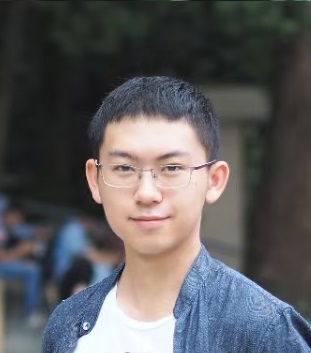
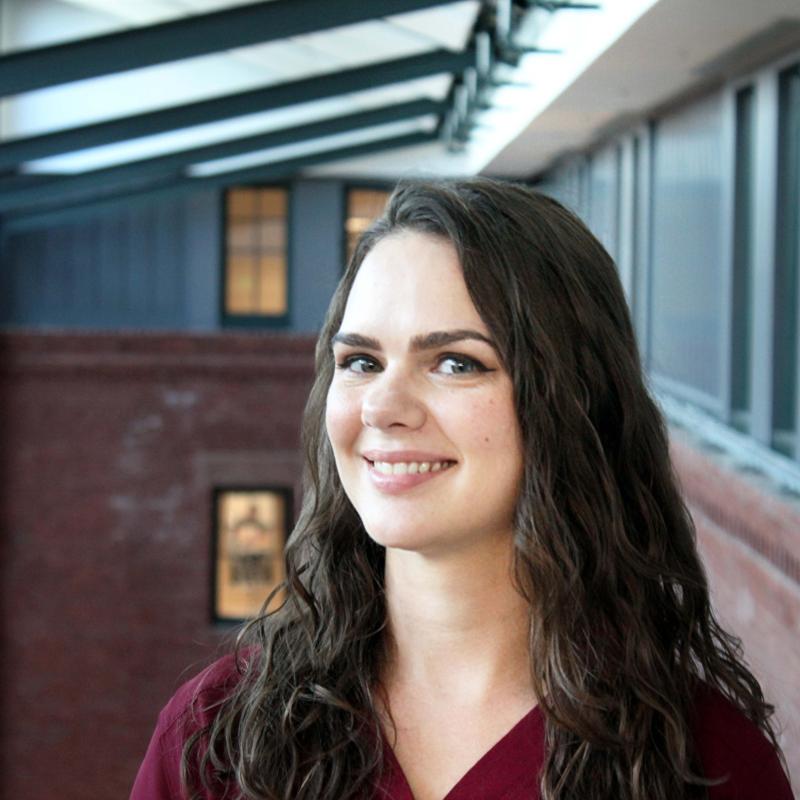
Dr. Gavin Morris is a Lecturer in Education at Charles Darwin University's College of Education, with over two decades of teaching experience in Australian schools. His academic qualifications include a PhD from Charles Darwin University (2019), Master of Education from University of Sydney (2016), and Bachelor of Education from James Cook University (2000). Morris specializes in Indigenous research methodologies, Health & Physical Education, and Sport Science. His qualitative work focuses on trauma healing, truth-telling, and decolonization practices in Aboriginal communities, particularly using Dadirri (deep listening) methodologies. Recent research explores digital platforms for cultural preservation and community resilience. As a registered postgraduate research supervisor, Morris contributes to undergraduate and postgraduate programs while maintaining active fieldwork in remote Northern Territory communities like Nauiyu at Daly River.
Dr. Dong Nguyen is an Associate Professor in Leadership Management and Change in Education at Durham University's School of Education. He serves as Director of the Master’s Programme in Educational Leadership and Change, which focuses on leadership, management, and research in education. Additionally, he is Editor-in-Chief of the International Journal of Educational Management (IJEM), a core journal in educational leadership. His career includes roles as a lecturer (Assistant Professor) and Programme Leader at the University of Glasgow, a Research Associate at Nanyang Technological University, and a teacher in Vietnam. Nguyen’s research emphasizes building leadership capacity in the Global South, comparative education studies, and innovation in education. He has led projects such as an impact evaluation of a Rwanda school leadership development program (2023–2026) funded by VVOB and a review of school leadership’s role in teacher retention funded by the Education Endowment Foundation (EEF). His work explores leadership practices across sectors like education, business, and healthcare, with a focus on equitable systems and professional learning. Nguyen has received a Discretionary Award from Durham University (2023) and has delivered numerous invited talks, including at the Chinese University of Hong Kong (2024), the Asian Conference on Business and Economic Studies (2024), and Stockholm institutions (2023). He has served as an external examiner for UK universities (e.g., Leeds, Newcastle) and evaluator for grants like UK Research & Innovation and Swiss National Science Foundation. His supervision focuses on topics like school leadership, inter-organizational collaboration, and professional development. Nguyen’s recent articles highlight leadership’s role in teacher retention, autonomy, and PLCs in the Global South. He advocates for leadership practices that foster teacher collaboration, instructional support, and participatory decision-making, particularly in contexts like Singapore and Vietnam. His funded projects and editorial roles underscore his commitment to evidence-based educational policy and practice.
Dorothy Kim serves as Assistant Professor of English at Brandeis University with cross-appointments in the Department of Women's, Gender and Sexuality Studies and the Women's Studies Research Center. Her innovative scholarship bridges medieval literary studies, digital humanities, and critical race theory, examining how medieval history is weaponized by contemporary white supremacist movements and advocating for antiracist frameworks in academia. She earned her Ph.D. and M.A. from the University of California, Los Angeles and her B.A. from the University of California, Berkeley. Her educational trajectory reflects deep engagement with interdisciplinary approaches to literature and cultural studies. Kim's research centers on exposing the racialized foundations of medieval studies, particularly through projects analyzing digital white supremacy and medievalism's role in alt-right ideology. She pioneers methodologies connecting medieval women's literary cultures with contemporary trans feminism while interrogating Jewish/Christian difference in manuscript studies. Her work consistently challenges the field's historical whiteness and develops decolonial digital humanities practices. Her publication trends reveal a decisive shift toward critical race interventions in premodern studies, with increasing focus on database methodologies, sonic histories, and the material politics of medieval manuscript transmission. Recent works demonstrate how digital tools can either reinforce or dismantle racial hierarchies in academic knowledge production. Her distinguished honors include: 2023 Medieval Academy of America Article Prize in Critical Race Studies American Studies Association Digital Humanities Book Prize (2021) Society for Medieval Feminist Scholarship's Best Feminist Article Award (2021) AAUW Postdoctoral Fellowship (2018-2019) Folger Shakespeare Library Long-Term Fellowship (2025-2026) SSHRC, Ford Foundation, Fulbright, and Mellon fellowships Kim directs major collaborative projects including the NEH-funded An Archive of Early Middle English (161-manuscript database) and co-leads the Global Middle Ages Project. As co-director of RaceB4Race and the Reckonings Institute, she creates platforms for community archiving and social justice praxis. Her mentorship focuses on training students in critical digital methodologies through Brandeis' DH Lab while developing antifascist frameworks for humanities education. She currently leads the Brandeis University DH Lab housing her NEH project, co-edits Literature Compass's pre-1800 section, and develops two major book projects: Race, the Crusades, and the Katherine Group (based on her AAUW fellowship) and Music, Multimodal Manuscripts, and Remediating the Medieval Lyric for ArcPress.
April Yi Wang is a tenure-track Assistant Professor in the Department of Computer Science at ETH Zürich, where she directs the Programming, Education, and Computer-Human Interaction Lab (PEACH Lab). She is a core faculty member at the Institute for Intelligent Interactive Systems and associated with the ETH AI Center. Wang is also an active member of ETH HCI and Swiss CHI communities, contributing significantly to human-computer interaction and educational technology research. Dr. Wang's educational background includes: Ph.D. in Information Science from University of Michigan (2023), advised by Steve Oney and Christopher Brooks M.Sc. in Computer Science from Simon Fraser University (2018), advised by Parmit Chilana B.Eng in Computer Science from Zhejiang University (2016) Dr. Wang's research focuses on human-centered approaches to programming and data science. Her work reimagines programming as a form of literature that communicates with both machines and people, exploring creative representations like text, shapes, animations, and everyday objects. She investigates how to make programming more natural and intuitive through literate programming environments, with applications in professional and educational contexts. Her research spans human-computer interaction, educational technology, and AI-assisted programming tools. Analysis of Dr. Wang's recent publications reveals a strong focus on AI-enhanced educational tools, particularly for programming and data literacy. Her work increasingly integrates large language models to scaffold learning while maintaining user agency. There's a clear trajectory toward developing situated learning approaches that connect abstract concepts to real-world contexts through augmented reality and tangible interfaces. Her research bridges HCI, education, and AI to create more accessible and engaging technical learning experiences. Dr. Wang has received numerous prestigious awards including: 2023 Gary M. Olson Award and Honourable Mention Award at ACM CHI 2022 Rising Stars in EECS and Heidelberg Laureate Forum Young Researcher 2020 Best Short Paper Award at IEEE VL/HCC and Honourable Mention at ACM CHI 2019 Best Paper Award at ACM CSCW Dr. Wang actively mentors students through thesis projects at ETH Zürich, supervising numerous bachelor's and master's students on topics ranging from AI-assisted programming to data literacy tools. Her lab, PEACH Lab, has secured funding including the recent innovedum funding for the Coducate project. She serves on program committees for major conferences including CHI and UIST, and regularly reviews for top HCI and education journals. The PEACH Lab, directed by Dr. Wang, focuses on creating expressive, intelligent, and human-centered systems that make technical topics more accessible. The lab explores textual, visual, and embodied representations for programming, with emphasis on enhancing communication, collaboration, and learning. Current research directions include balancing automation with user agency, supporting diverse learning needs, and developing tools for interdisciplinary technical communication.
Brendan Russo serves as an Associate Professor in the Department of Civil Engineering, Construction Management, and Environmental Engineering at Northern Arizona University, where he conducts influential research in transportation safety and traffic engineering. His work focuses on improving safety outcomes for vulnerable road users through rigorous analysis of crash data, traffic operations, and emerging mobility technologies, with significant contributions to Arizona-specific transportation challenges and national safety practices. Russo's research program centers on bicycle and pedestrian safety, crash severity analysis, and the integration of autonomous systems into transportation networks. He employs advanced methodologies including spatial analysis, statistical modeling (e.g., random parameters bivariate probit models), and observational studies to investigate traffic stress levels, intersection safety, and the impacts of infrastructure treatments. His work consistently bridges theoretical transportation engineering with practical applications for safer community design. Analysis of Russo's recent publications reveals a strong emphasis on emerging transportation technologies and their safety implications, particularly regarding autonomous delivery robots and vehicle-pedestrian interactions, while maintaining core focus on traditional safety concerns like bicycle crash frequency and severity. His research demonstrates increasing integration of spatiotemporal analysis and scenario-based testing methodologies, with a clear geographic concentration on Arizona metropolitan regions that provides valuable localized insights applicable to broader transportation contexts. No scientific awards were mentioned in the provided text. No specific information about advising responsibilities or grant funding was provided in the text, though his extensive publication record and dataset contributions indicate active research leadership. Russo collaborates within a robust research network centered on transportation safety, frequently partnering with colleagues including Gehrke, Smaglik, and Holliday on projects involving field data collection, bicycle infrastructure evaluation, and safety performance metrics. His work leverages both observational studies and simulation approaches to develop data-driven guidance for transportation practitioners, with particular attention to Arizona's unique transportation environment and metropolitan planning challenges.
Prof. Laura Leal-Taixé is a Professor at the Technical University of Munich (TUM) in the Department of Informatics, leading the Dynamic Vision and Learning group. She holds the Rudolf Mößbauer Tenure Track Assistant Professorship, promoted to W3 Associate Professorship in 2022. Her research focuses on computer vision and machine learning, particularly video analysis, multi-object tracking, and autonomous driving applications. Education: B.Sc./M.Sc. in Telecommunications Engineering (Technical University of Catalonia, UPC) Ph.D. in Information Processing (Leibniz University of Hannover, Germany) Postdoctoral Research at ETH Zürich (Switzerland) and TUM Research Interests: Laura’s work addresses challenges in video analysis, including motion analysis, semantic segmentation, and integrating social dynamics into urban traffic modeling. Her project socialMaps , funded by the Sofja Kovalevskaja Award, explores decoupling vehicle and pedestrian traffic using dynamic maps. Her research combines optimization techniques, deep learning, and sensor data for real-world applications like autonomous systems. Recent Trends: Her publications highlight advancements in multi-object tracking, 3D LiDAR segmentation, and trajectory forecasting, emphasizing neural networks and geometric approaches. Collaborations with industry and academia underscore her work’s practical impact. Awards: 2017 Sofja Kovalevskaja Award (€1.65M, Humboldt Foundation) 2017 DAAD Australia-German Joint Research Grant Travel grants from Women in CV, CVPR Doctoral Consortium, and Vodafone Foundation Labs & Projects: Leads the Dynamic Vision and Learning group at TUM, focusing on vision-based AI for autonomous systems and environmental monitoring. Active in developing datasets like DynamicEarthNet for semantic change analysis.
Emma Trentman is an Associate Professor of Arabic at the University of New Mexico (UNM) and Director of the Language Learning Center. Her research focuses on Applied Linguistics, particularly on language learning during study abroad programs, virtual exchange, and the impact of language ideologies on multilingual approaches. Research Interests: Multilingualism, Language Ideologies, Study Abroad Programs, Intercultural Communication, Arabic Language Education, and Curriculum Development. Key Publications: Co-editor of Language Learning in Study Abroad: The Multilingual Turn (2021), with works featured in The Modern Language Journal , Foreign Language Annals , and Critical Multilingualism Studies . Teaching: Offers Arabic language courses and the Languages Capstone class, integrating critical perspectives into language pedagogy. Editorial Work: Co-editor for Critical Multilingualism Studies Journal , advocating for plurilingual practices in education. Publications: Explores topics such as translanguaging, sociolinguistic competence, and decolonizing language learning frameworks across diverse contexts (Egypt, Tanzania, China). Advocacy: Engages in critical discussions on equity, identity, and sociocultural dimensions in language education.
Dr. Kyla Walters is an Associate Professor in the Department of Sociology at Sonoma State University. Her research focuses on gender, labor, and education policy, particularly exploring issues of inequality in retail work, sexual harassment in industries, and resistance to charter school expansion. She holds a Ph.D. from the University of Massachusetts-Amherst. Current research includes an interview-based study on beauty appraisals during pregnancy and childbirth, conducted with Sonoma State sociology students. Her work has been published in journals like Sociology of Race and Ethnicity and Hospitality & Society , as well as in the book Walking Mannequins (University of California Press, 2022). She has also contributed to policy analyses on teacher union resistance to educational reforms.
Prof. Dr. Thomas Brinkhoff is Chair of the Institute Board and Chair of Geoinformatics at Oldenburg University of Applied Sciences. He leads the Institute for Applied Photogrammetry and Geoinformatics (IAPG) and contributes to institutions like the Association for the Promotion of Geoinformatics in Northern Germany (GiN e.V.) and the Oldenburg Research and Development Institute for Computer Science (OFFIS e.V.). Education: Diploma in Computer Science (Informatik), Universität Bremen (1990) Doctorate in Computer Science (Dr. rer. nat.), Ludwig Maximilian University of Munich (1994) Brinkhoff's research spans geodatabase systems, spatiotemporal data processing, geosensor analytics, and location-based services. His work addresses Volunteered Geographic Information (VGI), web-based geospatial visualization, and mobile data integration, with applications in traffic management and forensic science. Recent projects include ProSaDi (Digital Provenance and Collection Research) and contributions to the Laboratory for optical 3D metrology . He has served on program committees for ACM SIGSPATIAL (2002-2019), AGILE conferences (2010-2025), and editorial boards of journals like GeoInformatica and TGIS. Notable Lectures: 2024: Forensic applications of tachograph data 2023: Geoinformatics in homicide investigations 2022: Spatiotemporal analysis for sustainability projects 2015: Open geodata standards at FOSSGIS 2014: Mobile sensor data processing
Alexandra Kennedy-Hanson is a Lecturer in Social Work at the School of Society and Community , University of Wolverhampton. She brings extensive professional experience in youth and community work, family support, and children’s safeguarding to her academic role. BA Hons Youth & Community Studies (2:1), University of Worcester MA Social Work (Merit), University of Wolverhampton Her research focuses on safeguarding children and young people, domestic violence, and its impact on families. She also explores social work practice in multicultural communities and issues affecting youth. Alexandra is a qualified social worker with 5 years of post-qualifying experience in child protection and a JNC-qualified youth worker. She transitioned to academia after a decade in statutory and community-based youth work, including projects on multiculturalism, anti-racism, and young women’s self-esteem. She currently teaches on the BA Social Work Programme and coordinates admissions for both BA and MA Social Work Programmes. Her professional memberships include: British Association of Social Workers (BASW) Social Work England
Bo Li is an Associate Professor at the University of Illinois at Urbana-Champaign, affiliated with the Siebel School of Computing and Data Science. Her research focuses on trustworthy machine learning, emphasizing robustness, privacy, and security in AI systems. She leads the Secure Learning Lab (SL²), exploring adversarial attacks and defenses across digital and physical domains. Key contributions include foundational work on adversarial examples, robust learning frameworks, and privacy-preserving techniques. Her academic roles include advisory board positions at the Center for Artificial Intelligence Innovation (CAII) and membership in the Information Trust Institute (ITI). She collaborates with institutions like the Advanced Digital Science Center (ADSC) and the Quantum Information Science and Technology Center (IQUIST). Notable recognitions include the IJCAI Computers and Thought Award (2022), MIT Technology Review's 35 Innovators Under 35 (2020), and multiple best paper awards. Recent work addresses AI safety through frameworks like ShieldAgent and AutoRedTeamer, aiming to enhance system resilience against adversarial threats. Her research spans theoretical guarantees, practical defenses, and ethical AI deployment. Students advised include Chulin Xie, Linyi Li, and Boxin Wang, who have received prestigious fellowships such as the IBM PhD Fellowship and Rising Stars in ML Awards. Advising: Guides PhD students in adversarial ML, privacy, and security. Labs/Teams: Secure Learning Lab (SL²), collaboration with ALERT program. Grants/Funding: NSF CAREER Award, Amazon/Google Faculty Awards, and industry partnerships.
Dr. Elaine T. Jurkowski serves as Professor in Social Work at Southern Illinois University's College of Health and Human Sciences, holding multiple leadership roles including Graduate Program Director (2021-present) and Program Director for Gerontology Programs (2020-present). She maintains cross-appointments as Adjunct Professor in the School of Medicine's Family Practice Residency Program and Professor in the Department of Health Education, demonstrating her interdisciplinary impact. B.S.W. (Industrial Social Work), University of Manitoba, Canada M.S.W. (Policy and Administration), University of Manitoba, Canada Ph.D., Public Health, University of Illinois at Chicago M.B.A., Southern Illinois University Carbondale (2022) Dr. Jurkowski's research program centers on health disparities, access to mental health services, aging, and disability issues, with particular focus on rural populations. Her work bridges public health, social work, and gerontology through innovative approaches to program evaluation, technology-enhanced teaching, and culture change in long-term care settings. She has developed expertise in international health planning and inter-professional collaboration across diverse cultural contexts. Her publication portfolio shows consistent thematic development across decades, with recent work focusing on medical tourism during the pandemic, rural-urban health disparities, and technology applications in gerontology education. These publications reflect her commitment to addressing healthcare access challenges for vulnerable populations through both scholarly inquiry and practical interventions. Great Cities Research Fellow in Health Provost Faculty Fellow (2018) Provost Assessment Fellow (2016) Student Hotspotting certification (2018-present) A.P.M. Assessment Academy certification (2016, 2017) Dr. Jurkowski has successfully secured over $1 million in research funding from agencies including Health Resources and Services Administration, The Hartford Foundation, and Administration on Aging. Her grant portfolio demonstrates sustained commitment to improving services for older adults and people with disabilities, particularly in rural settings. She has served as Graduate Program Director twice (2003-2014, 2021-present), mentoring numerous social work students through their academic and professional development. Her professional activities extend beyond campus through international consulting in West Africa, Hong Kong, India, China, Russia, and Egypt, and community engagement via the "Dare to Care" radio show and board service with Caring Counseling Ministries, Supporting People in Need, and UNA/USA Southern Illinois Chapter.
Prof. Li LU is a Professor at the Department of Mechanical Engineering, National University of Singapore (NUS). His research focuses on energy storage materials, ferroelectric systems, and advanced battery technologies. He holds editorial roles at Functional Materials Letters and Materials Technology – Advanced Functional Materials . Education: PhD from KU Leuven (Belgium), M.Eng and B.Eng from Tsinghua University (China). Research interests include thin film deposition, nanostructured materials, and solid-state electrolytes. His work addresses challenges in lithium/ sodium-ion batteries, solid-state interfaces, and high-performance energy storage systems. Recent studies emphasize aerosol deposition techniques, composite electrolytes, and interfacial stability. Publications highlight advancements in battery materials and electrolyte design. Notable contributions include ultra-stable sodium-ion batteries, ferroelectric-engineered electrolytes, and optimizing lithium metal anodes. His research bridges fundamental material science with practical energy solutions.
Zaw Myo TUN is a Research Fellow (Adjunct) at the Saw Swee Hock School of Public Health, National University of Singapore, and serves as Senior Manager (Research and Evaluation) at IRD Global Singapore. His academic career includes roles such as Postdoctoral Fellow (2022) and Research Associate (2013–2021) at the same school. He holds a PhD from NUS (2016–2021), an MSc in Epidemiology from the London School of Hygiene & Tropical Medicine (2011–2012), and an MBBS from the University of Medicine, Mandalay, Myanmar (2003–2008). His research focuses on epidemiology, global health, tuberculosis vaccines, and public health policy. Key interests include maternal vaccination coverage in low-resource settings, hospital-acquired infections (e.g., MRSA), antibiotic resistance, and the ethical implications of pandemic control measures. He has contributed to studies on SARS-CoV-2 transmission dynamics, road traffic injury patterns in Bhutan, and malaria drug policy compliance in India. His publications analyze public perceptions of health policies, such as during the COVID-19 pandemic, and explore factors influencing healthcare behaviors in diverse populations. His work bridges clinical data (e.g., electronic medical records) and population-level health surveillance to inform evidence-based interventions. While no awards are explicitly mentioned, his research has addressed critical global health challenges like tuberculosis control in Myanmar and antimicrobial stewardship in Singapore primary care settings. Zaw Myo TUN’s career emphasizes translational research, linking academic findings to real-world health system improvements. His roles span academia and non-profit sectors, reflecting a commitment to addressing public health disparities through collaborative, policy-driven solutions.
Deva Ramanan is a Professor at the Robotics Institute of Carnegie Melllon University, where he leads research in computer vision and machine learning. His work focuses on modeling human visual perception, leveraging large-scale visual data, and developing systems for 3D understanding, neural rendering, and autonomous systems. He advises a large group of PhD students and has mentored numerous postdoctoral researchers now in leading roles across industry and academia. His research interests include computer vision, machine learning, human perception modeling, 3D scene understanding, neural rendering, autonomous driving, video understanding, and multimodal foundation models. These areas reflect his focus on both foundational models and their application to real-world problems in robotics and AI. The recent publications highlight a strong trend toward multimodal and 3D-aware models, with increasing use of diffusion models, neural fields, and large vision-language systems. Key themes include scene flow, 3D reconstruction from monocular video, autonomous driving perception, and robust evaluation of vision-language models. There is a clear emphasis on both methodological innovation and practical deployment in dynamic environments. Marr Prize, Honorable Mention (ICCV 2021) Best Paper, Honorable Mention (ECCV 2020) Best Paper Finalist (WACV 2024) Best Paper Award (WACV 2016) Best Industrial Paper, Honorable Mention (BMVC 2017) Marr Prize winner (ICCV 2009) Deva Ramanan has advised numerous PhD and master’s students, many of whom are now at top institutions and companies including Apple, Meta, Google, Nvidia, OpenAI, and Princeton. He has received substantial funding from IARPA, DARPA, NSF, Intel, Google, and Facebook for projects in video analytics, dispersed computing, visual cloud systems, and multi-task recognition. His group has developed influential datasets and benchmarks used widely in the community. He leads a vibrant research lab focused on advancing computer vision through deep learning and multimodal integration. His team works on core challenges in perception, including 3D reconstruction, motion modeling, object detection, and scene understanding, with applications in robotics and autonomous systems.