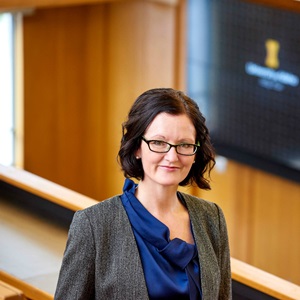
Wendy Gerwick Couture is the James E. Wilson Distinguished Professor of Law at the University of Idaho College of Law, Boise. She specializes in securities regulation, white collar crime, and corporate law. Her research focuses on securities fraud, litigation finance, and regulatory policy. She teaches courses including Business Associations, Property Security, Securities Regulation, and White Collar Crime. Dr. Couture holds a J.D. (summa cum laude) from Southern Methodist University and a B.A. (summa cum laude) in Economics and French from Duke University. Her work addresses gaps in securities law, including topics like SPAC litigation, cryptocurrency regulation, and state-federal enforcement coordination. Her recent articles analyze issues such as De-SPAC litigation challenges, the intersection of UCC and securities law, and the evolving legal frameworks for digital assets. She frequently contributes expert commentary on Supreme Court cases involving securities disputes. Her scholarship emphasizes practical legal solutions to modern financial market challenges.
Dr. Jody Clarke-Midura is a Professor and Associate Dean of Graduate Studies in the Emma Eccles Jones College of Education and Human Services at Utah State University. She holds an Ed.D. from Harvard Graduate School of Education, an M.Ed. in Technology in Education, and a B.A. in English and Women’s Studies from the University of Massachusetts. Her research focuses on designing playful, technology-enhanced learning environments to foster STEM engagement and computational thinking in K-12 and early childhood education. Key areas include game-based learning, computational thinking integration, and technology-enhanced assessments. She collaborates on interdisciplinary teams and leads externally funded projects. Clarke-Midura co-directs the Playful Explorations Lab (PEL), which designs STEM learning experiences for elementary classrooms. Her work emphasizes hands-on, student-driven exploration and connects theory to classroom practice. She mentors graduate and undergraduate students, supporting their research development. Her publications address topics like formative assessments, computational thinking assessment frameworks, and the role of coding toys in early math learning. She has contributed to curriculum models integrating computer science and mathematics, and explored cultural relevance in co-design processes. Professional activities include leading graduate studies administration, advising on educational technology initiatives, and advancing inclusive pedagogical practices.
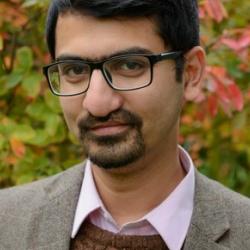
Denghui Zhang is an Assistant Professor in the School of Business at Stevens Institute of Technology. His research focuses on data science, large language models (LLMs), and business analytics, with particular emphasis on applications in financial systems, knowledge graphs, and spatio-temporal prediction. He is a member of the Stevens Institute for Artificial Intelligence and has held academic roles including reviewer positions for prestigious journals like Nature Communications and conferences such as AAAI and SIGKDD. Dr. Zhang holds a PhD in Information Systems from Rutgers University (2023) and an MS in Computer Science from the University of Chinese Academy of Sciences (2018). His educational background bridges computer science and business analytics, enabling his cross-disciplinary research. His research explores cutting-edge topics like federated learning optimization for LLMs, theory-of-mind reasoning mechanisms, and ethical AI governance. Notable contributions include turbulence forecasting models, traffic prediction frameworks, and venture capital investment strategies leveraging reinforcement learning. Dr. Zhang has received prestigious recognitions including the ICIS 2023 Best Student Paper Award and AAAI-23 Student Scholar distinction. His work frequently addresses practical challenges in AI ethics, financial decision-making systems, and scalable machine learning architectures. He actively contributes to academic communities through program committee roles for top conferences and has pioneered novel methodologies in multi-agent financial systems and graph neural network design.
Corey W. Dyck is a Professor and Department Chair at the University of Western Ontario , specializing in the history of German philosophy with an emphasis on the 18th century. His work bridges metaphysics and the philosophy of mind from Leibniz to Kant, and he currently leads the UWO Kant Research Group , which maintains a digital archive of German philosophical texts. Academic Background: PhD in Philosophy, Boston College (2006) MA, Catholic University of Leuven (2001) BA, University of British Columbia (1999) His research focuses on Kantian philosophy , 18th-century German thought , and epistemology , particularly in how contemporary philosophy engages with Kant's ideas. He supervises graduate students in classical and contemporary German thought and is editing a monograph titled The First Fifty Years of German Metaphysics (1720-1770). Dyck's publications span edited works like Women and Philosophy in Eighteenth-Century Germany and articles in Journal of the History of Philosophy and Kant-Studien . Dyck contributes to academic communities through the North American Kant Society and Immanuel-Kant-Forum , and he has co-edited volumes such as Kant and his German Contemporaries . His work emphasizes digital preservation of historical texts and inclusive Enlightenment scholarship , particularly regarding feminist contributions in 18th-century Germany.
Dr. Ankur Barua is a University Senior Lecturer in Hindu Studies at the Faculty of Divinity, University of Cambridge. He holds affiliations within the School of Arts & Humanities and specializes in Hindu philosophical theology, comparative religion, and postcolonial religious dynamics. His research explores Vedantic traditions, Indo-Islamic social structures, and Hindu-Christian theological engagements. Barua completed a B.Sc. in Physics at St. Stephen’s College, Delhi, before transitioning to Theology and Religious Studies at Cambridge. His interdisciplinary work bridges Sanskrit studies, postcolonial theory, and global religious history. Key research areas include: 1) Vedantic conceptual frameworks for understanding Hindu identity across transnational contexts, 2) Interfaith dynamics between Hinduism and Islam/Christianity, 3) Modern reinterpretations of classical Hindu thought, and 4) Theological responses to caste and social justice. His creative work includes historical fiction exploring religious identity formation and a YouTube channel explaining Hindu concepts accessibly. Publications since 2017 reflect sustained engagement with Advaita Vedanta's philosophical implications, colonial-era religious reform movements, and contemporary debates on religious pluralism. His work frequently engages with thinkers like Rāmānuja, Swami Vivekananda, and modern scholars like GR Malkani. No specific scientific awards are listed, though his scholarly contributions indicate significant recognition in religious studies. He supervises students under Dr. Hina Khalid and Rasamandala Das, focusing on Hindu studies, Sanskrit texts, and comparative theology.
Robert J. Sternberg is a Professor of Psychology at Cornell University's College of Human Ecology, with honorary roles at Heidelberg University (Germany). He has held prestigious administrative positions including President of the University of Wyoming, Provost at Oklahoma State University, and Dean of Arts and Sciences at Tufts University. His research focuses on intelligence, creativity, wisdom, thinking styles, and emotional dynamics like love and hate. Sternberg is renowned for developing theories such as the Triarchic Theory of Intelligence and the Triangular Theory of Love. With an h-index of 237 and over 241,000 citations, he is among the most cited psychologists globally. He holds 13 honorary doctorates and fellowships in leading academies, including the American Academy of Arts and Sciences. His work emphasizes educational reform to better assess and nurture non-traditional learning styles. Awards include the Grawemeyer Award and multiple presidential recognitions. Sternberg advocates for transformative creativity and ethical leadership, aiming to align education with real-world problem-solving. Education Background: Not explicitly detailed in text, but extensive academic and administrative leadership roles suggest advanced degrees in Psychology and Education. His career includes Yale University (research/teaching), Tufts, Oklahoma State, and the University of Wyoming. Research Interests: Sternberg’s work spans cognitive and social psychology, focusing on: Intelligence components (analytical, creative, practical) Creativity development and assessment Wisdom in leadership and decision-making Love/hate dynamics and their societal implications Adaptive educational practices Giftedness identification and nurturing Awards & Recognition: Over 40 major honors including APA’s William James Fellow Award, Grawemeyer Award, and listings as one of the top psychologists of the 20th century. His influence ranks #7 among American psychologists (Research.com, 2024). Advising & Grants: No formal student list provided, but leadership roles imply extensive mentoring. Grants and funding details not explicitly stated in text. Professional Activities: Former APA President, editor of top journals (Perspectives on Psychological Science), and leader in international academic organizations. Current focus includes advocacy for admissions reforms and ethical leadership in education.
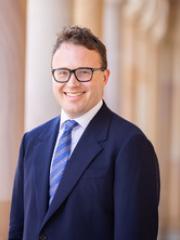
Dr. Rob Rouse is a Lecturer at the School of Education, University of Queensland , with expertise in maker education and integrated STEM learning environments . Previously, he taught chemistry at a New York City performing arts secondary school through the New York City Teaching Fellows and served as former Director of the Southern Methodist University (SMU) Maker Education Project , co-founded with SMU's School of Engineering. PhD in Learning, Teaching, and Diversity from Vanderbilt University's Peabody College Current research focuses on supporting teachers to utilize school makerspaces for innovative, hands-on instruction Collaborates with informal STEM organizations to provide professional development for educators His work explores inclusive makerspace design , mobile instructional spaces , and K-12 teacher training . Publications emphasize systematic reviews of makerspace research , best practices for mobile STEM spaces , and culturally relevant maker pedagogy . While no specific scientific awards are listed, his projects like the MakerTruck mobile makerspace demonstrate practical impact. Dr. Rouse supervises PhD research on topics including maker pedagogy , differentiated science learning , and gender dynamics in STEM education . He actively partners with teams at institutions like the International Symposium on Academic Makerspaces and Australian Technology Education Research Conference .
Dr Robert Mullins is a Senior Lecturer at the TC Beirne School of Law, part of the Faculty of Business, Economics and Law at the University of Queensland. He holds a BPhil in Philosophy and a DPhil in Law from the University of Oxford. His research focuses on legal philosophy, the theory of legal reasoning, and the application of formal logic to legal domains. Key areas include deontic language analysis, precedential constraint models, and the intersection of artificial intelligence with legal systems. He currently serves as Reviews Editor for the Law and Philosophy journal and is an Associate Member of the ARC Centre for Excellence for Automated Decision-Making and Society (ADM+S). His work examines explainability in automated legal reasoning and contributes to foundational debates in legal theory. Robert’s educational background includes degrees from the University of Oxford and earlier studies at the University of Queensland (B.A., LL.B.). His research interests are structured around legal semantics, moral conflict in rights frameworks, and the formalization of legal obligations. He has explored how logicians’ and linguists’ theories of deontic language shape interpretations of legal rights and authority relations. His recent articles analyze formal models of common law reasoning, the implications of deontic detachment for legal positivism, and the structural foundations of precedential constraint. While no formal awards are listed, his contributions to legal theory and interdisciplinary work with AI underscore his scholarly impact. Robert is available for academic supervision and has affiliations with the Australian Centre for Private Law.
Dominik Krell is a Leverhulme Trust Early Career Fellow at the Centre for Socio-Legal Studies and Junior Research Fellow at Wolfson College, University of Oxford. His work bridges legal scholarship, anthropology, and Middle Eastern studies with a focus on contemporary Islamic law. Education: German State Examination in Law B.A. in History and Culture of the Middle East, Freie Universität Berlin M.Sc. in Social Anthropology, University of Oxford Ph.D. from Max Planck Institute for Comparative and International Private Law/University of Hamburg (2021) Krell's research centers on Islamic jurisprudence's evolution in modern nation-states, particularly Saudi Arabia's judicial reinterpretation of Sharia. His interdisciplinary approach combines legal anthropology with textual analysis of court decisions and scholarly works, examining how Islamic jurists drive legal reforms in family law, codification, and state-society relations. He investigates tensions between traditional legal theory and contemporary governance needs across Saudi Arabia, Iraq, Syria, and Palestine. His publications reveal consistent focus on Islamic family law modernization, juristic authority in legal evolution, and cross-jurisdictional comparisons of marriage/divorce systems. Key trends include documentation of Saudi Arabia's transformative judicial practices, analysis of underage marriage regulations, and exploration of non-state pathways for Islamic legal development. Scientific Awards: Max Planck Society's Otto Hahn Medal for outstanding doctoral research German Middle East Studies Association (DAVO) Dissertation Award Association for Arabic and Islamic Law (GAIR) Dissertation Award Honorable mention for BRAIS Prize in Islamic Studies Krell's Leverhulme-funded research examines Islamic law's globalization through the Centre for Socio-Legal Studies' "Globalisation of Islamic Law" project. His work involves translating Arabic legal codes (Syria, Iraq), authoring expert opinions for international bodies, and comparative analysis of family law across Muslim-majority jurisdictions. He collaborates with institutions including the Max Planck Institute, King Faisal Center, and University of Bergen. As part of Oxford's socio-legal research community, Krell contributes to interdisciplinary dialogue on law's role in Muslim societies through the Centre for Socio-Legal Studies and Wolfson College's academic networks.
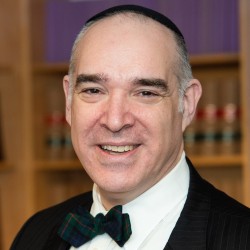
Professor Kenneth Ehrenberg is a faculty member at the University of Surrey's Surrey Law School, holding the title of Professor of Jurisprudence and Philosophy. He serves as Co-Director of the Surrey Centre for Law and Philosophy. Previously, he held appointments at the University of Alabama and SUNY Buffalo, and was a HLA Hart Visiting Fellow at the Oxford Centre for Ethics and Philosophy of Law. He earned a PhD in Philosophy from Columbia University and a JD from Yale Law School. His research focuses on jurisprudence methodology, legal ontology, authority, normativity, and validity, alongside the epistemology of evidence law. Notable works include explorations of inclusive legal positivism, exclusionary reasons in law, and critiques of anarchism in legal theory. Publications span theoretical legal studies, with recent contributions to Law, Morality and Judicial Reasoning (2024), Jurisprudence (2024), and Oxford Journal of Legal Studies (2024). His work emphasizes functional methodologies and artifactual theories of legal institutions.
Dr. Katherine Hockey is Lecturer in New Testament Studies at the University of Aberdeen's School of Divinity, History, Philosophy & Art History. Originally the Kirby Laing Postdoctoral Fellow, she specializes in the formation of early Christian identity through interdisciplinary approaches. Her research examines: Emotion in 1 Peter using Stoic philosophy and rhetorical analysis Inter-group dynamics in New Testament communities Methodist hermeneutics in pluralist contexts Ecumenical dialogue through Scriptural Reasoning Hockey's publications focus on Petrine theology, with recurring analysis of shame, non-retaliation, and resilience motifs. Recent work explores love/hate emotions in inter-group relations across biblical texts. She co-convenes Sophia: DRS Women's Network and serves on Society of Biblical Literature committees. Current collaborations include co-editing the T&T Clark Handbook to the Bible and Emotion. She supervises doctoral projects on Pauline community formation, Matthean divine presence, Lukan Mariology, and disability theology. Teaching includes 'Isaiah and the New Testament' and biblical interpretation courses.
Seth Frey is an Associate Professor in the Department of Communication at the University of California, Davis. His research focuses on computational social science, exploring governance institutions and complex human decision-making through computational methods, large datasets, and web-based experiments. He examines online communities as models of governance, with expertise in computational approaches to institutional design and strategic behavior analysis. Education: Ph.D. in Cognitive Science and Informatics, Indiana University, 2013 B.A. in Cognitive Science, UC Berkeley, 2004 Research Interests: Frey's work integrates data science, lab experiments, and computational modeling to study human organizations and communication. Key areas include governance technology, cognitive mechanisms of social outcomes, and institutional evolution. His projects span online games, sports, and open-source software communities, emphasizing topics like collective action, self-governance, and cooperative behavior. Publications & Funding: His work appears in journals like PNAS and Nature Scientific Reports, and has been funded by NSF, NASA, and the Ford Foundation. He contributes to the Ostrom Workshop at Indiana University and directs the Computational Communication Lab at UC Davis. Teaching: Frey teaches courses on data visualization, simulation methods, and online data analysis in the social sciences.
Dr. Melissa McCradden is a THRF Clinical Research Fellow at the Australian Institute for Machine Learning (University of Adelaide), Deputy Research Director at the Women's and Children's Health Network, and an Adjunct Scientist at the SickKids Research Institute (Toronto). Her work focuses on ethical frameworks for integrating AI into healthcare, addressing algorithmic bias, and advancing clinical evaluation standards. She holds a PhD in Neuroscience and a Master’s in Bioethics, and has pioneered initiatives like the STANDING Together consensus for AI ethics. Education: PhD in Neuroscience (McMaster University, 202?), Master of Health Sciences in Bioethics (University of Toronto, 20?), inaugural Postdoctoral Fellow in AI Ethics at SickKids/Vector Institute. Research Interests: Ethical AI integration in healthcare, clinical trial methodologies (CONSORT-AI, SPIRIT-AI), bias mitigation in medical datasets, and pediatric AI ethics. Her projects include CANAIRI (AI trials collaboration) and promoting AI literacy among patients. Awards: Listed among the 100 Brilliant Women in AI Ethics. Grants: THRF Fellowship, WHO Clinical Evaluation Task Force involvement. Supervision: Co-supervisor for PhD candidate Lana Tikhomirov (2024). Grants include Centre for Augmented Reasoning funding and Canadian Institutes of Health Research. Labs/Teams: Deputy Director at Australian Institute for Machine Learning, member of WHO’s Clinical Evaluation Task Force for Healthcare AI, and co-chair of DECIDE-AI guidelines for first-in-human trials.
Dilian Gurov is a Professor in Computer Science at KTH Royal Institute of Technology, associated with the Digital Futures Faculty and the Division of Theoretical Computer Science. He also coordinates the Doctoral Programme in Computer Science at the CSC school. Before joining KTH in 2002, he earned a Ph.D. from the University of Victoria, Canada (1998), and worked at the Swedish Institute of Computer Science (1997-2002). His research focuses on software specification and verification, including contracts, program models, logics, and tools, as well as multi-agent strategic planning involving knowledge-based strategies in imperfect information settings. Key contributions include the CAV Distinguished Paper Award 2023 for 'Automatic Program Instrumentation for Automatic Verification' and an EASST award for 'Checking Absence of Illicit Applet Interactions: A Case Study' (2004). He leads projects funded by VR (SEFROS, ContraST) and Vinnova (AVerT2) and collaborates with industries like Scania on formal verification of C programs. His service roles span over 30 conference committees and organization roles, including PC memberships for iFM, TAP, and ISoLA. Teaching responsibilities include courses such as 'Formal Methods,' 'Program Semantics and Analysis,' and 'Knowledge in Games with Imperfect Information.' His work emphasizes practical applications of formal methods, bridging academic research with industry needs through collaborations and tool development (e.g., CVPP, ProMoVer, TriCo).
Prof. Malinda Carpenter is a Professor in Developmental Psychology at the University of St Andrews, School of Psychology and Neuroscience. Her research focuses on infants' and young children’s social cognition, including joint attention, prosocial behavior, intergroup reactions, and comparative cognition between humans and apes. She holds editorial roles at Cognition and Child Development Perspectives . Research Interests: Her work examines mechanisms underlying social learning, communicative gestures, and the emergence of shared understanding in early childhood. Key topics include how infants interpret others' mental states, form social bonds, and navigate group dynamics. She also investigates parallels and differences in social cognition between humans and great apes. Awards: Fellow of the Royal Society of Edinburgh (2021), Fellow of the Association for Psychological Science (2012) Supervision: Currently advising PhD candidates Jinzhi Feng and Christina Ruiz-Mendoza Lab Affiliations: Centre for Research into Equality, Diversity & Inclusion; Institute of Behavioural and Neural Sciences Public Engagement: Her team addresses methodological challenges in child research and emphasizes ethical participant recruitment. Recent work explores how time constraints and social contexts influence prosocial behavior in young children.