

Prof. Michael Weyrich is a faculty member at the Institute of Industrial Automation and Software Engineering (IAS) within the University of Stuttgart , leading the Cluster of Excellence IntCDC . His academic rank is Professor, and he focuses on Industrial Automation , Digital Twins , and Large Language Models (LLMs) for manufacturing and automotive systems. His research explores integrating LLMs into industrial automation for adaptive control, cloud offloading of vehicle functions, and semantic interoperability via Asset Administration Shells . He investigates modular production architectures , connected vehicle systems , and synthetic data generation for autonomous machinery. Recent publications highlight LLM-driven production planning , dynamic sensor calibration , and machine learning for fault detection in electric vehicle powertrains. His work emphasizes real-time data modeling and flexible microservice orchestration .
جستوجوی استاد و پژوهشگر
استاد راهنما، استاد دانشگاه یا پژوهشگر مناسب برای مسیر پژوهشیتان را پیدا کنید و با او ارتباط بگیرید.
نمایش ۳۱-۴۵ از ۵۶۸ استاد راهنما
اطلاعات این پروفایلها از صفحات عمومی دانشگاهها جمعآوری شده و ممکن است بهروز نباشد.
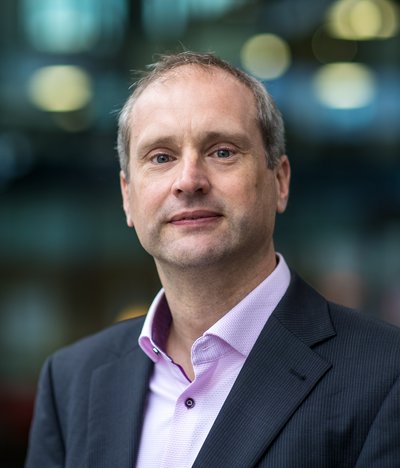
Frank Willems is a Full Professor of Systems and Control Technology and Chair of Integrated Powertrain Control at Eindhoven University of Technology (TU/e), holding a part-time position realized with support from TNO. He is affiliated with the Control Systems Technology group within the Department of Mechanical Engineering, and also contributes to EIRES and EAISI research initiatives. Dr. Willems obtained his MSc (1995) and PhD (2000) in Mechanical Engineering from Eindhoven University of Technology (TU/e). His academic journey continued with a position at TNO Automotive, where he currently serves as a principal scientist in powertrain control. Professor Willems' research focuses on developing optimal and robust control methods for automotive powertrain systems. His work addresses the critical challenge of integrating energy and emission management strategies at the powertrain system level, which is essential as traditional methods become infeasible due to increasingly strict environmental regulations. Key research areas include control-oriented modeling of internal combustion engines, cylinder pressure-based combustion control, and integrated energy and emission management. His research aims to minimize development time and costs through model-based control methods, with the ultimate goal of achieving auto-calibration where powertrain energy efficiency is optimized online using smart sensors and route information. Dr. Willems serves as an Associate Editor for Control Engineering Practice and is an active member of the IFAC Technical Committee Automotive Control. He has participated in numerous international program committees for conferences including the IFAC Conference on 'Engine and Powertrain Control, Simulation and Modeling (E-CoSM)', IFAC Symposium 'Advances in Automotive Control (AAC)', and 'Symposium for Combustion Control (SCC)'. His research has been supported by organizations including the Dutch Technology Foundation (STW) and DENSO Japan. At TU/e, Professor Willems teaches courses on 'Optimal control and reinforcement learning' and 'Advanced control for future heavy-duty powertrains.' His research group, part of the Control Systems Technology group, focuses on developing self-learning powertrain control systems to address the complexity and diversity of future ultra-clean and efficient vehicles.
Hannes Hick is a Professor at Graz University of Technology , affiliated with the Institute of Machine Elements and Development Methodology . His research focuses on mechanical development, tribology, and systems engineering for automotive and industrial applications. He actively contributes to engineering education and methodology standardization. Research Interests Hydrogen internal combustion engines System modeling and digital twins Tribology in electric drivetrains Sustainable engineering practices MBSE (Model-Based Systems Engineering) Friction and wear analysis Article Trends His recent work emphasizes hydrogen propulsion systems, model-based approaches for interdisciplinary engineering challenges, tribological optimization for sustainable mobility, and integrating AI with mechanical design workflows. Labs and Teams He leads research at the Institute of Machine Elements, focusing on mechanical validation and development methodologies for advanced powertrain systems.
Lokukaluge Prasad Perera is a Professor in Maritime Technology at UiT The Arctic University of Norway and a Senior Research Scientist in Smart Data at SINTEF Digital . He holds a BSc in Mechanical Engineering from Oklahoma State University (1999), MSc in Systems & Controls from the same institution (2001), and a PhD in Naval Architecture and Marine Engineering from Technical University of Lisbon (2012). His research focuses on Maritime and Offshore Systems , Advanced Data Analytics , Autonomous Navigation , Energy Efficiency , and Digital Twin Applications . He has published over 100 peer-reviewed papers and was recognized in the World's Top 2% Scientists (2021-2022) by Stanford University. Key professional experiences include roles at SINTEF Ocean (2014–2017), Center for Marine Technology and Engineering in Portugal (2008–2012), and Wärtsilä Finland (2012–2014). He has also held academic positions at Naval & Maritime Academy and Ocean University of Sri Lanka . His work addresses challenges in emission reduction , renewable energy integration , and safety-critical systems for maritime operations. Current projects emphasize trustworthiness of autonomous ships and data-driven decision frameworks for energy efficiency.
Dewei Yiمشاهده پروفایل
مدرس ارشد
Dewei Yi is a Senior Lecturer (Associate Professor) in the Department of Computing Science, School of Natural and Computing Sciences at the University of Aberdeen, UK. He holds a PhD from Loughborough University and is an active researcher in AI, computer vision, and intelligent systems. He serves as Director of the MSc AI and MSc Robotics and AI programmes. Research Interests: His research spans AI-enabled healthcare, medical image processing, intelligent vehicles, robotics, precision agriculture, remote sensing, and applied machine learning. He focuses on hybrid intelligent systems, personalised AI, federated learning, fairness, and explainability. Recent Publication Trends: His latest work includes medical image quality evaluation using contrastive learning, federated learning for diabetic retinopathy, UAV-based solar panel inspection, vascular image analysis, and emotion recognition from ECG data, reflecting a strong trend toward healthcare and intelligent systems with real-world impact. Scientific Awards: Fellow of the Higher Education Academy (FHEA) Outstanding Reviewer, Transportation Research Part C (TRC) Advising and Grants: Dr Yi supervises multiple PhD students in AI, computer vision, and machine learning. His graduated PhDs include Debinal Bakyavathi Rajan, Sami Hamid Al Sulaimani, and Adinath Abhimanyu Ghadage. He has secured significant funding as PI and Co-PI, including a £408K Smartawl 5.0 project and a £794K Cancer Research UK grant (Co-PI). Labs and Teams: He leads research in AI for healthcare and intelligent vehicles, collaborating with institutions like University of Warwick, Loughborough University, and industry partners such as AVL Powertrain Ltd. His work is supported by interdisciplinary teams focusing on embedded AI, medical applications, and sustainable technologies.
Nikolce Murgovskiمشاهده پروفایل
استادیار
Nikolce Murgovski is an Assistant Professor at Chalmers University of Technology, specializing in Mechatronics . He focuses on electric and hybrid vehicle energy management , autonomous driving systems , and optimization algorithms for powertrain design. His work bridges control theory , battery technology , and transport electrification . Current projects include CHARGE (2023–2026) for charging and trip planning , and EcoPilot (2022–2026) for energy-efficient autopilot development. Collaborates with institutions like Volvo Cars , Swedish Electromobility Centre , and VINNOVA on autonomous vehicle control and thermal energy systems . His recent publications emphasize convex optimization , eco-driving strategies , and collision avoidance in complex environments. He has contributed to tools like CONES for electromobility studies and has led research on hybrid powertrains and predictive energy management .
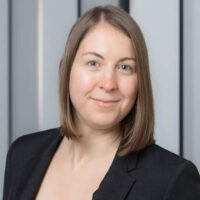
Dr. Jennifer Bauman is an Associate Professor in the Department of Electrical & Computer Engineering at McMaster University. Her research focuses on the electrification of transportation, power electronic converters, vehicle design and control, and smart-grid integration of electric vehicles (EVs). She holds a B.Sc. and Ph.D. from the University of Waterloo and has 8 years of industry experience as Director of Research at CrossChasm Technologies. Her work spans three levels: low-level power electronics optimization, mid-level vehicle system design, and high-level EV-grid interaction analysis. Education: B.A.Sc. and Ph.D. in Engineering from the University of Waterloo (2004, 2008). Professional registration: P.Eng. (Professional Engineer). Teaching: Instructors for ECE 724/MECHENG 721 on Modeling, Control, and Design of Electrified Vehicles. Research Interests: Development of efficient power electronic converters (e.g., using wide-bandgap devices), optimization of hybrid/electric powertrains, and analyzing EV impacts on smart grids. Notable contributions include a 65kW boost converter for fuel cell vehicles and studies on solar-charged EV architectures. Grants & Awards: Received $1.9M in CFI infrastructure funding (2017) as part of a team. Lab: Located in ITB A220, focusing on advanced vehicle electrification and grid-integrated systems.
Ratnak SOKمشاهده پروفایل
دانشیار
Ratnak SOK is an Associate Professor at Waseda University, specializing in thermal engineering, electrified vehicles, and internal combustion engine research. His work spans transportation electrification , CFD modeling , waste heat recovery , and low-carbon/e-fuel ICEs with aftertreatment systems. Doctor of Engineering (2015, Waseda University) MSME (2011, Institut Teknologi Bandung) Diplôme d'Ingénieur (2009, Institut de Technologie du Cambodge) DUT (2006, Institut de Technologie du Cambodge) His research focuses on xEV thermal management , internal combustion engine efficiency , and thermoelectric waste heat recovery , supported by 44 peer-reviewed papers and 340 Scopus citations. Recent work integrates machine learning and CFD simulations for combustion control and battery modeling. Scientific accolades include: Young Investigator Award (2025 Japan Society of Automotive Engineers) SAE International Journal editorial board member Chair, 2025 ASME Rail Transportation Symposium His academic leadership extends to organizing technical sessions at IEEE, SAE, and FISITA conferences.
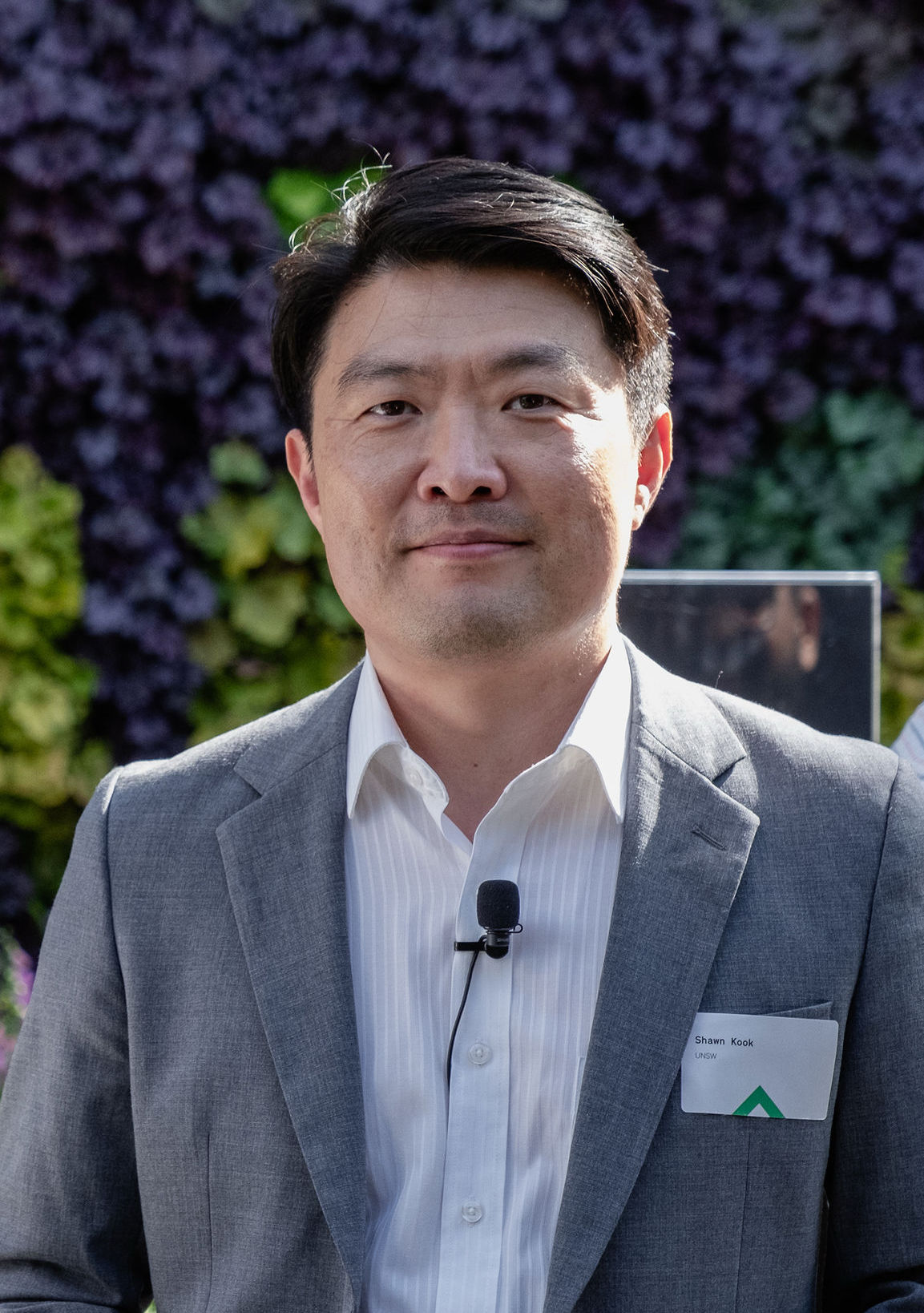
Professor Shawn Kook is a faculty member at the University of New South Wales (UNSW), where he directs the UNSW Engine Research Laboratory and conducts cutting-edge research in engine technologies and sustainable powertrain systems. His work focuses on developing new powertrain technologies for carbon neutral fuel combustion across various applications. His research expertise spans multiple critical areas: Internal Combustion Engines (Petrol/Gasoline, Diesel, Gasoline Compression Ignition, Dual-Fuel) Alternative Fuels (Hydrogen, Ethanol, Biodiesel, Natural Gas, Kerosene, Gas-To-Liquid) Optical Engines and Laser-based Imaging Diagnostics In-cylinder Flow Fields, Turbulence, and Combustion Processes Pollutants Formation (Soot, Particle Morphology, NOx, HC, CO, CO2) Professor Kook's research program investigates new diesel compression-ignition (CI) and petrol spark-ignition (SI) engines developed for high efficiency and low air-polluting emissions, including cooperation with other power generation methods such as gasoline-electric hybrids. His carbon neutral fuel research encompasses hydrogen, ethanol, methanol, jet fuel, biodiesel, and other renewable source fuels. The recent publications show a strong trend toward hydrogen combustion, optical diagnostics of in-cylinder processes, and alternative fuel research with emphasis on emissions reduction. He actively supervises research students focusing on internal combustion engines, CI engines, SI engines, energy & fuels, turbulence, and hydrogen technologies. Professor Kook has also founded DeCarice Pty Ltd, a UNSW spinout company where he serves as co-founder and chief technology officer, demonstrating his commitment to translating research into commercial applications.
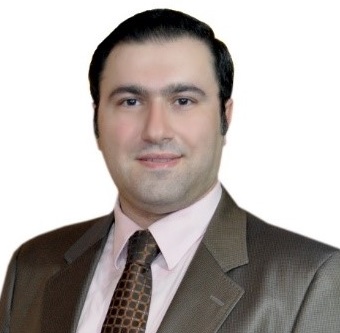
Dr. Mohammad Yazdani-Asrami is a Lecturer in Electrically Powered Aircraft and Operations at the Autonomous Systems & Connectivity (ASC) division of the James Watt School of Engineering, University of Glasgow. He leads research in electrification and cryo-electrification of transportation, particularly in aviation, leveraging applied superconductivity and AI techniques. His research interests span the Electrification and cryo-electrification of power and transportation systems Design of superconducting components (machines, cables, fault current limiters) for aviation Application of AI, machine learning, and big data in engineering and superconductivity Hydrogen electrolysis, production, and integration in aerospace and power networks His recent publications demonstrate a strong trend toward intelligent modeling and AI-driven solutions in superconducting technologies, with a focus on electric aircraft, fault protection, and thermal management using cryogenic fluids. Dr. Yazdani-Asrami has received notable scientific recognition, including: UK Royal Academy of Engineering Global Talent (2021) Young Professional of the Year, Cryogenic Society of America (2023) He actively supervises PhD students and hosts visiting researchers. His advising portfolio includes Alireza Sadeghi, Kerr Smith, Dedao Yan, Giacomo Russo, and Fábio Gregório. He has secured funding from the EPSRC, University of Glasgow, and CSC for PhD students. He also supports postdoctoral fellowships from the Royal Academy of Engineering, Leverhulme Trust, and Marie Skłodowska-Curie actions. He is involved in several research groups and collaborations, particularly within the Aerodynamics, Propulsion and Electrification group. His editorial roles include serving on the boards of Superconductor Science and Technology , World Journal of Engineering , Aerospace Systems , and others. He regularly contributes to major conferences such as the Applied Superconductivity Conference and the International Conference on Magnet Technology.
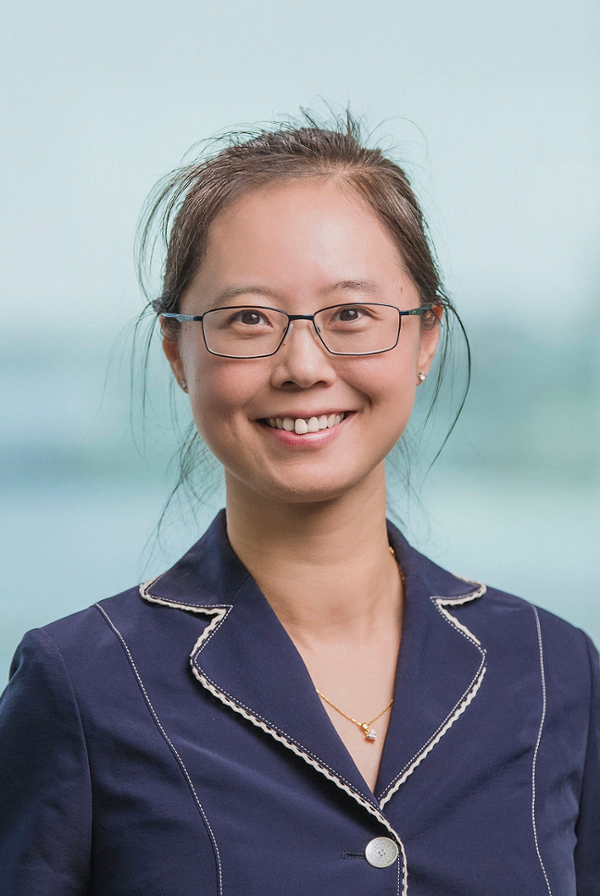
Dr. Shuangshuang Jin is an Associate Professor in the School of Computing with a joint appointment in the Department of Electrical and Computer Engineering at Clemson University's College of Engineering, Computing and Applied Sciences. Previously, she served as a Senior Research Scientist at Pacific Northwest National Laboratory. Her educational background includes a Ph.D. in Computer Science (2007), M.S. in Computer Science (2003) from Washington State University, and a B.S. in Computer Science (2001) from Wuhan University. Ph.D., 2007 - Washington State University, Computer Science M.S., 2003 - Washington State University, Computer Science B.S., 2001 - Wuhan University, Computer Science Dr. Jin specializes in high-performance computing (HPC), distributed and parallel computing, general-purpose computation on graphical processing units (GPGPU), and HPC-based big data analysis, machine learning, scientific computation, and visualization. Her research focuses on applying these technologies to electrical engineering (power and energy systems, power electronics), automotive engineering, systems biology, and computer graphics. She leads the High-Performance Computing Enabled Science and Engineering (HPCeSE) Lab, where she supervises six PhD students working on HPC implementations for power system dynamic simulation, GridPACK application development, data-driven model-based smart control of power electronics converters, and other cutting-edge projects. Her recent publications demonstrate expertise in accelerating power system simulations, PV inverter reliability assessment, edge computing for power systems, and virtual prototyping of vehicle powertrain systems. The research trends show increasing focus on GPU acceleration, real-time simulation capabilities, and integration of HPC with emerging power system challenges. Junior Faculty Excellence in Teaching award (2021) Churchill Carter Fellowship (2022-2023) Zucker Graduate Education Center PhD Grant (2023) Doctoral Dissertation Completion Award (2023-2024) Outstanding Masters Student in Computer Science award (2022) Dr. Jin has successfully secured multiple grants from DOE, DOD, and other agencies for projects including 'Vehicle Propulsion Digital Twins', 'GridPACK-Wind', and 'Tool for Reliability Assessment of Critical Electronics in PV (TRACE-PV)'. She has advised numerous PhD and Master's students who have gone on to positions at national laboratories and industry. Her HPCeSE Lab maintains strong connections with Pacific Northwest National Laboratory, Fermi National Accelerator Laboratory, and other research institutions, providing students with valuable internship opportunities. Dr. Jin leads the High-Performance Computing Enabled Science and Engineering (HPCeSE) Lab at Clemson University, which focuses on developing optimized HPC-based parallel programming algorithms and architectures to solve complex scientific and engineering domain problems. The lab works on smart grid modeling and simulation, power electronics reliability assessment, ground vehicle systems prototyping, and advanced grid analytics, utilizing OpenMP, MPI, Pthreads, and CUDA/OpenCL on various computing platforms.
Lorenz Dörschelمشاهده پروفایل
استاد مدعو
Lorenz Dörschel is an Adjunct Professor (Lehrbeauftragter) at the Institute of Automatic Control at RWTH Aachen University. He holds the academic title PD Dr.-Ing. habil, signifying post-doctoral research qualifications. His position is part-time, focusing on advanced control theory and applications. His primary research interests include: Control of distributed parameter systems (e.g., fluid dynamics, thermal processes) Model predictive control for industrial and automotive systems Parameter space methods for robust controller design Model reduction techniques for complex nonlinear systems Dörschel's recent publications (2018-2024) demonstrate broad applications across biomedical engineering, renewable energy, automotive systems, and industrial automation. His work consistently integrates mathematical rigor with practical implementations, emphasizing advanced control methodologies like nonlinear MPC, Lyapunov-based design, and Bayesian optimization. A recurring theme is the development of computationally efficient control strategies for distributed parameter systems. No scientific awards, student advising relationships, or research grants are documented in the available information.
JC Jiمشاهده پروفایل
استاد
- Dynamics, Vibration and Vibration Control
- Machine Condition Monitoring and Mechanical Engineering Asset Management
- Renewable Energy and Sustainability
- +۱۰ مورد دیگر
Professor JC Ji is a distinguished academic at the School of Mechanical and Mechatronic Engineering at the University of Technology Sydney (UTS), where he was promoted to Professor on January 3, 2025, after serving as an Associate Professor since January 1, 2016. He serves as the Theme Research Director at the Centre for Audio, Acoustics and Vibration (CAAV) at UTS and is an active member of the Faculty of Engineering and Information Technology. Professor Ji holds a PhD in Mechanical Engineering from Australia and a Graduate Certificate from UTS, along with CPEng NER certification from Engineers Australia since 2018. Professor Ji's research spans multiple interdisciplinary areas with significant practical applications. His primary research interests include Dynamics, Vibration and Vibration Control (focusing on wind turbine dynamics, rotor-bearing systems, and vibration isolation); Machine Condition Monitoring and Asset Management (specializing in fault diagnostics, prognostics, and digital twin-based modeling); Renewable Energy and Sustainability (particularly in vibration-based energy harvesting and battery circular economy); Mechanical and Vehicle Systems; Robotic and Multi-Agent Systems; and Ecological Systems. His work demonstrates a strong integration of theoretical foundations with practical engineering solutions for real-world problems. Analysis of Professor Ji's recent publications reveals a clear research trajectory focused on advanced vibration control systems, condition monitoring techniques, and digital twin applications. His work increasingly integrates machine learning with traditional mechanical engineering approaches, particularly in bearing and gear health management. A significant portion of his recent research focuses on quasi-zero stiffness vibration isolators using innovative structural designs including origami-inspired mechanisms. His publications show strong international impact with numerous high-citation articles in top mechanical engineering journals. Stanford University's World's Top 2% Scientists List for both career-long impact and single-calendar year impact in 2023 and 2024 CPEng NER Chartered Engineers certification from Engineers Australia (2018-present) Professor Ji actively supervises research students and has secured substantial funding for his work, including multiple ARC Discovery and Linkage Projects. He serves as an Associate Editor for Mechanical Systems and Signal Processing (Q1 journal), Journal of Vibration and Control (Q2 journal), and International Journal of Bifurcation and Chaos (Q2 journal). He is also an active assessor for ARC grant applications since 2007 and for international funding bodies including Hong Kong RGC, Belgium FNRS, and New Zealand MBIE. His industry collaborations include projects with Zip Heaters, Alstom Transport, and Coal Services Health and Safety Trust. As Theme Research Director at the Centre for Audio, Acoustics and Vibration (CAAV) at UTS, Professor Ji leads a research team focused on advancing vibration control technologies and their applications. His laboratory work includes developing innovative vibration isolators, condition monitoring systems for industrial machinery, and energy harvesting technologies. The research group maintains strong connections with industry partners to ensure practical implementation of their theoretical advancements.

Thomas Ebel is Professor and Head of the Centre for Industrial Electronics at the University of Southern Denmark (SDU) , Institute of Mechanical and Electrical Engineering. A leading expert in power electronics, high-voltage engineering and capacitor technology, he directs large, multi-partner research projects and teaches/supervises at both graduate and PhD levels. Education & Career Path Prof. Ebel holds the academic title Dr. rer. nat. and has been appointed full Professor at SDU. He concurrently serves as Head of Section at the Centre for Industrial Electronics, orchestrating cross-disciplinary research teams and infrastructure. Research Interests Power Electronics & Power Conversion: advanced converter topologies, WBG devices (GaN, SiC), high-frequency magnetics, grid-forming control. Dielectric Materials & Capacitors: polymer and hybrid nanocomposite dielectrics, self-healing metallized film capacitors, aluminium electrolytic capacitors, lifetime modelling and reliability. High-Voltage Engineering & Breakdown Physics: breakdown mechanisms in nanocomposites, corona and partial discharge, insulation coordination. IoT & Data-Driven Monitoring: real-time condition monitoring, digital twins, data-driven RUL estimation for power components. Publication Trends Across 133 research outputs (2018-2025) the dominant themes are (i) construction and reliability of 700 V-class aluminium polymer electrolytic capacitors, (ii) GaN-based power converter optimisation, (iii) hybrid AC/DC microgrid control and harmonic mitigation, and (iv) nanocomposite dielectrics for next-generation capacitors. The 15 most recent articles (2025) reinforce these directions while adding socio-technical energy analytics and green-vehicle powertrains. Scientific Awards Tek Innovation Prize 2023 – awarded for outstanding contributions to power electronics research and industrial innovation. Advising & Funding Prof. Ebel currently supervises ~10 PhD candidates and post-docs including L. Tavares, M. A. Khan, R. Maheshwari, S. Mateen, A. N. Pinky and others. He is Principal Investigator or Head Coordinator of six active projects (2024-2027) valued at >€8 M, spanning ultra-high-efficiency drives, hydrogen-PtX converters, self-healing capacitors and hybrid power-plant concepts. Laboratory & Teams He heads the High-Voltage Power Electronics Laboratory at SDU, equipped with 700 V/200 A capacitor test rigs, GaN/SiC converter prototyping benches, and environmental chambers for accelerated ageing studies. The centre collaborates with 20+ industrial partners and coordinates the international IEA Wind Task 50 on hybrid power plants.

Bernardo Tellini is a Full Professor of Electrical and Electronic Measurements at the Department of Energy, Systems, Land, and Construction Engineering (DESTEC) at the University of Pisa, where he also serves as Vice-Rector for Doctoral Research. He has held this institutional role since 2020, overseeing doctoral program planning, accreditation, and admission procedures. Previously, he chaired the doctoral program in Energy, Electrical, and Thermal Engineering from 2012 to 2016 and served on the Leonardo da Vinci Doctoral School in Engineering from 2008 to 2016. Education: PhD in Electrical Engineering, University of Pisa (1999) Degree in Electrical Engineering, University of Pisa (1993) Postdoctoral research at Karlsruhe Research Center for Technology and Environment Industry experience at ABB Tellini's research focuses on electrical and magnetic measurement methodologies for high-power pulsed applications, characterization of electrical and magnetic properties of materials, aging processes in battery cells, and electromagnetic emissions from power circuits. His work spans from fundamental measurement theory to practical industrial applications, particularly in railway technologies where he represents the University on the Steering Committee of the District for Railway Technologies, High-Speed, and Network Safety in Tuscany. He has served as president of the European Pulsed Power Laboratories agreement and chaired major IEEE conferences including I2MTC 2015 and MELECON 2020. His recent publications reveal a strong emphasis on RFID-based localization systems , nanoparticle-enhanced optical sensors , and advanced battery characterization techniques . The research trajectory shows increasing integration of measurement science with emerging technologies like plasmonic sensing, microwire-based transducers, and smart systems for industrial monitoring. His team has developed innovative approaches for battery health monitoring under vibration stress, temperature sensing using magnetic materials, and precise localization methods using phase-based RFID systems. Professional Service: President of Italian Section of IEEE (2019-2021) Scientific director of Pisa research unit in Association of Electrical and Electronic Measurements (GMEE) Member of Certification Committee of Italcertifer SpA (since 2019) Representative on District for Railway Technologies Steering Committee (since 2013) Tellini has authored approximately 200 publications in international journals and conference proceedings. His leadership extends to academic governance through roles on the DESTEC Department Human Resources Committee and various university committees overseeing scientific qualifications and doctoral programs. His research bridges theoretical measurement principles with practical engineering solutions for energy systems, transportation infrastructure, and industrial monitoring applications.