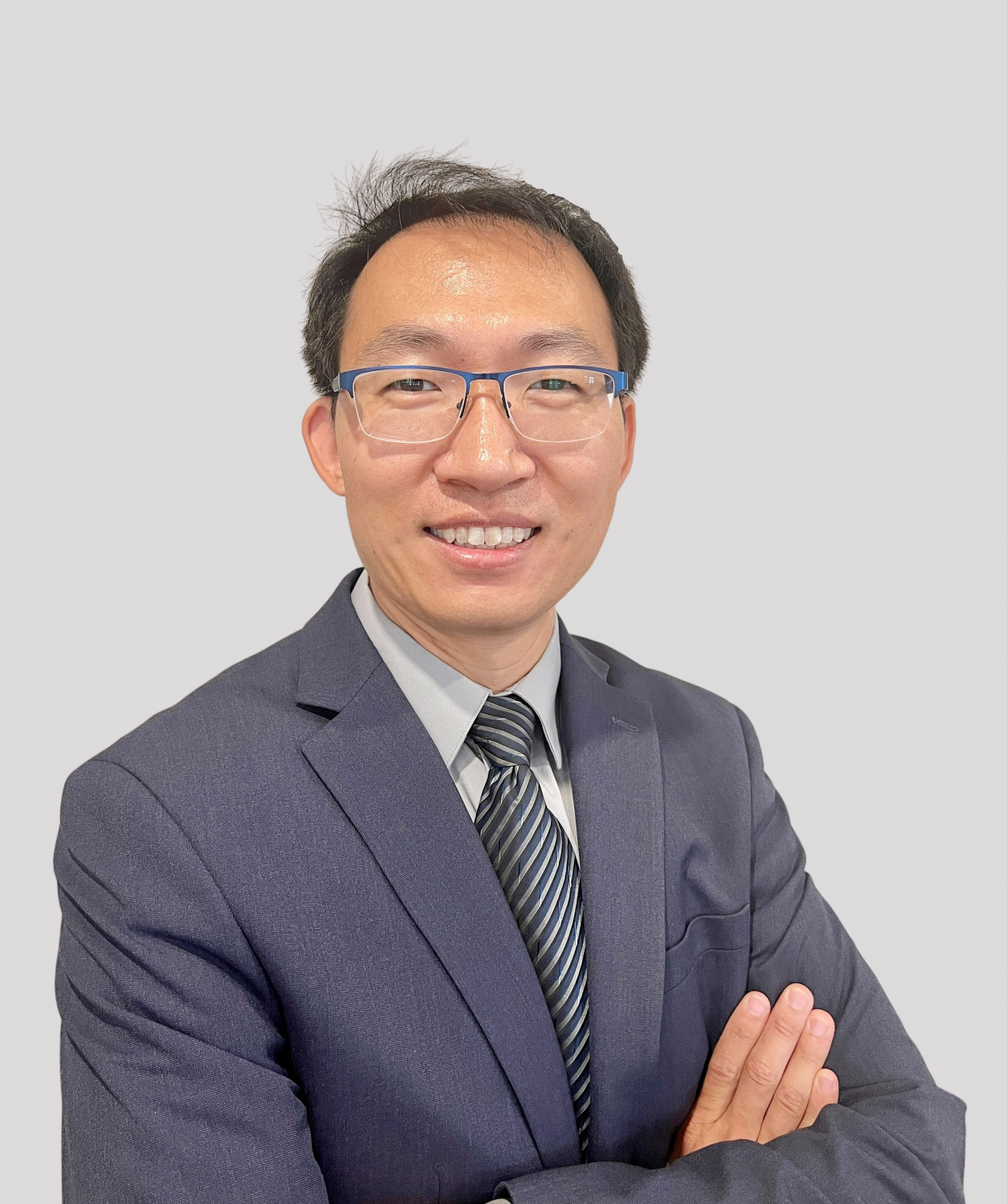
Jonas Fredriksson is a Professor in the Mechatronics research group at the Department of Systems and Control Engineering, Chalmers University of Technology. His work focuses on electric/hybrid vehicles, vehicle dynamics, active safety systems, and optimization-based coordination of automated vehicles. Academic Rank: Professor Affiliation: Chalmers University of Technology Department: Systems and Control Engineering Email: jonas.fredriksson@chalmers.se Research Themes: Powertrain control and energy management for electric/hybrid vehicles Advanced control strategies for heavy articulated vehicles Autonomous driving in confined environments Battery thermal management and charging optimization Vehicle stability and safety systems using Newtonian mechanics Article Trends: Recent publications emphasize 1) optimization algorithms for electric vehicle coordination, 2) aerodynamic modeling under crosswind conditions, 3) stochastic approaches to longitudinal vehicle dynamics, and 4) robust control systems for articulated heavy vehicles. The work combines classical mechanics with modern machine learning techniques. Teaching & Leadership: Supervises doctoral students and leads research projects in mechatronics. Manages the master's program in Systems, Control and Mechatronics. Teaches courses in mechatronics and vehicle control systems.
Karim Abu Salem serves as a Fixed-term Assistant Professor in the Department of Mechanical and Aerospace Engineering (DIMEAS) at the Polytechnic University of Turin, affiliated with the College of Mechanical, Aerospace, and Automotive Engineering. He additionally holds invited membership in the College of Management and Production Engineering. His teaching portfolio includes Aerospace Vehicle Design, Space Flight Mechanics/Structures, Space Environment Operations, and Aeronautical Legislation courses for both bachelor's and master's programs in Aerospace Engineering. Dr. Abu Salem's research centers on sustainable aviation innovation, specializing in box-wing aircraft configurations, hybrid-electric and hydrogen propulsion systems, and advanced structural design methodologies. His work addresses critical challenges in emissions reduction, flight dynamics optimization, and climate impact mitigation through computational modeling, metamodeling techniques, and multidisciplinary design analysis. Key focus areas include unconventional aircraft architectures, power management systems, and metamaterial applications for next-generation aerospace vehicles. Analysis of his recent publications (2023-2025) reveals a concentrated research trajectory toward decarbonizing regional and medium-range aviation. His work demonstrates increasing emphasis on liquid hydrogen propulsion, box-wing aerodynamic efficiency, and holistic environmental impact assessment beyond CO 2 emissions. The publications exhibit strong collaboration patterns with researchers like G. Palaia and E. Carrera, primarily targeting high-impact journals in aerospace engineering and sustainability. As an active educator, Dr. Abu Salem contributes to curriculum development across multiple aerospace engineering programs, bridging theoretical concepts with emerging sustainable aviation technologies through his course collaborations and lectures.
Dr. Junfeng Zhao is an Assistant Professor at Arizona State University's Polytechnic School within the Ira A. Fulton Schools of Engineering. He serves as the Principal Investigator of the Battery Electric & Intelligent Vehicle (BELIV) Lab and holds graduate faculty appointments in both the Robotics & Autonomous Systems (RAS) and Clean Energy Systems (CES) programs. Dr. Zhao's educational background includes: Ph.D. in Mechanical Engineering from The Ohio State University (2015), recipient of OSU Presidential Fellowship M.S. in Mechanical Engineering from University of British Columbia (2009) B.S. in Electrical Engineering from Tsinghua University (2007) Dr. Zhao's research focuses on connected and automated vehicles (CAV), with expertise spanning system integration, safety assessment, motion planning and controls, cooperative perception, AI/ML applications in automotive systems, and electrified propulsion control. His BELIV Lab develops advanced systems for battery electric and intelligent vehicles, targeting safer, cleaner, and more energy-efficient transportation solutions. With industry experience at General Motors R&D and Cummins Technical Center, his work bridges theoretical research with practical automotive applications. Analysis of Dr. Zhao's recent publications reveals a strong emphasis on cooperative perception frameworks, safety assessment methodologies for automated driving systems, integration of satellite positioning for vehicle localization, and novel testing approaches using digital twin and augmented reality technologies. His research consistently addresses critical challenges in autonomous vehicle deployment. Professional recognitions include: OSU Presidential Fellowship during doctoral studies 15 patents in automotive and vehicle systems Dr. Zhao actively mentors 9 current graduate students across PhD and Master's programs, with research areas spanning autonomous driving, battery management systems, and intelligent transportation. His former students have secured positions at major companies including Caterpillar Inc., BYD North America, and TSMC. The BELIV Lab has established itself as an Autoware Center of Excellence, received funding from industry partners like Cox, and has been featured in media coverage including The State Press and documentaries on self-driving technology. BELIV Lab maintains active industry collaborations and participates in outreach activities such as the 10th Annual Hands-on STEM Fair, demonstrating Dr. Zhao's commitment to inspiring future engineers and advancing autonomous vehicle technology through both academic research and practical implementation.
Professor James P Scanlan is a Professor of Design at the University of Southampton within the School of Engineering and Physical Sciences. He holds a materials science degree from Manchester University (1977), an MSc in aerospace design from Salford University, and a PhD from the University of the West of England (1995) in computer modeling of aerospace design processes. Prior to academia, he worked in the aerospace industry for over a decade, including as Head of Manufacturing Research at BAe Regional Aircraft. His research focuses on design optimization, logistics, simulation, and organizational optimization, funded by BAE Systems, Airbus, Rolls-Royce, and the EPSRC. He leads the Computational Engineering Design Centre (CEDC) and runs MSc courses in aerospace IGDS. Notable external roles include membership at the US National Science Foundation and European Programme Committee for Value Driven Design. He has received the Rolls-Royce R&T Award for Creativity (2008). Beyond academia, Scanlan is a keen squash player and pilot of Piper Warrior aircraft. Education: BSc Materials Science, Manchester University (1977) MSc Aerospace Design, Salford University PhD in Computer Modelling of Aerospace Design Process, University of the West of England (1995) Research Interests: Design, logistics optimization, simulation, and autonomous systems integration, particularly in aerospace and healthcare logistics. Key Projects: Includes EPSRC-funded CASCADE Programme Grant, SAMULET Project, and DECODE (Decision Environment for Complex Designs). Recent work explores drone logistics safety, airspace sharing, and cost-benefit analyses for UAV adoption in healthcare. Awards: Rolls-Royce R&T Award for Creativity (2008) Advising & Grants: Supervises PhD students like Ben Grindley. Leads projects sponsored by EPSRC, European Union, and industry partners like Thales and Airbus. Labs/Teams: Director of the Computational Engineering Design Centre (CEDC), collaborating on advanced design and simulation methodologies.
Meysam Razmara is an Adjunct Assistant Professor in the Department of Mechanical and Aerospace Engineering. His research focuses on advanced control strategies for energy systems and building-grid integration. PhD in Mechanical Engineering from Michigan Technological University His work spans Model Predictive Control (MPC) , Exergy-based Control of Energy Systems , and Integration of Energy Efficient Buildings to Grid (B2G) . Key applications include HVAC systems, MicroCSP, and solar energy. Recent publications highlight trends in Building-to-Grid Systems , Exergy Analysis , and Optimal Control for energy efficiency. Collaborative projects emphasize demand response, renewable integration, and grid flexibility. While no specific awards are listed, his research contributes to Smart Grids , Energy Storage , and Automotive Control Systems . He has not been explicitly identified as advising students or securing grants in this dataset.
Simone Ferrari is a Fixed-term Assistant Professor in the Department of Energy (DENERG) at Politecnico di Torino. He is a member of the Interdepartmental Center PEIC (Power Electronics Innovation Center) and affiliated with the College of Electrical and Energy Engineering and College of Mechanical, Aerospace and Automotive Engineering as an invited member. His research focuses on electric machines, finite element analysis, and open-source software development for electromagnetic systems. He has supervised multiple PhD students in electrical engineering and has contributed to commercial consulting projects such as the design of electric motors for lifting applications and supervision of high-power motor development. Teaching responsibilities include courses on Propulsion of Hybrid and Electric Vehicles, Applied Electromagnetism, and Electrical Machines across multiple academic years. His work emphasizes multiphysics simulation, data-driven modeling, and the development of efficient traction motors for electric vehicles. Key research outputs include advancements in flux-map-based modeling, fault-tolerant motor designs, and thermal/structural scaling techniques for synchronous machines. Dr. Ferrari holds a patent for a method to identify spatial harmonic flux and torque maps without torque transducers. His recent publications (2024-2025) address challenges in electric motor efficiency, fault performance, and NVH mitigation, reflecting his commitment to advancing sustainable power electronics and clean energy technologies aligned with SDGs 7 and 9.
Paolo Pescetto is a Fixed-term tenure-track Assistant Professor in the Department of Energy (DENERG) at Politecnico di Torino, where he is also a member of the Interdepartmental Center PEIC (Power Electronics Innovation Center). He serves on multiple academic boards including the College of Electrical and Energy Engineering, College of Computer, Film and Mechatronics Engineering, and College of Mechanical, Aerospace, and Automotive Engineering. His research focuses on power electronics, electrical machines, and motor drives with particular emphasis on electric vehicle applications. His work spans motor control strategies, thermal management of high-power density motors, sensorless control techniques, and integrated power systems for e-mobility. He has developed advanced methodologies for flux mapping, torque ripple compensation, and fault protection in permanent magnet and synchronous reluctance machines. Analysis of his recent publications reveals a strong trend toward solving practical challenges in electric vehicle powertrains, with significant contributions in multi-phase motor drives, thermal management, and fault-tolerant control systems. His work bridges theoretical advances with practical automotive applications, particularly in third-generation electric vehicle technologies. Dr. Pescetto holds multiple patents in motor control technologies, including methods for MTPA tracking without HF injection, spatial harmonic flux-map identification, and isolated on-board battery chargers for electric vehicles. His intellectual property demonstrates practical innovation in the field of motor drives and power electronics. He actively supervises PhD students Andrei Bojoi and Chen Chen in the Electrical, Electronics, and Communications Engineering program, focusing on electric motor drives and sustainable traction electrification. His research projects include commercial contracts on sensorless control of synchronous reluctance machines, firmware implementation for motor control, and advanced sensorless control methodologies for brushless motors. As a member of the PEEMD Research Group within DENERG, Dr. Pescetto contributes to cutting-edge research in power electronics and motor drives, with a strong industry collaboration focus that translates academic research into practical automotive solutions.
Enrico Galvagno is an Associate Professor at the Department of Mechanical and Aerospace Engineering (DIMEAS) of the Polytechnic University of Turin. He is a member of the CARS@PoliTO Interdepartmental Center for Automotive Research and Sustainable Mobility. His academic roles include teaching and supervising courses on Mechanical System Dynamics , Hybrid and Electric Propulsion Systems , and Motor Vehicle Mechanics , as well as serving on doctoral college committees for Mechanical Engineering since 2019. His research interests span Applied Mechanics , Vehicle Dynamics , Hybrid and Electric Vehicles , and Noise, Vibration, and Harshness (NVH) . He focuses on Mathematical Modeling , Control Optimization , and Experimental Mechanics in automotive systems. Recent projects include the OWHEEL benchmarking initiative, EFFEREST for energy management in electric vehicles, and CliMAFlux for axial flux motor drives. Galvagno's scholarly work includes collaborative research on electric powertrain vibro-acoustics , off-road tire modeling , and tracked vehicle simulations . His 2024 publications highlight advancements in nonlinear vehicle dynamics , e-NVH performance , and model order reduction techniques. Scientific Awards and Memberships : Effective member of IFToMM Italy (2019-) Scientific Committee member of IFToMM Technical Committee for Engines and Powertrains (2019-) Effective member of SAE International (2010-) He supervises PhD students Luca Biondo , Luca Ciravegna , and Luca Zerbato , and has led commercial research contracts like Off-Road Tyre Model Integration and Tracked Vehicle Kinematic Modeling for industrial clients.
Aurelio Soma is a Full Professor in the Department of Mechanical and Aerospace Engineering (DIMEAS) at the Polytechnic University of Turin, where he has served as a faculty member since at least the early 2000s. His academic career spans over two decades, with continuous involvement in teaching Mechanical Engineering doctoral programs since the 19th cycle (2003/2004). He teaches courses including Machine Construction and Product and Process Design with Numerical Methods. Professor Soma's research spans several critical areas of mechanical engineering with a strong focus on sustainable technologies. His primary research interests include Battery Electric Vehicles, Hybrid Electric Vehicles, Internet of Things (IoT) applications, MEMS technology, Railway Vehicles, and Working Vehicles. His work aligns with Sustainable Development Goals 9 (Industry, Innovation, and Infrastructure), 11 (Sustainable cities and communities), and 13 (Climate action), demonstrating his commitment to environmentally conscious engineering solutions. His research bridges theoretical mechanical design with practical industrial applications, particularly in energy harvesting and sustainable vehicle technologies. The analysis of his recent publications reveals a strong trend toward sustainable transportation systems, with particular emphasis on lithium-ion battery technology, energy harvesting for railway diagnostics, and electrification of agricultural machinery. His work consistently combines mechanical engineering principles with cutting-edge sustainable technologies, focusing on practical implementations that address real-world challenges in transportation and industrial systems. The interdisciplinary nature of his research spans mechanical engineering, materials science, electrical engineering, and environmental science. Professor Soma actively supervises PhD students, currently guiding nine doctoral candidates across multiple cycles of the Mechanical Engineering program. His research is supported by numerous competitive funding sources including PNRR Mission 4 (AGRITECH Spoke 6), national research projects, regional innovation centers, and commercial contracts. He has served as Scientific Manager for over 20 research projects spanning from 2006 to 2027, demonstrating sustained research productivity and leadership. His research group focuses on the Design and Experimentation of Industrial and Railway Systems and Microsystems (DIMEAS), developing innovative solutions for energy harvesting, vehicle diagnostics, and sustainable machinery. Professor Soma's work has resulted in numerous patents related to hybrid working vehicles, railway diagnostics systems, energy harvesters, and lithium battery applications, translating academic research into practical industrial solutions.
Henrique De Carvalho Pinheiro serves as a Fixed-term Assistant Professor in the Department of Mechanical and Aerospace Engineering (DIMEAS) at Politecnico di Torino. He is a member of the CARS@PoliTO Interdepartmental Center for Automotive Research and Sustainable Mobility and participates in the Innovative, Electric and Hybrid Vehicles research group. His academic appointment falls under Law 240/10 art.24-a, reflecting his fixed-term research position with teaching responsibilities. Dr. Pinheiro's research encompasses active suspension systems , automotive engineering , battery electric vehicles , control of hybrid and electric vehicles , and vehicle dynamics . His work particularly focuses on magneto-rheological technology for braking systems and innovative suspension solutions. He contributes to sustainable mobility research aligned with UN Sustainable Development Goals 7 (Affordable and clean energy), 9 (Industry, Innovation, and Infrastructure), and 13 (Climate action). His recent publications demonstrate a strong focus on zero-emission technologies, particularly in braking systems and electric vehicle dynamics. The research spans experimental validation, multi-physics modeling, and control system development for sustainable automotive solutions. A significant portion of his work addresses the integration of magneto-rheological technology with electric powertrains to create innovative braking systems that reduce emissions. Learning to Teach (L2T) badge issued by Politecnico di Torino (June 6, 2024) Dr. Pinheiro supervises three PhD students in Mechanical Engineering: Matteo De Carlo (40th cycle, 2024-present), Elena De Luca (40th cycle, 2025-ongoing), and Elia Grano (38th cycle, 2022-ongoing). He contributes to multiple research projects including SAFEST (2024) on electro-actuated brakes and traction systems, and MATERIALIZED (2023-2025) focused on material rheology for zero-emission driving systems under the PNRR Mission 4 initiative. His laboratory work centers around the development and testing of innovative braking systems, with several national and international patents to his name related to magneto-rheological technology for automotive applications.
Urho Hakonen is a Doctoral Researcher at Aalto University's School of Engineering , affiliated with the Department of Energy and Mechanical Engineering . Active in the field of mechatronics and torsional vibration analysis, he contributes to research involving electromagnetic systems, maritime powertrains, and digital twin technology. Current Role: Doctoral Researcher Institution: Aalto University Department: Department of Energy and Mechanical Engineering His research focuses on torsional vibration analysis , torque reconstruction , and electromagnetic influence in mechanical systems, with a strong emphasis on Python-based solutions like the OpenTorsion library . Publications highlight interdisciplinary work bridging mechanical engineering, control systems, and digital twin methodologies. Recent work explores collaborative design paradigms in mechanical systems through digital twin web integration and trend filtering techniques for maritime powertrains. All findings are categorized under Vibration Analysis , Mechatronics , and Automated Design .
John Kessels is a part-time Assistant Professor at the Department of Electrical Engineering, Eindhoven University of Technology, affiliated with the Control Systems Group . He works as a Senior Control Engineer at DAF Trucks NV since 2011, focusing on energy and thermal management for heavy-duty vehicles. His research emphasizes system integration and complete vehicle energy management strategies. Born: Venray, Netherlands (1977) Education: Fontys Hogescholen Eindhoven (B.Sc. 2000), TU/e (M.Sc. 2003, Ph.D. 2007) Industrial roles: Postdoc at TU/e (2007), TNO Science and Industry (2007-2011), DAF Trucks NV (2011-present) His research interests include: Energy management for hybrid trucks Battery life optimization Thermal system integration Distributed optimization algorithms Model predictive control applications Fuel consumption reduction Publication trends show focus on hybrid powertrain optimization, control theory applications in vehicle systems, and energy-saving technologies validated through simulation and real-world testing. Key collaborations include Ford Research Centre Aachen, TNO, DAF Trucks, and the Horizon 2020 LONGRUN project.
Roger Stirnimann serves as a Lecturer in Agricultural Engineering at the Bern University of Applied Sciences, specifically within the School of Agricultural, Forest and Food Sciences HAFL, Department of Agronomy in Zollikofen. With over a decade of academic experience since 2013, he has established himself as a specialist in agricultural machinery and tractor technology. His educational background includes an Executive Master of Business Administration from Kalaidos Fachhochschule Bern (2007-2008), a degree in Economics Engineering from Private Hochschule für Wirtschaft Bern (2000-2002), and an Agricultural Engineering degree from SHL Zollikofen (1993-1996). He further enhanced his academic teaching skills with a Certificate of Advanced Studies in University Teaching and e-Learning (2013-2014). Agricultural Engineering in general Tractor Technology and development Transport Technology in agriculture Self-propelled harvesting machinery Alternative drive systems for agricultural vehicles Emissions from Nonroad Mobile Machinery Terramechanics and soil-vehicle interaction Trailer braking systems His publication record demonstrates consistent scholarly output, particularly in tractor technology and agricultural machinery. The analysis of his 15 most recent articles reveals a strong focus on tractor development, engine and transmission systems, alternative drive concepts, and classification methodologies. His work bridges theoretical research with practical applications in agricultural machinery, with particular emphasis on performance optimization, sustainability, and technological innovation in farming equipment. Max Eyth commemorative coin in silver (DLG) Stirnimann actively contributes to academic and industry organizations, serving as a co-author for the Yearbook of Agricultural Engineering, Swiss delegate for OECD's Tractor Test Codes, and chair of DLG's Vehicle Technology examination commission. His industry experience prior to academia, particularly with Ammann Schweiz AG and Matra, provides valuable practical context to his academic work. His research often addresses real-world challenges in agricultural machinery, focusing on performance, efficiency, and environmental impact. His work with various tractor chassis concepts, soil pressure analysis, and alternative drive systems demonstrates his commitment to advancing sustainable and efficient agricultural technology. Through his memberships in organizations like ISTVS (International Society for Terrain-Vehicle Systems) and the Club of Bologna, he maintains strong connections between academic research and industry applications.
Jari Vepsäläinen is an Assistant Professor at Aalto University's Department of Energy and Mechanical Engineering under the College of Engineering. He serves as Director of the Fluid Power group and specializes in mechatronics design, energy efficiency, and generative design methodologies. Research focuses on physics-based modeling for energy recovery AI/ML applications in electromechanical system design Applications in robotics, heavy machinery, and sustainable transportation His recent publications demonstrate expertise in hybrid systems, fluid power optimization, and AI-driven engineering, with a strong emphasis on electrification and efficiency across automotive, maritime, and industrial domains. Key areas: Mechatronics, Energy Systems, Generative Design Technologies: Digital Twins, IoT, Machine Learning Current projects involve thermal energy systems, electric motor optimization, and advanced control algorithms for mobile machinery.
Yi Zhang is a Professor in the Department of Mechanical Engineering at the University of Michigan-Dearborn's College of Engineering and Computer Science. His expertise lies in automotive engineering, focusing on power transmission systems, dual clutch transmissions (DCTs), and hybrid electric vehicle (HEV) control strategies. Zhang's research spans theoretical and applied domains, including gear theory, CAD/CAM, and robotics. His scholarly work emphasizes advanced control systems for automotive components, energy management in hybrid and electric vehicles, and dynamic modeling of transmission systems. Recent publications highlight eco-driving optimization, adaptive gearshift strategies, and coordinated braking-shifting control for electric vehicles. Grants from General Motors, Ford Motor Company, and the U.S. Department of Energy support his research on transmission dynamics, hybrid vehicle systems, and gear design. Zhang's collaborations with industry leaders like Magna International and academic institutions demonstrate his impact in automotive and mechanical engineering.