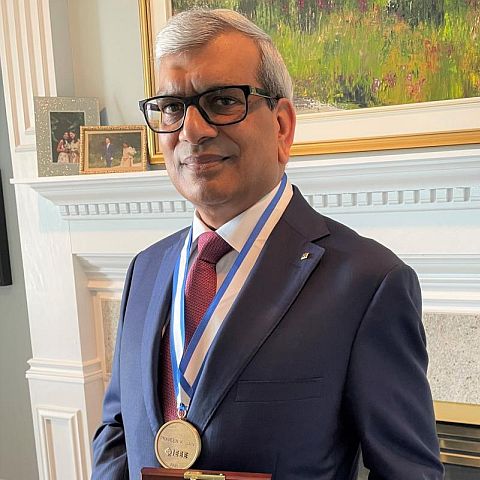
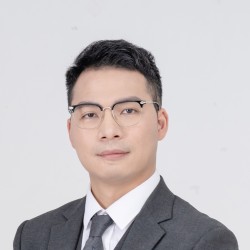
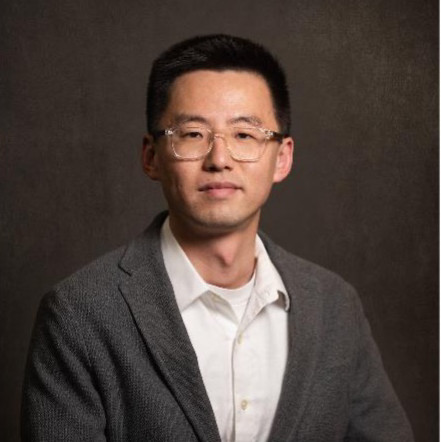
Christopher Onder is a Lecturer at the Department of Mechanical and Process Engineering at ETH Zürich, where he serves as Deputy Head of the Institute for Dynamic Systems and Control. His research focuses on control engineering, energy systems, and sustainable transportation solutions. Role : Lecturer, Deputy Head of Institute Department : Mechanical and Process Engineering Institute : Dynamic Systems and Control University : ETH Zürich His research interests include: Control systems for hybrid and electric vehicles Energy management optimization Thermal comfort in public transport Co-design of mechanical and racing strategies Nonlinear control in aerospace applications Model-based calibration for diesel engines Contact: onder@idsc.mavt.ethz.ch
Professor Melody Baglione is a Professor and George Clark Chair of Mechanical Engineering at The Cooper Union's Albert Nerken School of Engineering. She holds a PhD and M.S.M.E. from the University of Michigan and a B.S.M.E. from Michigan Technological University. Her work focuses on integrating sustainability into engineering education, control systems, and STEM outreach for children with special needs. She leads NSF and NYSERDA-funded projects to enhance energy efficiency in building systems and developed the Interactive Light Studio to promote STEM engagement. Education: Ph.D. & M.S.M.E (University of Michigan), B.S.M.E (Michigan Technological University) Research interests include sustainable control systems, automotive powertrain optimization, structural dynamics, and educational technology for underserved youth. Her awards include the NSF Graduate Research Fellowship and SAE Ralph R. Teetor Educational Award. She teaches courses such as Feedback Control Systems and Acoustics, Vibration, and Noise Control. Recent projects involve optimizing HVAC systems in 41 Cooper Square (LEED Platinum), designing interactive installations for pre-K students with hearing impairments, and advancing energy master planning for academic buildings.
Sampo Laine is a Visiting Professor at the Department of Energy and Mechanical Engineering at Aalto University, with affiliations in Mechatronics. His expertise focuses on vibration analysis, rotordynamics, and powertrain systems, contributing to the UN Sustainable Development Goals related to Industry, Innovation, and Infrastructure (SDG 9). He holds a Doctor of Science (Tech) in Mechanical Engineering (2025), a Master of Engineering (2021), and a Bachelor of Engineering (2020), all from Aalto University. His research explores lateral and torsional vibrations in rotating machinery, electromagnetic influences on torsional systems, and vibration mitigation through active control strategies. Notable contributions include the OpenTorsion Python library for torsional vibration analysis and studies on semi-active foundation stiffness control in rotor systems. His work bridges mechanical design, digital twin technology, and collaborative engineering practices. Laine’s publications span topics such as wire rope isolators, aerostatic measurement systems, and dynamic modeling of coupled electromechanical systems. His research emphasizes practical applications in industrial machinery, automotive powertrains, and manufacturing processes. Collaborations have addressed challenges in winder dynamics, paperboard quality assessment, and roll geometry optimization. No scientific awards are explicitly listed in the provided materials. His advising and grants focus on doctoral research in mechanical systems, with a recent doctoral thesis titled Lateral and torsional vibrations in variable speed rotating machinery (2025). He is affiliated with Aalto’s Mechatronics and Energy Engineering research groups, contributing to interdisciplinary projects in vibration analysis and automated design methodologies.
Thomas Ebel is Professor and Head of the Centre for Industrial Electronics at the University of Southern Denmark (SDU) , Institute of Mechanical and Electrical Engineering. A leading expert in power electronics, high-voltage engineering and capacitor technology, he directs large, multi-partner research projects and teaches/supervises at both graduate and PhD levels. Education & Career Path Prof. Ebel holds the academic title Dr. rer. nat. and has been appointed full Professor at SDU. He concurrently serves as Head of Section at the Centre for Industrial Electronics, orchestrating cross-disciplinary research teams and infrastructure. Research Interests Power Electronics & Power Conversion: advanced converter topologies, WBG devices (GaN, SiC), high-frequency magnetics, grid-forming control. Dielectric Materials & Capacitors: polymer and hybrid nanocomposite dielectrics, self-healing metallized film capacitors, aluminium electrolytic capacitors, lifetime modelling and reliability. High-Voltage Engineering & Breakdown Physics: breakdown mechanisms in nanocomposites, corona and partial discharge, insulation coordination. IoT & Data-Driven Monitoring: real-time condition monitoring, digital twins, data-driven RUL estimation for power components. Publication Trends Across 133 research outputs (2018-2025) the dominant themes are (i) construction and reliability of 700 V-class aluminium polymer electrolytic capacitors, (ii) GaN-based power converter optimisation, (iii) hybrid AC/DC microgrid control and harmonic mitigation, and (iv) nanocomposite dielectrics for next-generation capacitors. The 15 most recent articles (2025) reinforce these directions while adding socio-technical energy analytics and green-vehicle powertrains. Scientific Awards Tek Innovation Prize 2023 – awarded for outstanding contributions to power electronics research and industrial innovation. Advising & Funding Prof. Ebel currently supervises ~10 PhD candidates and post-docs including L. Tavares, M. A. Khan, R. Maheshwari, S. Mateen, A. N. Pinky and others. He is Principal Investigator or Head Coordinator of six active projects (2024-2027) valued at >€8 M, spanning ultra-high-efficiency drives, hydrogen-PtX converters, self-healing capacitors and hybrid power-plant concepts. Laboratory & Teams He heads the High-Voltage Power Electronics Laboratory at SDU, equipped with 700 V/200 A capacitor test rigs, GaN/SiC converter prototyping benches, and environmental chambers for accelerated ageing studies. The centre collaborates with 20+ industrial partners and coordinates the international IEA Wind Task 50 on hybrid power plants.
Bernardo Tellini is a Full Professor of Electrical and Electronic Measurements at the Department of Energy, Systems, Land, and Construction Engineering (DESTEC) at the University of Pisa, where he also serves as Vice-Rector for Doctoral Research. He has held this institutional role since 2020, overseeing doctoral program planning, accreditation, and admission procedures. Previously, he chaired the doctoral program in Energy, Electrical, and Thermal Engineering from 2012 to 2016 and served on the Leonardo da Vinci Doctoral School in Engineering from 2008 to 2016. Education: PhD in Electrical Engineering, University of Pisa (1999) Degree in Electrical Engineering, University of Pisa (1993) Postdoctoral research at Karlsruhe Research Center for Technology and Environment Industry experience at ABB Tellini's research focuses on electrical and magnetic measurement methodologies for high-power pulsed applications, characterization of electrical and magnetic properties of materials, aging processes in battery cells, and electromagnetic emissions from power circuits. His work spans from fundamental measurement theory to practical industrial applications, particularly in railway technologies where he represents the University on the Steering Committee of the District for Railway Technologies, High-Speed, and Network Safety in Tuscany. He has served as president of the European Pulsed Power Laboratories agreement and chaired major IEEE conferences including I2MTC 2015 and MELECON 2020. His recent publications reveal a strong emphasis on RFID-based localization systems , nanoparticle-enhanced optical sensors , and advanced battery characterization techniques . The research trajectory shows increasing integration of measurement science with emerging technologies like plasmonic sensing, microwire-based transducers, and smart systems for industrial monitoring. His team has developed innovative approaches for battery health monitoring under vibration stress, temperature sensing using magnetic materials, and precise localization methods using phase-based RFID systems. Professional Service: President of Italian Section of IEEE (2019-2021) Scientific director of Pisa research unit in Association of Electrical and Electronic Measurements (GMEE) Member of Certification Committee of Italcertifer SpA (since 2019) Representative on District for Railway Technologies Steering Committee (since 2013) Tellini has authored approximately 200 publications in international journals and conference proceedings. His leadership extends to academic governance through roles on the DESTEC Department Human Resources Committee and various university committees overseeing scientific qualifications and doctoral programs. His research bridges theoretical measurement principles with practical engineering solutions for energy systems, transportation infrastructure, and industrial monitoring applications.
Taehyung Kim is an Associate Professor at the University of Michigan-Dearborn in the Department of Electrical and Computer Engineering , College of Engineering and Computer Science. His research focuses on power electronics , motor drives , and electric/hybrid power systems for vehicles and aircraft , with an emphasis on renewable energy integration and fault-tolerant control . Education Ph.D., Electrical & Computer Engineering, Texas A&M University M.S., Electrical Engineering, Korea University B.S., Electrical Engineering, Korea University His research interests include energy conversion systems, power electronics for electric vehicles, evaluation and diagnosis of AC motors, and position sensorless control of permanent magnet motors. He leads the KIM Laboratory , which explores unmanned aerial vehicles (UAVs) , battery systems , and powertrain reliability . The 15 most recent articles (2024-2021) highlight his work on hybrid UAVs , fault detection algorithms , cost-effective converters , and powertrain optimization . These publications span power electronics , renewable energy integration , and electric propulsion systems , with applications in transportation electrification and industrial power systems . Scientific Awards NSF Mid Career Advancement Award, 2023 IEEE-IAS Prize Paper Award (2nd Place), 2012 Best Paper Award, IEEE Transportation Electrification Conference, 2021 Listed in "World Top 2% Scientists" (Stanford University, 2020-2024) Listed in Marquis Who’s Who in America Technical Program Co-Chair, 2009 IEEE Vehicle Power and Propulsion Conference Prof. Kim has advised numerous PhD and Master’s students , including Feng Zhou , Sreekanthreddy Chalapala , and Sahithya Parvathareddy . He has secured significant grants from the NSF , Department of Energy , and industry partners like Ford, focusing on smart monitoring , fault identification , and energy management for electrified systems. His lab’s facilities include advanced power electronics labs and hybrid powertrain testing environments .
Andreas Kugi is the Scientific Director at the AIT Austrian Institute of Technology and a full professor of Complex Dynamical Systems at TU Wien (Vienna University of Technology) in the Faculty of Electrical Engineering and Information Technology, Institute of Automation and Control. He has held significant academic and leadership roles across Europe, including professorships at Saarland University and offers from TU Dresden and KIT. His research focuses on the modeling, control, and optimization of complex dynamical systems , with strong applications in mechatronics, robotics, and industrial automation . He has led major research centers such as the Christian Doppler Laboratory for Model-Based Process Control in the Steel Industry and the Center for Vision, Automation & Control at AIT. His work bridges theoretical control design and real-world industrial implementation. The recent publications reflect a consistent focus on nonlinear, hybrid, and distributed parameter systems , with applications in robotics, manufacturing, energy, and process industries. His research integrates advanced control theory with practical engineering challenges, emphasizing real-time optimization, robustness, and system efficiency. Scientific Awards: Mechatronic Systems Outstanding Investigator Award (IFAC, 2022) Goldene Stefan-Ehrenmedaille (OVE, 2023) 16 best paper awards Andreas Kugi has supervised over 50 completed PhD dissertations and has been deeply involved in research leadership, including serving as Editor-in-Chief of Control Engineering Practice (2010–2017) and Vice President of the OVE Austrian Electrotechnical Association (2017–2023). He has secured and led numerous research grants, particularly through industrial collaborations in automation and process control. He leads and contributes to major research initiatives, including the Center for Vision, Automation & Control at AIT and the Christian Doppler Laboratory , fostering interdisciplinary teams focused on industrial digitalization and smart systems.
Bo Chen is a Professor in the Department of Mechanical Engineering – Engineering Mechanics and the Department of Electrical & Computer Engineering at Michigan Technological University. She directs the Intelligent Mechatronics and Embedded Systems (IMES) Laboratory, focusing on advanced controls, optimization, and artificial intelligence for connected and autonomous vehicles, electric vehicle–smart grid integration, and smart mobility. PhD in Mechanical and Aeronautical Engineering from the University of California, Davis (2005) Visiting Professor at Argonne National Laboratory (2014–2015, 2016) Sabbatical at Oak Ridge National Laboratory (2022–2023) Dr. Chen's research spans Mechatronics , Embedded Systems , Hybrid Electric Vehicles , and Cyber-Physical Systems . Her work includes vehicle-to-grid integration , battery control systems , and cybersecurity for automotive systems . Recent publications highlight advancements in predictive control algorithms for hybrid vehicles, consensus-based frequency regulation , and plausibly deniable encryption systems for mobile devices. Funded by the National Science Foundation, Department of Energy, and industry partners, her research has secured over $10 million in grants. ASME Fellow Best Paper Award (2008 IEEE/ASME MESA Conference) Top Cited Article Award (Journal of Computers & Graphics) Best Survey Paper Award (IEEE Transactions on ITS) Co-recipient of four Best Student Paper Awards Dr. Chen has held leadership roles as Chair of the Technical Committee on Mechatronics and Embedded Systems (IEEE ITS Society), Chair of the ASME Design Engineering Division's Technical Committee, and Associate Editor for IEEE Transactions on Intelligent Transportation Systems (2012–2019). She organized multiple international conferences and co-edited special issues on intelligent transportation systems.
Toufik AZIB is a Full Professor and scientific coordinator of the ECMS (Energy and Conception of Mechatronic Systems) research theme at ESTACA Engineering School in France. He leads a team of 6 teacher-researchers and 13 PhD students, focusing on optimal design of power electronics and energy management for hybrid power systems. His work bridges academic research and industrial applications in sustainable mobility, with strong collaborations across Europe and Algeria. Dr. AZIB received his Electrotechnical Engineering Diploma from the University of Setif, Algeria in 2006, followed by an M.Sc. in Electrical Engineering from ENSEM-INPL, France in 2007. He earned his Ph.D. in electrical engineering from the University of Paris South XI in 2010 and completed his HDR (Habilitation à Diriger des Recherches) from the University of Paris Saclay in 2021. His academic journey reflects a strong foundation in both theoretical and applied electrical engineering. His research focuses on the modeling, control, and optimal design of embedded energy systems under multi-physical constraints (electrical, thermal, electromagnetic compatibility, volume, reliability). He specializes in energy management strategies for hybrid systems combining fuel cells, batteries, and ultracapacitors, with applications in electric vehicles and the 'more electric aircraft.' His work integrates numerical and experimental approaches to develop methodologies for pre-dimensioning and real-time energy management, addressing challenges in sustainable transportation. Analysis of Dr. AZIB's recent publications reveals a strong trend toward multidisciplinary design optimization for automotive applications, particularly electronic throttle systems. His research increasingly incorporates knowledge management techniques and addresses reliability considerations in hybrid power source design. There's a clear progression from fundamental energy management strategies to sophisticated eco-driving solutions for electric vehicles, reflecting the evolving demands of sustainable mobility. Best Paper Award for 'Structure and Control Strategy for a Parallel Hybrid Fuel Cell/Supercapacitors Power Source' at IEEE VPPC'09 Dr. AZIB has supervised numerous PhD and Master's students across multiple institutions in France, Algeria, and Colombia. He leads significant research projects including MIMe (Module d'Intégration et de simulation Mécatronique), ECOS Nord (Eco-driving strategies for electric motorcycle), and AmCoAIR (improving air quality in vehicle cabins), securing funding from national and international sources. His work demonstrates strong industry collaboration with partners like Valeo, PSA, and Renault. As experimental platforms coordinator since 2012, Dr. AZIB oversees 10 specialized experimental facilities at ESTACA's S2ET-Paris Saclay research pole, including those for autonomous electric vehicles, drones, electric machines, and power modulators. His team regularly develops proof-of-concept demonstrators to validate research findings, such as the Formula Student electric vehicle and the 'Electric Appeal' streamliner project, demonstrating practical applications of their theoretical work.
Torbjörn Thiringer is a Professor in Electrical Engineering at Chalmers University of Technology. His research focuses on electrical systems for wind turbines and electric vehicles, with particular emphasis on system-level analysis and component-level studies of electrical machines, power electronics, and battery systems. Key research areas: Wind turbine systems, Electric vehicle drives, Battery degradation, Power electronics optimization Recent work explores graphene-based thermal management, fuel cell hybrid vehicles, and direct current building distribution efficiency His publications demonstrate interdisciplinary engagement with topics spanning: Finite element analysis of motor designs Life cycle assessment of energy systems Thermal modeling of SiC inverters Wave energy converter optimization Core loss measurement techniques Hydrogen fuel cell integration Professor Thiringer's collaborations span multiple institutions and industry partners, focusing on both theoretical modeling and practical implementation of advanced energy systems.
Juha Pyrhönen serves as Professor of Electrical Engineering at the School of Energy Systems, Lappeenranta-Lahti University of Technology (LUT University) in Lappeenranta, Finland. His research focuses on advanced electric machine design for high-performance applications, with particular expertise in traction motors, synchronous reluctance machines, and thermal management systems. Contact information includes email Juha.Pyrhonen@lut.fi and phone +358 40 571 1645. Professor Pyrhönen's research spans critical areas in electric machine development including high-speed motor design for aerospace and automotive applications, mitigation of parasitic effects like bearing currents, and innovative cooling techniques such as direct liquid cooling. His work addresses electromagnetic design challenges in drum-winding machines, variable reluctance resolvers for position sensing, and material selection for rotors operating under extreme conditions. Recent investigations examine agricultural tractor electrification and compact energy conversion systems for onboard machinery. Analysis of his 2025 publications reveals strong emphasis on improving power density through multidisciplinary approaches that integrate electromagnetic, thermal, and mechanical considerations. Key trends include advanced bearing current mitigation strategies, optimization of axially-laminated rotors, and precision measurement techniques under magnetic saturation. His research consistently targets sustainable solutions for electric propulsion across transportation sectors. No scientific awards were documented in the provided information. Details regarding student supervision, research grants, or collaborative projects were not specified in the available materials. The absence of such information suggests either non-disclosure in the source materials or potential focus on independent research activities. While specific laboratory facilities weren't mentioned, his research scope implies access to advanced testing infrastructure for high-speed machinery, electromagnetic characterization equipment, and thermal validation systems at LUT University's energy research facilities.
Praveen Jain is a Professor of Electrical and Computer Engineering at Queen's University, where he also serves as Director of the Centre for Energy and Power Electronics Research (ePOWER) and was a Tier 1 Canada Research Chair in Power Electronics from 2001 to 2022. His career spans over 35 years of groundbreaking contributions to power electronics technology and applications. Dr. Jain received his PhD from the University of Toronto in 1987. His research interests focus on power electronics and systems, with particular expertise in resonant power conversion, renewable energy integration, photovoltaic micro-inverters, and electric vehicle power systems. His work has significantly advanced the field through both theoretical contributions and practical implementations. His extensive publication record includes over 600 papers and more than 100 patents, reflecting his sustained innovation in power electronics. These publications demonstrate a strong trend toward renewable energy integration, particularly photovoltaic systems, electric vehicle applications, and advanced converter topologies that improve efficiency and power quality. 2021 IEEE Medal in Power Engineering 2017 IEEE Canada Electric Power Medal 2011 IEEE William Newell Power Electronics Award 2004 Engineering Medal of the Ontario Professional Engineers Fellow of the IEEE Fellow of the Royal Society of Canada Fellow of the Engineering Institute of Canada Fellow of the Canadian Academy of Engineering Dr. Jain has supervised over 100 graduate students, postdoctoral fellows, and power electronics engineers throughout his career. His industry engagement is exceptional, having founded two successful startups: CHiL Semiconductor (acquired by International Rectifier) and SPARQ Systems (listed on the TSX Venture Exchange in 2022). His research has been supported by significant industry partnerships and government funding, reflecting the practical impact of his work. As Director of the Centre for Energy and Power Electronics Research (ePOWER), Dr. Jain leads a vibrant research team focused on advancing power conversion technologies for renewable energy integration, electric transportation, and next-generation power systems. The center maintains strong industry partnerships and has produced numerous commercialized technologies.
Dr. Yinglong He is a Lecturer in Automated Electrified Transport (AcT) Systems at the School of Mechanical Engineering Sciences, University of Surrey, UK, and an Honorary Assistant Professor at the School of Engineering, University of Birmingham. His research focuses on intelligent transportation systems, energy management, vehicle dynamics, and AI-driven optimisation. He has held positions including Postdoctoral Research Associate at the University of Cambridge and Technology Expert at the European Commission's Joint Research Centre (JRC). Research interests include autonomous vehicle control, traffic simulation, hybrid/electric vehicle dynamics, and sustainable transport solutions. Notable contributions include advancing microscopic traffic models for automated vehicles and optimising energy systems for hybrid powertrains. His work integrates machine learning, multi-agent systems, and data-driven approaches to address challenges in transport decarbonisation and safety. Recent publications highlight advancements in hybrid vehicle dynamics simulation, lithium-air battery modelling, and energy mapping of urban buildings. He has received the Chinese Government Award for Outstanding Self-Financed Students (2022) and is a Fellow of the Institute for Sustainability (IfS). His expertise spans interdisciplinary collaborations in automotive engineering, energy systems, and smart infrastructure.
Andreas Strohmayer is a Professor and Managing Director of the Institute of Aircraft Design at the University of Stuttgart, leading research in aircraft design, electric/hybrid propulsion, and lightweight construction. His work focuses on sustainable aviation solutions, including electric aerotow systems, hydrogen tank integration, and hybrid-electric regional aircraft. He previously held senior industry roles at Grob-Werke, Sky Aircraft, and SST Flugtechnik before joining academia in 2015. Education & Career: 1989–1995: Studied Aerospace Engineering at TU Munich 1995–2002: Research Assistant at TU Munich's Aerospace Chair 2002–2009: Managing Director of Grob Aerospace GmbH 2009–2013: Deputy Director at Sky Aircraft (Metz) 2013–2015: Vice President at SST Flugtechnik GmbH 2015–Present: Full Professor at University of Stuttgart Research Focus: Electric and hybrid-electric propulsion systems Lightweight structural design and simulation Flight testing of demonstrators like the e-Genius-Mod Hydrogen storage integration in aircraft fuselages Aerodynamic optimization and wing tip propulsion Open-source tools for aircraft design (SUAVE) Recent Projects: Development of the e-Genius-Mod for electric aerotow and autonomous flight Hydrogen tank modeling for zero-emission aviation FUTPRINT50 initiative for 50-seat regional aircraft sustainability Investigation of distributed electric propulsion systems Academic Contributions: Over 50 peer-reviewed publications since 2015 Active in industry-academia collaborations (EASN, European projects) Supervisor of numerous master's and Ph.D. students Teaching courses on aircraft design and propulsion systems
Dr. Qilun Zhu is an Associate Research Professor at Clemson University's Department of Automotive Engineering. His research focuses on optimal control and estimation of automotive powertrain systems, vehicle dynamics, and autonomous driving technologies. He integrates cross-domain solutions for future mobility systems using rapid prototyping techniques. Dr. Zhu teaches courses in Advanced and Electrified Powertrains and Automotive Control Systems. He earned his B.S. from Jilin University (2010), M.S.E. from Cornell University (2011), and Ph.D. from Clemson University (2015). His publications demonstrate a consistent focus on predictive control strategies for thermal management and energy optimization in electrified and autonomous vehicles. Recent work emphasizes reinforcement learning applications and model-based control of power electronics. Honors include: 2019 SAE Young Professional Technical Paper Competition Best Paper award at the 2014 American Control Conference Dr. Zhu serves on technical committees including the Automotive and Transportation Systems Technical Committee and Automotive Controls Technical Committee, and as associate editor for IEEE Conference on Control Technology and Applications.