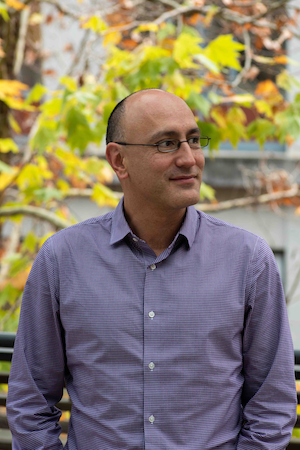
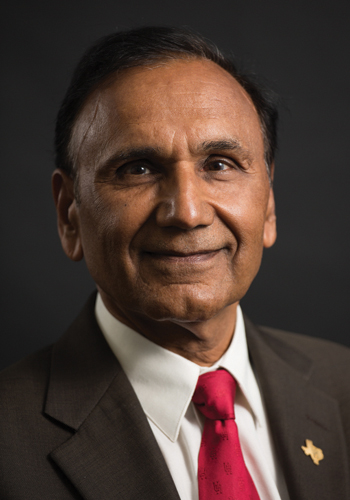
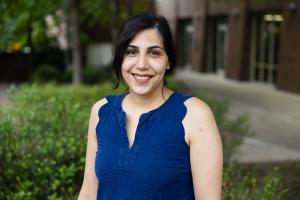
Dr. Sylvester Boadi Aboagye is an Assistant Professor in the School of Engineering at the University of Guelph, Canada. His research focuses on next-generation wireless communication and sensing systems, including reconfigurable intelligent surfaces (RIS), physical layer security, visible light communication (VLC), terahertz networks, and integrated sensing-communication frameworks. He received his Ph.D. and M.Eng. from Memorial University (Canada) and B.Sc. (Honors) from Kwame Nkrumah University of Science and Technology (Ghana). Prior to joining University of Guelph, he was a Postdoctoral Fellow at York University (2023). Dr. Aboagye's expertise includes machine learning for resource allocation, energy-efficient network design, and prototyping optical RIS systems. He currently serves as an Editor for IEEE Communications Letters and has received notable awards including the Governor General’s Gold Medal and recognition as an Exemplary Reviewer. His work addresses challenges in 6G systems, underwater communications, and sustainable network architectures.
Alvaro A. Cardenas is a Professor of Computer Science and Engineering at the University of California, Santa Cruz (UCSC), affiliated with the Erik Johnson School of Engineering and Computer Science. Previously, he held positions at the University of Texas at Dallas and conducted research at UC Berkeley and Fujitsu Laboratories. His research focuses on cybersecurity and privacy in emerging technologies, particularly cyber-physical systems like autonomous vehicles, drones, and SCADA systems controlling critical infrastructure. Education: Ph.D. and M.S. in Computer Science from University of Maryland, College Park B.S. in Computer Science from Universidad de Los Andes, Colombia Research Interests: Security of Industrial Control Systems Smart Grid and IoT Security Cyber-Physical System Exploitation Resilience in Critical Infrastructure Formal Verification of Safety-Critical Systems Awards: NSF CAREER Award 2018 Faculty Excellence in Research Award Eugene McDermott Fellow Endowed Chair IEEE TCSEC Distinguished Service Award Best Paper Awards at ACM CPS & IoT Security, IEEE Smart GridComm, and U.S. Army Research Conference Grants & Funding: Supported by NSF, ARO, AFOSR, NSA, NIST, MITRE, DHS, DoT, Google, Phoenix Technologies, and Intel. Research emphasizes practical defenses against cyber threats in critical systems. Labs/Teams: Leads the Cyber-Physical Systems Security Research Group at UCSC, focusing on innovative solutions for securing emerging technologies.
Suresh Khator is a Professor and Senior Associate Dean for Graduate Programs and Computing Facilities at the University of Houston's Cullen College of Engineering, Department of Industrial and Systems Engineering. He holds a Ph.D. in Industrial Engineering from Purdue University and has extensive experience in academia, industry, and administrative roles. His research focuses on modeling energy, healthcare, and manufacturing systems, facilities design, production planning, and project management. He has supervised 10 PhD dissertations and 37 Master's theses, and his work has been published in top-tier journals and conferences. Khator has received numerous awards, including the Fellow of IISE and multiple teaching excellence awards. His administrative roles include Director of Engineering Computing and Interim Associate Dean at the University of South Florida. He has also contributed to community initiatives, such as science fairs and outreach programs. His articles span power systems resilience, renewable energy integration, and manufacturing automation. He has led over 30 grants and contracts, including projects with the Florida Department of Transportation and utility companies.
Sujan Kumar Roy is an Assistant Teaching Professor in the Department of Computer Science at Michigan Technological University. He holds a Ph.D. in Machine Learning with Computer Engineering and Signal Processing from Griffith University, Australia, and has earned multiple academic distinctions, including the 'Award of Excellence in the Research Thesis' and consideration for the 'Chancellor's Medal for Excellence in Ph.D. Thesis 2021.' Dr. Roy's teaching focuses on Computational Intelligence, Foundations of Data Science, Machine Learning, Data Mining, and Introduction to Data Science. His research explores applications of AI, ML, and Data Science in Cybersecurity, Medical Image Analysis, Healthcare Systems, and Speech Enhancement. He has contributed extensively to speech enhancement techniques, integrating Kalman filters with machine learning and deep learning approaches. Recent research trends in his publications emphasize the development of robust algorithms for speech enhancement in noisy environments, fusion datasets for hate speech detection, and adaptive filtering methods. His work bridges signal processing and AI, aiming to improve real-time system performance and noise robustness. Awards: Award of Excellence in the Research Thesis Consideration for Chancellor's Medal for Excellence in Ph.D. Thesis 2021 In teaching, Dr. Roy emphasizes foundational concepts and their practical applications. His grants and collaborations focus on advancing AI-driven solutions for healthcare and cybersecurity challenges. He is affiliated with the Department of Computer Science at Michigan Tech, contributing to both academic and research missions.
Yue Zhao is an Associate Professor in the Department of Electrical and Computer Engineering at Stony Brook University, with an affiliated appointment in Applied Mathematics and Statistics. Prior to this, she held postdoctoral positions at Stanford University and Princeton University. She earned her Ph.D. from UCLA in 2011 and B.E. from Tsinghua University in 2006. Her research focuses on smart grid systems, renewable energy integration, machine learning applications in power systems, and game-theoretic approaches to electricity markets. Key areas include transportation electrification, demand response mechanisms, and cyber-physical security of grid infrastructure. She teaches courses on digital signal processing, convex optimization, and communication systems. Her work spans over 50 publications in top journals and conferences like IEEE Transactions on Power Systems and ACM e-Energy. Notable contributions include dynamic state estimation frameworks for inverter-based resources, incentive-compatible market mechanisms for renewable aggregation, and cyber attack detection methodologies. Dr. Zhao advises a research group focused on interdisciplinary challenges in energy systems. Current openings exist for Ph.D. students with strong analytical backgrounds. Sponsors include NSF, DOE, and industry collaborators.
Travis Wiens is an Associate Professor in the Department of Mechanical Engineering at the University of Saskatchewan. His research focuses on fluid power systems, acoustic sensing, dynamic modeling, mining mechatronics, and artificial intelligence applications in engineering. He holds a B.Sc., M.Sc., and Ph.D. in Mechanical Engineering from the same institution, completed in 2002, 2004, and 2008 respectively. His research interests emphasize innovative solutions for hydraulic control systems, pipeline resonance reduction, and mining safety through acoustic technologies. He has developed low-cost electrohydrostatic actuators and explored additive manufacturing in valve design. Notable contributions include vibrational data communication tools for extractive industries and machine learning models for mine roof stability assessment. Dr. Wiens teaches ENGC 01A - Introduction to Fluid Power Components . His work bridges theoretical fluid dynamics with practical applications in energy efficiency, structural health monitoring, and biomimetic systems. Ongoing research trends include integrating AI with hydraulic systems and advancing non-destructive testing methods for infrastructure integrity. His publications highlight interdisciplinary approaches, combining mechanical engineering principles with computational modeling, neural networks, and mechatronics. Collaborative efforts focus on mining safety, oil and gas infrastructure, and sustainable hydraulic technologies.
George K. Danns is a Professor of Sociology in the Department of Sociology and Human Services at the University of North Georgia, Gainesville Campus. Holding a PhD from SUNY Stony Brook, he has received prestigious awards including the Ford Foundation Fellowship and Complete College Georgia Champion Award. His leadership roles include Chair of UNG Faculty Senate (2015-2016), former Dean of Social Sciences at the University of Guyana, and Senior Fulbright Fellow at the University of Michigan. Ph.D. in Sociology, State University of New York at Stony Brook M.A. in Sociology, State University of New York at Stony Brook B. Soc. Sc. in Social Sciences (Distinction), University of Guyana Dr. Danns specializes in Caribbean socio-political dynamics with emphasis on Guyana, examining race/ethnic relations, political leadership, national security, and community development. His research explores intersections of identity, class, and power in postcolonial contexts, addressing critical issues like environmental disasters, homicide patterns, youth vulnerability, and gender disparities. His fieldwork combines theoretical rigor with practical applications for policy development. His 15 most recent publications (2014-2020) reveal three dominant thematic clusters: Caribbean political economy (35%), diaspora/identity studies (30%), and entrepreneurship/financial literacy (35%). The work demonstrates consistent focus on Guyana while expanding to broader Latin American and Caribbean contexts, with increasing attention to youth entrepreneurship and financial inclusion in developing economies since 2017. Ford Foundation Fellowship for Doctoral Research in Latin America and the Caribbean Complete College Georgia Champion Award (2016) Senior Fulbright Fellowship Dr. Danns has mentored students through diverse sociology courses while securing consultancy grants from major international organizations including UNICEF, UNFPA, USAID, IADB, OAS, and PAHO. His funded research focuses on social policy development, with particular emphasis on youth programs, gender initiatives, and national security frameworks for Caribbean governments. As former Director of the Center for Economic & Social Research & Action (CESRA) at the University of Guyana, he led multidisciplinary teams conducting critical studies on suicide prevention, military roles in national security, and environmental disaster response. His current UNG affiliation involves collaborative research networks addressing regional social challenges through the Sociology and Human Services department.
Emmanouel (Manos) Varvarigos is a Professor at the School of Electrical and Computer Engineering, National Technical University of Athens (NTUA), where he leads the High Speed Communication Networks Laboratory. He holds a Diploma from NTUA (1988) and an M.S./Ph.D. from MIT (1990/1992). Prior roles include Professorships at UC Santa Barbara (1992-1998) and Delft University (1998-1999), and leadership at the University of Patras (1999-2015). He has coordinated over 30 EU research projects, including H2020 initiatives like ORCHESTRA and FLEXGRID. His research focuses on optical networking, cloud computing, smart energy grids, and high-speed network protocols. He has published over 450 papers and serves on numerous conference committees. Awards include the NSF Research Initiation Award. His lab employs 5 postdocs and 10+ PhD students, addressing challenges in networking, data centers, and grid computing. Education: Ph.D., Electrical Engineering and Computer Science, MIT, 1992 M.S., Electrical Engineering and Computer Science, MIT, 1990 Diploma in Electrical and Computer Engineering, NTUA, 1988 Research Interests: Optical networking, high-speed network protocols, data center architectures, cloud computing, smart energy grids, wireless networks, and distributed systems. Grants & Projects: Coordinated 7 EU projects (e.g., FLEXGRID, ORCHESTRA) and participated in 35+ others. National projects include roles as Scientific Director of the Greek School Network and CTI’s Network Technologies Division. Labs & Teams: Directs the High Speed Communication Networks Lab (HSCNL), collaborating with global institutions on optical networks, edge cloud, and smart grids. The lab’s work includes EU-funded projects on 5G, data centers, and renewable energy integration.
Louis-A. Dessaint is a Professor at the Département de génie électrique at École de technologie supérieure (ÉTS). He holds B.Ing., M.Sc.A., and Ph.D. degrees from Polytechnique Montréal. His research focuses on power electronics, renewable energy integration, and smart grid technologies, with affiliations to the GREPCI research group. He has supervised numerous theses and projects, addressing topics like microgrid optimization, energy storage, and voltage stability. Education: B.Ing., M.Sc.A., Ph.D. (Polytechnique Montréal). Research interests include electric machines, power network dynamics, hybrid energy systems, and sustainable development. His recent work emphasizes real-time control of power systems, renewable energy integration, and smart building energy management. Publications highlight advancements in microgrid topology optimization, battery storage systems, and ADRC-based control strategies. Awards include IEEE Fellow (2013) and membership in the Canadian Academy of Engineering (2012). He has advised over 50 students and contributed to projects on smart grids, energy storage, and grid stability. His lab, GREPCI, focuses on power electronics and industrial control.
Prof. Juan Alonso is the Vance D. and Arlene C. Coffman Professor and James & Anna Marie Spilker Chair in the Department of Aeronautics & Astronautics at Stanford University. He directs the Aerospace Design Laboratory (ADL), focusing on high-fidelity computational methods for aerospace system design. His expertise spans transonic/supersonic/hypersonic aircraft, rotorcraft, and launch vehicles. Alumni include record-holding teams for human-powered watercraft and lightweight unmanned aerial vehicles. Education: PhD (1997) from Princeton University in Mechanical & Aerospace Engineering; M.A. (1993) Princeton; B.S. (1991) MIT Aeronautics/Astronautics. Research emphasizes multi-disciplinary optimization, numerical methods, and parallel computing applied to advanced aircraft design, sustainable aviation, and UAS systems. Notable contributions include computational design frameworks like SU2 and SUAVE, and initiatives in curriculum development for engineering education. Recent work focuses on: GPU-accelerated CFD solvers, multi-fidelity surrogate models (e.g., VortexNet), contrail simulation frameworks, and battery degradation modeling for electric aircraft. Active in urban air mobility and high-fidelity trajectory optimization for hypersonic systems. Labs/Teams: Aerospace Design Laboratory (ADL) leading open-source computational tools development. Involved in NASA-funded projects and industry partnerships for advanced propulsion systems.
Andreas Peter Burg is a Tenured Associate Professor at the École Polytechnique Fédérale de Lausanne (EPFL), where he leads the Telecommunications Circuits Laboratory (TCL) within the School of Engineering. He holds multiple academic and administrative roles at EPFL including Associate Professor in Teaching (SEL, EDMI, EDEE), Director of SEL Management, and Member of the Doctoral Program Committee for Electrical Engineering. Dr. Burg received his Dipl.-Ing. degree in 2000 and Dr. sc. techn. degree in 2006 from ETH Zurich. His academic career includes positions as SNF Assistant Professor at ETH Zurich (2009-2011) before joining EPFL in January 2011 as a Tenure Track Assistant Professor, where he was promoted to Tenured Associate Professor in June 2018. His research focuses on circuits and systems for telecommunications , with particular expertise in silicon implementation of communication technologies, communication algorithms optimization for hardware, low-power VLSI signal processing, and digital integrated circuits. His work bridges theoretical communication concepts with practical circuit implementations, addressing challenges in wireless and wired communication systems. His recent publications (2024-2025) demonstrate a strong focus on next-generation communication technologies including 6G systems, advanced error correction coding, wireless sensing applications, and ultra-low power circuit design. These works span multiple subfields from LDPC and polar code decoding to RF signal processing and machine learning applications in wireless systems. Willi Studer Award (2000) ETH Medal for diploma thesis (2000) ETH Medal for Ph.D. dissertation (2006) Swiss National Science Foundation Assistant Professorship grant (2008) Dr. Burg has been involved in the development of more than 25 ASICs throughout his career and co-founded Celestrius, an ETH spinoff in MIMO wireless communication. His laboratory work focuses on practical implementations of communication algorithms with emphasis on power efficiency and hardware optimization. Current research directions include 6G technologies, wireless sensing applications, and novel error correction techniques for next-generation communication systems.
Professor Kais Atallah is a Professor in Electrical Engineering at the University of Sheffield's School of Electrical and Electronic Engineering, with a secondary role as a Lecturer in Aerospace Engineering. He joined the University in 1989 as a PhD student and became academic staff in 2000. His research focuses on electromechanical energy conversion, magnetic torque systems, and applications in renewable energy, electric vehicles, and aerospace actuation. He is a member of the Centre for Research Into Electrical Energy Storage and Applications (CREESA) and leads the Electrical Machines and Drives Research Group. His research interests include novel drivetrain designs for wind turbines, flywheel systems, and fault-tolerant machine systems for safety-critical aerospace applications. He has advised multiple PhD students and contributed to over 150 publications, with recent work emphasizing magnetic gear design, high-performance ferrite machines, and modular multilevel converters. His articles explore themes like high-efficiency power transmission, magnetic gear optimization for wind turbines, and traction machine control systems. Collaborations include work on subsea ROV propulsion and flywheel energy storage. He oversees research labs focused on advanced electrical machine design and energy storage solutions.
Emilia Vann Yaroson is a Lecturer in Operations and Supply Chain Management at the Sheffield University Management School (The University of Sheffield). She holds a PhD in Operations and Information Management from the University of Bradford, an MSc in Business and Financial Economics from the University of Greenwich, and a PgCHE (Postgraduate Certificate in Higher Education). Her research focuses on leveraging emerging technologies (AI, blockchain, cloud computing, digital twins) to enhance supply chain resilience and sustainability, particularly aligned with UN SDGs related to healthcare access, environmental protection, and poverty reduction. Research Interests Pharmaceutical supply chains and resilience strategies Circular economy integration in supply chains Impact of Industry 4.0/5.0 technologies on sustainable operations Healthcare operations and quality improvement Artificial intelligence-driven decision-making in supply chains Teaching She teaches operations management, supply chain analytics, and related modules across undergraduate and postgraduate programs, including executive education. Her teaching aligns with the school’s Triple Crown accreditation, positioning it among global elite management schools. Research Group She is part of the Operations Management and Decision Sciences group, contributing to interdisciplinary projects on supply chain innovation and sustainability. Her work bridges theoretical frameworks (e.g., Complex Adaptive Systems) with practical applications in healthcare and manufacturing sectors.
Negin Alemazkoor is an Assistant Professor at the University of Virginia's School of Engineering and Applied Science, specializing in interdisciplinary research on infrastructure resilience. Her work focuses on developing AI-driven methodologies for analyzing interconnected systems like power grids, urban flood models, and transportation networks under uncertainty. Key areas include enhancing grid reliability through multi-fidelity modeling, hurricane evacuation equity analysis, and precision-compression techniques for large-scale data. She co-leads a NSF-funded initiative to democratize AI education in high schools. Her research integrates graph neural networks, physics-informed models, and machine learning to address challenges in energy systems, environmental monitoring, and disaster response. Notable projects include hurricane-induced power outage risk analysis under climate change and precision guarantees for smart-meter data analytics. She emphasizes computational efficiency and multi-fidelity approaches to balance accuracy with resource constraints. Recent contributions span AI applications in flood forecasting, renewable energy integration, and infrastructure cybersecurity. Her NSF grant aims to create inclusive AI curricula, reflecting her commitment to education and societal impact. She is affiliated with UVA Engineering’s research initiatives on resilient systems and data-driven decision-making.
Sijia Geng is an Assistant Professor in the Department of Electrical and Computer Engineering (ECE) at Johns Hopkins University (JHU) and a core researcher at the Ralph O’Connor Sustainable Energy Institute (ROSEI). She directs the Power and Energy Network Systems Analysis (PENSA) Laboratory and co-leads the NSF-funded Electric Power Innovation for a Carbon-free Society (EPICS) Center as co-PI. Her research focuses on integrating control theory, mathematical analysis, and optimization to enhance renewable energy utilization and grid resiliency. Education: Ph.D. and M.S. (ECE & Mathematics) from the University of Michigan-Ann Arbor (2016–2022), B.S. in Automation from Harbin Institute of Technology (2016). Postdoctoral work at MIT (2022) and visiting scholar roles at Purdue University (2015) and Pacific Northwest National Lab (2018). Research Interests: Dynamic analysis of inverter-based power systems, nonlinear control theory, data-driven decision-making, and multi-energy systems. Her work emphasizes achieving autonomous, resilient energy systems through advanced computational tools and theoretical frameworks. Awards: Best Paper Award at MIT/Harvard Applied Energy Symposium (2022), MIT Rising Stars in EECS (2021), Barbour Scholarship (2021), Towner Prize (2018), and Gerald and Esther Forrest Fellowship (2016). She is active in IEEE and INFORMS, organizing sessions at PES General Meeting and CISS conferences. Grants & Collaborations: Funded by NSF, DOE, MIT Energy Initiative, and industry. Leads global initiatives through EPICS, collaborating with UK, Australian, and international stakeholders. Co-leads ROSEI’s Grid pillar to advance fossil-free energy systems. Labs & Teams: Directs PENSA Lab, affiliated with JHU’s Data Science and AI Institute, Applied Mathematics & Statistics, and Computer Science departments.