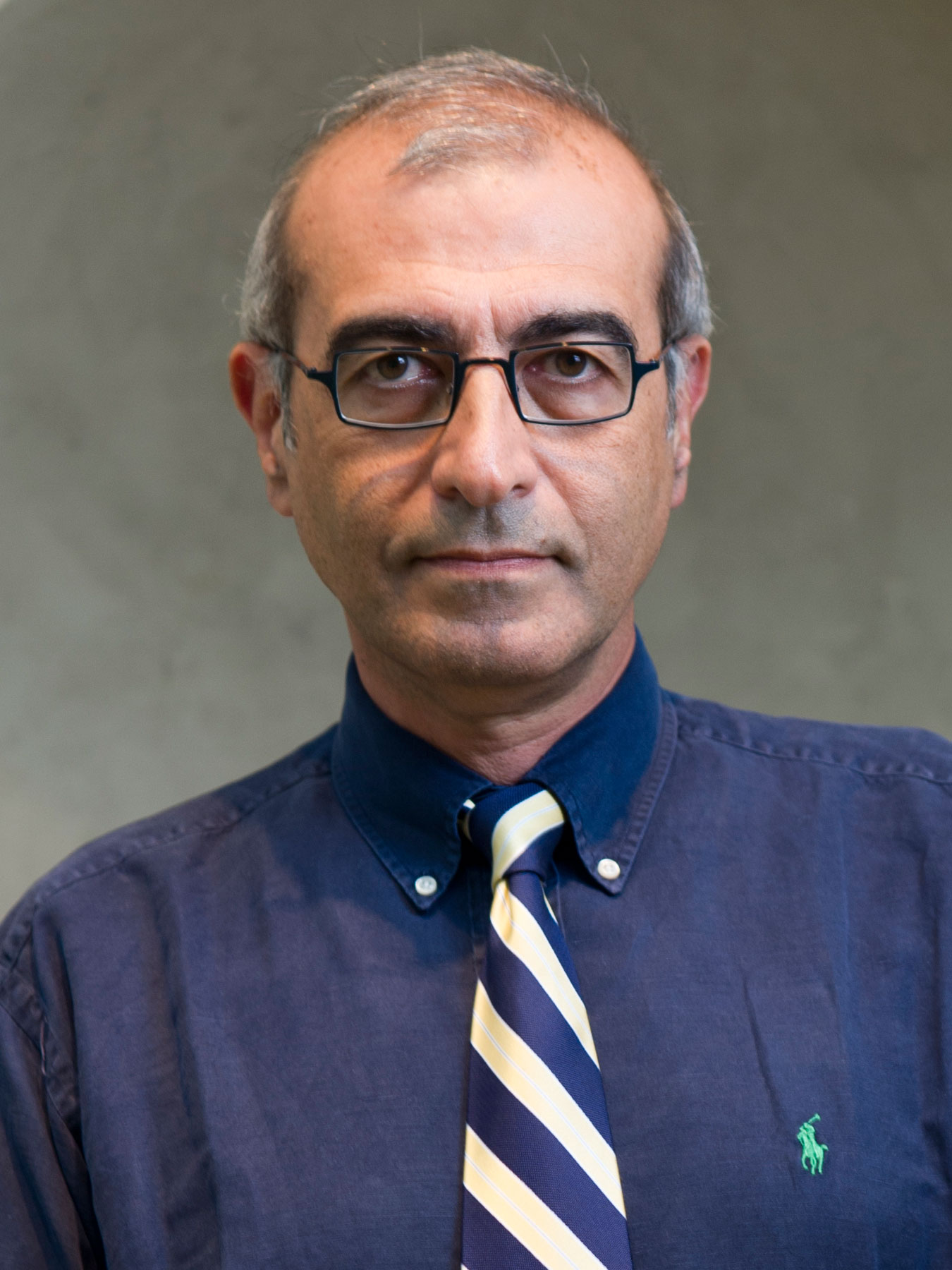
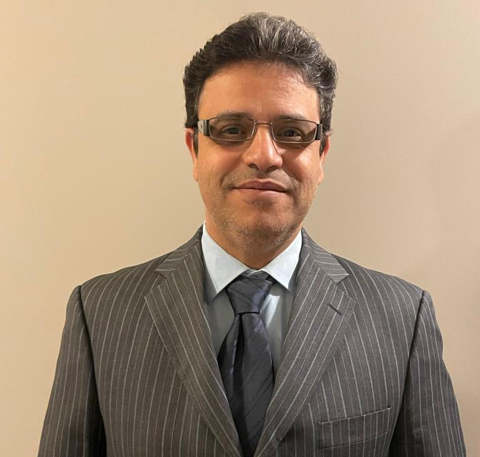
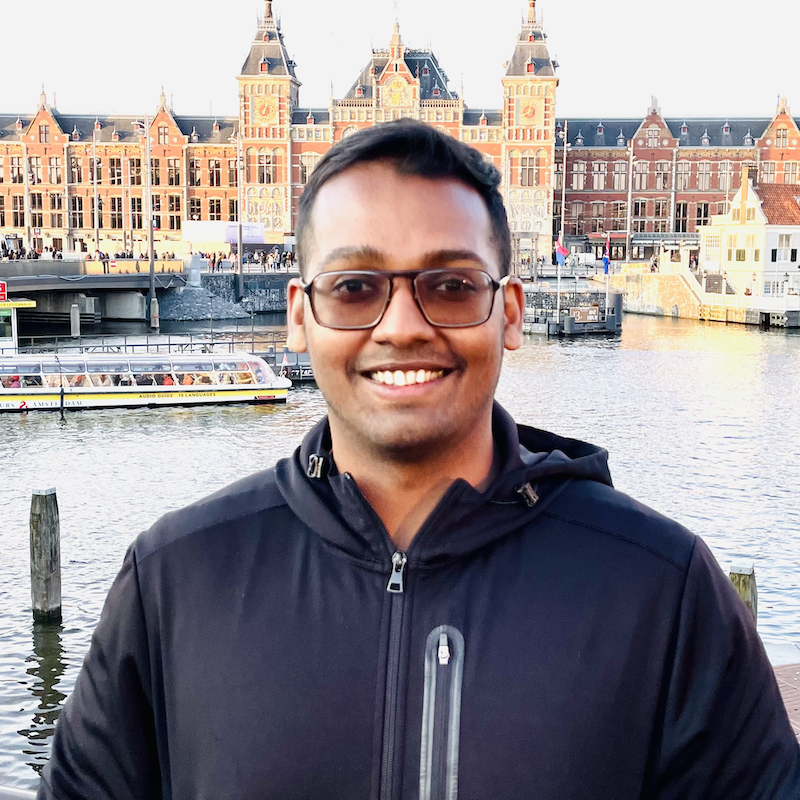
Satish C. Boregowda is a Senior Lecturer at the School of Mechanical Engineering, Purdue University in West Lafayette, Indiana. His work focuses on thermodynamics-based analysis of human physiological systems, energy systems engineering, and renewable energy integration. He is affiliated with Purdue's Mechanical Engineering department and maintains an office in POTR 322A. Education & Professional Background : While specific educational details are not provided, his long-term research contributions since 1992 indicate advanced expertise in thermodynamics, biomedical engineering, and energy systems. His career spans over three decades with continuous publication activity. Research Interests : Dr. Boregowda’s core research combines thermodynamics with human physiology, developing metrics like the Objective Stress Index (OSI) to quantify stress responses. His work also addresses energy security through renewable integration, entropy analysis in biological systems, and thermal comfort modeling. He applies constructal theory, fractional calculus, and finite element methods to model human thermal regulation and environmental interactions. Publications Trends : His articles (1992–2025) show sustained focus on: 1) Thermodynamic modeling of human stress and thermal comfort, 2) Renewable energy grid integration strategies, and 3) Advanced computational methods for physiological systems. Recent works emphasize decarbonization pathways and energy policy implications. Grants & Advising : No specific grants or advisees are listed in the provided data. His research likely involves collaborations with aerospace and environmental engineering groups given his work on thermal systems in microgravity and HVAC applications. Labs & Teams : While no specific lab affiliations are mentioned, his research aligns with Purdue’s mechanical engineering initiatives in renewable energy, biomedical engineering, and thermal systems design.
Kristian J. Hammond is the Bill and Cathy Osborn Professor of Computer Science at Northwestern University's McCormick School of Engineering. He directs both the Master of Science in Artificial Intelligence Program and the Center for Advancing Safety of Machine Intelligence (CASMI). His research focuses on artificial intelligence, natural language generation, narrative generation, conversational interfaces, and ethical AI applications across domains like law, education, and journalism. Hammond co-founded Narrative Science, leveraging AI for automated journalism from data. Education: PhD, MS, and BA in Philosophy (all from Yale University). His work spans technical innovation and societal impact, with notable contributions to AI transparency, bias mitigation, and machine learning ethics. Hammond has authored influential articles on AI governance, conversational systems, and the future of work in an automated economy. His leadership roles emphasize interdisciplinary collaboration between computer science, business, and humanities. Research highlights include developing AI systems that enhance human capabilities, exploring ethical frameworks for machine intelligence, and advancing AI safety through initiatives like CASMI. He frequently engages in public discourse via TEDx talks and commentaries on AI's societal implications, emphasizing the need for human-centered technology design.
Levi J Hargrove is an Associate Professor at Northwestern University, holding dual appointments in the Department of Physical Medicine and Rehabilitation at the Feinberg School of Medicine and the Department of Biomedical Engineering at the McCormick School of Engineering. He is also a Research Scientist at the Center for Bionic Medicine at Shirley Ryan AbilityLab. His work focuses on developing neural control systems for prosthetic limbs, particularly in myoelectric control and pattern recognition, aiming to create clinically viable solutions for amputees. Education: BScE in Electrical Engineering, University of New Brunswick, 2003 MScE in Electrical Engineering, University of New Brunswick, 2005 PhD in Electrical Engineering, University of New Brunswick, 2008 Research Interests: Signal processing, pattern recognition, myoelectric control of powered prostheses, and neural interfaces for bionic limbs. His lab translates research into clinical applications, such as the first thought-controlled bionic leg and Coapt LLC's pattern recognition systems for upper-limb prosthetics. Awards: 2017 American Academy of Orthotists and Prosthetists Research Award 2014 Department of Defense Outstanding Research Team Award 2015 Collaboration Award from Chicago Innovation Grants: Manages a $25 million portfolio from federal, military, and philanthropic sources. Key projects include NSF-funded research on human-robot interaction and DoD grants for prosthetic innovation. Labs: Leads the Regenstein Foundation Center for Bionic Medicine and collaborates with the Neurorehabilitation and Neural Engineering Lab. His work emphasizes translational research, bridging engineering and clinical practice.
Mohammad F. Islam is a Professor in the Department of Materials Science and Engineering at Carnegie Mellon University (CMU), affiliated with the College of Engineering. His research focuses on soft materials, nanomaterials, and their applications in energy, healthcare, and manufacturing. He holds the National Science Foundation CAREER Award, Alfred P. Sloan Research Fellowship, Kavli Frontiers Fellowship, and the George Tallman Ladd Research Award. His work spans advanced materials processing, sustainable energy systems, and self-healing materials. Education: Ph.D. in Physics, Lehigh University (2000) Research Interests: Additive manufacturing and nanofabrication techniques Development of smart materials with self-healing and shape-memory properties Energy storage systems using carbon nanotube aerogels Applications in biomedicine and environmental sustainability Grants & Recognition: Recipient of multiple grants from the Wilton E. Scott Institute for Energy Innovation Co-founder of Watson Nano, commercializing carbon nanotube technologies Labs & Teams: Islam Group at CMU investigating soft matter, nanomaterials, and interdisciplinary applications
Tridas Mukhopadhyay is the Deloitte Consulting Professor of e-Business at Carnegie Mellon University's Tepper School of Business, where he has served on the faculty since 1986. His academic journey at CMU progressed from Instructor of Information Systems (1986-1987) to Assistant Professor (1987-1993), Associate Professor (1993-1997), Professor (1998-present), and Deloitte Consulting Professor of e-Business (2000-present). He also served as Director of the MS in Electronic Commerce program from 1999-2004. Ph.D. in Computer and Information Systems, University of Michigan–Ann Arbor, 1987 M.B.A. in Computer and Information Systems, Indian Institute of Management Calcutta, 1981 B. Tech. in Electrical Engineering, Indian Institute of Technology Kharagpur, 1978 Professor Mukhopadhyay's research spans multiple critical areas in information systems and technology management. His work on strategic IT use examines how organizations derive business value from information technology investments. He has conducted extensive research on business-to-business commerce, particularly focusing on e-procurement systems, web-based marketplaces, and electronic intermediation models. His cybersecurity research investigates the economic aspects of cyber security, including liability mechanisms and patch release strategies. In software engineering, he has studied productivity, quality metrics, and offshore software development contracts. His most recent publications reveal several key trends in his research trajectory. There's a growing focus on digital platform economics, examining advertising models, virtual currency systems in gaming, and sharing economy dynamics. His work increasingly incorporates behavioral aspects, studying how users respond to personalized content and how backers exert control in crowdfunded projects. Methodologically, his research employs sophisticated analytical approaches including hierarchical Bayesian models, structural equation modeling, and natural experiment designs. CART Research Frontier Award, Carnegie Mellon, 2005 Distinguished Ph.D. Alum, Michigan Business School, 2004 Best Paper, International Conference on Information Systems, 2001 Best Paper, MIS Quarterly, 1995 Xerox Research Chair, Tepper School of Business, 1988-1989 Information Systems Society Distinguished Fellow, 2012 Professor Mukhopadhyay has served on numerous editorial boards including Information Systems Research (1994-2003), Management Science (1999-2003), and MIS Quarterly (1997-1999), demonstrating his significant contributions to the field. His consulting work with major organizations including Alcoa, Chrysler, Ford, General Motors, IBM, and governmental agencies like the United States Post Office and Pennsylvania Turnpike has provided practical insights that inform his academic research. He has been actively involved in university governance through committee service including the Business Technology Faculty Search Committee and the CMU Faculty Senate. His research has been supported through various industry partnerships and academic grants, though specific grant details aren't provided in the source material. His teaching focuses on Business Computing and Strategic IT courses, reflecting his expertise in both foundational information systems concepts and strategic applications of technology in business contexts.
Kwan-Wu Chin is a Professor in the School of Electrical, Computer and Telecommunications Engineering at the University of Wollongong, where he also serves as Head of Postgraduate Studies (HPS) and co-directs the Wireless Technologies Lab (WTL). His research focuses on resource allocation problems in Internet of Things (IoT) systems, maritime networks, edge computing platforms, and integrated sensing-communication systems. Chin leads an active research group currently supervising five PhD students working on UAV networks, edge computing, maritime systems, and metaverse resource allocation. He has graduated over 20 PhD students who now hold positions in academia and industry. Chin serves as editor for Elsevier Computer Communications and IEEE Internet of Things Journal. His work develops optimization techniques using graph theory, stochastic processes, and machine learning for next-generation wireless systems.
Dr. Victoria C. P. Chen is a Professor in the Industrial, Manufacturing, and Systems Engineering (IMSE) department at The University of Texas at Arlington (UTA), where she has served since 2002. She previously held positions at the Georgia Institute of Technology from 1993-2001. Dr. Chen has held several leadership roles at UTA, including Interim Department Chair (2012-2014), Director of the Center on Stochastic Modeling, Optimization, & Statistics (COSMOS) (2008-2012, and again from 2017-present), and Director of Doctoral Studies (2019-present). She was also the George & Elizabeth Pickett Professor from 2015-2017 and was inducted into the UT Arlington Academy of Distinguished Teachers in 2019. Dr. Chen is actively involved with INFORMS (Institute for Operations Research and the Management Science), where she currently serves as Secretary on the Executive Board. Dr. Chen earned her B.S. in Mathematical Sciences from The Johns Hopkins University, and her M.S. and Ph.D. in Operations Research and Industrial Engineering from Cornell University. Her academic journey includes visiting professorships at the University of Genoa, Italy, and Iowa State University. Dr. Chen's research utilizes statistical perspectives to create new methodologies for operations research problems appearing in engineering and science. Her expertise includes the design of experiments, statistical modeling, and data mining, particularly for computer experiments and stochastic optimization. Through her statistics-based approach, she has developed computationally-tractable decision-making methods for many high-dimensional complex systems. Her work spans multiple domains including sustainability, energy, water management, healthcare, and law enforcement. Specific application areas include inventory forecasting, airline optimization, water reservoir networks, wastewater treatment, air quality monitoring, green building design, nurse assignment systems, and pain management programs. Her recent publications demonstrate continued innovation in mixed integer programming for electric vehicle charging stations, vacuum ultraviolet spectroscopy prediction, and sustainable building education. Senior Member, Institute for Operations Research and the Management Sciences (INFORMS) (2024) Data Mining Prize (Lifetime Achievement Award), INFORMS Society on Data Mining (2023) College of Engineering Teaching Award, UT Arlington (2021) Third Place Award, C3.ai COVID-19 Grand Challenge (2020) Academy of Distinguished Teachers, University of Texas at Arlington (2019) George & Elizabeth Pickett Professorship (2015-2017) As an educator and mentor, Dr. Chen has advised over 25 doctoral students across diverse research topics in operations research and systems engineering. She has secured substantial research funding from multiple sources including the National Science Foundation (over $1.5 million in active projects), Environmental Protection Agency, National Institute of Justice, and industry partners like Luminant and Dallas-Fort Worth International Airport. Her current research projects focus on decision analytics for sustainable urban environments, optimization for Texas water management, and statistical methods for pain management programs. She has served as Principal Investigator or Co-PI on more than 20 externally funded research projects totaling over $3 million in funding. Dr. Chen co-founded the Center on Stochastic Modeling, Optimization, & Statistics (COSMOS) at UTA with Dr. H. W. Corley. This research center brings together faculty and students from multiple disciplines to address complex problems through advanced statistical and optimization methods. She also leads interdisciplinary research teams working on projects related to sustainable infrastructure, energy systems, and healthcare optimization, frequently collaborating with researchers from civil engineering, environmental science, and medical fields.
Yolanda Vidal Segui is an Associate Professor in the Department of Mathematics at the Universitat Politècnica de Catalunya (UPC), affiliated with the Escola d'Enginyeria de Barcelona Est (EEBE). Her research focuses on wind energy systems, predictive maintenance, and structural health monitoring of wind turbines. She leads projects in the CoDAlab and WinTurCoM research groups, specializing in data-driven models, condition monitoring, and failure prognosis. Her work integrates machine learning, mathematical modeling, and sensor technology to enhance turbine reliability and energy efficiency. Dr. Vidal holds a PhD in Applied Mathematics and has authored over 350 publications. Her contributions include advancements in SCADA data analysis, vibration-based diagnostics, and AI-driven condition monitoring systems. She has received several accolades, including the WindEurope Technology Workshop recognition and the IFIT Distinction in Mechanism and Machine Science. Her research bridges academia and industry, addressing challenges in offshore wind turbine integrity and maintenance strategies. Active in professional service, she serves on conference committees and editorial boards (e.g., Mechanical Systems and Signal Processing, Wind Energy). Her work emphasizes sustainable energy solutions and has been applied in real-world scenarios like the Alpha Ventus wind farm. She also contributes to educational initiatives, developing innovative teaching materials for engineering students.
Axel Schülzgen is a Professor of Optics at CREOL, The College of Optics and Photonics, University of Central Florida. He also holds an Adjunct Research Professor position at the University of Arizona's College of Optical Sciences. His research focuses on fiber fabrication, nano-structured fibers, nonlinear materials, and applications in fiber lasers, sensing, and communications. He earned a PhD in Physics from Humboldt-University of Berlin, Germany. His expertise spans optical fiber devices, components, and structures, with a strong emphasis on advancing high-power laser delivery and sensing technologies. Research Interests: - Development of hollow-core fibers for low-loss light transmission - Anti-resonant fiber designs for multi-mode guidance - Nonlinear optical materials for fiber lasers - Applications in fiber optic sensing and medical imaging - Disordered media imaging using optical fibers Awards & Honors: OSA Fellow (Optical Society of America) SPIE Fellow (International Society for Optics and Photonics) 2021 Excellence in Graduate Teaching Award 2015 CREOL Excellence in Research Award Advising & Labs: - Current advisees: Ameen Alhalemi, Caleb Dobias, Md Abu Sufian - Notable alumni: Xiaowen Hu (2022), Stefan Gausmann (2021), and Jian Zhao (2019) - Research Group: Focuses on fiber fabrication technology, nanotechnology in fibers, and photonics applications
Ali Abur is a University Distinguished Professor in the Department of Electrical and Computer Engineering at Northeastern University, and serves as the Northeastern Director of CURENT (a NSF/DOE Engineering Research Center). He holds a B.S. from Orta Dogu Teknik Universitesi (Turkey, 1979), and M.S. and Ph.D. from The Ohio State University (1981, 1985). Before joining Northeastern in 2005, he was a Professor at Texas A&M University. His research focuses on power system monitoring, state estimation, fault location, and electromagnetic transients modeling. He has led over 50 industry-funded research projects and authored/co-authored a seminal textbook on power system state estimation. His editorial roles include Associate Editor for IEEE Transactions on Power Systems (1999–2011) and guest editor for special issues. He organized the 2011 North American Power Symposium in Boston. Awards: 2025 IEEE PES Charles Concordia Power System Engineering Award 2023 U.S. National Academy of Engineering membership 2003 IEEE Fellow Leadership: Department Chair of Electrical and Computer Engineering at Northeastern (2005–2013) Abur’s work has advanced power grid reliability through innovations in state estimation algorithms, measurement validation, and fault detection systems. His lab collaborates closely with industry partners via CURENT, focusing on modernizing electrical grids.
Chasalevris Athanasios is an Assistant Professor at the School of Mechanical Engineering, National Technical University of Athens (NTUA), specializing in Rotordynamics and Tribology. His research focuses on nonlinear dynamics of machines, active bearings, and turbomachinery design. He holds a Ph.D. in Rotordynamics from the University of Patras (2009) and a Diploma in Mechanical & Aeronautical Engineering (2004). Research Interests: Machine Dynamics, Turbomachinery, Active Bearings, Bifurcation Analysis, Crack Detection. Teaching: Dynamics of Rotating Machines, Kinematics and Dynamics of Mechanisms, Machine Elements I. Collaborations: KIT (Germany), RPI (USA), MTU Aero Engines (Germany), and Cleveland State University (USA). Awards include the Humboldt Foundation Fellowship (2010), GE's 'Beyond and Ahead' Award (2017), and recognition as a Top 2% Scientist (2023). He has authored over 40 publications and supervised numerous graduate students. Current roles include Academic Advisor at DOATAP and Associate Editor for journals like ASME Journal of Tribology.
Huazhen Fang is an Associate Professor in the Department of Mechanical Engineering at the University of Kansas School of Engineering, where he joined in 2014. He leads the Information & Smart Systems Laboratory (ISSL) and holds a courtesy appointment in the Department of Electrical Engineering & Computer Science. His research focuses on enabling intelligence for complex systems through information-driven approaches. Dr. Fang received his Ph.D. in Mechanical Engineering from the University of California, San Diego in 2014, following an M.Sc. from the University of Saskatchewan and a B.Sc. in Computer Science & Technology from Northwestern Polytechnic University in China. He was a Visiting Faculty Fellow at Mitsubishi Electric Research Laboratories in 2022. His research interests span Systems and Control, Advanced Battery Management, Energy Storage Systems, and Robotics, with particular focus on system modeling, estimation, control design, machine learning and numerical optimization. Dr. Fang's work has significant applications in energy management, cooperative robotics, and environmental observing systems. His research has been supported by the National Science Foundation, Department of Energy, Army Research Laboratory, and Mitsubishi Electric Research Laboratories. His extensive publication record shows a clear trend toward increasingly sophisticated integration of physics-based modeling with machine learning approaches, particularly in battery management systems and autonomous vehicle control. Recent work demonstrates a growing emphasis on Bayesian inference methods, distributed control architectures, and safety-critical applications of intelligent control systems. Faculty Early Career Award from National Science Foundation (2019) University Scholarly Achievement Award (2024) Miller Professional Development Award (2022) Miller Faculty Scholar Award (2018, 2019, 2023) Wesley G. Cramer Outstanding Mechanical Engineering Faculty Award (2016) Big XII Faculty Fellowship (2015) IEEE Transactions on Transportation Electrification Prize Paper Award (2024) Dr. Fang has successfully mentored numerous graduate students through the Information & Smart Systems Laboratory, with many receiving awards for their research. His research has attracted significant funding from prestigious organizations including the National Science Foundation, Department of Energy, Army Research Laboratory, and Mitsubishi Electric Research Laboratories. He currently serves as an Associate Editor for multiple prestigious journals including Information Sciences, IEEE Transactions on Industrial Electronics, and IEEE Control Systems Letters. The Information & Smart Systems Laboratory (ISSL) under Dr. Fang's leadership has established itself as a center for cutting-edge research in information-driven smart systems. The lab focuses on pushing the frontiers of information extraction, analysis and exploitation for dynamic systems to deal with system complexity and enable system intelligence. The lab actively collaborates with industry partners and local communities, emphasizing research that serves societal needs.
Catherine Mulligan is a Distinguished Research Professor in the Department of Building, Civil, and Environmental Engineering at Concordia University, where she also serves as Director of the Concordia Institute for Water, Energy and Sustainable Systems. She was previously the Concordia Research Chair in Geoenvironmental Sustainability (Tier I) until 2021, having held this prestigious research chair since 2002 (initially as Tier II). Dr. Mulligan earned her B.Eng. and M.Eng. degrees in chemical engineering from McGill University, followed by a Ph.D. specializing in geoenvironmental engineering, also from McGill University. After 16 years working at McGill University and in industry (including positions at the Biotechnology Research Institute of the National Research Council and SNC Research Corp.), she joined Concordia University in 1999 as an Assistant Professor, was promoted to Associate Professor in 2002, and to full Professor in 2008. Her research spans multiple critical areas of environmental engineering with a focus on contamination remediation. She specializes in surfactant-enhanced washing and flushing of contaminated soils and sediments, treatment of metal-contaminated media, bioremediation techniques, and various wastewater treatment methods. Her work includes biosurfactant applications, in-situ sediment remediation, anaerobic treatment processes, membrane technologies for water treatment, and energy generation through pressure-reduced osmosis. She has developed sustainability indicators and focuses on practical applications of environmental engineering solutions. Analysis of her recent publications (2023-2025) reveals a continued leadership in environmental engineering with particular emphasis on nanotechnology applications for oil spill cleanup in sensitive coastal regions, advanced membrane technologies for water treatment and energy generation, microbially induced calcite precipitation for mining waste remediation, sustainable resource recovery approaches from waste batteries, and innovative techniques for eutrophic lake restoration. Her research demonstrates a consistent focus on practical, sustainable solutions to environmental contamination problems across diverse settings. Dr. Mulligan's scientific contributions have been recognized with numerous prestigious awards including Fellowship in the Royal Society of Canada, Canadian Academy of Engineering, Engineering Institute of Canada, and the Canadian Society for Civil Engineering. She has received the RSC Miroslaw Romanowski Medal, the Geoenvironmental Award, the A.G. Stermac Award of the CGS, and the John B. Sterling Medal of the EIC. Her Concordia-specific honors include the Provost Circle of Distinction, Concordia Sustainability Champion, and the Petro Canada Young Innovator Award (awarded twice). With over 40 years of research experience across government, industrial, and academic environments, Dr. Mulligan has supervised to completion more than 75 graduate students in Civil Engineering (MASc and PhD programs). Her research has attracted significant funding, including a $1,643,700 NSERC CREATE grant for the Institute in Water, Energy and Sustainability, which represents the first Concordia project to receive funding through this program. She has authored more than 140 refereed papers, holds three patents, and has made substantial editorial contributions as Section Editor for the Journal of Environmental Engineering, Chief Editor for Waste (MDPI), and serves on multiple other editorial boards. As Director of the Concordia Institute for Water, Energy and Sustainable Systems, Dr. Mulligan leads an interdisciplinary team focused on training students in sustainable development practices and advancing research into innovative solutions for water, energy, and resource conservation challenges. The institute represents a significant hub for environmental research and education at Concordia University.
Dr. Mohamed Youssef is an Associate Professor in the Department of Electrical, Computer and Software Engineering at Ontario Tech University. He holds a PhD (Electrical and Computer Engineering) from Queen’s University (2005). His primary affiliation is the Faculty of Engineering and Applied Science, with research focusing on propulsion systems, power electronics, railway systems, and renewable energy technologies. Education: PhD, Electrical and Computer Engineering, Queen’s University (2005) MSc, Power Electronics, Concordia University (2001) MSc, Electric Power and Machines, Ain Shams University (1999) BSc, Electric Power and Machines, Ain Shams University (1995) Research Interests: Dr. Youssef’s expertise spans propulsion systems for automotive and hyperloop technologies , power electronics for IoT and renewable energy , railway electromagnetic compatibility , and power system stability . His work emphasizes practical applications in electric vehicles, smart grid integration, and sustainable energy systems. He leads the PEDAL (Power Electronics and Drives Laboratory) at Ontario Tech. Awards and Recognition: Recipient of the NSERC Post-doctorate Scholarship (2006) Best Paper Award at IECON 2004 Award of Merit from Ontario Center of Excellence (2006) Nominated for the Howard Alper Prize (2007) Professional Activities: He serves as a reviewer for IEEE Transactions on Power Electronics , IEEE Transactions on Industrial Electronics , and others. He has held roles as Technical Chair at IEEE SEGE 2015 and Track Chair at IEEE SEGE 2016. Current affiliations include Senior Member of IEEE and Chair of the IEEE Power Electronics Chapter in Toronto. Labs and Teams: He directs the PEDAL Lab , focusing on advanced power electronics and electric vehicle technologies. Collaborations include Bombardier Transportation and Armstrong Pumps.
Tathagata Srimani is an Assistant Professor in the Department of Electrical and Computer Engineering at Carnegie Mellon University (CMU), affiliated with the College of Engineering. He previously served as a Postdoctoral Scholar in Electrical Engineering at Stanford University. His academic journey includes a Ph.D. and S.M. in EECS from MIT (2022 and 2018 respectively) and a B.Tech. in E&ECE from IIT Kharagpur (2016). Research Focus: Srimani’s work centers on nanoelectronics and transformative NanoSystems. Key areas include: Carbon nanotube field-effect transistors (CNFETs) and their monolithic 3D integration with silicon Ultra-dense 3D integration of logic and memory to address the 'memory wall' in AI/ML Technology-architecture co-design frameworks for energy-efficient computing Key Achievements: Developed first silicon fab-compatible CNFET processes (TNANO ’18, Nature ’19) Enabled CNFET RISC-V microprocessor and monolithic 3D integration with Analog Devices/SkyWater Recipient of MIT Presidential Fellowship (2016) and Morris Joseph Levin Award (2018) Teaching & Outreach: Teaches semiconductor devices and hardware design, including hands-on 'Hacker Fab' courses. Leads the NEXUS Research Group exploring heterogeneous nanomaterials (e.g., magnetic and oxide semiconductors) and thermal/power management in 3D systems. Future Directions: Expanding into probabilistic computing hardware, co-design frameworks for application-specific systems, and scaling 3D NanoSystem technologies for industrial adoption.