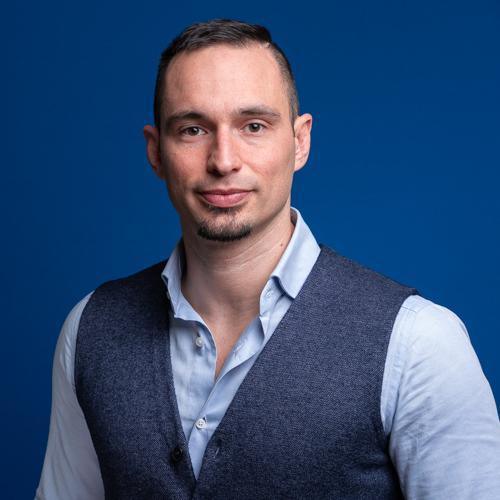
Andrea Bonfiglio is an Associate Professor at the Department of Naval, Electrical, Electronic and Telecommunication Engineering (DITEN) within the School of Engineering at the University of Genoa. His work focuses on power systems, smart grids, and renewable energy integration with a particular emphasis on innovative control strategies and energy storage solutions. Teaching areas: Electrical Systems, Industrial Measurements, Energy Security Key research themes: Smart distribution networks, synthetic inertia, microgrid control, vehicle-to-grid technologies, battery energy storage Recent work explores virtual energy partitioning, load flow optimization, and inertia allocation in transmission networks Contact: a.bonfiglio@unige.it His publications highlight advanced control methodologies using machine learning and sliding mode control for both transmission and distribution networks, with applications to renewable integration and grid stability challenges.
Sara Vinco is an Associate Professor at the Department of Control and Computer Engineering (DAUIN), Politecnico di Torino, Italy. She specializes in battery simulation, digital twins, and energy-efficient design automation for heterogeneous embedded systems, aligning with Industrial and Information Engineering (Area 0009) and ERC sectors including Computer Architecture and Machine Learning . Her research focuses on advancing cyber-physical systems through simulation frameworks like SystemC-AMS, enabling holistic modeling of analog, digital, and thermal domains. Key projects include data-driven digital twins for EV batteries and low-area digital circuits in industrial/medical applications, supported by commercial contracts such as C-based virtual prototyping. Her recent publications (2022-2023) emphasize machine learning for battery SOH/SOC estimation , energy monitoring in production lines , and multi-domain fault modeling . These works span journals like IEEE Transactions and conferences including DATE and ISLPED. Awarded the FFABR 2017 grant and IEEE FDL Best Paper Award 2011 , she also chairs editorial boards for IEEE Transactions on CAD and DATE Conference. She supervises PhD students Giovanni Pollo (Digital Circuits) and Khaled Alamin (EV Battery Twins), reflecting her leadership in smart systems design.
Stefano Grivet Talocia is a Full Professor in the Department of Electronics and Telecommunications at Polytechnic University of Turin. He serves as Director of the Doctoral School, is a member of the Interdepartmental Center SmartData@PoliTO - Big Data and Data Science Laboratory, and holds positions on the University Committee for Research and the Commission for the Promotion of Library, Archive and Museum Heritage. He is also President of the Doctoral School Council. His educational background includes a Laurea degree (summa cum laude) in Electronic Engineering (1994) and a Ph.D. in Electronic and Communication Engineering (1998), both from Polytechnic University of Torino. From 1994 to 1996, he worked at NASA/Goddard Space Flight Center in Greenbelt, MD, USA. Professor Grivet Talocia's research focuses on passive macro-modeling of concentrated and distributed interconnect structures for Signal/Power Integrity, order reduction techniques, and modeling and simulation of fields, circuits, and their interactions. His work spans several key areas including fast simulation of transmission lines (TOPLine technique), macromodeling and model order reduction, simulation methods for fields and circuits, passivity enforcement of lumped macromodels, waveform relaxation techniques, and wavelet applications. His research has significant applications in electromagnetic compatibility and signal integrity verification of complex electronic systems. His recent publications demonstrate strong trends in model order reduction techniques applied to power integrity verification, advanced macromodeling for electromagnetic compatibility, nonlinear circuit analysis, uncertainty quantification in PCB design, and power electronics modeling. These works consistently address practical engineering challenges in high-speed electronic design with emphasis on computational efficiency and accuracy. URSI Young Scientist Award (1999) Best symposium paper (2006) Three IBM Shared University Research Awards (2007-2009) IEEE Transactions on Advanced Packaging Best Paper Award (2007) Best EPEP conference paper awards (2007, 2008) Best Associate Editor Award - IEEE Transactions (2020) Best Conference Paper Award (2020) Three Intel SRS Grants (2022-2024) IEEE Fellow (2018) Professor Grivet Talocia actively supervises PhD students working on cutting-edge topics including machine learning applications in signal integrity, model reduction techniques, and electromagnetic compatibility. He has secured significant research funding through competitive grants including PRIN projects and multiple industry-sponsored research contracts with major technology companies such as IBM, Intel, Nokia, Hitachi, and Infineon. His technology transfer activities include co-founding the spin-off IdemWorks (acquired by CST in 2016) and maintaining active collaborations with industry partners. He leads the EMC Group (Electromagnetic Compatibility) within the Department of Electronics and Telecommunications and has developed the autoCircuits web service for automated generation of circuit theory problems. His research has been recognized by inclusion in the top 2% worldwide researcher catalog (Stanford) since 2019.
Matteo Nardello is a researcher affiliated with the Department of Industrial Engineering at the University of Trento. His work focuses on embedded systems, IoT, and energy harvesting technologies for sustainable applications. Current academic affiliation: Department of Industrial Engineering, University of Trento Research interests: IoT, embedded systems, energy harvesting, machine learning, cyber-physical systems Contact: matteo.nardello@unitn.it His research integrates hardware-software co-design for batteryless IoT systems, with applications in smart agriculture, industrial monitoring, and autonomous vehicles. Recent work explores deep learning at the edge, energy-efficient sensor networks, and microbial fuel cells for self-powered devices. Key article trends highlight a focus on sustainable power solutions, wireless sensor networks, and machine learning optimization for constrained environments. He contributes to courses on embedded systems, IoT, and AI-powered industrial applications at the University of Trento.
Eleonora Vacca is a PhD student and Research Fellow in the Department of Automatic Control and Computer Science (DAUIN) at the Polytechnic University of Turin. She holds a B.S. in Electronic Engineering from the University of Palermo (2018) and an M.S. in Electronic Engineering-Embedded Systems from Politecnico di Torino (2021). Her research focuses on digital hardware design, reliability engineering, reconfigurable devices, and AI applications in aerospace and safety-critical systems. She is a member of the Aerospace and Safety Computing Lab and the CAD - Electronic CAD & Reliability Group (DAUIN). Her work addresses challenges such as radiation effects mitigation in space missions, fault-tolerant AI accelerators, and real-time anomaly detection in satellite telemetry. She has contributed to projects like the RAMSES CubeSat-1 Development (2025-2026), funded by commercial contracts. In 2024, she won the Best Student Paper Award at the NEWCAS Conference for her research on radiation effects in space missions. Vacca collaborates on teaching, including assisting in the course 'Electronic Calculators' for Computer Engineering students. Her recent publications explore AI resilience in RISC-V ecosystems, radiation environment analysis for space missions, and gesture recognition systems for smart cities. She actively contributes to conferences such as the ACM International Conference on Computing Frontiers and the IEEE International Smart Cities Conference.
Gianfranco Chicco is a Full Professor at the Politecnico di Torino , Italy, within the Department of Energy (DENERG). He serves as Scientific Director of the Electrical Power Systems research group and the Turin unit of the ENSIEL Consortium. A Fellow of IEEE (since 2018), he has held editorial leadership roles as Editor-in-Chief of Sustainable Energy, Grids and Networks and Subject Editor of Energy , while chairing major conferences like IEEE ISGT Europe 2017 and UPEC 2020. Education : Laurea (cum laude) in Electrical Engineering (1987), Ph.D. in Electrical Engineering (1992), Doctor Honoris Causa (2017, Polytechnic University of Bucharest; 2018, Technical University 'Gheorghe Asachi' of Iasi). Research Interests : Focus on power transmission and distribution systems , distributed energy resources , and multi-energy smart grids , with applications in artificial intelligence , load management , and power quality . His work addresses technical, economic, and environmental aspects of distributed generation and smart grid sustainability . Publications Trends : Recent articles emphasize photovoltaic power optimization , dynamic grid modeling , and multi-energy system coordination , reflecting expertise in renewable integration , clustering algorithms , and adaptive control . Key subfields include voltage stability , load forecasting , and blockchain for energy trading . Awards : IEEE Fellow (2018-) Best Paper Awards at SEST (2018, 2020) Doctor Honoris Causa (2017, 2018) 'Giancarlo Vallauri' Degree Prize (1988) Advising and Grants : Supervises PhD students in power converters , renewable integration , and high-voltage measurement methodologies . Leads European projects like H2020 MIGRATE and OSMOSE, focusing on grid resilience , clustering-based network planning , and multi-energy sustainability .
Riccardo Raheli is a Full Professor at the University of Parma , Department of Engineering and Architecture, with a career spanning over three decades in Information and Communication Technologies (ICT). He has served as Chair of the Councils for Telecommunications and Communication Engineering programs, and as representative of the University of Parma in CNIT and its Members' Assembly. Education: Laurea in Electronic Engineering (University of Pisa, 1983), M.Sc. in Electrical and Computer Engineering (University of Massachusetts, 1986), Postgraduate Diploma (Scuola Superiore Sant'Anna, 1987) Key Roles: President of Degree Councils (2002-2018), CNIT Committee Member (2000-2005), Editorial Board member for IEEE Transactions, Springer and MDPI journals His research bridges telecommunications , digital signal processing , and healthcare applications , producing extensive international publications and industrial patents. He has co-authored monographs including Detection Algorithms for Wireless Communications (Wiley, 2004) and LDPC Coded Modulations (Springer, 2009). Recent article trends show interdisciplinary work in automotive stress monitoring (IoT/Matlab-based systems), video processing for healthcare (neonatal seizures, respiratory monitoring), and acoustic field control (microphone virtualization, personal sound zones). His work spans machine learning applications in automotive systems, stochastic acoustic modeling , and power-line communications . Scientific Leadership : Co-Chair for IEEE conferences (ICC 2010, GLOBECOM 2011, ISPLC 2020) Editorial roles in 7+ international journals Grants & Collaborations : Led industrial patents in communications systems Coordinated CNIT Technical Reports series (2025) He teaches Wireless Communications and Digital Signals Laboratory , emphasizing Matlab/Simulink proficiency. His laboratory sessions focus on practical implementation of signal processing algorithms, requiring full software installation on personal devices.
Stefano Grivet-Talocia is a Full Professor at the Department of Electronics and Telecommunications at the Polytechnic University of Turin, where he also serves as Director of the Doctoral School and President of the Doctoral School Council. He is a member of the Interdepartmental Center SmartData@PoliTO - Big Data and Data Science Laboratory, the University Committee for Research, Technology Transfer and Services to the Territory, and the Commission for the Promotion of Library, Archive and Museum Heritage. His academic career spans over two decades at Politecnico di Torino, where he has established himself as a leading researcher in electromagnetic modeling and signal integrity. Grivet-Talocia earned his Laurea degree (summa cum laude) in Electronic Engineering in 1994 and his Ph.D. in Electronic and Communication Engineering in 1998, both from the Polytechnic University of Turin. Between 1994 and 1996, he conducted research at NASA/Goddard Space Flight Center in Greenbelt, Maryland. His educational background laid the foundation for his expertise in electromagnetic modeling, wavelet analysis, and signal processing. His research focuses on behavioral modeling, electromagnetic compatibility, macromodeling, model order reduction, numerical modeling, passivity, power integrity, signal integrity, transmission lines, and wavelets . Grivet-Talocia is particularly renowned for his work on passive macromodeling of interconnect structures, development of the TOPLine technique for transmission line simulation, and pioneering contributions to passivity enforcement algorithms. He has co-authored the first book entirely dedicated to Macromodeling (2016) and developed innovative approaches to waveform relaxation and wavelet-based signal processing. His recent publications (2024-2025) demonstrate continued leadership in model order reduction, with significant contributions to data-driven modeling of linear and nonlinear systems, power integrity analysis, and electromagnetic compatibility. His work spans both theoretical advances in numerical methods and practical applications in circuit design, with strong industry relevance particularly for semiconductor and electronic design automation companies. IEEE Fellow (2018-present) Three Intel SRS Grants (2022-2024) Three IBM SUR Grant Awards (2007-2009) Best Associate Editor Award - IEEE Transactions on Components, Packaging and Manufacturing Technology (2020) Multiple Best Conference Paper Awards (2006-2020) URSI Young Scientist Awards (1999) Ranked among the "top 2% worldwide researchers" (Stanford) since 2019 Grivet-Talocia actively supervises doctoral students including Michele Cusano, Sara Paknezhad Panahi, Antonio Carlucci, and Kun Zhao. He has secured numerous research grants from competitive national calls (PRIN) and commercial contracts with industry partners including Intel, IBM, Nokia, Hitachi, Infineon, and Cadence. His technology transfer activities include co-founding the spin-off IdemWorks (2007-2016), which was acquired by CST in 2016. He also developed the autoCircuits web service for automated circuit problem generation, widely used in electrical engineering education. He leads the EMC Group (Electromagnetic Compatibility) at DET and has been instrumental in establishing the Compact Dynamical Modeling research area. His work has practical applications in high-speed electronics design, with algorithms embedded in commercial tools like IBM PowerSPICE. Grivet-Talocia maintains strong industry connections through his research projects and serves as Associate Editor for IEEE Transactions on Components, Packaging and Manufacturing Technology.
Massimo Canale is a Tenured Associate Professor at the Department of Electronics and Telecommunications (DET) of Politecnico di Torino , and a member of the CARS@PoliTO Interdepartmental Center for Automotive Research and Sustainable Mobility. His academic career spans over two decades, focusing on control systems engineering with applications in automotive technology. Scientific Branch: Systems and Control Engineering (IINF-04/A) ERC Sectors: Automotive Engineering, Control Engineering, Control Theory Dr. Canale's research bridges theoretical advancements in Model Predictive Control (MPC) with practical applications in autonomous vehicles , hybrid/electric propulsion , and active suspension systems . His work integrates reinforcement learning and dynamic programming for optimizing vehicle performance and energy efficiency. Recent publications demonstrate trends in autonomous driving architectures (2024), sliding mode control for highway scenarios (2024), and energy management for sustainable mobility (2023-2024). He has developed patented solutions for semi-active suspension control and autonomous vehicle guidance. Award: IEEE Transactions on Control Systems Technology Outstanding Paper Award (2011) Editorial Roles: Associate Editor, IEEE Open Journal of Control Systems (2022–present) Dr. Canale supervises PhD students like Francesco Cerrito and teaches courses on digital control technologies , automatic control , and reinforcement learning at Politecnico di Torino. His research is funded through competitive grants (e.g., MPC4AVP 2021-2022) and commercial contracts (AD Shuttle 2024).
Luciano Lavagno is a Full Professor at the Department of Electronics and Telecommunications, Polytechnic University of Turin, with over two decades of academic and research contributions. His work bridges hardware acceleration, low-power electronics, and intelligent system design. Research Focus: Hardware-accelerated machine learning, high-level synthesis (HLS) for FPGA/ASIC, heterogeneous CPU/GPU/FPGA platforms Key Projects: SPACE (predictable acceleration), REBECCA (secure AI acceleration), HPC-National Center (quantum computing), and oral history preservation via "Ti racconto una storia" initiative His recent publications analyze CNN inference optimization, subgraph isomorphism, and superword-level parallelism exploitation. Lavagno supervises multiple PhD students working on FPGA acceleration, neural network hardware, and embedded systems. As Principal Investigator for national and EU-funded projects (PRIN, JTI-ECSEL, PNRR), he drives advancements in sustainable computing infrastructure. His patented technologies include MIx&Latch timing methodology, capacitive sensing innovations, and 5G acceleration frameworks.
Marco Paggi is a Full Professor of Structural Mechanics at the IMT School for Advanced Studies Lucca, Italy, since 2017. He previously held academic roles at Politecnico di Torino (Assistant Professor, 2007-2013) and has been an Alexander von Humboldt Fellow at Leibniz University Hannover. His research focuses on fracture mechanics, contact mechanics, and computational methods applied to renewable energy systems, composite materials, and multi-scale modeling. Key Themes: Fracture propagation, contact interfaces, phase field modeling, photovoltaic durability, and material heterogeneity. Awards: Stanford Top 2% Scientists (2020-2024) Research.com Top Scientists (2022-2024) European Structural Integrity Society Young Scientist Award (2010) Publications: His work spans tribology, computational fracture mechanics, and material degradation, with recent emphasis on phase field modeling for quasi-brittle materials and photovoltaic systems. He has pioneered methods for multi-scale and multi-physics analysis of structural systems. Mentorship: Supervised 17 PhD graduates and 14 postdocs, including award-winning researchers like Pietro Lenarda and Zeng Liu.
Maurizio Martina is a Full Professor at the Department of Electronics and Telecommunications (DET) of Politecnico di Torino. He is a member of the Interdepartmental Center PEIC - Power Electronics Innovation Center and serves as an Associate Editor for the IEEE Transactions on Circuits and Systems I (2018-2023). His research focuses include: Digital circuits and signal processing Machine learning hardware architectures RISC-V extensions and post-quantum cryptography VLSI design for edge computing and IoT Recent publications emphasize cryptographic hardware implementations (CHIMERA, Keccak co-processors), RISC-V integration methodologies, and privacy-preserving neural network frameworks. His work spans VLSI architectures for video processing, bio-inspired electronics, and error correcting codes, with applications in cybersecurity, robotics, and biomedical systems. Scientific Recognition : Premio Nazionale Innovazione (2013) Premio dei Premi (2014) He supervises 12 PhD students across cycles 35-40 in Electrical, Electronics and Communications Engineering, including: Valeria Piscopo (2024-in progress) Alessandra Dolmeta (2022-in progress) Luigi Giuffrida (2022-in progress) Walid Walid (2019-2023) As part of the VLSILAB Group , his research explores hardware accelerators for machine learning, post-quantum cryptography on RISC-V, and bio-inspired embedded systems. Teaching activities include courses on Integrated Systems Architecture and Hardware & Wireless Security at Politecnico di Torino and Università di Pavia.
Marco Pirola is a Full Professor at the Department of Electronics and Telecommunications (DET) of the Polytechnic University of Turin, Italy. He is a member of the Interdepartmental Center 'CleanWaterCenter@PoliTo' and actively contributes to research in high-frequency electronics and microwave engineering. His work focuses on power amplifiers, device characterization, and advanced microwave circuit design. Research Interests: Microwave power devices, GaN technology, 5G/mm-Wave applications, space communications, and smart pipeline monitoring systems. Awards: IEEE Fellow (since 2019), IEEE Senior Member. Recent Publications address topics like Ka-band MMIC amplifiers for SAR systems, broadband Doherty amplifiers using GaN, and harmonic analysis of current-mode power stages. His projects include STARGATE (European GaAs power architectures) and Millimetre-Wave GaN Radar for UAV detection. Teaching: He leads courses on 'Radio Frequency Integrated Circuits' and 'Advanced Devices for High Frequency Applications' at the Polytechnic University of Turin. Supervised PhD students include Wenjun Zhang and Abbas Nasri, who worked on III-V HEMT circuits and GaN power amplifiers.
Gianluca Setti is a Full Professor at the Department of Electronics and Telecommunications (DET) at Polytechnic University of Turin, where he has been serving since 2017. He previously held positions at the University of Ferrara from 1997 to 2017. His institutional roles include being the Contact Person for the Research Quality Evaluation process, Member of the Interdepartmental Center SmartData@PoliTO - Big Data and Data Science Laboratory, and Member of the University Quality Assurance Committee. He serves as Editor-in-Chief of the Proceedings of the IEEE, the first non-US editor to hold this position. Dr. Setti's research spans multiple interdisciplinary fields including machine learning, artificial intelligence, big data analytics, Internet of Things, biomedical signal processing, power electronics, and electromagnetic compatibility. His work bridges theoretical foundations with practical applications, particularly focusing on compressed sensing, neural networks, and circuit design for specialized applications. His research has significant implications for healthcare, sustainable infrastructure, and next-generation electronics. His publication record reveals a consistent trajectory from foundational work in chaotic systems and neural networks to contemporary applications in AI, IoT, and edge computing. The most recent publications demonstrate his focus on anomaly detection at the edge, neural oracles for biosignal processing, and power electronics innovations. His work shows strong integration between theoretical signal processing and practical circuit implementation. 1998 Caianiello prize (best Italian Ph.D. thesis on Neural Networks) IEEE Fellow (2006) IEEE Circuits and Systems Society Distinguished Lecturer (2004, 2015) 2004 IEEE CAS Society Darlington Award 2013 IEEE CAS Society Meritorious Service Award 2013 IEEE CAS Society Guillemin-Cauer Award 2019 IEEE Transactions on Biomedical Circuits and Systems best paper award Multiple best paper awards at major conferences including ECCTD2005, EMCZurich2005, ISCAS2011, PRIME2019, and EMCCOMPO2019 Dr. Setti has supervised numerous PhD students across various research domains including electromagnetic compatibility, signal and power integrity, communication networks, mechatronics and robotics. His research is supported by significant funding including national PRIN projects, EU-funded JTI-ECSEL initiatives, and commercial contracts. He leads the VLSILAB Group at DET, focusing on circuit architectures, embedded systems, and AI applications. His current projects include DECORI (anomaly detection), StorAIge (embedded storage for AI), PROGRESSUS (energy infrastructure), CONNECT (smart grid), and CONVERGENCE (wearable healthcare applications).
Alberto Macii is a Full Professor in the Department of Control and Computer Science (DAUIN) at Polytechnic University of Turin. He is also a member of the Interdepartmental Center IAM@PoliTo - Integrated Additive Manufacturing and serves on two colleges: College of Computer, Film and Mechatronics Engineering and College of Mechanical, Aerospace and Automotive Engineering. His research interests include: Digital circuits and systems Electronic systems, modeling, and simulation Energy-efficient circuits and systems Energy management and battery systems Embedded systems and cyber-physical systems Low energy building technologies His work aligns with several Sustainable Development Goals including affordable and clean energy (Goal 7), industry innovation and infrastructure (Goal 9), and sustainable cities and communities (Goal 11). His publication record shows a consistent focus on energy efficiency in electronic systems spanning over two decades, with particular emphasis on battery modeling and power management. Recent work has expanded into environmental applications with transformer neural networks for flood forecasting, demonstrating the evolution of his research into new application domains while maintaining core expertise in energy optimization. His scientific awards include: Best paper award ACM/IEEE Great Lakes Symposium on VLSI (2008) IEEE Fellow (2007-) Senior Member IEEE He has served as Editor-in-Chief for the Journal of Embedded Computing (2005) and as Program Chair for EUC2005: Embedded & Ubiquitous Computing. Professor Macii has advised PhD students including Alberto Bocca (2019-2023) whose thesis focused on compact modeling techniques for energy analysis and optimization of complex systems. He has led numerous research projects including CANP (2018-2020), R3-PowerUP (2017-2021), SERENA (2017-2020), AMable (2017-2021), and STAMP (2016-2019), demonstrating sustained research leadership across multiple funding mechanisms. He is active in the EDA - Electronic Design Automation research group and LAB 4 research laboratory at DAUIN, with research spanning VLSI-CAD, Smart City technologies, and Industry 4.0 applications. His work bridges theoretical computer engineering with practical applications in energy conservation across multiple domains.