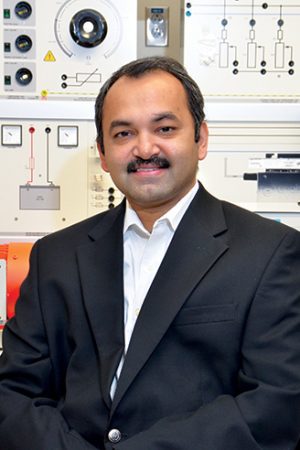
Dr. Madhav Manjrekar is an Associate Professor in the Department of Electrical and Computer Engineering at the University of North Carolina at Charlotte. He earned his Ph.D. from the University of Wisconsin–Madison in 1999. His research focuses on power electronics applications in utility systems, renewable energy interfaces, and cybersecurity of electricity infrastructure. Key areas include power quality improvement in microgrids, high-voltage direct current (HVDC) transmission, and advanced electrical machine design for electric vehicles and wind energy systems. His work emphasizes innovative solutions for energy storage integration, grid resiliency, and fault-tolerant power systems. Recent publications highlight advancements in DSTATCOM for microgrids, solid-state circuit breakers, and doubly salient electrical machines. He has contributed to projects like the US-Caribbean Super Grid and HVDC interconnectors for offshore renewable energy. Dr. Manjrekar’s research also addresses cybersecurity vulnerabilities in power infrastructure and explores next-gen semiconductor technologies like SiC MOSFETs. His interdisciplinary approach bridges power electronics, machine design, and grid stability, with applications in both academic and industry settings.
Gabriel Alfonso Rincon-Mora is the Motorola Solutions Foundation Professor at the Georgia Institute of Technology's School of Electrical and Computer Engineering. A Fellow of the National Academy of Inventors, IEEE, and IET, he specializes in analog/power integrated circuits, energy-harvesting systems, and microelectronics. With over 200 articles, 44 patents, and 12 books, his work has produced 26 commercial power-chip products. His research spans: Analog and power-management ICs for efficient energy conversion Self-sustaining microsystems powered by thermal, mechanical, and environmental sources Nano-scale circuit designs for biomedical and wireless sensor applications Recent publications focus on piezoelectric energy harvesting, battery charging optimization, and low-power CMOS designs, demonstrating consistent innovation in power efficiency and miniaturization. Awards include the IEEE Charles A. Desoer Technical Achievement Award, National Hispanic in Technology Award, and recognition as one of "The 100 Most Influential Hispanics." He directs research in power IC design and mentors students through the Georgia Tech Analog Consortium. His laboratory develops integrated solutions for energy-constrained applications, including collaborations with industry partners like Texas Instruments.
Dr. Hongye Zhang serves as a Lecturer in Superconducting and Cryogenic Electric Machines at the School of Engineering, University of Edinburgh, while maintaining a Visiting Research Fellow position at the University of Manchester. He actively contributes to the European Society for Applied Superconductivity (ESAS) as a Board Member and chairs the international HTS 2026 workshop. His educational foundation includes: BSc and MSc in Electrical Engineering from Xi’an Jiaotong University (2015, 2018) Diplôme d’ingénieur (MEng) from École Centrale de Lyon (2018) PhD in Applied Superconductivity from the University of Edinburgh (2021) Dr. Zhang’s research centers on decarbonizing transport through superconducting/cryogenic electric machines for hydrogen-powered aircraft, integrating artificial intelligence with superconductor technology and cryogenic techniques. His work targets net zero emissions by developing high-power-density propulsion systems that leverage hydrogen energy and advanced numerical modeling of superconductors. Analysis of his 2022-2025 publications reveals dominant themes in superconducting machine design for wind energy and electric aviation, with significant contributions to loss mitigation, flux pump technology, and trapped field magnet applications. His research bridges fundamental superconductor characterization with practical system integration for renewable energy. Recognized with the 2021 IEEE Council on Superconductivity Graduate Study Fellowship, his professional engagements include: Early Career Editorial Board Member for Elsevier’s Superconductivity journal Technical Editor for IEEE Transactions on Applied Superconductivity Program Committee Member for SMT 2023 He leads critical research within the £54-million H2GEAR project developing hydrogen-electric aircraft propulsion, while teaching Power Engineering 2 and Electrical Machines courses. His advisory roles span doctoral supervision and industry collaboration through Energy Systems research institute. Based at the University of Edinburgh’s Faraday Building, Dr. Zhang directs a research group focused on hydrogen energy applications and superconducting machine testing, with strong ties to the H2GEAR consortium and ESAS working groups.
Minjie Chen is an Associate Professor of Electrical and Computer Engineering and the Andlinger Center for Energy and the Environment at Princeton University, serving as Acting Associate Director for Research at the Andlinger Center. He leads the Princeton Power Electronics Lab (PowerLab), which focuses on developing fundamental and novel power electronics solutions for a wide range of applications from mW-scale energy harvesting to MW systems in renewable energy integration. Dr. Chen received his Ph.D. in Electrical Engineering and Computer Science from MIT in 2015 and his B.S. in Electrical Engineering from Tsinghua University in 2009. Before joining Princeton as an Assistant Professor in February 2017, he was a postdoctoral associate at MIT Research Laboratory of Electronics. His research spans power electronics, magnetics design, and machine learning applications in energy systems. The PowerLab develops advanced power conversion architectures that enable order-of-magnitude higher power density through high-frequency designs, addressing circuit timing, parasitics, magnetics, and thermal management challenges. Their work targets applications ranging from portable devices to data centers and renewable energy systems. The research group has produced a remarkable series of high-impact publications, with seven IEEE Transactions on Power Electronics Prize Papers in seven consecutive years (2016-2023). Their recent work increasingly integrates machine learning techniques with power electronics, exemplified by the MagNet project which redefines how power magnetics are studied and modeled. NSF CAREER Award, 2019 IEEE PELS Richard M. Bass Outstanding Young Power Electronics Engineer Award, 2023 Power of Associations Silver Award from ASAE for MagNet project, 2024 Multiple IEEE Transactions on Power Electronics Prize Papers (2016-2023) Princeton Engineering Commendation List for Outstanding Teaching (2019, 2020) Dr. Chen advises approximately 15 graduate students who have received numerous awards including the IEEE PELS John G. Kassakian Fellowship, Princeton SEAS Honorific Fellowship, and multiple IEEE conference best paper awards. His research is supported by significant grants from NSF, DOE ARPA-E, Princeton Innovation Fund, C3.ai DTI, and industry partners including Intel, Google, and pSemi. The lab's MagNet project has become a major international initiative with a $60,000 prize pool challenge. The PowerLab maintains strong industry connections and has launched several collaborative projects with Intel, Google, and pSemi. Their MagNet project has evolved into an international challenge with participation from over 40 teams worldwide, demonstrating the growing impact of their approach to machine learning for power magnetics modeling.
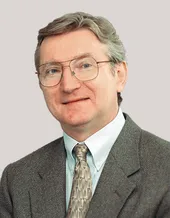
Professor Grahame Holmes is an Honorary Professor in the School of Engineering at RMIT University, Australia. His expertise spans electrical energy conversion, smart energy systems, renewable energy integration, power electronics, and grid infrastructure. He focuses on advancing technologies for sustainable energy storage, grid stability, and high-efficiency power conversion. Research Interests : Electrical and Electronic Engineering, Communications Technologies, Power Electronics, Renewable Energy Systems, and Grid Integration Solutions. His work emphasizes practical applications such as hydrogen energy storage systems, grid-interactive inverters, and modular multilevel converters. Recent Contributions : Prof. Holmes has published extensively on topics like advanced PWM techniques, resonant current controllers, and DC transformer designs. His research bridges theoretical advancements with real-world implementations, addressing challenges in smart grid stability and high-frequency power conversion. Advising & Grants : Supervised projects include 'Hydrogen Energy Storage System for Nanogrid' (2015) and 'Synchronised Control of Grid-Interactive Inverters' (2015). While specific grant details are not listed, his work aligns with major themes in sustainable energy research. Labs & Collaborations : Engages in collaborative research through RMIT's facilities, focusing on hardware-software co-simulation frameworks and FPGA-based real-time systems.
Jun Liu is an Assistant Professor in the Department of Mechanical and Aerospace Engineering at the School of Engineering and Applied Sciences, University at Buffalo. His research focuses on advanced energy materials, nano/micro-mechanics, and self-powered systems, with applications in triboelectric energy harvesting and scanning probe microscopy. Education: PhD, Materials Engineering, University of Alberta (2018) MS, Materials Science, Shanghai University (2015) BE, Materials Science and Engineering, Nanchang University (2012) Research Interests: Development of tribovoltaic and triboelectric systems for self-powered electronics Mechanical energy harvesting via dynamic heterojunctions and Schottky contacts 3D-printed hydrogel structures for energy absorption and flexible electronics Nanoscale characterization using atomic force microscopy Design of nanocomposite sensors and catalytic materials Publication Trends: His work emphasizes triboelectricity, nanoscale energy conversion, and sustainable materials. Recent articles explore bionic tactile sensing, tunable hydrogels, and quantum dynamics in sliding interfaces. Awards: SONY Faculty Innovation Award (2021) Nature Springer MINE Young Scientist Award (2020) International Contest of Applications in Nano/Micro Technology Prize (2013) Laboratory: Advanced Energy Materials and Nanomechanics Lab at University at Buffalo.
Wolfgang Porod is a Professor of Electrical Engineering and holder of the Frank M. Freimann Chair at the University of Notre Dame. He is also a Hans Fischer Senior Fellow at the TUM Institute for Advanced Study (TUM-IAS) since 2009, affiliated with the Nanoimprint and Nanotransfer Focus Group led by Paolo Lugli. His research focuses on nanoelectronics and quantum devices, notably co-inventing the Quantum-Dot Cellular Automata (QCA) framework, a molecular-scale information processing paradigm. Porod earned his Diplom (M.S.) and Ph.D. from the University of Graz, Austria, and held postdoctoral roles at Colorado State and Arizona State Universities before joining Notre Dame in 1986. He directs Notre Dame’s Center for Nano Science and Technology, advancing interdisciplinary nanotechnology research. His academic accolades include Fellowships from the AAAS (2005) and IEEE (2001), and teaching awards such as the Kaneb Teaching Award (2005) and the Ruth and Joel Spira Award (2000). Porod’s work bridges quantum physics and engineering, with applications in low-power computing, spintronics, and nanoscale device fabrication. At TUM-IAS, he collaborates on nanoimprint lithography and nanotransfer technologies, advancing scalable nanomanufacturing methods.
Azad J Naeemi is a Professor holding the Dean's Professorship in the School of Electrical and Computer Engineering at the Georgia Institute of Technology. He serves as Editor-in-Chief of the IEEE Journal on Exploratory Computational Devices and Circuits and Associate Director for Computation of the NSF-supported National Nanotechnology Coordinated Infrastructure (NNCI). His educational background includes a B.S. in Electrical Engineering from Sharif University (1994) and M.S./Ph.D. in Electrical and Computer Engineering from Georgia Tech (2001/2003). Prior to academia, he worked as a design engineer in Tehran (1994-1999) and as a research engineer at Georgia Tech's Microelectronics Research Center (2004-2008). Professor Naeemi's research spans nanotechnology with focus on emerging nanoelectronic devices, spintronics, ferroelectric devices, and design technology co-optimization for CMOS/beyond-CMOS technologies. His work bridges materials, devices, circuits, and systems, particularly investigating integrated circuits based on nanoscale devices and interconnects. Educational research includes experiential learning environments for engineering education. Recent publications (2024-2025) demonstrate strong emphasis on spin-orbit torque MRAM, ternary content addressable memories, ferroelectric/antiferroelectric devices, and plasmonic circuits. Key trends include energy-efficient hardware accelerators, neuromorphic computing applications, and compact modeling for advanced technology nodes. His scientific honors include: IEEE Solid-State Circuits Society James Meindl Innovators Award (2022) IEEE Electron Devices Society Paul Rappaport Award (2008) NSF CAREER Award (2013) SRC Inventor Recognition Award (2010) Multiple Georgia Tech teaching awards Professor Naeemi leads research supported by NSF (including NNCI infrastructure) and SRC. His editorial role with IEEE JXCDC positions him at the forefront of exploratory computational devices. He previously served as General Co-Chair for the IEEE International Interconnect Technology Conference (2013). His work connects with Georgia Tech's Microelectronics Research Center and national nanotechnology initiatives through the NNCI network, focusing on computational infrastructure for nanoscale device characterization and design.
Srdjan Lukic is the Deputy Director of the FREEDM Systems Center and a Distinguished Professor in the Department of Electrical and Computer Engineering at North Carolina State University. His research focuses on power electronics, power systems, and electric vehicle infrastructure. He holds a Ph.D. in Electrical Engineering from the Illinois Institute of Technology (2007). His work emphasizes high-power converters, DC microgrids, and extreme fast charging (XFC) technologies for electric vehicles. Recent projects include the development of a 13.2 kV solid-state transformer for EV XFC stations and resilient distributed control frameworks for smart grids. He has contributed to wireless charging systems and modular medium-voltage fast chargers. Key Awards: University Faculty Scholars (2022) Grants: DOE-funded XFC projects, modular EV charging infrastructure Labs/Teams: FREEDM Systems Center, RIAPS control architecture development Publications highlight innovations in microgrid control, power electronics modeling, and privacy-preserving distributed systems. His work addresses grid resilience, cyber-physical integration, and high-efficiency energy conversion.
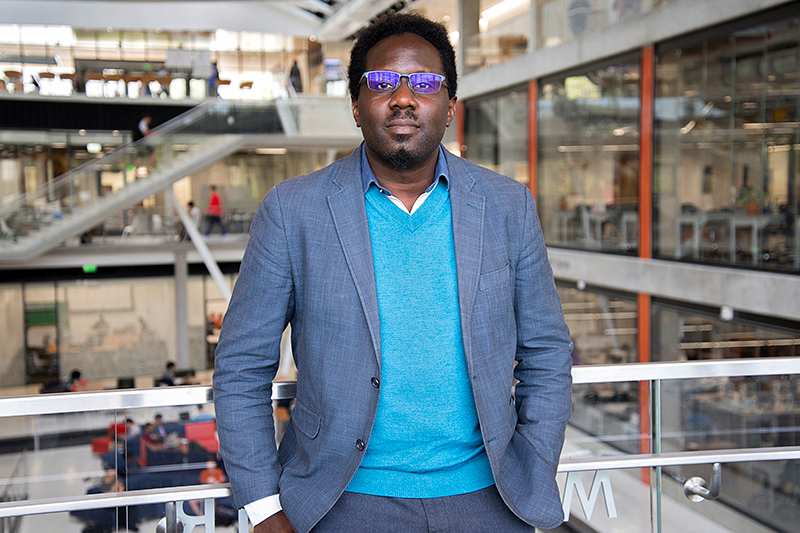
Deji Akinwande is a Professor and holds the Cockrell Family Regents Chair in Engineering #8 at The University of Texas at Austin's Chandra Family Department of Electrical and Computer Engineering. He earned his PhD in Electrical Engineering from Stanford University (2009) and an MS in Applied Physics from Case Western Reserve University. His research focuses on 2D materials, nanotechnology, and flexible electronics, with breakthroughs in atomristors, graphene-based biosensors, and wearable electronic tattoos. Key achievements include pioneering work on silicene, being elevated to IEEE Fellow (2021), and receiving the PECASE Award (Obama administration). His lab, the Akinwande Nano Research Group, explores nanoelectronics, bioelectronics, and RF systems for societal applications like health monitoring and 6G communications. Education: PhD, Electrical Engineering, Stanford University, 2009 MS, Applied Physics, Case Western Reserve University Awards: 2021 IEEE Fellow APS Fellow (2017) PECASE Award Moore Inventor Fellowship His research spans neuromorphic computing, flexible sensors, and energy-efficient memory devices. Over 100+ publications highlight his work on graphene, MXenes, and 2D material applications. He co-authored a textbook on carbon nanotubes and graphene (Cambridge University Press, 2011) and serves as an IEEE Distinguished Lecturer and editor for Nature NPJ 2D Materials . Lab and Collaborations: The Akinwande Nano Lab develops scalable 2D electronics, wearable health monitors, and next-gen RF components. Recent grants include NSF CHIPS Act funding and DoD support for 6G switches and neuromorphic hardware.
Dr. Benjamin Scott Flavel is a Research Group Leader at the Institute of Nanotechnology, Karlsruhe Institute of Technology (KIT), Germany. His research focuses on carbon nanotubes and their applications in photovoltaics and sensing technologies. He leads a dynamic research team conducting cutting-edge work on the separation, purification, and application of single- and double-walled carbon nanotubes. Education: Doctor of Philosophy (Chemistry), Flinders University, Australia, 2010 Bachelor of Science in Nanotechnology (Honors), Flinders University, Australia, 2005 Habilitation in Materials Science, Technische Universität Darmstadt, 2018 His research interests lie at the intersection of nanotechnology and energy materials, particularly in carbon nanotube-based solar cells , chirality-specific separation techniques , and nano-sensing devices . His group has pioneered methods such as ATPE for enantiomer sorting and developed innovative solar cell architectures with industrial relevance. The research spans fundamental charge transport mechanisms to applied device engineering. The publication record shows a strong trend in advancing carbon nanotube photovoltaics, with key contributions in interface engineering, scalable fabrication, and high-efficiency CNT:Si solar cells. Work also extends to spectroscopic characterization, alignment techniques, and software tools for data analysis. Scientific Awards: Heisenberg Program, DFG (2018) Emmy Noether Program, DFG (2013) Alexander von Humboldt Research Fellowship (2011) Australian Government Endeavor Research Fellowship (2009) Bloom-Gutmann Prize, Royal Australian Chemical Institute (2008) Hope Meeting, Japanese Society for the Promotion of Science (2008) Research Fellowship, Flinders University (2007) Dr. Flavel has successfully advised multiple PhD students, including Dr. Moritz Pfohl, Dr. Katherine Moore, and Dr. Daniel Tune. His research has been supported by significant grants from the German Research Foundation (DFG), including funding for a double-walled carbon nanotube project and an organic evaporation system (~320,000 EUR). Collaborations span institutions such as NIST, Freie Universität Berlin, University of Antwerp, McMaster University, and University of Sydney. The research group operates within the Institute of Nanotechnology at KIT, utilizing advanced infrastructure for nanomaterials synthesis, characterization, and device fabrication. The team is recognized internationally, with work featured in Open Access Government , Research Features , and Europhotonics , and covered by Nanotechweb.
Nenad Miljkovic is the Founder Professor in the Department of Mechanical Science and Engineering at the University of Illinois Urbana-Champaign (UIUC), with concurrent appointments in Electrical and Computer Engineering and the Materials Research Laboratory. He directs the Air Conditioning and Refrigeration Center (ACRC) and is affiliated with the International Institute for Carbon Neutral Energy Research (Kyushu University). His research spans thermo-fluid sciences, interfacial phenomena, and renewable energy, focusing on enhancing efficiency in power generation, electronics cooling, and thermal management via micro/nanostructured surfaces. Miljkovic holds a BASc in Mechanical Engineering from the University of Waterloo (2009) and an M.S. (2011) and Ph.D. (2013) from MIT. Prior to UIUC, he was a Postdoctoral Associate at MIT and an Adjunct Assistant Professor at UIUC. His research integrates fundamental studies of phase change and electrokinetics with applied device development, including solar thermal conversion and atmospheric energy harvesting. Recent work explores frost dynamics, battery thermal management, and scalable anti-corrosion coatings. Miljkovic's publications emphasize heat transfer enhancement, droplet dynamics, and sustainable energy systems. His articles frequently address thermal management challenges in electronics and renewable energy applications, leveraging nanostructured surfaces and phase change materials. Honors include: ASME Fellow (2022) Founder Professorship, Grainger College of Engineering (2023) ASME Bergles-Rohsenow Young Investigator Award (2021) ONR Young Investigator Award (2017) NSF CAREER Award (2016) He leads the Energy Transport Research Laboratory, advising graduate students and collaborating with industry on thermal systems. Grants support work on electronics cooling, battery safety, and renewable energy integration.
Johan Driesen is a full Professor at KU Leuven's Faculty of Engineering Sciences, where he serves as Department Head of Electrical Energy Systems and Applications (ELECTA) and Director of the KU Leuven Institute for Energy and Society (KIEM). He also holds leadership positions at EnergyVille as Division Head and Subdivision Head. His work spans both academic and applied research in electrical energy systems. His research interests focus on renewable energy integration, power electronics, electrical drives, electric vehicles, and smart grids. Driesen's work particularly emphasizes distributed generation of electricity, with significant contributions to floating photovoltaics, offshore wind integration, and low-voltage DC systems. His research group actively investigates the optimization of grid integration for renewable energy sources and the development of advanced power electronic converters. Driesen's recent publications reveal a strong emphasis on practical applications of renewable energy systems, with particular focus on reliability analysis of low-voltage DC systems, optimization of PV-battery systems, and integration of electric vehicles with renewable energy sources. His work bridges theoretical analysis with real-world implementation challenges. Laureate prize of the Belgian Royal Society of Electrotechnics (KBVE/SRBE) 'Research and Development' for master theses 1996 2nd place in final round IEEE Region 8 Student Paper Contest 1997 in München, Germany Laureate biannual prize 'R.Sinave' of the Belgian Royal Society of Electrotechnics (KBVE/SRBE) for best PhDs 2002 Driesen has supervised numerous students and researchers, including J. Despeghel who completed work on residential PV-battery system optimization. His current research portfolio includes substantial projects such as Flux50 (working on the future energy system), solar and wind energy in the Belgian marine zone, and smart charging solutions that integrate e-mobility with renewable energy. He serves as promoter or co-promoter on multiple major research initiatives with funding extending through 2028. At EnergyVille, Driesen leads research teams working on cutting-edge energy solutions, with particular focus on DC systems, grid integration challenges, and the development of innovative power electronic solutions for renewable energy applications. His work has significant industrial relevance and practical implementation potential.
Sahar Pirooz Azad is an Assistant Professor in the Department of Electrical and Computer Engineering at the University of Waterloo. She holds a PEng designation and specializes in power systems engineering, particularly in HVDC systems and grid stability. Previously, she served as an Assistant Professor at the University of Alberta (2015–2017) and conducted postdoctoral research at the University of Toronto’s CAPE Centre and KU Leuven in Belgium. Her research focuses on enhancing power grid stability through advanced control schemes for HVDC grids, converter modeling, and fault protection mechanisms. Dr. Azad’s work addresses challenges in multi-terminal HVDC systems, offshore wind grid integration, and multi-vendor system compatibility. She has taught courses like Power System Protection and Relaying (ECE 765) and Electromechanical Energy Conversion (ECE 260), reflecting her expertise in both theoretical and applied electrical engineering. Her recent publications emphasize innovative protection schemes for HVDC grids, fault detection algorithms using signal processing (e.g., Hilbert-Huang Transform), and robust controller designs for multi-vendor VSC systems. These contributions aim to improve grid reliability, fault resilience, and renewable energy integration efficiency. Dr. Azad is actively recruiting graduate students and holds Sole-Supervisory Privilege Status (SSPS) at Waterloo. Her research has been supported by European Commission-funded projects like MEDOW and leverages interdisciplinary approaches to tackle modern grid challenges.
Professor Raja Ayyanar is a faculty member in the School of Electrical, Computer and Energy Engineering at Arizona State University (ASU), where he has served since 2000. He holds a Ph.D. in Power Electronics from the University of Minnesota (2000), an M.S. from the Indian Institute of Science (1995), and a B.E. in Electrical Engineering from PSG College of Technology (1989). His research focuses on power electronics, renewable energy systems (including PV and wind integration), electric vehicles, motor drives, and wide bandgap devices. Notable contributions include advancements in DC-DC converters, power conversion for renewable energy interfaces, and high-frequency power electronics. He has published over 200 journal/conference papers and holds 8 U.S. patents. Ayyanar is a Fellow of the IEEE and has received the Office of Naval Research Young Investigator Award (2005). He leads or participates in major research initiatives, including the ACEPS Center and the Power Systems Engineering Research Center (PSERC). His work spans industry collaborations with entities like Sandia National Labs, Intel, and BP Solar. He teaches advanced courses in power electronics and has advised numerous students. His grants include projects on smart grid technologies, inverter reliability standards, and high-penetration renewable integration. He is affiliated with ASU’s Center for Efficient Vehicles and Sustainable Transportation Systems (EV-STS). Education: Ph.D. Power Electronics, University of Minnesota, 2000 M.S. Power Electronics, Indian Institute of Science, 1995 B.E. Electrical Engineering, PSG College of Technology, 1989 Affiliations: Professor, Ira A. Fulton Schools of Engineering Professor, PSERC and EV-STS Centers Grants & Projects: Over 60 grants from NSF, DOE, ONR, and industry partners Recent projects include dynamic sub-transmission-distribution co-simulation and EV/HEV traction drives





_rdax_230x341s.jpg)


