Enrico Arrigoni is a Professor at the Institute of Theoretical Physics - Computational Physics at Graz University of Technology (TU Graz). His research focuses on correlated quantum systems, many-body physics, and nonequilibrium dynamics, with applications to Mott insulators, quantum transport, and photovoltaic systems. He teaches courses such as 'Green's functions in Many-Particle Physics' and 'Atom Physics - Quantum Mechanics'. Recent work explores phonon effects in Mott systems, neural network approaches to quantum states, and impact ionization processes in photodriven materials. His methods include auxiliary master equation techniques and variational cluster approaches. Publications span topics like nonequilibrium steady states, quantum impurity models, and disordered systems. While no specific awards are listed, his contributions to theoretical physics and computational methods are evident through his prolific research output. Advising and grants details are not explicitly mentioned, though his involvement in graduate theses and research projects is implied via available master's and bachelor's thesis topics.
Georges Gielen is Full Professor in the Department of Electrical Engineering (ESAT) at KU Leuven, Belgium, and part-time Research Director at imec. He has held multiple leadership roles including Chair of ESAT Department (2012-2013, 2020-2024) and Vice-Rector for Science, Engineering & Technology (2013-2017). His academic career spans over 30 years at KU Leuven, progressing from Assistant to Full Professor. His research focuses on analog and mixed-signal integrated circuit design automation , with expertise in CAD tools, design optimization, sensor interfaces, and neuromorphic systems. His work bridges hardware design with machine learning, particularly in hardware-efficient AI implementations and biomedical applications. He has pioneered techniques for automated analog circuit sizing, topology synthesis, and reliability-aware design in nanometer CMOS. Gielen has received numerous accolades including the IEEE CAS Mac Van Valkenburg Award (2015), IEEE CAS Charles Desoer Award (2020), and EDAA Achievement Award (2021). He holds an ERC Advanced Grant AnalogCreate and is an IEEE Fellow since 2002. As a prolific scholar, he has chaired major conferences including DATE (2006), ICCAD (2007), and ESSCIRC (2017). He has graduated over 55 PhD students through the MICAS research group at KU Leuven, currently supervising 13 doctoral candidates. His research team collaborates extensively with imec and industry partners on cutting-edge projects in carbon-aware AI accelerators, uncertainty-aware design, and neuromorphic sensor interfaces.
Univ.-Prof. Dipl.-Ing. Dr.sc.ETH Michael Hartmann is a full professor of Power Electronics at the Electric Drives and Power Electronic Systems Institute of Graz University of Technology (TU Graz), leading the Power Electronic Systems research group since 2021. He holds academic degrees from Vienna University of Technology and ETH Zurich. Education: B.Sc. and M.Sc. (both with honors) in Electrical Engineering, Vienna University of Technology (2005–2006) Ph.D. in Power Electronics, ETH Zurich (2011) Research Interests: Three-phase power conversion, high-frequency switched converters, and MV connected systems Optimal design of compact power converters using novel semiconductor technologies Converter modeling, monitoring, and lifetime prediction Awards: IEEE Transaction Prize Paper Award (2012) 2nd TIA Award (2023) Google Little Box Challenge 2nd Place (2016) Grants & Industry Collaboration: Developed industrial power converter systems at Schneider Electric (2011–2021) Active in standardization groups for low-frequency EMC and energy efficiency Labs/Teams: Heads the Power Electronic Systems research group at TU Graz, focusing on cutting-edge converter technologies.
Yusuf Leblebici is a Turkish academic and current President of Sabanci University (2018-present), reappointed in December 2022. He previously served as a Chair Professor and Director of the Microelectronic Systems Laboratory at EPFL, Switzerland (2002-2018), and held academic roles at Worcester Polytechnic Institute (1997-1999), Istanbul Technical University (1993-1997), and the University of Illinois at Urbana-Champaign (1991-2000). His career spans microelectronics, VLSI design, and neuromorphic systems. BSc and MSc in Electrical Engineering from Istanbul Technical University (1984, 1986) PhD in Electrical and Computer Engineering from the University of Illinois at Urbana-Champaign (1990) His research focuses on low-power integrated circuits , VLSI design , sensor interfaces , semiconductor modeling , and neuromorphic computing . He has co-authored over 400 scientific articles and seven books, including two internationally acclaimed textbooks. Scientific Awards : 2020 ECE Distinguished Alumni Award (UIUC) 2009 IEEE Fellow 2009 IEEE Distinguished Lecturer 1999 WPI Satin Distinguished Fellow Award 1995 Turkish TUBITAK Young Investigator Award He has graduated 58 PhD students and over 100 MSc students, and played a pivotal role in establishing Sabanci University's Microelectronics Program (1999-2002) and directing EPFL's Microelectronic Systems Laboratory (2002-2018). As Sabanci University President, he has enhanced global visibility, attracted international talent, and strengthened global collaborations.
Harald Pretl is a Professor at the Department of Integrated Circuits within the Institute for Integrated Circuits and Quantum Computing at Johannes Kepler University Linz (JKU). Holding the title Univ.-Prof., he maintains active research leadership with current projects extending through 2029 and 107 documented research outputs including patents, articles, and conference proceedings. His research spans integrated circuits, quantum computing, mm-wave transmission, biomedical sensing, and open-source EDA tools. He specializes in high-frequency circuit design, ultra-low-power biomedical sensors, and educational applications of open-source design methodologies for analog/mixed-signal IC development. Recent work demonstrates cross-disciplinary innovation bridging engineering, neuroscience, and artistic expression. Recent publications reveal strong emphasis on practical implementation challenges: THz transmitter efficiency, brain-computer interface applications, ADC performance metrics, and open-source layout automation. These works collectively advance wireless communication systems, biomedical instrumentation, and accessible semiconductor design education through open-toolchain development. Prof. Pretl has supervised 3 students and actively promotes open-source EDA adoption through educational initiatives. His funded projects include Sub-blocks generators for NSSAR ADC (2025-2029), Open Parasitic Extraction for KLayout, and United Micro Technology collaborations, demonstrating sustained industry engagement. He co-leads the JKU LIT - SAL Intelligent Wireless Systems Lab (IWS Lab) and contributes to the High-Performance Integrated Quantum Computing project. Current activities include 42 documented presentations such as 'Using Open-Source EDA Tools in Hands-On IC Design Education' (2025) and 'Recent Developments in Ultra-Low-Power Biomedical Sensing' (2025), reflecting his dual focus on research innovation and pedagogical advancement.
Francesco Profumo serves as Rector of Polytechnic University of Turin since 2005 and previously as Dean of the Faculty of Engineering (2003-2005). He holds a Professorship in Electrical Machines and Drives at the same institution since 1996, following a professorship at University of Bologna (1994-1996). His international experience includes Visiting Professorships at University of Nagasaki (1996-1997) and University of Wisconsin, Madison (1986-1988). Prof. Profumo's research focuses on advanced electrical machine systems and power electronics, specializing in high-power devices, novel electrical machine structures, integrated electromechanical design, and power conversion technologies. His work particularly addresses high-response servo drives, fuel cell power conditioning, and energy-saving applications in electrical plants. This research bridges theoretical innovation with industrial implementation in automotive traction, renewable energy systems, and industrial motor drives. His publication record from 2002-2008 demonstrates consistent contributions to dual three-phase motor drives, sensorless control techniques, and multiphase drive systems. Key thematic areas include thermal management in integrated drives, fault-tolerant control architectures, and energy-efficient electrical plant design, with publications predominantly appearing in IEEE Transactions journals. Major recognitions include multiple honorary doctorates from Technical University of Riga, Politechnica of Bucharest, and University of Miskolc, alongside IEEE-IAS paper prizes (1991, 1992, 1997) and IIEE-IPEC first prize (2005). Additional distinctions comprise honorary professorships at University of Cordoba and Jiao Tong University, and the Signum Aureum award from University of Miskolc. No information regarding student advising or research grants appears in the source materials. Similarly, laboratory affiliations or team leadership details beyond administrative roles are not documented.
Christian Vogel is a Senior Lecturer affiliated with the Institute for Signal Processing and Speech Communication at TU Graz. His work focuses on advanced signal processing techniques, analog/digital conversion systems, and mixed-signal architectures. Key research areas include time-interleaved ADC error correction, digital predistortion for RF systems, and EVM estimation methodologies. Education: Holds a Dr.techn. (Doctor of Engineering) and Dipl.-Ing. (Diploma in Engineering). His research emphasizes practical applications in mixed-signal systems, including calibration techniques for high-resolution ADCs, nonlinear system compensation, and energy-efficient transmitter design. Recent work explores optimization-based quantization, crest factor reduction in envelope tracking, and adaptive filtering for digital predistortion. Publications span over 15 years, addressing topics ranging from PWM-based RF transmission to all-digital phase-locked loops. His contributions bridge theoretical signal processing with hardware implementation challenges in modern electronic systems. Teaching expertise includes analog and digital signal processing, with authorization to teach at TU Graz. Active in industry-academia collaboration, his work aims to improve system performance in telecommunication and embedded electronics.
Roland Seebacher is an Associate Professor at the Institute of Electrical Drives and Power Electronic Systems, Graz University of Technology. His work focuses on electrical engineering domains related to power electronics and electric drives. Contact Email: roland.seebacher@tugraz.at Phone: +43 316 873 - 7247 Office Hours: Thursdays 9:00 - 12:00 Research Interests His research aligns with the institute's focus areas, including power electronics, energy conversion systems, and motor control technologies. These fields are critical for advancements in electrical engineering and sustainable energy applications.
Carlo Patrono is a distinguished Professor and Chair of Pharmacology at the Catholic University School of Medicine in Rome, a position he has held since 2007. Previously, he served as Professor of Pharmacology at University of Rome 'La Sapienza' 2nd School of Medicine (2001-2006) and University of Chieti 'G. d'Annunzio' School of Medicine (1991-2001). His academic journey began as Assistant Professor at Catholic University School of Medicine (1972-1982), progressing to Associate Professor (1983-1985). Dr. Patrono earned his M.D. Cum Laude from Catholic University School of Medicine, Rome in 1968, following a B.S. in Arts from Liceo Classico Nazareno in 1962. He completed postdoctoral training at Bronx Veterans Administration Hospital and Mount Sinai School of Medicine, New York (1969-1971). His research focuses on nonsteroidal antiinflammatory drugs , antiplatelet drugs , clinical pharmacology , and arachidonic acid metabolism , with significant contributions to understanding cardiovascular pharmacology and platelet function. His work has particular relevance to aspirin therapy and antithrombotic agents. Dr. Patrono has received numerous prestigious awards including the Grand Prize from Fondation Lefoulon-Delalande (2013), the John Vane Award from University of London (2007), and the International Aspirin® Senior Award from Bayer AG (1998). His scholarly impact is reflected in his editorial roles with major journals including Circulation and Arteriosclerosis, Thrombosis and Vascular Biology. As an active researcher, he serves as Principal Investigator for multiple funded projects including studies on antiplatelet effects of aspirin in diabetes patients, funded by Bayer HealthCare AG. He also contributes to European Commission initiatives like the EICOSANOX program investigating eicosanoids and nitric oxide in cardiovascular diseases. Within his institution, Dr. Patrono chairs the Drug Therapy Committee and serves on the Ethics Committee at Catholic University School of Medicine, Rome. He is also a member of the Board of Directors for the Center for Aging Sciences at G. d'Annunzio University Foundation.
Manijeh Razeghi is the Walter P. Murphy Professor of Electrical and Computer Engineering and Director of the Center for Quantum Devices at Northwestern University. She also serves as an Adjunct Professor at the Optical Sciences Center, University of Arizona, and maintains significant professional connections with institutions in France and Switzerland. With a career spanning over three decades at Northwestern, Professor Razeghi has established herself as a world-leading authority in semiconductor physics and optoelectronic devices across the electromagnetic spectrum. Her educational background includes: 1980: Docteur d'etat es Sciences Physiques, Universite de Paris, France 1977: Docteur 3eme Cycle, Solid State Physics, Universite de Paris, France 1976: DEA, Science des Materiaux, Universite de Paris, France Professor Razeghi's research focuses on cutting-edge developments in semiconductor technology, particularly in the areas of quantum structures and devices spanning the electromagnetic spectrum from deep ultraviolet to terahertz frequencies. Her pioneering work in epitaxial manufacturing techniques has enabled significant advances in optoelectronic devices, particularly in infrared and terahertz technologies. She has made substantial contributions to condensed matter physics and engineering, with particular emphasis on nonlinear optics and semiconductor physics and technology. Her current research explores gallium oxide materials, quantum cascade lasers, and type-II superlattices for advanced photodetection applications, with a strong focus on practical implementations for telecommunications, imaging, and sensing. Analysis of Professor Razeghi's extensive publication record (over 1,000 papers) reveals a consistent trajectory of innovation in semiconductor photonics. Her recent work demonstrates a strategic progression toward developing high-power, efficient devices capable of room-temperature operation across challenging spectral regions. There is a clear emphasis on gallium oxide materials and type-II superlattices to overcome traditional limitations in infrared detection and terahertz generation. Her research increasingly bridges fundamental materials science with practical device engineering, resulting in technologies with significant commercial and scientific applications. Professor Razeghi has received numerous prestigious honors and awards throughout her distinguished career: Benjamin Franklin Medal in Electrical Engineering (2018) Elected Lifetime Fellow of IEEE (2017) Jan Czochralski Gold Medal (2016) IBM Faculty Award (2013) Elected Lifetime Fellow of Materials Research Society (2008) Multiple fellowships including APS, IOP, OSA, SPIE, and SWE Society of Women Engineers Achievement Award (1995) IBM Europe Science and Technology Prize (1987) As an academic mentor, Professor Razeghi has supervised 51 PhD dissertations and 20 MS theses at Northwestern University, and currently oversees approximately 15 PhD students, post-doctoral researchers, and visiting faculty. She created the Graduate and Undergraduate Programs in Solid State Engineering in the ECE Department at Northwestern, establishing a comprehensive 12-course curriculum. Her professional service includes chairing international conferences and serving on numerous editorial boards for leading journals in physics and engineering. She has also provided expertise to international organizations including the United Nations and the European Research Council, demonstrating her global impact on semiconductor science and technology. Professor Razeghi directs the Center for Quantum Devices (CQD) at Northwestern University, a world-class research facility focused on semiconductor materials and devices. Under her leadership, CQD has become a hub for innovation in infrared and terahertz technologies, with research spanning fundamental materials science to practical device applications. The center maintains strong connections with industry and government laboratories, facilitating the translation of basic research into real-world technologies. Current research directions at CQD include advanced quantum cascade lasers, novel infrared detectors, and next-generation semiconductor materials for optoelectronic applications.
Matthias Janetschek holds the position of Associate Professor at the Management Center Innsbruck (MCI), Austria, since September 2020. Previously, he served as a Lecturer at MCI (2018–2020) and was a Co-Founder/Senior Developer at Felix Solution UG (2013–2015). He earned a PhD in Computer Science from the University of Innsbruck (2011–2019), alongside earlier degrees in Computer Science (BSc 2002–2007, MSc 2007–2011). His research focuses on distributed systems, workflow management, cybersecurity, and IoT , with notable contributions to scientific workflow execution on cloud/manycore architectures and AR/VR applications in education. He has supervised over 18 bachelor/master theses addressing topics like IoT security, reinforcement learning, and edge computing. Teaching responsibilities include courses such as Distributed Systems , Virtual Reality , and Computer Architecture at MCI. He has also completed further training in online education tools (e.g., Sakai, Adobe Connect) and corporate communication. His publications span journals like Multimodal Technologies and Interaction and conference proceedings on workflow systems, cloud computing, and AR usability. Current work emphasizes large-scale IoT security assessments and edge computing optimizations.
Herr Johann Peter Bacher (Dipl.-Ing., Dr.techn.) is a researcher at the Institute of Electrical Drives and Power Electronic Systems, Graz University of Technology. His work focuses on power electronics, electric drives, and energy conversion systems. Education: Diplom-Ingenieur (MSc equivalent) in Electrical Engineering Doctorate in Technical Sciences (Dr.techn.) Contact: Email: johann.bacher@tugraz.at Phone: +43 316 873 - 8601 Address: Inffeldgasse 18/I, 8010 Graz, Austria Research Focus: Electrical drives, power electronic systems, and industrial energy conversion technologies.
Role & Affiliation: Krischan Klaus is an Associate Professor at the Institute of Electrical Drives and Power Electronic Systems, Technische Universität Graz. His research focuses on electrical drives, power electronics, and control systems. He holds a Dipl.-Ing. and Dr.techn. (Doctor of Technical Sciences). Contact & Office: Located at TU Graz, Inffeldgasse 16c, Room IDEG160. Contact via email or phone: +43 316 873-7745. Consultation by appointment. Research & Teaching: Specializes in electrical drive technology, power electronic systems, and automation. Engaged in final theses supervision, R&D projects, and courses in his subject areas. Access his research portal via Homepage .
Prof. Thomas Schrefl is a leading academic at the University for Continuing Education Krems, serving as Head of the Center for Modelling and Simulation. His research focuses on magnetic materials, micromagnetics, and machine learning applications in materials science. He holds a professorial role (Univ.-Doz.) and has led numerous EU-funded projects, including initiatives on rare-earth-free permanent magnets and multiscale modeling frameworks. Key research areas include designing energy-efficient permanent magnets, developing physics-informed machine learning models for material optimization, and exploring magnonic devices. His work bridges computational modeling, experimental characterization, and AI-driven discovery to address challenges in sustainable energy technologies. Notable projects include Magnetic Multiscale Modelling Suite (EU-funded), SINGLE GRAIN REENGINEERED NDFEB PERMANENT MAGNETS , and Novel rare-earth free permanent magnets . He has published extensively in journals like Nature Electronics , Journal of Magnetism and Magnetic Materials , and Acta Materialia . His contributions emphasize interdisciplinary approaches, integrating advanced simulations with machine learning to accelerate material innovation. Current interests include inverse-design strategies for magnetic materials and waste heat energy conversion systems.
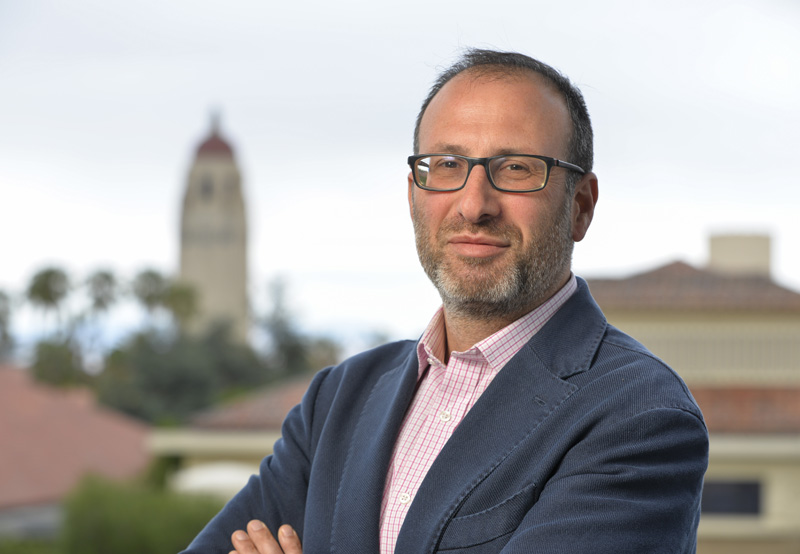
Alberto Salleo serves as Professor of Materials Science and Chair of the Department of Materials Science and Engineering at Stanford University's School of Engineering since 2019. He joined Stanford in 2005 as Assistant Professor, progressing to Associate Professor (2013) and Full Professor (2019) with a visiting professorship at École des Mines de Saint-Etienne in 2016. His research focuses on structure-property relationships in organic semiconductors , specializing in: Operando characterization techniques (X-ray/electron microscopy) Organic bioelectronics for biosensors and neuromorphic computing Development of artificial synapses and wearable diagnostic devices Electronic transport mechanisms in conjugated polymers His group's work bridges fundamental materials science with applications in healthcare and energy-efficient computing. Salleo's publication record includes multiple Clarivate Highly Cited Papers in Science , Nature Materials , and Journal of the American Chemical Society , demonstrating significant impact across organic electronics and neuromorphic engineering. His research trends show increasing focus on bioelectronic interfaces and energy-efficient computing architectures. Award highlights: Elected Fellow of Materials Research Society (2022) and European Academy of Sciences (2021) Cavaliere Ordine al Merito della Repubblica Italiana (2020) Walter J. Gores Award (Stanford's highest teaching honor, 2016) NSF Career Award and SPIE Early Career Award Salleo directs an active research group developing novel characterization methods and devices, serving as Principal Editor of MRS Communications and board member for the Materials Research Society. His leadership extends to international scientific collaboration through the Italian Scientists and Scholars in North America Foundation.