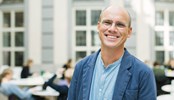
Cicek Cavdar is an Associate Professor at the School of Electrical Engineering and Computer Science (EECS) at KTH Royal Institute of Technology , Sweden. She leads the Intelligent Network Systems research group and specializes in Telecommunication Networks , with a focus on Beyond 5G/6G Mobile Networks , Energy Efficiency , and AI-Assisted Network Management . PhD in Computer Science (2009) from University of California, Davis and Istanbul Technical University Her research spans Cell-Free Massive MIMO , Reconfigurable Intelligent Surfaces (RIS) , UAV Communication Systems , and Green Network Technologies . She actively contributes to 6G Network Architecture and Non-Terrestrial Networks , including satellite and aerial systems. Recent publications highlight AI-driven network optimization for handover management, energy-aware resource allocation , and multi-agent reinforcement learning in complex communication environments. She teaches advanced courses in Communication Systems , Machine Learning , and Software Engineering at KTH.
Henrik Sandberg is a Professor at the Division of Decision and Control Systems , KTH Royal Institute of Technology , Stockholm, Sweden. He holds the title of Deputy Head of Division and is affiliated with the School of Electrical Engineering and Computer Science . Education: MSc in Engineering Physics (1999) PhD in Automatic Control (2004) from Lund University Postdoctoral position at Caltech (pre-2007) Research Interests: Focus on cyber-physical systems security , power systems , model reduction , and fundamental limitations of control systems . Key sub-areas include attack detection , networked control , privacy-preserving estimation , and resilient control architectures . Publications: Over 150 papers across IEEE Transactions and Automatica , covering topics like stealthy attacks , distributed control , LQG optimization , and thermodynamic costs in filtering . Recent work includes LWE-based encrypted control and Bayesian deception mechanisms . Scientific Awards: Best Student Paper Award Finalist at IEEE CASE 2014; Best Student-Paper Award at IEEE CDC 2004. Grants & Projects: Leads the DYNACON project (WASP Cybersec cluster) and collaborates on CERCES (critical infrastructure resilience). Serves as examiner for multiple advanced courses in cybersecurity and control systems. Contact: Email: hsan@kth.se Phone: +46 (0)8 790 7294 Room: A:607, Malvinas Väg 10, Stockholm
Therese Nordin is an Assistant Professor at Umeå University's Department of Community Medicine and Rehabilitation, specializing in occupational therapy. Her research focuses on social participation and togetherness among older adults within home care contexts, particularly through the STAY-IN-TOUCH project. Research Themes Gerontological perspectives on loneliness Co-creative methods in home care interventions Relational and transactional models of human activity Power dynamics in health services research Qualitative approaches to social participation Recent Publications Her work explores the interplay between structural care provision and subjective experiences of social connectedness in aging populations, with specific attention to: Gender norms and loneliness in men Home care professionals' conceptualization of social needs Design of participatory care models Quantitative-qualitative integration in aging research Methodological Expertise Therese employs a range of qualitative approaches, including: Scoping reviews Creative co-design methodologies Narrative analysis Transactional perspective frameworks
Lina Bertling Tjernberg is a Professor at the Department of Electrical Engineering, KTH Royal Institute of Technology, and Deputy Head of the School of Electrical Engineering and Computer Science (EECS) with responsibility for research conditions and impact. She served as Director of KTH's Energy Platform during 2018-2024 and holds memberships in IVA (Swedish Royal Academy of Engineering Sciences) and the IEEE Power & Energy Society. Research Focus: Applying mathematics (statistics, optimization, life cycle assessment) to enhance reliability and predictive maintenance in electric power systems, with emphasis on future electricity grids integrating microgrids, battery storage, HVDC, nuclear/pumped/hydro/wind/solar power, hydrogen, and electrified transport. Collaborations: Engaged with Comillas Pontifical University (Madrid), Addis Ababa University, Norwegian University of Science and Technology (NTNU), and IEA Wind. Key Research Trends: Recent articles highlight advancements in microgrid control (2025), SMR nuclear energy integration (2025), AI-driven asset management (2024), hydrogen sector coupling (2024), and renewable forecasting techniques (2024). Awards: 2021 Power Woman of the Year 2022 Energy Power List (Sweden’s top 20 energy influencers) Leadership Roles: Swedish Electromobility Center (SEC) board Chair of Swedish Electrical Standards (SEK Svensk Elstandard) Member, IEEE PES ISGT Europe steering committee
Zhonghai Lu is a Professor of Electronic Systems Design (specializing in Dependable and Autonomous Systems) at KTH Royal Institute of Technology, part of the Department of Electrical Engineering in the School of Electrical Engineering and Computer Science (EECS). He serves as Program Director for KTH's Embedded Systems master's program and Director of Studies at the Division of Electronics and Embedded Systems. His research focuses on Network-on-Chip (NoC), computer architecture, embedded systems, and Prognostics and Health Management (PHM) of power electronics. He leads a research group exploring in-network processing and embedded intelligence, transforming passive networks into active computational frameworks. Lu holds a BSc from Beijing Normal University (1989), MSc and PhD from KTH (2002, 2007), and an MBA in Innovation and Growth from the University of Turku (2012). He has authored over 240 scientific papers, including journal articles and peer-reviewed conferences, with notable recognitions such as Best Paper Awards at NOCS’2015 and EU HiPEAC, and a Featured Paper in IEEE Transactions on Computers (2020). He serves as Associate Editor for ACM Transactions on Architecture and Code Optimization (TACO) and has chaired major conferences like HiPEAC’2017 and NOCS’2018. His research group’s recent work includes integrating AI into hardware acceleration, fault-tolerant neural networks, and RUL estimation for power electronics using recurrent neural networks. Lu has secured grants from the Swedish Research Council and Intel Corporation and developed courses like IL2230 (Hardware Architectures for Deep Learning) and IL2233 (Embedded Intelligence), pioneering embedded AI education at KTH. Education: BSc (Beijing Normal University), MSc/PhD (KTH), MBA (University of Turku) Awards: Best Paper Awards (NOCS, EU HiPEAC), Swedish Research Council Grants, Intel Research Gifts Labs/Teams: Research Group on In-Network Processing and Embedded Intelligence
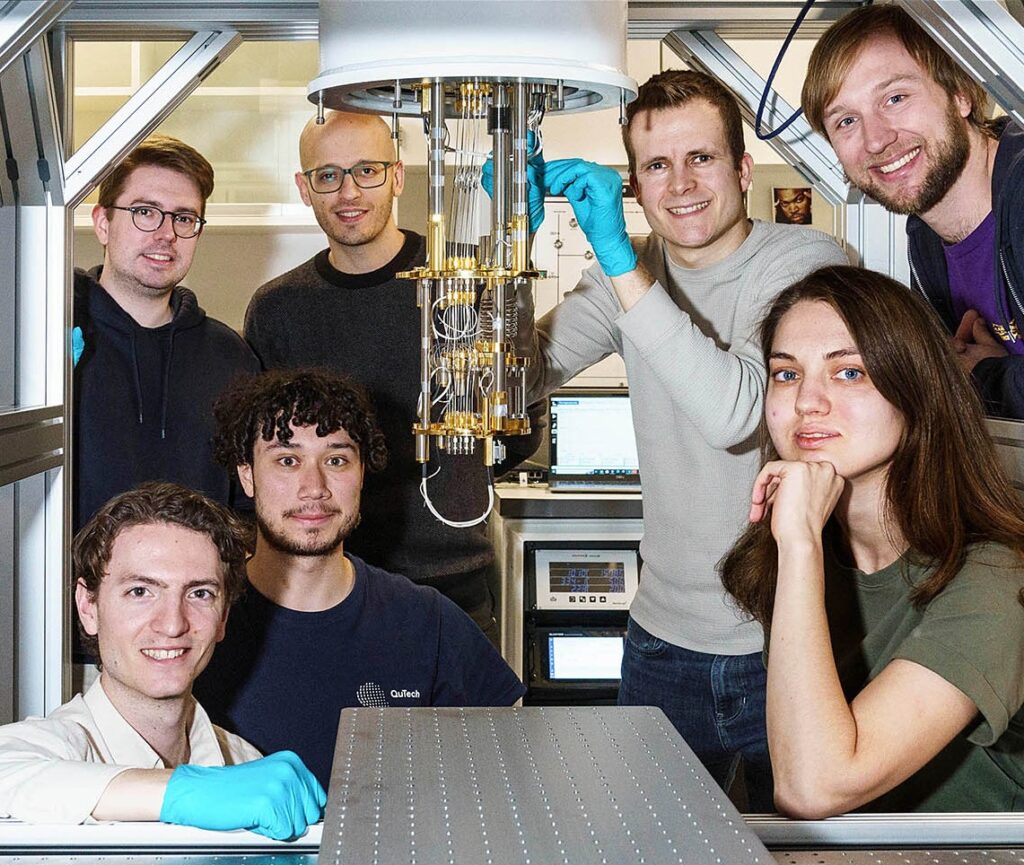
Carlos Errando Herranz serves as an Assistant Professor in the Quantum and Computer Engineering Division at Delft University of Technology's Faculty of Electrical Engineering, Mathematics and Computer Science (EEMCS) and as a Principal Investigator at QuTech. His research focuses on developing scalable quantum photonic integrated circuits using semiconductor fabrication processes compatible with existing infrastructure for quantum internet applications. He received Bachelor's and Master's degrees from Universitat Politècnica de València (2013) and a PhD in Micro and Nanosystems from KTH Royal Institute of Technology (2018), followed by postdoctoral positions at KTH and MIT as a Marie Curie fellow. His lab investigates quantum photonics, integrated photonics, and color centers with emphasis on diamond tin-vacancy systems and silicon-based quantum emitters. Recent publications demonstrate strong expertise in tuning quantum emitters via strain engineering, heterogeneous integration of spin-photon interfaces, and MEMS-enabled reconfigurable photonics. Key advancements include cavity-enhanced quantum memories, superconducting detector integration, and spectral control of solid-state emitters for quantum networks. Dr. Herranz advises seven graduate students including PhD candidates Vicky Dominguez Tubio, Arjan Mejas, Matteo Pirro, Christian Primavera, Jan Riegelmeyer, and Elena Volkova, along with Master student Bram Zijlstra. His team comprises postdocs Lin Jin and Pat Laferriere, and interns Elsa Herranz Valiente and Ernest Staffetti Cruañas. The Errando Herranz Lab operates within QuTech's Quantum Internet Division at Delft University, maintaining specialized facilities for nanofabrication and optical characterization of quantum photonic devices. Current research directions include developing CMOS-compatible quantum memories operating at telecom wavelengths and scalable architectures for quantum repeaters.
Luca Peretti is an Associate Professor in Electric Machines and Drives at KTH Royal Institute of Technology, affiliated with the School of Electrical Engineering and Computer Science and the Department of Electrical Engineering, Division of Electric Power and Energy Systems. He works as a researcher in the EMD (Electric Machines and Drives) group and serves as Partner Director for KTH's strategic partnership with ABB. Education: M.Sc. in Electronic Engineering (2005) from University of Udine, Ph.D. from University of Padova (2008) Professional Experience: Postdoc at University of Padova (2009-2010), Principal Scientist at ABB Corporate Research (2010-2018), Associate Professor at KTH (2018-present) His research focuses on: Automatic parameter estimation in electric machines Multiphase drive systems Sensorless control algorithms Loss segregation in drive systems Condition monitoring of industrial and transportation applications Recent publications demonstrate expertise in variable phase-pole machines, harmonic plane decomposition, predictive control algorithms, and advanced modeling of permanent magnet motors. Key application areas include transportation electrification, wind energy systems, and industrial drive technologies. Scientific roles include: Associate Editor, IET Electric Power Applications Journal (2019-present) Theme Co-Leader, Swedish Electromobility Center (2020-present) Member, IEEE (2021-present) and IET (2006-present) He leads the strategic partnership with ABB and contributes to doctoral program committees at University of Padova.
Magnus Dahlstedt is Professor of Social Work at Linköping University's Department of Culture and Society (IKOS) since 2019, previously holding the same position at ISV (Institution for Social and Welfare Studies) from 2015-2019. He has been responsible for the research environment and doctoral education in Social Work at Linköping University from 2016 to 2023. His academic journey began with a PhD in Ethnicity from Linköping University in 2005, followed by becoming a docent (associate professor) in 2009 and a biträdande professor (associate professor) in 2014 before achieving full professorship in 2015. Dahlstedt's research centers on citizenship formation in contemporary society shaped by welfare policy transformations and international migration. His work examines how citizenship is concretely formed in segregated urban environments, focusing particularly on the gap between formal rights and substantive living conditions. He investigates social pedagogical efforts across public policy, education, and the non-profit sector, with special attention to vulnerable groups including young people with foreign backgrounds in urban peripheries. His methodological approach is interdisciplinary, grounded in critical power analysis, discourse analysis, and ideological critique, often involving cross-disciplinary research collaborations. His recent publications reveal consistent thematic focus on migration, social inclusion, and urban segregation, with particular emphasis on how sports can serve as tools for social purposes in marginalized communities. The research shows increasing attention to longitudinal studies of migrants' trajectories and the role of different educational contexts (high school, folk high schools, study associations) in integration processes. Dahlstedt's work demonstrates strong policy relevance, with findings frequently presented in government agency reports and informing public debate on segregation and inclusion. Researcher at Center for Community Strategies Research (2018-2021) Member of Mimerrådet, National Program for Folk Education Research (since 2014) Department Head at Remeso, Linköping University (2012-2015) Dahlstedt actively contributes to public discourse through media appearances, public lectures, and alternative writing projects including the anthology 'Brandtal' (2023) and 'Hårdare kan ingen vara' (2023), while preparing 'En professors dagbok' for publication in fall 2024. His research is funded by multiple agencies including Vetenskapsrådet, Norrköping Research and Development Fund, and the Swedish Crime Prevention Council.
Dr. Catrin Lundström is an Assistant Professor of Ethnicity and Migration at the Department of Migration, Ethnicity and Society (REMESO) within the Department of Culture and Society (IKOS) at Linköping University's Faculty of Philosophy. Her research focuses on the intersection of migration, whiteness, and gender, examining how Swedish women experience transnational migration and return migration processes. Dr. Lundström received her PhD in Sociology from Uppsala University in 2007 and became an Associate Professor (Docent) in Sociology there in 2011. Her academic journey includes teaching and research positions at multiple Swedish institutions including Uppsala University, Stockholm University, Mälardalen University, Södertörn University, Umeå University, and Linköping University. She has also been a visiting researcher at the University of Arizona and the University of California. Dr. Lundström's research centers on whiteness as both a place-bound and transnational construction. She challenges conventional migration studies by focusing on privileged Swedish women migrants, developing the concept of 'white capital' to understand how whiteness functions as transferable cultural capital across national borders. Her work examines how racial privilege, gender, and class intersect in migration experiences, particularly among women who migrate for lifestyle, companionship, or professional reasons. Her recent publications demonstrate an expanding focus on the relationship between race, whiteness, and educational systems in Sweden, as well as critical examinations of contemporary political debates through the lens of critical race theory. Lundström's work increasingly addresses how colorblind discourse operates in Swedish society while simultaneously exploring the politics of national identity in a globalized world. Dr. Lundström has led significant research projects including: 'White Migrations: Gender, Whiteness and Privilege in Transnational Migration' (2014) 'Tre faser av hegemonisk vithet' (Three Phases of Hegemonic Whiteness) with Tobias Hübinette 'Att återintegrera svenskheten' (Reintegrating Swedishness) on returning Swedish migrant women, funded by the Swedish Research Council Her research has been supported by organizations including the Sweden-America Foundation and the Swedish Research Council. Dr. Lundström is actively involved in several academic networks: IMISCOE Standing Committee on Gender, Migration and Transnational Lives White Spaces Network at Leeds University Lifestyle Migration Hub, an international network of researchers studying lifestyle migration She regularly lectures within and outside academia, both in Sweden and internationally, and has received significant media attention for her research on school segregation, colorblind language, and gender equality in migration contexts.
Filip Johnsson is a Full Professor in Energy Technology at Chalmers University of Technology, where he leads research on measures to reduce the climate impact of the energy system. His work addresses both technical issues regarding electricity and heat production and how the entire energy system can be transformed by 2050 through technical-economic studies. Professor Johnsson's research spans multiple critical areas in the transition to sustainable energy systems: Energy Systems Analysis: Comprehensive modeling of energy systems to identify cost-effective pathways for decarbonization Industrial Decarbonization: Electrification of energy-intensive industries and carbon capture technologies Renewable Energy Integration: Grid stability, storage needs, and system flexibility with high shares of variable renewables Transportation Electrification: Real-world EV usage patterns and infrastructure requirements Fluidized Bed Technology: Advanced combustion and carbon capture processes Energy Policy: Critical analysis of Swedish and European climate policies and implementation strategies Johnsson's extensive publication record demonstrates a consistent focus on practical, implementable solutions for deep decarbonization across multiple sectors. His recent work shows increasing emphasis on industrial decarbonization pathways, grid integration challenges with high renewable shares, and critical evaluation of policy mechanisms. The research often employs technical-economic modeling approaches, combining engineering analysis with economic evaluation to identify cost-optimal pathways for climate mitigation. Professor Johnsson actively engages with Swedish energy policy debates, contributing to public discourse through newspaper articles and government reports. His work frequently addresses the practical implementation challenges of Sweden's ambitious climate goals, particularly regarding industrial decarbonization and grid infrastructure requirements.
Lars Nordström is a Professor at the Division of Electric Power and Energy Systems within KTH Royal Institute of Technology, Stockholm, Sweden. His work bridges control systems , communication networks , and power systems , with a focus on future architectures, functionality, and quality aspects of ICT for power grid operations. He has led initiatives such as the Swedish Centre of Electric Power Engineering and served as Thematic Leader for Smartgrids in KIC InnoEnergy. In 2014, he was a Visiting Professor at Washington State University. Education : Ph.D., MSc.EE Nordström's research explores the intersection of smart grids , machine learning , and cybersecurity for power systems. Key areas include: Wide-Area Monitoring and Control (WAMC) systems Decentralized control strategies for DC microgrids Impedance modeling using neural networks Data-driven methods for islanding detection ICT reliability and protocol design for grid operations His recent publications emphasize machine learning applications in power systems, including LSTM networks for EV charging management, graph attention networks for stability monitoring, and digital twin approaches for cyber-attack mitigation. These works span disciplines such as Smart Grids, Power Electronics, and Data Science. Scientific Recognitions : Senior Member, IEEE Senior Member, CIRED Senior Member, Cigre Past Chairman, Swedish IEC TC57 Mirror Committee Nordström actively teaches and examines graduate courses like Communication and Control in Electric Power Systems and Computer Applications and Machine Learning in Electric Power Systems . His work influences industry practices through collaborations on digital substations, energy market analysis, and resilience strategies.
Saurabh Amin is a Professor in the Department of Civil and Environmental Engineering at the Massachusetts Institute of Technology (MIT), where he also serves as the Edmund K. Turner Professor and Undergraduate Officer. He is a Principal Investigator at the Laboratory of Information and Decision Systems and holds affiliations with the Operations Research Center and the Center for Computational Science and Engineering. His educational background includes: B.Tech. 2002, Indian Institute of Technology (IIT) Roorkee M.S. 2004, University of Texas (UT) Austin Ph.D. 2011, University of California (UC) Berkeley Saurabh Amin's research focuses on the design and control of infrastructure systems using game theory and optimization in networks. His work spans three main areas: resilient network control, information systems and incentive design, and optimal resource allocation in large-scale infrastructure systems. By concentrating on critical infrastructure domains including highway transportation, electric power distribution, and urban water networks, his research develops innovative theory and tools to enhance system performance against both stochastic and adversarial disruptions. His approach involves modeling cyber-physical interactions in infrastructures to assess vulnerabilities, developing detection and response tools for failures at various scales, and designing economic incentive schemes that improve aggregate public good while accounting for dependencies and private information among strategic entities. Amin's work bridges mathematical systems theory with practical civil engineering applications, creating a rigorous theoretical foundation for infrastructure resilience that addresses diverse failure mechanisms from natural disasters to deliberate malicious actions. His recent publications demonstrate a strong focus on decarbonization of energy systems, resilient infrastructure planning under climate uncertainty, optimization methods for complex networked systems, and game-theoretic approaches to sustainable infrastructure management. His work increasingly integrates artificial intelligence and machine learning techniques with traditional control theory to address contemporary challenges in infrastructure resilience and sustainability. The research shows a clear trajectory toward addressing climate change impacts on infrastructure systems while maintaining economic efficiency and operational reliability. Professor Amin has received numerous prestigious awards and honors: Common Ground Excellence in Teaching Award, 2025 HSCC Test-of-Time Award, 2024 MIT CEE, Distinguished Service and Leadership Award, 2023 Samuel M. Seegal Prize (SoE) – inspiring students in pursuing and achieving excellence, 2022 Earll M. Murman for Excellence in Undergraduate Advising, 2022 C3.ai Digital Transformation Institute Research Award, 2020 MIT, Ole Madsen Mentoring Award, 2020 MIT, Energy Initiative Research Award, 2020 National Academy of Engineering, China-America Frontiers of Engineering Symposium speaker, 2019 MIT, Robert N. Noyce Career Development Professor, 2015-2018 Google Faculty Research Award, 2015 National Science Foundation CAREER Award, 2015 Siebel Energy Institute Research Award, 2015 MIT, Solomon Buchsbaum AT&T Research Fund Award, 2012 Professor Amin has been actively involved in significant research projects including the C3.ai DTI project on Causal Reasoning for Real-Time Attack Identification in Cyber-Physical Systems and another on Learning in Routing Games for Sustainable Electromobility. He serves as the chief scientist on multi-institutional NSF grants, including the $9 million Foundations of Resilient Cyber-Physical Systems (CPS) project. His teaching portfolio includes courses such as 1.008 Engineering for a Sustainable World, 1.104 Sensing and Intelligent Systems, 1.020 Engineering Sustainability: Analysis and Design, and 1.208 Resilient Networks. As Undergraduate Officer, he plays a key role in shaping the educational experience for civil and environmental engineering students at MIT. Professor Amin leads the Resilient Infrastructure Networks Lab at MIT, where his team develops theoretical foundations and practical tools for infrastructure resilience. The lab focuses on the intersection of control theory, game theory, and optimization applied to cyber-physical infrastructure systems. Current research directions include pandemic-resilient urban mobility and hurricane-resilient smart grid operations, reflecting the lab's commitment to addressing pressing societal challenges through rigorous systems engineering approaches.
Vanya Darakchieva is a Professor in Solid State Physics at Lund University's Faculty of Engineering (LTH), serving as Principal Investigator at NanoLund: Centre for Nanoscience and Director of C3NiT: Centre for III Nitride technology. She is a core member of Lund's profile areas in Nanoscience and Semiconductor Technology, Light and Materials, and The Energy Transition, reflecting her interdisciplinary impact. Her research centers on wide bandgap semiconductors, particularly gallium nitride (GaN) and gallium oxide (Ga 2 O 3 ), with emphasis on defect engineering, electron transport, and advanced characterization techniques. She pioneers terahertz spectroscopy and electron paramagnetic resonance methods to analyze material properties critical for quantum technologies and energy-efficient electronics. Her work bridges fundamental physics with industrial applications in high-frequency devices and green semiconductor technology. Recent publications reveal a sharp focus on structural optimization of GaN crystals, doping mechanisms, and contact engineering—key bottlenecks in next-generation power electronics. Trends show increasing collaboration with international teams on epitaxial growth techniques and defect-driven property control. No scientific awards were documented in the provided text. She actively supervises PhD candidates including Logotheti, A. and Rindert, V., guiding dissertation projects within major grants. Darakchieva leads nine research projects with 150+ million SEK in funding, including two flagship Knut and Alice Wallenberg Foundation initiatives (2025–2030) on quantum-ready semiconductors and ceramic-to-semiconductor transformation, plus Swedish Research Council and Vinnova grants targeting terahertz characterization and III-nitride technology. Her work is anchored in NanoLund and C3NiT infrastructure, fostering cross-departmental teams for nanofabrication and device prototyping. Current efforts integrate magnetron sputtering, MOCVD growth, and in-situ characterization to solve industry challenges in thermal management and electron mobility for 6G communications and renewable energy systems.
Robert Östling is a Professor of Economics at the Stockholm School of Economics (SSE), affiliated with the Department of Economics and the Karl-Adam Bonnier Center for Governance within the House of Governance and Public Policy. He holds a PhD from SSE (2008) and previously worked at Stockholm University's Institute for International Economic Studies until 2018. His research focuses on applied microeconomics and behavioral economics, particularly examining how wealth impacts attitudes, behavior, and life outcomes using Swedish lottery data. He teaches econometrics, behavioral economics, and economics for MBA students, and serves as program director for SSE's MSc in Economics. Key roles include board membership of the Swedish Economics Association and the Expert Group on Public Economics (ESO), and membership in the scientific advisory board of the Swedish Consumer Protection Agency. He co-founded the popular economics blog Ekonomistas , recognized as 'Swede of the Year' in 2017. Awards include the Assar Lindbeck Medal (2021) and the Arnberg Prize (2009). His research spans wealth effects on labor supply, health, child development, and political behavior. Notable projects include studying lottery winners' long-term well-being and portfolio decisions. Teaching innovations include using animated GIFs for econometrics instruction. He has contributed to policy debates on economic reforms, consumer protection, and pandemic responses. Outreach activities include public writing and policy advisory roles. His research has been featured in outlets like the New York Times and Swedish media. He remains active in academic networks, including the Network for Evidence-Based Policy.
Sami Al Daghistani is an Associate Professor in Contemporary Islamic Studies at Lund University's Centre for Theology and Religious Studies, a Researcher at the Centre for Advanced Middle Eastern Studies (CMES), and holds associate appointments at Columbia University (Middle East Institute) and the Brooklyn Institute for Social Research. His work bridges Islamic economics, environmental ethics, legal philosophy, and intellectual history, emphasizing interdisciplinary methodologies and cross-cultural analysis. Ph.D. (2017) in Islamic Studies from Leiden University, co-supervised by Columbia University and WWU Münster Postdoctoral Fellow at Norwegian School of Theology (2020-2024) Visiting Researcher at Istanbul University and Swedish Research Institute in Istanbul His research focuses on decolonizing economic thought through Islamic traditions, integrating environmental ethics, moral philosophy, and legal theory. Recent publications analyze intersections between Islamic economic cosmology, pre-modern intellectual traditions, and contemporary societal challenges. Key projects include: SWEMENA (Swedish Middle East and North Africa Network), Critical Islamic Studies consortium (founded 2021), and GreenMENA. He has received the 31st World Book of the Year Award in Islamic Studies (2024) and Islamic Economics Research Award (2024). Academic roles span teaching at Lund University (Islamology courses), guest lectures at Istanbul Forum, and leadership in international research collaborations. His translations of Ibn Baṭṭūṭa and Ibn Ṭufayl into Slovenian demonstrate linguistic expertise and cultural bridge-building.