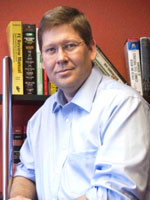
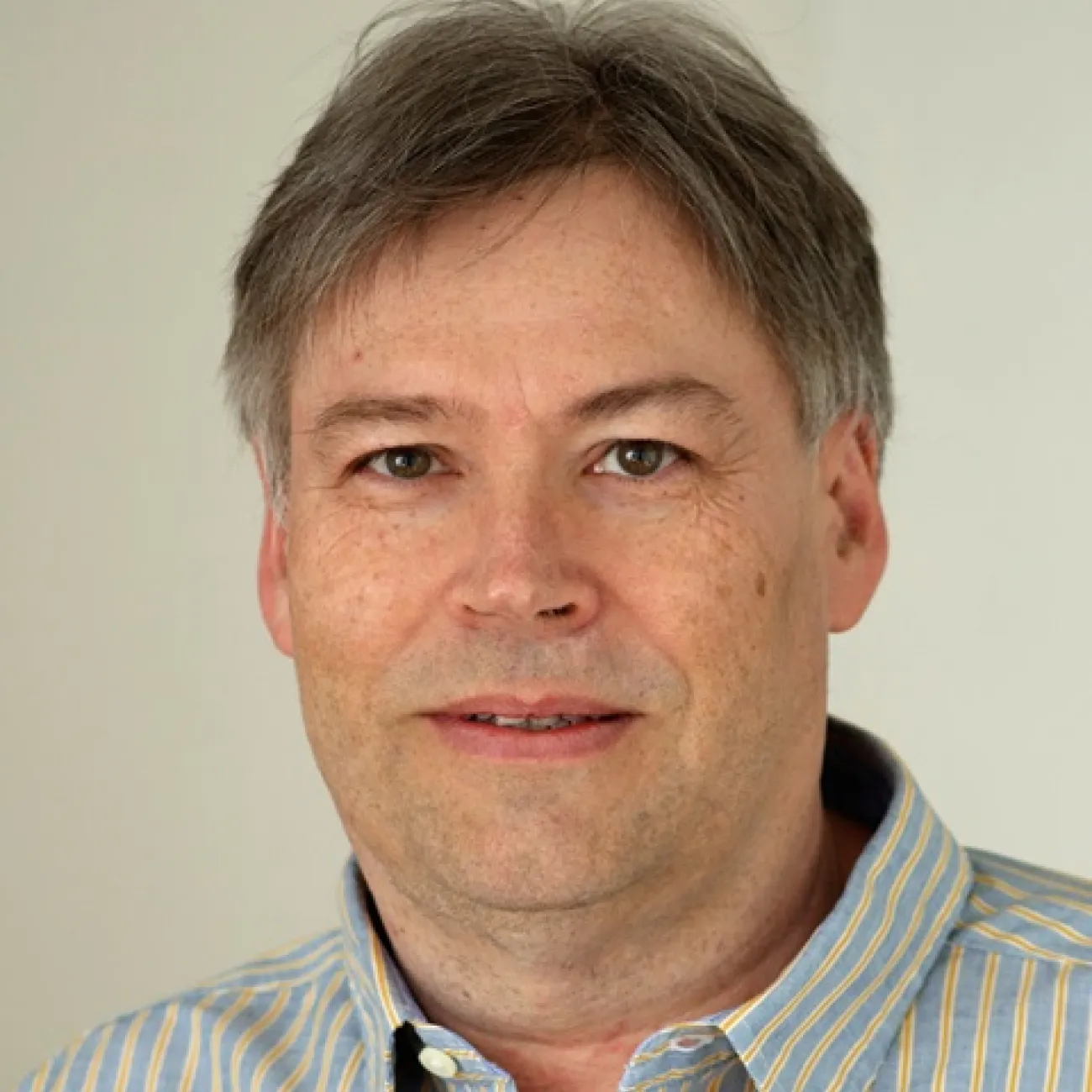
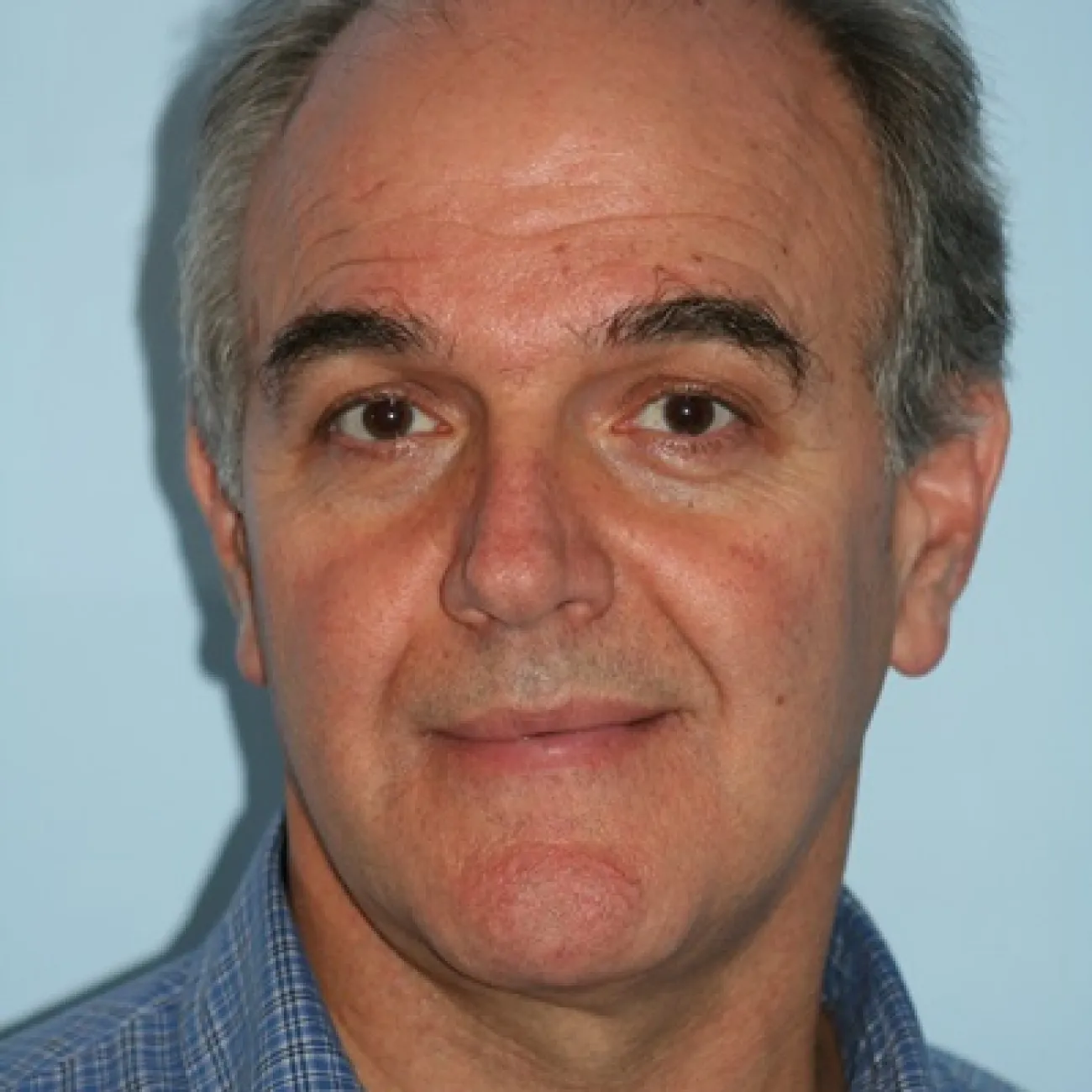
James Dickens is a Professor at the Whitacre College of Engineering , Texas Tech University , where he also serves as the Charles Bates Thornton Professor and Co-Director of the Center for Pulsed Power and Power Electronics (P3E) . He holds a PhD (1995), MS (1993), and BS (1991) in Electrical Engineering from Texas Tech University, and is a registered Professional Engineer in Texas. Research Interests: Grounding & Shielding, Explosive Pulsed Power, High-Power Microwaves, Electric Space Propulsion, Aerospace Electronics Key Contributions: Development of semiconductor opening switches, investigation of gas insulation performance, optimization of nonlinear transmission lines, and analysis of multipactor phenomena in waveguides Awards: Fellow of the Japanese Society for the Promotion of Science (1996) His recent publications focus on solid-state switching technologies , high-voltage gas insulation , and multipactor suppression in microwave systems. His work bridges theoretical modeling (LTspice, ANSYS Maxwell) with experimental validation in extreme environments, including studies on explosive emission cathodes, nanocrystalline transformer cores, and vacuum insulator flashover physics.
Chi-Kwan Lee is a Professor at the University of Technology Sydney (UTS), School of Electrical and Data Engineering since 2024. Previously, he held roles including Associate Professor (2018-2023) and Assistant Professor (2012-2017) at the University of Hong Kong. He earned his B.Eng. and Ph.D. in Electronic Engineering from City University of Hong Kong (1999 and 2004). His research focuses on electric power conversion, electromagnetic devices, wireless power transfer, renewable energy, and smart grid technologies. He was a Visiting Researcher at Imperial College London (2010-2020). Research Highlights: Prof. Lee has pioneered advancements in wireless power transfer for medical devices (e.g., capsule endoscopy) and electric vehicles, with breakthroughs in efficiency optimization and misalignment mitigation. His work on hybrid stepper motor systems and magnetoresistive sensors addresses challenges in contactless actuation and high-voltage current sensing. Awards & Contributions: A Senior Member of IEEE and recipient of the 2015 IEEE Power Electronics Society Transactions First Prize Paper Award. He serves on IEEE PELS committees and editorial boards of key journals like IEEE Transactions on Power Electronics. Grants & Labs: Active in funded research projects related to wireless charging systems, smart grids, and renewable energy integration. His work spans academic collaborations, industry partnerships, and international conferences.
Dr. Kristin Knipfer is a Senior Research Fellow at the TUM School of Management and Executive Director of the TUM Institute for LifeLong Learning . Her research focuses on leadership as a catalyst for organizational learning and innovation, examining how leaders influence team dynamics in academic, entrepreneurial, and corporate settings. Leadership development in academia and business Organizational learning mechanisms Knowledge management systems Digital transformation in leadership education Her recent publications explore leader identity construal, narcissistic leadership impacts, and team reflection processes. She has received multiple awards including the TUM Digital Innovations in Management Education Award and the Richard A. Swanson Research Excellence Award nomination. She leads evidence-based leadership programs for academic leaders and has co-developed digital tools like the TUM Leadership Toolbox and EMMA digital leadership coach. Her work bridges theory and practice through collaborations with institutions like the Vienna University of Economics and Business.
Paul McKenna is a Professor in the Department of Physics, Faculty of Science, at the University of Strathclyde, where he currently serves as Deputy Associate Principal (Research & Knowledge Exchange). He previously held leadership roles as Vice Dean (Research) in the Faculty of Science (2021–2023) and Head of the Department of Physics (2018–2021). His work is central to advancing ultra-intense laser-plasma science and its applications. His research focuses on ultra-intense laser-plasma interactions , particularly the development of laser-driven particle and radiation sources , plasma optics and photonics , and high field science . His work bridges fundamental physics with practical applications in medicine, materials science, and fusion energy. He is actively involved in major international laser facilities, serving on advisory boards such as the Program Advisory Committee for the Extreme Light Infrastructure-Nuclear Physics (ELI-NP) and previously at the Central Laser Facility, Harwell. Recent publications highlight a strong trend in laser-driven proton acceleration , beam diagnostics using machine learning , plasma-based collimation , and structured light generation . His work increasingly integrates computational methods, such as Bayesian optimization and neural networks, to enhance experimental outcomes in high-energy-density physics. Fellow of the Royal Society of Edinburgh (2020) High Power Laser Science and Engineering Outstanding Contribution Award (2023) McKenna has secured significant research funding, notably from EPSRC, and leads multiple active projects including those on relativistic plasma apertures and Bayesian optimization in fusion simulations. He contributes extensively to researcher development and postgraduate research strategy. He has supervised numerous early-career researchers and PhD students, though specific names are not listed in the provided data. He is also involved in interdisciplinary efforts to foster collaborative research cultures in technological universities. He leads or participates in advanced research facilities such as the SCAPA (Scottish Centre for the Application of Plasma-based Accelerators) and contributes to the development of high-repetition-rate laser systems. His lab’s work is highly collaborative, involving partnerships across the UK and internationally, with strong ties to institutions like Queens University Belfast and national laboratories.
Johan Nilsson is a Professor of Optoelectronics at the University of Southampton's Optoelectronics Research Centre (ORC), specializing in high-power fibre laser systems and photonics innovation. His work bridges fundamental laser physics with industrial applications in manufacturing and sensing. His research spans: Fibre laser design and optimization High-power amplification techniques Raman laser development Mid-infrared wavelength generation Laser material processing Optical sensing systems Recent publications (2022-2025) reveal a strategic focus on efficiency breakthroughs in cladding-pumped amplifiers, novel gain media like thulium-doped fibres, and industrial applications including silicon wafer dicing and aero-engine emissions monitoring. His work consistently addresses power-scaling challenges while expanding fibre lasers into new spectral regions and application domains. Professor Nilsson actively supervises four PhD candidates and leads major research initiatives funded by EPSRC, US Air Force Office of Scientific Research, and industry partners including Lockheed Martin and Northrop Grumman. His grant portfolio demonstrates exceptional translational impact, with projects ranging from fundamental beam-combination science to commercial 6kW laser systems for metal 3D printing. As a core member of the ORC's High Power Fibre Lasers and Smart Lasers research groups, he contributes to Southampton's global leadership in photonics through collaborative projects like the EPSRC Centre for Innovative Manufacturing in Photonics and the Smart Fibre-Optic High Power Photonics (HiPPo) initiative.
Professor Michalis Zervas serves as Professor of Optical Communications at the University of Southampton's Optoelectronics Research Centre (ORC), leading pioneering research in photonics and laser technologies. His work integrates advanced optical systems with artificial intelligence to solve complex challenges in telecommunications, manufacturing, and medical diagnostics through major collaborations with industry and international research bodies. His primary research spans Optical Communications, Photonics, and Fibre Lasers, with specialized focus on deep learning applications for laser control optimization, coherent beam combination, and optical fibre sensor development. Current investigations include high-power photonics systems for industrial manufacturing and novel laser-based biomedical diagnostic platforms that bridge physics with healthcare innovation. Recent publications (2025) reveal a decisive trend toward AI-photonic integration, where deep learning algorithms enhance precision in laser-material interactions across diverse applications—from microbead cleaning and paint analysis to psoriasis treatment simulation and diatom imaging. This interdisciplinary approach demonstrates consistent methodological innovation in merging computational intelligence with fundamental laser physics. Supervises 6 PhD students including Rosemary Catriona Clark and Fedor Chernikov in ORC's photonics programs Secures major funding from EPSRC (Smart Fibre-Optic High Power Photonics, Hearing Light) and US Air Force Office of Scientific Research Leads collaborative projects with Professor Sir David Payne and Professor Johan Nilsson across national manufacturing hubs As co-leader of the Smart Lasers and Special Fibres research group within the Advanced Laser Laboratory, Zervas drives experimental photonics innovation through state-of-the-art fibre laser systems and optical resonator technologies. His team maintains strategic partnerships with global industry leaders in photonics manufacturing and medical device development.
Cavit Fatih Küçüktezcan is an Assistant Professor in the Department of Electrical Engineering at Istanbul Technical University, College of Engineering. His research focuses on power system security, optimization methods, and smart grid technologies. He actively contributes to advancements in electric vehicle energy systems, battery modeling, and resilience of renewable-rich power grids. Research Interests: His work spans power system dynamic security , preventive and corrective control , heuristic and evolutionary optimization (e.g., differential evolution, mean-variance mapping, genetic algorithms), and the application of machine learning for transient stability prediction. He also investigates electric vehicle battery systems , including optimal cell selection and real-time energy consumption modeling. The publication trends show a shift toward data-driven and AI-enhanced approaches in power systems, especially in modeling cyber-attack impacts and improving grid resilience. His recent articles emphasize practical applications in sustainable transportation and secure grid operation under uncertainty. Scientific Contributions: Developed optimization frameworks for preventive control with search space reduction. Applied mean-variance mapping optimization to enhance dynamic security. Explored machine learning benchmarks for transient stability under cyber threats. Contributed to battery modeling and energy efficiency in electric buses. Advising and Grants: While specific details on students or funded projects are not available in the provided text, his collaborative research patterns suggest active supervision and team-based research in power systems and energy technology. He frequently co-authors with researchers from Istanbul Technical University, indicating strong institutional collaboration. Labs and Teams: Though no specific lab or research group is named, his work aligns with smart grid, energy systems, and optimization research teams within the Department of Electrical Engineering at ITU. His focus on real-time data and cyber-physical systems suggests potential involvement in intelligent grid monitoring and control initiatives.
Antonio Maria Gonzalez Colas is a Full Professor at the Universitat Politècnica de Catalunya (UPC), affiliated with the Department of Computer Architecture within the Faculty of Computer Science of Barcelona (FIB). He leads the ARCO research group focused on Microarchitecture and Compilers and is actively engaged in high-impact research in computer architecture, GPUs, and energy-efficient computing. His collaborations extend to the Barcelona Supercomputing Center and various national and European research initiatives. Research Interests: His primary research areas include computer architecture, microarchitecture, compilers, GPUs, and processor design. He focuses on energy-efficient computing, deep neural network (DNN) accelerators, GPU simulation and optimization, memory systems, and architectural support for machine learning and autonomous systems. His work often integrates compiler techniques with hardware design for performance and efficiency. Scientific Production Trends: His recent publications demonstrate a strong focus on energy-efficient hardware for AI workloads, particularly DNN and speech recognition acceleration, GPU architectural innovations, memory optimization, and real-time rendering. He frequently publishes in top-tier venues such as ISCA, MICRO, HPCA, and IEEE/ACM journals. ICREA Academia Award 2024 HiPEAC 2024 Paper Award ACM Senior Member (2020) Advising and Grants: He has advised numerous PhD students whose theses cover topics like energy-efficient architectures for autonomous driving, speech recognition, and neural networks. He leads competitive R&D projects, including an ERC Advanced Grant and projects funded by the Spanish National Program and the ICREA Academia program, focusing on domain-specific architectures and cognitive computing units. Labs and Teams: He is the principal investigator of the ARCO (Microarchitecture and Compilers) research group at UPC, a leading team in computer architecture research in Spain. The group is part of a larger collaborative network within UPC and with international partners.
Massimo Poncino is a Full Professor at the Department of Control and Computer Science (DAUIN) within the Faculty of Engineering at Politecnico di Torino. He serves as Scientific Advisor for the STMicroelectronics partnership and coordinates basic engineering subjects. A Senior Member of IEEE since 2012 and Fellow since 2012, he has served on editorial boards for IEEE Transactions on Computer-Aided Design, IEEE Design & Test of Computers, and ACM Transactions on Design Automation. Education: Laurea in Electronic Engineering (1989) and PhD in Computer and Systems Engineering (1993) from Politecnico di Torino Academic Career: Visiting Scientist University of Colorado (1993-1994), Researcher at Politecnico di Torino (1995-2001), Associate Professor at University of Verona (2001-2004), Full Professor at Politecnico di Torino (2006-present) His research focuses on energy-efficient digital systems , including design automation of SoCs, hardware-aware AI, battery management, cyber-physical systems, and embedded systems. Recent publications highlight advancements in digital twins for batteries , low-power neural network deployment , and IoT privacy . Scientific Awards: Recognition of Service Award - ACM (2013) Certificate of Appreciation - IEEE Circuits and Systems Society (2006, 2008, 2009) IEEE Fellow (2012-) Research Involvement: EU H2020, VI/VII Framework Programs evaluator Scientific Director for projects: Approxim@ction, EMBAI, DISLO-MAN, DAMASCO Member of EDA research group Teaching: Course director for Energy Management for IoT (2019-2025) Lecturer for Computer Science courses (2003-2025)
Per-Olov Östberg is an Associate Professor at the Department of Computing Science, Umeå University, and a research leader in the Autonomous Distributed Systems Lab (ADSLab). His work focuses on resource management for distributed cloud environments using AI/ML-based techniques, with a particular emphasis on ethical reasoning integration for responsible AI solutions. Research Themes: Cloud-edge continuum optimization, serverless frameworks, 6G computing challenges, data fabric architectures, and energy-aware systems Projects: COGNIT (cognitive serverless framework), WARA Common Information Bridge (data-driven cloud operations), De facto Center of Excellence in Autonomous Distributed Systems His publications (2011-2024) demonstrate consistent contributions to cloud resource management, including fairshare scheduling, decentralized prioritization, and power-performance tradeoffs. He has collaborated on interdisciplinary projects with institutions across Europe. Scientific Awards: None explicitly stated in provided information.
Massimo Cenciarini is a Senior Lecturer in the Department of Mechanical Engineering at the Universitat Politècnica de Catalunya (UPC), affiliated with the School of Industrial Engineering (ETSEIB). He is an active member of the BIOMEC - Biomechanical Engineering Lab, TecSalut - Health Technologies Research Group, and CDEI - Industrial Equipment Design Centre. His work bridges engineering and biomedical applications, focusing on human movement and assistive technologies. Research Interests: Biomechanics and human balance Wearable robotics and exoskeletons System identification and control Assistive mobility technologies Mechatronics and simulation Postural control and motor adaptation His recent publications show a strong trend in wearable robotic devices, particularly knee exoskeletons, with emphasis on human-exoskeleton interaction, misalignment compensation, impedance identification, and gait assistance. His work integrates biomechanical modeling, experimental validation, and translational research for rehabilitation and mobility enhancement. Scientific Awards: 3r Premi UPC al Compromís Social He has participated in competitive R&D projects such as Xartec Salut and technology transfer initiatives, including the development of wearable knee exoskeletons. While no formal students are listed, his collaborative projects suggest mentorship roles within multidisciplinary teams. He is involved in research networks focused on health technologies and Industry 4.0 educational environments. Laboratories and Research Groups: BIOMEC - Biomechanical Engineering Lab (UPC) TecSalut - Health Technologies Research Group CDEI - Centre de Disseny d'Equips Industrials
Aidan O'Sullivan is an Associate Professor in Energy and Artificial Intelligence at University College London's Bartlett School of Environment, Energy & Resources, where he leads the Energy Systems and Artificial Intelligence Lab and the department's Data Analytics research theme. He is also the founding course director of the Energy Systems and Data Analytics MSc, an innovative program combining energy systems and sustainability with data science and machine learning. Current Position: Associate Professor, UCL Energy Institute Education: PhD in Mathematics, Imperial College London Prior Experience: Postdoctoral Researcher at MIT Civil Engineering Department Affiliation: Turing Fellow at the Alan Turing Institute (2018-2020) O'Sullivan's research focuses on applying artificial intelligence to energy system problems, particularly in power systems and heavy industry. He is a pioneer in using data science and machine learning with novel energy sector data sources like renewable generation and smart meter data. His specific AI interests include reinforcement learning, ensemble based methods, latent variable models and deep learning, with additional interest in complex network theory for understanding system interdependencies. His publication history shows a clear evolution from transportation and aviation applications toward direct power system applications, with reinforcement learning emerging as a consistent methodology across his work. The research demonstrates strong interdisciplinary integration of AI techniques with energy system challenges, particularly in grid management, optimization, and emissions reduction. O'Sullivan has received recognition including a Turing Fellowship from the Alan Turing Institute in 2018, the UK's leading center for AI and data science research. Turing Fellowship, Alan Turing Institute (2018-2020) As an educator, O'Sullivan serves as Deputy Director and Founding Course Director of the MSc in Energy Systems and Data Analytics. He teaches BENV0094 Statistics for Energy Analytics, focusing on the mathematical foundations of machine learning methods and their application to energy system datasets. His teaching directly addresses the industry need for professionals with integrated expertise in energy systems and data science. O'Sullivan leads the Energy Systems and Artificial Intelligence Lab at UCL, which focuses on applying advanced AI techniques to solve complex energy system challenges, particularly in grid management, renewable integration, and energy efficiency. His work aligns with UN Sustainable Development Goals 7 (Affordable and Clean Energy), 11 (Sustainable Cities and Communities), and 13 (Climate Action), reflecting the applied nature of his research in addressing global energy challenges.
Martin Henze is a tenure-track Assistant Professor at RWTH Aachen University's Department of Computer Science, where he leads the Security and Privacy in Industrial Cooperation (SPICe) research group. Additionally, he co-leads the Secure Production & Energy Networks research group at the Fraunhofer Institute for Communication, Information Processing and Ergonomics FKIE in Bonn, Germany. His work bridges academic research with practical industrial security applications, focusing on critical infrastructure protection. Dr. Henze's research interests center on technical security and privacy aspects of industrial networks and data sharing, with special emphasis on energy and production sectors. His work spans industrial intrusion detection, 5G security for industrial applications, IoT security in constrained environments, and blockchain security. He develops practical security solutions that balance protection needs with the resource constraints and operational requirements of industrial systems, particularly focusing on making security both effective and comprehensible for operators. His recent publications demonstrate a strong focus on industrial security challenges, with particular emphasis on intrusion detection systems that maintain operator control, TLS optimization for resource-constrained industrial IoT, 5G security for production systems, and novel approaches to securing legacy industrial protocols. His work consistently addresses the tension between security requirements and operational constraints in industrial settings. Nachwuchsförderpreis Verbraucherforschung NRW Borchers-Plakette ICT Young Researcher Award Dr. Henze actively contributes to the academic community through service on numerous prestigious program committees including ACM CCS, IEEE S&P, NDSS, and USENIX Security. His teaching portfolio includes graduate courses on Industrial Data Security, Industrial Network Security, and specialized seminars on 5G/6G Security and IoT Security. His research is highly collaborative, frequently involving partnerships across institutions and with industry to address real-world security challenges in critical infrastructure. He heads the SPICe research group at RWTH Aachen, which focuses on developing practical security and privacy solutions for industrial cooperation scenarios. The group's work emphasizes creating security mechanisms that are not only technically sound but also comprehensible and usable by industrial operators, recognizing that the human element is critical in maintaining security in complex industrial environments.
Joe Alexandersen is an Associate Professor in the Department of Mechanical Engineering at the University of Southern Denmark (SDU), affiliated with the Institute of Mechanical and Electrical Engineering. His research spans structural optimization, heat transfer, fluid dynamics, and high-performance computing, with applications in heat sink design, microfluidic devices, and additive manufacturing. Research Interests Topology and shape optimization Conjugate heat transfer Navier-Stokes flow modeling Finite element methods High-performance computing Scientific Awards 2022 Fluids 2020 Best Paper Award 2017 DTU Young Researcher Award 2015 ISSMO/Springer Prize for Young Scientist Key Projects HiHeaT: Topology optimization for high heat flux components (2024–2027) Structural Analysis of Large Modular Vessels (2025–2027)
Prof. Dr.-Ing. Katharina Schmitz serves as Institute Director and Vice Dean at the Institute for Fluid Power Drives and Systems, RWTH Aachen University. Her leadership within the Production Technology Cluster and extensive contributions to fluid power engineering establish her as a leading authority in mechanical engineering research and education. Her research spans fluid power systems, hydraulic component design, tribology, and physics-informed machine learning applications. She pioneers sustainable propulsion solutions through bio-hybrid fuels research while addressing fundamental challenges in polymer material behavior under hydraulic stresses. Current work focuses on carbon-neutral heavy-duty transportation, physics-based neural networks for lubrication modeling, and advanced control systems for electro-hydraulic actuators. Analysis of her 15 most recent publications reveals a dominant trend toward integrating physics-based modeling with deep learning to solve complex engineering problems. Her team consistently develops novel frameworks for cavitation prediction, flow rate determination, and material compatibility assessment - significantly advancing fluid power system reliability, efficiency, and digitalization. Scientific recognition includes: GfT Förderpreis 2023 for experimental and simulative investigation of partially hydrostatic relieved contacts in variable speed axial piston machines As head of the Institute for Fluid Power Drives and Systems, she leads cutting-edge research in sustainable fluid power technologies. The institute maintains strong industry partnerships while driving innovation in hydraulic component design, digital twins for condition monitoring, and next-generation propulsion systems through its position within RWTH Aachen's Production Technology Cluster.