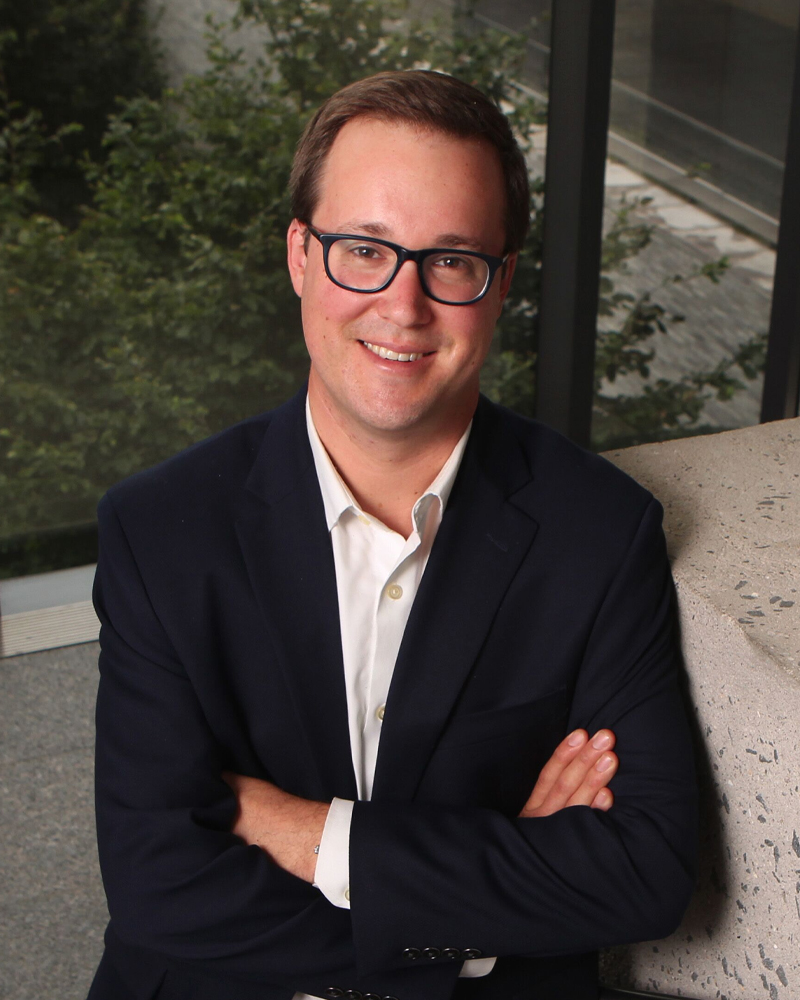
Jesse D. Jenkins is an Associate Professor of Mechanical and Aerospace Engineering and the Andlinger Center for Energy and the Environment at Princeton University. His joint appointment bridges the School of Engineering and Applied Science and the Andlinger Center, focusing on macro-scale energy systems engineering. He holds a Ph.D. in Engineering Systems from MIT (2018) and completed a postdoctoral fellowship at Harvard Kennedy School. Research Interests: Energy systems modeling, deep decarbonization pathways, low-carbon technologies, and energy policy. He leads the Princeton ZERO Lab, which develops optimization-based models to evaluate clean energy transitions and inform policy. Key Awards: Howard B. Wentz Jr. Junior Faculty Award, Princeton Engineering Teaching Excellence Award, TIME100 Next (2024), and recognition in ENR's 2022 Top 25 Newsmakers for leadership in climate policy analysis. Professional Contributions: Serves on advisory boards for Eavor Technologies, Rondo Energy, and Dig Energy. Co-hosts the podcast Shift Key on energy transition strategies. Labs/Teams: Directs the ZERO Lab and co-leads the REPEAT Project, analyzing U.S. decarbonization pathways and federal policy impacts.
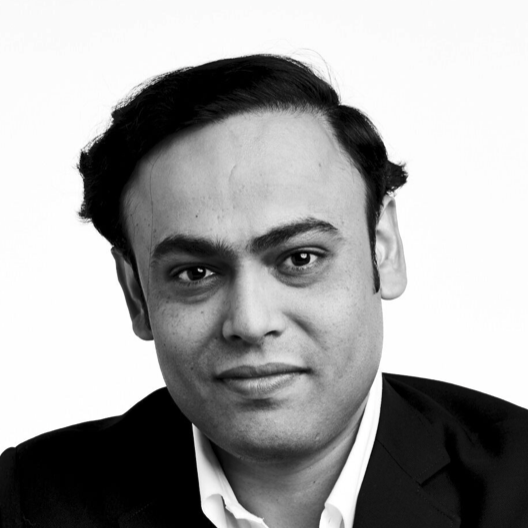
Saurabh Amin is a Professor in the Department of Civil and Environmental Engineering at the Massachusetts Institute of Technology (MIT), where he also serves as the Edmund K. Turner Professor and Undergraduate Officer. He is a Principal Investigator at the Laboratory of Information and Decision Systems and holds affiliations with the Operations Research Center and the Center for Computational Science and Engineering. His educational background includes: B.Tech. 2002, Indian Institute of Technology (IIT) Roorkee M.S. 2004, University of Texas (UT) Austin Ph.D. 2011, University of California (UC) Berkeley Saurabh Amin's research focuses on the design and control of infrastructure systems using game theory and optimization in networks. His work spans three main areas: resilient network control, information systems and incentive design, and optimal resource allocation in large-scale infrastructure systems. By concentrating on critical infrastructure domains including highway transportation, electric power distribution, and urban water networks, his research develops innovative theory and tools to enhance system performance against both stochastic and adversarial disruptions. His approach involves modeling cyber-physical interactions in infrastructures to assess vulnerabilities, developing detection and response tools for failures at various scales, and designing economic incentive schemes that improve aggregate public good while accounting for dependencies and private information among strategic entities. Amin's work bridges mathematical systems theory with practical civil engineering applications, creating a rigorous theoretical foundation for infrastructure resilience that addresses diverse failure mechanisms from natural disasters to deliberate malicious actions. His recent publications demonstrate a strong focus on decarbonization of energy systems, resilient infrastructure planning under climate uncertainty, optimization methods for complex networked systems, and game-theoretic approaches to sustainable infrastructure management. His work increasingly integrates artificial intelligence and machine learning techniques with traditional control theory to address contemporary challenges in infrastructure resilience and sustainability. The research shows a clear trajectory toward addressing climate change impacts on infrastructure systems while maintaining economic efficiency and operational reliability. Professor Amin has received numerous prestigious awards and honors: Common Ground Excellence in Teaching Award, 2025 HSCC Test-of-Time Award, 2024 MIT CEE, Distinguished Service and Leadership Award, 2023 Samuel M. Seegal Prize (SoE) – inspiring students in pursuing and achieving excellence, 2022 Earll M. Murman for Excellence in Undergraduate Advising, 2022 C3.ai Digital Transformation Institute Research Award, 2020 MIT, Ole Madsen Mentoring Award, 2020 MIT, Energy Initiative Research Award, 2020 National Academy of Engineering, China-America Frontiers of Engineering Symposium speaker, 2019 MIT, Robert N. Noyce Career Development Professor, 2015-2018 Google Faculty Research Award, 2015 National Science Foundation CAREER Award, 2015 Siebel Energy Institute Research Award, 2015 MIT, Solomon Buchsbaum AT&T Research Fund Award, 2012 Professor Amin has been actively involved in significant research projects including the C3.ai DTI project on Causal Reasoning for Real-Time Attack Identification in Cyber-Physical Systems and another on Learning in Routing Games for Sustainable Electromobility. He serves as the chief scientist on multi-institutional NSF grants, including the $9 million Foundations of Resilient Cyber-Physical Systems (CPS) project. His teaching portfolio includes courses such as 1.008 Engineering for a Sustainable World, 1.104 Sensing and Intelligent Systems, 1.020 Engineering Sustainability: Analysis and Design, and 1.208 Resilient Networks. As Undergraduate Officer, he plays a key role in shaping the educational experience for civil and environmental engineering students at MIT. Professor Amin leads the Resilient Infrastructure Networks Lab at MIT, where his team develops theoretical foundations and practical tools for infrastructure resilience. The lab focuses on the intersection of control theory, game theory, and optimization applied to cyber-physical infrastructure systems. Current research directions include pandemic-resilient urban mobility and hurricane-resilient smart grid operations, reflecting the lab's commitment to addressing pressing societal challenges through rigorous systems engineering approaches.
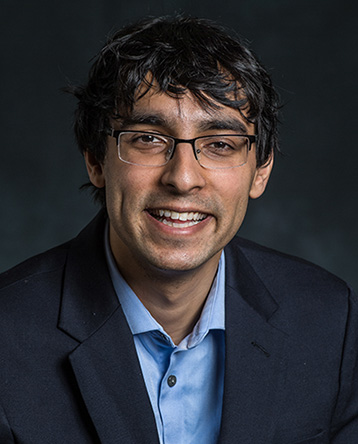
Jacob Østergaard is a Professor and Head of the Division for Power and Energy Systems at DTU Wind and Energy Systems, Technical University of Denmark. His research focuses on renewable energy systems, offshore wind power hubs, and quantum computing applications in energy systems. He leads initiatives like EnergyLab Nordhavn and PowerLabDK, emphasizing collaboration between academia and industry. Education: MSc in Electrical Engineering from DTU (1989–1995). External positions include roles at Research Institute of the Danish Electric Utilities and Ørsted (now SK Energy). Research Interests: Power system stability, flexibility markets, offshore wind energy, quantum computing in energy systems, Power-to-X, and energy storage. He advocates for integrated, market-based energy systems to achieve the green transition. Publications highlight quantum computing for grid optimization, offshore energy hubs, and Denmark’s energy island strategy. Recent work emphasizes scientific advice for energy policy and green hydrogen production. Awards: A. Angelo’s Prize (1996), AEG Electron Prize (2007), Danish Design Award (2019), and EU RESponsible Island Prize (2020). Advising and Grants: Supervises PhD students in grid integration and control. Active in projects like OEH (Offshore Energy Hubs) and BOSS (Battery Energy Storage System). His work drives Denmark’s energy policy through roles on Energinet’s board and the Danish Energy Commission. Labs/Teams: Leads PowerLabDK and EnergyLab Nordhavn, experimental facilities for smart grid and energy system research.
Rachid Cherkaoui is a Senior Scientist at École polytechnique fédérale de Lausanne (EPFL), affiliated with the School of Engineering, specifically within the Department of Electrical Engineering. He is actively associated with research units SEL-ENS, EDEY-ENS, and DESL, contributing to the Distributed Electrical Systems Laboratory (DESL). His work focuses on advanced power system optimization, smart grids, and energy market modeling. Ph.D. in Electrical Engineering, EPFL, 1992 M.S. in Electrical Engineering, EPFL, 1983 Dr. Cherkaoui's research interests include electrical power and distribution systems, distributed generation, energy storage, electricity market deregulation, and power system vulnerability mitigation. His work bridges theoretical modeling and real-world applications, particularly in flexibility provision, grid resilience, and market integration of renewable energy. His recent publications (2020–2025) reflect a strong focus on smart grid technologies, energy storage integration, and market mechanisms. Key themes include optimal dispatch of hybrid systems, TSO-DSO coordination, frequency control, and stochastic optimization under uncertainty. His work is frequently published in top-tier journals such as IEEE Transactions on Power Systems and IEEE Transactions on Smart Grid. ABB Swiss Award '83 Senior Member, IEEE Member, CIGRE Task Forces C5-2 IEEE Swiss Chapter Officer since 2005 Dr. Cherkaoui actively supervises doctoral students and collaborates extensively with researchers like Mario Paolone. He has contributed to numerous projects funded by industry, CTI/Innosuisse, and Horizon 2020. His research includes experimental validation and real-time control systems, particularly in hydropower and battery storage applications. He is also involved in national and international energy strategy discussions, including Switzerland's path to carbon neutrality.
Scott Kemp is an Associate Professor at the Massachusetts Institute of Technology (MIT) within the Department of Nuclear Science and Engineering , where he also directs the Laboratory for Nuclear Security and Policy . His interdisciplinary research bridges physics, political science, and history to address challenges in nuclear security, energy policy, and critical infrastructure protection . Education: B.Sc. in Physics from University of California, Santa Barbara; Ph.D. in Public and International Affairs from Princeton University Research focuses on: Strategic implications of hypersonic and advanced conventional weapons Securing vulnerabilities in energy/water/gas infrastructure Technological tools for nuclear disarmament verification Decarbonization policy frameworks Scientific recognition includes: Fellow of the American Physical Society (2017) Sloan Research Fellowship in Physics (2016) NEC Corporation Award in Computation (2015) Fulbright Fellow (2003) As an academic advisor in MIT's Energy Studies Program , he mentors students in policy-science intersections while serving on the International Policy Lab and President’s Committee for Distinguished Fellowships .
Andrew Rowe is a Professor in Mechanical Engineering at the University of Victoria (UVic), with affiliations to the Institute for Integrated Energy Systems (IESVic) and the Advanced Mechanical Research Laboratory (AMRLab). He holds a BEng from the Royal Military College of Canada, MASc and PhD from UVic, and is a licensed Professional Engineer (P.Eng). His research focuses on thermodynamics, energy systems, cryogenics, and heat transfer, with particular expertise in caloric cycles, hydrogen systems, and energy systems analysis. His research emphasizes decarbonization strategies, including hydrogen integration into natural gas networks, grid flexibility under electrification scenarios, and the optimization of magnetocaloric materials for energy-efficient cooling. AMRLab, led by Rowe, develops technologies for energy conversion, storage, and system optimization, addressing challenges in low-temperature thermal systems and integrated energy networks. Recent work explores the systemic impacts of electrification in transportation and buildings, leveraging open-source tools like the NExus Solutions Tool (NEST) for multi-scale energy-water-land system modeling. His projects often address regional energy challenges, such as British Columbia’s transition to renewable energy and grid infrastructure resilience. Key contributions include studies on gas system decarbonization via hydrogen blending, thermal-hydraulic modeling of energy systems, and experimental validation of magnetocaloric materials. Rowe’s publications highlight interdisciplinary approaches to climate mitigation, emphasizing the interplay between technological innovation and systemic policy frameworks.
Paul Dodds is Professor of Energy Systems at University College London's Bartlett School of Environment, Energy & Resources, where he holds joint appointments at the UCL Energy Institute and the Institute for Sustainable Resources. He serves as the Faculty Graduate Tutor for the Bartlett Faculty of the Built Environment, overseeing all doctoral research programs. His academic progression at UCL has been steady, moving from Research Associate (2011-2014) to Senior Research Associate (2014-2015), Lecturer (2015-2016), Senior Lecturer (2016-2018), Associate Professor (2018-2020), and finally to Professor. His educational background includes a PhD from the University of Leeds (2010) focused on climate change and agriculture in Senegal, where he developed a new crop model for adaptation research and created detailed meteorological datasets for West Africa. He also holds a Master of Natural Science (Honours) from the University of Nottingham (2000). Dodds specializes in energy systems modelling with particular expertise in hydrogen and bioenergy systems, and the importance of energy storage. His research examines the interactions between society and the environment, with a focus on energy and food systems. He has developed the UK TIMES energy systems model, which has replaced the UK MARKAL model and is now co-developed with the UK Department of Business, Energy and Industrial Strategy (BEIS). This model has provided underpinning evidence for the UK's Clean Growth Strategy and Net Zero Strategy. His methodological contributions include formalizing a theoretical approach to analyzing the evolution of energy system models using 'model archaeology'. Analysis of his recent publications reveals a strong focus on hydrogen energy systems, with multiple papers examining hydrogen trade pathways, integration methods, and environmental impacts. His work increasingly addresses the geopolitical dimensions of energy transition, as seen in studies about Russian gas pivots to Asia and global energy scenarios. He maintains expertise in energy system modeling techniques while expanding into practical applications for policy development, particularly regarding the UK's net-zero transition. Dodds has supervised 15 PhD students at UCL, with eight under his primary supervision. His professional activities include serving as the UK Alternate Delegate to IEA Hydrogen since 2017, acting as a PhD External Examiner at the University of Edinburgh, and participating in the EPSRC Peer Review College. He has contributed to multiple government initiatives, including the UKERC Future of the Gas Networks workshop and representing the UK Government at IEA ETSAP meetings. He teaches an undergraduate module on 'Energy and Environmental Systems Modelling' and guest lectures on several MSc courses. His research group focuses on energy system modeling, with particular emphasis on the UK TIMES model development and application. His work often involves collaboration with government bodies, particularly BEIS, and he has coordinated significant projects like seven reports on overshoot pathways for the UK Government.
Akshaya Jha is an Associate Professor of Economics and Public Policy at Carnegie Mellon University’s Heinz College of Information Systems and Public Policy , as well as a Faculty Research Fellow at the National Bureau of Economic Research (NBER) . His work combines economic modeling with causal inference to analyze energy and environmental policy impacts on electricity markets. Education: Ph.D. in Economics, Stanford University B.S. in Economics and Statistics, Carnegie Mellon University Research Interests span energy economics , environmental economics , industrial organization , and public policy , focusing on quantifying economic and environmental trade-offs in electricity supply policies. Recent work includes financial trading in California’s electricity market, Germany’s nuclear phase-out, rooftop solar growth in Western Australia, and electricity blackout determinants in India. Scientific Contributions appear in American Economic Review , Management Science , and PNAS . Article trends reveal expertise in regulatory distortions , market design , environmental externalities , and policy communication . Scientific Awards: Hicks-Tinbergen Award (best paper in Journal of the European Economic Association ) Heinz College Martcia Wade Teaching Award (2023) USAEE Young Professional Research Award (2021)
Dr. Hakan Karaosman is an Associate Professor at Cardiff Business School, Cardiff University, and a globally recognized expert in supply chain sustainability, particularly in fashion and textiles. He serves as Chief Scientist at FReSCH (Fashion's Responsible Supply Chain Hub), a UN-recognized, EU-awarded action research project hosted by University College Dublin, and holds visiting positions at University College Dublin and Politecnico di Milano. He is Chair of the Union of Concerned Researchers in Fashion (UCRF) and an advisory board member for Remake and other sustainability initiatives. His research focuses on just transition, decarbonization, social equity, and sustainable operations in fashion supply chains. He has authored numerous influential publications in top journals such as the International Journal of Operations & Production Management , and his 2025 paper 'For the many not the few: Introducing just transition for supply chain management' was among the most downloaded in its journal. His work emphasizes systemic change, stakeholder inclusion, and action research, bridging academia and industry. Hakan’s recent publications reflect a strong thematic focus on justice, equity, and systemic transformation in fashion. Key trends include critiquing greenwashing, advocating for supplier inclusion in climate action, analyzing the social dimensions of decarbonization, and promoting just transition frameworks. His research consistently addresses power imbalances, labor rights, and the need for inclusive, people-centered sustainability strategies. His scientific honors include the Financial Times Responsible Business Education Award (2025), the Cardiff University Celebrating Excellence Award for Sustainability (2023), and being named a Sustainability Thought Leader in the Vogue Business 100 Innovators (2023). He also received a prestigious Marie Skłodowska-Curie Individual Fellowship from the European Union. He is actively involved in postgraduate supervision and has delivered teaching on supply chain management and sustainability. His academic service includes roles as Area Editor for Operations Management Journals and editorial board member for several leading journals. He frequently collaborates with international organizations, including the UN, NGOs, and fashion companies, and is a sought-after keynote speaker at global events such as the Financial Times, TEDx, and the Global Fashion Summit. Hakan leads FReSCH, an international research hub focused on responsible fashion supply chains. He is also a founder and key organizer of initiatives like the Next Generation Assembly and A New Awareness, fostering collaboration among researchers, students, and industry stakeholders to drive systemic change in the fashion industry.
Benjamin F. Hobbs serves as the Theodore M. and Kay W. Schad Professor of Environmental Management at Johns Hopkins University, holding a primary appointment in the Department of Environmental Health and Engineering and a joint appointment in the Department of Applied Mathematics and Statistics. He is co-director of the USEPA Yale-JHU SEARCH Center and director of the NSF-funded Electric Power Innovation for a Carbon-free Society (EPICS) Center, focusing on interdisciplinary research at the intersection of energy systems, environmental management, and public health. Hobbs' educational background includes a BS from South Dakota State University (1976), an MS in Resources Management and Policy from SUNY-Syracuse (1978), and a PhD in Environmental Systems Engineering from Cornell University (1983). Prior to joining Johns Hopkins in 1995, he worked at Brookhaven and Oak Ridge National Laboratories and served as a professor at Case Western Reserve University, with additional visiting appointments at institutions including Cambridge University. His research integrates systems analysis, economics, and optimization to address critical challenges in electric utility planning, renewable energy integration, and environmental resource management. Key focus areas include solar forecasting using AI, green infrastructure for urban water management, health impacts of energy transitions, and grid reliability under high renewable penetration. His work emphasizes practical applications through engineering-economic modeling with rich technological and environmental detail. Analysis of his recent publications reveals a strong trend toward addressing grid reliability in decarbonizing systems, with increasing emphasis on market design innovations, resource adequacy under uncertainty, and storage-transmission tradeoffs. His research consistently bridges theoretical optimization with real-world policy implementation, particularly evident in his leadership of the EPICS Center's 100% renewable grid initiatives. Lifetime Achievement Award by Energy Systems Integration Group (ESIG), 2024 Fellow of the Institute of Electrical and Electronics Engineers (IEEE) Fellow of the Institute for Operations Research and Management Science (INFORMS) Hobbs advises graduate students through Johns Hopkins' interdisciplinary programs, with alumni employed as energy consultants, policy analysts, and researchers. His current grants include leadership of the NSF Global Center EPICS and co-direction of the USEPA SEARCH Center, focusing on energy-air-climate-health interactions. He chairs the Market Surveillance Committee for the California Independent System Operator and serves on editorial boards for Energy Economics and other leading energy journals. He leads the Hobbs Energy & Environment Decisions Research Group, which collaborates with institutions including IBM, National Renewable Energy Laboratory, and University of Texas at Dallas. The group participates in the Global Power Systems Transformation Consortium and Columbia-JHU Future Power Markets Forum, conducting fieldwork initially in California and the central United States.
Rajesh Karki is a Professor in the Department of Electrical and Computer Engineering at the University of Saskatchewan’s College of Engineering. He holds a B.E., M.Sc., and Ph.D. in related fields. His research focuses on power system reliability, renewable energy integration, and microgrid resilience, with particular emphasis on addressing challenges posed by extreme weather, cyber threats, and decarbonization targets. Dr. Karki’s work spans theoretical modeling, probabilistic analysis, and practical implementation strategies for smart grids, energy storage systems, and distributed generation. His educational background includes advanced degrees in electrical engineering, complemented by professional engineering licensure (P.Eng.). His research has explored diverse topics such as wind energy curtailment mitigation, energy storage optimization, and demand response mechanisms in developing economies like Nepal. He has authored numerous peer-reviewed publications on grid resilience, reliability economics, and cyber-physical system security. Key themes in his work include: (1) quantifying the reliability value of energy storage in active distribution systems, (2) modeling cyber-physical threats to microgrids, and (3) developing frameworks for extreme weather-resilient infrastructure. Despite the volume of his publications (over 50 articles), no specific awards or grants are explicitly listed in the provided materials. His research often intersects technical, economic, and policy dimensions of sustainable energy systems.
Lars O. Nord is a Professor in the Department of Energy and Process Engineering at NTNU, specializing in thermal energy systems, CO2 capture technologies, and dynamic process modeling. He holds a PhD from NTNU (2010) and a Master's from Virginia Tech (2001). His research focuses on power cycles, turbomachinery optimization, and decarbonization strategies for energy systems. Nord has led projects such as DEXPAND and InnCapPlant, addressing CO2 capture under variable loads and expander efficiency in renewable systems. Current roles: Head of the Thermal Energy research group and teaches courses like Engineering Thermodynamics. Research highlights include thermal energy storage integration, moving bed adsorption processes, and offshore hybrid energy systems. His work spans over 80 publications, emphasizing CO2 capture dynamics, turbine design, and control strategies for flexible power plants. Notable collaborations include SINTEF and Aker Solutions. Nord advises multiple PhD candidates and has mentored alumni now leading roles in industry and academia.
Professor Alan J Murphy is a leading academic in Maritime Engineering at the University of Southampton. He holds a First-Class BEng in Naval Architecture and a PhD in Experimental Hydrodynamics. His research focuses on decarbonizing maritime systems, emission reduction, and sustainable propulsion technologies. He has held leadership roles including Head of the Marine, Offshore and Subsea Technology Group at Newcastle University and is currently Editor-in-Chief of the International Journal of Maritime Engineering. Education: BEng Naval Architecture (Newcastle University), PhD Experimental Hydrodynamics (University of Southampton) Affiliations: Royal Institution of Naval Architects Fellow, Worshipful Company of Shipwrights Liveryman Research interests include net-zero maritime propulsion, energy efficiency, and policy/regulation for sustainable shipping. He has supervised numerous PhD students and contributed to major projects such as the establishment of Newcastle University’s Singapore campus. Publications span topics like electrified port systems, alternative marine fuels, and underwater vehicle navigation. Awards include the Stanley Grey Fellowship and Froude Scholarship.
Jessica Jewell is a Professor in Technology and Society at Chalmers University's Department of Space, Earth and Environment. She holds additional roles including Professor at the Centre for Climate and Energy Transformation (University of Bergen), Guest Research Scholar at IIASA, and Senior Fellow at the Breakthrough Institute. Her research focuses on climate action feasibility, energy transitions, and the political economy of decarbonization. She leads projects funded by the European Research Council (ERC), Norwegian Research Council, and EU initiatives like CINTRAN. Key achievements include an ERC Starting Grant and membership in the Swedish Young Academy. Her work spans interdisciplinary approaches to quantify energy transition dynamics, assess coal phase-out strategies, and analyze carbon capture deployment. She serves on editorial boards for journals like Energy Research and Social Science and Oxford Open Energy . Jewell’s recent articles highlight themes like climate justice in energy transitions, feasibility of rapid decarbonization, and global coal reduction pathways. Her research bridges technical, socio-economic, and political dimensions to inform actionable climate policies.
Dr. Bhavna Sharma is an Associate Professor and Director of the Chase L. Leavitt Master of Building Science Program at the USC School of Architecture. Her work focuses on decarbonization, bio-based materials innovation, and sustainable healthcare infrastructure. She leads the Keck USC Sustainable Healthcare Initiative (KUSHI) to advance environmentally conscious healthcare systems. Dr. Sharma holds a Ph.D. in Civil and Environmental Engineering from the University of Pittsburgh, with additional degrees in Art History and Architecture. Her research spans structural systems optimization from material harvesting to building-scale applications, emphasizing bio-composites like bamboo and timber. She co-chairs USC's Presidential Working Group on Sustainability, contributing to Assignment: Earth climate goals. Courses taught include seismic design, structural systems, and building science integration. Key research areas include lifecycle assessment in healthcare, seismic-resistant designs, and interdisciplinary standards for non-conventional materials. Her work bridges material science, architectural practice, and policy to address global sustainability challenges.