Dag Henrik Tuastad is a Professor of Middle East Studies at the Department of Culture Studies and Oriental Languages (IKOS) at the University of Oslo. His research focuses on kinship dynamics in Palestinian politics, rebel governance (notably Hamas rule in Gaza 2007–2023), political representation crises, and the intersection of sports and politics in the Middle East. Current projects include senior research at Football and Religion in the Middle East (FORM) , funded by the Norwegian Research Council (2021–2026) Former project leader for Rebel Governance in the Middle East (2017–2021) PhD in Social Anthropology (2008) on kinship in Palestinian politics His recent publications analyze Hamas’s symbolic authority, football’s role in Jordanian-Palestinian identity formation, and the erosion of legal frameworks in the West Bank. He critiques media bias (e.g., in Qatar World Cup coverage) and explores how football culture reflects broader political tensions. Teaching: Courses on Middle East history, cultural anthropology, and conflict resolution Regional Focus: Palestine, Jordan, Gaza, and the Levant
Irina Oleinikova is a Professor at the Norwegian University of Science and Technology (NTNU) in the Department of Electric Energy, Faculty of Information Technology and Electrical Engineering. She leads the Power System Operation and Analysis research group and serves as the NTNU Smart Grid Team Leader. She is a steering committee member of the European Energy Research Alliance (EERA) Joint Programme on Smart Grids and an expert in the International Smart Grid Action Network (ISGAN) WG6. Research Interests : Power System Operation, Digital Power System Protection and Control, Grid Resilience, Energy Flexibility, Cybersecurity in Power Systems, and Hydrogen Technology Integration. Her work focuses on advancing smart grids, grid flexibility, and cybersecurity through projects like FME CINELDI, HONOR, ASAP, and ZeroKyst. Key Projects : CINELDI : Developing intelligent electricity distribution grids. HONOR : Cross-sectoral energy flexibility markets. ASAP : Next-generation system protection schemes. ZeroKyst : Hydrogen and charging infrastructure along Norway’s coast. COSPAT : Stability of AC/DC transmission grids via co-simulation. Advising & Grants : Supervises PhD students in digital protection and cybersecurity. Active in projects funded by RCN, STATNETT, and EU Horizon 2020. Leads the Power System Operation and Analysis group and collaborates with SINTEF and industry partners. Labs/Teams : NTNU Smart Grid Team and the Power System Operation research group.
Terese Løvås serves as Vice Dean of Research and Innovation at the Faculty of Engineering, Norwegian University of Science and Technology (NTNU), where she leads strategic development of research and innovation activities. She concurrently holds the position of Professor of Combustion and Thermodynamics within the Department of Energy and Process Engineering. Her leadership responsibilities include oversight of Centers of Excellence, Horizon Europe projects, and PhD researcher training. Her research focuses on combustion engineering and alternative fuel technologies , particularly investigating ammonia and hydrogen combustion for zero-emission engines, biomass gasification processes, and reactive multiphase flow modeling. She heads the Engine Lab at NTNU and teaches Thermodynamics, Heat, and Combustion courses. Her work bridges theoretical modeling with experimental validation in sustainable energy systems. Løvås actively contributes to major research initiatives including LowEmission (SFI center), ACTIVATE (ammonia-powered agricultural vehicles), AMAZE (ammonia zero-emission), and CAHEMA (marine ammonia/hydrogen engines). Her publications reveal strong trends in ammonia combustion chemistry , emissions reduction , and advanced computational modeling for sustainable fuel systems, with increasing focus on nitrogen oxide formation mechanisms and dual-fuel strategies. Member of the Board of Directors, Combustion Institute (2022–present) Joint Editor, Proceedings of the Combustion Institute (2019–present) Alumni Fellow in Engineering, Churchill College, Cambridge University As Vice Dean, she manages NTNU's Research and Innovation Committee and represents the faculty in NTNU's Research and Innovation Committee. She supervises multiple PhD candidates and leads international collaborations through projects funded by the Norwegian Research Council, Nordic Energy Research, and EU programs. Her laboratory work focuses on optical engine diagnostics and advanced combustion testing. Løvås maintains active industry engagement through her leadership in the ComKin Research Group and membership in the Institute of Physics and Scandinavian-Nordic Section of the Combustion Institute. Her current work emphasizes practical implementation of ammonia-fueled engine technologies for marine and agricultural applications.
Marta Molinas is a Professor at the Department of Engineering Cybernetics within the Faculty of Information Technology and Electrical Engineering at the Norwegian University of Science and Technology (NTNU). Her research spans multiple interdisciplinary domains with a focus on EEG technology and brain-computer interfaces. She actively supervises numerous Master's projects and maintains extensive international collaborations with institutions including Kavli Institute for Systems Neuroscience, RIKEN Center for Brain Science, University of Tsukuba, Juntendo University, and several European universities. Professor Molinas' research interests center on developing innovative EEG technologies, particularly her FlexEEG concept for reduced-channel EEG systems with brain imaging capabilities. Her work integrates signal processing, artificial intelligence, and neuroscience to create practical applications in mental health, sleep research, neurorehabilitation, and human-computer interaction. She specializes in EEG source imaging, machine learning for brain signal analysis, and the development of brain-computer interfaces for various applications including locked-in syndrome communication, ADHD treatment, and driver monitoring systems. Her publication portfolio demonstrates strong trends in interdisciplinary research combining neuroscience with electrical engineering and artificial intelligence. The work shows particular emphasis on developing practical EEG-based systems that minimize invasiveness while maintaining analytical power, with applications spanning healthcare, rehabilitation, and human augmentation. Her research bridges theoretical signal processing with real-world implementations through numerous student projects and international collaborations. Professor Molinas actively supervises a large team of Master's and PhD students across multiple projects, with each project typically requiring two students working collaboratively. Her research is supported through numerous international collaborations with institutions in Japan, India, and Europe, indicating substantial research funding and project leadership. She has developed a pipeline of student projects that build upon previous work, creating a cumulative knowledge base within her research group. She leads the EEG ITK research team at NTNU, which focuses on developing the FlexEEG headset prototype featuring flexible, wireless, dry electrodes designed to move across the scalp. This team works at the intersection of neuroscience, electrical engineering, and computer science, developing applications for sleep research, mental health monitoring, neurorehabilitation, and brain-computer interfaces. The team collaborates extensively with international partners including the Kavli Institute for Systems Neuroscience, the International Institute of Integrative Sleep Medicine at University of Tsukuba, and several engineering departments across Europe and Asia.
Ali Ramezani-Kebrya is an Associate Professor with tenure in the Department of Informatics at the University of Oslo (UiO), where he leads research in machine learning theory. He holds dual Principal Investigator roles at the Norwegian Center for Knowledge-driven Machine Learning (Integreat) and SFI Visual Intelligence, and is an active member of the European Laboratory for Learning and Intelligent Systems (ELLIS) Society. His service includes Area Chair positions for NeurIPS and AISTATS, and Action Editor for Transactions on Machine Learning Research. His research focuses on theoretical foundations of deep learning with emphasis on understanding input data distribution encoding in neural network layers. Key themes include minimizing statistical risk under resource constraints, addressing distribution shifts in distributed settings, and developing practical tools for robust federated learning. Current applications span emotion recognition, marine data analysis, and neuroscience, reflecting his commitment to real-world machine learning challenges as evidenced by his FRIPRO-funded Machine Learning in Real World (MLReal) project. Recent publication trends reveal three dominant threads: (1) label/covariate shift mitigation in distributed systems through entropy regularization and density ratio estimation; (2) communication-efficient optimization via layer-wise quantization and adaptive compression techniques achieving 150% speedups; and (3) robustness guarantees against tailored attacks and distribution shifts. These works consistently bridge theoretical bounds with empirical validation across domains from GAN training to federated settings. Scientific recognition includes: FRIPRO Grant for Early Career Scientists (2025) for MLReal project SFI Visual Intelligence Spotlight Publication award (2023) for federated learning work He actively mentors 11 graduate students across Oslo and Tromsø universities, with recent PhD placements at Apple and NVIDIA. Current grant portfolio features the FRIPRO Early Career award and leadership roles in two major Norwegian research centers. His lab maintains strong industry collaborations through Vector Institute and EPFL, with recent hiring for PhD and postdoc positions in physics-informed machine learning.
Zeinab Karami Hassan Abadi is a PhD candidate at the Department of Engineering Cybernetics, Norwegian University of Science and Technology (NTNU), under Professors Jon Are Wold Suul and Marta Molinas. Her research focuses on Control of Wireless Power Transfer Systems for Public Transport Applications, supported by SINTEF Energi's collaboration with Dr. Giuseppe Guidi. Academic Background: 2015-2021: Research Associate at University of Kurdistan, Sanandaj, Iran. 2015-2017: M.Sc. in Power Systems Engineering (University of Kurdistan). 2011-2015: B.Sc. in Electrical Engineering (University of Kurdistan). Research Interests span Optimal Control of Power Converters, Model Predictive and Robust Control, Wireless Power Transfer Systems, and Microgrid Dynamics. She specializes in advanced control strategies for power electronics in renewable energy and EV charging applications. Her work emphasizes stability and efficiency in power systems, with contributions to Model Predictive Control (MPC) for DC microgrids and inductive power transfer. Notable collaborations include projects with SINTEF Energi, focusing on practical implementations of control algorithms in real-world systems. Labs/Teams: Active in NTNU’s Power Electronics and Drives group, collaborating with SINTEF on applied power systems research.
Professor Mohan Lal Kolhe is a distinguished academic at the University of Agder , serving as a Full Professor in Smart Grid and Renewable Energy within the Faculty of Engineering and Science and the Department of Engineering Sciences . With over three decades of international academic experience, he has held positions at prestigious institutions including University College London, University of Dundee, and Hydrogen Research Institute in Canada. His career spans technical innovation, policy development (e.g., as a member of South Australia’s Renewable Energy Board), and extensive research leadership in sustainable energy systems. Research Leadership : Focus on Smart Grid integration, Electric Vehicles, Hydrogen Energy, Solar/Wind Systems, and Techno-Economic Energy Analysis. Global Recognition : Listed in the top 2% of scientists worldwide (2020-2023) by Stanford University, with 10 publications averaging 200+ citations. Recent publications emphasize advanced optimization techniques for renewable integration, EV charging infrastructure, hydrogen production, and power system stability. His work has secured competitive funding from entities like the Norwegian Research Council and EU programs. Awards and Expert Roles : Top 2% Global Scientist (Stanford, 2020-2023) Highly Cited Researcher (Top 10 publications, 200+ avg. citations) Expert evaluator for European Commission, Royal Society London, EPSRC, and Cyprus Research Foundation He actively contributes to international conferences as keynote speaker and editorial board member, with leadership roles in research groups like Autonomous and Cyber-Physical Systems and Energy Systems .
Associate Professor Eilif Hugo Hansen works at the Department of Electrical Energy, Norwegian University of Science and Technology (NTNU). His primary research areas are electrical installations and lighting technology, with a focus on energy efficiency, daylight utilization, and applications in aquaculture. He has contributed to standardization committees like NEK/NK64 and IEC TC64, and co-developed the LYSSTYR lighting control software. Department: Electrical Energy School: Faculty of Information Technology, Mathematics, and Electrical Engineering University: Norwegian University of Science and Technology Education includes a Civil Engineering degree (1985) and Doctorate in Engineering (1990) from NTH (now NTNU). He is a certified electrical contractor with expertise in low-voltage systems. Research Highlights : Over 30 years of publications in lighting technology, electrical safety, and energy systems. Key themes include ground fault detection , non-radial electrical networks , and daylight integration in buildings. His work with Lysforsk center and SINTEF collaborations underscores his industry impact. Teaching involves courses like TET4165 Light and Lighting and TET4170 Electrical Installations . He has supervised over 40 master's theses, including topics on smart lighting , power distribution , and energy-saving technologies . Professional Engagement : Member of NEK/NK64 Low-Voltage Installations committee Contributor to IEC TC64 MT12 standards Former head of the Energy Transformation and Electrical Installations program (1997-2000) Co-developer of the LYSSTYR software for simulating daylight rhythms
Morten Hovd is a Professor at the Department of Engineering Cybernetics, Norwegian University of Science and Technology (NTNU). His work focuses on advanced control systems, particularly in model predictive control, optimization, and power electronics. He has contributed to control design for uncertain systems, bilinear models, and modular multilevel converters. Research Interests Control Theory and Model Predictive Control (MPC) Optimization Techniques in Control Systems Power Electronics and Smart Grid Applications Stability Analysis of Hybrid and Discrete-Time Systems Teaching TTK4210 - Advanced Control of Industrial Processes TK8118 - Mini-seminar in Cybernetics
Prof. Irina T. Sorokina is a Professor of Physics at the Norwegian University of Science and Technology (NTNU), leading the Laser Physics Group. Her research focuses on ultrafast lasers, mid-IR photonics, and their applications in materials processing, quantum computing, and spectroscopy. She holds a prestigious Fellowship from the Optical Society of America (2006) and the IEEE Snell Premium Award (2004). Research Interests: Her work spans laser physics, nonlinear optics, and solid-state laser technologies. Key areas include femtosecond laser development, mid-IR frequency combs, and advanced material processing techniques using ultrafast pulses. Recent projects include subsurface silicon modification, all-fiber mid-IR laser systems, and applications in quantum networks. Publications: Her 15 most recent articles (2023–2025) emphasize mid-IR scaling, dissipative solitons, and novel laser architectures. These contributions highlight advancements in energy-efficient laser systems and their industrial applications. Awards: Fellow of the Optical Society of America (2006) IEEE Snell Premium Award (2004) Co-founder of NTNU spin-off ATLA Lasers AS Advising & Innovation: Supervises graduate students in laser physics and materials science. Her lab collaborates on spin-off ventures and advanced projects like subsurface silicon processing for photovoltaics and quantum sensors. Research also extends to energy-dense battery materials and supercontinuum generation in chalcogenide fibers. Labs/Teams: Heads the Laser Physics Group at NTNU, focusing on mid-IR ultrafast lasers and their interdisciplinary applications. Collaborates internationally on projects like double-frequency comb spectroscopy and femtosecond laser writing in ZnS crystals.
Sebastien Nicolas Gros is a Professor at the Department of Engineering Cybernetics, Norwegian University of Science and Technology (NTNU). His research focuses on safe reinforcement learning (RL) and data-driven model predictive control (MPC), with applications in energy systems, biomedical engineering, and autonomous vehicles. Institution: Norwegian University of Science and Technology Department: Engineering Cybernetics His work emphasizes AI-driven optimization for domestic energy storage, battery integration, and smart building management. Collaborations include Equinor, DNV, Kongsberg, Volvo, and CorPower Ocean. Key themes in his publications include: Control theory for renewable energy systems (wave energy converters, buildings) Biomedical applications (artificial pancreas, glucose monitoring) Transportation systems (electric vehicles, autonomous ships) Machine learning integration with physical models He supervises 6 PhD students and co-supervises projects on multi-rotor wind turbines and industrial PhD collaborations. The articles demonstrate a convergence of RL, MPC, and uncertainty quantification across energy, biomedical, and transportation domains.
Charu Sharma is an Associate Professor in the Department of Electrical Engineering at UiT The Arctic University of Norway, specializing in power systems and smart grid technologies. Her work focuses on reactive power control, voltage stability, and optimization of renewable energy-integrated networks. Research on cyber-physical co-simulation frameworks for real-time grid management Development of hybrid renewable energy microgrids for rural and industrial applications Expertise in optimization algorithms (e.g., BFOA-PSO, ANFIS) for energy systems Recent publications highlight her contributions to DER-enriched distribution networks, low-inertia system stability, and intelligent load frequency control. She actively collaborates with researchers on projects like Cooperative Isolated Renewable Energy Systems and arcICE , addressing reliability and sustainability challenges.
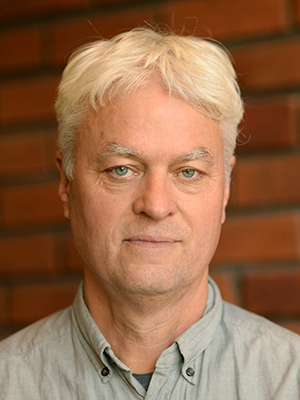
Marianne Zeyringer is an Associate Professor in Renewable Energy Systems at the Department of Technology Systems (ITS), University of Oslo. She leads the Energy Systems Modelling Group and co-leads the SPATUS Thematic Research Group. Her research focuses on designing net-zero energy systems with high shares of renewables, emphasizing interdisciplinary approaches integrating social sciences and climate science. She coordinates the UiO:Energy Convergence Environment EMPOWER and leads initiatives like the dScience Community Forum. Previously, she held roles at UCL Energy Institute, the European Commission Joint Research Centre, and Lawrence Berkeley National Laboratory. She teaches Energy Markets and Regulation and supervises multiple PhD students exploring topics like hydrogen storage, social factors in energy models, and climate risk. She actively contributes to editorial boards and international projects, including the NextGen Energy Climate Group and the ERC grant reFUEL. Her work emphasizes climate-resilient energy systems, spatial-temporal modeling, and equity considerations. Notable contributions include highRES-Europe, a high-resolution electricity system model, and studies on wind energy variability and policy impacts.
Alexey Pavlov is a Professor of Petroleum Cybernetics at the Department of Geosciences and Petroleum, Norwegian University of Science and Technology (NTNU). He holds an MSc in Applied Mathematics from St. Petersburg State University, a PhD in Mechanical Engineering from Eindhoven University of Technology, and has industrial R&D experience from Statoil and Ford Motor Co. Education: MSc (Applied Mathematics, St. Petersburg State University), PhD (Mechanical Engineering, Eindhoven University) His research focuses on control systems for petroleum engineering applications, including nonlinear control theory, iterative learning control, and data-driven optimization methods. Publications reveal a strong emphasis on real-time drilling optimization, well integrity monitoring, and synchronization in networked systems. Recent work trends include machine learning integration for oil well monitoring, moment matching in model reduction, and extremum seeking control for multi-agent systems. Collaborations span institutions like Ford Motor Co., Statoil, and Eindhoven University of Technology. Current affiliations include the Department of Geosciences and Petroleum at NTNU. No scientific awards or advisee information is explicitly mentioned in the provided texts.
Thor Inge Fossen is a Professor of Navigation and Marine Craft Control at the Department of Engineering Cybernetics, Faculty of Information Technology and Electrical Engineering at the Norwegian University of Science and Technology (NTNU). He is a key scientist at the Norwegian Centre for Embodied AI (NCEI) and internationally recognized for his work in navigation systems, guidance systems, and control of marine vessels, aircraft, and drones. Professor Fossen holds a PhD in Engineering Cybernetics and an MSc in Marine Technology. His academic journey has led him to become a Fellow of AAIA, IEEE, and IFAC, reflecting his significant contributions to the field. His research spans several critical areas in marine and aerospace systems: Marine craft hydrodynamics and motion control Navigation, guidance, and control systems for marine craft, aircraft, and drones Cybersecurity of autonomous vehicles Sea-state estimation and wave analysis Attitude control and estimation Fossen's marine craft model, which is widely used in the industry Professor Fossen's publication record demonstrates a strong focus on adaptive control systems, particularly Line-of-Sight (LOS) guidance laws, with numerous papers on 3D path following for marine and aerial vehicles. His recent work (2023-2025) shows increasing integration of machine learning techniques with traditional control systems, particularly in areas like constrained control allocation using deep neural networks. There's also a growing emphasis on cybersecurity aspects of autonomous vehicle guidance systems. His scientific recognition includes: Fellow of the American Institute of Aeronautics and Astronautics (AAIA) Fellow of the Institute of Electrical and Electronics Engineers (IEEE) Fellow of the International Federation of Automatic Control (IFAC) Professor Fossen has been actively involved in advising graduate students, with numerous PhD and MSc graduates. He has led significant research projects including the Marine Systems Simulator (MSS) and the Python Vehicle Simulator, which are widely used tools in the field. His current appointments include being a Study Program Coordinator for the Master's program in Cybernetics and Robotics at NTNU and a Key Scientist at the Norwegian Centre for Embodied AI. He leads research teams focused on embodied AI applications for marine systems, with particular emphasis on safe and secure autonomous operations in complex maritime environments. His work bridges theoretical control systems with practical marine applications, making significant contributions to both academic research and industry implementation.



/marianze/marianne-zeyringer.jpg)
