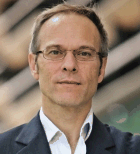
Jeanne VanBriesen is the Duquesne Light Company Professor at Carnegie Mellon University, affiliated with the Department of Civil and Environmental Engineering and the Department of Engineering and Public Policy. She serves as director of the Center for Water Quality in Urban Environmental Systems (Water QUEST) and focuses on environmental systems, urban water sustainability, and the energy-water nexus. Ph.D., Civil Engineering, Northwestern University (1996) M.S., Civil Engineering, Northwestern University (1993) B.S., Education, Northwestern University (1990) Her research explores interactions between water infrastructure, energy systems, and urban environments, with particular attention to disinfection byproducts, bromide dynamics, and climate change resilience. She has secured funding from the National Science Foundation, Department of Defense, and other foundations. VanBriesen has supervised 21 Ph.D. students and 6 M.S. theses, while serving on influential boards including the U.S. EPA Science Advisory Board and the Consortium of Universities for the Advancement of Hydrologic Sciences (CUAHSI). Fellow of ASCE and EWRI 2015 Margaret S. Peterson Woman of the Year (ASCE) 2013 Philip L. Dowd Fellowship 2015 Barbara Lazarus Award for Mentoring 2009 ASCE Pittsburgh Chapter Professor of the Year Her recent work examines climate change hazard indexes, bromide transport from power plants, and innovative water treatment technologies. VanBriesen also contributes to national discussions about hydrologic science education and research policy.
Sandeep Gupta is a Professor and Director of the School of Computing and Augmented Intelligence at Arizona State University's Ira A. Fulton Schools of Engineering. He also serves as a Senior Global Futures Scientist. His work bridges computer science, engineering, and healthcare applications with a focus on creating reliable cyber-physical systems that interact safely with humans. Education: Ph.D. from The Ohio State University (1995) Research Interests: Professor Gupta's research spans cyber-physical systems, green and sustainable computing, mobile and pervasive computing, and parallel and distributed computing. His work increasingly focuses on human-in-the-loop systems where AI and humans collaborate safely, particularly in healthcare contexts. Recent research integrates large language models with cyber-physical systems to enhance safety and operational effectiveness in critical applications like medical monitoring and industrial automation. Research Trends: Analysis of Professor Gupta's recent publications reveals a strong focus on operational safety in human-AI collaborative systems, particularly in healthcare applications. His work combines physics-guided models with machine learning to detect "unknown-unknowns" in safety-critical systems, develops LLM-based approaches for medical image classification, and creates frameworks for ethical human-AI collaboration. The research increasingly addresses real-world challenges in diabetes management, epilepsy diagnosis, and industrial automation. Professional Service: IEEE Communication Letters Editorial Board, Area Editor (2008-Present) IEEE Journal on Special Areas in Communications - Issue on Body Area Network, Co-editor (2006-Present) Elsevier COMNET - Computer Network Journal, Reviewer (2008-Present) Technical Advisory Committee Chair for Networks (2005-Present) Advising and Grants: Professor Gupta has secured numerous research grants from NSF, NIH, Intel, Raytheon, and other organizations, totaling millions of dollars. His research portfolio includes projects on smart stadiums, mobile ECG sensing, power-aware scheduling, medical device verification, and sustainable data center management. He actively advises PhD and Master's students through thesis courses and research supervision, focusing on cyber-physical systems and healthcare applications. Labs and Research Groups: Professor Gupta leads research in cyber-physical systems with applications in healthcare, sustainable computing, and mobile networks. His work involves interdisciplinary collaboration across engineering, computer science, and medical domains, particularly through ASU's Global Futures initiatives.
Prof. Gregorio Iglesias is a Professor of Marine Renewable Energy at University College Cork (UCC) and Honorary Professor of Coastal Engineering at the University of Plymouth. His expertise lies in Marine Renewable Energy and Coastal Engineering, with a focus on wave and tidal energy systems, offshore wind integration, and coastal protection strategies. He has secured over €12M in research funding as Principal Investigator and authored/edited key texts such as Wave and Tidal Energy (Wiley) and Ocean Energy and Coastal Protection (Springer). Education: BEng (Civil Engineering, 1992), MEng (Civil Engineering, 1993), PhD (Engineering, 2001). Research Interests: Advanced modeling of wave energy converters, floating offshore wind turbines, coastal erosion mitigation, and climate change impacts on marine energy resources. His work bridges theoretical advancements and practical applications, including coasts like the Port of Gijón (Spain) and the Shannon Estuary. Recent publications highlight climate-driven renewable energy transitions, multi-hazard coastal resilience frameworks, and techno-economic assessments of offshore systems. He chairs the IEC Standards panel for wave energy device testing and serves as Subject Editor for Energy (Elsevier) . Professional Activities: Lead of Marine Renewable Energy research at MaREI (Ireland), former Head of the COAST Engineering Group at Plymouth (2012–2018), and member of PIANC’s Universities Consortium. His work has generated 5,459 citations with an h-index of 41. Teaching: Delivers modules on Ocean Energy (NE4003/NE6005) and Hydraulics (CE3007).
Dr. Paul Leahy is a Lecturer in Wind Energy Engineering at University College Cork (UCC) and a funded investigator in the SFI MaREI Centre for Energy, Climate, and Marine Research. He leads research on wind energy, circular economy applications for decommissioned turbine blades, and climate change impacts. His work includes the Re-Wind project, a transdisciplinary initiative funded by SFI, NSF, and Northern Ireland's Department for the Economy. He co-supervises six PhD students and has examined over 20 theses globally. Education: BE Electrical Engineering (1995), PhD Electrical Engineering (2001), Postgraduate Certificate in Teaching & Learning in Higher Education (2018). Research & Awards: Research focuses on wind energy forecasting, energy storage, and greenhouse gas emissions. Notable awards include the Environmental Research Letters' 2013 Highlight and an ISI Highly Cited Paper (2012). He contributed to IPCC Special Reports on climate change mitigation and co-edits Renewable & Sustainable Energy Reviews. Grants & Projects: Secured €320,000 for Re-Wind and led multiple EU, EPA, and industry-funded projects. Current research includes lifecycle assessments of repurposed turbine blades and hydrogen production via offshore wind. Teaching & Outreach: Coordinates modules like NE6003 Wind Energy Engineering and contributes to energy systems education. Engages in public lectures and policy initiatives like Energy Cork Cluster leadership. Labs & Teams: Collaborates with multidisciplinary teams on infrastructure repurposing (e.g., BladeBridges) and climate adaptation strategies for agriculture and peatlands.
Dr. Sotirios Argyroudis is a Reader (Associate Professor) of Infrastructure Engineering at Brunel University London within the Department of Civil & Environmental Engineering, College of Engineering, Design and Physical Sciences. He leads the infrastructure risk and resilience research group and serves as Coordinator of the Horizon PORTAL project and deputy Scientific Coordinator of the Horizon/UKRI ReCharged project. He co-founded bridgeUkraine.org and co-leads metaInfrastructure.org, both initiatives focused on critical infrastructure recovery and sustainability. With over 20 years of experience, Dr. Argyroudis specializes in vulnerability, disaster risk, and resilience assessment of critical infrastructure exposed to multiple hazards including floods and earthquakes. His educational background includes: Graduate Certificate in Learning and Teaching, University of Surrey, UK (2021) PhD in Geotechnical Earthquake Engineering, Aristotle University of Thessaloniki, Greece (2010) BSc in Geology, Aristotle University of Thessaloniki, Greece (2008) MEng in Civil Engineering, Aristotle University of Thessaloniki, Greece (2000) Dr. Argyroudis' research focuses on infrastructure risk and resilience assessment under multiple hazards including earthquakes, floods, and climate change effects. His work spans vulnerability assessment of transportation networks, bridges, tunnels, and urban systems, with particular emphasis on developing frameworks for climate-resilient infrastructure. He integrates emerging technologies like AI and remote sensing to enhance infrastructure monitoring and decision-making processes. His research has significant applications in disaster risk reduction, post-conflict recovery, and sustainable infrastructure development aligned with UN Sustainable Development Goals. His recent publications demonstrate a clear trend toward integrating climate adaptation with infrastructure resilience, with increasing focus on multi-hazard approaches, digital technologies, and sustainability metrics. His work spans transportation infrastructure (railways, bridges, tunnels), energy systems, and urban networks, with growing emphasis on post-conflict recovery applications as seen in his bridgeUkraine.org initiative. The publications show strong international collaboration across Europe, North America, and Asia. Dr. Argyroudis has received notable recognition including: 2022 European Council on Computing in Construction (EC3) Thorpe Medal Top 2% most highly cited scientists for 2021, 2022, and 2023 (Elsevier/Stanford list) Fellow of the Higher Education Academy, UK (FHEA) Member of the Institution of Civil Engineers (UK), CEng, MICE Dr. Argyroudis actively supervises PhD students across multiple institutions including University Sains Malaysia, Aristotle University of Thessaloniki, and Democritus University of Thrace. His current research portfolio includes significant grants such as the Horizon Europe-funded PORTAL and ReCharged projects, the Brunel BRIEF AWARDS-funded CCRI project, and the HORIZON-INFRA-funded SCOUR&SHAKE project. He serves as a reviewer for EPSRC, the European Commission, and numerous scientific journals, contributing to the advancement of infrastructure resilience research globally. He is a key member of Brunel's Centre for Flood Risk and Resilience and the Research Group of Geotechnical and Environmental Engineering. Through his leadership of the PORTAL project and co-leadership of metaInfrastructure.org, he fosters international collaboration on sustainable and resilient infrastructure solutions. His work with bridgeUkraine.org demonstrates practical application of research to urgent global challenges, connecting academic research with real-world infrastructure recovery needs.
Toufik AZIB is a Full Professor and scientific coordinator of the ECMS (Energy and Conception of Mechatronic Systems) research theme at ESTACA Engineering School in France. He leads a team of 6 teacher-researchers and 13 PhD students, focusing on optimal design of power electronics and energy management for hybrid power systems. His work bridges academic research and industrial applications in sustainable mobility, with strong collaborations across Europe and Algeria. Dr. AZIB received his Electrotechnical Engineering Diploma from the University of Setif, Algeria in 2006, followed by an M.Sc. in Electrical Engineering from ENSEM-INPL, France in 2007. He earned his Ph.D. in electrical engineering from the University of Paris South XI in 2010 and completed his HDR (Habilitation à Diriger des Recherches) from the University of Paris Saclay in 2021. His academic journey reflects a strong foundation in both theoretical and applied electrical engineering. His research focuses on the modeling, control, and optimal design of embedded energy systems under multi-physical constraints (electrical, thermal, electromagnetic compatibility, volume, reliability). He specializes in energy management strategies for hybrid systems combining fuel cells, batteries, and ultracapacitors, with applications in electric vehicles and the 'more electric aircraft.' His work integrates numerical and experimental approaches to develop methodologies for pre-dimensioning and real-time energy management, addressing challenges in sustainable transportation. Analysis of Dr. AZIB's recent publications reveals a strong trend toward multidisciplinary design optimization for automotive applications, particularly electronic throttle systems. His research increasingly incorporates knowledge management techniques and addresses reliability considerations in hybrid power source design. There's a clear progression from fundamental energy management strategies to sophisticated eco-driving solutions for electric vehicles, reflecting the evolving demands of sustainable mobility. Best Paper Award for 'Structure and Control Strategy for a Parallel Hybrid Fuel Cell/Supercapacitors Power Source' at IEEE VPPC'09 Dr. AZIB has supervised numerous PhD and Master's students across multiple institutions in France, Algeria, and Colombia. He leads significant research projects including MIMe (Module d'Intégration et de simulation Mécatronique), ECOS Nord (Eco-driving strategies for electric motorcycle), and AmCoAIR (improving air quality in vehicle cabins), securing funding from national and international sources. His work demonstrates strong industry collaboration with partners like Valeo, PSA, and Renault. As experimental platforms coordinator since 2012, Dr. AZIB oversees 10 specialized experimental facilities at ESTACA's S2ET-Paris Saclay research pole, including those for autonomous electric vehicles, drones, electric machines, and power modulators. His team regularly develops proof-of-concept demonstrators to validate research findings, such as the Formula Student electric vehicle and the 'Electric Appeal' streamliner project, demonstrating practical applications of their theoretical work.
Dr. Zhengyu Lin is a Reader in Power Electronics at Loughborough University's Wolfson School of Mechanical, Electrical and Manufacturing Engineering, affiliated with the Centre for Renewable Energy Systems Technology (CREST). Previously, he held a Lecturer position at Aston University for over five years and worked in UK industry for six years, including roles at Sharp Laboratories of Europe and Nidec Control Techniques. His academic journey includes a Ph.D. from Heriot-Watt University (2004), an MSc from Zhejiang University (2001), and a BSc from Zhejiang University (1998). Lin's research focuses on advancing power electronics and renewable energy systems, particularly in DC microgrid control, grid resilience, and energy storage. His work addresses challenges in power sharing accuracy, fault detection, and infrastructure robustness under severe weather or disasters. He has contributed to policy analysis for EV adoption in South Asia and innovative solutions for wireless power/data transfer in EV charging. Key achievements include the EPSRC UKRI Innovation Fellowship (2018-2021) and over 80 peer-reviewed publications. His research bridges academic theory with industrial applications, emphasizing sustainable energy transitions and smart grid technologies. Education: Ph.D. (Heriot-Watt), MSc/BSc (Zhejiang University) Awards: EPSRC UKRI Innovation Fellowship Research Themes: DC Microgrids, Grid Resilience, Renewable Energy Integration Labs: Centre for Renewable Energy Systems Technology (CREST)
Dr. Magdy Salama is a Professor in the Department of Electrical and Computer Engineering at the University of Waterloo, with dual professional engineering registrations in Ontario and Egypt. His research focuses on power systems, smart grid technologies, renewable energy integration, and medical imaging. He holds over 460 publications, including 215 journal articles, and has developed specialized labs in areas like Power Quality and Ultrasound Imaging. Recognized in the 1991 National Encyclopedia of Egyptian Scientists, he also teaches courses such as ECE 192, 390, and 462, emphasizing engineering economics and design. Education: PhD, Electrical Engineering, University of Waterloo (1977) MSc, Electrical Engineering, Cairo University (1973) BSc, Electrical Engineering, Cairo University (1971) Research Interests: Power quality and distribution system automation Smart grid and renewable energy analysis Medical image processing (e.g., sleep staging, neuromodulation) Electric energy storage and fault detection Asset management and risk analysis Labs & Innovation: He leads labs in Power Quality, Electric Vehicle Power Electronics, Ultrasound Imaging, and Sleep Staging. His patents include high-voltage power supplies for automotive and aerospace applications. Awards: Listed in the 1991 National Encyclopedia for Distinguished Egyptian Men of Science . Teaching & Grants: Recently taught courses like Distribution System Engineering (ECE 6606PD) and Electric Safety Design (ECE 6616PD). His work spans academic-industrial partnerships, though specific grants are not detailed in the text.
Jerome F. Hajjar is a University Distinguished Professor and CDM Smith Professor in the Department of Civil and Environmental Engineering at Northeastern University, with an affiliation in Marine and Environmental Sciences. He holds a PhD in Structural Engineering from Cornell University (1988) and is a licensed Professional Engineer in Illinois and Minnesota. PhD, Structural Engineering, Cornell University, 1988 MS, Structural Engineering, Cornell University, 1985 BS, Engineering Mechanics, Yale University, 1982 Hajjar’s research focuses on sustainable and resilient steel/concrete composite structures , earthquake engineering , structural stability , and large-scale experimental testing . He pioneered design for deconstruction and physics-guided machine learning for structural analysis. His work addresses climate change risks through offshore wind resilience and hurricane risk assessment. His recent publications emphasize carbon reduction strategies via steel-CLT hybrids, machine learning techniques for seismic modeling, and experimental programs on composite diaphragms. Hajjar’s projects include the STReSS Laboratory , equipped with a reinforced concrete strong floor for full-scale structural testing. 2025 William H. Wisely American Civil Engineer Award 2025 SSRC Distinguished Member Award 2021 AISC Lifetime Achievement Award 2018 Robert D. Klein Lectureship 2007 ASCE Fellow Hajjar mentors PhD students, including R. Bailey Bond (2024), and leads major initiatives like the Academic Center for Reliability and Resilience of Offshore Wind (ARROW) and the Steel Diaphragm Innovation Initiative . His advocacy extends to integrating sustainability, resilience, and equity into national building codes through roles in the Structural Engineering Institute and American Society of Civil Engineers.
Veysi Başhan serves as an Assistant Professor in the Department of Marine Engineering within the Faculty of Naval Architecture and Ocean Engineering at Istanbul Technical University (ITU). His academic profile demonstrates active engagement in maritime engineering research with current publications extending through 2025 and an active research project on hybrid renewable energy systems analysis. Professor Başhan's research spans critical maritime engineering domains with particular emphasis on renewable energy integration, risk assessment methodologies, and marine propulsion systems. His work innovatively combines fuzzy logic, Bayesian networks, and multi-criteria decision-making approaches to address complex challenges in maritime operations, energy systems, and safety protocols. This interdisciplinary approach bridges traditional marine engineering with modern computational techniques for risk analysis and system optimization. His publication portfolio reveals a clear trajectory toward sustainable maritime technologies, with increasing focus on wind-solar hybrid systems, alternative fuels like methanol, and autonomous navigation reliability. The research demonstrates consistent application of fuzzy-based analytical frameworks across diverse maritime contexts from engine performance to ballast water treatment systems. Current research activities include the 2024 project "Hibrit Yenilenebilir Enerji Sistemlerinde Arızaların Analizi ve Çözüm Önerileri" (Analysis of Failures in Hybrid Renewable Energy Systems and Solution Proposals), indicating ongoing commitment to solving practical engineering challenges in renewable energy integration for maritime applications. His scholarly impact is evidenced by 32 research outputs, 366 Scopus citations, and an h-index of 9.
James Dickens is a Professor at the Whitacre College of Engineering , Texas Tech University , where he also serves as the Charles Bates Thornton Professor and Co-Director of the Center for Pulsed Power and Power Electronics (P3E) . He holds a PhD (1995), MS (1993), and BS (1991) in Electrical Engineering from Texas Tech University, and is a registered Professional Engineer in Texas. Research Interests: Grounding & Shielding, Explosive Pulsed Power, High-Power Microwaves, Electric Space Propulsion, Aerospace Electronics Key Contributions: Development of semiconductor opening switches, investigation of gas insulation performance, optimization of nonlinear transmission lines, and analysis of multipactor phenomena in waveguides Awards: Fellow of the Japanese Society for the Promotion of Science (1996) His recent publications focus on solid-state switching technologies , high-voltage gas insulation , and multipactor suppression in microwave systems. His work bridges theoretical modeling (LTspice, ANSYS Maxwell) with experimental validation in extreme environments, including studies on explosive emission cathodes, nanocrystalline transformer cores, and vacuum insulator flashover physics.
Associate Professor Iain MacGill at the University of New South Wales leads interdisciplinary research at the intersection of renewable energy integration , electricity market design , and policy frameworks for low-carbon transitions. As a core member of the Centre for Energy and Environmental Markets , he develops computational models for coordinating distributed energy resources in restructured power systems. PhD in Electrical Engineering (UNSW) B.Eng. & M.Eng.Sci. (University of Melbourne) His work examines technical-economic-commercial challenges of renewable integration, with recent focus on: 24/7 zero-emission energy tracking frameworks Temporal matching in renewable procurement Open-source tools for green hydrogen value chains Residential solar-battery interaction dynamics Current research projects involve smart grid technologies , community microgrid economics , and climate-resilient energy systems . He collaborates with institutions like ARENA , CSIRO , and ARC on grants addressing grid stability, cost allocation, and policy innovation.
Prof. Chris Dent is a Professor at the University of Edinburgh's School of Mathematics, specializing in the intersection of mathematical sciences and engineering. He holds a fellowship at the Alan Turing Institute and directs the Statistics Consultancy Unit. His career spans theoretical physics, operational research, and energy systems analysis, with notable contributions to National Grid strategies, policy-driven decision support, and pandemic data communication. Education: MMath (Cambridge), PhD in Theoretical Physics, MSc in Operational Research (Edinburgh). Research focuses on energy system reliability, uncertainty quantification, and interdisciplinary policy modeling. He critiques data communication practices in crises, advocating for rigorous reporting frameworks. Key activities include projects on electricity supply security, smart grid optimization, and post-pandemic economic recovery. Collaborations involve government bodies, the National Grid, and international energy networks. The Statistics Consultancy Unit supports cross-disciplinary projects in academia and industry.
Robert Czechowski, PhD , is an Assistant Professor at the Faculty of Information and Communication Technology , Wrocław University of Science and Technology , Poland, stationed in the Department of Telecommunications and Teleinformatics . His office is located in building D-20, room 421, and he holds regular consultation hours on Tuesdays 14:00–15:00, Wednesdays 15:00–17:00, and Thursdays 13:00–15:00. His research portfolio is centred on securing the next generation of electrical power systems. Core interests include: Cyber-security architectures for smart grids and micro-grids Artificial-intelligence-driven intrusion detection and prevention systems (IDS/IPS) Network protocols and time-synchronisation security in SCADA environments Simulation of information flow in complex, dynamically reconfigurable networks IPv4/IPv6 network design and security policy enforcement in power-system automation Database and expert-system solutions for real-time energy-management and fraud detection Between 2014 and 2019 he authored or co-authored more than fifteen peer-reviewed works. The publications reveal a clear longitudinal trend: early work established foundational security policies and good-practice guidelines, while later studies pivot toward advanced AI/ML techniques for anomaly detection and risk quantification in smart-metering infrastructures. A recurring theme is the integration of communication-protocol security (IEC 61850, PLC, IPv4/IPv6) with higher-level cyber-physical risk governance. Scientific recognitions: None explicitly mentioned in the supplied text. Advising & Grant activities: The provided material does not list specific doctoral or master’s students, nor does it enumerate funded projects. Laboratories & Teams: He conducts research within the Department of Telecommunications and Teleinformatics, leveraging university laboratories and the wider ICT Faculty infrastructure, although no dedicated lab name is specified.
Alejandro Andrade-Rodriguez is an Assistant Professor at the University of Nevada, Reno in the Department of Agriculture, Veterinary & Rangeland Science . His work focuses on optimizing water use in arid and semi-arid agricultural systems through engineering innovations and data-driven approaches. Education: B.S., Universidad Autonoma Chapingo (2007) M.S., University of Arizona (2011) Ph.D., University of Arizona (2013) His research spans: Precision irrigation techniques AI and optimization methods for water management Development of Decision Support Systems (DSS) for farmers Climate resilience in snowmelt-dependent agriculture Wireless sensor networks for irrigation monitoring Machine learning applications in crop stress prediction Recent publications highlight trends in: Integration of climate data into irrigation risk models Machine learning-driven crop yield forecasting Improving cold-weather reliability of solar-powered sensors Soil texture impacts on irrigation efficiency Email: andradea@unr.edu