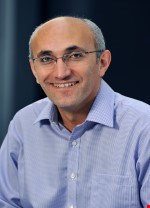
Michel Rivier Abbad is a Full Professor at the Electrical Engineering Department of Universidad Pontificia Comillas (IIT), where he has held academic and leadership roles since 1988. His career spans energy economics, electricity market modeling, and regulatory frameworks, with extensive consulting for entities like Iberdrola, World Bank, and European Commission. Education: Ph.D. in Electrical Engineering (Universidad Pontificia Comillas, 1998) Leadership: Former Director of IIT (2002–2008) Research Focus : His work addresses electricity market design , renewable energy integration , transmission expansion planning , and energy system optimization . Recent studies examine grid reinforcement under high renewable penetration and reliability mechanisms for decarbonized systems. Scientific Contributions : Over 50 journal publications and 60 projects focus on European energy market reform , Iberian reliability options , and Latin American interconnections . Collaborations with institutions like MIT and European University Institute highlight his global expertise.
Şahin Serhat Şeker is a Professor in the Department of Electrical Engineering at Istanbul Technical University (ITU), Istanbul, with continuous research activity since 1993. He maintains an active publication record through 2025, demonstrating ongoing academic engagement, and has accumulated 111 research outputs with 1084 citations and an h-index of 19. His research centers on power system analysis and electric motor diagnostics, specializing in vibration signal processing for fault detection in induction motors. He employs continuous wavelet transform for non-stationary signal analysis to identify bearing damage, aging processes, and fault signatures. Recent work integrates machine learning for renewable energy forecasting and power grid stability, reflecting a strategic shift toward AI-driven solutions for energy infrastructure challenges. Professor Şeker's 2023-2025 publications reveal a strong trend toward deep learning applications in transient instability prediction, solar irradiance forecasting, and photovoltaic system optimization. His work increasingly addresses real-world energy challenges in regions like Djibouti, focusing on grid stability and renewable integration through hybrid modeling approaches. He has supervised 13 students and secured research funding through two major projects: SENSOR VALIDATION AND FUSION FOR SYSTEM MONITORING (2018-2019): Developed sensor validation frameworks for industrial system monitoring Analysis of Ferroresonance in Power Systems Using Multiresolution Wavelet Analysis and Extraction of Nonlinear Properties (2013-2018): Investigated nonlinear phenomena in power grids through advanced signal processing
Yalçın Durmuşoğlu is an Assistant Professor in the Department of Marine Engineering at Istanbul Technical University (ITU), Faculty of Maritime. His research focuses on energy efficiency, marine power systems, performance analysis, and sustainable maritime technologies. He is based at ITU's Ayazaga Campus in Istanbul, Turkey. Assistant Professor, Department of Marine Engineering, Faculty of Maritime, Istanbul Technical University Research Interests: Energy Efficiency, Marine Power Engineering, Thermoeconomics, Solar Energy Integration, Green Ports, Refrigeration Systems Email: ydurmusoglu@itu.edu.tr His research interests center on improving the energy efficiency and environmental performance of marine systems. Key areas include exergy analysis, EEXI compliance, solar photovoltaic integration on ships, refrigerant alternatives, and green port development. He also investigates the role of mechatronics in marine engineering education, advocating for modernized curricula. His work bridges theoretical modeling with practical case studies, particularly on container ships and Ro-Ro vessels. The recent publications show a strong trend in sustainable maritime technologies, with emphasis on renewable energy integration (e.g., solar PV), energy efficiency optimization, and environmental compliance. Topics span thermoeconomic analysis, failure mode assessment, refrigeration systems, and port competitiveness under green frameworks. The research combines engineering analysis with policy implications, reflecting a multidisciplinary approach to modern maritime challenges. While no scientific awards are explicitly mentioned in the provided text, his publications have garnered significant citations, indicating recognition in the field. Yalçın Durmuşoğlu has led research projects such as the feasibility study of solar cell applications on cargo ships, funded under ITU's BAP program. He has co-authored multiple journal articles and conference papers, contributing to advancements in marine engineering education and sustainable shipping. There is no mention of student advisement in the provided data. There is no information available about specific labs or research teams he leads or participates in.
Dr. Rada Andrei is an Assistant Professor at the Faculty of Mechanical and Electrical Engineering , UPET.RO , affiliated with the Department of Automation, Computers, Electrical and Power Engineering. His research focuses on energy security, power systems optimization, electrostatic filtration technologies, and industrial automation. He has contributed extensively to studies on energy sector dynamics, centrifugal pump performance modeling, and energy efficiency in mining operations. His academic work spans experimental measurements of industrial equipment (e.g., pumps, transformers), simulation of thermal systems, and critical analysis of national/international energy policies. Notable collaborations include projects with the Institute of „Ioan Ursu” and energy companies of national strategic importance. Key research directions include: Power crisis mitigation strategies Electrostatic particle charging mechanisms Virtual instrumentation in engineering design Energy balance calculations for industrial systems Industry 4.0 implementation in production processes Dr. Andrei has developed a laboratory guide for electric machines and pioneered real-time electricity balance analysis at lignite coal mines. His work emphasizes bridging theoretical models with practical industrial applications.
Abbas Barabadi is a Professor at the Department of Technology and Security, UiT The Arctic University of Norway. His research focuses on resilience engineering, risk analysis, and sustainable development in Arctic and industrial contexts. He actively collaborates on projects related to mining, renewable energy, and infrastructure safety. Affiliation: UiT The Arctic University of Norway Research Interests: Resilience engineering, Arctic operational challenges, sustainability in mining and energy systems, reliability analysis. Recent Article Trends: 2025 works address climate-related infrastructure risks and Arctic wind farm operations. 2024 publications emphasize mining sustainability, fuel system reliability, and CSR in complex systems. Labs/Teams: Sustainable Technology and Safety (STS) research group.
Dr. Tom Brownlee is an Assistant Professor in Applied Sport Sciences at the School of Sport, Exercise and Rehabilitation Sciences, University of Birmingham. His expertise bridges academic research and elite sports practice, with a strong background in professional football environments. Education: BSc (Hons) Sport and Exercise Science, Coventry University MSc Exercise Physiology, Loughborough University PhD Applied Exercise Physiology, University of Liverpool (conducted at Liverpool FC) Tom’s research is centered on applied physiology and strength and conditioning , with a focus on high-performance sport . His work investigates strength training methodologies, periodisation strategies, nutritional practices, and effective communication between scientists and coaches in elite settings. He has extensive experience working within professional football, informing both his teaching and research direction. His recent publications reflect a strong trend in elite football science , particularly in training load monitoring, strength development across genders and age groups, genetic influences on performance and injury, and the practical application of technology like GPS and flywheel training. The research emphasizes real-world implementation and practitioner perspectives. Professional Roles and Recognition: Leader, UK Strength and Conditioning Association (UKSCA) Football Special Interest Group Consultant for the English Premier League Reviewer for leading journals including Journal of Sports Sciences , International Journal of Sports Physiology and Performance , and European Journal of Sports Science Tom is an active supervisor, having guided multiple doctoral and master’s students to completion, with a focus on candidates embedded in high-performance sport. He regularly advertises PhD opportunities through his professional network, particularly on Twitter. While specific grants are not listed, his consulting and leadership roles indicate significant professional engagement and impact. He also contributes to teaching, delivering modules such as Introduction to Sports Science and Athletic Training and Conditioning.
Brad Buckham is a Professor and Chair of the Department of Mechanical Engineering at the University of Victoria (UVic). He leads the West Coast Wave Initiative (WCWI) and co-directs the Pacific Regional Institute for Marine Energy Discovery (PRIMED), focusing on marine energy technologies and resource assessment. His expertise spans underwater vehicle dynamics, finite element methods, and offshore mechanics. Dr. Buckham’s research emphasizes wave energy conversion, grid integration, and community-based renewable energy solutions. He has been recognized with 2018 Excellence in Teaching awards from Engineers and Geoscientists of BC and Engineers Canada. His work bridges academia and industry through collaborations like AXYS Technologies, deploying wave buoys for resource assessment. Key areas include tidal and wave energy systems, control design for energy converters, and techno-economic feasibility studies. Research outputs span hydrodynamic modelling, mooring dynamics, and policy frameworks for marine energy deployment. He actively contributes to student-led projects through WCWI, fostering innovation in renewable energy technologies.
Wei Xie is an Associate Professor in the Department of Mechanical and Industrial Engineering at Northeastern University. His research focuses on interpretable AI, IoT, and data-driven stochastic optimization for complex systems in biopharmaceutical manufacturing, smart grids, and healthcare. He holds a PhD from Northwestern University (2014) and has received prestigious awards including the NSF CAREER Award (2025) and the INFORMS Simulation Society Outstanding Publication Award. His work bridges simulation, machine learning, and operations research to address real-world challenges in manufacturing, energy, and healthcare. Education: PhD in Industrial Engineering and Management Sciences from Northwestern University (2014). Research Interests: Interpretable AI and hybrid modeling for bioprocesses Blockchain for supply chain risk management Stochastic optimization in renewable energy systems Data integrity and big data analytics Notable Projects: Principal Investigator for NSF-funded research on mechanism-informed AI for biomanufacturing, and NIIMBL grants on mRNA vaccine potency assessment and stem cell culture monitoring. Awards: 2025 NSF CAREER Award 2023 Constantinos Mavroidis Award INFORMS Simulation Society Award (2023) Advising & Grants: Supervised PhD students in areas like stochastic simulation and biomanufacturing. Secured over $800K in federal and industry grants since 2018. Labs/Teams: Active contributor to Northeastern's Institute for Experiential AI and National Institute for Innovation in Manufacturing Biopharmaceuticals (NIIMBL).
Professor Ahmet Duran Şahin is a faculty member at Istanbul Technical University's Department of Meteorological Engineering within the College of Engineering. His research focuses on renewable energy systems, particularly wind and solar power, with an emphasis on floating photovoltaic systems, climate change impacts, and energy policy. He has contributed to over 45 publications and led 14 projects, including studies on climate-resilient campus design and extreme weather analysis. Key research areas include optimizing renewable energy technologies under extreme conditions, evaluating carbon footprints in urban settings, and enhancing wind farm performance through integrated climate projections. His work frequently involves numerical simulations and computational fluid dynamics. Awards include the 6. Kadir Has Awards (2010), H2020 Above-Threshold Award (2017), and Incentive Award (2006). Projects span topics like floating solar power prototypes, meteorological infrastructure for railways, and sustainable energy transitions in Sub-Saharan Africa. His contributions to academia include advising numerous graduate students (not explicitly listed) and collaborating on interdisciplinary initiatives, such as integrating climate data with urban planning and energy systems.
Xueping Li is a Professor and Dan Doulet Faculty Fellow in the Department of Industrial and Systems Engineering at the University of Tennessee, Knoxville. He also serves as Co-Director of the Health Innovation Technology and Simulation (HITS) Lab and Director of the Ideation Laboratory (iLab). University: University of Tennessee, Knoxville College: Tickle College of Engineering Department: Department of Industrial and Systems Engineering Education: PhD in Industrial Engineering – Arizona State University MS in Computer Science – Nankai University BS in Automatic Control & Computer Science – Nankai University Research Interests: Dr. Li's research spans a broad spectrum of systems engineering, with a focus on complex systems modeling, simulation, and optimization . His work is applied in healthcare systems engineering , digital twins , cyber-physical systems , and supply chain logistics . His recent work integrates machine learning and AI into real-world systems such as predictive maintenance , drone delivery networks , and energy microgrids . Scientific Awards & Honors: Chancellor’s Research and Creative Achievement Award, UTK (2023) Fellow, Institute of Industrial and Systems Engineers (IISE) (2023) Harvey J. Greenberg Research Award, INFORMS Computing Society (2022) Dan Doulet Faculty Fellow (2021) Fellow, Center for Transportation Research, UT (2018) Best Paper Awards at IISE and ISERC conferences (2018, 2015) Outstanding Teaching Award, College of Engineering, UT (2016) Research Funding & Leadership: Dr. Li has led or co-led over 30 externally funded projects totaling more than $15 million from agencies such as the NSF, NIH, DOE, HRSA, and ARPA-E . He currently directs projects on digital twins for nuclear maintenance, AI-driven freight transportation, and mHealth immunization systems. PI: "RECOIL" – ARPA-E Cognitive Freight Digital Twin ($1.9M) PI: "EMRAA" – DOE Predictive Maintenance Analytics ($1.2M) Co-PI: "SmartSHOTS" – TN Dept. of Health mHealth Initiative ($1.29M) Labs & Teams: HITS Lab: Health Innovation Technology and Simulation Lab – Co-Director iLab: Ideation Laboratory – Director
Dr. Andrey Povyakalo is a Senior Lecturer at City, University of London , affiliated with the Centre for Software Reliability (CSR) . He joined CSR in 2001 as a Research Fellow and was promoted to Senior Lecturer in 2008. Previously, he held academic positions at the Institute of Nuclear Power Engineering (INPE) in Russia, including roles as Docent (Associate Professor) in the department of Computer Systems, Networks and Technologies. Education : Candidate of Science in Engineering (PhD equivalent) from INPE, 1994 Dipl. Eng. in Computer-Aided Control & Management from Moscow Engineering Physics Institute (MEPhI), 1985 His research focuses on software and systems engineering with emphasis on dependability, fault-tolerance, and probabilistic risk/safety assessment . Key projects include DISPO , SESAMO , INDEED , CRUK , and DIRC . Recent publications (2020–2024) address statistical testing of software components , conservative reliability bounds , and human-computer interaction in safety-critical systems . These works span software diversity , failure-free testing strategies , and safety argumentation under uncertainty . Academic Appointments : Senior Lecturer, City, University of London (2008–present) Research Fellow, City, University of London (2001–2008) Docent (Associate Professor), Institute of Nuclear Power Engineering, Russia (1995–2000)
Dr. Narakorn Srinil is an Associate Professor in Subsea Engineering at the School of Engineering, Newcastle University. He leads the FlexNARA research team focusing on Fluid-Flexible Structure Interactions for offshore infrastructure. His work bridges offshore oil & gas and renewable energy sectors, emphasizing predictive modeling of ocean current, wave, and ice loads. Reader/Associate Professor in Subsea Engineering, Newcastle University (since 2022) PhD Supervision in projects like 'Renewable Energy from Natural Flow Phenomena' (2021-2025) EPSRC Grant Holder for CableDyn (2022-2025) and MUFFINS (2018-2022) Royal Society & NSFC Awardee for High-Fidelity Modeling of Flow-Induced Vibrations (2019-2022) Research spans flow-induced vibrations (VIV, MFIV, IIV, WCIV) in offshore/maritime engineering, energy transition systems, and carbon capture pipelines. Key methodologies include phenomenological models, CFD simulations, and experimental validations in circulating water flumes. Recent publications analyze vortex-induced vibrations in S-shaped risers, turbulence characteristics in pulsatile flows, and AI-driven multiphase flow predictions. Awards include British Council Eco-NICE (2024-2026), EPSRC CableDyn (2022-2025), and Royal Society collaborations. Teaching involves advanced modules: MAR8052 - Dynamics of Subsea Installations , MAR8069 - Renewable Marine Structures , and MAR8011 - Offshore Installation Dynamics . Supervised over 50 MSc theses on topics like slug flow FIV, pipeline fatigue analysis, and hybrid riser systems.
Professor Alireza Mousavi is affiliated with Brunel University in the College of Engineering, Design and Physical Sciences , where he contributes to research and teaching across Mechanical and Aerospace Engineering , Computer Science , and Electronic and Electrical Engineering departments. A graduate of Tehran Azad University (BEng, 1994) and Brunel University (PhD, 2000), he has taught modules in Systems Modeling , Machine Learning , Embedded Systems , and Control Theory to international cohorts since 2002. His research focuses on Digital Transformation for Industry 4.0 Smart Manufacturing Systems Predictive Maintenance AI-Driven Automation Sustainable Supply Chains leveraging technologies like Sensors/Actuation , SCADA , and Machine Learning . Recent publications address challenges in autonomous vehicle safety , laser module assembly analytics , and PCB component recognition , reflecting his expertise in real-time industrial systems. He leads the Brunel Centre for Digital Manufacturing and has secured over £20M in grants from EU, UK, and US agencies. Scientific contributions include the Newton Advanced Fellowship (2015-2020) and collaborative projects in wastewater management , microelectronics , and photonics . His mentorship spans 15+ PhD students in areas like human network modeling and predictive industrial control .
Dr. Eng. Tomasz Babczyński is a researcher at Wrocław University of Science and Technology, affiliated with the Faculty of Computer Science and Telecommunications and the Department of Technical Computer Science. Software Engineering (specializing in Software Performance Engineering) Geographic Information Systems (GIS) software Image processing and pattern recognition (focusing on handwritten document analysis) His research spans interdisciplinary applications of computer science, including: Railway systems dependability analysis (ERTMS/ETCS protocols) Historical landscape modeling using GIS Multiagent system performance evaluation for power systems Advanced techniques for line segmentation in handwritten documents Recent publications (2020-2024) demonstrate expertise in tensor voting algorithms, data heterogeneity challenges, and safety-critical system analysis. His work combines theoretical computer science with practical applications in transportation, energy, and historical information systems. Contact: tomasz.babczynski@pwr.edu.pl
Min Xian is an Associate Professor in the Department of Computer Science at the University of Idaho's College of Engineering. Their research focuses on Trustworthy Artificial Intelligence , Machine Learning , Deep Learning , and Adversarial Learning , with applications in Biomedical Image Analysis and AI-Aided Materials Characterization . They actively contribute to nuclear safety research through AI applications in nuclear fuel analysis and power plant risk assessment. Ph.D. in Computer Science (2017), Utah State University M.S. in Computer Science (2011), Harbin Institute of Technology B.S. in Information Security (2008), Harbin Institute of Technology (Weihai) Their research integrates AI into critical domains like medical imaging (skin cancer diagnosis, breast ultrasound analysis) and nuclear materials characterization (fission gas bubble segmentation in metallic fuels). They also explore uncertainty quantification , adversarial defense mechanisms , and knowledge-informed AI for nuclear safety. Recent publications demonstrate expertise in vision-language models , sharpness-aware optimization , and multi-task learning for biomedical and nuclear applications. Their work balances algorithm development (e.g., Bend-Net, GCSAM) with domain-specific applications. Dean's Distinguished Faculty Fellow, University of Idaho (2024) Min Xian leads the MIDA Lab (Machine Intelligence and Data Analytics) , developing AI solutions for nuclear material analysis and medical imaging. Their collaborations span biomedical engineering, materials science, and nuclear safety domains.