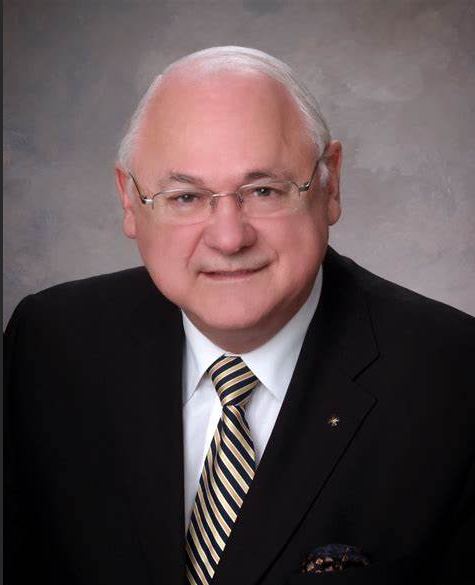
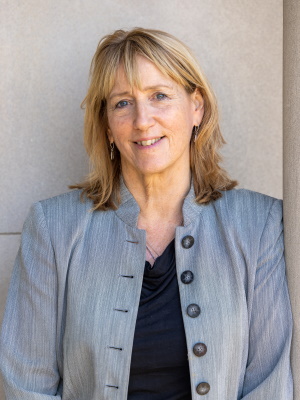
Ebrahim Shayesteh is a postdoctoral researcher at the KTH Royal Institute of Technology , affiliated with the School of Electrical Engineering and the Division of Electromagnetic Engineering and Fusion Science . Born in Iran, he earned his B.Sc. (2006), M.Sc. (2009), and Ph.D. (2015) in electrical engineering from Isfahan University of Technology, Tarbiat Modares University, and KTH, respectively. His current research focuses on power system reliability, energy efficiency, and renewable energy integration. His research interests span reliability modeling , grid optimization , data quality impacts , and renewable energy integration . Publications emphasize fault diagnosis , asset management , and resilience against extreme events . Key trends include smart grid technologies , dynamic load modeling , and data-driven grid planning .
Associate Professor Ines Matić Matešković serves at the University of Rijeka's Faculty of Law as Vice Dean for Business Relations and faculty member of the Department of Roman Law. Her scholarly work bridges ancient Roman legal traditions with contemporary legal frameworks through meticulous analysis of medieval statutes from Croatia's Adriatic regions. Her research centers on Roman legal continuity in medieval Croatian statutes, particularly examining debt security instruments in Dalmatian, Istrian, and Kvarner legal texts. Key specialties include: Evolution of antichresis and debt enforcement mechanisms Roman law influences on medieval Adriatic jurisprudence Historical development of insolvency and bankruptcy concepts Legal analysis of medieval wine trade regulations and vineyard protection Diachronic study of price control systems from Diocletian's Edict to modern economies Recent publications reveal a pronounced focus on 2024-2025 on higher education's role in public administration competency development and modern Croatian university funding models within European frameworks. Her historico-legal methodology consistently connects ancient legal principles to current administrative challenges, notably through examination of the 'salus populi' doctrine in pandemic contexts and evolution of ombudsman institutions from Roman tribunes. Dr. Matić Matešković secured Croatian Science Foundation project 6558 ( Business and Personal Insolvency–the Ways to Overcome Excessive Indebtedness ) and contributes significantly to doctoral education at Rijeka's Law Faculty as evidenced by her 2018 publication on new PhD graduates. Her supervisory role extends to guiding research on Roman legal principles in Croatian judicial practices and medieval statute interpretations.
Tomáš Hrustič, PhD, is a prominent researcher at the Institute of Ethnology of the Slovak Academy of Sciences in Bratislava, specializing in Roma studies, ethnic and national minorities, political participation of Roma, religiosity of Roma, and social mobility. With over 14 years of experience since joining the institute in 2009, he has established himself as a leading expert in Roma studies in Slovakia and internationally. Dr. Hrustič completed his university education at Comenius University, Faculty of Arts, Department of Ethnology - Religious Studies in Bratislava in 2002, earning his Mgr. degree. He later obtained his PhD in 2008. His international academic experience includes research stays at Charles University in Prague (1999-2000), University College London's Department of Anthropology (2004-2005) with a SYLFF scholarship, and the University of Szeged's Department of Study of Religions (2005) with a CEEPUS scholarship. Dr. Hrustič's research focuses on the complex dynamics of Roma communities in Slovakia and Europe. His work examines political participation, religious conversion patterns, social mobility, and economic structures within Roma communities. He has pioneered research on how religious pathways can facilitate social inclusion of Roma, challenging conventional approaches to minority integration. His extensive ethnographic fieldwork, primarily conducted in marginalized Roma communities in Eastern Slovakia, provides nuanced insights into everyday life, identity formation, and resistance strategies among Roma populations. His methodological approach combines participant observation with qualitative interviews and document analysis. His publication record shows a clear evolution from early work on religious conversion among Roma to more recent analyses of Roma political participation, responses to the COVID-19 pandemic, and welfare policy support for marginalized groups. His research bridges anthropology, sociology, political science, and religious studies, with consistent attention to the intersection of ethnicity, religion, politics, and social mobility in Central and Eastern Europe. Cena prezidenta Slovenskej republiky udeľovaná mladým vedeckým pracovníkom (2010) Cena Jána Komorovského za najlepšiu vedeckú publikáciu z oblasti vedeckého štúdia náboženstiev (2011) Cena Predsedníctva SAV za 3. miesto v súťaži Mladých vedeckých pracovníkov do 35 rokov (2013) Cena Národopisnej spoločnosti Slovenska za najlepšiu akademickú publikáciu (2016) Dr. Hrustič has supervised doctoral students through seminars on research methodology and has led numerous significant research projects funded by VEGA, APVV, and international bodies. His most notable projects include 'Patterns of social mobility of Roma in the light of empirical research' (2019-2022) as principal investigator, and 'Analysis of barriers to access to job opportunities for marginalized population groups' (2018-2022) as co-investigator. He has also provided expert evaluation for government agencies, including the Implementation Agency of the Ministry of Labour, Social Affairs and Social Development. As a member of the Advisory Committee for the Framework Convention for the Protection of National Minorities of the Council of Europe (2014-2018) and a permanent invited member of the Committee for National Minorities and Ethnic Groups (since 2018), Dr. Hrustič actively contributes to policy development at national and international levels. He is also a member of the Gypsy Lore Society since 2010 and the European Academic Network on Romani Studies since 2011.
Col. (ret.) Michel William Drapeau serves as an Adjunct Professor at the University of Ottawa’s Faculty of Law, teaching Access to Information and Privacy Law (Common Law Section, French) and Canadian Military Law (Common Law Section, English) at undergraduate and graduate levels since his 2009 appointment. A retired Canadian Forces Colonel with 34 years of service ending in 1993 as Director of National Defence Headquarters Secretariat, he maintains an active private law practice specializing in military/veterans law, administrative law, and human rights litigation before Federal Courts and tribunals. His academic foundation includes dual law degrees (LL.L. civil law 1999, LL.B. common law 2000) from the University of Ottawa, complemented by advanced military education: CF Command and Staff College (1975), U.S. Armed Forces Staff College (1977), U.S. Army Military Comptrollership School (1978), and National Defence College (1988). He clerked at the Federal Court of Appeal under Justice Gilles Létourneau prior to being called to the Ontario Bar in 2002. Drapeau’s research critically examines military justice systems and privacy/access-to-information frameworks , reflecting his unique soldier-lawyer perspective. His scholarship consistently bridges theoretical legal principles with operational military realities, particularly in sentencing under the National Defence Act and cross-jurisdictional privacy challenges. The recurring theme across his work is the tension between national security imperatives and individual rights within administrative law structures. His 2001-2015 publications reveal two dominant trajectories: foundational military law texts addressing court martial procedures and disciplinary systems, and pioneering privacy/access-to-information works analyzing government transparency mechanisms. Notably, his military law scholarship integrates comparative perspectives from international military jurisdictions, while his privacy research emphasizes practical implementation challenges in federal institutions. Drapeau’s exceptional service has earned significant recognition: Order of Military Merit (OMM) for “outstanding military service” (1990) Canadian Forces Decoration with dual clasps Commemorative Medal for Canada’s 125th Anniversary (1993) Queen Elizabeth II Golden Jubilee Medal (2003) Queen Elizabeth II Diamond Jubilee Medal for veteran welfare contributions (2012) Ontario Bar Association Distinguished Award for “exceptional career contributions” (2022) Though not supervising formal graduate students, Drapeau mentors through high-impact legal advocacy, having argued before the Federal Court of Appeal, Court Martial Appeal Court, and US Congressional panels on military justice reform. His international engagements include Yale Law School seminars and Rhodes Conference presentations, demonstrating sustained influence beyond Canadian borders. Professional leadership includes board service at Collège militaire royal (2007-2012) and Saint-Paul University (2012-2019), plus membership in the International Society for Military Law and the Law of War.
Matthias C. Kettemann is a full-time Professor of Innovation, Theory and Philosophy of Law at the University of Innsbruck , where he leads the Department of Legal Theory and Future of Law . He also serves as a research programme leader at the Leibniz Institute for Media Research | Hans Bredow Institute in Hamburg, research group leader at the Alexander von Humboldt Institute for Internet and Society in Berlin, and as a research group leader at the Sustainable Computing Lab in Vienna. His academic affiliations extend to associated researcher roles at institutions in Hamburg, Frankfurt am Main, and Graz. Head of Department, University of Innsbruck Research Programme Leader, Leibniz Institute for Media Research Research Group Leader, Humboldt Institute for Internet and Society Board Member, Sustainable Computing Lab Associated Researcher, Research Institute for Social Cohesion Prof. Kettemann’s research focuses on internet law , AI governance , platform regulation , digital constitutionalism , and innovation law . His publications and projects explore normative orders , multinormativity , and cybersecurity in digital spaces. His recent articles address human-in-the-loop AI systems , consumer credit algorithms , and democratic resilience against disinformation . He also investigates legal frameworks for data sovereignty and platform accountability in crisis situations . He has received prestigious scholarships, including the Fulbright and Boas Scholarships , and contributes to academic discourse as Managing Editor of the Mohr/Siebeck series 'Internet und Gesellschaft' , editorial board member of journals like jusIT and Media and Communication Studies , and scientific advisory board member of the European Yearbook on Human Rights . He is actively involved in reviewing for international publishers and academic journals. Prof. Kettemann teaches in German, English, and French, with courses in internet law , innovation law , international law , and legal philosophy since 2008. He supervises theses at bachelor, diploma, doctoral, and post-doctoral levels, emphasizing digital law and innovation frameworks . His third-party funding includes grants from the European Union , Friedrich-Ebert-Stiftung , Google , and Deutsche Telekom .
Filip Holik is an Associate Professor at the Department of Information Security and Communication Technology at Norwegian University of Science and Technology (NTNU). He works remotely at the University of Glasgow, Scotland, and is actively involved in cybersecurity research for critical infrastructure. Key research areas: eBPF-based programmable data planes, Smart Grid security, Digital Substations, Software-Defined Networking. Major projects: Multidisciplinary Research group on Privacy and data protection (MR PET) , ECoDiS - Engineering and Condition monitoring in Digital Substations , InterSecure - Security of supply in smartgrids . Publications focus on eBPF security frameworks, digital substation threat modeling, and smart grid cybersecurity. His work addresses security of supply in interconnected digital systems and develops adaptive learning mechanisms for attack detection. Technical contributions include developing simulation models for Digital Substations, serving as a Smart Grid Simulation Model developer , and Digital Security instructor for industrial network training programs.
Prof Francesca Iacopi is an Adjunct Professor at the Faculty of Engineering & Information Technology , University of Technology Sydney (UTS). She also holds an adjunct position at Purdue University, IN, USA, and serves as Imec Fellow & Director of the Indiana R&D Center for Imec USA. With a PhD in Electrical Engineering/Materials Science from Katholieke Universiteit Leuven (2004) and MSc in Physics (1996) from Sapienza University of Rome, she has 20+ years of leadership in semiconductor R&D and academic innovation. IEEE Fellow & Elected Board of Governors Member (2021-2026) Inaugural Editor-in-Chief, IEEE Transactions on Materials for Electron Devices Chief Investigator & Industry Liaison Chair, ARC Centre of Excellence for Transformative Meta-Optical Systems Research Focus spans graphene electronics , additive manufacturing for microwave components , and energy-efficient nanodevice design . Her work bridges semiconductor industry experience (GlobalFoundries, IMEC) with academic breakthroughs in epitaxial graphene integration , nanoscale thermal emitters , and brain-machine interface sensors . Key Trends in her recent publications: 3D-printed metasurfaces for wireless communication, Fermi level tuning in graphene devices, and high-temperature operando characterization of graphene growth mechanisms. These align with her broader vision of multi-functionality on silicon platforms. Scientific Recognition : Australian Research Council Future Fellowship (2012-2016) Gold Graduate Student Award (2003, Materials Research Society) Global Innovation Award (2014) IEEE Fellowship (2024) Leadership & Education : Founded UTS's Bachelor of Engineering (Hons) Major in Electronics. Serves on UTS Academic Board (2021) and leads the Integrated Nano Systems Lab . Her teaching spans semiconductor physics, nanofabrication, and IoT component design, emphasizing cross-domain integration of CMOS, photonics, and energy storage systems.
Etienne Paradis-Gagné is an Assistant Professor at the Faculty of Nursing, University of Montreal, with a focus on forensic nursing, mental health, and social vulnerability. He holds a PhD in Nursing (2019) and a DES in Health Law (2020). His career spans academic research, clinical practice in forensic psychiatry, and leadership in health policy studies. PhD (Nursing), University of Ottawa (2019) DES (Health Law), Université de Sherbrooke (2020) MBA (Health Administration), Université Laval (2011) BSc (Nursing), Université Laval (2009) His research explores intersections between mental health systems and justice, coercion in psychiatric care, and nursing practices for homeless populations. Key projects include studies on involuntary hospitalization, street nursing interventions, and poststructuralist analyses of healthcare governance. His recent publications span forensic nursing ethics, homelessness healthcare, and critical discourse analysis. Awards include the Journal of Forensic Nursing 2020 Research Article of the Year and the 2017 National Bank Clinical Innovation Prize. Supervises graduate students in nursing Principal Investigator for CIHR, SSHRC, and FRQS-funded projects Collaborates with CR-IUSMM and Philippe-Pinel Forensic Institute Develops immersive virtual reality applications for forensic nursing training
Dr. Christian Zipper is a Senior Lecturer at the Zurich University of Applied Sciences (ZHAW) School of Engineering, specializing in Technology Assessment. He leads projects focused on integrated risk management, resilience engineering, and sustainability assessment. Resilience Engineering: Developed frameworks for transitioning from risk to resilience management, contributing to European Safety and Reliability Conference proceedings. Sustainability Assessment: Led research on CO2 methanation value chains and social life cycle assessment for Switzerland. IoT Applications: Investigated IoT's role in climate protection and sustainable power grids. Education: Involved in teaching MAS/DAS/CAS programs in Integrated Risk Management.
Hristina Runcheva Tasev serves as an Associate Professor at the Faculty of Law, Ss. Cyril and Methodius University in Skopje, within the Institute of Political Science and Applied Political Science Department. Her academic profile spans teaching across all three study cycles with subjects including Applied Politics, Digital Democracy, EU Political System, and Ethnicity, Nation and State. Her research focuses on EU integration dynamics, Balkan political systems, and media freedom under emergency conditions. Key areas include refugee rights in Macedonian legal frameworks, EU rule of law mechanisms, and digital governance challenges. Her work demonstrates consistent engagement with contemporary European political crises and institutional responses. Analysis of her recent publications reveals strong thematic continuity in Balkan-EU relations, with increasing attention to digital governance and pandemic-era civil liberties. Over 60% of her work since 2018 addresses migration corridors or EU integration challenges specific to North Macedonia, reflecting deep regional expertise. Regular participant in Annual International Conferences on European Integration Contributor to Mega project "European Integration of the Republic of North Macedonia" Her teaching portfolio demonstrates comprehensive coverage of political science subfields, with particular emphasis on practical policy application through courses like Policy Analysis and Evaluation at the third-cycle level. Office hours are maintained Monday/Wednesday 11am-1pm for student consultations.
Professor Jenny Parkes serves as Professor of Education, Gender and International Development at University College London's Institute of Education within the Department of Education, Practice and Society. She co-leads the Centre for Education and International Development (CEID) and conducts globally recognized research on violence, gender inequalities, and education systems across Sub-Saharan Africa and the UK. Her academic credentials include a PhD in Education (2005), MSc in Professional Educational Psychology (1989), and BSc in Psychology (1983) from the University of London and Bristol. Postgraduate qualifications comprise a PGCE in Primary Education (2004) and Professional Certificate in Teaching and Learning in Higher Education (2007). Parkes' research program centers on school-related gender-based violence (SRGBV) prevention, examining intersections between climate change, conflict, and child protection. Her work emphasizes innovative partnerships with UN agencies, governments, and NGOs across nine African nations, focusing on how educational institutions can mitigate violence and promote gender equity. Current projects investigate climate-violence linkages and longitudinal impacts of school-based interventions like the Good School Toolkit. Analysis of her 15 most recent publications reveals three dominant trends: 1) Climate change as an emerging driver of violence against children, 2) School systems as critical intervention points for SRGBV prevention, and 3) Compounded vulnerabilities among adolescent girls facing intersecting risks of violence, unintended pregnancy, and mental health challenges. Her methodological innovations include remote research techniques developed during the COVID-19 pandemic. She actively supervises 11 doctoral candidates across diverse topics including policy enactment in Côte d'Ivoire, gender subjectivities in prison education, and forced marriage in UK schools. Her completed PhDs (7 since 2013) have produced influential work on teacher sexual violence in Uganda and educational capabilities of Somali refugee youth. Parkes teaches core modules for the MA Education, Gender and International Development program while securing substantial research funding for multi-country studies. As CEID co-leader, Parkes directs a collaborative research hub focused on education in conflict-affected and resource-constrained settings. The center facilitates knowledge exchange between academics, policymakers, and practitioners to advance Sustainable Development Goals 3, 4, 5, and 16 through evidence-based interventions.
Vladimir Alekseevich Kryazhkov is a Research Professor at the Department of Public Law within the Faculty of Law at the National Research University Higher School of Economics (HSE) in Moscow. With 28 years of scientific and teaching experience, he has been affiliated with HSE since 2007. His academic career spans multiple prestigious institutions and roles, including serving as an advisor to the Constitutional Court of the Russian Federation from 1992 to 2010. Education: 1972: Graduated from Tomsk State University with a degree in Jurisprudence 1978: Candidate of Law 1981: Associate Professor 1989: Doctor of Law with dissertation on 'Information links of the Soviet representative system in the context of democratization of society' 1991: Professor 1994: Interned at the Constitutional Court of Germany Research Interests: Professor Kryazhkov specializes in constitutional law, public authority, federalism, constitutional justice, and most notably, the rights of national minorities and indigenous peoples of the North. His work bridges historical analysis with contemporary legal challenges, particularly focusing on the legal frameworks protecting indigenous communities and their traditional ways of life. His research demonstrates a consistent dedication to understanding how constitutional mechanisms can better serve minority populations within Russia's federal structure. Publication Trends: Analyzing his recent publications reveals a clear trajectory of scholarly focus. Since 2019, his work has increasingly centered on indigenous rights, particularly examining traditional reindeer herding, land rights, and constitutional protections for indigenous communities. His 2023-2025 publications show a sophisticated integration of international legal standards (particularly ILO Convention 169) with Russian constitutional law, while also addressing the evolving structure of constitutional control within Russia's federal subjects following recent judicial reforms. Scientific Recognition: Honorary Diploma of HSE (2020) Honored Lawyer of the Russian Federation (2010) Academic Work Allowance (2012-2018) Publications Bonus for international scientific reputation (2022-2025) Winner of Best Scientific Works Competition (2023) Academic Leadership: Professor Kryazhkov has supervised five doctoral dissertations, with his most recent advisee (Sukhanov K.A.) completing work in 2023 on national minorities' rights. Since 2010, he has served as an invited editor for the 'Arctic Review on Law and Politics,' demonstrating his international scholarly engagement. His participation in numerous constitutional forums across Russia (Ural, Saratov, Kazan) and internationally (Geneva) highlights his active role in shaping constitutional discourse, particularly regarding indigenous rights and federalism. Professional Activities: He regularly participates in constitutional forums and conferences, with documented presentations through 2025 on topics including constitutional councils in Russian regions, indigenous rights protection, and constitutional reform impacts. His work bridges academic scholarship with practical constitutional development in Russia.
Efstratiadis Andreas serves as an Assistant Professor in the Department of Water Resources and Environmental Engineering at the School of Civil Engineering, National Technical University of Athens (NTUA), based at the Laboratory of Hydrology and Water Resources Development. His research spans water resources systems, hydropower infrastructure, and the water-energy nexus, with emphasis on stochastic modeling and uncertainty quantification. His primary research interests include stochastic hydrology, flood risk assessment, multipurpose reservoir optimization, and renewable energy integration. He investigates cascading infrastructure failures, spatial reliability in solar PV systems, and climate-energy market uncertainties, often employing advanced simulation-optimization frameworks to address complex water-energy challenges under environmental variability. Recent publications (2023–2025) reveal a strong focus on hydropower dam safety, flood control infrastructure design, and the operational trade-offs in multipurpose reservoirs. His work increasingly integrates Earth Observation data for hydrologic modeling and examines socio-technical dimensions of the water-energy nexus, reflecting a shift toward interdisciplinary systems analysis. Dr. Efstratiadis contributes to NTUA's Laboratory of Hydrology and Water Resources Development, which develops decision support systems like Hydronomeas 2020 and national monitoring infrastructure (OpenHi.net) for Greek surface waters. His lab emphasizes computational tools for water resources management under climate uncertainty.
Sheryl Kubiak, Ph.D., serves as Dean and Professor at Wayne State University School of Social Work and Founding Director of the Center for Behavioral Health and Justice. With prior roles at Michigan State University and the University of Michigan, her career spans 30 years of research at the intersection of criminal/legal systems and behavioral health. Current: Wayne State University School of Social Work Dean and Professor Former: Michigan State University Professor, University of Michigan Research Associate Education: Ph.D. in Psychology and Women's Studies, University of Michigan (2002) M.S.W., University of Michigan (1988) B.A. in Social Work with Business minor, Madonna University (1987) Dr. Kubiak's research focuses on criminal/legal system-behavioral health intersections , including substance abuse treatment in prisons, mental health courts, opioid addiction reentry programs, and trauma-informed corrections. Her methodological expertise includes Evaluation methods Survey design Secondary data analysis Recent publications examine: Prison behavioral health service disparities Crisis response model effectiveness Gender-specific violence patterns AI applications in social work education Sequential intercept model implementation Scientific awards include: NIMH Gender and Mental Health Pre-doctoral Fellowship NIJ Women in Criminal Justice Training Scholarship James Marshall Public Policy Fellowship (declined) Grants exceeding $20 million include: $1.7M MDHHS mental health diversion evaluation $16M SAMHSA opioid addiction initiative $6.8M NIMH/NIJ suicide prevention trial As a peer review panel member for NIMH and Fulbright Awards, Dr. Kubiak has also designed experiential learning programs in correctional settings and advocated for policy reforms through gubernatorial appointments.
Professor Eiji Sasada serves as a distinguished faculty member at Waseda University's School of Political Science and Economics, where he has been employed since 2012. Previously, he held academic positions at Hokkaido University Graduate School of Law (2002-2012), Kanazawa University Faculty of Law (1995-2002), and University of Teacher Education Fukuoka Faculty of Education (1988-1995). His academic credentials include a Doctor of Laws from Kyushu University, where he completed both undergraduate and graduate studies in law. Dr. Sasada's research interests center on constitutional law, public law, and judicial systems, with particular emphasis on constitutional interpretation, judicial reform, and the relationship between constitutional principles and practical court procedures. His scholarly work explores how judicial systems can better uphold constitutional rights while adapting to contemporary governance challenges, including digital transformation in legal processes and the evolving role of judiciary in democratic societies. His recent publications reveal a consistent scholarly trajectory examining paradigm shifts in judicial systems, with particular attention to constitutional review mechanisms, effective remedies in administrative trials, and the impact of technology on civil judicial procedures. His research demonstrates sophisticated comparative analysis, especially regarding German constitutional practices, while addressing uniquely Japanese constitutional challenges. Notably, his current work investigates how AI integration in trials might affect judicial independence and constitutional rights. National Personnel Authority, National Civil Service Recruitment Examination Specialist Committee (2015-2021) Japan Society for the Promotion of Science Scientific Research Funding Committee (2014-2016) Hokkaido Bureau of Telecommunications Consumer Support Liaison Committee (2010-2012) Information Disclosure and Personal Information Protection Review Board of Sapporo City (2009-2012) Ministry of Justice New Bar Examination Committee (2006-2011) Professor Sasada has secured multiple significant research grants, including projects on constitutional issues in digitalized civil litigation (2021-2023), reforming justice through openness and participation (2015-2019), and empirical comparative research on revitalizing constitutional review (2011-2015). His teaching portfolio encompasses Constitutional Law, Judicial System Theory, and Comparative Constitutional Law at both graduate and undergraduate levels.