Juraj Sipko is a Professor at the Paneuropean University PEVŠ , affiliated with the Faculty of Economics and Business . He teaches International Finance , Current Issues of the World Economy , and Civilizational Challenges for the 21st Century . Scientific focus: International Finance , World Economy , Macroeconomics , with emphasis on European Monetary Union , Financial Systems , and Economic Imbalances . Notable collaborations include research on currency competition and monetary transitions with V. Sadil in 2021, and SME entrepreneurship studies with J. Belas in 2015. Recent publications (2021-2014) analyze currency internationalization , debt crisis impacts , liquidity trends , and economic imbalances in the Eurozone and Slovakia.
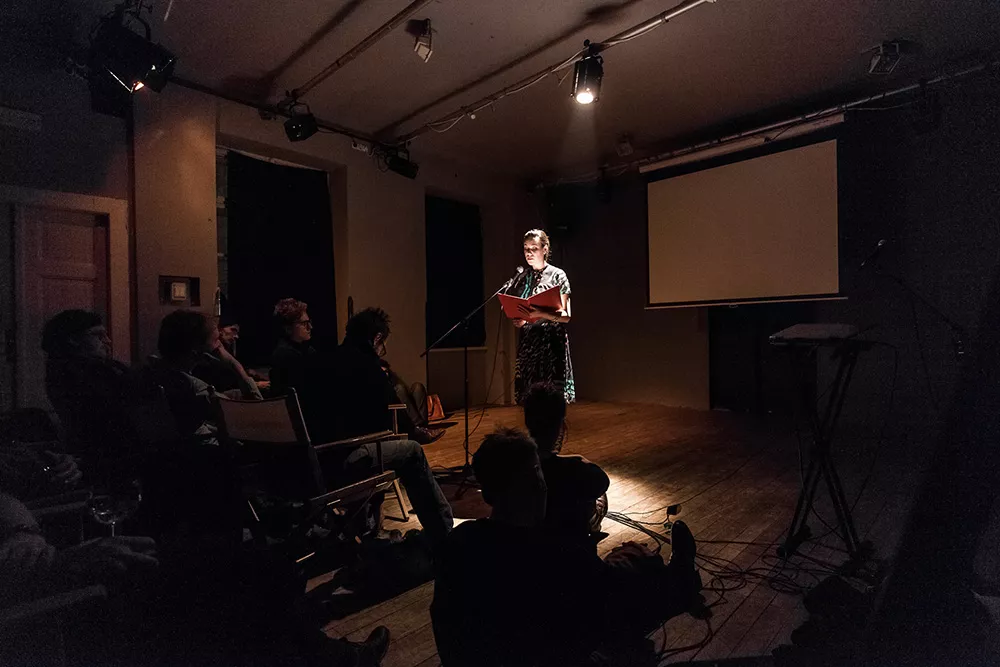
Jana Kapelová is an Associate Professor and Studio Manager at the Department of Intermedia, Academy of Fine Arts and Design in Bratislava. Her practice bridges intermedia art, institutional critique, and civic activism. Academy of Fine Arts and Design, Bratislava (2009-2013, ArtD.) Faculty of Fine Arts, Banská Bystrica (2004-2006, MFA) University of Trnava (2000-2004, MA in Slovak Language & Art Education) Her research interrogates: Social resistance strategies through performance and participatory projects Temporal dynamics of labor and leisure in bureaucratic systems Institutional critique of Slovak cultural policy Oral history and polyphonic narratives in art practice Urban space alienation and reclamation Intergenerational identity transmission through art Major works include the Kunsthalle documentary project (2011-2012), which compiled 18 expert testimonies about Slovakia's failed contemporary art institution campaign, and Free Working Time (2011), analyzing creative acts during labor hours through Michel de Certeau's 'tactics' theory. She employs video installations, mail art, and public interventions as primary mediums. Scientific recognition includes: 2014 Oskár Čepan Award for emerging Slovak artists 2014 Tatra Tiger Award for innovative art projects 2013 Essl Art Award CEE Finalist 2005 Egoart Award Finalist She has completed international residencies at ICPA New York (2015) and Oberliht Moldova (2013), while co-founding Artyčok TV (2009-2015) – Slovakia's first art-focused online television platform.
Associate Professor Dušan Medved serves at the Department of Electrical Power Engineering within the Faculty of Electrical Engineering and Informatics at the Technical University of Košice. As Head of the Electricity Generation and Distribution Department, he plays a key leadership role in shaping electrical engineering education and research at the institution. His extensive teaching portfolio spans fundamental electrical engineering concepts through to specialized topics in power systems and renewable energy technologies. Medved's research interests primarily focus on power system modeling, renewable energy integration, and smart grid technologies . His work demonstrates particular expertise in photovoltaic systems, electric vehicle integration, electromagnetic field analysis, and power quality assessment. He has developed significant expertise in using EMTP-ATP software for power system transient analysis and has published extensively on modeling techniques for electrical power engineering applications. An analysis of his recent publications (2023-2024) reveals a strong emphasis on the integration of renewable energy sources into power grids, with particular attention to photovoltaic systems, electric vehicle charging infrastructure, and energy storage solutions. His work bridges theoretical modeling with practical implementation challenges, addressing critical issues such as grid stability during high renewable penetration, optimal sizing of energy storage systems, and maximizing self-consumption of locally generated renewable energy. The interdisciplinary nature of his research connects electrical engineering with energy economics and environmental considerations. Medved has been actively involved in teaching a wide range of courses including Fundamentals of Electrical Engineering, Electrothermal Technology, Electrical Energy Transformations, and Modeling in Electrical Power Engineering. His teaching materials demonstrate a hands-on approach with practical assignments covering resistance furnace design, arc steelmaking furnace analysis, and power system modeling using EMTP-ATP software. His commitment to education is evident in his development of numerous teaching resources and student projects spanning from 2012 to the present.
Dr. Karol Kyslan serves as Associate Professor and Vice-Dean for Research at the Faculty of Electrical Engineering and Informatics, Technical University of Košice, where he leads research initiatives and doctoral education programs. His academic profile centers on advanced control systems for electrical drives, with institutional affiliation deeply rooted in industrial automation applications. His research expertise spans sensorless control of Permanent Magnet Synchronous Motors (PMSM) , finite control set model predictive control , and sliding mode observers , addressing critical challenges in low-speed operation, fault tolerance, and industrial implementation. Key application domains include material processing lines, rotary shears, and steel production systems, where his work bridges theoretical control algorithms with practical machinery dynamics. Analysis of his 2021-2025 publications reveals a strategic evolution toward integrating machine learning for fault diagnosis while maintaining core focus on high-frequency signal injection techniques. Recent work demonstrates increasing sophistication in torque ripple compensation and real-time optimization, with growing emphasis on multiphase machine control and hardware-in-the-loop validation for industrial deployment.
Ján Strelinger serves as a Senior Lecturer at the Department of English Language, Faculty of Applied Languages, University of Economics in Bratislava, where he has contributed to academic programs since 2008 with expertise spanning language pedagogy and cross-cultural business communication. His educational foundation includes a second degree in Translating and Interpreting (English-Italian) from Comenius University (1991) and a third degree in International Economic Relations from the University of Economics in Bratislava (2016), complemented by professional development through study stays at Universitá di Padova (2003), Universitá per stranieri di Siena (2006), and UC Berkeley (2007). Strelinger's research critically examines Language Teaching methodologies for business contexts, Translation Studies in EU documentation, Consumer Behavior in sustainable food systems, and Cultural Diplomacy in international negotiations. His work bridges linguistic theory with practical applications in economics and management education, emphasizing innovative approaches to multilingual professional communication. Analysis of his publications reveals a consistent focus on adapting language education to global business demands, with significant contributions to understanding Slovak consumer patterns in organic food markets and developing pedagogical frameworks for cross-cultural negotiation competence. No major scientific awards or fellowships were documented in the source material. He has supervised 2 Bachelor's theses and secured research funding through KEGA grants: KEGA Project (2018-2019): 'Ideational idioms in Business English communication' (Co-investigator) KEGA Project (2024): 'Innovative Methods in Teaching Business Negotiations in English' (Co-investigator) His recent Erasmus mobility at Universidad de País Vasco EHU (March 2024) underscores ongoing international collaboration in language education.
Marta Richtáriková is a researcher at the Department of Nuclear Physics and Biophysics within the Faculty of Mathematics, Physics and Informatics at Comenius University , Slovakia, where she has been affiliated since 1989. Her work focuses on radiocarbon sample preparation and analysis for climate change and environmental studies. PhD in Analytical Chemistry (1984), Faculty of Natural Sciences, Comenius University Her research spans radiocarbon dating , atmospheric CO2 monitoring , and isotope hydrology , with significant contributions to nuclear power plant impact assessments and cosmic radiation studies . Recent projects include isotope analysis of meteorites and environmental radionuclide monitoring under IAEA grants. Key publication trends involve AMS (Accelerator Mass Spectrometry) , groundwater tracers , and nuclear process investigations , reflecting her expertise in environmental radioactivity and isotope geochemistry. She collaborates on international projects and has contributed to tree-ring radiocarbon records and thermal water dating . Her laboratory work includes optimizing ion sources and target preparation for AMS/IBA facilities, enhancing Slovakia's capacity for nuclear and environmental research. She employs techniques like gas proportional counting and IRMS spectrometry for carbon and cesium isotope analysis.
Theodor Baums is a Professor at J.W. Goethe University, Frankfurt/Main, and a Fellow of the European Corporate Governance Institute (ECGI), Brussels. His work bridges academic research and policy development in corporate law and governance. J.W. Goethe University, Frankfurt/Main – Professor European Corporate Governance Institute (ECGI) – Fellow His research focuses on corporate governance, company law, shareholder protection, and regulatory frameworks in Germany and the European Union. He has extensively analyzed German corporate structures, co-determination, and transparency mechanisms, contributing to both national and EU-level legal reforms. His publications reveal a strong emphasis on comparative and European company law, with recurring themes including regulatory competition, legal harmonization, shareholder rights, and corporate disclosure. His work often engages with policy documents and government commissions, indicating a significant influence on legal and regulatory thinking in Europe. Notable contributions include the European Model Company Act (EMCA) , reports on EU company law reform, and analyses of German corporate governance models. His scholarship is widely disseminated through the ECGI and SSRN, reflecting high academic impact. Theodor Baums has collaborated with leading scholars across Europe and contributed to major policy initiatives, including the German Government Panel on Corporate Governance and the Reflection Group on the Future of EU Company Law. While no formal students or grants are listed, his collaborative projects suggest extensive academic engagement and mentorship. He has not listed any scientific awards in the provided texts, but his sustained scholarly output and policy involvement indicate recognition within the legal and governance communities.
Prof. JUDr. Marián Giba, PhD. is a Professor and Head of the Department of Constitutional Law at the Faculty of Law, Comenius University in Bratislava. He also teaches Public Law and Public Policy at the Institute of Public Policy. With academic qualifications from Charles University in Prague, Université Panthéon-Assas in Paris, and Comenius University, he has established himself as a leading constitutional scholar in Slovakia. His academic journey began with a law degree from Charles University in Prague (2006), followed by a doctorate from both Université Panthéon-Assas, Paris and Comenius University (2010). He achieved the title of Associate Professor in 2018 and was promoted to full Professor in 2023. His academic career spans from 2009 to present, progressing through multiple academic ranks while maintaining significant public service roles. Prof. Giba's research focuses on constitutional law with particular emphasis on institutional aspects of constitutional law, referendums, constitutional-law aspects of the European Union, and French constitutional law. His scholarly work demonstrates deep engagement with both theoretical and practical dimensions of constitutional systems, with special attention to Slovak constitutional development within the European context. He has authored numerous domestic and foreign articles and handbooks that have significantly contributed to constitutional discourse in Central Europe. His recent publications reveal a strong trend toward analyzing specific constitutional mechanisms in Slovakia, particularly concerning budget responsibility, early elections through referendums, and unwritten constitutional principles. His comparative work on French constitutional review provides valuable insights for understanding different models of constitutional adjudication in Europe. Prof. Giba actively supervises students at all levels, currently guiding 6 bachelor's, 2 master's, and 1 doctoral students, with a track record of supervising 41 bachelor's, 37 master's, and 4 doctoral theses to completion. He secures significant research funding through multiple VEGA projects including 'Ensuring the operation of constitutional bodies of the Slovak Republic during crisis situations' (2021-2022), 'Limits of European integration in the Slovak constitutional order' (2022-2024), and 'Constitutional-political crises caused by loss of parliamentary confidence in the government and possible solutions' (2024-2025). Beyond academia, Prof. Giba holds influential positions in Slovak constitutional governance, having served as Advisor to the President for Law and Justice (2022-2024), Associate Judge of the Supreme Administrative Court (since 2022), Vice-Dean of the Faculty for IT, External Relations and the Diplomatic Academy (2015-2019), and Member of the State Commission for Elections and Control of Political Party Financing (2021-present).
Prof. Annamária Várkonyiné Kóczy is a Professor at the Department of Informatics within the Faculty of Economics and Informatics at J. Selye University. She holds a joint appointment as a professor at Óbuda University's Institute of Software Design and Software Development. Her academic journey includes: Electrical Engineering studies (Measurement and Control) at Technical University of Budapest (1975-1981) Mechanical Engineering degree (Mechanical Engineer-Teacher) from the same institution (1978-1983) PhD in Computer Science from Technical University of Budapest (1996) DSc (Doctor of Sciences) from Hungarian Academy of Sciences (2010) Habilitation from Széchenyi István University (2017) Her research spans digital signal processing, soft computing, and hybrid techniques for complex systems, with applications in medical diagnostics, intelligent control, and sustainable technologies. She leads projects in computational intelligence and has developed novel algorithms for real-time processing in resource-constrained environments. Recent publications demonstrate strong focus on AI-driven solutions: machine learning for bioacoustic analysis (beehive swarming), fuzzy logic optimizations for edge computing, medical imaging diagnostics (COVID-19 detection), and sustainable energy control systems. Her work consistently bridges theoretical models with practical implementations in healthcare, environmental monitoring, and industrial diagnostics. She has secured multiple research grants including: OTKA K 105846: Intelligent Space and robotics (2012-2017) OTKA K 78576: Intelligent techniques in signal/image processing (2009-2013) GVOP-3.3.1: Intelligent 3D modeling systems (2006-2007) EU Structural Funds projects on vehicle industry collaborations She mentors graduate researchers in applied informatics and leads international collaborations across Europe and Asia, focusing on intelligent systems development.
Lukrécia Kováč Gerulová serves as a Lecturer at the Department of Finance, Faculty of Economics and Finance, University of Economics in Bratislava, where she has maintained continuous academic engagement since 2002 following a period of maternity leave (2012-2020). Her career progression includes Assistant Professor roles until 2012 and again from 2020-2023 before transitioning to her current position, reflecting deep institutional commitment and expertise in finance education. Her academic credentials include: Second degree in Finance, Banking and Investment, and Taxation and Tax Consulting (2002) Third degree in Economic Theory (2010) Her research spans finance, regional economics, gender studies, and health economics, characterized by empirical analysis of Slovak economic phenomena. Key themes include EU regional convergence, tax policy implementation, gender wage disparities, and healthcare innovation impacts, often combining theoretical frameworks with localized data. Methodologically, she employs econometric modeling, discrete choice experiments, and policy analysis. Recent publications reveal a strategic pivot toward gender economics and pandemic-related health economics since 2020, while maintaining core finance research. Her 2022-2023 works demonstrate interdisciplinary integration—examining wage gaps through regional lenses and postal service satisfaction through consumer behavior theory—indicating evolving methodological sophistication within her Slovak-focused empirical tradition. No scientific awards were documented in the provided materials. She has supervised 46 bachelor's and 15 master's theses, demonstrating significant educational impact. Current research is supported through participation in the APVV-20-0338 project 'Driving forces of economic growth and survival of firms in the sixth K-wave,' where she contributes expertise in regional economic analysis and gender-disaggregated data interpretation.
Alena Bašová, PhD, serves as Assistant Professor in the Department of Finance at the Faculty of Economics and Finance, University of Economics in Bratislava. With continuous academic service since 1986 (initially at the Faculty of National Economy, predecessor to the current faculty), she maintains active roles in teaching and research within Slovakia's leading economic institution. Her educational credentials include: PhD, University of Economics in Bratislava, Faculty of National Economy (1986) Master's in Economic Theory, University of Economics in Bratislava (2001) Dr. Bašová's research interrogates critical intersections between energy systems, financial markets, and digital transformation. She investigates renewable energy adoption frameworks, monopoly pricing dynamics in regulated sectors, and digitalization's disruptive effects on traditional economic structures. Her methodology combines theoretical modeling with policy-relevant analysis, particularly focused on Slovak and European contexts where energy security and financial stability remain pressing concerns. Analysis of her 2018-2021 publications reveals intensifying focus on digital-energy synergies, with 60% of recent work examining how digital technologies reshape energy markets, grid management, and security paradigms. Concurrently, she maintains expertise in financial risk assessment and investment evaluation, demonstrating consistent engagement with both classical economic theories and emerging technological disruptions. Dr. Bašová has supervised 12 degree theses (8 Bachelor's, 4 Master's) while contributing as co-investigator to three major research initiatives: Financial risks and their influence on Slovak economic stability (3 years) Digitalization challenges in taxation systems (3 years) Capital and risk management during macroeconomic shocks (3 years) Her research operates within structured funding frameworks including VEGA grants 1/0688/20 and 1/0779/19, with departmental resources supporting her energy economics and digital finance investigations. Current work emphasizes practical applications for Slovak energy policy and financial sector resilience.
Doc. PhDr. Andrea Klimková, PhD is an Associate Professor at the Department of Philosophy , Matej Bel University (Banská Bystrica, Slovakia), with additional affiliation at Univerzita Pavla Jozefa Šafárika . Her work bridges ecological ethics , applied ethics , and sustainable development , emphasizing ethical leadership, pandemic decision-making, and eco-ethical educational frameworks. Specializes in environmental education and ethics of care Key publications address shame in ecological ethics , axiological dimensions of tourism , and transdisciplinary sustainable development Active in medical ethics (physician-patient dynamics, nursing ethics) Her recent 2022 paper analyzes ethics implementation in scientific research , arguing for institutional integrity over proclamatory adoption. This follows her 2021 pandemic ethics study and 2018 contributions to sustainability discourse . Despite extensive publication, scientific awards aren't explicitly mentioned. She maintains active ethical counseling roles and regional development initiatives.
Prof. Juraj Gazda is a Professor at the Faculty of Electrical Engineering and Informatics, Technical University of Kosice. His research focuses on cognitive radio networks, artificial intelligence, green communications, and agent-based modeling. He holds a PhD in engineering from TUKE (2010) and has extensive industry experience as an external consultant at Nokia Networks (2011–2014), advising on LTE wireless systems. He has been a guest researcher at institutions like Ramon Llull University (Spain), Technical University of Hamburg (Germany), and Delft University of Technology (Netherlands). His teaching includes stochastic modeling and data analysis courses. Gazda’s work bridges academia and industry, emphasizing network security, autonomous systems, and 6G technologies. Research highlights include contributions to UAV-assisted networks, blockchain-based spectrum management, and AI-driven edge computing. His projects address real-world challenges in 5G/6G networks, including energy efficiency, secure communication, and autonomous vehicle coordination. Gazda actively collaborates with global tech firms like Verizon Wireless, contributing to network design and optimization. Publications span AI applications in healthcare, vehicular networks, and quantum computing. He advocates for interdisciplinary research, integrating machine learning, blockchain, and metaverse technologies to address future mobility and communication needs.
Prof. Irena Kamanová holds dual roles as Professor and Associate Professor at the Department of Social Work, Catholic University in Ružomberok. Her work focuses on elderly care, healthcare ethics, and social service policy. She advises via email预约 at office 423, specializing in demography, disability studies, and gerontology. Her research bridges Slovak social systems with international frameworks, addressing issues like dementia communication and institutional care ethics. Key research areas include aging populations in post-communist contexts, malnutrition interventions, and standards for social service delivery. She has authored influential works on family dynamics in Poland and Slovakia, and the intersection of demographic trends with reproductive behavior. Her recent studies analyze regional social service needs in the Žilina region and explore applied ethics in social work practice. Publications span 15 years, emphasizing practical methodologies for social work and policy analysis. She actively contributes to debates on Slovak social security systems and has pioneered frameworks for evaluating institutional care quality. Current research priorities include improving accessibility for physically disabled individuals and advancing interdisciplinary elderly care models.
Tomáš Imrich Profant is an Associate Professor in the Department of International Political Relations at the Faculty of International Relations, University of Economics in Bratislava, with active teaching responsibilities including consultation hours on Thursdays and diploma seminars on Tuesdays. His research critically examines intersections of political systems and ecological sustainability through key areas: International political economy: analyzing global power structures in economic governance Postcolonial theory: deconstructing colonial legacies in international relations Political ecology and Ecological economy: investigating socio-ecological crises and alternative economic models Post-development approach and Degrowth: challenging conventional development paradigms Discursive analysis and Racism: exposing discourse-power dynamics in racial inequality Profant leads and contributes to major international research initiatives including COST Action CA19129 "Decolonization of Development" (Management Committee member) and APVV-19-0314 "Discourse of Global Education" (Principal Investigator), with collaborations spanning Sciences Po Bordeaux, University of Vienna, and Czech-Slovak research networks.