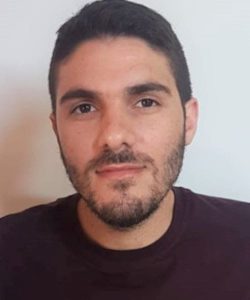
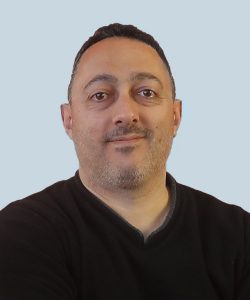
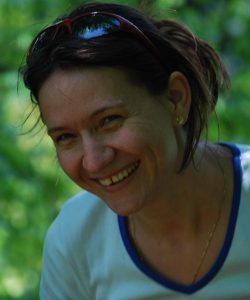
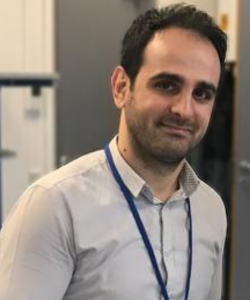
Christos Frangkeskou is a Researcher at the KIOS Research Center of Excellence, Department of Electrical and Computer Engineering, University of Cyprus. His educational background includes: BSc in Electrical Engineering, University of Cyprus, 2012 MSc in Energy and Sustainability with Electrical Power Engineering, University of Southampton, 2013 (with Distinction) Professionally, he has six years of experience in the UK: Power Systems Engineer in the Oil and Gas Industry for a major EPC Contractor Power Systems Protection Engineer for a Distribution Network Operator (DNO) in the Electricity Industry His research spans Power System Protection, Monitoring and Control, Power Quality, and Renewable Energy Systems. He is a member of the Cyprus Technical Chamber and the Institute of Engineering and Technology, conducting work at the KIOS Research Center of Excellence focused on intelligent systems and networks.
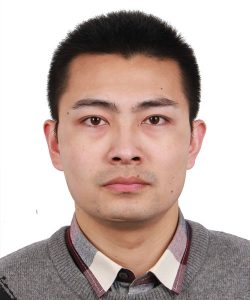
Dong Zhao is a Research Fellow at the KIOS Research and Innovation Center of Excellence, University of Cyprus. He holds a Ph.D. in Control Science and Engineering from Beijing University of Chemical Technology (2016) and a B.S. in Automation (2011). B.S., Automation, Beijing University of Chemical Technology, 2011 Ph.D., Control Science and Engineering, Beijing University of Chemical Technology, 2016 His research focuses on fault diagnosis , fault-tolerant control , two-dimensional systems , linear estimation , and active disturbance rejection control . Recent work emphasizes resilience in cyber-physical systems under cyber-attacks and advanced data-driven control methodologies. The 15 most recent publications highlight trends in distributed control for nonlinear systems, cybersecurity in industrial systems , soft sensing , and encrypted control systems . Topics include replay attack detection , deception attacks , and applications to power systems and quadcopters. Current affiliations include postdoctoral research at the University of Cyprus since 2018, following a postdoctoral fellowship at the University of Duisburg-Essen (2017–2018). Research is conducted at the KIOS Research and Innovation Center of Excellence.
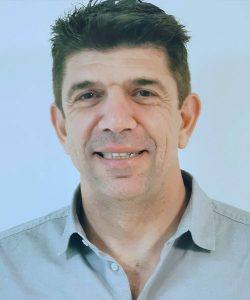
Charalambos Pissaridis is an alumnus of Cyprus University of Technology (CUT), where he served as a Research Assistant. He holds a Bachelors in Electrical Engineering (2021) from CUT under the supervision of Dr. Petros Aristidou. His research focuses on electric vehicle integration and its impact on power distribution networks, employing stochastic modeling and Monte Carlo simulations. Education: Bachelor of Science in Electrical Engineering, Cyprus University of Technology (2021) Research: His work analyzes how electric vehicle penetration affects low-voltage distribution grids, with a focus on load profile dynamics and charging strategies. He co-authored a thesis titled Impact of Electric Vehicles on the Cyprus Distribution Network , which evaluates grid resilience under varying EV adoption scenarios. Contributions: His research highlights the importance of grid control techniques to mitigate peak loads and optimize energy distribution. The study was conducted at the SPS-lab (https://sps-lab.org/publication/2021thpantelipissaridis/).
Dr. Michalis Chrysostomou is an Associate Lecturer in the School of Sciences at the University of Central Lancashire Cyprus (UCLan Cyprus), specializing in Electrical Engineering. He holds a PhD in Electrical Engineering from Frederick University (2021), an MSc in Sustainable Electrical Power from Brunel University (2007), and a BEng in Electronics and Electrical Engineering from Brunel University (2006). His research focuses on renewable energy systems, power electronics, datacenter efficiency, and energy storage solutions. He has contributed to projects like Eranet-MED (2017–2019) and Iponics (2020), and holds certifications such as CDCMP and ISO14001 Lead Auditor. His teaching includes Signals and Control Systems. Notable publications address energy efficiency in datacenters, IoT-based agricultural systems, and machine learning-driven power management. He has received the Best Thesis Award for his PhD work.
Asst. Prof. Alper Doğanalp holds a Ph.D. in Electrical and Electronic Engineering from Eastern Mediterranean University (EMU) and has been affiliated with EMU since 1990. He currently serves as an Assistant Professor in the Electric and Electronic Technology Department within the School of Computing and Technology. His roles include teaching courses such as Architecture and Hardware (ITEC582), Industrial Electronics (ITEC424), and Circuit Analysis (EENG224). He previously served as Vice Director of the School of Computing and Technology for two years. Education: B.Sc. (Honors) in Electrical and Electronic Engineering, Higher Technological Institute (now EMU), 1985 M.Sc. in Electrical Engineering, Technical University of Istanbul, 1988 Ph.D. in Electrical Engineering, Eastern Mediterranean University, 2003 Research Interests: Supervisory control theory, linear/nonlinear systems control, power electronics, programmable logic controllers (PLCs), and computer architecture. He has developed laboratory instruments and manuals for electronics and industrial electronics courses at EMU, supervising over 50 industrial projects. Service Roles: Associate Editor (unspecified journal/conference) Session Chair and Reviewer for academic conferences Member of the Chamber of Electrical Engineers in Northern Cyprus Grants & Advising: Supervised numerous master's theses and contributes to academic governance through administrative duties and thesis committee memberships. Labs/Teams: Involved in laboratory development for electronics and industrial electronics coursework, emphasizing hands-on experimentation.
Anna Filippou is a Professor at the Department of Computer Science of the University of Cyprus. She holds a B.A. in Mathematics and Computation from the University of Oxford (1992) and a Ph.D. in Computer Science from the University of Warwick (1996). Her research focuses on Concurrency Theory, Formal Methods, Privacy Policy Analysis, and Algorithmic Game Theory. She has served as General Chair for major conferences such as ETAPS 2010 and FM 2016, and her work is funded by the Foundation for Research and Innovation and the European Commission. Her research applies formal frameworks like Process Calculi, Petri Nets, and Type Systems to design and analyze concurrent, distributed, and real-time systems. Recent work includes modeling Reversible Computation and developing privacy policy enforcement mechanisms in π-calculus. She has published extensively in top venues including TACAS, ETAPS, and Algorithmica. Anna has held academic positions at the University of Cyprus since 2002 and previously worked at the University of Pennsylvania (1997-1998). She is a member of the Laboratory for Foundations of Computing Systems and Theoretical Computer Science. Her technical roles include managing the HSF Controller Network design and formal verification of distributed systems using tools like UPPAAL. Key contributions include formalizing privacy policies using typed π-calculus systems, analyzing network security games, and developing resource-aware process algebra models for real-time systems. Current projects explore GDPR compliance frameworks and algorithmic game theory applications in network defense mechanisms.
Marios Georgiou is the Head of the PROTEAS Facility Operations at the Energy, Environment & Water Research Center (EEWRC) of the Cyprus Institute (CyI). He holds a PhD in Environmental and Atmospheric Sciences from CyI and has been a core member of the Energy and Renewables Group for eight years. His work focuses on the implementation of the CSP-DSW project, combining concentrated solar power with desalination technology. Prior to this role, he served as a postdoctoral researcher at CyI, focusing on thermal characterization and energy storage systems within the PROTEAS pilot plant. Education: Bachelor and Master of Science in Physics, National and Kapodistrian University of Athens, Greece. PhD in Environmental and Atmospheric Sciences, Cyprus Institute. Research Interests: Dr. Georgiou’s research emphasizes solar thermal desalination , concentrated solar power (CSP) , and energy storage systems . His work integrates experimental and theoretical approaches to optimize thermal performance, particularly in molten salt systems and receiver designs. He also explores the application of CSP in cogeneration for electricity and water production, addressing water scarcity and climate change mitigation in Cyprus and beyond. Articles and Contributions: His publications highlight advancements in CSP technologies, molten salt systems, and desalination processes. Recent work includes optimizing aiming strategies for heliostats and evaluating thermal losses in energy storage tanks. He has also contributed to EU collaborations, such as EU-SOLARIS, advancing CSP infrastructure research. Awards and Recognition: No scientific awards explicitly mentioned in the provided texts. Advising and Grants: Marios has mentored Master and Bachelor students in laboratory settings and contributed to securing joint research projects with European institutions and universities. His involvement in proposal preparation underscores his role in fostering international collaborations. Labs and Facilities: He leads the PROTEAS facility, a center for experimental research in CSP and desalination technologies, focusing on innovative solutions for sustainable energy and water systems.
Christos Panayiotou is a Professor in the Electrical and Computer Engineering Department at the University of Cyprus (UCY) and serves as the Deputy Director of the KIOS Research and Innovation Center of Excellence. He holds a B.Sc. and Ph.D. in Electrical and Computer Engineering from the University of Massachusetts Amherst (1994 and 1999), as well as an MBA from the Isenberg School of Management. Prior to joining UCY in 2002, he was a Research Associate at Boston University's Center for Information and System Engineering. His research focuses on modeling, control, optimization, and performance evaluation of discrete event and hybrid systems, with applications in intelligent transportation systems, cyber-physical systems, machine learning, wireless networks, and smart buildings. His work has secured over €45 million in funding from national/EU agencies, governments, and private entities. He has published over 290 papers and received the 2014 Best Paper Award in Building and Environment . Editorial Roles : Associate Editor for IEEE Transactions on Intelligent Transportation Systems, IEEE Control Systems Society, and others. Leadership : General Chair of EWGT2020, Co-Chair of ECC2018, and Chair of IEEE Computational Intelligence Society subcommittees. Key projects include UAV swarm coordination for maritime surveillance, digital twin architectures for smart buildings, and resilient traffic demand management systems. His grants emphasize cyber-physical systems, energy grids, and disaster response technologies.
Sotiris Nikoletseas is a Full Professor and Founding Director of the Internet of Things Laboratory (IoT-Lab) at the Computer Engineering and Informatics Department of the University of Patras, Greece. He also serves as a Senior Researcher of the Algorithms Group at the Computer Technology Institute and Press "Diophantus" (CTI), Greece. His academic career includes Visiting Professor positions at the Universities of Geneva, Ottawa and Southern California (USC). Professor Nikoletseas's research spans several cutting-edge domains in computer science, with primary focus on algorithmic aspects of wireless sensor networks and the Internet of Things (IoT). His work extends to Artificial Intelligence of Things (AIoT), wireless energy transfer protocols, probabilistic algorithms and random graphs, and innovative applications of psychoanalysis driven computing to social networks and interactive media. His interdisciplinary approach bridges theoretical computer science with practical applications in networked systems. His publication record is exceptional, with over 300 publications in international journals and refereed conferences, three influential books, and 30 invited chapters in publications by major publishers. His most recent book, 'Wireless Power Transfer Algorithms, Technologies and Applications in Ad Hoc Communication Networks' (Springer, 2016), represents a significant contribution to the field. Best Paper award at the 18th International Conference on Distributed Computing and Networking (ICDCN), Hyderabad, India, 2017 Best Paper Award at the 6th IEEE International Conference on Distributed Computing in Sensor Networks (DCOSS), Santa Barbara, USA, 2010 Inclusion in the list of highly cited computer scientists based on Google Scholar h-index As an academic leader, Professor Nikoletseas has supervised over 50 diploma theses and numerous graduate students, including 7 PhD candidates who have completed their degrees under his guidance. His research has been supported by substantial external funding, including multiple European Union projects where he served as site leader or coordinator. His work with industry includes direct contracts with organizations like Pfizer through their Center for Digital Innovation. The IoT-Lab he founded at the University of Patras serves as a hub for research in algorithms and systems for the Internet of Things, fostering collaboration between academia and industry. His current research directions include AI-enhanced IoT applications, wireless power transfer systems, and innovative approaches to cybersecurity and environmental monitoring through advanced sensor networks.
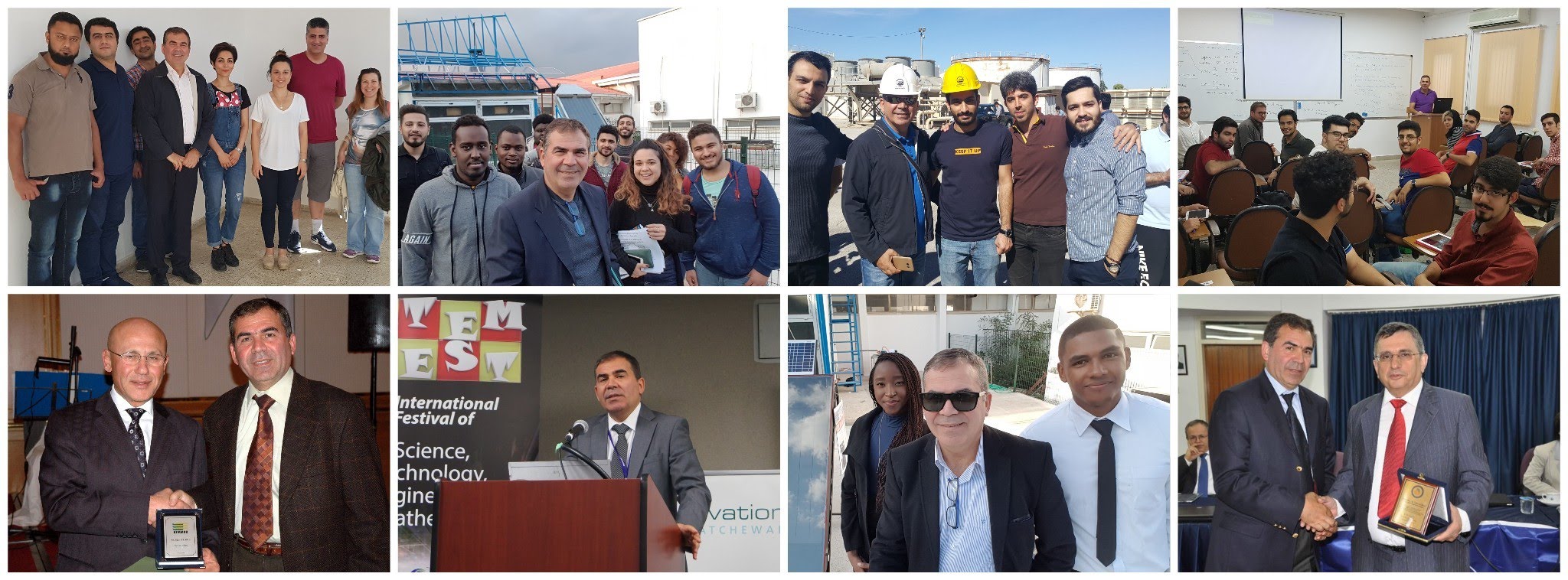
Prof. Dr. Uğur Atikol is a Professor of Thermodynamics, Energy Management and Building Services at Eastern Mediterranean University's Department of Mechanical Engineering within the College of Engineering. As Director of the Energy Research Center (ERC) since 2004 and former Head of Mechanical Engineering Department (2010-2016), he has established himself as a leading expert in sustainable energy implementation. A Certified Energy Auditor with extensive HVAC engineering experience, Dr. Atikol has contributed significantly to energy projects sponsored by USAID and the EU, particularly focused on improving living standards in the Turkish Cypriot community. Dr. Atikol's research expertise spans Thermodynamics, Energy Management, and Building Services , with particular emphasis on transferring clean and efficient energy technologies to developing countries. His work addresses critical challenges in sustainable energy implementation through projects like the Resource Efficiency Achievement Project (REAP) and EU-sponsored renewable energy initiatives. He recently co-chaired a working group developing a strategic plan for energy efficiency across all sectors in northern Cyprus. His scholarly output demonstrates consistent focus on practical energy solutions, with research trends showing strong emphasis on demand-side management strategies, solar energy applications, desalination technologies, and thermodynamic optimization of energy systems. The progression of his work reveals increasing sophistication in system integration and practical implementation of theoretical concepts. Certified Energy Auditor First President of Cyprus Chapter of Association of Energy Engineers (2006) Co-founder of Energy Professionals Association in northern Cyprus Dr. Atikol has successfully supervised five PhD students to completion and currently mentors three ongoing PhD projects focused on demand-side management and solar thermal technology transfer. His research has been supported by significant international projects including USAID's REAP and EU renewable energy programs, demonstrating his ability to secure and manage substantial research funding. As Director of the Energy Research Center, Dr. Atikol leads multidisciplinary teams focused on sustainable energy solutions for the region. His leadership extends to professional organizations, where he co-founded both the Cyprus Chapter of the Association of Energy Engineers and the Energy Professionals Association in northern Cyprus, significantly contributing to the development of energy professionals in the region.
Theocharis (Theo) Theocharides is an Associate Professor and Department Chair at the University of Cyprus's Department of Electrical and Computer Engineering. He serves as Director of Research at the KIOS Research and Innovation Centre of Excellence. Holding a Ph.D. in Computer Science and Engineering from Pennsylvania State University, his research focuses on designing intelligent embedded systems with specialization in domain-specific architectures, reconfigurable hardware, and low-power embedded processors. He leads the Embedded and Application-Specific System-on-Chip Lab, conducting projects in mobile systems, tinyML, embedded computer vision, pattern recognition architectures, and intelligent system monitoring. His pioneering work includes hardware acceleration for real-time object detection and depth estimation in embedded vision systems for robotics and cyber-physical applications. Current investigations focus on hardware-friendly ML algorithms for tinyML, visual information extraction, and distributed embedded vision systems involving drone swarms and robotic networks. Professor Theocharides has authored over 130 publications and serves as Associate Editor for prestigious journals including ACM's Computing Surveys and IEEE Transactions on Computer-Aided Design. As Technical Programme Committee Chair for DATE 2025, he maintains active involvement in the research community.
Irina Ciornei is a Senior Research Fellow at the University of Cyprus, affiliated with the KIOS Research and Innovation Center of Excellence since March 2020. She holds a PhD in Electrical Engineering (2012) from the University of Cyprus and a joint MSc in Energy and Environment (2003) from the Technical University of Iasi and the University of Poitiers. Her research focuses on smart grid applications, including optimal operation of AC/DC hybrid grids, microgrid control, and cybersecurity solutions. She has contributed to projects like Smart5Grid, ELECTRON, and HYNET, and has authored over 40 peer-reviewed publications. Expert Evaluator for the European Commission Delegate Expert for IEC (Power Quality) Her work integrates advanced ICT technologies in energy systems, with notable contributions to EU-funded initiatives such as the Marie Curie Fellowship (2016) at Politehnica University of Bucharest and Aalborg University. She has been involved in national/EU projects including ZeroCo2, CIPRNet, and leads cybersecurity research within the KIOS CoE.
Eleni Tekki is a Research Engineer II at the University of Cyprus, affiliated with the KIOS Research and Innovation Center of Excellence. She holds a BSc in Mechanical Engineering (2018) and an MSc in Mechatronics and Automation (2020). Education: BSc in Mechanical Engineering, University of Cyprus (2018) MSc in Mechatronics and Automation, Strathclyde University (2020) Research Interests: Eleni focuses on advanced research in power systems, particularly smart grids, multifunctional inverters for renewable energy systems, and cybersecurity in power substations. Her work involves designing software tools for innovative solutions and participating in projects addressing grid protection, virtual synchronous generators, and cyber threats. Recent Publications: Her articles analyze cybersecurity in power systems, prioritization of ancillary services in renewable energy inverters, and sandboxing methodologies for grid control. These works span topics in electrical engineering, grid stability, and cyber-physical threat modeling. Projects: Eleni is engaged in projects related to cyber attacks on active distribution grids, microgrids, and coordinated overcurrent protection schemes. Her contributions include software tool development and simulation of security threats.
Sina Hashemi is a Research Fellow at the Department of Electrical and Computer Engineering, University of Cyprus, with additional affiliation at the KIOS Research and Innovation Center of Excellence. He holds a PhD (2022) from the University of Tehran, specializing in power system stability and control. His work bridges academic research and practical solutions for modern power grids. Research Focus: Dr. Hashemi's expertise centers on enhancing power system resilience, stability, and reliability. Key areas include: Mitigation of cascading failures and cyberattack impacts Hybrid AC/DC grid planning and operation Voltage stability assessment and control optimization Reactive power management and blackout prevention His methodologies integrate machine learning, multi-objective optimization, and real-time monitoring frameworks. Publication Trends: Recent articles (2022–2024) emphasize cyber-physical security and resilience-oriented planning for modern grids, using optimization and AI-driven approaches. Earlier work (2010–2019) focused on voltage stability indices, neural network applications, and capacitor/UPFC placement. Affiliations: He contributes to the KIOS Research Center, which focuses on intelligent systems for critical infrastructure.
Konstantinos Katzis is an Associate Professor and Deputy Dean at the School of Sciences, Department of Computer Science and Engineering, European University Cyprus. His academic journey includes a PhD in Electronics from the University of York (2006) and prior roles as Research Associate at the University of York and Assistant Professor at European University Cyprus. Education: PhD in Electronics, University of York (2006) MSc in Radio System Engineering, University of Hull (2001) BEng in Computer Systems Engineering, University of Hull (2000) Research Interests: Dr. Katzis focuses on telecommunications, IoT applications in healthcare, medical device security, and STEM education leveraging AR/VR technologies. His work also explores wireless communication networks (e.g., HAP, TVWS), earthquake-related radio anomalies, and spectrum management for 5G and beyond. Awards: Fulbright Visiting Researcher (2018-2019) Best Paper Awards at International Conferences on Healthcare Technologies (2017) Laureate's Research Publication Award (2016) Consulting & Leadership: He serves as IEEE Standard 1900.6 Vice Chair, H2020 Programme Committee Member for Space (representing Cyprus), and advisor to the Cyprus Ministry of Transport on ESA membership. His projects include ERASMUS+ initiatives like EL-STEM and STEM-IT-UP. Labs & Collaborations: Active in the INFREP Network for studying earthquake precursors via radio signals and the MedSecurance Project for securing IoT medical devices. Collaborates with institutions like NIST (USA) and IEEE on standards development.