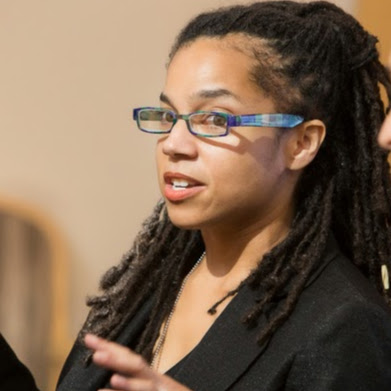
Kathy L. Powers is an Associate Professor of Political Science at the University of New Mexico (UNM), with cross-appointments in the UNM School of Law, Program of Africana Studies, Robert Wood Johnson Center for Health Policy, and Georgetown University’s Department of Government. Her research focuses on institutional authority, international law, and transitional justice, particularly global reparations following mass human rights violations and the legal personality of international organizations. Supported by NSF grants, her work examines how regional economic institutions evolve into military structures and impact conflict. Dr. Powers has been honored with the 2013 UNM New Faculty Teaching Award and 2010 Faculty of Color Teaching Award. Her recent fellowships include residencies at the Woodrow Wilson Center (2015) and the United States Holocaust Memorial Museum (2014), where she studied reparations and transitional justice. She has also presented on victim justice in post-genocide contexts and taught in Germany. Her research spans international relations, with publications in journals like the Journal of Conflict Resolution and Journal of Peace Research . Key themes include institutional design, reparations movements, and the interplay between trade and military alliances.
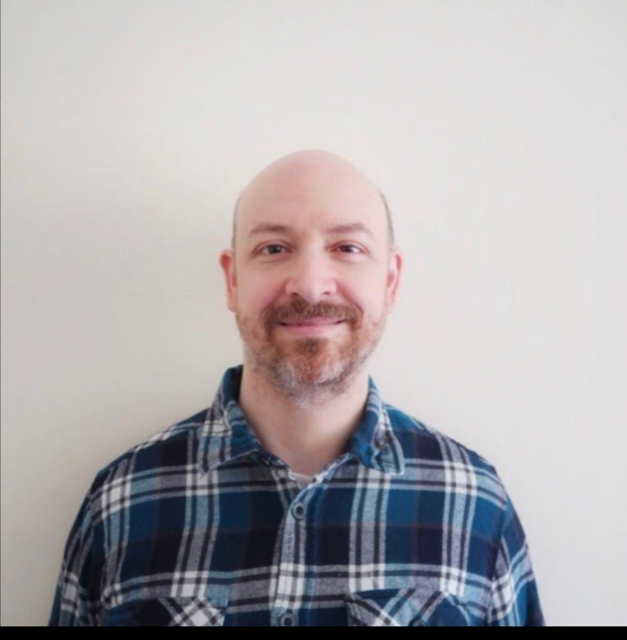
Dr. Alan James is Reader in International History at King's College London's Department of War Studies, specializing in early modern naval warfare and state formation. His research examines the changing strategic contexts of 16th-18th century Europe with focus on French naval development and imperial expansion. Research interests include: Evolution of Western naval power ideologies (1500-1815) Relationship between military innovation and state formation French absolutism and maritime policy Confessional conflicts and imperial expansion His publications demonstrate consistent focus on French naval history, particularly under Louis XIV and Colbert, with recent works exploring ideological foundations of Western sea power. James serves as trustee of the British Commission for Maritime History and convener of the King's Maritime History Seminar. Honors include a 2022-23 fellowship at the Institute of Advanced Study in Paris.
Prof. Cornelia Bohn is a Professor of General Sociology at the University of Lucerne's Department of Sociology, within the Faculty of Humanities and Social Sciences. She holds a Ph.D. from the University of Bielefeld and a habilitation from the University of Trier. Her career includes roles as Associate and Assistant Professor at several institutions, and she has been a visiting scholar at Toyo University, Stanford, and the University of Chicago. Bohn's research focuses on sociological theory, media theory, monetary systems, and inclusion/exclusion dynamics. She co-edits the journal Soziale Systeme and collaborates with prestigious research networks like NCCR 'Iconic Criticism' and SFB 600 'Strangers and Poor People'. Her work bridges historical and contemporary social analysis, emphasizing visual and monetary systems. Key achievements include a fellowship at the Institute for Advanced Study (University of Constance), editorial leadership, and international research engagements. Her theoretical contributions address autonomy, societal structures, and cultural representation. Current research explores the intersection of art, documentation practices, and modern sociological frameworks.
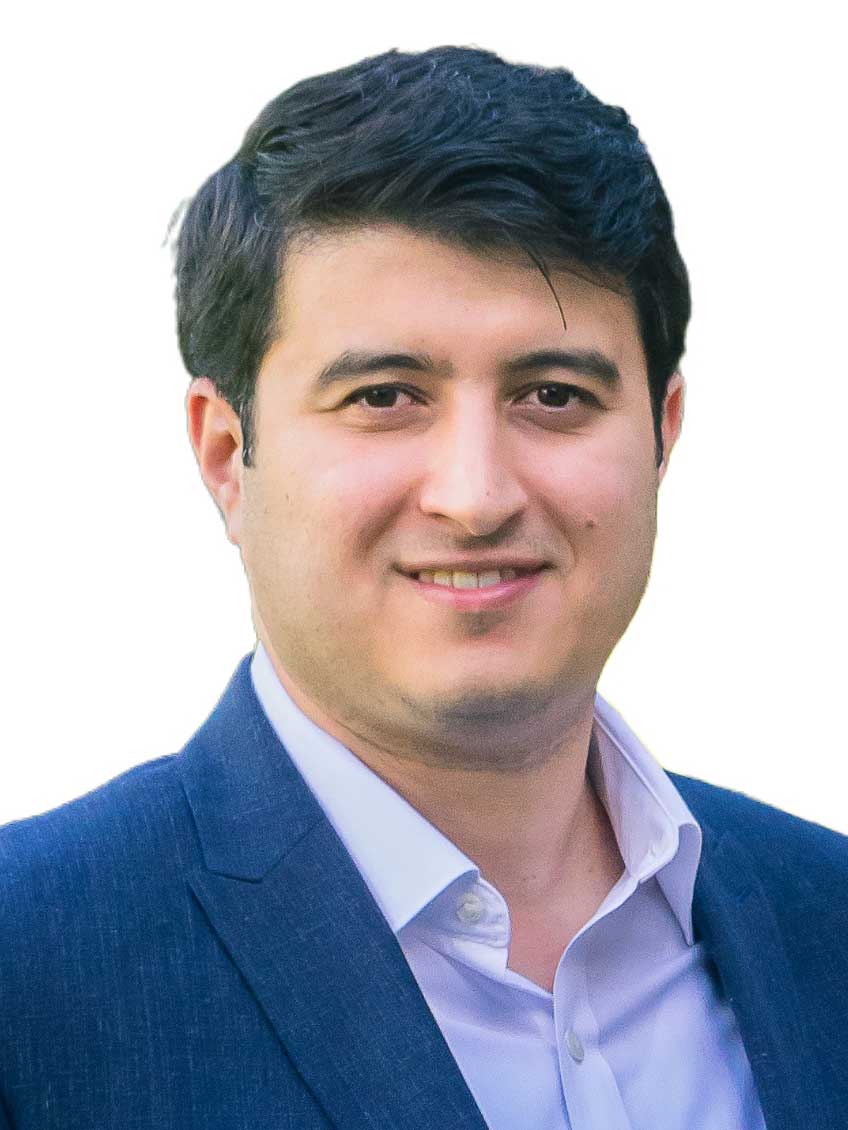
Benyamin Davaji serves as an Assistant Professor in the Department of Electrical and Computer Engineering at Northeastern University, where he joined in January 2022. He holds additional appointments as a Center Member of The Plastics Center and Core Faculty of the Institute for NanoSystems Innovation (NanoSI). His work bridges microsystems engineering, nanofabrication, and data science to develop next-generation sensing technologies. Dr. Davaji's educational background includes: Postdoctoral Associate in Electrical and Computer Engineering at Cornell University (2016-2021) Ph.D. in Electrical Engineering from Marquette University (2016) His research centers on integrated microsystems with emphasis on mechanical wave-based sensing and computation, ultrasound transducers, bio-interfaces, and microcalorimetry. The Autonomous Integrated Microsystems (AIMS) Laboratory combines physics with AI/ML to invent novel sensors and computational devices through advanced nanofabrication. Key thrusts include power-sustaining architectures and analog/digital computational integration. Recent publications (2024-2025) reveal strong trends in MEMS/NEMS optimization using digital twins, plasmonically enhanced infrared detection, ferroelectric actuators for high-speed scanning, and ultrasound-enabled metrology. His work increasingly integrates machine learning for design automation and process optimization across semiconductor manufacturing and flexible hybrid electronics. Dr. Davaji advises graduate students including Yilmaz Arin Manav (PhD'28), who won the FLEX 2024 Future Student Poster Award. He has secured over $3 million in competitive funding as PI/Co-PI, including a $550k NSF grant for MEMS actuators, $330k NSF grant for quantum detectors, and $2M DARPA grant for inertial sensors. He directs the interdisciplinary AIMS Laboratory focused on MEMS, ultrasound, and calorimetric technologies. The lab collaborates extensively with NanoSI and The Plastics Center, developing autonomous microsystems for biomedical, environmental, and industrial applications through advanced manufacturing techniques.
Babak Moaveni is a Professor in the Department of Civil and Environmental Engineering at Tufts University, serving as the Associate Chair since September 2024. He also holds a joint appointment as a Professor in Electrical and Computer Engineering. His research focuses on structural health monitoring, Bayesian inference, earthquake engineering, and offshore wind energy systems. Moaveni earned his Ph.D. in Structural Engineering from the University of California San Diego (2007), following an M.S. (2001) and B.S. (1999) from Sharif University of Technology in Tehran, Iran. His research interests span probabilistic system identification, signal processing, uncertainty quantification, and verification/validation of computational models. Notable grants include leadership in the PIRE project on offshore wind energy digital twins and the Coastal Virginia Offshore Wind Pilot Project. He has supervised multiple Ph.D. and M.S. students, with current advisees including Mehdi Akhlaghi and Nasim Partovi-Mehr. Moaveni has received the Best Presentation Award at the 2022 EDGE Symposium and serves on editorial boards for journals like Structural Health Monitoring and Frontiers in Built Environment . His lab, the Structural Health Monitoring Lab, specializes in infrastructure management and offshore wind energy systems. Key professional activities include membership in the American Society of Civil Engineers (ASCE) and roles on Tufts' Tenure and Promotion Committee. His teaching includes courses on structural health monitoring, numerical methods, and structural reliability.
Gaston Bacquet is a Lecturer in Education Studies at the University of Glasgow's School of Education, specializing in Culture, Literacies, Inclusion & Pedagogy. A Chilean teacher trainer and educator based in Scotland, he also holds qualifications as a meditation and yoga instructor. With extensive international teaching experience across K-12 and higher education systems in Chile, Japan, Saudi Arabia, Myanmar, the US, and UK, his work bridges practical pedagogy and theoretical innovation. His educational background includes a DipTESOL from Trinity College London, an MA in TESOL from the Institute of Education (UCL), and a PhD in Education from the University of Glasgow. Bacquet currently teaches in the MSc/MEd Education Studies program and leads the undergraduate Asian Religions course, while supervising dissertation students across the School of Education. Research interests center on nonviolence as transformative educational practice, with emphases on decolonial approaches, contemplative pedagogy, and inclusion of minoritized groups. His work integrates Buddhist philosophy, indigenous wisdom traditions, and international perspectives to challenge Western epistemological dominance. Key methodological commitments include participatory action research and qualitative approaches that prioritize community voices. Recent publications reveal evolving trajectories from language education toward decolonial nonviolence frameworks, with increasing focus on Global South contexts, indigenous knowledge systems, and teacher preparation. His 2024-2025 work shows intensified engagement with Buddhist-Christian dialogue, indigenous contributions to peace education, and practical applications of nonviolence in classroom power structures. As a supervisor, Bacquet mentors Master's students in inclusion, nonviolence, and educational ethics, welcoming PhD proposals aligned with his research interests. His professional activities span editorial roles with Cogent Arts and Humanities and SAGE Open , alongside active participation in international scholarly networks including the Comparative and International Educational Society and the European Network for Buddhist-Christian Studies. Professional affiliations reflect his interdisciplinary reach: British Educational Research Association (2021-present), American Educational Research Association (2022-present), International Society for Contemplative Research (2023-present), and the International Society for the Scholarship of Teaching and Learning (2025-present). His conference presentations consistently address nonviolence pedagogy, decolonial curriculum development, and participatory research ethics across global contexts from Chile to New Zealand.
Prof. Dr. Gabriel Zeilinger is a Professor of Bavarian and Franconian Regional History at Friedrich-Alexander-Universität Erlangen-Nürnberg since April 2022. He holds a Chair in the Department of History and focuses on medieval and early modern urban history, comparative regional studies, and pre-modern socio-economic dynamics. Born in Freiburg im Breisgau in 1975, he studied History and Norse Philology in Kiel and Oslo, earning his PhD in 2006 with a thesis on the impact of war on urban life in 15th-century Southern Germany. His habilitation (2013) explored urbanization in Upper Alsace. Education: 1996–2002: Studies in History and Norse Philology (Kiel/Oslo) 2006: PhD, Kiel University 2013: Habilitation, Kiel University His research interests span Bavarian/Franconian regional history, comparative urbanization processes, and the interplay between nobility, cities, and political structures. Key themes include medieval disasters, economic resource management, and the role of violence in urban contexts. Zeilinger has authored/co-edited over 30 books and numerous articles on topics like medieval festivals, city-state conflicts, and the socio-political dynamics of urban communities. His work often bridges archaeology, historical documentation, and interdisciplinary methodologies. Memberships: Board Member, Society for Franconian History Editor, Jahrbuch für fränkische Landesforschung DSM Fellow/Senior Expert, Leibniz Institute for Maritime History Member, German Historical Association and multiple regional history associations His recent studies examine medieval water management, urban conflict strategies, and the legacy of the Protestant Reformation in Franconia. Zeilinger’s interdisciplinary approach integrates material culture analysis with textual evidence to illuminate medieval socio-political landscapes.
Sang Bok Lee is a Professor of Chemistry & Biochemistry at the University of Maryland. His research focuses on electrochemistry of heterogeneous nanomaterials for energy storage systems, nanopore transport properties, and biosensor development. He specializes in advanced materials for high-power batteries and electrochromic devices, with a strong emphasis on solid-state electrolyte interfaces and protective coatings. Research Interests: Electrochemistry of nanomaterials for energy storage Transport properties of nanopores Solid-state battery interfaces Biosensor design and nanoparticle toxicology Targeted drug delivery systems Chemical and biochemical separation techniques Recent work highlights include developing aluminum nitride protective layers for solid electrolytes, optimizing hot-pressed argyrodite electrolytes, and advancing in situ Raman diagnostics for battery materials. His studies on magnesium anode protection and lithium metal anode engineering have significantly impacted rechargeable battery technologies. Publications reflect a focus on nanomaterial synthesis, electrochemical stability, and energy storage innovations. No academic awards or student advisement details were explicitly cited in the text.
Atreyee Sen is Professor in the Department of Anthropology at the University of Copenhagen , Faculty of Social Sciences, a position she assumed on 1 February 2025 after serving as Associate Professor since 2015. She holds a PhD in Social Anthropology from SOAS, University of London (2003), and previously held academic roles at the University of Sussex and the University of Manchester. BA in Sociology, University of Calcutta (1994) MA in Sociology, Jawaharlal Nehru University (1996) PhD in Social Anthropology, SOAS, University of London (2003) Her research centers on urban South Asia , particularly India, with a focus on gender, violence, political mobilization, and subaltern communities . She investigates how marginalized groups—such as women in Mumbai slums, Muslim youth in Hyderabad, and former Maoist guerrillas in Calcutta—navigate and resist structural violence through political activism and cultural production. Her ethnographic work explores themes of prisons, moral policing, custodial disappearances, and urban poverty , challenging reductive narratives about the 'poor' and 'violent' in non-Western contexts. The recent articles in her publication record reveal a sustained engagement with political violence, urban precarity, and resistance . Her work spans ethnographic studies of child vigilantes, anti-Romeo squads, and informal economies in Indian cities, often highlighting the intersection of gender, state power, and everyday survival . She employs comparative frameworks, such as between Chicago and Mumbai, to broaden anthropological theory. Her research is deeply interdisciplinary, drawing from political science, sociology, and gender studies. Sutasoma Award for Outstanding Research Towards a PhD (2002) NirmalChunder Basu Ray Memorial Award, University of Calcutta (1994) Atreyee Sen has been actively involved in public scholarship through media engagements, including interviews and documentaries with BBC Radio 4 on topics such as the Delhi rape case, women vigilantes, and Indian elections. She has also led major research projects, including an ERC Advanced Grant on global political anger and a project on cashless economies and urban debt. She is currently writing a monograph titled ‘Morgue tags and body bags’ -- Ethno-histories, custodial death/disappearances and state torture in urban India . She has served in leadership roles in international academic bodies, including the Association of Social Anthropologists (ASA) and the World Council of Anthropological Associations (WCAA). While no formal lab or team is specified, her collaborative research outputs and network suggest active engagement with global academic communities. She has not indicated any future work beyond her current monograph and ongoing projects.
Estelle Ferrarese is a Professor of Moral and Political Philosophy at the Department of Philosophy, University of Picardy Jules Verne, and a Senior Member of the Institut Universitaire de France (class of 2022). She is the principal investigator of the International Research Network (IRN) 'The Norms of Life,' a collaborative project involving institutions such as Harvard University, Johns Hopkins University, and the University of Cape Town. Her academic affiliations reflect a strong international presence, with visiting positions at the New School, Humboldt-Universität, and Goethe-Universität. Professor of Moral and Political Philosophy, University of Picardy Jules Verne (2016–present) Senior Member, Institut Universitaire de France (2022–) Principal Investigator, IRN 'The Norms of Life' (2023–2027) Former Researcher, Marc Bloch Center, Berlin (2014–2016) Former Professor, University of Strasbourg (2012–2016) Her research lies at the intersection of critical theory, feminist philosophy, and political theory, with a focus on vulnerability, public space, forms of life, and ethical consumption. She critically engages with thinkers such as Adorno, Habermas, Nancy Fraser, and Agamben, exploring how subjectivity, recognition, and care are shaped within capitalist and democratic frameworks. Her methodological approach combines continental philosophy with social theory to interrogate normative structures in contemporary society. The trend in her recent publications reveals a deepening exploration of emotional and bodily expressions—such as sobs, gémissements (moans), and physical vulnerability—as political acts and ethical responses. Her work bridges philosophical abstraction with lived experience, particularly in contexts of care, gender, and democratic participation. Themes of reification, micrology, and the commodification of virtue recur across her writings, signaling a sustained critique of neoliberal rationality. Senior Member, Institut Universitaire de France (2022) Alexander von Humboldt-Stiftung Fellow (multiple appointments: 2003–2006, 2008, 2013, 2017, 2024) Hoover Fellow, University of Louvain-La-Neuve (2006) Writing Grant, National Book Centre (2006) Lavoisier Scholarship (2002–2003) Gastprofessur, Goethe-Universität Frankfurt (2015) Visiting Professor, New School for Social Research (2006–2007) Ferrarese has supervised and collaborated with numerous scholars, though specific advisees are not listed in the provided text. She has secured significant research funding through fellowships and institutional grants, including support from the Alexander von Humboldt Foundation and the French CNRS. Her editorial work includes directing special issues on 'The Politics of Vulnerability' and 'Forms of Life,' as well as co-editing volumes with leading philosophers like Sandra Laugier. She is actively involved in shaping contemporary debates in critical theory and feminist philosophy through publications, international collaborations, and leadership in transnational research networks. She leads the International Research Network 'The Norms of Life,' which brings together scholars from North America, Europe, and Africa to examine the normative dimensions of everyday life forms. This project reflects her commitment to interdisciplinary and globally engaged philosophy. She has also been affiliated with research centers such as CURAPP-ESS and has collaborated with institutions including the Maison Française d’Oxford and CUNY.
Prof. Dr. Kalina Stefanova is a Professor in the Department of Theatre Studies at the Faculty of Performing Arts . She is an internationally renowned scholar specializing in theatre criticism, Eastern European theatre, and cross-cultural dramaturgy. Her work bridges academic research with practical theatre practice, focusing on global theatre dynamics and cultural exchange. Her research interests include comparative theatre studies, the role of criticism in shaping theatrical canon, and the evolution of theatre post-political transitions. She has authored/co-authored 17 books, including seminal works like Eastern European Theatre After the Iron Curtain and 20 Ground-Breaking Directors of Eastern Europe , which are widely used in university curricula globally. Her books on Chinese theatre, such as Storm by Cao Yu , have expanded intercultural theatre dialogues. Prof. Stefanova has held visiting professorships at institutions like NYU, Wuhan University, and Shanghai Theatre Academy. She has been honored with titles like 'Distinguished Visiting Professor' (2016) and 'Distinguished Researcher' (2016). She served as Vice President of the International Association of Theatre Critics (2001-2006) and led symposia as their Director of Symposia (2006-2010). She currently sits on editorial boards of journals like Chinese Performing Arts and European Stages . Her recent projects include editing the first anthology of Chinese contemporary drama in Bulgarian and vice versa. She frequently lectures on theatre criticism and Eastern European theatre in countries like China, South Africa, and Poland. Her non-theatrical works, such as Ann's Dwarves , blend performance-inspired narratives with literary creativity. Prof. Stefanova’s awards include the SAB Criticism Award (1999) and recognition from the 'Idea for Theatre' Foundation. She remains active in international theatre festivals as a jury member and contributes expertise to the European Commission’s cultural evaluation panels.
Jeffrey D Marr is an Assistant Professor of Health Services, Policy, and Practice at Brown University’s School of Public Health. His research focuses on health care markets using quasi-experimental methods and administrative data, with current work emphasizing Medicare, private insurance, and AI applications in healthcare decision-making. Marr holds a PhD in Health Economics and Policy from Johns Hopkins University (2025) and a BA in Economics from Colgate University (2018). Key Affiliations: Brown University School of Public Health Research Themes: Algorithmic healthcare decision-making, Medicare Advantage networks, insurer market power, and post-acute care economics His research demonstrates how predictive algorithms reduce skilled nursing facility stays without compromising health outcomes, and how Medicare Advantage expansion impacts hospital pricing and provider networks. Marr’s work has been published in prestigious journals like Health Affairs , Health Services Research , and Journal of the American Geriatrics Society . His studies on Medicaid managed care reveal hospital pricing disparities linked to insurer bargaining power, while analyses of Medicare Advantage enrollment trends highlight shifts in supplemental insurance usage among elderly patients. Marr’s research also addresses critical issues like dialysis facility choice constraints and home-based care utilization differences between Medicare programs.
Andreas Grothey is a Senior Lecturer in the School of Mathematics at The University of Edinburgh, a position he has held since 2011. He completed his MSc in Numerical Algebra and Mathematical Computing at the University of Dundee (1995) and his PhD in Optimization at the University of Edinburgh (2001), supervised by Ken McKinnon. His research focuses on stochastic programming, interior point methods, decomposition approaches, high-performance computing, and energy systems optimization. He has contributed to energy planning, power grid reliability, and emergency response strategies for power networks. Grothey has advised seven PhD students, including work on unit commitment, top-percentile traffic routing, and power flow optimization. His projects include the OOPS solver, CESI energy integration center, and the Structured Modelling Language (SML). Recent work addresses pandemic policy optimization and exascale computational challenges. Education: MSc in Numerical Algebra and Mathematical Computing (University of Dundee, 1995) PhD in Optimization (University of Edinburgh, 2001) Research Interests: Stochastic Programming Interior Point Methods Decomposition Methods High-Performance Computing Energy Systems Optimization Advising & Projects: PhD Supervision (7 students, 2007–2022) OOPS Parallel Solver Development CESI Energy Systems Integration SML Structured Modelling Language Labs/Teams: Member of the Edinburgh Research Group on Optimization, leading projects in power grid stability and energy planning.
Professor Julia Race is a leading academic in the Department of Naval Architecture, Ocean and Marine Engineering at the University of Strathclyde’s Faculty of Engineering, where she also serves as Vice Dean (Academic). Her research focuses on the role of pipeline infrastructure in achieving net-zero emissions, particularly through carbon dioxide transport for Carbon Capture and Storage (CCS) and hydrogen energy systems. PhD, University of Cambridge – Carbon diffusion across dissimilar steel welds (1992) BEng, University of Sheffield (1989) Her research interests center on the adaptation of energy infrastructure for decarbonization, combining engineering, risk assessment, and socio-economic analysis. She investigates material specifications for CO₂ and H₂ pipelines, quantitative risk assessments, hydraulic design, and the wider economic impacts of energy transitions. Her work is closely tied to UN Sustainable Development Goals, particularly those related to climate action and sustainable industry. The recent publications reflect a strong trend toward interdisciplinary research at the intersection of engineering, economics, and policy. Her work increasingly emphasizes the socio-economic dimensions of decarbonization, including employment impacts, labour supply constraints, and regional economic benefits of CCS and hydrogen infrastructure. There is a clear focus on UK industrial clusters and the role of Scottish CO₂ transport systems in national and international markets. Julia Race has contributed to several policy briefings and collaborative reports with key stakeholders including the Scottish Government, OEUK, and Storegga. She is actively engaged in research projects funded by EPSRC, NERC, and the British Council, focusing on early-career development, maritime decarbonisation, and engineering education equity. Co-investigator, Strathclyde Engineering Scholars – Equal Outcomes for the Most Disadvantaged (2025) Principal Investigator, EPSRC/NERC CDT in Offshore Renewable Energy (IDCORE 2) (2019–2028) Co-investigator, Empowering Early Career Researchers to Advance Maritime Decarbonisation in Indonesia (2024–2026) Co-investigator, Green Hydrogen Integration at Sullom Voe (2023–2024) She plays a key role in policy outreach and professional engagement, regularly participating in workshops and meetings with government and industry stakeholders. Her leadership extends to diversity and inclusion in engineering education, where she contributes to initiatives aimed at supporting disadvantaged students.
Professor Jing Meng is a leading academic at University College London's Bartlett School of Sustainable Construction, holding the position since 2023 after progressing from Lecturer (2019-2021) to Associate Professor (2021-2023). She concurrently serves as a fellow at the Cambridge Centre for Environment, Energy and Natural Resource Governance and maintains active editorial roles as Executive Editor of the Journal of Cleaner Production and Associate Editor for Journal of Geophysical Research: Atmospheres. Her research spans three interconnected domains: Energy Transitions and Technology Innovation (examining cost forecasts and structural emission declines in China), Climate Change Policies (analyzing South-South trade effects and multinational enterprise emissions), and Emission-Health-Socioeconomics Nexus (assessing air pollution impacts and integrated co-mitigation strategies). This interdisciplinary approach is reflected in her publication record across Nature family journals and PNAS. Analysis of her recent publications reveals a consistent focus on global carbon accounting methodologies, with increasing attention to subnational (city-level) analyses, health co-benefits of climate policies, and technological innovation pathways for hard-to-abate sectors. Her work frequently employs multi-regional input-output modeling to trace emissions through complex supply chains. AGU Global Environmental Change Early Career Award (2023) MIT Technology Review Innovators Under 35 Asia Pacific (2022) Clarivate Highly Cited Researcher (2020-2024) Nature Communications Top 50 Earth Sciences Article (2018) MDPI Emerging Sustainability Leader Award (2020) Environmental Research Letters Best Early Career Article (2017) Professor Meng has secured substantial funding from diverse sources including NERC, the British Council, Quadrature Climate Foundation, The Royal Society, and UCL internal grants. She leads an interdisciplinary research group focused on technology innovation and climate policy, with particular emphasis on China's role in global emissions systems. Her work directly supports Sustainable Development Goal 13 (Climate Action) through actionable policy insights.