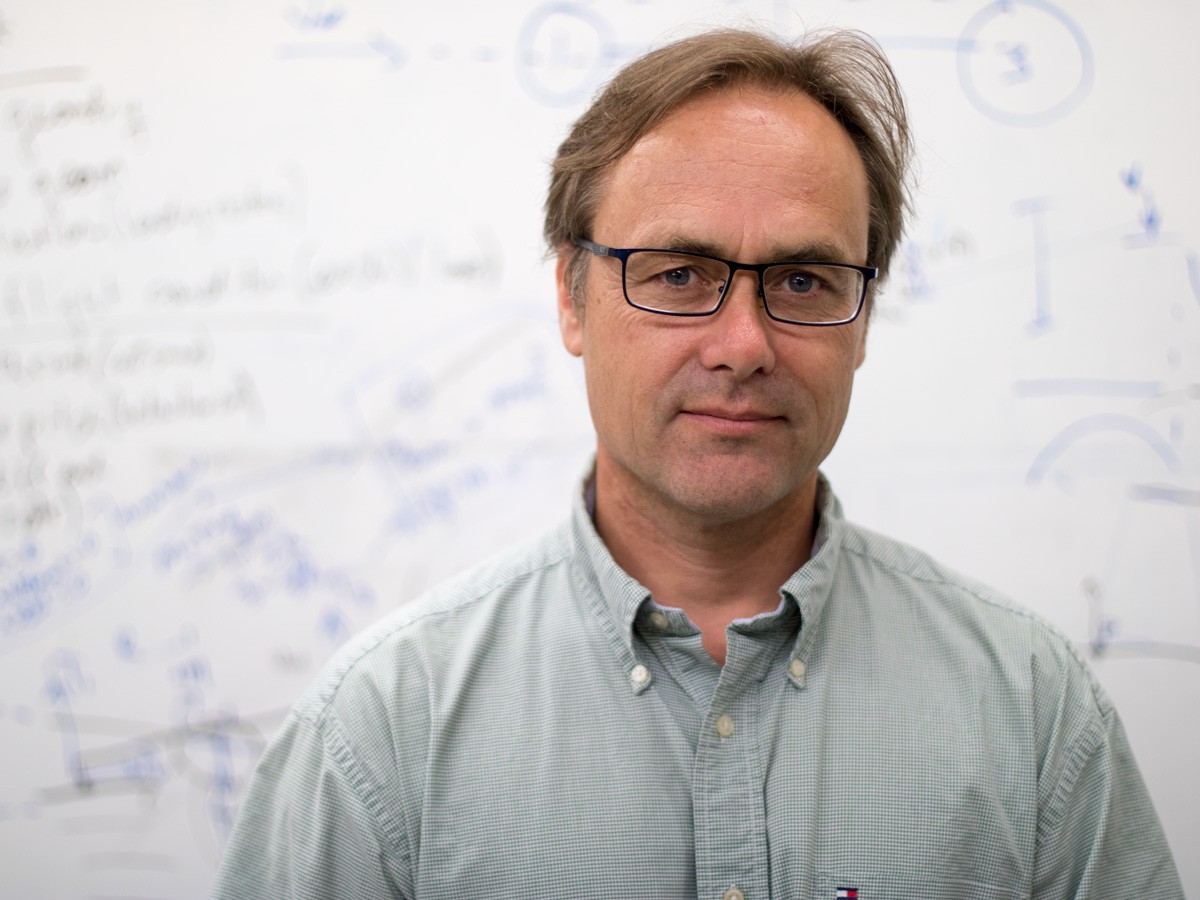
Martin Grohe is a Professor at the School of Logic and Theory of Discrete Systems , part of the Department of Computer Science at RWTH Aachen University . His research spans Algorithms and Complexity , Logic , Database Theory , Graph Theory , and Machine Learning , with a focus on integrating logical frameworks into computational models. His recent work explores graph neural networks , Weisfeiler-Leman algorithms , and parameterized complexity , as seen in publications on isomorphism testing , database repairing , and probabilistic query evaluation . While no specific scientific awards are mentioned, his contributions to graph theory and machine learning are widely recognized through numerous peer-reviewed publications.
Dr. Goetz Bramesfeld serves as a Professor in the Department of Aerospace Engineering at Toronto Metropolitan University, where he leads research in applied aerodynamics and unconventional flight systems. His expertise spans flight vehicle design, small UAV development, and motorless flight dynamics, with particular emphasis on energy harvesting from atmospheric phenomena. Bramesfeld's educational background includes a PhD (2006) and MS (1999) from The Pennsylvania State University, and a BEng (1998) from Technische Universität Braunschweig. His research interests focus on applied aerodynamics , flight dynamics , and energy-efficient aircraft design , with notable contributions to sailplane optimization, gust energy extraction, and microwave-powered UAV concepts. His work bridges theoretical aerodynamics with practical applications in both terrestrial and planetary exploration contexts. Analysis of his publication record reveals consistent innovation in energy harvesting flight systems, particularly through gust energy extraction and unconventional propulsion methods. His research evolves from traditional sailplane optimization toward cutting-edge concepts like microwave-powered aircraft and planetary exploration gliders, maintaining strong connections between fundamental aerodynamics and real-world flight applications. Bramesfeld actively supervises graduate students through the Applied Aerodynamics Laboratory of Flight (AALF) and maintains significant professional engagement as a Senior Member of the American Institute of Aeronautics and Astronautics (AIAA), member of the Canadian Aeronautics and Space Institute (CASI), Associated Editor for the Technical Soaring Journal, and board member of the Organisation Scientifique et Technique du Vol à Voile (OSTIV).
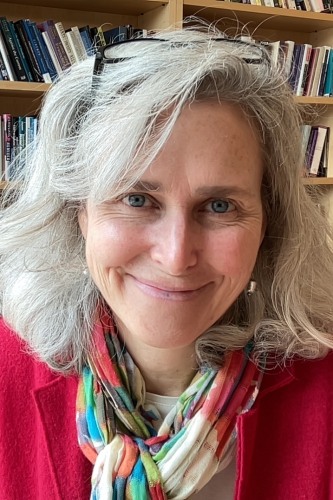
Dr. Anke Kirchner is a Researcher at the Leibniz Institute for Solid State and Materials Research Dresden (IFW Dresden) in the Department of Functional Oxide Layers and Superconductors. Her work focuses on superconducting materials, magnetic systems, and advanced thin-film deposition techniques for applications in levitation and energy-efficient transportation. Her research spans high-temperature superconductivity, nanocrystalline magnetic materials, and REBCO coated conductor development. Key contributions include optimizing artificial pinning centers in superconducting films, analyzing grain boundary structures in permanent magnets, and pioneering microacoustic sol atomization (MASA) for thin-film deposition. Her interdisciplinary approach bridges fundamental materials science with practical engineering applications in transportation and energy. Analysis of her 15 most recent publications (2000-2024) reveals consistent focus on superconducting levitation technologies and REBCO conductor performance enhancement. Her work demonstrates evolution from foundational studies of NdFeB magnet microstructures to cutting-edge innovations in coated conductor joints and tape-stack levitation systems, with strong emphasis on nanoscale characterization and process optimization. No scientific awards are mentioned in the provided text. Information regarding student advising, doctoral supervision, or research grants is not specified in the source material. The department specializes in oxide layer engineering and superconductor development, with Dr. Kirchner contributing to IFW Dresden's internationally recognized research on quantum levitation and magnet-superconductor interactions, frequently collaborating with Prof. L. Schultz on applied superconductivity projects.
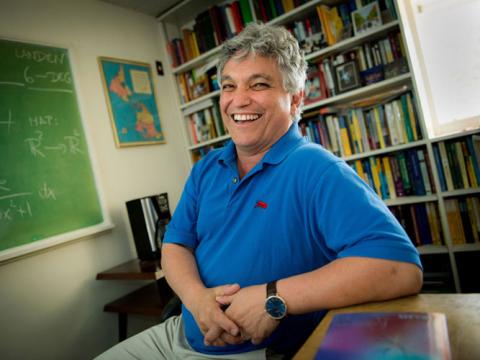
Luís F. Costa is a Senior Associate Professor at the Lisbon School of Economics & Management (ISEG) of the University of Lisbon. Since 2015, he has served as Editor-in-Chief of the Portuguese Economic Journal . His research focuses on macroeconomics, dynamic general equilibrium, fiscal policy, business cycles, and market power. He is a co-founder of the Lisbon Macro Club and holds a DPhil from the University of York. University: University of Lisbon School: Lisbon School of Economics & Management Academic Rank: Senior Associate Professor Research Interests: Luís Costa's work spans macroeconomic theory, with emphasis on dynamic models, imperfect competition, and fiscal policy effectiveness. His publications analyze topics such as markup fluctuations, market power in business cycles, and the role of sunspot equilibria in macroeconomic dynamics. He has contributed to policy discussions in Portugal through special journal issues and collaborative projects. Recent Publications (Trends): His 15 most recent works include analyses of pandemic-induced recessions, business cycle accounting, and the impact of market power on fiscal multipliers. Key themes are macroeconomic modeling, policy evaluation, and empirical studies on OECD and Portuguese economies. Supervisions: Advised Master's students on topics like market power in Portugal, fiscal multipliers, and business cycle accounting in Angola. Visiting Positions: Held visiting professorships at Universidade Eduardo Mondlane (2016), Cardiff Business School (2016), Universidade Lusiada de Angola (2013), and University of York (2005).
Helmut Reimitz is the Shelby Cullom Davis '30 Professor of European History and Professor of History at Princeton University, where he also serves as Director of the Humanities Council's Program in Medieval Studies. He joined Princeton's faculty in 2008 after heading the Early Medieval Department at the Institute for Medieval Research of the Austrian Academy of Sciences, one of Europe's leading centers for early medieval studies. Professor Reimitz specializes in the history of the Early Middle Ages (5th-10th centuries), with research focusing on: Political and social transformations from the end of the Roman Empire to the Carolingian Empire Formation of Western Christian culture and European identity Ethnicity, identity politics, and social stratification History of historical thinking in late Antiquity and the medieval West Literacy and communication in early medieval societies Religious transformations during the transition from Roman to medieval Europe His scholarly work demonstrates a consistent focus on how identity formation and political structures evolved during the transition from the Roman world to medieval Europe. His publications reveal particular interest in Frankish identity as a lens for understanding broader Western conceptions of ethnicity and social organization, with significant contributions to understanding the formation of European civilization. Professor Reimitz has received significant recognition for his work, including: Election as Fellow of the Medieval Academy of America (2023) Phi Beta Kappa Chapter Teaching Award He actively mentors graduate students, with numerous PhD advisees including Merle Eisenberg, Daniel Kosasa, Meg Leja, Molly Lester, Radka Pallová, Valerie Piro, Giuseppe (Joseph) A. Ricci, Jan van Doren, Lucia Waldschuetz, and Ian S. Ward. Professor Reimitz participates in multiple international research collaborations, including projects with Freie Universität Berlin, University of Heidelberg, and the Austrian Academy of Sciences, and co-organizes an annual graduate exchange program between Princeton, Oxford, and Vienna for students of late Antique, early medieval, and Byzantine history. He leads research initiatives focused on governance, material text cultures, and social cohesion across early medieval Europe, working with international scholarly networks to advance understanding of this formative historical period through comparative analysis of political communication, identity formation, and cultural transformation.
Reeve Huston is an Associate Professor of History at Duke University's Arts & Sciences school. His scholarship focuses on U.S. political history and the history of capitalism, with particular emphasis on the evolution of democratic practices and land distribution conflicts during the Antebellum period. Ph.D. in History from Yale University (1995) B.A. and M.A. from Wesleyan and Yale Universities His research examines: Two-party democracy formation (1790s-1840s) Land policy conflicts in early America Democratization processes and competing political practices Global capitalism history frameworks Recent publications analyze: Jacksonian democracy's institutional foundations Land policy's role in political development Democratization debates during political transitions Key honors include: 1999 Dixon Ryan Fox Prize 2000 Theodore Saloutos Prize His teaching employs flipped classroom models with emphasis on discussion-based learning.
Daniel M Liberzon is the Richard T. Cheng Professor in the Department of Electrical and Computer Engineering and a Professor at the Coordinated Science Laboratory (director of the Decision and Control group) at the University of Illinois Urbana-Champaign. He also holds an affiliate appointment in the Department of Mathematics. Ph.D. in Mathematics from Brandeis University (1998), advised by Roger W. Brockett (Harvard) Undergraduate studies in Mathematics at Moscow State University (1989-1993) His research interests focus on theoretical and applied aspects of nonlinear, switched, and hybrid systems with limited information. Key areas include: Stability analysis via Lyapunov functions and Lie algebras Finite-data-rate control and topological entropy Robust synchronization and observers Stochastic switched systems Supervisory control for uncertain systems Recent scientific awards include: IFAC Fellow (2016) IEEE Fellow (2013) AACC Donald P. Eckman Award (2007) IFAC Young Author Prize (2002) NSF CAREER Award (2002) He has taught graduate courses such as ECE 517 (Nonlinear and Adaptive Control), ECE 553 (Optimum Control Systems), and ECE 586 DL (Hybrid Systems and Control). Current sponsored projects include NSF grants on switching control and AFOSR MURI on hybrid dynamics.
Christina Nikitopoulos Sklibosios is an Associate Professor in the Finance Discipline Group at the University of Technology Sydney (UTS) Business School. She specializes in energy finance, renewable energy economics, sustainable finance, and commodity markets. Her research focuses on analyzing price dynamics and volatility in energy markets, particularly addressing challenges posed by renewable energy integration, green bond markets, and climate transition risks. She has held leadership roles including Finance PhD Program Coordinator (2015–2023) and currently serves on the UTS Business School's Faculty Board and HDR Director (acting). Education: Doctoral and academic background in finance and energy economics (details not explicitly provided in texts). Her research projects include modeling electricity prices in Australia’s National Electricity Market (NEM), assessing renewable energy impacts on grid stability, and evaluating green bond premiums. Key grants include ARC grants on energy market volatility and climate risk (2010–2017), and recent awards such as the UTS Strategic Research Accelerator grant (2024–2025) for net-zero decision-making tools. Research interests span energy economics, sustainable finance mechanisms, and commodity market dynamics. She collaborates with international organizations like CEMA, IAEE, and AFFECT, and contributes to policy discussions on energy transition and financial market reforms.
Scott Thompson is a Professor in the Department of Electrical & Computer Engineering at the University of Florida. He holds academic appointments within the College of Engineering and specializes in solid-state electronics, nanotechnology, and semiconductor device fabrication. His research focuses on advancing transistor technologies to extend Moore’s Law, including strained silicon innovations and low-power device designs. Thompson earned his BSEE (1987), MS (1988), and PhD (1992) in Electrical Engineering from the University of Florida. His industrial contributions include roles at Intel Corporation and leadership at SuVolta, recognized with the TiE 50 Top Startup Award (2014) and Semi Award North America (2008). He is an IEEE Fellow (2006) and Intel Fellow (2003). His research portfolio includes over 50 patents and publications on topics like deeply depleted channel transistors, CMOS process optimization, and strain-engineered semiconductor materials. Key themes in his work involve improving transistor performance, reducing power consumption, and advancing fabrication techniques for nanoscale electronics. Key Awards: IEEE Fellow, Intel Fellow, TiE 50 Startup Award Key Contributions: Strained silicon transistors, SuVolta startup innovations, CMOS process advancements
Tridas Mukhopadhyay is the Deloitte Consulting Professor of e-Business at Carnegie Mellon University's Tepper School of Business, where he has served on the faculty since 1986. His academic journey at CMU progressed from Instructor of Information Systems (1986-1987) to Assistant Professor (1987-1993), Associate Professor (1993-1997), Professor (1998-present), and Deloitte Consulting Professor of e-Business (2000-present). He also served as Director of the MS in Electronic Commerce program from 1999-2004. Ph.D. in Computer and Information Systems, University of Michigan–Ann Arbor, 1987 M.B.A. in Computer and Information Systems, Indian Institute of Management Calcutta, 1981 B. Tech. in Electrical Engineering, Indian Institute of Technology Kharagpur, 1978 Professor Mukhopadhyay's research spans multiple critical areas in information systems and technology management. His work on strategic IT use examines how organizations derive business value from information technology investments. He has conducted extensive research on business-to-business commerce, particularly focusing on e-procurement systems, web-based marketplaces, and electronic intermediation models. His cybersecurity research investigates the economic aspects of cyber security, including liability mechanisms and patch release strategies. In software engineering, he has studied productivity, quality metrics, and offshore software development contracts. His most recent publications reveal several key trends in his research trajectory. There's a growing focus on digital platform economics, examining advertising models, virtual currency systems in gaming, and sharing economy dynamics. His work increasingly incorporates behavioral aspects, studying how users respond to personalized content and how backers exert control in crowdfunded projects. Methodologically, his research employs sophisticated analytical approaches including hierarchical Bayesian models, structural equation modeling, and natural experiment designs. CART Research Frontier Award, Carnegie Mellon, 2005 Distinguished Ph.D. Alum, Michigan Business School, 2004 Best Paper, International Conference on Information Systems, 2001 Best Paper, MIS Quarterly, 1995 Xerox Research Chair, Tepper School of Business, 1988-1989 Information Systems Society Distinguished Fellow, 2012 Professor Mukhopadhyay has served on numerous editorial boards including Information Systems Research (1994-2003), Management Science (1999-2003), and MIS Quarterly (1997-1999), demonstrating his significant contributions to the field. His consulting work with major organizations including Alcoa, Chrysler, Ford, General Motors, IBM, and governmental agencies like the United States Post Office and Pennsylvania Turnpike has provided practical insights that inform his academic research. He has been actively involved in university governance through committee service including the Business Technology Faculty Search Committee and the CMU Faculty Senate. His research has been supported through various industry partnerships and academic grants, though specific grant details aren't provided in the source material. His teaching focuses on Business Computing and Strategic IT courses, reflecting his expertise in both foundational information systems concepts and strategic applications of technology in business contexts.
Trevor Brown is an Associate Professor in the Computer Science department at the University of Waterloo, affiliated with the Cheriton School of Computer Science. He leads the Multicore Lab and specializes in concurrent data structures, non-blocking algorithms, and memory management. His research bridges theory and systems, focusing on practical implementations of lock-free trees, transactional memory, and techniques for non-uniform memory architectures. Education includes a PhD in Computer Science from the University of Toronto and a B.Sc. in Computer Science and Mathematics from York University. Research interests center on concurrent systems, with recent work exploring hardware-accelerated indexing, memory reclamation techniques, and performance anomalies in microbenchmarks. His publications demonstrate consistent innovation in parallel computing, with articles frequently appearing at top conferences like PPoPP, SPAA, and DISC. Sustainable energy research includes optimizing hybrid power systems and battery storage solutions. Awards include multiple best paper/artifact recognitions at SPAA and PPoPP, teaching excellence honors, and nominations for the Governor General’s Gold Medal. Extensive advising includes 13+ graduate students and PDFs, with research grants exceeding $965K from NSERC, Huawei, and CFI. He directs the Multicore Lab, developing open-source tools like SetBench for rigorous performance benchmarking.
Sreedhar Bharath is the Richard C. Kraemer Professor of Finance at Arizona State University's W. P. Carey School of Business, where he has been since 2010. He holds a Ph.D. from New York University, an MBA from the Indian Institute of Management Ahmedabad, and a B.Tech. from the Indian Institute of Technology Madras. His research focuses on Corporate Finance, Banking, and Credit Risk, with publications in leading journals like the Journal of Finance and Review of Financial Studies. Notable works include analyses of corporate bond liquidity risk, private equity exits, and creditor recoveries during industry distress. Awards: LECG Best Paper Award (2007), Journal of Financial Economics Best Paper (2007), Crowell Memorial Prize (2012). Teaching: Courses include Risk Management in Banks, AI in Finance, and Corporate Finance. Research Activity: Explores banking relationships, debt structure, and governance impacts on corporate finance decisions.
Sharon Krause is the William R. Kenan, Jr. University Professor of Political Science at Brown University, affiliated with the Watson Institute of International and Public Affairs. She holds a B.A. from Wellesley College, an M.T.S. from Harvard Divinity School, and a Ph.D. in Political Theory from Harvard University. Her research focuses on political theory, particularly environmental politics, freedom, social inequality, and democratic theory. She has authored influential books such as Eco-Emancipation: An Earthly Politics of Freedom (2023), Freedom Beyond Sovereignty (2015), and Civil Passions (2008), which explore themes of justice, ecological sustainability, and non-sovereign agency. Her work bridges classical and contemporary political thought, engaging with thinkers like Montesquieu, Hume, and Arendt. She has been honored with awards including the Clay Morgan Award (2024) and Spitz Prize (2010). Krause teaches courses on political theory, environmental humanities, and ancient/modern political thought, emphasizing interdisciplinary approaches to understanding power, justice, and ecological responsibility. Education: B.A. Wellesley College (1988), M.T.S. Harvard Divinity School (1993), Ph.D. Harvard University (1998) Key Research Areas: Eco-politics, non-sovereign freedom, democratic deliberation, gender studies Recent Trends: Increasing focus on environmental sustainability and intersectional domination theories Her articles analyze topics ranging from Montesquieu’s legal philosophy to contemporary feminist theory, demonstrating a commitment to integrating historical insights with urgent modern challenges.
Yolanda Vidal Segui is an Associate Professor in the Department of Mathematics at the Universitat Politècnica de Catalunya (UPC), affiliated with the Escola d'Enginyeria de Barcelona Est (EEBE). Her research focuses on wind energy systems, predictive maintenance, and structural health monitoring of wind turbines. She leads projects in the CoDAlab and WinTurCoM research groups, specializing in data-driven models, condition monitoring, and failure prognosis. Her work integrates machine learning, mathematical modeling, and sensor technology to enhance turbine reliability and energy efficiency. Dr. Vidal holds a PhD in Applied Mathematics and has authored over 350 publications. Her contributions include advancements in SCADA data analysis, vibration-based diagnostics, and AI-driven condition monitoring systems. She has received several accolades, including the WindEurope Technology Workshop recognition and the IFIT Distinction in Mechanism and Machine Science. Her research bridges academia and industry, addressing challenges in offshore wind turbine integrity and maintenance strategies. Active in professional service, she serves on conference committees and editorial boards (e.g., Mechanical Systems and Signal Processing, Wind Energy). Her work emphasizes sustainable energy solutions and has been applied in real-world scenarios like the Alpha Ventus wind farm. She also contributes to educational initiatives, developing innovative teaching materials for engineering students.
Victor H. Moll is a Professor of Mathematics at Tulane University, New Orleans, Louisiana. He holds a Ph.D. and M.S. in Mathematics from New York University (1984/1982) and a B.S. in Mathematics from Universidad Santa Maria (1978). His research focuses on Classical Analysis, Symbolic Computation, Special Functions, and Number Theory. He has held visiting positions at Universidad Santa Maria (Chile) and the Courant Institute (NYU), and served as a postdoctoral researcher at Temple University. Moll has contributed extensively to integral evaluations, particularly through the Gradshteyn and Ryzhik series and the method of brackets for definite integrals. His work bridges pure mathematics with applications in physics and combinatorics. His research spans asymptotic analysis of polynomials, valuation theory of number sequences, and symbolic computation techniques. Notable contributions include studies on Jacobi polynomials, Catalan numbers, and hypergeometric inequalities. Moll has collaborated on projects involving Feynman diagrams and modular-type transformations, showcasing interdisciplinary reach. His academic journey includes roles from Assistant Professor (1986–1992) to full Professor (2001–present) at Tulane. While no specific grants or awards are listed, his prolific publication record (over 200 articles from 2015–2025) highlights sustained academic engagement. His work often explores connections between classical mathematical analysis and modern computational methods.