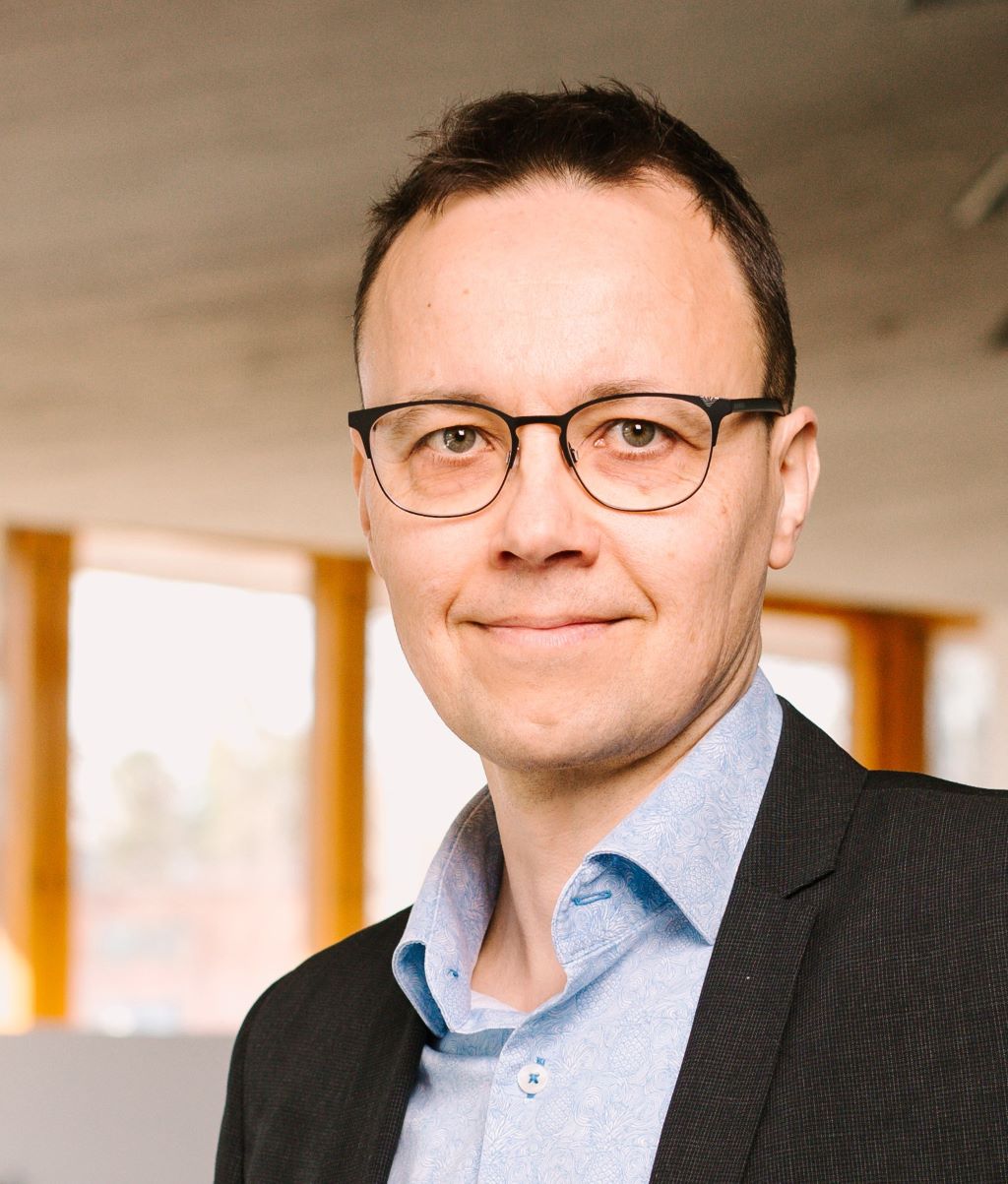
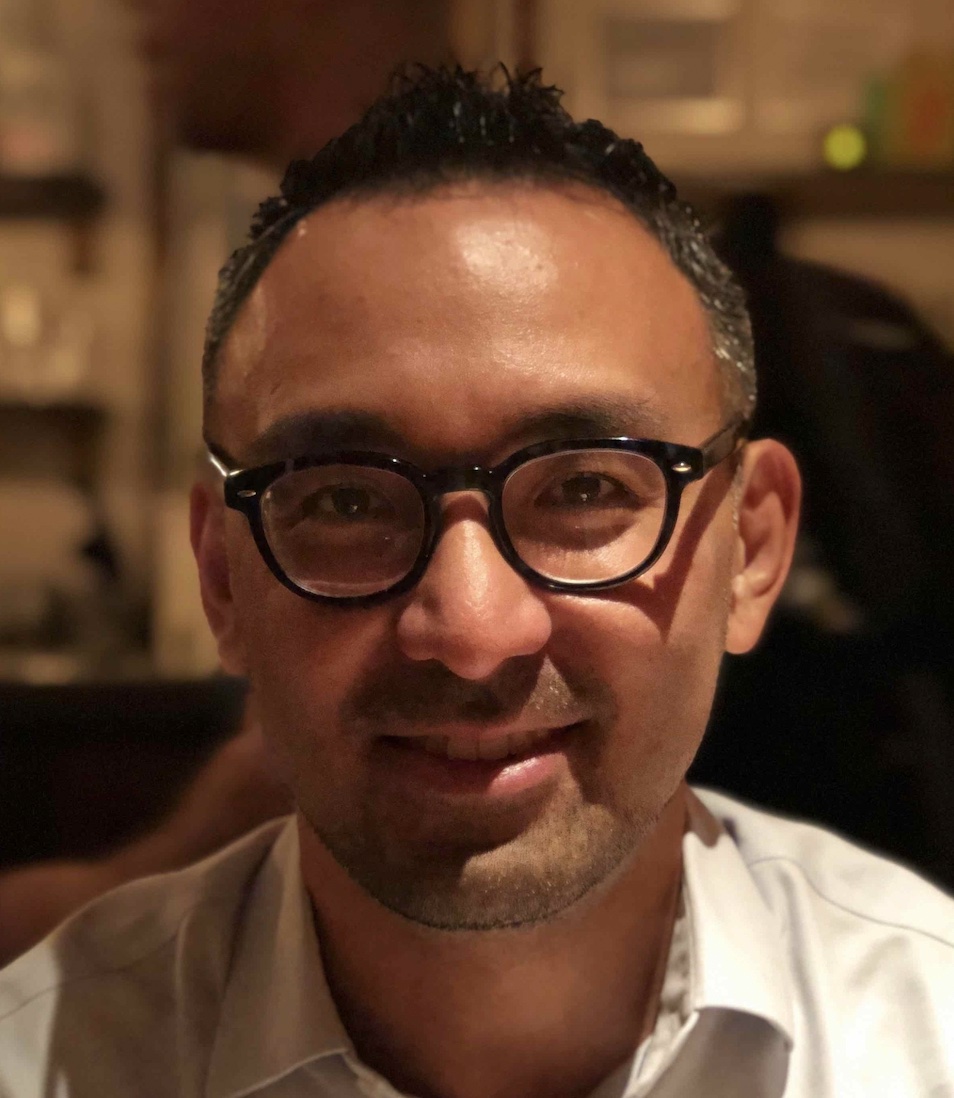
Yan Liu is a full professor in the Thomas Lord Department of Computer Science at the University of Southern California (USC), serving as Director of the USC Machine Learning Center within the Viterbi School of Engineering. He holds courtesy appointments in the Ming Hsieh Department of Electrical Engineering and the Quantitative and Computational Biology Department. Before joining USC in 2010, he was a research staff member at IBM's T.J. Watson Research Center. He earned his M.S. and Ph.D. from Carnegie Mellon University. His research focuses on machine learning for time series, physics-informed AI, and interpretable models, with applications in healthcare, sustainability, and social media. Notable projects include developing AI for surgical training, analyzing misinformation on social platforms, and predicting cancer treatment outcomes. He has held leadership roles in top conferences like ICLR and ACM KDD, and serves as Associate Editor-in-Chief of TPAMI and Board Member of ICLR. Education: Ph.D., Carnegie Mellon University Affiliations: USC Machine Learning Center, Viterbi School of Engineering Service: General Chair (ICLR 2023, ACM KDD 2020), Program Chair roles across multiple conferences His lab, the Melady Group, emphasizes foundational ML advancements and interdisciplinary applications. Recent work includes physics-aware neural networks and time-series foundation models.
Minghao Qi is a Professor in the Department of Electrical and Computer Engineering at Purdue University's College of Engineering, West Lafayette. His research focuses on integrated photonics systems for optical communications, quantum information, and precision metrology applications. Professor Qi's work spans several critical photonics domains: Design and application of microresonator-based optical frequency combs (Kerr combs) Silicon and silicon nitride integrated photonic circuits Thin-film lithium niobate devices for nonlinear optics Quantum information processing using frequency-bin entangled photons Photonic neuromorphic computing with machine learning co-design Optical sensors and time-of-flight ranging systems Analysis of his 2022-2025 publications reveals three dominant research vectors: (1) Vernier microcombs for optical atomic clocks and RF stabilization, (2) Trident edge coupler architectures for octave-spanning nonlinear processes on lithium niobate, and (3) Physics-informed neural networks applied to photonic device design and signal processing. His recent work demonstrates strong convergence between integrated photonics, quantum technologies, and machine learning.
Anne E. White is the School of Engineering Distinguished Professor of Engineering and associate vice president for research administration at the Massachusetts Institute of Technology (MIT). She serves in the Department of Nuclear Science and Engineering within MIT's School of Engineering and is a key researcher at the Plasma Science and Fusion Center (PSFC). White has held significant leadership roles including NSE department head from 2019 to 2023 and co-chair of the MIT Climate Nucleus from 2021 to 2024. She currently chairs the Fusion Energy Sciences Advisory Committee (FESAC), providing federal advisory input to the U.S. Department of Energy Office of Science. White received her PhD in physics from UCLA, where she conducted research at the Electric Tokamak. Her early career included research positions at the National Spherical Torus Experiment at Princeton Plasma Physics Laboratory and the DIII-D National Fusion Facility at General Atomics before joining MIT as a faculty member. Her educational background laid the foundation for her expertise in plasma physics and fusion energy research. Professor White's research focuses on magnetic fusion energy, specifically on understanding turbulent transport in magnetically confined fusion plasmas. Her work spans diagnostic development, novel experimentation, and validation of nonlinear gyrokinetic codes. She aims to demonstrate nuclear fusion as a practical part of the world's sustainable energy future. Her group develops and uses radiometers, reflectometers, and interferometers to measure fluctuations in plasma density, temperature, and flows in tokamaks. This research is critical for improving predictive capabilities of turbulent transport models, which is essential for developing viable fusion reactors. Analysis of Professor White's recent publications reveals a strong focus on plasma diagnostics and turbulence measurements across multiple tokamak facilities. Her work spans experimental measurements on ASDEX Upgrade, Alcator C-Mod, NSTX, and DIII-D tokamaks, with particular emphasis on electron temperature fluctuations, turbulence characterization, and transport model validation. A significant theme is the development and application of novel diagnostic techniques for simultaneous measurements of multiple plasma parameters. Her research increasingly incorporates computational approaches, including gyrokinetic simulations and machine learning methods, to interpret experimental data and advance predictive capabilities in fusion plasma physics. Professor White has received numerous prestigious awards throughout her career: Fellow, American Physical Society Division of Plasma Physics (2019) Cecil and Ida Green Career Development Professor, MIT (2014) American Physical Society Katherine E. Weimer Award (2014) Fusion Power Associates Excellence in Fusion Engineering Award (2014) Junior Bose Award for Excellence in Teaching, MIT (2014) PAI Outstanding Faculty Award from MIT student chapter of the American Nuclear Society (2013) Norman C. Rosenbluth Career Development Professor, MIT (2012-2014) Department of Energy Early Career Award (2011-2016) Marshall N. Rosenbluth Outstanding Doctoral Thesis Award (2009) As an educator and mentor, Professor White has advised numerous students through MIT's Department of Nuclear Science and Engineering. She has taught courses including Principles of Plasma Diagnostics, Seminar in Fusion & Plasma Physics, and Introduction to Plasma Physics. Her leadership extends to developing educational resources, notably leading a team in 2018 to create a free MITx MOOC focused on nuclear science and engineering for global high school learners. Professor White has secured significant research funding through Department of Energy awards, including the Early Career Award (2011-2016) and various fusion energy fellowships throughout her career. Her research group at MIT's Plasma Science and Fusion Center has contributed to multiple major fusion facilities and has been instrumental in advancing understanding of plasma turbulence and transport. Professor White leads the Fusion and Plasmas Lab at MIT, which focuses on diagnostic development and turbulence measurements in fusion plasmas. Her team has made significant contributions to research on four major tokamaks: Alcator C-Mod, ASDEX Upgrade, DIII-D, and National Spherical Torus Experiment Upgrade. At MIT's Plasma Science and Fusion Center, she previously served as assistant division head for magnetic fusion energy collaborations and ran the Gyrokinetic Simulation Working Group and the Alcator C-Mod Transport Group. Her lab maintains close collaboration between experimental work, theoretical modeling, and computational simulation to advance the understanding of plasma turbulence and transport phenomena critical for fusion energy development.
Phillip J. Ansell is an Associate Professor in the Department of Aerospace Engineering at the University of Illinois at Urbana-Champaign (UIUC), affiliated with the Grainger College of Engineering. He directs the Center for Sustainable Aviation and the Center for High-Efficiency Electrical Technologies for Aircraft. His academic positions include Assistant Professor (2015–2021) and current role as Associate Professor since 2021. He teaches courses such as AE 416 (Applied Aerodynamics), AE 419 (Aircraft Flight Mechanics), and AE 515 (Wing Theory). Education: BS, The Pennsylvania State University, Aerospace Engineering, 2008 MS, UIUC, Aerospace Engineering, 2010 PhD, UIUC, Aerospace Engineering, 2013 Research Interests: Focuses on applied aerodynamics, sustainable aviation, distributed propulsion, flow control, and aircraft electrification. His work integrates experimental fluid mechanics and computational models to advance aviation sustainability. Key projects include hydrogen propulsion systems, cryogenics in aviation, and unsteady aerodynamics for rotorcraft. Research Contributions: Authored/co-authored books like Aircraft Cryogenics (Springer, 2024). His articles address sustainable aviation frameworks, hydrogen-electric propulsion, and high-lift aerodynamics. Recent trends emphasize decarbonization pathways and system-of-systems analysis. Awards & Honors: Dean's Award for Excellence in Research (2025) NASA Innovative Advanced Concepts Fellow (2025) AIAA Associate Fellow (2024) Forbes 30 Under 30 (2016) Advising & Grants: Advises graduate students on propulsion and aerodynamics. Secured grants from AFOSR, ARO, and NASA. Active in AIAA committees, including Electrified Aircraft Technology Technical Committee (Chair, 2020–2023). Labs & Teams: Leads the Aerodynamics and Unsteady Flows Research Group, using UIUC’s wind tunnel facilities. Collaborates on projects like the Five Circles of Sustainable Aviation framework and cryogenic propulsion systems.
Simo Hostikka is a Professor in the Department of Civil Engineering at Aalto University's School of Engineering. His research focuses on fire safety engineering , utilizing numerical fire simulations to address critical challenges in building and infrastructure safety. Key Expertise: Fire Dynamics Simulator (FDS) development, thermal radiation heat transfer, pyrolysis modeling, fire toxicity calculations, and probabilistic risk analysis. Leadership: Supervises advanced fire safety research and contributes to international fire safety standards. Research Trends: Recent publications emphasize fire toxicity modeling , hydrogen fire safety , radiation heat transfer , and fire retardancy of polymeric materials . His work bridges computational methods with real-world fire safety applications. Scientific Awards: Philip Thomas Medal of Excellence (2008, 2005) Sjölin Award (2012) Interflam Trophy (2007) Harmathy Award (2020, 2019) Dean’s Award for Best MSc Thesis (2020) Best Paper in Rakenteiden Mekaniikka (2009) Advising: Supervised Topi Sikanen, who received the Young Talent Award from the International Water Mist Association.
Gijs Heuts is an Associate Professor in the Fundamental Mathematics group at the Mathematical Institute of Utrecht University, part of the Faculty of Science. His research focuses on advanced topics in algebraic topology and higher category theory, with particular expertise in Goodwillie calculus, chromatic homotopy theory, and operads. He is affiliated with the Utrecht Geometry Center, which includes prominent mathematicians Ieke Moerdijk and Lennart Meier. His work is currently funded by prestigious grants including an ERC Starting Grant titled "Chromatic homotopy theory of spaces" and an NWO Vidi grant "Hopf algebras and periodic homotopy theory". Starting September 2025, he will also serve as one of the Principal Investigators on the NWO XL consortium "Symmetry on the interface of topology and higher algebra". Dr. Heuts' research centers around homotopy theory and derived algebraic geometry, with a focus on generalizations of classical algebraic concepts (such as Lie algebras, commutative rings, and Hopf algebras) to homotopy theory. His work has significant applications to chromatic homotopy theory, with Goodwillie calculus and operads serving as central methodological tools. His publication record demonstrates consistent high-impact contributions to the field, with papers appearing in top journals such as Annals of Mathematics and Proceedings of the American Mathematical Society. His research spans theoretical foundations of higher category theory to specific applications in unstable homotopy theory, particularly focusing on connections between spectral Lie algebras and vn-periodic phenomena. ERC Starting Grant "Chromatic homotopy theory of spaces" NWO Vidi grant "Hopf algebras and periodic homotopy theory" PI on NWO XL consortium "Symmetry on the interface of topology and higher algebra" (starting Sept 2025) Dr. Heuts completed his PhD under Jacob Lurie at Harvard University and was previously a postdoc at the University of Copenhagen. He has held research positions at the Isaac Newton Institute and Hausdorff Research Institute. He was an organizer of the MIT Talbot Workshop (2012-2015) and currently organizes the European Autumn School in Topology (EAST).
Dr. Guohong Tian is a Senior Lecturer in Automotive Engineering at the University of Surrey's School of Mechanical Engineering Sciences. He holds roles including Departmental representative for the Faculty International Relations Committee and coordinator for Headstart and Summer School programs. His research focuses on advanced engine technologies, alternative fuels, and thermal management systems. Prior to Surrey, he was at Newcastle University (2010–2015) and Birmingham University as a Research Fellow (2008–2010). Education: PhD in Mechanical Engineering (Birmingham University). Collaborations: Jaguar Land Rover, Cummins, BP, Shell, JCB, and Avid. Research areas include: Internal combustion engines: novel designs (free piston, scroll engines), waste heat recovery via ORC, and desalination integration. Battery thermal management using capillary-driven cooling and heat pipes. Soot oxidation mechanisms and catalytic diesel particulate filters. Key projects: KTP project with William Medcalf Limited improving vintage engine performance. ADVICE-ADvancing thermal energy management in hybrid vehicles. Publications emphasize combustion diagnostics, emission reduction, and scroll expander optimization. He supervises students on pyrolysis oils and scroll expander development. His lab includes a state-of-the-art engine test bench with FTIR emission analysis and high-speed imaging systems.
Matthias Bucher is a Professor at the Department of Electronics and Computer Engineering, Technical University of Crete. He specializes in analog/RF integrated circuits design, MOSFET compact modeling, and device characterization. His research focuses on nanoscale CMOS, wide-band semiconductor devices, and high-voltage MOSFETs. He leads the Electronics Laboratory and teaches courses such as Electronics II and CMOS Analog IC Design. Education: Ph.D. in Electrical Engineering, Swiss Federal Institute of Technology (EPFL), 1999 M.S. in Electrical Engineering, Swiss Federal Institute of Technology, 1993 Research Interests: Prof. Bucher’s work emphasizes charge-based compact models (e.g., EKV3), RF device modeling, and noise analysis in MOSFETs/JFETs. His contributions include open-source tools for Verilog-A modeling and parameter extraction methodologies for advanced CMOS technologies. Labs/Teams: He directs the Electronics Laboratory , focusing on nanoelectronics and high-reliability circuits. His team collaborates on semiconductor device modeling for aerospace and industrial applications. Grants/Awards: While not explicitly listed, his extensive publication record and leadership in open-source projects indicate sustained recognition in semiconductor research communities.
Wayne Springer is a Professor in the Department of Physics & Astronomy at the University of Utah, with a career spanning over 25 years. He has been actively involved in experimental particle astrophysics, ultra-high-energy cosmic ray (UHECR) physics, and gamma-ray astronomy. Ph.D. in Physics from University of Maryland (1991) B.S. in Physics from University of Maryland (1985) Postdoctoral training at University of Maryland and University of Alberta His research focuses on particle astrophysics, cosmic ray detection, and gamma-ray astronomy. He has made significant contributions to the development of the HiRes and Telescope Array cosmic ray observatories, as well as the HAWC and SWGO gamma-ray observatories. His recent work includes deployment of the Trinity neutrino detector prototype and serving as SWGO project manager for Chile site infrastructure. Article trends show strong emphasis on TeV gamma-ray observations (HAWC, SWGO), cosmic ray diffusion mechanisms, dark matter searches, and high-energy astrophysical source characterization (pulsars, microquasars, supernova remnants). He has secured multiple NSF grants for particle astrophysics research and leads detector working groups in international collaborations. Professor Springer actively participates in astronomy outreach, co-developing observatories and implementing computational physics teaching tools with Gradescope auto-graders for enhanced pedagogy. His work bridges experimental high-energy physics, detector development, and multiwavelength astrophysical studies.
Roles & Affiliations: Charles Rezk is a Professor in the Department of Mathematics at the University of Illinois at Urbana-Champaign. He is affiliated with the College of Liberal Arts & Sciences and holds offices in both the Computing Applications Building and Altgeld Hall. He actively teaches advanced courses such as Homotopy Theory (Math 527) and Higher Category Theory (Math 595). Research Interests: Rezk specializes in algebraic topology, with a focus on homotopy theory, higher category theory, and infinity categories. His work explores topics like elliptic cohomology, spectral algebra, and model categories. He has contributed to foundational areas such as quasicategories and topological André-Quillen cohomology. Academic Contributions: Rezk manages the ALGTOP-L algebraic topology mailing list and maintains a comprehensive website with course materials, publications, and resources. His research includes notable papers on free colimit completions in infinity-categories (2025) and spectral algebra models of unstable periodic homotopy theory (2020). He also engages in educational outreach through lecture notes and video courses on finite group representations and abstract algebra. Professional Activities: Rezk has organized conferences, contributed to editorial boards, and participated in initiatives like the Bousfield Classes conference. His work bridges foundational category theory with applied homotopy theory, influencing both pure and applied mathematical research.
Professor Neil Strickland is a faculty member at the University of Sheffield's School of Mathematical and Physical Sciences, holding the rank of Professor. He earned his PhD from the University of Manchester in 1992 and held positions as a C.L.E. Moore Instructor at MIT and a Research Fellow at Trinity College Cambridge before joining Sheffield in 1998. He received the prestigious Whitehead Prize from the London Mathematical Society in 2005. His research focuses on stable homotopy theory, exploring connections between topology, algebraic geometry, and category theory. Key areas include formal group laws, chromatic homotopy theory, and equivariant cohomology. Prof. Strickland emphasizes translating topological problems into algebraic frameworks, leveraging category theory for structural insights. Grants: He has led EPSRC-funded projects, including 'Symmetric Powers of Spheres' and 'Equivariant Elliptic Cohomology and Class Field Theory,' and collaborated on grants like 'Higher Structures on Elliptic Cohomology.' Teaching: Prof. Strickland instructs courses such as MAS334 Combinatorics and MAS435 Algebraic Topology. His homepage provides further academic resources and materials. Awards: His recognition includes the Whitehead Prize, reflecting contributions to algebraic topology and homotopy theory.
Daisuke Nagai is a Professor of Physics and Astronomy at Yale University and the Director of Graduate Studies in the Yale Physics Department. His research focuses on theoretical and computational cosmology, including dark matter, dark energy, galaxy clusters, and data science. He holds a Ph.D. from the University of Chicago (2005) and a B.S. from the University of Michigan (1999). Before joining Yale in 2008, he was a Sherman Fairchild Postdoctoral Scholar at Caltech. Positions: Professor (2022–present), Director of Graduate Studies (2022–2025), Co-Director Yale Center for Research Computing (2015–2019). Awards: Stephen Murray Lectureship (2018), Cottrell Scholar (2012), IUPAP Young Scientist Prize (2011). His work uses high-resolution cosmological simulations to study galaxy cluster formation, X-ray observations, and the interplay between dark matter and baryonic processes. He also leads efforts in computational astrophysics and data-driven methods for cosmological analysis.
Andrew S. Whittaker is a SUNY Distinguished Professor in the Department of Civil, Structural and Environmental Engineering at the University at Buffalo, State University of New York . He serves as Director of the Institute of Bridge Engineering and Interim Director of the Stephen Still Institute for Sustainable Transportation and Logistics , both within the School of Engineering and Applied Sciences . A registered Civil and Structural Engineer in California, Whittaker specializes in structural and earthquake engineering, bridge engineering, blast and impact engineering, performance-based engineering, and nuclear structures. Research Interests: His work focuses on seismic isolation systems for nuclear reactors, fluid-structure interaction in advanced reactor vessels, gamma radiation effects on materials, and the dynamic behavior of graphite blocks in high-temperature gas reactors (HTGRs). He also explores the commodification of microreactors and soil-structure interaction for seismically isolated facilities. Scientific Awards: Distinguished Member, American Society of Civil Engineers (2025) Untermyer & Cisler Reactor Technology Medal (2023) Nathan M. Newmark Medal (2023) Fellow of multiple societies (ASCE, SEI, ACI) Awards and grants highlight his leadership in nuclear safety, seismic engineering, and reactor design.
John Rognes is a Professor at the Department of Mathematics , University of Oslo, specializing in Algebraic Topology, Algebraic K-Theory, and Geometric Topology. His research bridges number theory and homotopy theory, with a focus on structured ring spectra and topological modular forms. Education : International Baccalaureate (1984), Cand. Mag. in Mathematics (1985), Princeton MA (1987), and PhD (1990) under Gunnar Carlsson. Positions : Professor at UiO since 1998, Visiting roles at Stanford (1996), Chicago (1996), and Bonn (2005-2006). His research areas include Algebraic K-Theory , Stable Homotopy Theory , Topological Cyclic Homology , and Motivic Homotopy . Articles highlight work on Adams spectral sequences, redshift phenomena, Segal conjectures, and topological Hochschild homology of modular forms. Scientific awards include the 1999 Professor Ingerid Dal and Ulrikke Greve Dals prize, Fulbright-Hays Fellowship, and multiple grants from the Research Council of Norway (YFF, SUPREMA). He supervised 18 Master’s and 9 PhD students, including Paul Arne Østvær, Vigleik Angeltveit, and Alice Hedenlund. Leadership : Chairman of the Abel Committee (2014-2018), Program Leader for Master programs in Mathematics (2021-2024), and organizer of international symposia. Grants : YFF program 'Brave new rings' (7.1 MNOK), RCN projects on topology and motivic homotopy (total >30 MNOK).
Andrea Costamagna is a researcher affiliated with the École Polytechnique Fédérale de Lausanne (EPFL), working within the School of Computer and Communication Sciences and the Department of Communication Systems. His research focuses on logic synthesis, digital circuit design, and the intersection of machine learning with hardware implementation. His work includes optimizing digital circuits using techniques like resynthesis, resubstitution, and decomposition, with applications in FPGA design and low-power systems. Recent publications explore symmetry-based synthesis, glitch-aware power minimization, and the use of resistive switching devices in machine learning hardware. His research also extends to quantum physics modeling with deep learning.