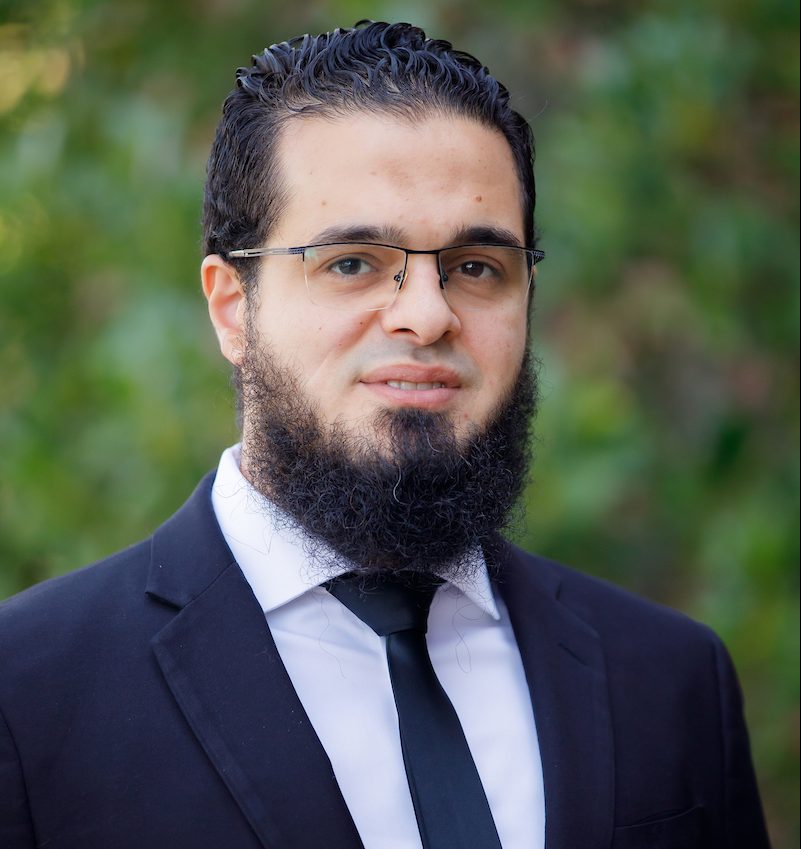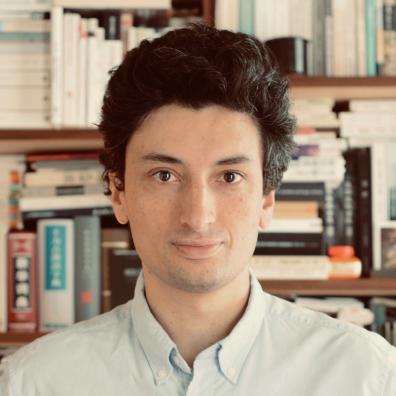
David Serfass is a Lecturer at the National Institute of Oriental Languages and Civilizations (INALCO) specializing in Chinese studies. He serves as Co-manager of international mobility, Tutoring Manager, and Referent to the Cross-functional Commission at the institution. His teaching portfolio includes courses on the History of East Asia (19th-20th centuries), Communication and Media in East Asia, Introduction to Ancient Chinese History, Sinological Culture and Practice, Republican China through Texts and Media, and History of Taiwan. Dr. Serfass's research focuses on the History of the Japanese Occupation of China (1931-1945), the History of the Modern Chinese State, Sino-Japanese Relations, and the History of the Sino-Japanese War. His work examines state-building processes during wartime, particularly through the lens of the Wang Jingwei regime and collaboration governments in occupied China. He approaches these topics through spatial history, bureaucratic documentation, and memory studies, revealing how territorial control, administrative practices, and historical narratives shaped wartime China. His scholarly contributions demonstrate a consistent focus on the complexities of political authority during periods of fragmentation and occupation. Rather than viewing the Wang Jingwei regime as merely a Japanese puppet government, Serfass's research reveals the regime's internal dynamics, state-building efforts, and complex negotiations of sovereignty. His work challenges teleological narratives of central state formation in Republican China, highlighting instead the fragmented and contested nature of political authority during this period. Member of editorial board, Études chinoises (2014-2024) Member of editorial board, Terrains de Taiwan Member, ERC project Elites, Networks and Power in Modern China Member, French Taiwan Studies Project Member, Occupation Studies Research Network Dr. Serfass is an active contributor to academic discourse through conference presentations, editorial work, and collaborative research projects. His approach combines traditional historical research with spatial analysis and attention to bureaucratic practices, drawing on Chinese, Japanese, and Western archival sources to provide multi-perspective understanding of wartime China. His work has established him as a significant voice in the field of modern Chinese history, particularly regarding the complex dynamics of occupation, collaboration, and state formation during the Sino-Japanese War period.