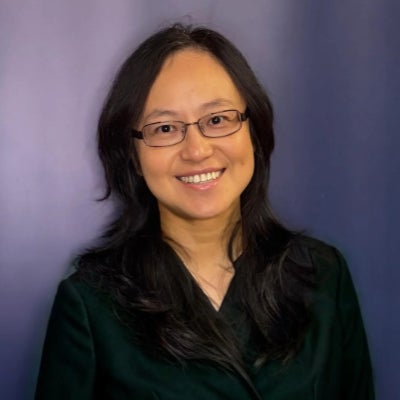
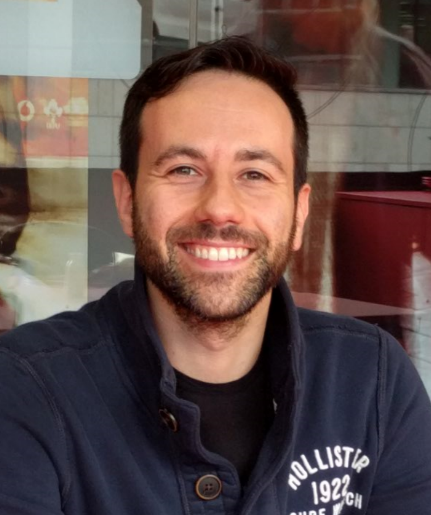
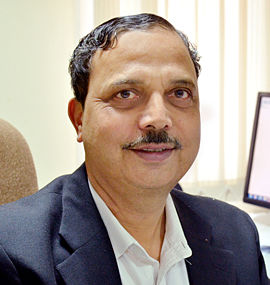
Dr. Beibei Ren is an Assistant Professor in the Department of Mechanical Engineering at Texas Tech University. She earned her Ph.D. in Electrical and Computer Engineering from the National University of Singapore (NUS) in 2010, followed by postdoctoral work at UCSD and a research fellowship at NUS. Education: Ph.D. in Electrical and Computer Engineering (NUS, 2010) Previous Positions: Postdoctoral Scholar (UCSD, 2010-2013), Research Fellow (NUS, 2009-2010) Her research focuses on dynamic systems and control with applications in renewable energy integration, microgrids, UAVs, MEMS, marine systems, and manufacturing. At Texas Tech, she directs the Dynamic Intelligent Systems, Control and Optimization (DISCO) Group , emphasizing robust control strategies for uncertain systems. The 15 most recent publications highlight her expertise in uncertainty and disturbance estimator (UDE)-based control , with applications in smart grid technologies, wind and solar energy systems, quadrotor robotics, and power electronics. Her work bridges theoretical control theory with practical implementations in renewable energy and autonomous systems. STEM Outreach: Actively promotes diversity in engineering through Texas Tech's STEM CORE programs.
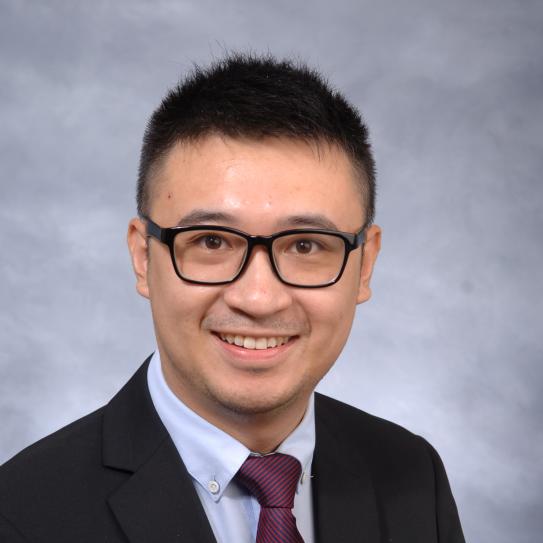
Xiaozhe Wang is an Associate Professor in the Department of Electrical and Computer Engineering at McGill University, holding the Canada Research Chair (Tier II) in Resilient and Stable Zero-Emission Electric Power Grids and the Rubin & So Foundation Faculty Scholar. He joined McGill in 2016 after a postdoctoral fellowship at MIT under Prof. Konstantin Turitsyn. He earned his Ph.D. from Cornell University (2015), with a minor in Applied Mathematics, and holds degrees from Zhejiang University (B.S., 2010) and Cornell (M.Eng., 2011). His research focuses on resilient power grids, data-driven methodologies, and cybersecurity in energy systems. Key areas include electric vehicle integration, stability assessment, and control strategies for renewable energy systems. He develops advanced techniques for uncertainty quantification, wide-area monitoring, and adversarial attack detection. Notable achievements include pioneering work on polynomial chaos expansion for probabilistic assessment and sparse identification for nonlinear dynamics. His articles explore topics like microgrid control, false data injection attacks, and decentralized energy trading. Awards: Canada Research Chair (Tier II), Rubin & So Foundation Scholar Grants/Projects: Focus on resilience, cybersecurity, and renewable integration funded via NSERC, Mitacs, and industry partnerships. He advises students through fellowships like Mitacs Elevate and Banting Postdoctoral Fellowships. His lab emphasizes interdisciplinary approaches to modern grid challenges, including lab experiments and field trials.
Ronnie Sircar is the Eugene Higgins Professor of Operations Research and Financial Engineering at Princeton University , where he contributes to the Department of Operations Research and Financial Engineering (ORFE). His work spans financial mathematics, stochastic modeling, and applied probability, with a focus on market volatility, optimal investment strategies, and dynamic game theory. Email: sircar@princeton.edu Office: Sherrerd Hall, Room 208, Princeton, NJ 08544 His research interests include: Stochastic Volatility: Asymptotic analysis, calibration, and impact on option pricing and portfolio optimization. Mean Field Games: Applications to cryptocurrency mining, energy markets, and interbank network formation. Portfolio Theory: Forward performance processes, drawdown constraints, and risk-averse strategies. Credit Risk: Multi-name credit derivatives, CDO valuation, and risk measures. Energy Systems: Renewable reliability, unit commitment, and electricity market design. Recent publications emphasize mean field games in energy and blockchain, stochastic volatility in portfolio optimization, and machine learning applications for financial engineering. He has advised graduate students such as Giulia Crippa, Nicolas Garcia, and Burak Aydin, often collaborating with researchers including M. Soner, P. Chan, and A.M. Reppen.
Kwang Moo Yi is an Assistant Professor in the Department of Computer Science at the University of British Columbia (UBC), where he conducts research in computer vision and machine learning. He is affiliated with the Computer Vision Lab, CAIDA (Centre for Artificial Intelligence Decision-making and Action), and ICICS (Institute for Computing, Information and Cognitive Systems) at UBC. Education: B.Sc. from Seoul National University Ph.D. from Seoul National University under Prof. Jin Young Choi Post-doctoral researcher at École Polytechnique Fédérale de Lausanne (EPFL) with Prof. Pascal Fua and Prof. Vincent Lepetit Dr. Yi's research focuses on Visual Geometry with the goal of understanding local environments, adapting to them, and acting within them. His work spans applications in autonomous vehicles, drones, robots, and Augmented/Mixed Reality systems. He employs machine learning, particularly deep learning, as the primary tool for advancing computer vision capabilities. His recent publications demonstrate a strong focus on neural rendering techniques, especially 3D Gaussian Splatting and Neural Radiance Fields (NeRF). The research trends show increasing sophistication in handling occlusions, improving rendering quality, and developing more efficient training methods for neural fields. There's also significant work connecting computer vision with practical applications in industrial settings and energy systems. Dr. Yi serves as an area chair for top computer vision and machine learning conferences including CVPR, ICCV, ECCV, NeurIPS, ICML, and AAAI. He was part of the organizing committee for CVPR 2023. He supervises graduate students including Eric (who recently completed his PhD), Gopal (now at Samsung Research), and Jeong-Gi (joining as a postdoctoral fellow). His teaching includes CPSC 425: Computer Vision and CPSC 533Y: 3D Computer Vision with Deep Learning. Dr. Yi is actively involved with the Computer Vision Lab at UBC, collaborating with researchers across CAIDA and ICICS. His work bridges theoretical computer vision with practical applications in various domains including astronomy, industrial automation, and energy systems.
Dr. Yuzhang Lin is an Assistant Professor in the Department of Electrical and Computer Engineering at NYU Tandon School of Engineering. Previously, he held an Assistant Professor position at the University of Massachusetts Lowell (2018–2023). He earned his Ph.D. from Northeastern University and B.Eng./M.S. from Tsinghua University. His research focuses on smart grids, renewable energy systems, cyber-physical resilience, and machine learning applications. He leads editorial roles for IEEE Transactions on Power Systems and chairs IEEE PES Task Forces on standard test cases and distribution system operations. Dr. Lin’s research has been funded by NSF, DOE, ONR, and others. He is a recipient of the NSF CAREER Award and Northeastern’s Graduate Student Outstanding Research Award. His work emphasizes data-driven solutions for grid resilience, including state estimation, cyber-physical defense, and distributed energy integration. The Lin Group actively seeks PhD candidates interested in advancing smart grid technologies. Education: Ph.D. (Northeastern University), B.Eng./M.S. (Tsinghua University) Grants: NSF, DOE OE/EECE/CESER, ONR, NYSERDA, MassCEC Service Roles: IEEE PES Task Force Co-chair (Standard Test Cases), Secretary (Distribution System Operations Subcommittee) Publications span top journals/conferences, focusing on state estimation, inverter-based resource control, and machine learning for grid systems. His lab develops cutting-edge tools for power system resilience and renewable energy integration.
Seddik M. Djouadi is a Professor in the Min H. Kao Department of Electrical Engineering and Computer Science at the University of Tennessee, Knoxville. He holds a PhD from McGill University (1999), an M.A.Sc. from École Polytechnique (1992), and a B.Sc. from École Nationale Polytechnique (1989). His research focuses on robust control, distributed systems, wireless communication, model reduction, and power networks. He has authored over 100 publications and received awards including recognition as an outstanding reviewer by Automatica (2006-2007, 2003-2004) and the Tibbets Award (1999). Education: PhD in Electrical Engineering, McGill University, 1999 M.A.Sc., École Polytechnique, 1992 B.Sc., École Nationale Polytechnique, 1989 Research Interests: Robust and distributed control Wireless communication systems Model reduction for fluid flows Power network dynamics and renewable integration Biological systems modeling Cyber-physical systems security Awards: Outstanding Reviewer, Automatica (2006-2007, 2003-2004) Best Paper Award, Mediterranean Conference on Intelligent Systems (2008) Ralph E. Powe Junior Faculty Enhancement Award (2005) Tibbets Award (1999) Students and Advising: Djouadi has mentored over 20 graduate students and postdoctoral researchers, including current advisees Yichen Zhang and Ehsan Raoufat. Notable past students include Jin Dong (now at Oak Ridge National Laboratory) and Xiao Ma (Western Digital). Projects: Current research includes distributed control of large power networks, data-driven nonlinear model reduction, and stochastic modeling of wireless systems. Collaborations involve ORNL and TVA on energy systems and cybersecurity.
Dr. Li Shen is an Associate Professor at the Copernicus Institute of Sustainable Development , Utrecht University since 2015. She holds the Energy & Resources group and has been active in sustainability assessment of materials and energy systems since completing her PhD in 2011. Education: BEng (Mechanical Engineering, cum laude 1999, Shanghai) MSc (Sustainable Development, track Energy and Resources 2006, Utrecht University) PhD (2011, Utrecht University, thesis: Bio-based and Recycled Polymers for Cleaner Production – an Assessment of Plastics and Fibres ) Research Interests: Dr. Shen specializes in Life Cycle Assessment and Technological Sustainability Evaluation of Bio-based Plastics , Plastics Recycling , Waste Management , and Nanomaterials . Her work bridges Environmental Science , Chemical Engineering , and Sustainable Development through rigorous system analysis. Scientific Publications: Leading expert in Circular Economy applications for plastics Developed Ex-ante LCA frameworks for emerging materials Key contributor to PEF Bio-based Bottle sustainability analysis Active in Telescope Energy Systems sustainability Published in Nature Communications , Science of the Total Environment , and Journal of Cleaner Production Teaching: Responsible instructor for Advanced Energy Analysis in the Master Energy Science program. Also teaches Life Cycle Assessment and Sustainable Resources Use in the Global Sustainability Science bachelor program. Supervises numerous master thesis projects from Energy Science (ES), Sustainable Development (SD-EM), and Science for Energy Innovation (SBI) programs.
Professor Omer Rana serves as Professor of Performance Engineering and International Dean for the Middle East at Cardiff University's School of Computer Science and Informatics. He also holds the prestigious position of Cross-Council Research Director for the UK National Edge AI Hub, demonstrating his leadership in national research initiatives. Previously, he led the Complex Systems research group and served as Dean of International for the Physical Sciences and Engineering College at Cardiff University. Professor Rana is a Fellow of both the Learned Society of Wales and the Higher Education Academy, and serves on the Advisory Board of the Welsh Ethnic Minority Professors Initiative (WEMPI). His research expertise centers on the intersection of intelligent systems and high performance distributed computing, with particular focus on applying intelligent techniques to resource management in distributed systems. His scholarly contributions span edge computing, cloud computing, Internet of Things (IoT), artificial intelligence, cybersecurity, federated learning, privacy-preserving systems, and sustainable computing. Professor Rana has published extensively in top-tier journals and conferences, with recent work emphasizing practical applications in industrial automation, smart buildings, and sustainable computing solutions. Professor Rana's publication record demonstrates consistent leadership in edge computing and distributed systems research, with a growing emphasis on practical implementations across diverse application domains. His work bridges theoretical computer science with real-world technological challenges, particularly in industrial automation, smart environments, and sustainable infrastructure. Fellow of the Learned Society of Wales Fellow of the Higher Education Academy Professor Rana actively supervises postgraduate students and has secured significant research funding for projects related to edge computing, IoT, and distributed systems. His international collaborations span Europe, Asia, and the Middle East, reflecting his global influence in the field. He serves as a sought-after keynote speaker, workshop chair, and panel moderator at major international conferences including IEEE/ACM Utility and Cloud Computing (UCC) and IEEE Edge Computing. He leads multiple research initiatives, most notably as Cross-Council Research Director for the UK National Edge AI Hub, where he shapes national research directions in edge computing and AI. His work has practical applications across industrial automation, smart building management, electric vehicle infrastructure, and sustainable computing solutions.
Valerie Thomas is the Anderson Interface Chair of Natural Systems at Georgia Tech, holding joint appointments in the H. Milton Stewart School of Industrial and Systems Engineering and the School of Public Policy. Her research focuses on energy systems, sustainability, industrial ecology, and science and technology policy. She earned a B.A. in Physics from Swarthmore College and a Ph.D. in Theoretical Physics from Cornell University, followed by postdoctoral research at Carnegie Mellon and Princeton Universities. Her work addresses low-carbon transportation, environmental impacts of food systems, and energy development in Africa. Key research areas include life cycle assessment, climate policy, and technology assessment. Thomas has contributed to over 80 technical publications and serves on advisory boards for the U.S. EPA and USDA/DOE. Education: Ph.D. in Physics, Cornell University; B.A. in Physics, Swarthmore College Awards: AAAS and APS Fellowships, Georgia Tech’s 1934 Outstanding Interdisciplinary Award Her teaching spans energy policy, lifecycle analysis, and engineering economics. She leads interdisciplinary teams at the Climate and Energy Policy Laboratory and the Technology Policy and Assessment Center, advancing sustainable systems engineering and policy solutions.
Associate Professor Lasantha Meegahapola is a Deputy Head of Department (Teaching & Learning) at RMIT University's School of Engineering in Melbourne, Australia. He holds an IEEE Senior Membership and serves as an Associate Editor for several prestigious journals, including IEEE Transactions on Power Systems and IET Renewable Power Generation. His research focuses on Power System Stability with Renewable Integration, Microgrid Control, and Smart Grid Technologies, addressing challenges like voltage stability, inverter-based grid dynamics, and renewable energy penetration. He has supervised 16 PhD students to completion and published over 200 articles. Key contributions include identifying stability issues in microgrids and advancing grid-forming inverter control strategies. His work aligns with UN Sustainable Development Goals 7 (Clean Energy), 9 (Infrastructure), and 13 (Climate Action). He is actively involved in IEEE committees, including the PSDP Task Force on Microgrid Stability. Teaching roles include Programme Manager for the Bachelor of Electrical Engineering (HK) and Subject Coordinator for Power System Analysis and Control courses. Collaborations span industry and international research institutions, emphasizing real-world applications of his research in power systems and renewable energy integration.
Dr. Madhav Manjrekar is an Associate Professor in the Department of Electrical and Computer Engineering at the University of North Carolina at Charlotte. He earned his Ph.D. from the University of Wisconsin–Madison in 1999. His research focuses on power electronics applications in utility systems, renewable energy interfaces, and cybersecurity of electricity infrastructure. Key areas include power quality improvement in microgrids, high-voltage direct current (HVDC) transmission, and advanced electrical machine design for electric vehicles and wind energy systems. His work emphasizes innovative solutions for energy storage integration, grid resiliency, and fault-tolerant power systems. Recent publications highlight advancements in DSTATCOM for microgrids, solid-state circuit breakers, and doubly salient electrical machines. He has contributed to projects like the US-Caribbean Super Grid and HVDC interconnectors for offshore renewable energy. Dr. Manjrekar’s research also addresses cybersecurity vulnerabilities in power infrastructure and explores next-gen semiconductor technologies like SiC MOSFETs. His interdisciplinary approach bridges power electronics, machine design, and grid stability, with applications in both academic and industry settings.
Professor Yan (Lindsay) Sun is a faculty member at the University of Rhode Island in the College of Engineering under the Department of Electrical, Computer and Biomedical Engineering . She is the founding director of the Center for Cyber-Physical Intelligence and Security (CYPHER) and an IEEE Fellow . Her research focuses on cyber-physical systems security , power grid security , network security , and trustworthy social computing , with a particular emphasis on trust modeling and management in complex systems. Her publications span smart grid security , microgrid control , machine learning applications in power systems, and blockchain-based security mechanisms . The work often explores adversarial threats , resilient control strategies , and data augmentation techniques for improved grid monitoring. NSF CAREER Award (2007) IET Wireless Sensor Systems Premium Award (2018) EURASIP Best Paper Award (2015) IEEE Fellow (2019) URI College of Engineering Outstanding Research Award (2022) She actively leads interdisciplinary CYPHER Lab initiatives involving cyber-physical system resilience , network security , and smart grid analysis , collaborating with government and industry partners.
Gian Antonio Susto is an Associate Professor at the Department of Information Engineering , University of Padova . With a Ph.D. in Information Technology and post-doctoral experience at National University of Ireland, Maynooth, he leads research in Machine Learning , Semiconductor Manufacturing , and Industrial IoT . His work bridges Anomaly Detection , Continual Learning , and Algorithmic Fairness with applications in Hydroelectric Power Plants , Particle Accelerators , and Smart Mobility . B.Sc. and M.Sc. in Controls Engineering, University of Padova (cum laude) Ph.D. in Information Technology, University of Padova (2013) Post-Doc at National University of Ireland, Maynooth (2012-2013) Assistant Professor at University of Padova (2013-2021) His research focuses on Explainable AI , Virtual Metrology , and Deep Learning for manufacturing and infrastructure monitoring. Recent projects include the AIMS5.0 (AI for Manufacturing Sustainability) and MICS (Circular Economy in Italy) initiatives. His publications span Engineering Applications of Artificial Intelligence , IEEE Transactions , and Information Processing & Management , with 15+ recent papers on topics like Fault Diagnosis , Continual Learning , and Fair Ranking . Key scientific awards include: IEEE CCTA Best Student Paper Award (2021) IP&M 2020 Ph.D Paper Award Best Industry Paper Award, European Workshop on Advanced Control and Diagnosis (ACD 2019) He has supervised Ph.D. students on projects involving Particle Accelerators , Plant Behavior Modeling , and Explainable AI , with alumni now at institutions like Max Planck Institute , IBM , and Scripps Research . Current teaching includes Reinforcement Learning and Explainable Machine Learning at graduate and Ph.D. levels.
Nedim Pervan is a Full Professor at the Faculty of Mechanical Engineering, University of Sarajevo, Bosnia and Herzegovina. His academic position focuses on mechanical engineering with emphasis on product design, structural analysis, and biomechanical applications. He maintains an active research profile with numerous publications and collaborations across various engineering disciplines, with office hours every workday from 09:00 to 10:00 in room 314. Professor Pervan's research interests span multiple domains of mechanical engineering. He has made significant contributions to additive manufacturing, particularly in polymer gear production and analysis. His work explores mechanical properties, failure mechanisms, and service life of polymer gears manufactured through additive processes. Additionally, he has conducted extensive research on external fixation devices used in orthopedic treatments, analyzing their biomechanical characteristics and structural stability under various loading conditions. His expertise extends to finite element analysis, structural optimization, and the application of 3D scanning technologies within Industry 4.0 contexts. His research demonstrates a strong connection between theoretical engineering principles and practical applications across automotive, medical devices, and manufacturing industries. His recent publication record reveals a strong trend toward interdisciplinary research bridging mechanical engineering with biomedical applications and advanced manufacturing technologies. A significant portion of his work focuses on polymer gears and additive manufacturing, examining material properties and performance characteristics. Another substantial research stream involves biomechanical engineering, particularly the analysis of external fixation devices. His publications demonstrate a methodological approach combining experimental testing with finite element analysis. More recently, his research has expanded into 3D scanning applications in manufacturing and the electrification of transportation systems in Bosnia and Herzegovina. Professor Pervan has been involved in numerous research projects that have advanced the capabilities of the Faculty of Mechanical Engineering. These include the "Integrated Intelligent CAD System for Interactive Design, Analysis and Prototyping of Compression and Torsion Springs" (2022), "Opremanje Laboratorije za razvoj i dizajn proizvoda" (2020), and "Modernizacija Laboratorije za ispitivanje mašinskih konstrukcija" (2019-2020). These projects have focused on developing advanced laboratory facilities, intelligent CAD systems, and equipment for mechanical design and analysis, with several specifically targeting 3D scanning technology implementation. His collaborative work extends across multiple research teams within the Department of Mechanical Constructions at the University of Sarajevo. He frequently collaborates with researchers including Adis Muminović, Elmedin Mešić, and Muamer Delić on projects related to additive manufacturing, biomechanical engineering, and structural analysis. His research group appears actively involved in both theoretical and applied engineering research with practical industrial and medical applications, contributing significantly to Bosnia and Herzegovina's engineering research landscape.
S. C. Srivastava is a Professor in the Department of Electrical Engineering at the Indian Institute of Technology Kanpur (IIT Kanpur) and serves as the Director of the IIT Kanpur-La Trobe University Research Academy, highlighting his leadership in international academic collaboration. Dr. Srivastava earned his PhD in Electrical Engineering from IIT Delhi in 1987 and completed his B.Tech from Banaras Hindu University in 1976. His research spans power system dynamics & stability studies, optimal power dispatch and state estimation, security analysis and control, smart grid technologies, and renewable energy integration including DC and AC micro-grids. His publication record shows consistent research output through 2018 with significant contributions to power system state estimation, microgrid protection, and wide area control systems. His work demonstrates a clear progression toward addressing contemporary challenges in power systems, particularly renewable integration and smart grid applications. Malaviya Award for Excellence in Power Systems (2018) Prof GK Dubey Memorial IEEE UP Section Life Time Achievement Award (2016) The Life time Achievement Award for Academic Excellence (2016) Dr. Srivastava serves in influential advisory roles including Chairman of the Expert Committee on Mission Innovation in Smart Grids (DST, New Delhi) and Member of the R&D Advisory Committee of NETRA, NTPC. His leadership in the IIT Kanpur-La Trobe University Research Academy demonstrates ongoing commitment to addressing global energy challenges through international collaboration.