Petter Holme is a Professor at the Department of Computer Science, Aalto University, specializing in network science and complex systems. His research focuses on understanding interconnected systems through network analysis, including topics like epidemic spreading, climate change interactions, and power grid synchronization. He holds a Doctoral degree in Natural Sciences from Umeå University (2004) and has received the prestigious Fellow of the Network Science Society (2024). His work is interdisciplinary, collaborating with social scientists, medical researchers, and engineers. Key areas include temporal networks, computational social science, and data-driven modeling. Education: PhD in Natural Sciences (Umeå University, 2004), Licentiate in Natural Sciences (Umeå University, 2001), Master's in Engineering (Uppsala University, 2000), and Master's in Humanities (Stockholm University, 2000). Research interests span network structure analysis, epidemic models, and social dynamics, with contributions to UN Sustainable Development Goals. He has authored over 116 publications and frequently engages with media on topics like Paxlovid's public health impact and climate change networks.
Ian Brown is a Professor of Electrical and Computer Engineering at Illinois Institute of Technology, part of the Armour College of Engineering. He holds a Ph.D. (2009), M.S. (2003), and B.S. (1999) in Electrical and Computer Engineering from the University of Wisconsin-Madison and Swarthmore College. His research focuses on energy conversion, electric machines, and renewable energy systems, with emphasis on sensorless control, machine design optimization, and traction motor development for electric vehicles. He has extensive industry experience as a principal engineer at A.O. Smith, contributing to electric machine and drive technologies. Research interests include adjustable speed drives, high-power density motors, and applications in sustainable energy. He has advised multiple graduate students and published over 50 peer-reviewed articles in IEEE Transactions and conferences. His recent work explores superconducting circuit breakers, thermal management systems, and advanced winding designs to minimize harmonic distortions. Brown's contributions bridge academic research with industrial applications, particularly in improving energy efficiency and reliability in power conversion systems. He is affiliated with the IEEE and has contributed to journal editorials on electric machines in renewable energy. His lab focuses on experimental prototyping and simulation-driven optimization of electric drives. Current projects include developing brushless capacitive excitation systems for traction motors and analyzing driving cycle-based machine design optimization strategies. Teaching responsibilities include graduate courses on electric machines and power electronics. He maintains active collaborations with industry partners like A.O. Smith and Siemens, emphasizing translational research with commercialization potential.
Fred Popowich is a Professor in the School of Computing Science at Simon Fraser University (SFU), Canada. He holds adjunct positions at Dalhousie University's Faculty of Graduate Studies and is an Associate Member of SFU's Department of Linguistics and Cognitive Science Program. His academic career began post-PhD (Cognitive Science/Artificial Intelligence, University of Edinburgh, 1989) and has spanned over three decades at SFU. Education: PhD in Cognitive Science/Artificial Intelligence (University of Edinburgh, 1989); M.Sc. and B.Sc. in Computing Science (Simon Fraser University and University of Alberta, 1985/1982). Research focuses on natural language processing (NLP), machine translation, intelligent systems, and big data applications. He directs SFU’s Big Data Initiative and leads the Natural Language Laboratory, supervising MSc/PhD students in computing science. His work includes developing systems for smart homes, toxic language detection in social media, and energy grid analysis. Industry roles include co-founding Axonwave Software (as CTO/President) and contributing to technology commercialization. Current projects address EV charging impacts, personalized learning systems, and real-time load monitoring. Publications span machine translation, sentiment analysis, and NLP applications in education and energy systems. His work bridges theoretical computer science with practical applications in healthcare, smart cities, and education.
Petros Karamanakos is an Assistant Professor in the Department of Electrical Engineering at Tampere University's Faculty of Information Technology and Communication Sciences. His research focuses on advanced control methodologies for power electronic systems, emphasizing optimization, mathematical programming, and model predictive control. He holds a Ph.D. and Diploma in Electrical and Computer Engineering from the National Technical University of Athens (2007–2013). Prior to his academic role, he worked at ABB Corporate Research Center (2010–2011) and was a PostDoc Research Associate at Technische Universität München (2013–2016). His mission involves developing control methods that maximize hardware capabilities while minimizing hardware requirements. Key research topics include variable speed drives, grid-connected converters, multilevel power converters, and modulation strategies. He has received prestigious awards, including the Third Best Paper Award in IEEE Transactions on Industry Applications and four IEEE conference prize paper awards. Teaching responsibilities include courses on power electronics and control systems. He actively supervises BSc, MSc, and PhD students. His work bridges theoretical advancements with practical implementations in power electronics, with a focus on real-time control and system optimization.
Dr. Niels Hartog is a Guest Associate Professor in Environmental Hydrogeology at Utrecht University and Principal Scientist (Team Geohydrology) at KWR Water Research Institute. His expertise spans groundwater geochemistry, geothermal energy, managed aquifer recharge (MAR), subsurface thermal energy storage (ATES), and contaminant remediation. He leads research on sustainable groundwater use, energy systems integration, and subsurface engineering challenges. Research Interests: - Thermal energy storage in aquifers (ATES/HT-ATES) - Managed aquifer recharge (MAR) for water security - DNAPL source zone characterization and remediation - Geothermal energy systems and subsurface scalability - Coastal zone hydrology and variable-density flow Notable Contributions: - Pioneered use of multiple partially-penetrating wells (MPPW) to enhance ATES efficiency - Investigated methane migration risks from abandoned wells - Developed models for thermal recovery efficiency in heterogeneous aquifers - Co-authored over 110 publications on hydrogeology and environmental engineering Professional Roles: - KWR Water Research Institute: Leading geohydrology research for sustainable water solutions - Utrecht University: Teaching and supervising in environmental hydrogeology
Professor Arunabha Sen is a faculty member at Arizona State University (ASU), affiliated with the School of Computing and Augmented Intelligence and the College of Health Solutions as a Health Solutions Ambassador. He joined ASU in 1987 and holds a Ph.D. in Computer Science from the University of South Carolina (1987). His research focuses on resource optimization in telecommunication networks, VLSI circuits, hardware-software co-design, and network security. Key areas include algorithm design, combinatorial optimization, and network processor systems. His work spans wireless, optical, and sensor networks, with contributions to video transmission over mobile ad-hoc networks and interference-aware channel assignment. Notable projects include robust network design against WMD attacks and tools for resilient communication networks. He has served on multiple technical committees for conferences like IEEE and IFIP, and contributed to academic initiatives such as capstone courses on network processors. Grants include NSF, DOD-DTRA, and Motorola Labs funding, emphasizing interdisciplinary research in network science and communications. Teaching responsibilities include courses on algorithms, game theory, and network design. His service roles include Associate Editor for IEEE Transactions on Mobile Computing and leadership in graduate program committees. Research outputs include over 30 peer-reviewed publications, with recent work in algorithmic network design and social computing data mining.
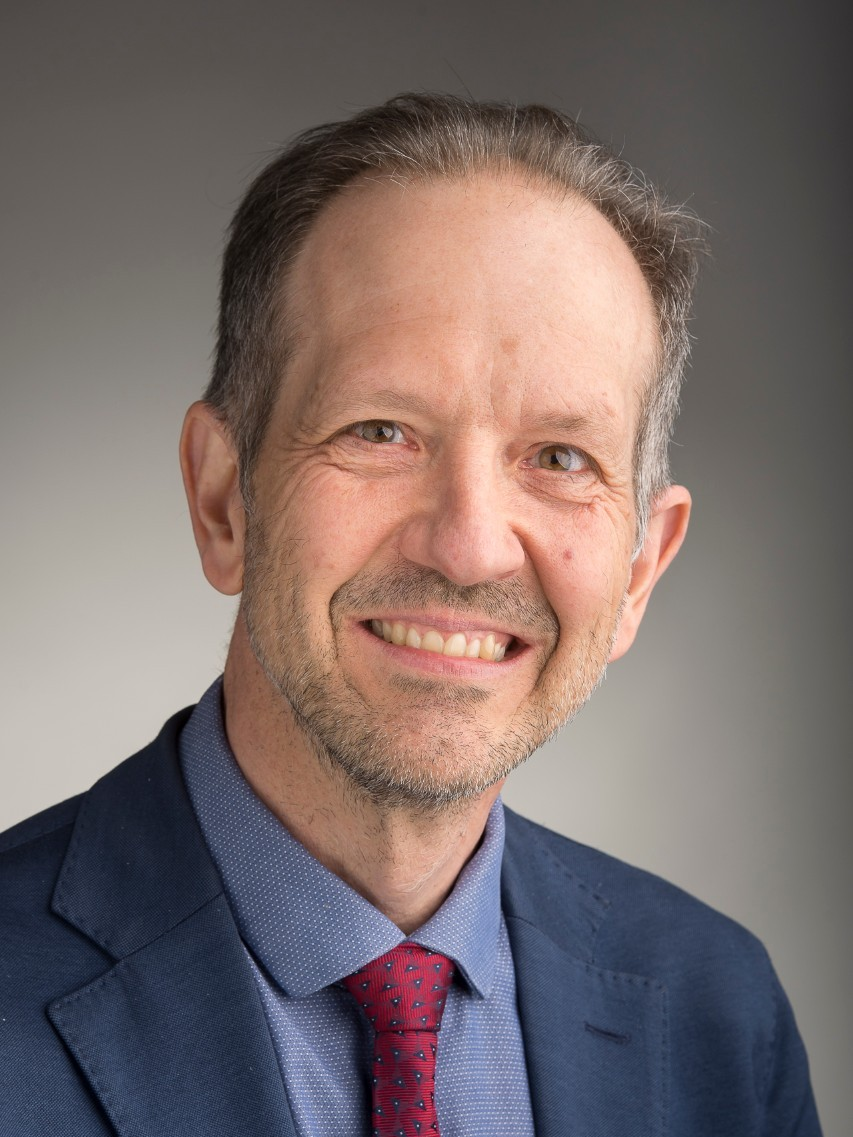
Sabrina Sartori is a Professor and Section Head at the University of Oslo's Energy Systems Section, Institute of Theoretical Astrophysics. Her research bridges energy technology and astrophysics, focusing on sustainable power solutions for remote astronomical facilities. Energy Systems Section, University of Oslo AtLAST Telescope Project Consortium Her work centers on energy storage , renewable energy integration , and materials science for hydrogen technologies, combining experimental characterization with life cycle assessments. 2025 : Dual-phase alloys for room temperature hydrogen storage 2024 : Sustainable off-grid telescope power systems Recent publications analyze offshore wind-hydrogen systems , photochromic materials , and metal hydride scalability , reflecting her multidisciplinary approach to decarbonization.
Carlos A. Ocampo Martínez is an Associate Professor in the Department of Automatic Control (ESAII) at the Universitat Politècnica de Catalunya (UPC), BarcelonaTech, Spain. He is affiliated with the Institut de Robòtica i Informàtica Industrial, CSIC-UPC, a joint research center between UPC and the Spanish National Research Council. He has been with UPC since 2011 and served as Deputy Director of IRI from 2014 to 2018. Education: PhD in Control Engineering, Universitat Politècnica de Catalunya, 2007 MSc in Industrial Automation, National University of Colombia, 2003 BSc in Electronics Engineering, National University of Colombia, 2001 His research is centered on model predictive control (MPC) , particularly constrained and distributed MPC, with applications in energy, water, and smart manufacturing. He investigates large-scale systems management, partitioning strategies, and non-centralized control architectures. His work integrates IoT frameworks for smart industrial systems. Key domains include renewable hydrogen production, fuel cell vehicles, microalgae bioreactors, and solar thermal plants. The recent publications reflect a strong trend in applying control theory to sustainable energy systems and environmental management. There is a clear focus on integrating game theory, population dynamics, and optimization into MPC frameworks for distributed and coalitional control. Applications span hydrogen infrastructure, solar energy, water irrigation, and transportation electrification, demonstrating interdisciplinary impact. Scientific Awards: Juan de la Cierva Research Fellow Dr. Ocampo-Martínez actively supervises PhD students and leads research projects such as MASHED , which focuses on digitalized energy systems with hybrid storage. He has advised students on topics including alkaline electrolyzers, hydrogen production control, and alcohol steam reformers. His grant involvement emphasizes renewable integration, smart grids, and sustainable transport. He collaborates with researchers across Europe and contributes to high-impact journals and IFAC conferences. He is a key member of the Automatic Control research group at ESAII and contributes to the strategic direction of the Institut de Robòtica i Informàtica Industrial. His team integrates control theory, optimization, and real-world industrial applications, particularly in energy and water systems.
Hossam H. H. Mousa is a Doctoral Researcher at Aalto University's Department of Electrical Engineering and Automation, School of Electrical Engineering. He also serves as an Assistant Lecturer at South Valley University's Department of Electrical Engineering since 2020. B.Sc. in Electrical Engineering (2017), South Valley University M.Sc. in Electrical Power and Machines Engineering (2020), South Valley University His research focuses on electrical power engineering, including maximum power point tracking (MPPT) for renewable energy, power systems analysis, energy management, and machine learning applications in grid optimization. He has published extensively on topics like hosting capacity estimation, unbalanced microgrids, and hydrogen storage integration. The 15 most recent articles emphasize modern power systems optimization through machine learning (2025), smart inverter applications in renewable integration (2025), and hydrogen storage's role in cold climate energy management (2025). Earlier works include best practice studies on capacitor allocation (2024) and photovoltaic system controls (2024), earning him the 2024 Best Paper Award in the International Journal of Electrical Power & Energy Systems. Best Paper Award (2024), International Journal of Electrical Power & Energy Systems His scholarly activities span energy conversion, microgrid stability, and applied machine learning, contributing to sustainable energy transition solutions. He has collaborated on international research books addressing distribution network hosting capacity (2025) and future energy systems challenges.
Prof. Sossan Fabrizio is an Associate Professor of Power Systems at HES-SO Valais-Wallis, focusing on energy storage, renewable integration, and smart grid technologies. He holds a PhD from DTU (2014) and has held roles at EPFL, ETHZ, and Mines ParisTech. His research emphasizes optimizing distribution grids, hydropower flexibility, and EV charging infrastructure. He leads projects like STOR-HY (Hybrid Hydropower Control) and STORE (Swiss Renewable Energy Storage). Education: Bachelor's/Master's in Computer Engineering, University of Genova (2010) PhD in Electrical Engineering, Technical University of Denmark (2014) Research Interests: Planning/scheduling/control of distributed energy resources, energy storage systems, and grid dispatchability. Areas include hydropower penstock stress reduction, EV charging infrastructure optimization, and model predictive control. Articles Overview: Over 20 peer-reviewed publications since 2013, focusing on grid integration of storage, renewable curtailment, and frequency control. Recent work includes optimal EV charging station planning (2023) and stress-informed MPC for hydropower plants (2022). Advising/Grants: Supervised PhD students like Stefano Cassano (defended 2023) and Biswarup Mukherjee. Secured grants including Horizon 2020 STOR-HY (2024) and Swiss Innovation Agency projects. Leads the ResiNet initiative on grid resiliency. Labs/Teams: Co-founded ModBESS (2020) for microgrid monitoring systems. Active in experimental facilities like the CIGRE MV network and Waterloo Institute’s hydropower lab.
Koen Van Dam is a Research Fellow at Imperial College London's Department of Chemical Engineering, part of the Urban Energy Systems group within the Faculty of Engineering. His work focuses on agent-based modelling of socio-technical systems to support decision-making in urban energy and transport infrastructure design. He leads the SEF05 Urban Energy Systems module in the Sustainable Energy Futures MSc program and co-organizes computational social science summer schools. Koen has held visiting researcher positions at the National University of Singapore and TU Delft, and previously served as president of Eurodoc (European council for doctoral candidates). Education: MSc in Artificial Intelligence (Vrije Universiteit Amsterdam), PhD from TU Delft (2009) with thesis on agent-based modelling of socio-technical systems. Research interests emphasize integrating spatial/temporal data across energy and transport sectors to model urban systems at multiple scales. Projects include: FCDO Climate Compatible Growth (CCG) project COP26 Rapid Response Facility technical lead EPSRC-funded Digital City Exchange (DCE) and IDLES projects resilience.io (DFID project) Key contributions include decision support tools for: Electric vehicle infrastructure planning Low-carbon energy systems Smart district design Post-pandemic urban resilience Awards: None explicitly listed, though his extensive project leadership indicates recognition in sustainability research. Advising: Supervised over 40 MSc/MEng projects on smart cities, energy demand, EVs, bioenergy, and resilient infrastructure. Active in education through master's course leadership and international summer schools. Labs/Teams: Affiliated with Energy Futures Lab, Network of Excellence in Air Quality, and the Artificial Intelligence Climate Compatible Growth initiative.
Felix Urs Erich Freitag is an Associate Professor in the Department of Computer Architecture at the Barcelona School of Informatics (FIB), Universitat Politècnica de Catalunya (UPC). He is a key member of the CNDS - Computer Networks and Distributed Systems research group, where he actively contributes to projects in cloud computing, peer-to-peer systems, and IoT networking. His primary research interests include Cloud Computing , Peer-to-Peer (P2P) Systems , Internet of Things (IoT) , LoRa Mesh Networks , Federated Learning , Edge Computing , and Blockchain for IoT . His work spans from fundamental networking protocols to applied research on decentralized systems and sustainable digital technologies. He has also contributed to educational innovation through open project-based learning methodologies. Dr. Freitag's recent publications highlight a strong focus on integrating AI with low-power IoT networks, particularly using LoRa technology for federated learning and secure, decentralized identity solutions. His work demonstrates a clear trend towards enabling intelligent, trustworthy, and resource-efficient distributed systems at the network edge. Scientific Awards: 1er Premi UPC de Ciència Oberta 2024 He has been involved in significant research and innovation projects, including European H2020 and Horizon Europe initiatives, often in collaboration with colleagues like Leandro Navarro and Roque Meseguer. His research is supported by competitive grants focused on digital, industry, and space technologies. He also contributes to educational innovation projects and has supervised student theses, fostering a collaborative research environment within the UPC. His work is associated with the development of experimental testbeds and software libraries for LoRa mesh networks and federated learning, indicating a hands-on approach to building and validating distributed systems.
Yiheng Hu is a Lecturer in Electrical Engineering at the Department of Engineering, School of Computing and Engineering, University of Huddersfield. She holds a PhD in Transient Energy Storage Systems, funded by the UK Government Scholarship, and has completed postdoctoral roles at University College Dublin and the University of Manchester. B.Eng. in Mechatronics, Central South University (2012) M.Sc. in Power Systems, University of Manchester (2013) PhD in Transient Energy Storage Systems, University of Huddersfield (2021) Her research focuses on electrochemical energy storage systems, power electronics, and renewable energy integration, with applications in AI-driven battery management systems and grid stability. Recent work includes transient energy storage for fast frequency response and modeling approaches for grid-connected storage technologies. Key trends in her publications include advancements in energy storage materials, AI-optimized grid integration, and real-time simulation tools. Her work bridges power electronics, renewable systems, and sustainable energy frameworks. Scientific awards include recognition in the Top 50 Women in Engineering 2022 (UK) and the UK Government Scholarship for her PhD. She actively mentors through global energy programs. Mentor, Women in Energy Storage Programme (2024-2025) Mentor, Women in Renewable Energy in Africa (2023) Mentor, Women in Energy Storage Programme (2020-2021) She supervises PhD students on distributed energy storage integration, permanent magnet machine design for fuel cell vehicles, and AI-enhanced disaster management systems. She contributes to climate initiatives through the Women’s Engineering Society (WES) Climate Emergency Group.
Dr. Changlong Wang is a Research Fellow at Monash University's Faculty of Engineering, specializing in Civil & Environmental Engineering. He holds additional roles as a Climate Futures Fellow at the University of Melbourne and an Academic Visitor at the University of Oxford. His research focuses on decarbonization strategies, hydrogen technology, green metals production, and energy market design. Key contributions include the Hydrogen and Green Steel Economic Fairways Mapper, which supports Australia's National Hydrogen Strategy, and leadership in international energy collaboration through the IEA Hydrogen TCP. He has been honored with the 2023 Australian Eureka Prize and the 2024 Monash Engineering Dean’s Award for Research Excellence. Education: Bachelor of Engineering with Honours from ANU; PhD from the University of Melbourne. Research highlights include leading the South Australian Green Iron Supply Chain Study with the Port of Rotterdam, co-leading the 'Hydrogen for Iron/Steelmaking' task, and serving as Deputy Lead for the SEVI project's grid stability analysis. He has submitted 7 policy consultations and chairs the 2026 Australian Hydrogen Research Conference organizing committee. His work contributes to UN SDGs 7 (Affordable Clean Energy), 9 (Industry Innovation), 11 (Sustainable Cities), and 13 (Climate Action).
J.A. La Poutré is a Full Professor at Delft University of Technology and a Scientific Staff Member at CWI (Centrum Wiskunde & Informatica) in the Intelligent and Autonomous Systems group. He holds part-time positions and is involved in research on multi-agent systems and computational intelligence for smart energy systems, with a focus on market-based optimization and fairness in network congestion management. PhD in computer science (Utrecht University, 1991) MSc in mathematics (TU Eindhoven, 1986) His research spans algorithm design, game theory, and reinforcement learning applied to energy systems, particularly smart grids and market mechanisms. Recent publications address cybersecurity threats in power networks, auction-based energy trading, and AI integration in media sectors. The 2019–2025 publications highlight his work in combining game theory with smart grid optimization , covering topics such as topology attacks , demand-side bidding , and fair congestion management . Papers frequently involve reinforcement learning , metaheuristics , and market mechanisms . Scientific Awards : Best paper award at GECCO-2015 KNAW fellow (Utrecht University, 1991–1997) He has led funded projects like Computational Capacity Planning in Electricity Networks (STW program) and co-chairs the Commit2Data Energy division. La Poutré also serves as Vice President of ERCIM (European Research Consortium for Informatics and Mathematics).



%20/sabrinsa/sabrinaweb.jpg)