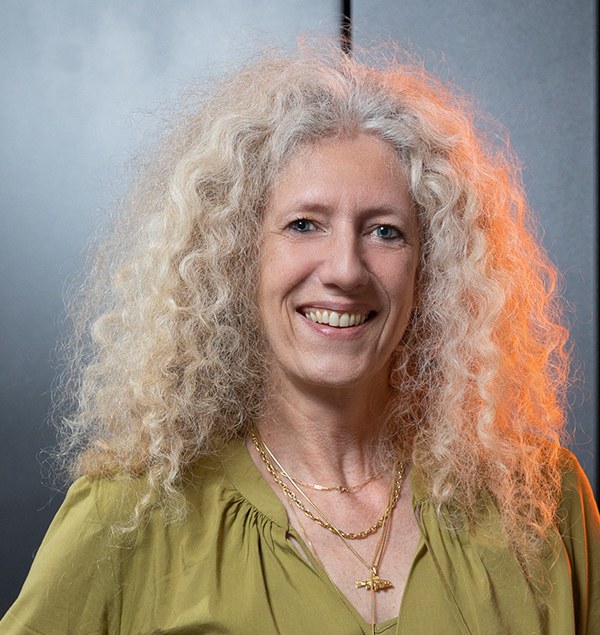
Dr. Naser Ojaroudi Parchin is a Lecturer at the School of Computing Engineering and the Built Environment , Edinburgh Napier University. His work focuses on antenna systems for 5G/6G wireless networks , Internet of Things (IoT) , and microwave power transfer . Research Interests : 5G/6G antenna design IoT wireless power solutions Metamaterials and beam-steering Cognitive radio systems Recent Publications : 15 most recent works span THz phased arrays , SWIPT systems , and compact MIMO designs Key themes: beam-steering , end-fire radiation , and metamaterial integration Awards : No specific awards mentioned Advising : Supervised PhD student: Haleh Jahanbakhsh Basherlou (2023) Second supervisor for: Abubakar Suleiman (2022) Projects : Lead project: Device-based e-Assistant for People (DeAP) (2025, £7,500) Feasibility Study of Wireless Microwave Power Transfer (2022-2023, £14,999)
Sancho Salcedo Sanz is a Full Professor at the Universidad de Alcalá, affiliated with the Signal Theory and Communications Department and the GHEODE Research Group. His work focuses on applying machine learning and optimization techniques to energy systems, climate science, and environmental modeling. He holds PhDs from Universidad Complutense de Madrid (2019) and Universidad Carlos III de Madrid (2002). Key research interests include deep learning for energy price prediction, spatio-temporal climate analysis, and hybrid models for renewable energy forecasting. His GHEODE group develops optimization algorithms for network design and distributed systems. Recent publications highlight advancements in extreme weather prediction, smart grid optimization, and explainable AI for environmental monitoring. He has pioneered methodologies like Autoencoder-based flow analogues for heatwave reconstruction and multi-method ensembles for energy demand modeling. Labs/Teams: Leader of the GHEODE Group, specializing in modern heuristics and network design. Collaborates extensively on interdisciplinary projects combining AI with environmental and engineering applications.
Prof. Dr. Kristel Michielsen is a Professor of Quantum Information Processing at RWTH Aachen University and holds leadership roles at Forschungszentrum Jülich. She leads the division HPC for Quantum Systems and heads the Jülich UNified Infrastructure for Quantum computing (JUNIQ). As Group Leader of the Research Group Quantum Information Processing, her work focuses on quantum annealing, quantum simulation, and modular hybrid HPC-quantum computing. She is also Spokesperson of the Helmholtz Information Program 1 and a Principal Investigator in Topics 1 and 2. Affiliations: RWTH Aachen University, Forschungszentrum Jülich (IAS/JSC), JUNIQ Key Roles: Head of HPC for Quantum Systems, JUNIQ Director, Quantum Information Processing Group Leader Her research emphasizes quantum computing applications in optimization, benchmarking, and hybrid supercomputing-quantum systems. She pioneers quantum-annealing solutions for real-world problems like power grid partitioning and transportation logistics. Recent work explores error mitigation, noise modeling in D-Wave systems, and quantum-classical workflows.
David Palma is an Associate Professor at the Department of Information Security and Communication Technology , Faculty of Information Technology and Electrical Engineering , Norwegian University of Science and Technology (NTNU). His research focuses on next-generation networking paradigms, including intent-based networking , knowledge-driven management , and IoT device automation . Key research interests include: Human-centric Internet of Things (IoT) Ontology-based network management Cloud/Edge/Fog computing for IoT Arctic and satellite communication 5G integration in smart grids His recent publications (2024-2019) highlight trends in knowledge graphs for network compliance, XR applications in critical sectors, UAV-based emergency networks , and 5G-enabled smart grid protection . Articles also explore Arctic connectivity via satellite swarms and energy-efficient IoT management.
William Holderbaum is a Professor at the Department of Electrical Engineering, School of Engineering, University of Reading. His research spans control systems, energy management, functional electrical stimulation, robotics, and wireless power transfer, with over 95 publications since 2002. Research Interests: His work integrates theoretical control theory with practical applications in renewable energy, biomedical engineering, and smart systems. He has made significant contributions to microgrid protection, energy storage control, optimal power management for electric cranes, and FES for paraplegia rehabilitation. His recent work explores soft robotics using electroactive polymers and intelligent sensing for environmental and health monitoring. Publication Trends: His recent articles (2021–2025) reflect a multidisciplinary focus, combining engineering, materials science, and healthcare. Key themes include sustainable energy systems, intelligent control, wearable sensors, and novel computing paradigms using smart materials. Scientific Awards: No awards mentioned in the provided text. Advising and Grants: He has collaborated extensively with researchers such as F. Alasali, T. Yunusov, M. Alkowatly, and V. Becerra, suggesting a strong mentoring role. His work on energy storage, smart grids, and FES implies involvement in funded research projects, though specific grants are not listed. Labs and Teams: He is part of research teams focused on control systems and energy at the University of Reading, collaborating with the group led by B. Potter and V. Becerra. His work with biomedical applications suggests ties to interdisciplinary health-tech initiatives.
Jean-Yves Le Boudec is a Professor at École Polytechnique Fédérale de Lausanne (EPFL), affiliated with the School of Computer and Communication Sciences and the Institute of Electrical Engineering. He has been a key figure in advancing the theory and application of network calculus and deterministic networking, contributing significantly to standards such as IEEE Time-Sensitive Networking (TSN) and IETF DetNet. His research focuses on network calculus , time-sensitive and deterministic networking , traffic regulation , worst-case delay analysis , and cyber-physical systems , with cross-cutting applications in smart grids , real-time communication , and network security . He has co-authored foundational texts on network calculus and developed theoretical frameworks for traffic regulators, service curves, and delay bounds in complex networked systems. The recent publications highlight a strong trend in analyzing and improving performance guarantees in deterministic networks, including scheduling mechanisms like Deficit Round-Robin and Cyclic Queuing and Forwarding, traffic shaping via interleaved regulators, and security against time-synchronization attacks in power systems. The work spans theoretical modeling using stochastic and min-plus/max-plus algebra, practical algorithm design, and application to critical infrastructure. IEEE Fellow Le Boudec has advised numerous researchers and PhD students, including Ehsan Mohammadpour, Ludovic Thomas, and Seyed Mohammadhossein Tabatabaee. His collaborative projects often involve grants related to European and Swiss research initiatives in networking and smart grid technologies. He leads a research group focused on networked systems at EPFL, contributing to both theoretical advances and real-world implementations in industrial and energy-critical networks. His lab work centers on modeling and verification of time-sensitive network behaviors, integrating formal methods with practical experimentation. The team investigates regulators, shapers, and synchronization mechanisms, aiming to ensure robustness, predictability, and security in next-generation communication infrastructures. Future work continues to explore the interplay between communication, control, and energy systems in highly reliable environments.
Vahe Caliskan is a Clinical Professor in the Department of Electrical and Computer Engineering at the University of Illinois at Chicago (UIC), affiliated with the College of Engineering. His office is located at 1009 SEO Building, 851 S. Morgan St, Chicago, and he can be contacted at 312.996.6013 or vahe@uic.edu. Education: Sc.D. in Electrical Engineering and Computer Science, Massachusetts Institute of Technology (2000) M.S. in Electrical Engineering and Computer Science, University of Illinois at Chicago (1993) B.S. in Electrical Engineering and Computer Science, University of Illinois at Chicago (1990) Research Focus: Dr. Caliskan specializes in power electronics, analog circuit design, automotive electronics, and computer-aided modeling/simulation. His work bridges theoretical analysis and practical applications, particularly in automotive power systems and advanced converter topologies. Publication Trends: His scholarly output (1991-2005) demonstrates consistent focus on power conversion technologies, automotive electrical systems, and control methodologies. Key themes include three-phase rectifiers, switched-mode power supplies, resonant converters, and innovative automotive alternator designs, often emphasizing modeling precision and efficiency optimization. Awards and Honors: Faculty Advising Award, UIC College of Engineering (2017) Faculty Teaching Award, UIC College of Engineering (2016) EEWeb Featured Engineer Spotlight Interview (2015) Silver Circle Award for Excellence in Teaching, UIC (2012) Professional Engagement: Dr. Caliskan maintains an active conference presence, presenting at IEEE events on automotive power systems and converter technologies. His collaborations include researchers from MIT and industry partners in power electronics.
Feije de Zwart is a dedicated researcher at Wageningen University & Research, focusing on Horticulture Technology. With a robust presence in horticultural engineering, de Zwart contributes extensively to the fields of energy efficiency, greenhouse climate control, and sustainable crop production. Active in Artificial Intelligence and Horticulture research domains Current projects emphasize water resource management and hydrogen energy integration in greenhouses De Zwart's research spans Arid Zones , Crop Production , and Irrigation , with a strong emphasis on data-driven approaches and technological innovation in controlled-environment agriculture. Recent publications analyze energy-saving screen materials , dynamic climate control , and autonomous greenhouse systems , reflecting a trend toward AI integration and microclimate optimization.
Paolo Marocco is a Fixed-term Assistant Professor at the Department of Energy (DENERG) of Politecnico di Torino, Italy. His work focuses on hydrogen-based mobility solutions, renewable energy systems, and techno-economic/environmental sustainability analysis. He serves on teaching committees for Electrical and Energy Engineering, Mechanical Engineering, and Aerospace Engineering programs. Academic Role: Assistant Professor (Fixed-term) Department: Department of Energy (DENERG) Teaching: Hydrogen Laboratory, Electrical Energy Storage Systems, Applied Thermodynamics Research spans four key areas: Hydrogen Infrastructure : Green hydrogen production for ammonia synthesis, aircraft propulsion, and rail transport decarbonization. Projects include SOFFHICE (SOFC hybridization in maritime engines) and PNRR initiatives for industrial decarbonization. Energy Storage Systems : Hydrogen-battery hybrid storage, virtual thermal inertia storage, and optimal dispatch models for wind-electrolysis systems. Industrial Decarbonization : Semiconductor manufacturing, steel industry high-temperature heat substitution, and biogas carbon recovery. Policy Integration : Bridging technical research with European green policy targets through Italian energy modeling. He supervises 7 PhD students across Energetics, Mechanical Engineering, and Energy/Nuclear Engineering programs. Current projects include SOFFHICE (2023-2026) and PNRR-funded industrial furnace decarbonization (2023). Recent publications analyze hydrogen train feasibility, aviation fuel cells, and storage system optimization.
Meng Yuan is an Assistant Professor in the Department of Sustainability and Planning at The Technical Faculty of IT and Design, Aalborg University, Denmark. With a strong focus on sustainable energy systems, Dr. Yuan contributes significantly to the university's research profile in green energy solutions and climate change mitigation. Dr. Yuan's research interests center on Smart Energy Systems, with particular expertise in renewable energy integration, district heating systems, and the development of advanced energy system models. Their work spans techno-economic and environmental analysis of low-carbon technologies at local, regional, and national scales, contributing directly to multiple UN Sustainable Development Goals, particularly those related to affordable and clean energy, industry innovation, and climate action. The publication record shows a strong focus on renewable energy transition pathways, with particular emphasis on hydrogen technologies, district heating optimization, and energy storage solutions. Dr. Yuan's research demonstrates a consistent trajectory toward increasingly complex energy system modeling and analysis, with recent work exploring sector coupling and cross-border energy solutions. "Best Paper Award" at the 1st African Conference on Sustainable Development of Energy, Water and Environment Systems (SDEWES), May 2025 "Best Presenter" at the 10th International Conference on Low Carbon Asia (ICLCA), September 2024 Beijing Outstanding Graduates Award, June 2022 China National Scholarship at PhD level, 2020 Top 10 Outstanding Student Award at CUPB, 2020 As an active researcher, Dr. Yuan serves as an Ethics editor for Energy (Elsevier) and Sustainable Energy Technologies and Assessments (Elsevier), and has participated in numerous peer review activities. Current research projects include CARMA-Green Fuels Cross Mission Carbon Management, INNO-CCUS INFRASTRUCTURES, and ActRes: Agency for resilience – Making people and energy systems fit for climate change and crises, demonstrating significant engagement with both European and international research initiatives.
Professor Zhe Chen is a distinguished academic at Aalborg University's Faculty of Engineering and Science, where he leads research in Electric Power Systems and Microgrids within the Intelligent Energy Systems and Flexible Markets department. With an extensive publication record spanning over two decades and more than 1,200 publications, he has established himself as a leading expert in power engineering and renewable energy systems. Professor Chen's research focuses on Wind Turbine Engineering, Power Engineering, Control Strategy, Wind Power Engineering, Energy Engineering, and Reinforcement Learning. His work bridges theoretical advancements with practical applications in smart grid technology and microgrid systems. His research interests center around developing innovative solutions for renewable energy integration, power system stability, and efficient energy management. His recent publications demonstrate a strong trend toward integrating artificial intelligence with traditional power engineering, particularly in applying deep reinforcement learning to power system control, state estimation with noisy data, and optimization of power electronic converters. His work shows increasing focus on carbon emissions optimization, thermal management in power electronics, and the application of advanced neural network architectures to energy systems. MPCE 2023 Best Paper Award for research on reinforcement learning applications in electric vehicles MPCE 2022 Best Paper Award for distribution network optimization MPCE 2021 Best Paper Award for reinforcement learning in energy systems WATAB Best Paper Award 2005 for offshore wind farm research IEEE Fellow recognition for contributions to power electronics and renewable energy systems Professor Chen has supervised 27 PhD students throughout his career, demonstrating his commitment to academic mentorship. His current research is supported by significant grants including the Erasmus+ funded S3SF project (Smart Energy Solutions for a Sustainable Future) and multiple projects focused on machine learning-based stability analysis for multi-energy systems. His collaborative work spans numerous international partnerships, with recent projects involving researchers from China, Europe, and other global institutions. Professor Chen leads a research team focused on intelligent energy systems, working on advanced control strategies for microgrids, power quality analysis, and the integration of renewable energy sources into existing power infrastructure. His team is particularly known for innovative approaches to wind power integration and DC microgrid technologies.
Prof. Dr.-Ing. Thomas Stetz is a Professor for Electrical Power Engineering at the Technical University of Mittelhessen (Gießen, Germany), specializing in Smart Grids and Energy Storage . He is a Scientific Director of the Institute for Transformation Tasks in Energy Economics and Energy Technology (ITEE) and Project Group Leader at TransMIT GmbH, Gießen. PhD in Electrical Power Engineering (University of Kassel, 2013) Former Research Group Leader at Fraunhofer IWES (Kassel, Germany) His research focuses on technical and economic aspects of voltage control , grid integration of photovoltaics , and smart grid technologies . He has led international projects with partners like the University of Costa Rica and Ingolstadt University of Applied Sciences, funded by BMBF , BMWi , and DFG . Key article trends include reactive power optimization , automated grid planning , and storage system integration for renewable-heavy grids. His scientific awards highlight his contributions to global PV grid integration research. Best Presentation Award (CIER 2017, Havana) Science Award (German Chamber of Industry and Commerce Kassel, 2014) Prof. Stetz supervises PhD and undergraduate students and contributes to industry-standard guidelines through collaborations with Stadtwerke Gießen AG and Bayernwerk. His work bridges technical innovation and policy development for the energy transition.
Dr. Almas Shintemirov is a Research Fellow at Aalto University's Department of Electrical Engineering and Automation, specializing in robotics, control systems, and human-robot interaction. His research focuses on intelligent robotics, with emphasis on Real-time motion prediction for collaborative robots Nonlinear control algorithms for safe human-robot interaction Open-source robotic hardware design Deep learning applications in autonomous systems
Dr. Ronald Huisman is an Associate Professor at the Finance Section of the Department of Economics , Faculty of Law, Economics and Governance , Utrecht University . With extensive research focused on Energy Markets, Renewable Integration, and Financial Risk , he contributes to the Pathways to Sustainability initiative, particularly in Energy Transition studies. His work bridges Economic Theory with Energy Policy , addressing critical challenges in modern power markets. Key research themes: Energy Economics, Climate Risk, Market Design Active in: Benelux Association for Energy Economics Teaches: Impact Investing courses Research Trends: Recent publications examine climate change risk in municipal financing, extreme energy price dynamics under renewable intermittency, and carbon-energy market interactions in China. Earlier work established foundational models for electricity futures pricing , overconfidence measurement , and regime jumps in energy prices.
Aidan Bharath is a Researcher III in Mechanical Engineering at the National Renewable Energy Laboratory (NREL), affiliated with the Center for Energy Conversion and Storage Systems. His work focuses on marine renewable energy systems, particularly wave and tidal resource assessment, turbulent computational fluid dynamics, and wave energy converter array modeling. Education: Ph.D. in Maritime Engineering from the Australian Maritime College. Bharath's research explores predicting non-tidal components of tidal flows, numerical investigation of wave impacts on tidal devices, and energy loss in wave energy converter arrays. At NREL, he investigates grid integration benefits of marine renewable energies and industry innovation. His recent publications (2023–2025) highlight expertise in fatigue analysis of tidal turbines, data acquisition systems for marine energy, resistive control in hydraulic power take-off systems, and experimental data collection for wave energy converters. Keywords span Renewable Energy, Mechanical Engineering, and Computational Fluid Dynamics. Key collaborations include projects with researchers like M. Bichanich, R. Raye, and W. Sheng, focusing on grid integration, cost-effective marine energy technologies, and turbulence mitigation strategies. Research activities at NREL involve resource assessment, experimental validation of energy converters, and modeling frameworks for optimizing energy capture and minimizing losses in marine environments.