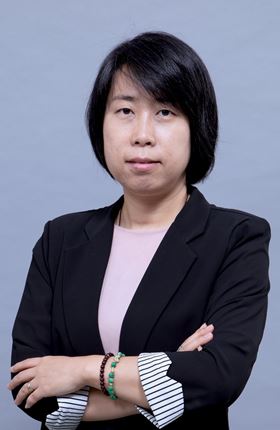
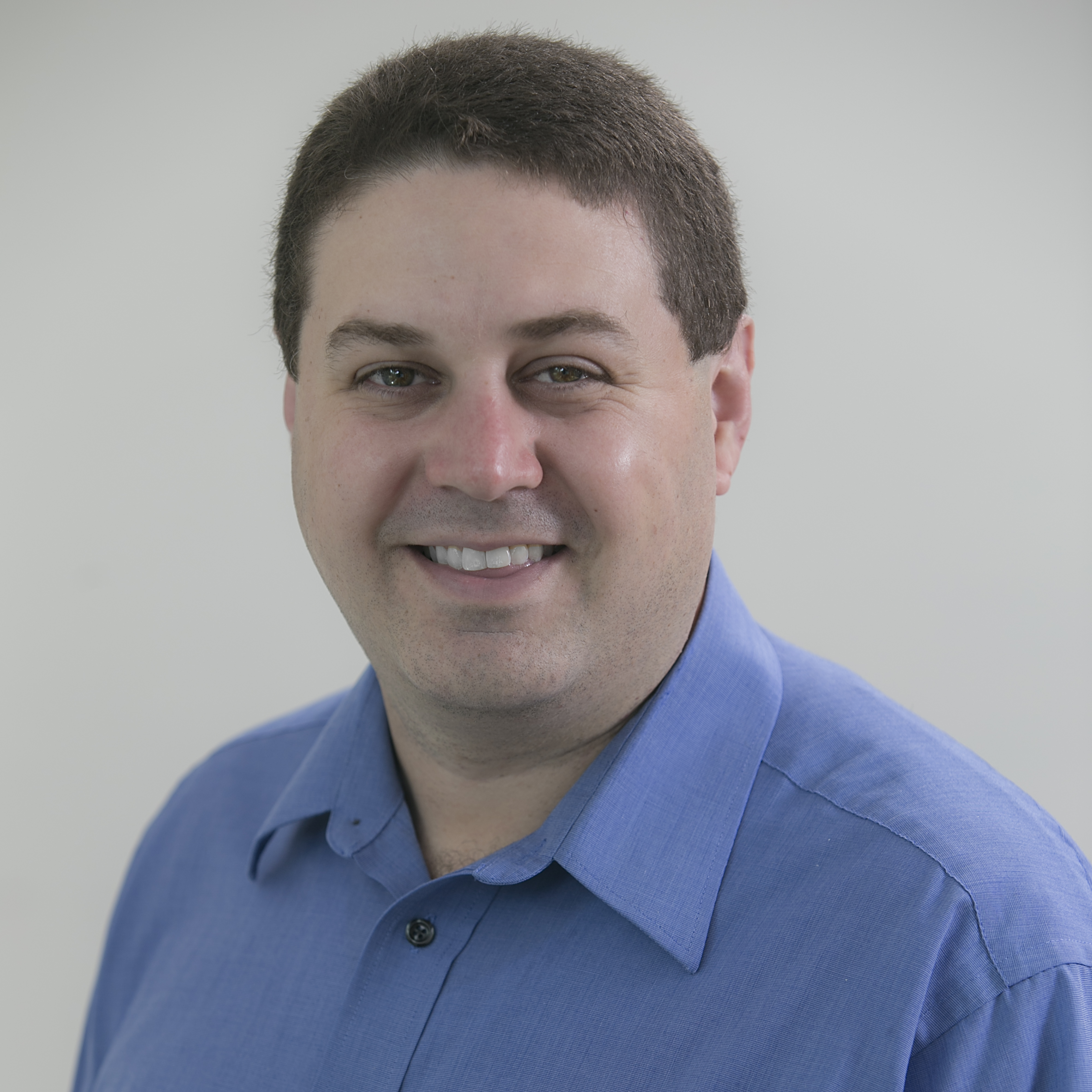
Prof. Yan Tina Luximon is a Full Professor and Associate Dean (Research) at the School of Design, The Hong Kong Polytechnic University. She chairs the School Research Committee, leads the Asian Ergonomics Design Lab, and serves as Deputy Discipline Leader for BA (Product Design). Her work bridges ergonomics, AI design tools, and 3D human modeling in cross-cultural contexts. Education: PhD in Ergonomics from The Hong Kong University of Science and Technology Research interests span Ergonomics in product design 3D digital human modeling for AI applications Anthropometry and cultural design differences Statistical modeling for head/face product development Human-computer interaction and AI visualization Recent publications focus on AI-enhanced 3D head modeling, ergonomic healthtech products, and cross-cultural design psychology, with applications in robotics, mobile technology, and medical devices. Scientific awards include: Gold Medal with jury congratulations at Geneva Inventions 2024 Silver Award at IDEA 2023 for adaptive eyewear design Best Innovation Award at ACED Japan 2017 She supervises postgraduate research and leads projects funded by the General Research Fund (RGC GRF) and Laboratory for AI in Design, including AI Powered Ergonomic Product Design (2025) and 4D Head Movement Prediction (2024).
Alberto Oliveri is an Associate Professor at the University of Genoa in the Department of Naval, Electrical, Electronic and Telecommunications Engineering. He teaches courses including Circuits and Systems, Nonlinear Circuits and Systems, Power Management, and Elements of Electrical Technology for undergraduate and graduate programs in Electronic Engineering, Information Engineering, Industrial Technologies, and Chemical Engineering. His research focuses on advanced topics in power electronics and control systems, with particular emphasis on: Modeling and optimization of magnetic components (inductors) for switch-mode power supplies FPGA implementation of nonlinear model predictive control algorithms Synthetic inertia solutions for renewable energy grid integration Embedded control systems for power converters Advanced modeling of ferrite-core and amorphous-core inductors His recent publications (2022-2025) demonstrate a consistent focus on improving power conversion efficiency through advanced control strategies and hardware implementation. Research themes include predictive control optimization, magnetic component characterization under saturation conditions, renewable energy grid support functions, and embedded algorithm development for real-time power system monitoring.
Samarjit Chakraborty is the William R. Kenan, Jr. Distinguished Professor in the Department of Computer Science at the University of North Carolina at Chapel Hill. He previously held the Chair of Real-Time Computer Systems at the Technical University of Munich (2008–2019) and was an assistant professor at the National University of Singapore (2003–2008). His research spans real-time embedded systems, cyber-physical systems (CPS), and automotive security. Research Interests include distributed embedded systems, hardware/software co-design, low-power systems, energy storage, electromobility, and sensor network-based information processing. His work addresses challenges in scheduling algorithms for autonomous vehicles, timing predictability in automotive networks, and safety-critical controller implementations. Recent Publications highlight advancements in Timing analysis for automotive networks Energy modeling of Bluetooth Low Energy Autonomous vehicle perception computing Security in automotive systems Flexible manufacturing with process dynamics Scientific Awards include the ETH Medal, European DAAD Outstanding Doctoral Dissertation Award, multiple best paper awards at conferences (ISLPED, ICCD, RTCSA, etc.), the 2023 Humboldt Professorship, and IEEE Fellowship. Advising active PhD students: Clara Hobbs, Shengjie Xu, Sharmin Aktar, and postdoc Enrico Fraccaroli. His research is supported by NSF grants and industry partnerships with General Motors, Intel, Google, BMW, Audi, Siemens, and Bosch.
Ghyslain Gagnon is a Professor in the Department of Electrical Engineering at École de technologie supérieure (ÉTS) in Montreal, Canada. He leads research activities within the LACIME – Communications and Microelectronic Integration Laboratory, focusing on cutting-edge developments in microelectronics, sensors, and communication systems. His work bridges theoretical research and practical applications across multiple domains including health technologies, wireless communications, and quantum engineering. Education: B.Ing. from École de technologie supérieure M.Ing. from École de technologie supérieure Ph.D. from Université de Carleton Professor Gagnon's research spans several interconnected domains with emphasis on Radiofrequency circuits and antennas, Microelectronics, Wireless communications, Sensors and monitoring systems, Machine learning applications, Health technologies, and Quantum engineering. His work demonstrates a strong commitment to translating theoretical concepts into practical solutions with real-world impact, particularly in the areas of health monitoring systems and advanced communication technologies. His recent publications reveal a clear trajectory toward increasingly interdisciplinary research, combining traditional electrical engineering with machine learning, health monitoring, and quantum technologies. The trend shows growing emphasis on practical applications in automotive safety systems, wireless communications for next-generation networks, and health monitoring technologies that leverage flexible electronics and novel sensor designs. Professor Gagnon has successfully supervised numerous graduate students through their doctoral and master's research, with recent theses focusing on smart hearing protection devices, machine learning applications, energy monitoring systems, and flexible sensor technologies. His supervision record demonstrates consistent productivity and relevance to contemporary engineering challenges. He is an active member of the LACIME research laboratory, which focuses on six key areas: Functional materials, Micro- and nanofabrication processes, Conception and design of integrated circuits, Design and fabrication of hybrid components, Photonic and electronic microsystems, and Signal processing and communication. This environment provides students with access to cutting-edge tools and fosters innovation through interdisciplinary collaboration.
Łukasz Szabłowski is a habilitated doctor (dr hab. inż.) and academic researcher at the Institute of Heat Engineering (ITC) of Warsaw University of Technology , working within the Department of Power Machinery and Equipment at the Faculty of Mechanical Engineering, Power and Aerospace Engineering. He serves as an Editor and Journal Manager for the Journal of Power Technologies and actively contributes to the academic community through research, teaching, and supervision of student projects. Dr. Szabłowski's research focuses on distributed energy systems, energy storage technologies, and the application of artificial intelligence in energy management . His work spans multiple aspects of modern energy systems including Compressed Air Energy Storage (CAES) , Liquid Air Energy Storage (LAES) , hydrogen energy systems , and mathematical modeling of energy conversion processes . He has developed expertise in exergy analysis of energy systems and the application of artificial neural networks for control strategies in distributed generation units. His research addresses critical challenges in integrating renewable energy sources, improving energy efficiency, and developing innovative storage solutions for modern power systems. His most recent publications demonstrate a strong focus on advanced energy storage technologies and intelligent control systems . The 2023 habilitation monograph represents a comprehensive analysis of mathematical modeling and energy/exergy assessment of compressed air energy storage systems. His work in 2018-2020 expanded into comparative analysis of different storage technologies, neural network applications for fuel cell control, and dynamic modeling of solar heating plants with seasonal storage. These publications consistently appear in high-impact journals such as Energy , Renewable Energy , and the International Journal of Hydrogen Energy , reflecting the significance and quality of his research contributions. Dr. Szabłowski actively supervises student projects with topics including hydrogen-powered gas turbines , combined cycle systems , CAES and LAES energy storage , steam reforming processes , and artificial neural network applications in energy systems. He utilizes advanced simulation tools including GateCycle , Aspen HYSYS , Matlab , and MS Excel with PPIE for his research and teaching activities. His work bridges theoretical analysis with practical applications in modern energy systems, contributing significantly to the development of sustainable energy technologies in Poland and internationally.
Cécile Münch-Alligné is a Professor in Hydraulic Energy at the University of Applied Sciences and Arts Western Switzerland (HES-SO) in Sion, where she serves as the Head of the Hydroelectricity Research Group and the Renewable Energy Program. She leads the Hydro Alps Lab, which conducts applied research in hydropower combining experimental and numerical approaches. Her work focuses on enhancing the flexibility of both small and large hydropower plants, with particular emphasis on adapting these systems to the evolving energy landscape and integration of renewable energy sources. Her educational background includes a BSc in Energy and Environmental Techniques, an MSc in Engineering, and a BSc in Industrial Systems, all from HES-SO Valais-Wallis. Her research spans multiple domains within hydraulic engineering and renewable energy systems, with particular expertise in CFD simulation, numerical methods, and hydraulic machine design. Münch-Alligné's research interests primarily center around improving hydropower flexibility through innovative approaches such as hydraulic short-circuit operating modes, variable speed operation, and energy recovery systems in water networks. She investigates both large-scale pumped storage power plants and micro-hydropower systems for urban water networks, with a strong focus on practical implementation and commercialization of research findings. Her work bridges theoretical modeling with experimental validation to address real-world challenges in the energy transition. Her research has been published extensively in leading journals, covering topics from Pelton turbine dynamics and Francis turbine vortex analysis to micro-turbine implementations in drinking water networks. The publications reveal a clear trend toward enhancing operational flexibility of hydropower systems to better integrate with intermittent renewable energy sources, with increasing emphasis on practical demonstration projects and commercial applications. As Principal Investigator, she has led multiple significant research projects including the SCCER 4 WP 3.2.0 2017-2020 (Supply of Electricity), Hydrolienne pour canaux artificiels Centrale de Lavey, and SOLUTION DE TRANSFERT D'ENERGIE PAR POMPAGE-TURBINAGE A PETITE ECHELLE. These projects, totaling over 2 million CHF in funding from sources including CTI, OFEN, and industrial partners, demonstrate her ability to secure substantial research funding and collaborate effectively with both academic and industry partners. Münch-Alligné leads the Hydro Alps Lab research team, which includes numerous researchers such as Steiner Amandus, Walpen Olivier, Vaccari Aldo, and others. Her collaborative approach extends to partnerships with institutions like Stahleinbau GmbH and The Ark Energy, facilitating the transfer of knowledge from research to industry application. The lab's work spans from fundamental fluid dynamics research to full-scale demonstration projects, creating a comprehensive pipeline from theory to practical implementation.
Tanvir Arafin serves as an Assistant Professor in the Department of Cyber Security Engineering at George Mason University, where his research focuses on hardware security and trust mechanisms for emerging computing platforms. With publications in premier venues including IEEE Transactions on Very Large Scale Integration Systems, IEEE Transactions on Computers, and ACM International Conference on Computer-Aided Design, he addresses critical security challenges in next-generation systems through rigorous hardware-software co-design approaches. His research portfolio spans Hardware Security, Trusted Computing, and IoT Security, with specialized expertise in Side-Channel Attacks and Secure Hardware Design. Dr. Arafin investigates electromagnetic side-channel vulnerabilities in O-RAN networks, develops countermeasures for autonomous vehicle cybersecurity, and pioneers RRAM-based security solutions for memory-constrained devices. His work bridges theoretical security models with practical implementations, emphasizing real-world applicability in edge computing environments and autonomous navigation systems. Current projects explore machine learning integration for anomaly detection in connected vehicles and secure acceleration of cryptographic operations. Analysis of Dr. Arafin's 2022-2025 publications reveals strategic focus areas: electromagnetic fingerprinting for radio units in O-RAN (2025), spatial acceleration of Kolmogorov-Arnold Networks (2025), and NTT-based cryptography accelerators (2024). His research demonstrates consistent innovation in securing autonomous navigation systems and edge devices, with emerging work on in-memory computing architectures using resistive memory technologies. Key trends include hardware-centric defense against model inversion attacks, voltage overscaling for lightweight authentication, and robust multi-robot coordination in dynamic environments. Scientific Awards: No scientific awards, fellowships, or medals were documented in the source materials. Dr. Arafin leads significant collaborative research, including the NSF CISE-MSI grant (DP: CNS) for edge-based robust multi-robot systems. His educational initiatives feature Capture-the-Flag competitions targeting underrepresented students in cybersecurity. Current grant activities emphasize practical security solutions for autonomous navigation, multi-robot coordination, and IoT edge devices, with demonstrated focus on translating research into deployable countermeasures for real-world threats in dynamic operational environments.
Jean-Marie Bonnin is a Researcher at IMT Atlantique , affiliated with the Network Systems, Cyber Security and Digital Law department. His work spans autonomous industrial vehicles, vehicular networks, and cooperative systems, with a focus on energy management, task allocation, and safety protocols. IMT Atlantique, Rennes Campus Research in Industry 4.0 and Smart Mobility Research Interests : Autonomous Industrial Vehicle Fleets Fuzzy Logic for Multi-Agent Systems V2X Communication Protocols Scientific Contributions include: Modeling energy consumption in extreme-edge IoT nodes Decentralized task allocation for autonomous vehicles Collision avoidance in industrial environments
Dennis Esch serves as Lecturer (Assistant Professor) in Marketing and Behavioural Science at Cranfield School of Management, Cranfield University, where he acts as the Strategic Marketing and Sales Group's liaison for research matters. Previously, he directed the Cranfield Customer Management Forum, one of the School's premier research practice clubs. Dr. Esch holds award-winning academic qualifications in marketing, psychology and behavioural science from Lancaster University Management School and Cranfield School of Management, establishing a strong interdisciplinary foundation for his research. His research program centers on three interconnected domains: the psychological mechanisms of brand influence in consumer decision-making, the transformative impact of emerging technologies on consumer perceptions and preferences, and the complex relationship between social consumption experiences and human happiness. Methodologically, he integrates behavioral science principles with marketing theory through quantitative approaches including experiments, field studies, and big data analysis to address questions with both theoretical significance and practical managerial relevance. Dr. Esch's publication record reveals an evolving research trajectory from foundational consumer behavior studies (2016-2019) examining product assortment effects, sports consumption impacts, and social identity dynamics, toward contemporary methodological innovations in mobile research platforms (2022-2025). His recent work demonstrates particular expertise in evaluating mobile-first platforms for crowdsourcing behavioral, advertising, and personality research, addressing critical questions about digital research validity and ecological relevance. While specific major scientific awards beyond his noted 'award-winning degrees' aren't detailed in available information, his research has been published in reputable outlets including Behavior Research Methods and Academy of Marketing Science proceedings, indicating scholarly recognition. Dr. Esch brings extensive international teaching experience across multiple contexts, having instructed postgraduate students and executives in brand management, marketing strategy, consumer behavior, and research methods in the UK, Germany, and Switzerland. His pre-academic industry background includes significant roles at Audi, Henkel, Vaillant Group, and Swiss Post, providing practical grounding for his academic work and enhancing the real-world applicability of his research findings. His research methodology reflects a commitment to bridging the gap between laboratory rigor and field relevance, particularly through his investigations of mobile research platforms that can capture authentic consumer experiences while maintaining scientific validity. This approach addresses contemporary challenges in behavioral research methodology while generating actionable insights for marketing practitioners.
Peiyuan Chen is an Associate Professor at the Department of Electric Power Engineering, Chalmers University of Technology. He holds a B.Eng. from Zhejiang University (2004), an M.Sc. from Chalmers (2006), and a Ph.D. from Aalborg University (2010). His research focuses on power system operation and planning with wind power integration, emphasizing time series modeling, statistical analysis, and optimization. He contributes to projects on grid-forming converters, inertia estimation, frequency control, and renewable energy system stability. Research Interests: • Power Systems and Renewable Integration • Grid-Forming Converters and Stability Analysis • Time Series Modeling and Statistical Methods • Machine Learning for Energy Applications • Frequency Control and Synthetic Inertia Recent Publication Trends include studies on deep learning for heating load classification, wind turbine type optimization, fault ride-through capabilities, and inertia estimation in converter-dominated grids. His work bridges theoretical power system analysis with practical implementations in Nordic and European energy networks. Projects (2017-2024) include grants from the Swedish Energy Agency, Swedish Research Council (VR), and collaborations with institutions in Sweden, China, and Italy. Key areas: grid strength metrics, multiport converter applications, and citizen energy communities.
Dr. Fendy Santoso is a Visiting Fellow at UNSW Canberra's School of Engineering and Information Technology, where he conducts cutting-edge research at the intersection of cyber-physical systems, cybersecurity, and artificial intelligence. His work focuses on developing robust security mechanisms for autonomous systems, particularly UAVs and robotics operating in adversarial environments. His educational background includes a PhD in Electrical Engineering from UNSW Sydney and a Master of Engineering (Electrical and Computer Systems) from Monash University. Dr. Santoso's research interests span cyber-physical systems security, adversarial machine learning, trustworthy autonomy, and AI-driven cybersecurity for autonomous platforms. His work specifically targets penetration-resistant architectures and secure decision-making frameworks for UAVs and robotic systems operating in dynamic, threat-prone environments. His approach integrates advanced fuzzy logic systems with deep learning techniques to create resilient control mechanisms that can withstand cyberattacks and operational uncertainties. Analysis of his recent publications reveals a consistent focus on applying type-2 fuzzy systems, deep learning, and negative imaginary control theory to solve critical challenges in autonomous systems security and control. His work demonstrates strong interdisciplinary connections between cybersecurity, control theory, and artificial intelligence, with particular emphasis on real-world implementation and experimental validation. Distinguished Early Career Travel Fellowship 2019, University of Wollongong ARC Linkage Project: Robust Defenses Against Adversarial Machine Learning for UAV Systems (2023) CSIRO Next Generation Grant for AgriTwins: Bridging Cyber-Secure Emerging Technologies and Data-Centric Twin Tech for Resilient Agriculture of the Future (2024) Dr. Santoso has secured over AUD 3 million in competitive research funding from prestigious sources including the Australian Research Council, U.S. Army Ground Vehicle Systems Centre, and Defence Science and Technology Group. He leads multi-disciplinary research teams and maintains strategic partnerships with defense and government agencies to translate theoretical advances into practical cybersecurity frameworks. His laboratory work centers around the Autonomous System Laboratory at UNSW Canberra, where he conducts experimental validation of security protocols for military ground robots and UAVs under realistic cyberattack scenarios.
Prof. Dr.-Ing. Stefan Winternheimer is a faculty member at the Saarland University of Applied Sciences , specializing in Electrical Engineering. He leads the Power Electronics and Drive Technology Laboratory and serves as a study advisor for electrical engineering programs. His roles include membership in the Master Admissions Committee and coordination of university activities related to laboratories and departments. Research Focus : Power electronics, drive technology, renewable energy systems, and semiconductor cooling solutions. Teaching : Courses in Power Electronics, Drive Technology, Automation, Energy Technology Systems, and Simulation Technology. Contact : Room 8003, Goebenstraße 40, Saarbrücken. Phone: +49 681 5867-219.
Francesco Prudenzano is a Full Professor at the Department of Electrical and Information Engineering (DEI), Polytechnic University of Bari, Italy. He leads research in photonics, microwave engineering, and electromagnetic compatibility, with a focus on mid-infrared optical fiber devices, laser design, and microwave antennas. His work spans theoretical modeling, fabrication, and application development in advanced photonic systems. University: Polytechnic University of Bari Department: Electrical and Information Engineering Research Group: MOE Group (Microwave and Optical Engineering) Research Interests: Prudenzano's research explores the design and optimization of optical fiber devices, microwave sensors, and electromagnetic systems. Key areas include mid-infrared laser development, additive manufacturing of antennas, and photonic sensors for composite materials. His work bridges material science, photonics, and electromagnetics to solve practical engineering challenges. Recent Publications (2024-2025): His articles highlight advancements in fluoride and chalcogenide fiber optics, Q-switched lasers, and 5G antenna technologies. Topics span mid-IR amplification, supercontinuum generation, and microwave applicators for medical use, reflecting his interdisciplinary approach. Laboratories: Research is conducted at the Electromagnetic Fields and Telecommunications laboratories in Bari and the "Polo Magna Grecia" facility in Taranto, focusing on device prototyping and electromagnetic modeling.
Torbjörn Thiringer is a Professor in Electrical Engineering at Chalmers University of Technology. His research focuses on electrical systems for wind turbines and electric vehicles, with particular emphasis on system-level analysis and component-level studies of electrical machines, power electronics, and battery systems. Key research areas: Wind turbine systems, Electric vehicle drives, Battery degradation, Power electronics optimization Recent work explores graphene-based thermal management, fuel cell hybrid vehicles, and direct current building distribution efficiency His publications demonstrate interdisciplinary engagement with topics spanning: Finite element analysis of motor designs Life cycle assessment of energy systems Thermal modeling of SiC inverters Wave energy converter optimization Core loss measurement techniques Hydrogen fuel cell integration Professor Thiringer's collaborations span multiple institutions and industry partners, focusing on both theoretical modeling and practical implementation of advanced energy systems.
Jeffrey Young is a Principal Research Scientist at Georgia Institute of Technology, working with the Partnership for Advanced Computing Environments (PACE) and leading Georgia Tech’s Open Source Program Office. His research focuses on high-performance computing (HPC), computer architecture, and novel accelerators including GPUs, FPGAs, and Arm/RISC-V processors. He leads next-generation computing strategy at PACE and directs the NSF-funded CRNCH Rogues Gallery testbed, which explores post-Moore accelerators like neuromorphic and near-memory systems. His work bridges hardware-software co-design and scientific software engineering. Recent research trends show expertise in quantum programming (Qwerty/ASDF), heterogeneous computing (Cupbop), and memory system optimization across GPUs, FPGAs, and CPUs. He has contributed to exascale workflows (HIPLZ), safe HPC libraries, and UAV co-simulation frameworks. Scientific Awards: NSF-funded CRNCH Rogues Gallery testbed (2020-2024) Education: Ph.D. in Computer Architecture (2013), advised by Dr. Sudhakar Yalamanchili Labs & Initiatives: Director, CRNCH Rogues Gallery testbed Co-Director, Georgia Tech Center for Scientific Software Engineering Director, Georgia Tech Open Source Program Office