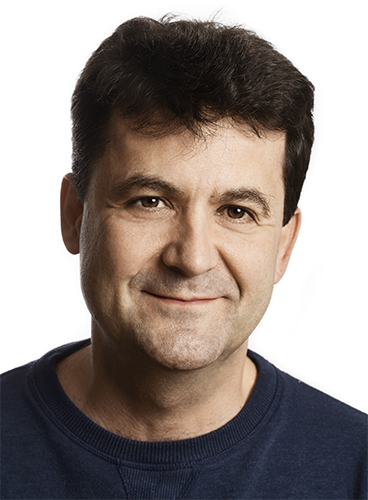
Jan Madsen is a Professor at DTU Compute, Technical University of Denmark, and Head of the Embedded Systems Engineering section. His research focuses on system-level modeling and design of embedded computing systems, particularly cyber-physical systems, microfluidic biochips, and synthetic biology applications. Develops design automation tools and methodologies for embedded systems Supervises numerous PhD students and leads major research projects Research Interests Key areas include: Embedded systems-on-a-chip Cyber-Physical Systems (Internet-of-Things) Microfluidic Lab-on-Chip devices Synthetic biology with molecular computing Design, modeling, and optimization of complex systems Scientific Awards DATE Fellow (2019) IEEE CEDA Outstanding Recognition (2019) DTU Scientific Advise Award (2013) Best Paper Awards at MECO (2013) and CASES (2009) Jorck’s Foundation Research Award (1995) Publications His 14+ journal papers and 115+ conference papers demonstrate expertise in: SystemC-based modeling frameworks Energy-aware sensor networks Self-healing eDNA architectures Microfluidic biochip synthesis RTOS modeling and MPSoC exploration
Konstantinos Kalogeropoulos is an Assistant Professor at the Department of Biotechnology and Biomedicine, Technical University of Denmark (DTU), leading research at the Cell Diversity Lab. His work bridges proteomics, computational biology, and snake venom research. Current projects: "The Proteomic Landscape during Influenza Infection" (2022-2025) Supervisor for PhD projects on protease network rewiring in psoriasis and wound exudate degradomics Research interests include: Proteomic analysis of inflammatory diseases Snake venom toxin structure prediction Extracellular matrix biomechanics De novo peptide sequencing algorithms Computational modeling of protease networks Recent article trends demonstrate his work in • Database-free proteomics (InstaNovo/InstaNexus) • Snake venom pathophysiology (V-ToCs clustering) • Inflammatory disease biomarkers (psoriasis, impaired healing) • Extracellular matrix mechanics (fibronectin tension, gut inflammation) Advising: Supervises PhD students Polhaus, C. J. M. and Haack, A. M., focusing on protease networks and wound healing.
Jesper Liniger is an Associate Professor at AAU Energy within the Faculty of Engineering and Science at Aalborg University. He works in the Esbjerg Energy Section focusing on Offshore Renewable Energy Systems and is affiliated with AAU BLUE – Marine & Maritime Research. His office is located at Niels Bohr Street 8, 6700 Esbjerg, Denmark. Research Interests Marine Growth Engineering and automated cleaning solutions for offshore structures Underwater robotics including Remotely Operated Vehicles (ROVs) and autonomous inspection systems Wind turbine engineering with emphasis on hydraulic pitch systems and fault detection Fluid power engineering applications in marine environments Development of robotic solutions for offshore renewable energy infrastructure Research Trends Dr. Liniger's recent publications demonstrate a strong focus on developing robotic solutions for offshore renewable energy infrastructure. His work bridges theoretical control systems with practical marine applications, particularly addressing marine growth (biofouling) challenges on offshore structures. The research shows increasing interdisciplinary collaboration, combining robotics, fluid mechanics, and wind energy systems to create integrated solutions that improve operational efficiency and reduce maintenance costs in offshore environments. Scientific Awards Innovation Project of the Year (2024) - For underwater robotics development Esbjerg Universitetspris (2018) - University award recognizing research excellence Advising and Research Leadership Dr. Liniger actively supervises PhD students and serves as principal investigator or supervisor on multiple major projects including "NextGen Robotics" for offshore wind farms and "Towards Enhancing Perception and Navigation for Autonomous Underwater Inspection Drone." His research portfolio includes collaborations with industry partners like Vattenfall and Business Center Funen, demonstrating strong industry-academia connections focused on practical applications with economic impact. Research Teams and Facilities Liniger is part of AAU BLUE – Marine & Maritime Research, which provides specialized facilities for marine robotics testing and development. His work involves close collaboration with researchers in control systems, fluid mechanics, and renewable energy. The research group has developed experimental frameworks for testing underwater and surface vehicle operations, with recent media coverage highlighting their innovative approaches to solving marine growth challenges on offshore structures.
Elham Ramin is a Researcher at the Department of Chemical and Biochemical Engineering at the Technical University of Denmark (DTU), affiliated with the Center for Energy Resources Engineering (CERE) and the Process and Systems Engineering Centre (PROSYS). Her work contributes to multiple UN Sustainable Development Goals, particularly in clean water and sanitation, affordable and clean energy, and industry innovation. Dr. Ramin completed her PhD at DTU (2010-2014) with research focused on modeling water quality in sewer-WWTP systems. Her academic journey demonstrates a strong foundation in environmental process engineering with applications to real-world water treatment challenges. Her research interests span wastewater treatment optimization, Power-to-X applications for water resource recovery, industrial symbiosis in water management, and biomanufacturing process modeling. She specializes in computational fluid dynamics, activated sludge modeling, and one-dimensional simulation models for wastewater treatment plants. Her work bridges environmental engineering with sustainable resource management, focusing on practical solutions for water-energy nexus challenges. Analysis of her recent publications reveals a strong trend toward integrating sustainable energy solutions with water treatment processes, particularly Power-to-X technologies. Her research portfolio shows increasing focus on digitalization of water resource recovery facilities and cross-sectoral industrial symbiosis for optimal resource utilization. The work demonstrates strong interdisciplinary connections between environmental engineering, chemical process modeling, and sustainable development. Dr. Ramin has participated in significant research projects including ERASE (Evaluation of Resource recovery Alternatives in South African water) and GECKO (Green and Circular Innovation for Kenyan Companies), demonstrating international collaboration and application of research to diverse water management contexts. Her work has generated substantial academic interest with multiple publications receiving significant downloads and reader engagement on platforms like Mendeley. She is actively involved with research centers including CERE and PROSYS at DTU, contributing to interdisciplinary teams focused on energy resource engineering and process systems optimization. Her collaborations extend to pharmaceutical industry applications, particularly in vaccine manufacturing development and digital twin implementation for bioprocesses.
Borja Valverde Pérez is an Associate Professor in the Department of Environmental and Resource Engineering at the Technical University of Denmark (DTU). His research advances sustainable water resource recovery through biotechnology innovations. Research focuses on microalgae cultivation, microbial protein production, and bioelectrochemical systems for water treatment. Key projects explore nutrient recovery from waste streams and greenhouse gas mitigation in biological processes. Recent publications demonstrate innovative approaches to wastewater valorization, including microalgae-bacteria consortia for pollutant degradation and inorganic bioelectric systems for low-temperature denitrification. Work integrates experimental validation with life cycle assessment. He coordinates projects on industrial symbiosis and circular economy applications in water systems. Current initiatives investigate decarbonization pathways for water resource recovery facilities through energy-flexible operation.
Mohit Bhola is a Researcher at AAU Energy within the Faculty of Engineering and Science at Aalborg University, Denmark. His work focuses on fluid power systems engineering with specialization in hydraulic components for wind turbines and heavy machinery applications. His primary research domains include Fluid Power Engineering (100% fingerprint match), Hydraulic System Design (50%), and Wind Turbine Technology . Key sub-specialties encompass hydrostatic transmission optimization, fault diagnosis in pitch systems, compressed air motors, and energy efficiency in fluid power applications. His fingerprint analysis confirms strong concentration in hydraulic cylinder engineering (49%) and pump displacement systems (38%). Recent publications (2024-2025) reveal a strategic shift toward comprehensive reviews of fault detection methodologies for wind turbine hydraulic pitch systems, alongside optimization studies for front-end loader transmissions. His collaborative work demonstrates increasing industry integration, particularly with energy giant Vattenfall in reliability-focused research. Dr. Bhola actively participates in the HyRel project (2022-2027), a Vattenfall-funded initiative targeting 20% reduction in wind energy costs through pitch system fault mitigation. This €2.1M project involves cross-disciplinary collaboration with experts in hydrostatic transmission and condition monitoring.
Joe Alexandersen is an Associate Professor in the Department of Mechanical Engineering at the University of Southern Denmark (SDU), affiliated with the Institute of Mechanical and Electrical Engineering. His research spans structural optimization, heat transfer, fluid dynamics, and high-performance computing, with applications in heat sink design, microfluidic devices, and additive manufacturing. Research Interests Topology and shape optimization Conjugate heat transfer Navier-Stokes flow modeling Finite element methods High-performance computing Scientific Awards 2022 Fluids 2020 Best Paper Award 2017 DTU Young Researcher Award 2015 ISSMO/Springer Prize for Young Scientist Key Projects HiHeaT: Topology optimization for high heat flux components (2024–2027) Structural Analysis of Large Modular Vessels (2025–2027)
Anders Henry Nielsen is a Senior Scientist in the Department of Physics at the Technical University of Denmark (DTU), specializing in Plasma Physics and Fusion Energy. He is based at DTU’s Fysikvej campus in Kgs. Lyngby, Denmark, and maintains an active research profile with over 350 publications. His work is central to advancing understanding in magnetic confinement fusion, particularly through computational modeling and experimental collaboration with major tokamak facilities worldwide. His research interests lie at the intersection of plasma turbulence, edge physics, and fusion energy. He investigates phenomena such as zonal flows, coherent structures, and transport scaling in tokamak plasmas. His work often involves developing and applying advanced numerical models, including coupling Monte Carlo methods with 2D fluid models like HESEL, to simulate neutral particle behavior and turbulence in the plasma edge. He has contributed to major experimental campaigns on devices such as TCV, ASDEX Upgrade, and EAST, focusing on heating, fueling, and stability. His recent publications highlight trends in computational plasma physics, parametric instabilities, and cross-field transport. These works span disciplines including plasma turbulence, magnetic confinement, and fusion reactor engineering, with subfields like Monte Carlo simulations, electron cyclotron resonance heating, and synthetic diagnostics. His research consistently addresses key challenges for ITER and DEMO, such as power threshold scaling and heat flux management. Anders Henry Nielsen has supervised multiple PhD students, including R. Gerru Miguelañez, G. Avdeeva, J. M. B. Olsen, and J. Madsen, on projects related to zonal flow dynamics, neutral injection, and turbulence modeling. He has received research funding from various sources, including national and international fusion programs, and has been involved in projects funded by research councils and institutional grants. He is affiliated with the Plasma Physics and Fusion Energy section at DTU, where he collaborates closely with leading researchers such as V. Naulin, J. J. Rasmussen, and S. Kragh Nielsen. His team contributes to both theoretical and experimental aspects of fusion science, participating in international collaborations and presenting findings at major conferences. He has organized academic events, such as the Ninth Sino-Danish Autumn School on Fusion Plasma Physics and Technology.
Christopher Cadou is a Professor and Director of Undergraduate Studies in the Department of Aerospace Engineering at the University of Maryland. He holds a B.S. in Mechanical Engineering and B.A. in History from Cornell University, and M.S. and Ph.D. in Mechanical Engineering from UCLA. His research focuses on combustion at micro and conventional scales, laser diagnostics, compact power systems, and fuel cells. He has led interdisciplinary projects in micro-gas turbine engines, microfluidics, and energy innovation. Professional affiliations include the American Society of Mechanical Engineers (ASME), American Institute of Aeronautics and Astronautics (AIAA), and The Combustion Institute. He has reviewed for journals like Combustion and Flame, and government agencies such as the National Science Foundation. His work includes pioneering infrared diagnostics for micro-combustors and developing analytical models for heat transfer in mini/microchannels. He has organized conferences including the 2009 AIAA Joint Propulsion Conference. His contributions span technical reports on microturbomachinery and scramjet inlet flows, and collaborations with industry through initiatives like the Maryland Energy Innovation Institute.
Clara Marika Velte is an Associate Professor in the Department of Civil and Mechanical Engineering at the Technical University of Denmark (DTU), where she serves as Head of the Turbulence Centre of Excellence. Her research is centered on fluid mechanics, particularly turbulence, with a focus on theoretical modeling, experimental design, and vortex dynamics. She is actively involved in major research initiatives funded by the European Research Council and the Poul Due Jensen Foundation. PhD in Experimental and Theoretical Fluid Mechanics, DTU (2006–2009) MSc in Turbulence, Chalmers University of Technology (2004–2005) Her research interests include turbulence theory, boundary layers, flow control, vortex dynamics, and the development of theoretical models for turbulent flows. She employs advanced techniques such as Proper Orthogonal Decomposition, Reynolds decomposition, and modal analysis to study non-equilibrium turbulence and jet dynamics. Her work bridges fundamental physics with practical applications in energy and environmental engineering. Recent publications explore triad interactions, spatio-temporal structure functions, and Lumley decomposition in turbulent round jets, indicating a strong trend toward mathematical and physical modeling of turbulence dynamics. These works are targeted at high-impact journals such as Physical Review Fluids and Journal of Fluid Mechanics , reflecting her leadership in advancing theoretical frameworks in fluid dynamics. Best paper award, SEMA’18 (2018) Kalundborg Refinery Prisen (2023) Selected for special issue in Experiments in Fluids (2010) Publication in Journal of Systemics, Cybernetics and Informatics (2009) Clara Velte supervises multiple PhD students and leads several active research projects, including the PDJF Turbulence Centre of Excellence and UniEqTURB, which challenge classical paradigms like the Richardson-Kolmogorov theory. She also contributes to academic service as a member of the Editorial Board for Philosophical Transactions of the Royal Society A . Her laboratory, the Turbulence Research Laboratory at DTU, fosters interdisciplinary collaboration and innovation in turbulence science. The Turbulence Centre of Excellence at DTU, under her leadership, operates as a state-of-the-art research hub integrating experimental, theoretical, and computational approaches. The center collaborates internationally and engages in public outreach, including media appearances on turbulence in aviation and climate systems.
Henrik Bruus is a Professor and Section Head in the Department of Physics at the Technical University of Denmark (DTU). He leads the Section of Biophysics and Fluids and the Theoretical Microfluidics Group, focusing on theoretical modeling in microfluidics, acoustofluidics, and nanofluidics. His academic journey began at the Niels Bohr Institute, University of Copenhagen, where he earned his B.Sc., M.Sc., and Ph.D. in physics. He has held research and faculty positions at NORDITA, Yale University, CNRS-CRTBT, and DTU, transitioning from DTU Nanotech to DTU Physics in 2012. He has held visiting professorships at Harvard, MIT, Princeton, and several French institutions. B.Sc. in Mathematics and Physics, University of Copenhagen (1984) M.Sc. in Physics, University of Copenhagen (1986) Ph.D. in Physics, University of Copenhagen (1990) Henrik Bruus's research lies at the intersection of theoretical physics and engineering, with a strong emphasis on microfluidics, acoustofluidics, and biophysics . His work explores acoustic radiation forces, electrokinetics, streaming, and particle manipulation in microsystems. He is renowned for his Acoustofluidics tutorial series published in Lab on a Chip. His research contributes to UN Sustainable Development Goals in energy and innovation. He has published over 248 works, including in Physical Review , Lab on a Chip , and Science Advances . The recent publications highlight a consistent focus on acoustofluidic phenomena , particularly the modeling and control of acoustic streaming, radiation forces, and thermoviscous effects in microchannels. His work bridges theoretical analysis with experimental validation, often involving collaborations across disciplines. Key themes include ultrasound manipulation of particles and cells, optimization of microreactors, and development of novel acoustofluidic devices using thin-film transducers. Scientific Awards: DTU Teacher of the Year (2013) Elected Fellow of the American Physical Society (since 2011) Henrik Bruus actively supervises Ph.D. students and leads multiple research projects in biophysics and microfluidics. He has been the main supervisor or co-supervisor on projects related to plant biophysics, micro- and nanochannel flows, and electroacoustic actuation. His international collaborations span across Europe and the U.S., and he has delivered numerous conference presentations, including at APS meetings and specialized workshops. He is a central figure in the global acoustofluidics research community. He leads the Theoretical Microfluidics Group at DTU Physics, which focuses on computational and analytical modeling of fluid behavior at micro- and nanoscales. The group collaborates closely with experimental teams to develop and validate theoretical frameworks for lab-on-a-chip systems. Their work supports applications in biomedical diagnostics, cell sorting, and material science.
Torben Anker Lenau is an Associate Professor in the Department of Civil and Mechanical Engineering at the Technical University of Denmark (DTU). His work focuses on biomimetic design, sustainable engineering, and innovative material applications. He leads research projects addressing multi-functional problem-solving, renewable energy systems, and eco-design principles. His expertise contributes to UN Sustainable Development Goals, particularly in sustainable cities, clean energy, and responsible consumption. Key research interests include biomimicry in product development, lifecycle assessment, and bio-inspired materials. Notable projects include kinetic energy harvesting for wildlife tracking and bio-inspired medical devices. He has published extensively on topics like prototyping strategies, material selection, and biomimetic self-healing systems. Projects: Integrated Design (1999–present), Processed Material Selection (1996–present), CAD/CAM Prototyping (1996–present) Contributions: Over 100 publications, 27 projects, and patents in medical and energy sectors His work emphasizes translating biological principles into engineering solutions for sustainability challenges. Collaborations span academia and industry, with a focus on global impact through innovative design methodologies.
Fan Zhou is a Researcher at Aalborg University's Department of Thermal Engineering within the Faculty of Engineering and Science, specializing in hydrogen and electro-fuels. His work focuses on high-temperature proton exchange membrane (HT-PEM) fuel cells and solid oxide electrolysis systems, with applications in power-to-X and micro combined heat and power (micro-CHP) solutions. He holds a PhD awarded in February 2016 and maintains an active research profile with 27 documented publications. His research interests center on Fuel Cell Technology , Hydrogen and Electro-fuels , and Thermal Engineering , with specific expertise in performance degradation mechanisms, fault diagnosis using electrochemical impedance spectroscopy (EIS) and machine learning, thermal management, and dynamic operation of energy conversion systems. Current investigations address real-time monitoring challenges in residential microgrids and power-to-X applications, examining how operational parameters like temperature, pressure, and gas composition affect system efficiency and durability. Analysis of his 15 most recent publications (2021-2025) reveals a strong emphasis on data-driven approaches for fault detection in fuel cells, dynamic operation effects on electrolysis cells, and integration of clean energy systems. Key trends include the application of convolutional neural networks for online diagnostics, investigation of AC/DC frequency effects in solid oxide electrolysis, and development of control systems for micro-CHP applications using HT-PEM fuel cells. Dr. Zhou currently participates in two major research projects: Robust And Dynamic Electrolysis for Power-to-X (2024-2027), focusing on advanced electrolysis technologies for power-to-X applications, and FC-COGEN (2023-2025), developing micro combined heat and power systems. Both projects are funded by the Energy Technology Development and Demonstration Program (EUDP) and involve collaboration with industry partners and researchers including Søren H. Jensen and Simon L. Sahlin from AAU's Power Electronics and Drives group.
Henning Tangen Søgaard is an Associate Professor at the Department of Mechanical and Production Engineering, part of AU Engineering at Aarhus University. He teaches mathematics, numerical methods, and mathematical statistics to BEng students. His research focuses on robotics in agriculture , dynamic modeling , and precision agriculture . Primary Affiliation: Department of Mechanical and Production Engineering, AU Engineering, Aarhus University Research Expertise: Computer vision, control systems for agricultural robotics, environmental modeling (ammonia emissions, spray drift), and wireless sensor networks. His work includes developing autonomous systems for weed control, GPS-based geo-referencing of crops, and mathematical models for fertilizer-related emissions. Publications span peer-reviewed journals and reports in agricultural engineering , robotics , and environmental science . Scientific awards are not mentioned in the provided text. He has no listed PhD students but has collaborated on multiple projects. For direct contact, his email is hts@mpe.au.dk .
Julian Antony Quick is a Researcher at the Department of Wind and Energy Systems within the Technical University of Denmark . His work focuses on wind farm optimization, energy management, and market-driven renewable energy systems. Active research in wind farm control and market integration Specializes in hybrid power plant design and uncertainty quantification Contributes to UN Sustainable Development Goals through wind energy research His research explores advanced optimization techniques for wind resource assessment, turbine design, and revenue maximization in electricity markets. Key areas include: Compressed air energy storage integration Wind farm layout optimization Surrogate-based system modeling Dynamic energy management strategies While not explicitly listed, his collaborative projects suggest active involvement in PhD supervision and industry partnerships across Europe. His recent publications demonstrate a strong focus on translating technical advances into economic benefits through: Market-aware wind farm design Data-driven flow control Hybrid system efficiency improvements SDG-aligned sustainable energy solutions