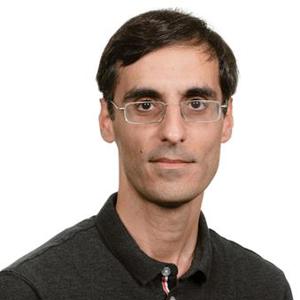
Mamoun Qasem is a Lecturer in Cyber Security at the University of South Wales, Faculty of Computing, Engineering and Science. His work focuses on IoT Security, autonomous vehicle cybersecurity, wireless sensor networks, and RPL protocol enhancements. He has collaborated with industry leaders like Huawei and Thales Ltd, contributing to international standards through the IETF. Research Interests include: Defending systems from cyber threats RPL protocol optimization Adversarial deception methods in complex systems IoT threat hunting and network security Publications span top journals (e.g., IEEE Communications Letters) and conferences (e.g., IEEE WCNC). He leads projects like RsIoT for oil & gas field monitoring and supervises a KESS PhD student on adversarial deception in cyber defense. Mamoun actively reviews for journals like Elsevier Computer Networks and coordinates international conference workshops (e.g., ICSOC, CFATI). No scientific awards are explicitly listed. He coordinates interdisciplinary research initiatives and serves as a technical reviewer for multiple platforms.
He Zhu is an Assistant Professor at Rutgers, The State University of New Jersey, affiliated with the Department of Computer Science. His research focuses on programming languages, compilers, wireless communications, IoT systems, and 5G network protocols. He received the PLDI 2019 Distinguished Paper Award for his contributions to formal methods in programming systems. His work addresses challenges in vehicle-to-everything (V2X) communication, resource allocation in sidelink networks, network security, and dynamic authorization frameworks for IoT devices. Key research interests include optimizing 5G NR (New Radio) protocols for vehicular environments, developing efficient data aggregation techniques for user equipment, and enhancing service layer mechanisms for IoT systems. He leads projects funded by the NSF, such as 'Formal Symbolic Reasoning of Deep Reinforcement Learning Systems,' and has contributed to advancements in beam management, RACH protocols, and energy-efficient DRX configurations in wireless networks. His office is located in Core 315. Notable Awards: PLDI 2019 Distinguished Paper Award Grants: NSF Grant: Formal Symbolic Reasoning of Deep Reinforcement Learning Systems His research group explores intersections between compiler design, distributed systems, and network architecture, with applications in smart mobility, edge computing, and secure IoT communication. He actively contributes to standards development for 5G and future generations of wireless networks.
Konstantinos Nikitopoulos is a Professor at the University of Surrey , UK, specializing in Wireless Communications and Signal Processing . His research focuses on MIMO Systems , Open-RAN , and Non-Linear Processing for next-generation wireless networks. His recent work explores Analogue Processing for Tbps Wireless Systems and Neuromorphic Computing in MU-MIMO detection. He has developed frameworks like MIMO-SoftiPHY and SACCESS for software-based radio acceleration and power-efficient network design. Key Publications : Power-Efficient RIC, NL-COMM, NeuroMIMO Collaborators : Rahim Tafazolli, George Katsaros, Marcin Filo His research impacts 6G Network Development through innovations in Beamforming , Channel Estimation , and Software-Defined Radios .
Shimeng Yu is a full professor at the Georgia Institute of Technology's School of Electrical and Computer Engineering, holding the Dean’s Professorship. He earned his B.S. from Peking University (2009) and M.S./Ph.D. from Stanford University (2011/2013). His research focuses on semiconductor devices, non-volatile memories, 3D integration, and AI hardware accelerators. Yu leads SRC/DARPA JUMP 2.0 centers on memory/storage and 3D integration, with over 400 publications and 30,000+ citations (H-index 82). He serves on flagship conference committees (e.g., IEDM, VLSI) and editorial boards (IEEE EDL, JETCAS). Education: B.S., Microelectronics, Peking University (2009) M.S./Ph.D., Electrical Engineering, Stanford University (2011/2013) Research Themes: Emerging non-volatile memories for AI Monolithic 3D integration Energy-efficient computing systems His work spans device fabrication, circuit design, and system-level co-optimization. Recent projects are funded by NSF, DARPA, DOE, and industry partners (TSMC, Intel, Samsung), totaling >$17M. His lab, located at the Pettit Microelectronics Research Center, develops prototypes with cleanroom access. Awards: IEEE Fellow (2024) ACM/IEEE DAC Under-40 Innovators Award (2020) NSF CAREER Award (2016) Multiple editorship roles and distinguished lecturer appointments (IEEE EDS/CASS) Grants & Funding: Lead of two SRC/DARPA JUMP 2.0 centers Total research funding exceeds $17M
Hjalti H. Sigmarsson is an Assistant Professor at the University of Oklahoma's School of Electrical and Computer Engineering within the Gallogly College of Engineering. His research focuses on reconfigurable RF/microwave hardware, spectral management for cognitive radios, heterogeneous integration packaging, and nanomaterial-based device development. Education : B.S.E.C.E., University of Iceland (2003) M.S.E.C.E., Purdue University (2005) Ph.D., Electrical and Computer Engineering, Purdue University (2010) Research Interests : His work advances agile communication systems through tunable microwave components and explores novel packaging techniques for heterogeneous material integration. His nanomaterial research targets next-generation RF devices, while his radar systems development contributes to meteorological observations and mobile phased arrays. Scientific Contributions : He has pioneered liquid metal-tuned filters, substrate integrated waveguide technologies, and evanescent-mode cavity resonators. His publications demonstrate expertise in hybrid acoustic-electromagnetic filters, SAR imaging, and filter shape optimization. Awards : DARPA ASP program recognition (2008) Best paper awards at IMAPS (2008, 2009) Outstanding student paper, IMAPS (2009) Best paper, Microwave/Radio Applications session at IMAPS (2008, 2009) Labs & Centers : He leads research at the University of Oklahoma's Radar Innovations Lab and contributes to the Advanced Radar Research Center. His work includes the Horus All-Digital Phased Array Weather Radar project.
Adlen Ksentini is a Professor at EURECOM, a leading graduate school and research center in Sophia Antipolis, France, specializing in digital science and communication systems. His extensive research focuses on next-generation mobile networks (5G/6G), network management, and the integration of artificial intelligence with telecommunications infrastructure. Dr. Ksentini actively contributes to major EU research initiatives including 6G-BRICKS and AC3, serving as a key researcher and project leader in the development of future network architectures. Dr. Ksentini's research interests center around network slicing, intent-based networking, edge computing, and the application of machine learning to network management problems. His work bridges theoretical advancements with practical implementations in 5G/6G systems, with particular emphasis on zero-touch network management, energy efficiency optimization, quality of service assurance, and the integration of large language models with network operations. His research has significantly contributed to the development of O-RAN (Open Radio Access Network) frameworks and the evolution of network automation. His recent publication trends reveal a strategic shift toward AI-native network architectures, with increasing focus on integrating large language models (LLMs) with network management systems. His work demonstrates a clear progression from traditional network management approaches to more autonomous, AI-powered systems capable of intent-based configuration, self-optimization, and predictive maintenance. The publications show strong emphasis on practical implementations within the 6G research ecosystem, addressing critical challenges in network slicing, resource allocation, and energy efficiency. As a research supervisor, Dr. Ksentini mentors several PhD students including Abdelkader Mekrache, Karim Boutiba, Bouziane Brik, and Houda Hafi, who frequently appear as co-authors on his publications. His research is primarily funded through major EU research projects such as 6G-BRICKS (Building Reusable Testbed Infrastructures for Cloud-to-Device Breakthrough Technologies) and AC3 (which focuses on Cloud Edge Continuum). Dr. Ksentini is actively involved with the 6G-BRICKS project consortium and the AC3 project team, where he contributes to developing next-generation network architectures that integrate communication, computing, and sensing capabilities. His work within these projects focuses on creating reusable testbed infrastructures and addressing security and trust management challenges in the cloud-edge continuum.
Yong-Bin Kim is a Professor in the Department of Electrical and Computer Engineering at Northeastern University, part of the College of Engineering. He has held prior positions at Intel Corp., Hewlett Packard Co., Sun Microsystems, and the University of Utah. His research focuses on integrated circuit design, nanoelectronics, bio-chip interfaces, and low-power VLSI systems. He has contributed to initiatives like the HPVLSI Lab and Microsystems and Electron Devices Lab. Education includes a B.S. in Electronic Engineering from Sogang University (Seoul, South Korea), an M.S. from the New Jersey Institute of Technology, and a Ph.D. in Computer Engineering from Colorado State University (1996). Research interests encompass high-speed low-power VLSI design, system-on-chip (SoC), physical VLSI CAD, and nanoelectronics. Specific areas include bio-sensor interface circuits, electronic neuron design, and adaptive robot controllers. Key projects involve compact power-efficient integrated circuits and high-speed transceiver design. Outstanding Paper Award, 2020 IEEE ISOCC South Korean Patent for Autonomous Impedance Calibration (2021) Best Paper Award, 2016 International SoC Design Conference Patent for Improved Receiver Circuit (2020) Patent for Method to Detect Trojan Circuits (2018) Advisees include graduate student Yixuan He. He has led research projects funded by Winchester Technology and Hynix Semiconductor, focusing on semi-self-calibration transceivers and tunable RF inductors. Labs include the HPVLSI Lab and Microsystems and Electron Devices Lab at Northeastern University, which focus on high-speed/low-power IC design and microfabrication technologies.
Professor Vincent Sokalski is a faculty member in the Department of Materials Science and Engineering at Carnegie Mellon University (CMU), specializing in nanoscale magnetic and spintronic materials. He holds a B.S. from the University of Pittsburgh and advanced degrees (M.S., Ph.D.) from CMU. His research focuses on emerging phenomena in magnetic thin films for energy-efficient computing, particularly leveraging skyrmions and the Dzyaloshinskii-Moriya interaction. He chairs the Pittsburgh IEEE Magnetics Society and directs CMU's MSE Department's community and inclusion initiatives. Sokalski also leads outreach efforts through the College of Engineering. Education: Ph.D., Materials Science & Engineering, CMU (2011) M.S., Materials Science & Engineering, CMU (2009) B.S., Materials Science & Engineering, University of Pittsburgh (2007) Research emphasizes low-power memory solutions via spintronic materials, with a focus on stabilizing skyrmions for next-generation computing. His group employs combinatorial material design and advanced imaging techniques like Lorentz transmission electron microscopy. Recent work explores asymmetrical superlattices and DMI-driven phenomena. Publications highlight advancements in domain wall dynamics, skyrmion stabilization, and magnetic symmetry breaking. Awards include the 2021 Provost’s Inclusive Teaching Fellowship. Sokalski advises students like Nisrit Pandey and Maxwell Li, who have won national poster competitions. He co-leads the AMPED Consortium grant for advanced magnetic technologies and oversees MSE’s materials characterization facilities.
Professor Jouni Mattila is a leading academic in Machine Automation at Tampere University's Faculty of Engineering and Natural Sciences, affiliated with the Automation Technology and Mechanical Engineering department. He is part of the IHA-Innovative Hydraulics and Automation research group. His expertise spans autonomous mobile working machines, nonlinear control engineering, and safety-critical systems like those in the ITER project. He holds a Technical Editor role in ASME/IEEE Transaction on Mechatronics (2015-2020). Research interests include real-world autonomous systems, whole-body motion control for rough-terrain robots, energy-efficient actuators, and teleoperation systems. His work integrates advanced control theory, AI, and robotics for heavy-industry applications. Recent publications focus on robust control frameworks, LiDAR-inertial SLAM navigation, and fault-tolerant systems for mobile robots. Publications highlight advancements in hydraulic/electromechanical actuator systems, visual-inertial feedback control, and energy-efficient robotics. Awards/recognitions are not explicitly listed, but his contributions are evident through collaborations with Finnish industry and big science projects. Advising focuses on MSc and Dr (Tech) students in robotics and automation, with a mission to bridge academia and industry for high-tech innovation. Labs/teams include the Intelligent Hydraulics and Automation (IHA) group, emphasizing practical R&D in cleantech and heavy-duty robotics. Ongoing projects address challenges in autonomous rock-breaking systems, exoskeleton control, and energy-efficient robotic actuators.
Professor Xiaodong Liu is a faculty member at Edinburgh Napier University, affiliated with the School of Computing, Engineering and the Built Environment . His research spans Internet of Things , Edge Computing , Artificial Intelligence , and Cybersecurity , with a focus on decentralized systems and data-driven decision-making. Research Themes : IoT orchestration, federated learning, smart city infrastructure, building maintenance optimization, and automotive cybersecurity. Current Projects : Leading Swarmchestrate (EU-funded), Long-range Perceptive Autonomous Vehicles (Royal Society), and Met-Bot for Disaster Surveillance (Royal Society). His recent publications emphasize privacy-preserving edge learning , semantic IoT data validation , and deep learning for weather prediction . As a supervisor, he has guided PhD students in areas like federated learning, smart building systems, and IoT security. Collaborations include partnerships with institutions in Scotland, China, and Italy, alongside funding from European Commission , Royal Society , and Scottish Funding Council . He contributes to international conferences and journals, with notable work in IEEE Transactions , ACM TAAS , and MDPI publications.
Dr. Alexandra Fedorova is a Professor in the Department of Electrical and Computer Engineering at the University of British Columbia (UBC), with an Associate Member role in the Computer Science department. She leads the Systopia systems research group, focusing on system software design, memory/storage management, and accelerator-centric computing. Her work emphasizes performance optimization, energy efficiency, and hardware-software co-design. She holds a PhD from Harvard University (2006), where she researched operating system scheduling under Margo Seltzer. Prior to UBC, she was an Associate Professor at Simon Fraser University (2006–2015). Fedorova is a recipient of the Alfred P. Sloan Research Fellowship and the Anita Borg Early Career Award. She consults for MongoDB's storage engine team and collaborates with industry on storage and performance challenges. Her research spans tools like Non-sequitur for program trace visualization, studies on storage-class memory (e.g., Optane), and frameworks for GPU acceleration. Recent efforts include Sunstone (spatial accelerator scheduling) and ExtMem (application-aware memory management). Her work bridges low-level systems with high-performance computing needs. Key contributions include optimizing NUMA systems, improving storage engine performance, and exploring processing-in-memory architectures. Fedorova’s projects often involve open-source collaboration, reflected in her GitHub repositories such as vividperf and perf-logging , which support performance analysis tools.
Ramses Martinez is an Assistant Professor in the Department of Industrial Engineering and Biomedical Engineering at Purdue University . He holds a B.A. in Applied Physics from Universidad Autonoma de Madrid (2004) and a Ph.D. in Physics and Materials Science from the Spanish National Research Council (CSIC) in 2009. Prior to joining Purdue, he conducted postdoctoral research in the lab of Prof. George M. Whitesides at Harvard University, focusing on nanofabrication, microfluidics, and soft robotics. Education B.A. in Applied Physics, Universidad Autonoma de Madrid (2004) Ph.D. in Physics and Materials Science, Spanish National Research Council (CSIC) (2009) His research bridges soft robotics , flexible electronics , and nanofabrication , with a focus on creating self-powered e-textiles , omniphobic paper-based devices , and programmable mechanical metamaterials . His work has led to over 25 publications and 9 patents, emphasizing practical applications in health monitoring and industrial automation . Notable projects include waterproof electronic decals for biofluid monitoring, smart bandages for chronic wound detection, and laser nanoforming methods for scalable metallic structures. His research has been recognized through the Fulbright Fellowship and the Marie Curie IOF Grant .
Dr. Carl Ho (Ngai Man) is a Full Professor and Canada Research Chair in Efficient Utilization of Electric Power at the University of Manitoba's Price Faculty of Engineering, Department of Electrical and Computer Engineering. Appointed Associate Head (Electrical Engineering) in July 2021, he leads the Renewable-energy Interface and Grid Automation (RIGA) Lab established with CFI funding in 2014. His educational background includes: PhD in Electronic Engineering (2007), City University of Hong Kong MEng in Electronic Engineering (2002), City University of Hong Kong BEng in Electronic Engineering (2002), City University of Hong Kong Dr. Ho's research focuses on power electronics applications for sustainable energy systems, with particular expertise in power conversion technologies for electric vehicles, renewable integration, and smart grid infrastructure. His work bridges industrial application and academic innovation, evidenced by over 40 IEEE journal publications, 80 conference papers, and 20+ patents. Current research emphasizes wide-bandgap semiconductor applications, power hardware-in-loop validation, and DC microgrid architectures for remote communities. Analysis of his recent publications reveals a strong trend toward practical implementation of power electronics solutions, with increasing focus on GaN/SiC devices, grid-forming converters, and modular architectures for microgrids. His work consistently addresses real-world challenges in efficiency, reliability, and cost-effectiveness across renewable integration, electric transportation, and power quality domains. Notable awards include: Second Place Winner for 2018 IEEE Transactions on Power Electronics Prize Paper Multiple IEEE JESTPE Star Associate Editor Awards (2022-2023) IEEE TPEL AE Excellence Award (2023) Best Student Team Regional Award in IEEE Empower a Billion Lives 2019 As an active mentor, Dr. Ho supervises numerous graduate students across multiple cohorts and leads significant research initiatives including NSERC Discovery Grants, MITACS collaborations with Power Integrations Inc., Research Manitoba Innovation Proof-of-Concept Grants, and Natural Resources Canada projects on zero-emission heavy vehicles. His RIGA Lab serves as a hub for industry-academic collaboration with Manitoba Hydro and transportation sector partners. The RIGA Lab, completed in 2016 and renovated in 2019, houses specialized equipment for power electronics prototyping, real-time simulation, and hardware-in-loop testing. Current projects include advanced wireless EV charging, GaN-based controller development, and DC microgrid solutions for remote communities, with recent recognition including a visit from Prime Minister Justin Trudeau in April 2023.
Lennart Heim is a Professor of Policy Analysis at the RAND School of Public Policy and Compute Lead at the Technology and Security Policy Center within The RAND Corporation. His research focuses on AI governance, compute infrastructure, and their strategic implications for national security and global competitiveness. He advises organizations like Epoch and contributes to initiatives such as the OECD.AI Expert Group on AI Compute and Climate. Previously, he held roles at ETH Zürich and the Centre for the Governance of AI. Education: Studied computer engineering at ETH Zürich and RWTH Aachen University. Current affiliations include adjunct fellowships at GovAI and pro forecasting at INFER Pub. Research Interests: He examines how compute capacity shapes AI development, policy frameworks for AI governance, and the interplay between technology and geopolitical strategy. His work emphasizes leveraging compute for ethical AI deployment while mitigating security risks. Advising & Grants: Advises Epoch on AI trajectory analysis and has collaborated with the National Science Foundation and NIST on policy frameworks. His grants focus on AI energy requirements and global engagement strategies. Labs/Teams: Leads compute research initiatives in the Technology and Security Policy Center, engaging interdisciplinary teams to address AI’s societal and security challenges.
Alireza Saberkari is an Associate Professor and Docent at Linköping University, affiliated with the Department of Electrical Engineering and the Division of Electronics and Computer Engineering (ELDA). His work bridges analog, digital, and mixed-signal electronics with applications in biomedical systems, wireless power, and energy-efficient integrated circuits. Research Interests: His research spans low-power analog and mixed-signal IC design, energy harvesting, RF circuits, and the miniaturization of Nuclear Magnetic Resonance (NMR) systems for portable spectroscopy. He is actively involved in developing integrated solutions for wireless cell fluorescence detection and intelligent surfaces for mid-range wireless power transfer. Recent Publication Trends: His recent publications (2024–2025) emphasize circuit-level innovations in switched-capacitor amplifiers, RF-DC rectifiers, and NMR front-ends, reflecting a strong focus on energy efficiency, integration, and system co-design for portable and biomedical applications. Scientific Projects: Nuclear Magnetic Resonance (NMR) Miniaturization for Spectroscopy (VR, 2023–2026) Efficient Mid-Range Wireless Power Transfer with Intelligent Surfaces (EMPTIS, ELLIIT, 2023–2027) ENGINED - Efficient Organic Energy Module (Vinnova, Phase I, 2023–2024) Micrometer-Scale Wireless Cell Fluorescence Detection Device (SSF Med-X, 2020–2024) Advising and Grants: While no formal students are listed, his leadership in multiple externally funded projects indicates active supervision and mentorship. He has secured funding from major Swedish research agencies including VR, ELLIIT, Vinnova, and SSF, demonstrating strong grant acquisition and collaborative research capabilities. Labs and Research Teams: He is a core member of the Electronics and Computer Engineering (ELDA) division at Linköping University, contributing to a multidisciplinary team focused on advancing electronics for real-world applications in healthcare, energy, and communication systems.