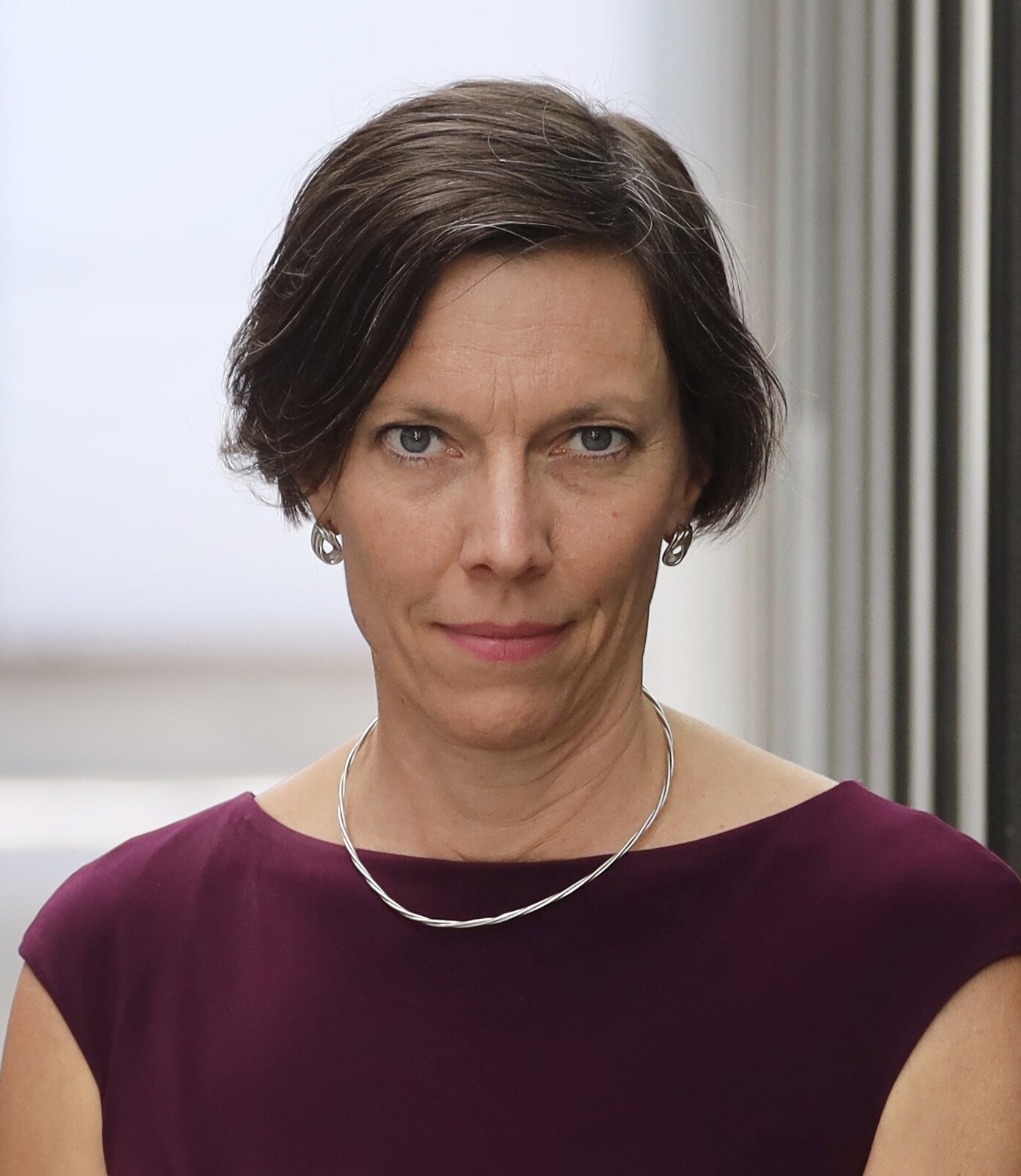
Taina Bucher is a Professor at the Department of Media and Communication, University of Oslo, specializing in algorithmic studies, digital infrastructure, and human-machine communication. She leads the Screen Cultures research group and serves as Principal Investigator for HumAIn , a five-year humanities hub reimagining AI (2024-2029). Research Focus: Her work examines Algorithmic power and politics Cultural imaginaries of digital technology Temporalities of algorithmic media Feminist epistemologies in digital contexts Monitorial citizenship in platform societies Publications: Bucher has authored two monographs: Facebook (Polity Press, 2021) and IF…THEN: Algorithmic Power and Politics (Oxford University Press, 2018). Her recent articles explore facial recognition systems, algorithmic temporality, and digital divides. Academic Background: PhD in Media Studies (University of Oslo, 2012), MSc in Culture & Society (London School of Economics, 2007), with visiting scholar appointments at The New School, Ryerson University, and New York University. Teaching: She supervises and teaches topics including Digital infrastructure Algorithm studies Screen cultures Media theory Critical data studies Digitalization of public sectors Editorial Roles: Active on editorial boards for Journal of Communication , New Media & Society , and Information, Communication & Society .
Marianne Nordli Hansen is a Professor at the Department of Sociology and Human Geography , University of Oslo. With a career spanning decades, her research focuses on social stratification , class and inequality , labor market conditions , economic inequality , and elites . She has taught courses like Sociological Theory (SOS4001), Theory Specialization in Sociology (SOS4011), and Inequality: Class, Gender and Ethnicity (SOS4100). Education: MA in Sociology (University of Oslo, 1984), Dr. philos in Sociology (University of Oslo, 1996) Positions: Associate Professor (ISS, UiO, 1996), Professor (ISS, UiO, 1999) Her research explores wealth accumulation , intergenerational mobility , social networks , and educational policy . Key collaborators include Professor Olav Korsnes and Associate Professor Johannes Hjellbrekke at the University of Bergen. Current projects focus on social inequality in Norway , with publications analyzing elite professions, wealth distribution, and class-based educational disparities. She has contributed to significant works on Nordic welfare models and public sector impacts on segregation and equality.
Norwegian University of Science And TechnologyNorway
Irina Oleinikova is a Professor at the Norwegian University of Science and Technology (NTNU) in the Department of Electric Energy, Faculty of Information Technology and Electrical Engineering. She leads the Power System Operation and Analysis research group and serves as the NTNU Smart Grid Team Leader. She is a steering committee member of the European Energy Research Alliance (EERA) Joint Programme on Smart Grids and an expert in the International Smart Grid Action Network (ISGAN) WG6. Research Interests : Power System Operation, Digital Power System Protection and Control, Grid Resilience, Energy Flexibility, Cybersecurity in Power Systems, and Hydrogen Technology Integration. Her work focuses on advancing smart grids, grid flexibility, and cybersecurity through projects like FME CINELDI, HONOR, ASAP, and ZeroKyst. Key Projects : CINELDI : Developing intelligent electricity distribution grids. HONOR : Cross-sectoral energy flexibility markets. ASAP : Next-generation system protection schemes. ZeroKyst : Hydrogen and charging infrastructure along Norway’s coast. COSPAT : Stability of AC/DC transmission grids via co-simulation. Advising & Grants : Supervises PhD students in digital protection and cybersecurity. Active in projects funded by RCN, STATNETT, and EU Horizon 2020. Leads the Power System Operation and Analysis group and collaborates with SINTEF and industry partners. Labs/Teams : NTNU Smart Grid Team and the Power System Operation research group.
Norwegian University of Science and TechnologyNorway
Marta Molinas is a Professor at the Department of Engineering Cybernetics within the Faculty of Information Technology and Electrical Engineering at the Norwegian University of Science and Technology (NTNU). Her research spans multiple interdisciplinary domains with a focus on EEG technology and brain-computer interfaces. She actively supervises numerous Master's projects and maintains extensive international collaborations with institutions including Kavli Institute for Systems Neuroscience, RIKEN Center for Brain Science, University of Tsukuba, Juntendo University, and several European universities. Professor Molinas' research interests center on developing innovative EEG technologies, particularly her FlexEEG concept for reduced-channel EEG systems with brain imaging capabilities. Her work integrates signal processing, artificial intelligence, and neuroscience to create practical applications in mental health, sleep research, neurorehabilitation, and human-computer interaction. She specializes in EEG source imaging, machine learning for brain signal analysis, and the development of brain-computer interfaces for various applications including locked-in syndrome communication, ADHD treatment, and driver monitoring systems. Her publication portfolio demonstrates strong trends in interdisciplinary research combining neuroscience with electrical engineering and artificial intelligence. The work shows particular emphasis on developing practical EEG-based systems that minimize invasiveness while maintaining analytical power, with applications spanning healthcare, rehabilitation, and human augmentation. Her research bridges theoretical signal processing with real-world implementations through numerous student projects and international collaborations. Professor Molinas actively supervises a large team of Master's and PhD students across multiple projects, with each project typically requiring two students working collaboratively. Her research is supported through numerous international collaborations with institutions in Japan, India, and Europe, indicating substantial research funding and project leadership. She has developed a pipeline of student projects that build upon previous work, creating a cumulative knowledge base within her research group. She leads the EEG ITK research team at NTNU, which focuses on developing the FlexEEG headset prototype featuring flexible, wireless, dry electrodes designed to move across the scalp. This team works at the intersection of neuroscience, electrical engineering, and computer science, developing applications for sleep research, mental health monitoring, neurorehabilitation, and brain-computer interfaces. The team collaborates extensively with international partners including the Kavli Institute for Systems Neuroscience, the International Institute of Integrative Sleep Medicine at University of Tsukuba, and several engineering departments across Europe and Asia.
Norwegian University of Science and TechnologyNorway
Professor Ingrid Bouwer Utne is a faculty member at the Department of Marine Engineering, Norwegian University of Science and Technology (NTNU). Her primary research focuses on risk analyses of ships, marine systems, and autonomy, with emphasis on operational safety, maintenance management, and risk control in autonomous maritime technologies. Key Projects: Leader of the Risk Group at NTNU, involved in the SFI Autoship initiative and ERC AdG BREACH project addressing risk-based rationality in autonomous systems. Research Interests: Autonomous systems design, probabilistic risk assessment, safety engineering, and risk-informed decision-making for marine operations. Grants & Funding: Secured funding from the Research Council of Norway, MAROFF, and industry partners for projects like ORCAS (Online Risk Management for Autonomous Ships) and UNLOCK (Supervisory Risk Control). She supervises numerous PhD students and postdocs, focusing on topics such as autonomous vessel navigation, risk modeling for underwater robotics, and decarbonization of maritime systems. Her work bridges theoretical risk analysis with practical applications in marine autonomy and safety systems.
Filippo Maria Bianchi is an Associate Professor in the Department of Mathematics and Statistics at UiT The Arctic University of Norway, where he conducts research at the intersection of machine learning, dynamical systems, and complex networks. He is also a Senior Researcher at NORCE Norwegian Research Centre and actively contributes to the IEEE Task Force on Learning for Structured Data and the ELLIS Society. Department: Department of Mathematics and Statistics School: Faculty of Science and Technology University: UiT The Arctic University of Norway Adjunct Position: Senior Researcher, NORCE Education: Bachelor’s in Computer Engineering, Sapienza University of Rome Master’s in Artificial Intelligence & Robotics, Sapienza University of Rome (cum laude, 2012) PhD in Machine Learning, Sapienza University of Rome His research focuses on graph machine learning, time series analysis, reservoir computing, and probabilistic forecasting , with applications in energy analytics and remote sensing. He has led and contributed to numerous projects involving Arctic power grids, satellite-based environmental monitoring, and deep learning for sustainability. The recent publications reflect a strong trend in graph neural networks —particularly pooling mechanisms, spatiotemporal modeling, and explainability—alongside applications in energy forecasting, avalanche detection, and remote sensing . His work combines theoretical innovation with real-world impact, especially in Arctic and remote environments. Scientific Affiliations and Leadership: Vice-Chair, IEEE Task Force on Learning for Structured Data Member, ELLIS Society Co-founder, Northernmost Graph Machine Learning group Member, IEEE Task Force on Reservoir Computing Visiting Professor, Politecnico di Milano (2024–2025) He actively mentors students and collaborates on interdisciplinary research. He has led projects in power grid reliability, solar fault detection, and unsupervised change detection in satellite imagery . His work is supported by open-source implementations and reproducible research practices. Laboratories and Research Groups: Northernmost Graph Machine Learning group (co-founder) ARC Research Group, UiT Graph Machine Learning Group, Lugano
Ali Ramezani-Kebrya is an Associate Professor with tenure in the Department of Informatics at the University of Oslo (UiO), where he leads research in machine learning theory. He holds dual Principal Investigator roles at the Norwegian Center for Knowledge-driven Machine Learning (Integreat) and SFI Visual Intelligence, and is an active member of the European Laboratory for Learning and Intelligent Systems (ELLIS) Society. His service includes Area Chair positions for NeurIPS and AISTATS, and Action Editor for Transactions on Machine Learning Research. His research focuses on theoretical foundations of deep learning with emphasis on understanding input data distribution encoding in neural network layers. Key themes include minimizing statistical risk under resource constraints, addressing distribution shifts in distributed settings, and developing practical tools for robust federated learning. Current applications span emotion recognition, marine data analysis, and neuroscience, reflecting his commitment to real-world machine learning challenges as evidenced by his FRIPRO-funded Machine Learning in Real World (MLReal) project. Recent publication trends reveal three dominant threads: (1) label/covariate shift mitigation in distributed systems through entropy regularization and density ratio estimation; (2) communication-efficient optimization via layer-wise quantization and adaptive compression techniques achieving 150% speedups; and (3) robustness guarantees against tailored attacks and distribution shifts. These works consistently bridge theoretical bounds with empirical validation across domains from GAN training to federated settings. Scientific recognition includes: FRIPRO Grant for Early Career Scientists (2025) for MLReal project SFI Visual Intelligence Spotlight Publication award (2023) for federated learning work He actively mentors 11 graduate students across Oslo and Tromsø universities, with recent PhD placements at Apple and NVIDIA. Current grant portfolio features the FRIPRO Early Career award and leadership roles in two major Norwegian research centers. His lab maintains strong industry collaborations through Vector Institute and EPFL, with recent hiring for PhD and postdoc positions in physics-informed machine learning.
Norwegian University of Science And TechnologyNorway
Zeinab Karami Hassan Abadi is a PhD candidate at the Department of Engineering Cybernetics, Norwegian University of Science and Technology (NTNU), under Professors Jon Are Wold Suul and Marta Molinas. Her research focuses on Control of Wireless Power Transfer Systems for Public Transport Applications, supported by SINTEF Energi's collaboration with Dr. Giuseppe Guidi. Academic Background: 2015-2021: Research Associate at University of Kurdistan, Sanandaj, Iran. 2015-2017: M.Sc. in Power Systems Engineering (University of Kurdistan). 2011-2015: B.Sc. in Electrical Engineering (University of Kurdistan). Research Interests span Optimal Control of Power Converters, Model Predictive and Robust Control, Wireless Power Transfer Systems, and Microgrid Dynamics. She specializes in advanced control strategies for power electronics in renewable energy and EV charging applications. Her work emphasizes stability and efficiency in power systems, with contributions to Model Predictive Control (MPC) for DC microgrids and inductive power transfer. Notable collaborations include projects with SINTEF Energi, focusing on practical implementations of control algorithms in real-world systems. Labs/Teams: Active in NTNU’s Power Electronics and Drives group, collaborating with SINTEF on applied power systems research.
Professor Mohan Lal Kolhe is a distinguished academic at the University of Agder , serving as a Full Professor in Smart Grid and Renewable Energy within the Faculty of Engineering and Science and the Department of Engineering Sciences . With over three decades of international academic experience, he has held positions at prestigious institutions including University College London, University of Dundee, and Hydrogen Research Institute in Canada. His career spans technical innovation, policy development (e.g., as a member of South Australia’s Renewable Energy Board), and extensive research leadership in sustainable energy systems. Research Leadership : Focus on Smart Grid integration, Electric Vehicles, Hydrogen Energy, Solar/Wind Systems, and Techno-Economic Energy Analysis. Global Recognition : Listed in the top 2% of scientists worldwide (2020-2023) by Stanford University, with 10 publications averaging 200+ citations. Recent publications emphasize advanced optimization techniques for renewable integration, EV charging infrastructure, hydrogen production, and power system stability. His work has secured competitive funding from entities like the Norwegian Research Council and EU programs. Awards and Expert Roles : Top 2% Global Scientist (Stanford, 2020-2023) Highly Cited Researcher (Top 10 publications, 200+ avg. citations) Expert evaluator for European Commission, Royal Society London, EPSRC, and Cyprus Research Foundation He actively contributes to international conferences as keynote speaker and editorial board member, with leadership roles in research groups like Autonomous and Cyber-Physical Systems and Energy Systems .
Norwegian University of Science And TechnologyNorway
Hossein Farahmand is a Professor at the Department of Electric Energy, Norwegian University of Science and Technology (NTNU), and leads the Electricity Markets and Energy Systems Planning (EMESP) research group. He holds an Associate Editor role at IEEE Transactions on Energy Markets, Policy and Regulation and contributes to international initiatives like IEA Wind Task 25 and ISGAN Annex 9. Education : Dr.ing. (PhD) from NTNU (2012) His research focuses on power market analysis, hydropower scheduling, power system balancing, and local flexibility markets in smart grids. Recent work explores renewable energy integration, digitalization, and hydrogen systems. Trends include machine learning applications in hydropower scheduling, offshore wind economics, and grid flexibility solutions. Scientific awards include Senior Member of IEEE and representation in ISGAN Annex 9 and IEA Wind Task 25 . He supervises PhD candidates and co-supervised projects in areas like grid tariffs , local energy communities , and electric vehicle integration . Grants include EU Horizon 2020 and Research Council of Norway funding for projects such as IntHydro , HONOR , and Ocean Grid . Labs and teams include the EMESP research group at NTNU, collaborations with Hohai University , Smart Innovation Norway , and industry partners in China and Norway.
Norwegian University of Science and TechnologyNorway
Associate Professor Eilif Hugo Hansen works at the Department of Electrical Energy, Norwegian University of Science and Technology (NTNU). His primary research areas are electrical installations and lighting technology, with a focus on energy efficiency, daylight utilization, and applications in aquaculture. He has contributed to standardization committees like NEK/NK64 and IEC TC64, and co-developed the LYSSTYR lighting control software. Department: Electrical Energy School: Faculty of Information Technology, Mathematics, and Electrical Engineering University: Norwegian University of Science and Technology Education includes a Civil Engineering degree (1985) and Doctorate in Engineering (1990) from NTH (now NTNU). He is a certified electrical contractor with expertise in low-voltage systems. Research Highlights : Over 30 years of publications in lighting technology, electrical safety, and energy systems. Key themes include ground fault detection , non-radial electrical networks , and daylight integration in buildings. His work with Lysforsk center and SINTEF collaborations underscores his industry impact. Teaching involves courses like TET4165 Light and Lighting and TET4170 Electrical Installations . He has supervised over 40 master's theses, including topics on smart lighting , power distribution , and energy-saving technologies . Professional Engagement : Member of NEK/NK64 Low-Voltage Installations committee Contributor to IEC TC64 MT12 standards Former head of the Energy Transformation and Electrical Installations program (1997-2000) Co-developer of the LYSSTYR software for simulating daylight rhythms
Elisabeth Oxfeldt is a Professor of Scandinavian Literature at the University of Oslo's Faculty of Humanities, Department of Literature, Area Studies and European Languages. Specializing in Danish and Norwegian literature from the 19th to 21st centuries, she examines cultural narratives through postcolonial and orientalist frameworks with particular focus on guilt discourse in Nordic contexts. Her educational background includes a Ph.D. in Scandinavian Literature from U.C. Berkeley (2002), M.A. in Scandinavian Literature (1996), and B.A. in French Literature (1988). This interdisciplinary foundation informs her transnational approach to Nordic literary studies. Oxfeldt's research centers on Scandinavian narratives of guilt and privilege within globalization, exploring how Orientalism, postcolonialism, and (post)nationalism manifest in literature and visual media. Her work critically engages with Hans Christian Andersen adaptations, war literature, travelogues, and literary activism, revealing tensions between Nordic self-perception as egalitarian societies and historical complicity in colonial structures. She frequently analyzes word-image relationships and adaptation processes across media. Publication trends show sustained engagement with postcolonial critique since her 2005 monograph Nordic Orientalism , evolving toward contemporary analyses of activist voices and guilt narratives. Recent edited volumes address literary rights struggles (2024) and ecological perspectives in Nordic literature (2023), demonstrating expanding interdisciplinary scope while maintaining core focus on representation and power dynamics. Awards and honors: Member of Det Danske Akademi (The Danish Academy) Advising and grants information was not specified in source materials, though her leadership of major research projects suggests significant supervisory and funding acquisition activities. Teaching responsibilities include courses on Nordic literature after 1800, Norwegian world literature, and literary activism. Oxfeldt co-leads the DINO (Diversity in Nordic Literature) research group and previously participated in ECODISTURB. Her current projects include 'Scandinavian Narratives of Guilt and Privilege in an Age of Globalization' (ScanGuilt) and 'Norwegian Romantic Nationalisms' (NORN), examining historical and contemporary constructions of Scandinavian identity through literary lenses.
Norwegian University of Science and TechnologyNorway
Sebastien Nicolas Gros is a Professor at the Department of Engineering Cybernetics, Norwegian University of Science and Technology (NTNU). His research focuses on safe reinforcement learning (RL) and data-driven model predictive control (MPC), with applications in energy systems, biomedical engineering, and autonomous vehicles. Institution: Norwegian University of Science and Technology Department: Engineering Cybernetics His work emphasizes AI-driven optimization for domestic energy storage, battery integration, and smart building management. Collaborations include Equinor, DNV, Kongsberg, Volvo, and CorPower Ocean. Key themes in his publications include: Control theory for renewable energy systems (wave energy converters, buildings) Biomedical applications (artificial pancreas, glucose monitoring) Transportation systems (electric vehicles, autonomous ships) Machine learning integration with physical models He supervises 6 PhD students and co-supervises projects on multi-rotor wind turbines and industrial PhD collaborations. The articles demonstrate a convergence of RL, MPC, and uncertainty quantification across energy, biomedical, and transportation domains.
Amanda D. Lotz is a Professor in the Digital Media Research Centre at Queensland University of Technology (QUT), leading the Transforming Media Industries and Cultures research program. Her work focuses on media industries, internet distribution, and the evolving role of television in society. She holds fellowships from the International Communication Association and the Queensland Academy of Arts and Sciences. Her research examines global streaming services, media policy, and the business strategies shaping contemporary media landscapes. Dr. Lotz earned a Ph.D. in Radio-Television-Film from the University of Texas at Austin, with prior academic roles at Washington University in St. Louis, Denison University, and the University of Michigan (2004–2018). Her expertise spans books like The Television Will Be Revolutionized and Media Disrupted , exploring streaming’s impact on traditional media. She advises on policy, consults for media organizations, and hosts the Media Business Matters podcast. Her research highlights the fragmentation of television audiences, the rise of subscriber-funded platforms, and challenges to cultural policy. Key projects include analyzing Australian TV drama production and the global implications of internet distribution. Her recent work addresses generative AI and metaverse media, emphasizing the transformative role of funding models (advertiser, consumer, government) in media priorities. Awardees include the Mellon Post-Doctoral Fellowship and recognition for her teaching. She actively contributes to global media discourse via interviews with major outlets (BBC, NPR, CNN) and serves as a resource for industry workshops on adapting to digital disruption.
Charu Sharma is an Associate Professor in the Department of Electrical Engineering at UiT The Arctic University of Norway, specializing in power systems and smart grid technologies. Her work focuses on reactive power control, voltage stability, and optimization of renewable energy-integrated networks. Research on cyber-physical co-simulation frameworks for real-time grid management Development of hybrid renewable energy microgrids for rural and industrial applications Expertise in optimization algorithms (e.g., BFOA-PSO, ANFIS) for energy systems Recent publications highlight her contributions to DER-enriched distribution networks, low-inertia system stability, and intelligent load frequency control. She actively collaborates with researchers on projects like Cooperative Isolated Renewable Energy Systems and arcICE , addressing reliability and sustainability challenges.