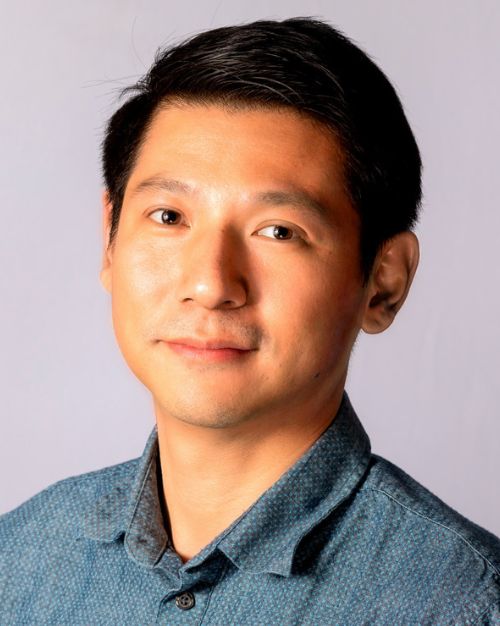
Yulong Huang is an Adjunct Assistant Professor of Research in the Department of Chemical and Biological Engineering and a Research Scientist in the Department of Mechanical and Aerospace Engineering at the University at Buffalo, State University of New York. His work focuses on advanced materials science, particularly magnetic materials, superconductivity, and nanomaterials with applications in energy, electronics, and biomedical systems. Research interests include molecular conductors, 2D materials, thermal insulation composites, and functional materials for wearable and flexible electronics. He has contributed to breakthroughs in lithium-ion battery technology, magnetic receptor studies, and high-temperature ceramic aerogels. Huang's interdisciplinary approach bridges chemical engineering, mechanical engineering, and applied physics. Key achievements include developing printable copper conductors, proton-controlled ferroelectrics, and pressure-tuned magnetic systems. His lab emphasizes scalable fabrication techniques for next-generation materials with tailored properties for extreme environments.
Dr. Tehmina Ambreen is a Senior Lecturer in Mechanical Engineering at the University of Hertfordshire's School of Physics, Engineering & Computer Science. She holds a PhD from Kyungpook National University, South Korea, and has held research positions at Kyungpook National University (Postdoctoral Researcher, 2021–2022) and the University of Sheffield (Research Associate, 2022–2023). Her research focuses on thermal management, nanofluids, phase change materials, and heat transfer in energy systems. Education: PhD in Mechanical Engineering, Kyungpook National University (2021) BEng (Hons) in Mechanical Engineering Research interests span thermal management of electronics/EV batteries, biomimetic heat exchangers, and thermal energy storage using phase change materials. She has published extensively on nanofluids, porous media, and heat sink optimization. Notable projects include designing thermal management systems for electric vehicle inverters and optimizing parabolic trough collectors. Her work integrates computational fluid dynamics (CFD) and experimental validation. Collaborations include studies on geothermal heat pumps and microfluidic fuel cells. Current affiliations include the Centre for Engineering Research at the University of Hertfordshire.
Pietro Bareschino is an Associate Professor in the Department of Engineering at University of Sannio. His research spans chemical looping combustion (CLC), CO2 capture and utilization, methanation, and fluidized bed reactor technology. He has contributed extensively to studies on sustainable energy systems, including bioenergy with carbon capture, solar PV lifecycle analysis, and coal fragmentation dynamics. His recent work includes a 2024 publication on bioenergy with carbon capture, where he analyzed integrated torrefaction–CLC–methanation using solar-dried biomasses. In 2023, he developed reduced-order models for methane reactors and evaluated solar PV systems in Pakistan, focusing on energy payback periods and environmental impacts. Earlier, he studied chemical looping combustion configurations (2020), tobacco stem biofuels (2020), and desiccant wheel performance (2013). His collaborations include researchers like Erasmo Mancusi, Francesco Pepe, and Claudio Tregambi. While no specific awards are mentioned, his work appears in journals like Applied Energy and Powder Technology , with conference contributions to Engineering Conferences International and AIDIC . He has explored innovative reactor designs, such as dual fluidized beds with internal/external solids circulation (2017), and techno-economic analyses of supercritical coal-fired power systems (2024).
Prof Tariq Muneer is a faculty member at Edinburgh Napier University , affiliated with the School of Computing Engineering and the Built Environment . His research focuses on renewable energy systems , particularly solar PV and wind turbines , with applications in climate change mitigation , energy economics , and sustainable transport . He has supervised numerous postgraduate students and led projects funded by organizations such as the Scottish Government and EPSRC . Research Interests Tariq's work spans renewable energy generation , energy storage , and data-driven performance assessment of wind and solar systems. Key areas include bifacial photovoltaics , urban heat island effects , and electric vehicle infrastructure , emphasizing technical and economic feasibility in real-world contexts like Scottish agriculture and island communities. Recent Publications His 2023 article on solar-wind hybrid systems in Scotland highlights cost-competitiveness with fossil fuels. Earlier works (2020-2022) cover diffuse radiation models , view-factor algorithms , and EV thermal management , reflecting a trend toward hybrid renewable systems and urban sustainability . Articles from 2019 and earlier explore island energy solutions and cement industry emissions . Projects He led projects such as the EPSRC-funded Enerwater (2014-2018) on energy recovery in food processing and the Scottish Government’s LED lighting feasibility study (2012). Other initiatives include renewable integration in Sark Island and decentralized energy solutions for South Asia and sub-Saharan Africa.
Maria Serra Prat is an Associate Professor in the Automatic Control Department at the Universitat Politècnica de Catalunya (UPC), where she has been a faculty member since 2008. She leads the Automatic Control Group at the Institut de Robòtica i Informàtica Industrial (IRI), a joint research center of UPC and CSIC, focusing on advanced control systems for energy applications. Research Interests: Her work centers on the modeling and control of complex energy systems, with a strong emphasis on fuel-cell technologies and vanadium redox flow batteries. She investigates optimal strategies for hydrogen production, storage, and integration with renewable sources, particularly in transport and grid applications. Her research bridges theoretical control methods with real-world energy system implementation. Recent Research Trends: Her recent publications (2023–2024) reflect a consistent focus on energy storage and conversion systems. Key themes include real-time monitoring of fuel cells, optimal control of hydrogen refueling stations, and advanced strategies for mitigating capacity loss in flow batteries. The work combines nonlinear control theory, system identification, and experimental validation in hybrid energy systems. Scientific Awards: While no specific awards are listed in the provided text, her leadership in national research projects and publication record in high-impact journals indicate significant recognition in her field. Advising and Grants: She supervises PhD research, including Pol Cardona Rubio’s work on optimization-based control of renewable hydrogen systems. She leads the MAFALDA project on vanadium flow battery integration and contributes to the MASHED project on hybrid energy storage management, both national-level initiatives demonstrating sustained grant funding. Labs and Teams: She heads the Automatic Control Group at IRI, a multidisciplinary team engaged in cutting-edge research on energy system automation, control algorithm development, and experimental validation of fuel cell and battery technologies.
James L. Kirtley Jr. is a Professor of Electrical Engineering at MIT, affiliated with the Department of Electrical Engineering and Computer Science (EECS) and the Research Laboratory for Electronics. He holds dual roles as a Director at Satcon Technology Corporation and has held visiting positions at institutions such as the Swiss Federal Institute of Technology (ETH Zurich) and Chongqing University. His academic journey includes a BS and PhD from MIT (1971). Research focuses on electromechanics, electric machinery, and power systems, including advanced motor/generator design, electric ship propulsion, microgrid optimization, and energy storage. Notable contributions include work on high-conductivity rotor materials and electric vehicle drive systems. Awards: IEEE Fellow (1990), IEEE Third Millennium Medal (2000), Nikola Tesla Prize (2002), National Academy of Engineering (2007). Professional Roles: Editor-in-Chief of IEEE Transactions on Energy Conversion (1998–2006), Editorial Board member of Electric Power Components and Systems. His industry experience includes roles at General Electric (steam turbine generators), Raytheon (microwave tube research), and Satcon (Vice President and Chief Scientist). He leads research initiatives in electric distribution systems, vehicle electrification, and modular ship propulsion architectures. Current projects explore 'self-healing' grids and advanced energy storage integration.
Dr. Jiajun Xu is a Professor of Mechanical Engineering and Director of the Center for Advanced Manufacturing in Space Technology and Applied Research (CAM-STAR) at the University of the District of Columbia (UDC). He holds a Ph.D. in Mechanical Engineering from the University of Maryland, College Park. His research focuses on additive manufacturing, thermal transport, space technology, and nanofabrication tools like atomic layer deposition and PVD. He leads multiple laboratories including CAM-STAR and the Multiscale Thermal Transport and Energy Conversion Lab. Dr. Xu has secured significant federal funding from NASA and the Department of Defense for projects in advanced manufacturing and thermal management systems. His expertise includes designing additively manufactured geothermal heat exchangers, nanoscale thermal transport studies, and phase change material integration. He actively collaborates with industry leaders and NASA, emphasizing experiential learning for students through capstone projects. Dr. Xu's leadership roles include serving as Program Director for UDC's Mechanical Engineering program and on editorial boards of journals like the ASME Journal of Heat Transfer. He has received notable awards, including the Black Engineer of the Year Award and multiple UDC Excellence Awards. Grants: NASA (2023, 2019), DoD (2020), NSF (2016) Labs: CAM-STAR, MT2EC, Additive Manufacturing Lab Professional Affiliations: ASME, ASTFE, NSPE Education: Ph.D./M.S. (University of Maryland), B.Sc. (Southeast University)
Yiqiang Wu serves as Professor of Teaching English as a Second Language and Graduate Coordinator for TESL within the Department of Special Education, Language, and Literacy at The College of New Jersey's School of Education. His 30-year academic career at TCNJ includes progressive appointments from Assistant Professor (1995) to current Professor (2019-present), with continuous leadership as TESL Program Coordinator since 1996. His educational background includes: Ph.D. in Curriculum and Instruction, Texas A&M University (1992) M.A. in English Literature and Linguistics, Texas A&M University (1989) Wu's research centers on second language acquisition in transnational contexts, with particular emphasis on Chinese-American educational interfaces. His work bridges theoretical linguistics and classroom practice through investigations of language assessment methodologies, sociocultural dimensions of bilingual education, and technology-enhanced language learning. Current projects examine motivational dynamics in heritage language acquisition and cross-cultural communication challenges in U.S. educational settings. Analysis of his 20+ publications reveals consistent focus on practical applications of language theory, with evolving emphasis from foundational language skills (1990s) to contemporary sociopolitical dimensions of multilingual education (2020s). His scholarship demonstrates strong alignment with federal priorities in bilingual teacher development and immigrant student support. Award recognition includes: Certification of Excellence Award in Teacher Education (NJ DOE, 2012) Wu directs substantial grant-funded initiatives including the $3.5M USDOE Back to Community Bilingual Multilingual Teacher Certification Project (2024-2029) and the $600K MUSIC grant addressing urban immigrant EL challenges. His sustained funding record since 2002 demonstrates significant impact in bilingual education policy and practice. As TESL Program Coordinator, he oversees comprehensive teacher preparation pathways and maintains active collaboration with New Jersey school districts through the Center for Future Educators and professional development partnerships.
Alberto Arce Ceinos is a Professor at the University of A Coruña (UDC), serving in the Department of Navigation Sciences and Marine Engineering. As coordinator of the Thermal Systems and Heat Transfer research group, he leads significant research efforts in thermal engineering applications with focus on phase equilibrium, physical properties, boiling phenomena, ionic liquids, and nanofluids. His research spans thermal systems, heat transfer, and thermodynamic properties of advanced fluids. This work bridges fundamental thermodynamic principles with practical engineering applications, particularly in renewable energy systems and industrial processes. His expertise in ionic liquids and nanofluids has important implications for energy efficiency and sustainable engineering solutions across multiple industries. Analysis of his publication record reveals consistent focus on thermophysical properties of novel fluids, with progression from fundamental measurements to applied research in petroleum engineering, power generation, and renewable energy systems. His work demonstrates strong interdisciplinary connections between chemical engineering, mechanical engineering, and energy systems, with increasing emphasis on sustainable applications in recent years. Professor Arce Ceinos has directed numerous bachelor's and master's theses since 2013 on thermal engineering applications including heat pumps, organic Rankine cycles, refrigeration systems, and energy recovery systems. His research has received funding from the European Regional Development Fund, Spanish Ministry of Economy and Competitiveness, and Galician regional government agencies. He coordinates the Thermal Systems and Heat Transfer research group at UDC, which focuses on energy efficiency, thermal system design, and advanced heat transfer applications. The group maintains strong industry connections, developing practical engineering solutions for power generation, refrigeration, and energy recovery systems with emphasis on sustainable technologies.
Dr. Fadi Kahwash serves as a Lecturer in Mechanical Engineering within the School of Computing, Engineering and the Built Environment at Edinburgh Napier University, where he teaches design and energy-related modules. He joined Napier University in 2021 after working as a research assistant and research fellow at Northumbria University, where he participated in EU-funded projects including Erasmus+ for renewable energy teaching and Horizon 2020 for research initiatives. Dr. Kahwash earned his PhD in Mechanical Engineering in 2018 from Northumbria University with research focused on novel numerical methods applied to modeling machining of composite materials. His educational background established the foundation for his expertise in physics-based modeling and simulation techniques that continue to drive his research agenda. His research spans renewable technologies, energy storage, aerodynamics, materials science, and manufacturing processes, unified by a common thread of physics-based modeling and numerical methods. Recent work demonstrates increasing focus on practical applications in healthcare energy systems, residential multi-energy integration, and biodegradable medical implants through additive manufacturing. His publications reveal a strategic evolution from fundamental machining simulations toward applied energy solutions addressing real-world sustainability challenges. Dr. Kahwash's recent publications show strong emphasis on energy system integration for healthcare facilities, residential applications, and industrial processes. His work combines theoretical modeling with practical implementation considerations, particularly in unreliable grid environments and specialized applications like medical facilities. The research demonstrates sophisticated understanding of both technical and economic aspects of energy systems. Fellowship of the Higher Education Academy (FHEA) Member of the Institution of Mechanical Engineers (MIMechE) Chartered Engineer (CEng) Dr. Kahwash actively supervises multiple PhD students on projects including energy management strategies for hybrid renewable systems, work and heat exchange networks for hydrogen industry, photovoltaic integration in buildings, and optimization of additively manufactured medical parts. His research portfolio includes significant funding from diverse sources including the British Council (£80,000 for Resilient & Green Healthcare in Egypt), EPSRC (£49,531 for Multi-Scale Energy Systems Modelling), and Scottish Funding Council (multiple £4,999-5,000 grants for energy storage projects). These projects demonstrate his ability to secure competitive funding for applied research addressing energy sustainability challenges. His work involves collaboration with multiple research teams including Energy Systems Catapult, Northumbria University researchers, and international partners in Egypt. Current projects focus on developing AI-aided energy management software, modular energy storage solutions, and innovative approaches to healthcare facility power resilience, reflecting a strategic research direction toward practical, implementable energy solutions for critical infrastructure.
Hrushikesh Mhaskar is a Research Professor of Mathematics at Claremont Graduate University (CGU) since 2012, with a prior 32-year tenure at California State University, Los Angeles. He holds a PhD in Mathematics from Ohio State University, alongside an MS in Computer Science and an MSc from the Indian Institute of Technology, Mumbai. His research focuses on approximation theory, computational harmonic analysis, machine learning, and signal processing, with significant contributions to neural network theory and kernel-based methods. Mhaskar has authored over 150 papers, two books, and five edited volumes. His work includes pioneering studies on weighted polynomial approximation, Fourier domain conversions, and manifold learning. He currently serves on editorial boards for journals like Applied and Computational Harmonic Analysis and Journal of Approximation Theory , and collaborates with institutions like the University of California, Santa Barbara. Awards include five Alexander von Humboldt Fellowships and a John von Neumann Distinguished Professorship. His research is supported by the NSF and previously by the U.S. Air Force and intelligence agencies. Notable contributions include developing eignets for function approximation on manifolds and analyzing deep vs. shallow networks' approximation capabilities. His work bridges theoretical mathematics with practical applications in biomedical data analysis (e.g., blood glucose prediction) and signal processing.
Prof. Dr. Marco Chiado Caponet is a Professor of Power Electronics at Berlin University of Technology . His research focuses span power electronics, electromagnetic compatibility (EMC) , and wide bandgap (WBG) semiconductors for applications in electric vehicles , photovoltaic systems , and high-efficiency inverters . Education: Master's (1995) and Ph.D. (2000) in Electrical/Electronic Engineering from Polytechnic of Turin. Professional History: Developed power electronics at Prima Electronics (1996–1997), research assistant at Polytechnic of Turin (1997–1999), and visiting researcher at RWTH Aachen (1998–1999). Later served as Ministerial Official (2004–2008), Director of the Don Bosco Institute (2008–2014), and held professorships at RheinMain University of Applied Sciences (2014–2016), Ravensburg-Weingarten University (2015), Wismar University (2016–2020), and Berlin University of Technology (since 2020). Research Trends: Specializes in EMC-optimized inverter design , WBG semiconductor characterization (GaN/SiC), and thermal performance for industrial and traction applications. Publications highlight advancements in low-cost power factor correction , noise suppression , and high-efficiency photovoltaic inverters . Scientific Awards: IEEE Senior Member (2021) Advising: Offers thesis topics in DC/DC converters , WBG semiconductors , and renewable energy systems . No explicit student list provided.
Oliver Opel is a Professor of Energy Optimization of Buildings at the West Coast University of Applied Sciences (FH Westküste) in Germany. He leads research in thermal energy storage, corrosion monitoring, and sustainable campus development. His work focuses on integrating renewable energy systems into buildings and infrastructure, with a particular emphasis on district heating networks and aquifer thermal storage. Education: Dr. Opel holds a Doctorate in Natural Sciences (2013) and degrees in Environmental Sciences (2005) and Physics/Philosophy (2000) from Leuphana University of Lüneburg and the University of Osnabrück. Research Interests: Dr. Opel’s work spans thermal energy storage technologies, corrosion prevention in hydraulic systems, and achieving climate-neutral urban environments. Notable projects include the climate-neutral campus at Leuphana University and the development of innovative thermochemical storage systems. Awards: His contributions to sustainable energy infrastructure have been recognized through institutional awards, including the 1st place UI Green Metric World University Rankings (2019) for energy and climate initiatives. Advising & Grants: He has supervised multiple students (e.g., M. Wiegand, J.C. Genning) and led projects funded by the German Federal Ministry of Economics (BMWi), focusing on energy efficiency, corrosion monitoring, and renewable energy integration. Labs/Teams: Dr. Opel collaborates with interdisciplinary teams at the Institute for the Transformation of Energy Systems (ITE) and the Energy Storage Institute, advancing applied research in sustainable energy solutions.
Fernando J. T. E. Ferreira is an Assistant Professor in the Department of Electrical and Computer Engineering at the University of Coimbra since 2014. He has been a researcher at the Institute of Systems and Robotics since 1998 and previously served as Professor and Head of Department at the Engineering Institute of Coimbra (2001-2014). His career focuses on electrical engineering, energy efficiency, and motor design. University: University of Coimbra Department: Electrical and Computer Engineering Institution: Institute of Systems and Robotics Research Interests: Fernando's work centers on improving electric motor efficiency through winding configurations, fault diagnosis, and energy regeneration systems. He has explored voltage unbalance tolerance, motor reliability, and thermal management solutions for industrial applications. Article Trends: His recent publications (2016-2020) analyze motor efficiency optimization via winding redesign, fault detection algorithms, and energy recovery systems. Key themes include IEC standards compliance, thermal management, and predictive maintenance techniques. Contributions: With over 150 publications and 3000+ citations, Ferreira has contributed to IEEE journals and conferences on topics ranging from switched reluctance motors to photovoltaic power systems. He collaborates with Aníbal T. de Almeida and other engineers on industrial efficiency projects.
Krzysztof Czajka is a researcher affiliated with the Department of Energy Conversion Engineering at Wrocław University of Science and Technology. His work focuses on thermal processes, solid fuel conversion, and energy systems. Research interests include kinetics of thermal processes thermal analysis (TGA, DSC) pyrolysis, gasification, and combustion of solid fuels design of gasifiers and pyrolysis reactors steam and gas turbines life cycle assessment Recent publications analyze biomass torrefaction, coal gasification, and waste pyrolysis, emphasizing kinetic modeling and environmental sustainability. Key trends involve optimizing energy conversion efficiency and assessing emissions.