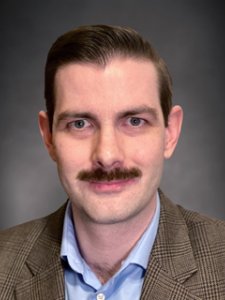
Dr. Vanika Sharma is a Lecturer at UniSA STEM , University of South Australia. Her research focuses on renewable energy systems, battery storage optimization, and smart grid technologies. Renewable Energy Integration Power System Voltage Regulation Energy Cost Minimization Smart Inverter Controls Vanika's work addresses critical challenges in high PV penetration and overvoltage-induced curtailment . She has developed optimization models for battery sizing and tariff analysis, demonstrating economic benefits for households and distribution networks. Her recent studies show how combining reactive power support and smart inverters can eliminate financial losses. In her 2024 IEEE Access paper, she proposed a method to reduce active power curtailment by 47% through coordinated battery and PV inverter control. Earlier works (2017-2020) established foundational insights on feed-in tariff economics and net zero energy homes . Her research has received support from the Australian Government and University of South Australia.
Johannes Kruisselbrink is a Researcher at Biometris , a department within Wageningen University & Research , specializing in food safety and cumulative risk assessment. His work focuses on pesticide residues, dietary exposure, and computational modeling for regulatory compliance. Key Collaborations: European Food Safety Authority, EFSA Projects: Active in pesticide exposure analysis (2024-2028), cumulative risk assessment tools (2019-2023), and regulatory frameworks (2018-2019). His research integrates data modeling and statistical software to enhance risk assessment methodologies. Recent projects emphasize interoperability and accessibility of platforms like MCRA and PARC. Scientific Contributions: Developed AMIGA Power Analysis tool for equivalence testing Authored reports on pesticide risk surveillance in fruits and vegetables Advancing EFSA standards for acute reference dose calculations
Dr. Abdullahi Tasiu Abubakar is a Senior Lecturer and Director of the PhD Programme in the Department of Journalism at City St George's, University of London. He holds a PhD in Journalism and Mass Communications from the University of Westminster, awarded with no corrections. His professional background includes roles as a producer at BBC World Service (London) and Bureau Editor in Nigeria, alongside reporting for major Nigerian newspapers covering conflicts across West Africa. Research Focus: Dr. Abubakar specializes in media audiences, strategic communications, conflict reporting, and journalism ethics. His work critically examines how global media interacts with African audiences, the ethics of crisis journalism, and the communication strategies of insurgent groups like Boko Haram. Publication Trends: His scholarly output (2011-2024) demonstrates consistent focus on media in conflict zones, digital audience engagement, and African media landscapes. Recent works explore colonial legacies in broadcasting and mobile technology's impact on media consumption. A 2021 computational study represents an interdisciplinary divergence. Awards & Honors: Nigeria’s Best Newspaper Reporter of the Year NUJ Certificate for Professional Excellence Fellow, Higher Education Academy (AdvanceHE, UK) Professional Activities: He supervises PhD, MA, and undergraduate dissertations, has secured multiple research grants, and advises governmental/NGO bodies. As External Examiner at King's College London, he contributes to academic quality assurance. He regularly presents at major conferences (e.g., IAMCR, ICA) on extremism reporting and decolonization of media.
Mamoun Qasem is a Lecturer in Cyber Security at the University of South Wales, Faculty of Computing, Engineering and Science. His work focuses on IoT Security, autonomous vehicle cybersecurity, wireless sensor networks, and RPL protocol enhancements. He has collaborated with industry leaders like Huawei and Thales Ltd, contributing to international standards through the IETF. Research Interests include: Defending systems from cyber threats RPL protocol optimization Adversarial deception methods in complex systems IoT threat hunting and network security Publications span top journals (e.g., IEEE Communications Letters) and conferences (e.g., IEEE WCNC). He leads projects like RsIoT for oil & gas field monitoring and supervises a KESS PhD student on adversarial deception in cyber defense. Mamoun actively reviews for journals like Elsevier Computer Networks and coordinates international conference workshops (e.g., ICSOC, CFATI). No scientific awards are explicitly listed. He coordinates interdisciplinary research initiatives and serves as a technical reviewer for multiple platforms.
Konstantinos Nikitopoulos is a Professor at the University of Surrey , UK, specializing in Wireless Communications and Signal Processing . His research focuses on MIMO Systems , Open-RAN , and Non-Linear Processing for next-generation wireless networks. His recent work explores Analogue Processing for Tbps Wireless Systems and Neuromorphic Computing in MU-MIMO detection. He has developed frameworks like MIMO-SoftiPHY and SACCESS for software-based radio acceleration and power-efficient network design. Key Publications : Power-Efficient RIC, NL-COMM, NeuroMIMO Collaborators : Rahim Tafazolli, George Katsaros, Marcin Filo His research impacts 6G Network Development through innovations in Beamforming , Channel Estimation , and Software-Defined Radios .
Adlen Ksentini is a Professor at EURECOM, a leading graduate school and research center in Sophia Antipolis, France, specializing in digital science and communication systems. His extensive research focuses on next-generation mobile networks (5G/6G), network management, and the integration of artificial intelligence with telecommunications infrastructure. Dr. Ksentini actively contributes to major EU research initiatives including 6G-BRICKS and AC3, serving as a key researcher and project leader in the development of future network architectures. Dr. Ksentini's research interests center around network slicing, intent-based networking, edge computing, and the application of machine learning to network management problems. His work bridges theoretical advancements with practical implementations in 5G/6G systems, with particular emphasis on zero-touch network management, energy efficiency optimization, quality of service assurance, and the integration of large language models with network operations. His research has significantly contributed to the development of O-RAN (Open Radio Access Network) frameworks and the evolution of network automation. His recent publication trends reveal a strategic shift toward AI-native network architectures, with increasing focus on integrating large language models (LLMs) with network management systems. His work demonstrates a clear progression from traditional network management approaches to more autonomous, AI-powered systems capable of intent-based configuration, self-optimization, and predictive maintenance. The publications show strong emphasis on practical implementations within the 6G research ecosystem, addressing critical challenges in network slicing, resource allocation, and energy efficiency. As a research supervisor, Dr. Ksentini mentors several PhD students including Abdelkader Mekrache, Karim Boutiba, Bouziane Brik, and Houda Hafi, who frequently appear as co-authors on his publications. His research is primarily funded through major EU research projects such as 6G-BRICKS (Building Reusable Testbed Infrastructures for Cloud-to-Device Breakthrough Technologies) and AC3 (which focuses on Cloud Edge Continuum). Dr. Ksentini is actively involved with the 6G-BRICKS project consortium and the AC3 project team, where he contributes to developing next-generation network architectures that integrate communication, computing, and sensing capabilities. His work within these projects focuses on creating reusable testbed infrastructures and addressing security and trust management challenges in the cloud-edge continuum.
Tamara Stojmenović is a faculty member at Singidunum University within the Faculty of Physical Culture and Management in Sports . She holds a Doctor of Medicine degree from the University of Belgrade (2003-2010), a Specialist in Sports Medicine from the University of Belgrade (2014-2017), and a PhD in Experimental and Applied Physiology with Sports Medicine from the University of Kragujevac (2011-2019). Her research focuses on Sports Medicine , Physiology , and Cardiorespiratory Fitness , particularly examining: Cardiovascular responses to exercise Post-COVID-19 physiological impacts on athletes Physical activity optimization through ventilatory threshold analysis Comparative physiological profiles across sports disciplines Recent trends in her publications include athlete cardiac health, strain-specific SARS-CoV-2 effects, and injury prevention in basketball players. Her work appears in journals like Journal of Clinical Medicine , Diagnostics , and Medicina (Kaunas) , covering topics from maximal oxygen consumption to sports injury epidemiology. Professional Contributions: Co-author of two textbooks: Corrective gymnastics and kinesitherapy in sports (2021) and Sports medicine - through questions and answers (2020) Presented at multiple conferences on topics including ACL rupture prevention and athlete overtraining Conducts applied research on sports performance, physical activity prescription, and injury rehabilitation
Inbar Fijalkow is a Full Professor at the National School of Electronics and Computer Science (ENSEA) within CY Cergy Paris University. She is a member of the ETIS Research Unit (UMR 8051), focusing on signal processing for wireless communications, optimization, and machine learning applications. Her research bridges theoretical advancements with practical implementation in emerging communication systems. Education & Career: PhD in Signal Processing from TelecomParisTech (1993) Postdoctoral Fellow at Cornell University (1994–1995) Professor at ENSEA since 1999 Former Head of ETIS Research Unit (2004–2013) Research Interests: Signal processing for wireless communications Optimization techniques in massive MIMO and NOMA systems Machine learning applications in communication systems Nonlinear effects mitigation in high-power amplifiers Community & Awards: Member of CoNRS Section 7 (National Committee for Scientific Research) Chevalier de l’Ordre National du Mérite (2015) Founder of the CY Alliance Women in Science Prize (2017) Recent Projects: Active in ANR-funded initiatives (e.g., EcoBioH2, AI4code) and EU projects (e.g., PERSEUS). Her work emphasizes sustainability and AI-driven communication systems. Teaching: Teaches signal processing and wireless communications at ENSEA. Supervises PhD students and master’s theses in communication systems and signal processing.
Jessica Edlom serves as a PhD student and adjunct teacher at Karlstad University, actively contributing to strategic communication research within the global music industry. Her work bridges academic theory and practical industry challenges, with particular focus on digital transformation and fan-brand relationships. Her core research examines strategic communication practices, fan engagement dynamics, and transmedia marketing strategies in music. She investigates how artists like ABBA and Taylor Swift leverage phygital experiences to cultivate fan communities, exploring tensions between commercial imperatives and authenticity. Key interests include pandemic-era industry adaptation, value co-creation mechanisms, and the commodification of fan participation through choreographed engagement. Analysis of her publication timeline reveals a clear evolution from foundational studies on Nordic music branding (2017-2019) toward cutting-edge explorations of immersive technologies and fan experience design (2023-2025). Recurring thematic threads include the strategic mobilization of fan communities through social media, authenticity maintenance in digital branding, and industry adaptation to technological disruption. Her methodological approach frequently employs strategy-as-practice frameworks to uncover practitioner-level tensions in brand work.
Roberto Rojas-Cessa is a Professor in the Department of Electrical and Computer Engineering at New Jersey Institute of Technology (NJIT), affiliated with the School of Applied Engineering and Technology. His research focuses on networking, blockchain applications in smart cities, energy systems, wireless communications, and high-performance switching. He has led multiple National Science Foundation (NSF)-funded projects, including initiatives on controlled delivery power grids and next-generation network quality of service. Notably, his work explores blockchain for energy metering, sustainable environmental measures, and smart grid optimization. He is also a Senior Member of the National Academy of Inventors (2024). His research interests span network protocols, distributed systems, and IoT applications. Recent projects include AMI-Chain (a blockchain-based power metering system) and studies on indirect free-space optical communications for vehicular networks. He has contributed to advancements in medium access control for crowded networks and energy packet switches for digital microgrids. Rojas-Cessa’s work integrates machine learning for network management and flood impact analysis. He has developed tools for time-lapse analysis of urban data and agent-based models to evaluate electric vehicle adoption. His publications emphasize scalability, security, and efficiency in both traditional and emerging technologies. Grants: Collaborative Research on Power Grids (NSF, 2016–2018), NeTS-NR: Quality of Service Networks (NSF, 2004–2008) Awards: Senior Member of the National Academy of Inventors (2024) His lab activities include experimental evaluations of digital microgrids and blockchain implementations for carbon footprint tracking. He actively collaborates on projects addressing emergency communications and resilient energy distribution systems.
Stefano Paleari is a Full Professor of Financial Systems Analysis at the Department of Management, Information and Production Engineering, University of Bergamo. He holds a degree in Nuclear Engineering from Politecnico di Milano and has held significant academic roles, including Rector of the University of Bergamo (2009–2015) and President of CRUI (2013–2015). His research interests span financial systems, aviation economics, and higher education governance, with notable contributions to policy analysis and institutional performance evaluation. Administrative Roles: Scientific Director of ICCSAI, EUA Board member, and advisor to the Italian Ministry of Universities and Research. Key Projects: Led initiatives on university sustainability, energy consumption, and digital healthcare systems. Recognition: Honored as Grande Ufficiale della Repubblica Italiana and Cavaliere di Gran Croce, and awarded the Pearson Prize for financial research. His work integrates academic leadership with practical policy impact, focusing on institutional efficiency and innovation in education and healthcare sectors.
Dr Sara Giarola is an Honorary Research Fellow at Imperial College London's Department of Chemical Engineering, part of the Faculty of Engineering. Her work focuses on large-scale energy systems modeling, climate change mitigation strategies, and the integration of technological innovations into global energy frameworks. She is affiliated with the Sustainable Gas Institute (SGI), Energy Futures Lab, Grantham Institute, and MUSE energy systems model project. Dr Giarola holds a PhD in Chemical Engineering from the University of Padova and has extensive experience in mathematical programming, supply chain optimization, and advanced biorefining processes. Her research spans interdisciplinary areas including renewable energy systems, bioenergy production, and policy analysis for decarbonization pathways. Key affiliations include the Network of Excellence in Air Quality and SGI's Modelling gas futures initiative. She contributes to the development of agent-based models and geospatial analytics to address complex energy transition challenges, particularly in regions like Ecuador, Mexico, and China. Publications highlight her expertise in modeling energy trade dynamics, hydrogen infrastructure, and the socio-technical dimensions of net-zero pathways. Her work emphasizes real-world applications of integrated assessment models to evaluate climate policies and technological feasibility.
Professor Roger Woods is a prominent academic and researcher affiliated with Queen's University Belfast's School of Electronics, Electrical Engineering and Computer Science, part of the Faculty of Engineering and Physical Sciences. He holds the rank of Professor and is actively involved in advancing research and innovation in embedded systems, FPGA technologies, and AI-driven solutions for industry challenges. His work emphasizes practical applications through close collaboration with industry partners. His research interests span novel computing architectures (e.g., multi-precision and edge computing), FPGA-based systems for data analytics, and secure IoT communication protocols. Notably, he co-founded and serves as Chief Scientist of Analytics Engines Ltd, a data analytics company. He has led significant initiatives like the Kelvin-2 Tier-4 High Performance Computing centre and contributed to semiconductor reviews through EFutures. Professor Woods has been recognized with prestigious awards, including the IET Northern Ireland Engineering Excellence Award and IEEE Fellowship. He has supervised numerous PhD students focusing on topics like FPGA-based image processing, secure wireless communications, and embedded AI platforms. His publications reflect interdisciplinary strengths in hardware acceleration, physical layer security, and structural health monitoring. Key Collaborations : Projects with industry and institutions on semiconductor design, bridge monitoring, and AI hardware. Grants : Principal Investigator for multiple research grants, including Core Equipment Awards for advanced instrumentation. Labs/Teams : Active in Queen's Advanced MicroEngineering Centre and the EFutures network.
David K. Hall is an Assistant Professor in the Department of Aerospace Engineering at Pennsylvania State University, College of Engineering. His research focuses on advanced propulsion systems and aerodynamic integration for next-generation aircraft. He is actively involved in projects related to electric and hybrid-electric propulsion, boundary layer ingestion, and sustainable aviation technologies. Assistant Professor, Department of Aerospace Engineering, Penn State Researcher in Electrified Propulsion and Airframe Integration Contributor to NASA-affiliated research initiatives Dr. Hall's research interests center on improving aircraft efficiency and reducing environmental impact through innovative propulsion technologies. His work emphasizes boundary layer ingestion , distributed electric propulsion , and conceptual aircraft design optimization . He investigates how integrating propulsion systems with airframes can reduce fuel consumption and emissions, particularly in transport aircraft. The recent publications demonstrate a strong trend toward electrified and hybrid-electric aircraft systems, with a focus on mitigating flow distortion, optimizing fan-motor co-design, and assessing the environmental and economic viability of liquid hydrogen-fueled aircraft. His work bridges fundamental fluid dynamics with practical engineering applications in sustainable aviation. Dr. Hall has contributed to significant advancements in understanding the benefits and challenges of boundary layer ingestion, collaborating with leading researchers from MIT and NASA. While no formal scientific awards are listed, his publications in top-tier journals such as Journal of Turbomachinery and AIAA Journal reflect high research impact. He is likely involved in federally funded research projects, particularly through Penn State’s Vertical Lift Research Center of Excellence. He advises graduate students in aerospace research, particularly in propulsion and aerodynamics, though specific names are not listed. His lab or research group likely focuses on computational and experimental analysis of advanced propulsion concepts, possibly involving partnerships with industry and government agencies. Future work may explore cryogenic fuels, supersonic sustainable flight, and autonomy in electric aircraft.
Professor Ben Horan is the Head of School of Engineering at Deakin University , Faculty of Science Engineering and Built Environment. He holds a Doctor of Philosophy and Bachelor of Engineering from Deakin University, with expertise in electrical engineering , control systems , and human-centred computing . As a leading researcher in virtual reality (VR) applications, he focuses on safety training, aged care, and extended reality (XR) systems. PhD in Electrical Engineering (Deakin University) Graduate Certificate of Higher Education (Deakin University) Bachelor of Engineering (Deakin University) His research spans VR for electrical safety training , automated vehicle interactions , and XR applications in museums . His work includes grants from the Department of Health, Melbourne Water Corporation, and City of Greater Bendigo. Recent publications analyze 360° video realism, cognitive load in virtual workplaces, and AR for Industry 5.0. Professor Horan supervises PhD candidates exploring topics like autonomous vehicle pedestrian interactions , VR stress mitigation , and industrial XR systems . He has completed supervision of 10+ PhD and Master’s students.