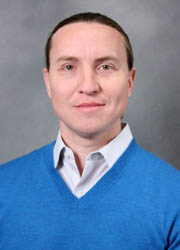
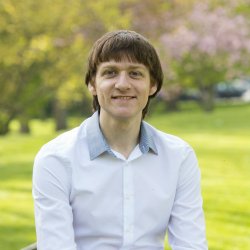
Professor Hak-Kim Chan of the Sydney Pharmacy School at the University of Sydney is a world-renowned expert in respiratory drug delivery, particularly pulmonary aerosols and inhalation therapies. With over 480 publications and 17,580+ Google Scholar citations, he has pioneered advancements in powder formulation , in silico modeling , and clinical applications of inhalation technologies. His work includes the development of FDA-approved diagnostics like Aridol™ (inhaled mannitol for asthma) and Bronchitol™ (for cystic fibrosis), and groundbreaking research on inhaled bacteriophage therapy to combat antibiotic-resistant respiratory infections. Education: BPharm (University Medal, 1983), PhD (1988), DSc (2009) from University of Sydney Professional Experience: Postdoc at University of Minnesota (1988–89), Scientist at Genentech Inc. (1992–95) Leadership: Executive Editor of Advanced Drug Delivery Reviews , Fellow of AAPS and RACI His research spans in vitro production methods, computational modeling of inhaler design, and in vivo imaging of aerosol deposition. Current projects focus on nanomedicine , phage therapy , and combating superbugs via inhalation routes. He has secured significant recognition for his work, including NHMRC case studies highlighting public health impacts. Professor Chan has supervised numerous researchers, including PhD student Grace YAU studying pulmonary probiotic delivery . His team's 10 patents (7 as first inventor) reflect practical innovations in dry powder inhalers , antimicrobial formulations , and drug stabilization technologies.
Kaka Ma is an Associate Professor in the Department of Materials Science & Engineering at Texas A&M University, specializing in advanced materials processing for energy systems and extreme environments through powder-based synthesis, additive manufacturing, and sintering technologies. Educational Background: Ph.D. in Materials Science and Engineering, University of California, Davis (2010) B.S. in Materials Science and Engineering, University of Science and Technology of China (2006) His research focuses on powder-based synthesis of metals/ceramics, laser directed energy deposition, field-assisted sintering technology (FAST), thermionic/thermoelectric energy conversion materials, and ultrahigh-temperature/hypersonic environment applications, with strong emphasis on sustainability in materials engineering. Recent publications demonstrate expertise in creating functionally graded materials via controlled thermal gradients and powder morphology optimization. Analysis of 2021-2025 publications reveals dominant trends in spark plasma sintering parameter optimization, additive manufacturing of titanium alloys, high-entropy carbide development, and nanoparticle synthesis for energy applications, consistently linking processing parameters to microstructure-property relationships in extreme-condition materials. Scientific Awards: TMS Light Metals/Extraction & Processing Subject Award – Recycling (2020) Professional memberships include The Minerals, Metals and Materials Society (TMS) and America Makes. While specific advising details and grant information are not documented in the provided materials, his extensive collaborative publication record indicates active mentorship of graduate researchers and successful acquisition of research funding. No dedicated laboratory facilities or research team structures are specified in the source documentation.
Kaliramesh (Kali) Siliveru is an Associate Professor and University Outstanding Scholar in the Department of Grain Science and Industry at Kansas State University. His work focuses on grain processing, food safety, and process modeling , with expertise in milling technologies, particle mechanics, and material handling. He holds a B.S. in Food Science from Acharya N.G Ranga Agricultural University, India, and a Ph.D. in Grain Science from Kansas State University. Dr. Siliveru’s research has produced 75+ peer-reviewed articles, 13 book chapters , and impactful studies on reducing microbial contamination in wheat-based products, optimizing pulse processing, and advancing nonthermal technologies like cold plasma. He has received prestigious awards including the ASABE Early Career Engineer of the Year and the University Distinguished Faculty Award for undergraduate mentoring. He teaches GRSC 310 (Materials Handling) , GRSC 810 (Particle Technology) , and GRSC 840 (Advanced Grain Processing) . His lab affiliations include the BIVAP Feed Quality Assurance Lab and Hal Ross Flour Mill, where he explores milling efficiency, microbial control, and sustainable food processing . Current projects address novel applications for minor millets and engineering solutions for safe, nutritious food production.
Carolyn Conner Seepersad serves as the J. Mike Walker Professor of Mechanical Engineering at the University of Texas at Austin and directs the Center for Additive Manufacturing and Design Innovation. She holds membership in the U.T. System Academy of Distinguished Teachers and maintains active leadership in the additive manufacturing community through roles such as co-organizer of the Solid Freeform Fabrication Symposium and ASME Design Engineering Division Executive Committee membership. Her academic credentials include: PhD in Mechanical Engineering from Georgia Tech (2004) MA/BA in Philosophy, Politics and Economics from Oxford University (1998, Rhodes Scholar) BS in Mechanical Engineering from West Virginia University (1996) Dr. Seepersad's research centers on computational design methodologies and additive manufacturing innovation , with particular expertise in simulation-based design of complex systems, environmentally conscious product development, and materials engineering. Her work bridges theoretical design frameworks with practical manufacturing applications, emphasizing sustainability and performance optimization across aerospace, automotive, and energy systems. Current projects explore reactive extrusion additive manufacturing, negative stiffness materials, and machine learning integration for process-aware design. Analysis of her 15 most recent publications reveals a dominant focus on process innovation in additive manufacturing (70%), particularly stereolithography and selective laser sintering, with growing emphasis on data-driven design approaches (20%) and sustainable engineering applications (10%). Her work demonstrates consistent progression from fundamental material design toward integrated system optimization and industrial scalability. Her scientific recognition includes: International Outstanding Young Researcher Award in Freeform and Additive Manufacturing (2009) UT System Regents’ Teaching Award (2010) ASME Design Automation Committee Outstanding Young Investigator Award (2010) ASEE Outstanding New Mechanical Engineering Educator Award (2013) Multiple ASME and ASEE best paper awards U.T. System Academy of Distinguished Teachers membership Dr. Seepersad maintains an extensive advising portfolio with 48 graduate students (16 PhD, 24 MS, and 8 current) plus 2 postdoctoral researchers, reflecting sustained research productivity and educational impact. Her Product, Process, and Materials Design Lab fosters interdisciplinary collaboration between mechanical engineering, materials science, and computational design teams.
Claire Gaiani is a full Professor at the University of Lorraine, leading the Laboratoire d'Ingénierie des Biomolécules (LIBio). With an ORCID iD: 0000-0003-0434-8453 , she focuses on sustainable food ingredient development from agroresources and food-waste, specializing in the formulation of bioactive compounds (probiotics, glycans, PUFA, flavonoids) into functional powders through industrial-academic collaborations. Habilitation to supervise research (2012, University of Lorraine) PhD in Food Science (2006, University of Lorraine) Engineer (M.Sc.) from ENSAIA (2002, University of Lorraine) Her research combines atomic force microscopy (AFM), XPS analysis, and industrial partnerships (Nestle, Arla Foods) to optimize dairy and plant-based powder properties. Recent work explores cryogel monoliths for probiotic delivery, plant seed gums as structuring agents, and maltodextrin surface characterization. Key scientific contributions include: Over 140 peer-reviewed papers (90% Q1 Food Science/Chemistry/Biophysics) 2 book editions ( Engineering Plant-Based Food Systems , 2023; Atomic Force Microscopy for Food Research , 2023) 10 book chapters 2 patents (FR2807932A1, FR2112358A) 65 international lectures (17 invited) Honors include: 2023 Grand Prix en Sciences Lorraine-Luxembourg 2015 IUF junior member (5-year term) 2011 Marcel Loncin Prize 2014 NIZO Dairy Conference keynote She supervises 9 postdocs and 15 PhD students, and serves on the European Bioencapsulation Research Group board. Her work drives innovations in powder rehydration, probiotic encapsulation, and sustainable food systems through the Agria Grand Est association.
Dr. John J. Fitzpatrick is a Senior Lecturer in Process & Chemical Engineering at University College Cork (UCC) since 2008. He holds a PhD in Agricultural Engineering (Bioprocess Engineering) from Texas A&M University and has extensive industry experience, including roles at the National Dairy Products Research Centre and University College Dublin. His research focuses on Particle and Powder Technology, Sustainability, and Bioprocess Engineering, with notable contributions to dairy powder breakage mechanisms, sustainable process design, and engineering education reform. Education: PhD, Agricultural Engineering (Texas A&M, 1992) MSc, Food Engineering (University of Massachusetts, 1988) MSc, Teaching & Learning in Higher Education (UCC, 2008) Additional qualifications in Environmental Management and Sustainability. Research Interests: His work spans particle technology (food/dairy powders), sustainable energy systems, bioreactor optimization, and integrating ecological economics into engineering curricula. Recent projects include modeling oxygen transfer in bioreactors and analyzing carbon footprints of energy systems. Dr. Fitzpatrick has secured over €300k in research grants, including EU-funded projects on powder technology and Teagasc-supported studies on infant milk formula. He received the President’s Award for Excellence in Teaching (2006/7) and pioneered sustainability-focused educational initiatives at UCC. His 150+ peer-reviewed publications highlight interdisciplinary approaches to engineering challenges, emphasizing real-world applications and environmental stewardship. Grants & Awards: Walsh Fellowship (2018–2022) EU Research Training Network BIOPOWDERS (2004–2008) Teagasc-funded project on dairy powder breakage (2018–2022) Labs/Teams: Leads the Particle and Powder Science group at UCC, collaborating with industry partners like Teagasc and international universities. Active in curriculum development for sustainable engineering education programs.
Vanessa Magnanimo is a Full Professor at the MESA+ Institute, University of Twente, specializing in the micromechanics of granular materials and clays using advanced Discrete Element Method (DEM) simulations . Her research bridges micro- and macro-scale behavior of soils, focusing on computational modeling , small-strain stiffness , and material stabilization . She has led 107 research outputs and 2 datasets , including studies on wet granular systems , bio-cemented soils , and vegetated soil mechanics . Recent work includes 2025 publications on coarse-grained DEM and mixing indices in industrial processes. Notable activities include keynote talks at international events (2018–2020), visiting researcher appointments at institutions like 3SR Laboratory (2017) and Politecnico di Bari (2020), and editorial contributions. Her research spans geotechnical engineering , powder technology , and multi-scale modeling , with applications in soil stabilization , industrial powder handling , and eco-mechanical systems .
Professor Mike Bradley is a leading expert in Bulk and Particulate Technology at the University of Greenwich's School of Engineering. He has served as Director of The Wolfson Centre since 2000, overseeing its growth into a critical hub for powder and bulk material research. His work spans industries such as mining, pharmaceuticals, and renewable energy, with significant commercial and academic impact. Key affiliations include the University of Greenwich (since 1988) and leadership roles at The Wolfson Centre (since 2000). Education and early career: PhD in industrial pneumatic conveying systems (1985–1990), preceded by work in control system dynamics at GEC Avionics. His research focuses on powder behavior measurement , including novel instruments for flowability, breakage, segregation, and electrostatic charge detection. He explores hopper design , soil remediation , and wear protection in solids handling. Collaborations with over 170 companies (e.g., Brookfield Viscometers) have generated £2 million in industry funding over 10 years and led to 16 completed PhDs. Professor Bradley has received prestigious accolades such as the Institution of Mechanical Engineers' Innovation in Bulk Solids Handling Prize and Bulk Materials Handling Award (2013). He has held leadership roles in international standardization committees and organized key conferences like the Indian Bulk Solids Handling Conference (2011, 2014). His work integrates engineering innovation with industry applications , exemplified by the global adoption of his powder flowability tester and contributions to projects like the Drax Eco-Store renewable fuel conversion. He has also acted as an expert witness in litigation cases related to cargo damage and equipment performance.
Anna Lähde is a Professor in Aerosol Technology at the Department of Environmental and Biological Sciences, University of Eastern Finland. She leads the Sustainable Materials Group at the Fine Particle and Aerosol Technology Laboratory . Her work focuses on the synthesis and characterization of sustainable nano- and microparticles for clean energy and environmental applications. Academy of Finland Research Fellow (2017-2022) Specializes in graphene, carbon nanostructures, and metal oxides via aerosol processes Key methods: induction annealing, chemical vapor synthesis, spray pyrolysis Her research spans Li-ion battery materials , water treatment nanocomposites , and toxicological analysis of airborne particles . She has published extensively on carbon-based anode materials , photocatalytic systems , and environmental applications of aerosol technology . Recent work includes CO2 adsorption catalysts and biomass-derived graphene . She has received recognition through the Academy of Finland Fellowship and contributes to circular economy projects like EKOAKKU.
Dr. Waseem Kaialy is a Senior Lecturer in Pharmaceutics at the School of Pharmacy, Faculty of Science and Engineering, University of Wolverhampton. He earned his BPharm (2007) with five Academic Excellence Awards, followed by a PhD in Pharmaceutics from the University of Kent (2013) in collaboration with Pfizer Ltd. His academic journey includes roles as a pharmacy manager (2007-2008), teaching assistant (2008-2009), postdoctoral research associate (2013-2014) at Kent, and visiting researcher at Luleå University of Technology (Sweden). Education: BPharm (2007), PhD (2013), PGC Academic Practice in Higher Education (2014-2015) Certification: AoFAQ Level 3 Award in First Aid at Work (2016) Dr. Kaialy’s research focuses on enhancing drug delivery systems through particle engineering, with emphasis on: Optimizing aerosolization performance of dry powder inhalers Improving solubility and dissolution rates of poorly soluble drugs Enhancing flowability and tabletability of poorly compactible drugs His work spans pharmaceutical solid-state properties, triboelectrification effects, and lyophilization techniques, with over 90 publications, 1331 citations, and leadership roles in editorial boards for 25 journals. Notable scientific awards include the ERAS Fellowship and Fellowship of the Higher Education Academy . Dr. Kaialy has supervised multiple research-based degrees at Wolverhampton, focusing on composite particle engineering and novel formulation strategies.
Marcial Gonzalez is an Associate Professor of Mechanical Engineering at Purdue University's School of Mechanical Engineering. He holds a Ph.D. in Aeronautics from the California Institute of Technology and has expertise in multi-scale modeling of granular systems, pharmaceutical manufacturing, and energetic materials. His research focuses on predictive modeling of particulate processes and their applications in industries like pharmaceuticals and energy. Education: Ph.D., Aeronautics (Minor in Materials Science), California Institute of Technology, 2011 M.Sc., Aeronautics, California Institute of Technology, 2006 Mechanical Engineer, University of Buenos Aires, 2002 Research interests emphasize multi-scale modeling of microstructure evolution in granular systems, particulate product design, and continuous manufacturing. Key areas include pharmaceutical tablet performance, energetic materials thermomechanics, and biomass processing. Notable awards include multiple Seed for Success Awards (totaling over $1M in grants) and teaching accolades like the Robert W. Fox Outstanding Instructor Award. He is affiliated with Purdue's Center for Particulate Products and Processes and Ray W. Herrick Laboratories. Awards: Purdue Insights Fellow (2025-2026) Fellow of Purdue University Teaching Academy (2025) Outstanding Engineering Teacher (2024, 2019) Robert W. Fox Outstanding Instructor Award (2021) Grants and advising: Active in securing grants for projects like FDA-funded Industry 4.0 frameworks and DOE biomass transport studies. His work bridges micromechanics with industrial-scale manufacturing challenges. Labs/Teams: Leads research at the Gonzalez Research Group, focusing on granular dynamics and particulate product engineering.
Dr. Colin Hare is a Visiting Senior Lecturer in Chemical Engineering at the University of Surrey's School of Chemistry and Chemical Engineering. He holds an MEng (2006) and PhD (2010) from the University of Leeds, and a Graduate Certificate in Learning and Teaching (2018) from the University of Surrey. Roles: Visiting Senior Lecturer, Research Fellow (2010–2016 at University of Leeds), and Co-Investigator in Marie-Curie ITN 'Mathegram' Affiliations: Member of EPSRC Early Career Forum in Manufacturing Research, Secretary/Treasurer of IChemE Particle Technology SIG His research focuses on powder flowability , particle breakage , and Discrete Element Method (DEM) -based modeling. Key projects include flowability assessment of weakly consolidated powders (funded by IFPRI) and predicting size reduction in ribbon milling (Procter & Gamble collaboration). He has pioneered methods like ball indentation for powder flow measurement and DEM modeling of impact breakage. Publications span Chemical Engineering Science , Powder Technology , and International Journal of Pharmaceutics , emphasizing granular dynamics, segregation, and industrial applications. Awards include the 2012 UK Particle Technology Forum Young Researcher Award and 2015 IChemE Nicklin Medal. Grants: £IFPRI grants (2014, 2017), Corning Inc. funding (2010s) Students: Supervises research on powder flow, heat generation, and CFD-DEM modeling Lab affiliations include collaborations with Procter & Gamble and the University of Leeds' Institute of Particle Science & Engineering.
Zoé Jardon is an Applied Mechanics postdoctoral researcher at Vrije Universiteit Brussel (VUB), working within the Applied Mechanics Acoustics & Vibration Research Group. Her research focuses on additive manufacturing processes, particularly laser-based directed energy deposition techniques, with expertise spanning structural health monitoring, residual stress analysis, and crack mitigation in additively manufactured components. Dr. Jardon completed her PhD at VUB, for which she received the prestigious Belgian National Committee for Theoretical and Applied Mechanics (NCTAM) Best PhD Thesis Award in 2022 (awarded March 2023) and VUB's Doctoral Derby in 2023. Her doctoral work centered on structural health monitoring systems, building upon two Master's theses she completed at VUB in 2018: one on crack localization verification and another on turbulent noise production in duct systems. Her research program demonstrates exceptional depth in advanced manufacturing technologies, with particular emphasis on thermal management and structural integrity of additively manufactured components. Dr. Jardon's work bridges theoretical mechanics with practical industrial applications, addressing critical challenges in laser-based directed energy deposition processes including powder-gas flow dynamics, residual stress control, and real-time monitoring systems. Her fingerprint analysis reveals strong expertise in Structural Health Monitoring (100%), 3D Printing (55%), Powder Processing (48%), and Laser Materials Processing (47%). Dr. Jardon's publication record shows consistent growth and increasing impact, with 31 research outputs spanning from 2017 to 2025. Her recent work demonstrates a clear trajectory toward developing intelligent manufacturing systems that incorporate in-process monitoring and real-time control to enhance component quality and reliability, moving beyond traditional post-process inspection methods. Her notable achievements include: Belgian National Committee for Theoretical and Applied Mechanics (NCTAM) Best PhD Thesis Award 2022 (awarded March 2023) VUB's Doctoral Derby 2023 Physical understanding of propagating waves through eSHM - system for crack localization (October 10, 2019) As principal investigator for the FWOTM1172 project "Thermal history and Residual Stress Control and Mitigation for Hybrid Additive Manufacturing Techniques" (2023-2026), Dr. Jardon leads fundamental research addressing residual stresses in manufacturing processes. She actively contributes to the academic community through conference presentations and workshop organization, recently chairing the VUB Additive Manufacturing Workshop in September 2024. Her collaborative research network includes strong partnerships with colleagues at VUB and beyond, focusing on advancing additive manufacturing technologies for industrial applications. Working within VUB's Applied Mechanics Acoustics & Vibration Research Group, Dr. Jardon contributes to the group's mission of developing innovative solutions for structural analysis and advanced manufacturing challenges. Her leadership in organizing research events and presenting at international conferences demonstrates her growing influence in the additive manufacturing research community.
Osmo Antikainen is a University researcher and visiting researcher at the Division of Pharmaceutical Chemistry and Technology, Faculty of Pharmacy, University of Helsinki. He serves as a Supervisor in the Doctoral Programme in Drug Research. His research focuses on pharmaceutical chemistry and technology, particularly tablet manufacturing, powder flow properties, and AI-driven quality control. Recent work includes AI frameworks for tablet compression and image-based analysis of powder dynamics. Antikainen has supervised doctoral theses on topics like pharmaceutical powder behavior and formulation stability. He collaborates with organizations such as Care4living Oy, DAIN Studios Oy, and Business Finland on projects like NIR-Based PAT Applications and LifeFactFuture . His publications (65 total) and projects (3 active/inactive) span 2000–2025, with a focus on process optimization and material interactions in pharmaceutical manufacturing.
Rajesh Dave is a Distinguished Professor in the Department of Chemical & Materials Engineering at the New Jersey Institute of Technology (NJIT). He holds a B.S. from the Indian Institute of Technology Bombay and M.S./Ph.D. degrees from Utah State University, all in Mechanical Engineering. His research focuses on pharmaceutical process engineering, powder technology, and material science, with applications in drug delivery systems and manufacturing optimization. He has pioneered dry coating techniques to enhance powder blend processability and employs machine learning for predictive modeling in pharmaceutical processes. Education: Ph.D., Mechanical Engineering, Utah State University (1983) M.S., Mechanical Engineering, Utah State University (1981) B.S., Mechanical Engineering, Indian Institute of Technology Bombay (1978) Research interests include powder compaction mechanics, surface engineering of pharmaceutical particles, and scalable manufacturing solutions for poorly soluble drugs. His work integrates experimental and computational methods to address challenges in drug formulation, process analytical technology (PAT), and quality-by-design (QbD) frameworks. Recent projects emphasize enhancing drug dissolution rates via nanoparticle engineering and optimizing 3D-printed dosage forms. Scientific Awards: 2022 AIChE PD2M Award for QbD Contributions 2021 Fellow of the National Academy of Inventors (NAI) His research has led to innovations in engineered excipients, continuous manufacturing systems, and predictive models for powder flowability. Collaborative efforts with industry partners focus on translating lab-scale discoveries into industrial applications. He maintains an active laboratory and advises on grants related to pharmaceutical manufacturing excellence.