
Giovanni Straffelini serves as Full Professor in the Department of Industrial Engineering at the University of Trento, holding key roles as Rector's delegate for Vocational and Continuing Training and coordinator of the Doctoral programme in Materials, Mechatronics and Systems Engineering. His research expertise encompasses: Metallurgical processes and metallic materials engineering Surface phenomena including wear, thermal fatigue, and surface engineering Advanced manufacturing technologies: heat treatment, powder metallurgy, spark plasma sintering Computational modeling through finite element analysis Energy efficiency optimization in industrial systems Professor Straffelini teaches core courses including Metallurgy, Metallic Materials Engineering, and Steelmaking and Foundry Technologies. His pedagogical approach integrates theoretical principles with industrial applications, featuring factory visits and numerical exercises to develop students' ability to design manufacturing systems and optimize material properties through process selection.
جستوجوی استاد و پژوهشگر
استاد راهنما، استاد دانشگاه یا پژوهشگر مناسب برای مسیر پژوهشیتان را پیدا کنید و با او ارتباط بگیرید.
نمایش ۴۶-۶۰ از ۳۸۳ استاد راهنما
اطلاعات این پروفایلها از صفحات عمومی دانشگاهها جمعآوری شده و ممکن است بهروز نباشد.
Albert To is a Professor at the Swanson School of Engineering, University of Pittsburgh, where he holds the William Kepler Whiteford Professorship. He serves as Director of both the MOST-AM Consortium and the ANSYS Additive Manufacturing Research Laboratory. Since joining Pitt in 2008, he has advanced from assistant to associate (2014) and full professor (2019). Education: BS, MS, and PhD from UC Berkeley; MS from MIT Postdoctoral Research: Northwestern University with Wing Kam Liu Dr. To's primary research interests center around design optimization for additive manufacturing, multiscale methods, and computational mechanics. His work focuses on fast process modeling and topology optimization for metal additive manufacturing. He directs the ANSYS Additive Manufacturing Research Laboratory, which houses advanced metal 3D printers including EOS DMLS, Optomec LENS, and ExOne binder jetting systems. In 2016, he founded the MOST-AM Consortium, which now includes over 30 member companies and research labs collaborating on additive manufacturing research. His research has been consistently supported by major funding agencies including NASA, DOD, DOE, NSF, America Makes, and industry partners like ANSYS. The recent publications demonstrate a strong focus on addressing key challenges in metal additive manufacturing processes, particularly laser powder bed fusion and wire-arc directed energy deposition technologies. His work spans from fundamental process modeling to practical applications in materials science and mechanical engineering. NSF BRIGE Award (2009) Air Force Summer Faculty Fellowship (2009) Board of Visitors Faculty Award (2016) Carnegie Science Award (2018) Best Student Paper Award, 46th Acoustic Emission Working Group Meeting (2003) Dr. To has secured substantial research funding from government agencies and industry partners to advance additive manufacturing technologies. His MOST-AM Consortium facilitates collaboration between academia and industry, accelerating the translation of research findings into practical applications. He has advised numerous graduate students who have contributed to his extensive publication record in top journals. His laboratory at the University of Pittsburgh is equipped with state-of-the-art metal 3D printing systems, enabling both fundamental research and applied development in additive manufacturing. The MOST-AM Consortium provides a framework for industry collaboration, ensuring research addresses real-world challenges in the field.
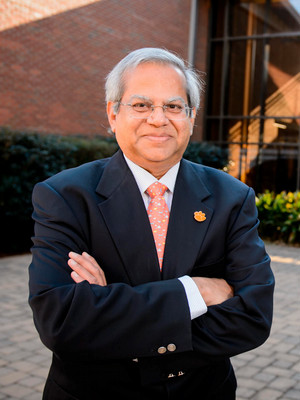
Rajendra K. Bordia is the George J. Bishop, III Chair Professor of Ceramics and Materials Engineering at Clemson University, where he previously served as Department Chair (2013–2019). He holds a B.Tech. from the Indian Institute of Technology Kanpur (1979), and M.S. and Ph.D. in Materials Science from Cornell University (1981, 1986). His research focuses on ceramics for energy, environmental, and medical applications, emphasizing sintering science, porous materials, and advanced composites. With over 170 publications and $40M in research funding, he is a Fellow of the American Ceramic Society and recipient of the Humboldt Research Award (2007) and Outstanding Educator Award (2012). Education: B.Tech., Mechanical Engineering, Indian Institute of Technology (1979) M.S., Materials Science and Engineering, Cornell University (1981) Ph.D., Materials Science and Engineering (minor in Solid Mechanics), Cornell University (1986) Research Interests: Ceramics for extreme environments and energy storage Nano/microstructure control in ceramics Porous and multilayered ceramic systems Polymers-derived ceramics and composites Professional Roles: Editor-in-Chief, Ceramics International Board Member, American Ceramic Society Academician, World Academy of Ceramics Awards Highlight: His recognition spans academic leadership (Marsha L. Landolt Graduate Mentor Award, 2007) and technical excellence (McQueen Quattlebaum Award, 2020).
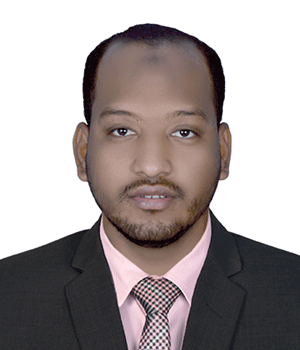
Mohamed Abdelmoula is a Researcher in the Mechanical Engineering Department at the University of Wisconsin-Milwaukee (UWM), affiliated with the College of Engineering & Applied Science. He holds a PhD from Gazi University (2022), an MS from Assiut University (2016), and a BS in Mechanical Engineering from Assiut University (2011). His research focuses on advanced additive manufacturing techniques, particularly laser powder bed fusion (LPBF) of ceramics and metals, numerical modeling of microstructure evolution, and process parameter optimization. Key research areas include additive manufacturing of silicon carbide and alumina ceramics, residual stress analysis, and scanning strategy development for LPBF systems. He previously served as a Marie-Curie Research Fellow, achieving notable advancements in the field. His work bridges computational modeling and experimental validation, with a strong emphasis on material characterization and process innovation. Abdelmoula's recent publications highlight advancements in ceramic additive manufacturing, including process parameter optimization for silicon carbide and multi-layer simulation of alumina processing. His contributions span both experimental and numerical studies, addressing challenges in material fabrication, thermal management, and energy systems (e.g., solid oxide fuel cells). Scientific Awards: Marie-Curie Research Fellowship (EU's most competitive fellowship). His research also extends to thermal stress analysis in fuel cells and welding processes, demonstrating expertise across multiple domains of mechanical engineering and materials science.
Tibor BEDOمشاهده پروفایل
دانشیار
Tibor BEDO is an Associate Professor at the University of Transilvania of Brașov , affiliated with the Faculty of Materials Science and Engineering and its Department of Materials Science . His contact information includes Building W, Room WIII5, Brașov, Romania, and phone/fax +40 268 411877. Research Interests: thermal analysis, special metal casting technology, computer aided design Key Focus Areas: additive manufacturing, 3D printing, metallurgical processing His recent publications explore solar sintering applications, material consumption reduction in ABS silver printing, innovative polymer architectures, metastable aluminum alloys for additive manufacturing, and medical implant translation methods. These works emphasize thermal behavior, structural optimization, and material efficiency. Dr. BEDO's collaborations span international institutions including Italian Academic University of Modena and Reggio Emilia, Romanian Technical University of Brașov, and Hungarian research entities. His work integrates computational modeling with experimental validation in materials development.
Jakob Blankenhagen is a research assistant at the Chair of Metal Construction at the Technical University of Munich . He holds an M.Sc. in Civil Engineering from TUM and specializes in additive manufacturing , fire safety engineering , and hybrid steel-timber structures . B.Sc. in Civil Engineering (2015-2019) M.Sc. in Civil Engineering (2019-2022) International Welding Engineer (2021) His research focuses on optimizing fatigue-stressed hollow section structures using Laser Powder Bed Fusion (LPBF) and developing fire-safe hybrid steel-timber constructions. Current projects include TRR277 A06, which investigates LPBF fundamentals for structural steel elements. Key publications address material characterization , fire behavior of hybrid structures, and machine learning-based pore detection in additive manufacturing. He contributes to advancing 3D-printed steel components and sustainable construction methods . He teaches courses on steel construction, composite building, and computational design at TUM, with a focus on practical implementation of additive manufacturing in construction.
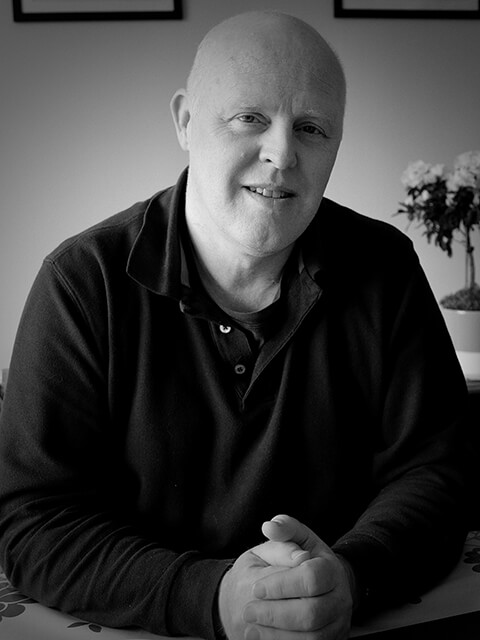
Paul Conway is a Professor of Manufacturing Processes and Dean of School at Loughborough University. He holds leadership roles such as Director of the EPSRC Centre for Doctoral Training in Embedded Intelligence. Conway earned his BEng (Hons) from the University of Ulster (1988) and MSc from Loughborough University (1989). His expertise spans electronics manufacturing, multifunctional materials, and Industrial IoT, with contributions to projects funded by EPSRC, EU frameworks, and industry. He is a Fellow of The Royal Academy of Engineering (2021) and has received prestigious awards including the 2003 IEEE/CPMT/SEMI Best Paper Award and 2012 Loughborough Innovation Italy Sustainability Award. His research addresses challenges in additive manufacturing, materials processing, and cyber-physical systems, with notable work on through-silicon vias (TSVs), biomedical scaffolds, and Industry 4.0 applications. Conway has led initiatives like the EPSRC IeMRC and contributed to strategic advisory roles in UK manufacturing research. His work emphasizes sustainable manufacturing practices and technological innovation across academia and industry. Education: BEng (Hons), University of Ulster, 1988 MSc, Loughborough University, 1989 Awards: Fellow of The Royal Academy of Engineering (2021) IEEE/CPMT/SEMI Best Paper Award (2003) Loughborough Innovation Italy Sustainability QUID Award (2012) Conway’s publications span advanced materials, manufacturing processes, and smart systems, reflecting his interdisciplinary approach. His current focus includes integrating cyber-physical systems for sustainable production and training future engineers through innovative frameworks.
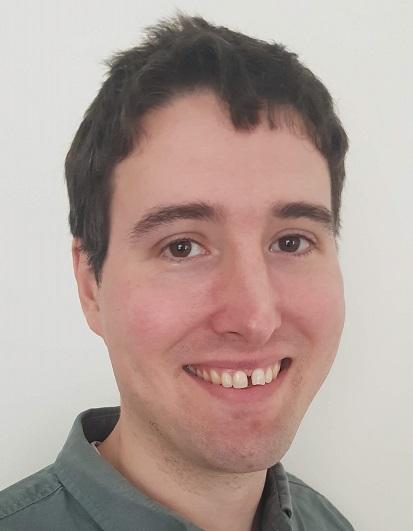
Dr Samuel Tammas-Williams is a Lecturer in Digital Manufacture at The University of Edinburgh's School of Engineering, with expertise in additive manufacturing and materials science. His academic credentials include an MEng and PhD in Aerospace Engineering and Advanced Metallic Systems from The University of Manchester (2010-2015), and a PGCert in Academic Practice from LJMU (2021). Mechanical Engineering Materials Science 3D Printing Titanium Alloys X-ray Computed Tomography Electron Beam Melting His research focuses on optimizing additive manufacturing processes for aerospace and space applications through advanced characterization techniques like X-ray tomography. Recent work explores lunar manufacturing, hot isostatic pressing, and defect analysis in metallic components. He supervises BEng, MEng, and MSc projects while teaching courses in digital design, additive manufacturing, and computer-aided manufacturing. Scientific contributions include 24 research outputs across metallurgy, process optimization, and novel manufacturing applications. Current projects target titanium structure damping and material performance correlations in additive manufacturing. Fellow of Advance HE (FHEA) Member of The Institute of Materials, Minerals & Mining (MIMMM)

- Structural Materials
- Microstructures
- Metal Forming
- +۷ مورد دیگر
Wojciech Z. Misiolek is the Loewy Professor and Director of The Loewy Institute at Lehigh University, where he also chairs the Department of Materials Science and Engineering. His research focuses on materials processing, microstructure evolution, and advanced manufacturing techniques. He has over 300 publications and two patents, and is a Fellow of the American Society for Materials International. Education: Sc.D., Metallurgy, AGH-University of Science and Technology, Kraków, Poland M.S., Metallurgy, AGH-University of Science and Technology, Kraków, Poland Research Interests: Dr. Misiolek investigates structural materials, metal forming, biomaterials, and additive manufacturing. He employs advanced numerical modeling and physical characterization techniques to study microstructure evolution during material processing. Key areas include aluminum extrusion, titanium alloy welding, and mechanical behavior of aerospace materials. Awards: Lehigh’s Hillman Faculty Award Fellow, American Society for Materials International Laboratories/Teams: Director of The Loewy Institute, which focuses on metal forming and advanced materials research. Previously co-directed the RPI Aluminum Processing Program.

Dr. Sinead O'Halloran is a Professor and Head of the Department of Science at South East Technological University (SETU), where she leads research initiatives in materials engineering and computational modeling. She is affiliated with the South Eastern Applied Materials Research Centre (SEAM) and has served as Scientific Coordinator for key projects like the DTIF E-Bambi initiative focused on biomedical implants. PhD in Mechanical Engineering, NUI Galway (2017) BEng in Civil Engineering, NUI Galway (2013) Her research spans Additive Manufacturing and Fretting Fatigue Analysis , with emphasis on: Biomedical implant biocompatibility Stainless steel powder reusability in AM Marine riser structural integrity Voronoi lattice design for fatigue resistance Surface acoustic wave sensor integration Key awards include the Robert Waterhouse Award (2016) , Maurice Godet Award (2015) , and Pierce Malone Scholarship (2014) . Her work contributes to UN Sustainable Development Goals, particularly in education and materials sustainability.

Dr Paul O'Leary is the Head of Quality Promotion and Academic Policy Development at SETU (South-East Technological University), Ireland. Previously, he served as a full-time lecturer in the Department of Engineering Technology within the School of Engineering, specializing in circuit theory, energy systems, and communications. He has over 10 years of experience leading academic programs from certificate to master's levels and contributed to teaching at both undergraduate and postgraduate levels. He is a member of SETU’s Academic Council and its subcommittees on Academic Quality, Planning, Teaching & Learning, and Research Innovation. Education: Bachelor of Engineering (BE) from University College Dublin (UCD) MEngSci in Digital Signal Processing (UCD) PhD in Far InfraRed diagnostic development on the RFX fusion facility (University College Cork, awarded as a EURATOM/Marie Curie Fellow at Consiglio Nazionale delle Ricerche, Italy) Research Interests: His work spans wireless communications, antenna design, laser diagnostics, additive manufacturing, and academic quality assurance. Notable contributions include developing solar wind detection systems for space projects (RAPID Cluster, Geotail HEP-LD) and a powerline communications system at DIT’s Applied Optoelectronics Centre. Recent Articles: Focus areas include quality frameworks in higher education during crises, 3D-printed metallic antennas, and non-destructive manufacturing techniques. These reflect his dual expertise in engineering and academic policy. Activities: Organized the 2024 Digital Education Conference and contributed to EU-funded research projects. He actively engages in peer-review and conference organization, emphasizing interdisciplinary collaboration. Labs/Teams: Affiliated with the Wireless Communications & Large Scale Simulation Group and the School of Engineering at SETU.
Roberto ROSAمشاهده پروفایل
دانشیار
Roberto ROSA is an Associate Professor at the University of Modena and Reggio Emilia, affiliated with the Department of Engineering Sciences and Methods. His work focuses on interdisciplinary research at the intersection of environmental sustainability, materials science, and chemical engineering. Key areas include Life Cycle Assessment (LCA) of chemical processes, development of sustainable materials (e.g., photocatalysts, geopolymer composites), and nanotechnology applications. ROSA’s research emphasizes environmental impact mitigation through innovative synthesis methods, such as microwave-assisted processes and solution combustion. His academic roles include teaching and guiding research in environmental technologies, materials engineering, and process intensification. Notable collaborations involve studies on green hydrogen supply chains, MXene material synthesis, and biorefinery processes using agricultural residues. ROSA’s work frequently integrates experimental design with LCA to optimize both technical and environmental outcomes. Publications highlight contributions to sustainable energy systems, biomedical applications of materials (e.g., dental pulp cell studies), and waste valorization (marble powder, ceramic waste). His research aligns with the UN Sustainable Development Goals, particularly in advancing resource efficiency and reducing environmental footprints of industrial processes.
David C. Dunand is a James and Margie Krebs Professor in the Department of Materials Science and Engineering at Northwestern University . He is a TMS Fellow and ASM International Fellow , recognized for his work in physical and mechanical metallurgy of multiphase metallic materials, with a focus on additive manufacturing , green manufacturing , and synchrotron X-ray radiation for in-situ strain and phase analysis. Ph.D., Metallurgy, MIT B.S. and M.S., Materials Engineering, Swiss Federal Institute of Technology His research spans metallic alloys , composites , and foams , particularly studying mechanical properties in relation to microstructure. Recent projects include $500,000 DOE funding for industrial emissions reduction and educational video games like Aluminoid and Oxide Blaster to teach metallurgy concepts. He co-founded NanoAI, LLC (acquired by Braidy Industries) and served as Co-Director of ISEN from 2008–2015. His group has published extensively on Al-Ce-Ni-Mn-Sc-Zr alloys , CoCrFeNi microlattices , and Fe-Ni extraterrestrial structures . Collaborations include institutions like MIT , Paul Scherrer Institut , and Universities in Switzerland and Thailand . The lab operates a SISMA MYSINT 100 laser powder bed fusion system . TMS Fellow (2012) ASM International Fellow (2007) Department Teacher of the Year (1998) Structural Materials Division Distinguished Scientist/Engineering Award (2008) James and Margie Krebs Professorship (2005–2016) His former students now hold positions at institutions including MIT , Boeing , Blue Origin , and Marquette University . His lab has produced over 15 recent publications in 2024 alone, focusing on additive manufacturing , high-temperature alloys , and microstructure-property relationships .

Erkki Levänen is a Professor specializing in Materials Science and Environmental Engineering. He holds a Doctor of Engineering in Materials Engineering (Rock Engineering, 2004) and a Tech. ul. in Mechanical Engineering (1994). His research focuses on advanced materials processing, including ceramic additive manufacturing, supercritical fluid applications, and corrosion science. He contributes to UN Sustainable Development Goals related to clean energy and sustainable innovation. Key research interests include: 1) Supercritical CO₂ processing for material synthesis (e.g., nanoparticles, ceramics), 2) Development of 3D-printed ceramic structures using vat photopolymerization, 3) Corrosion mechanisms of metallic coatings in extreme environments, and 4) Valorization of industrial waste into sustainable materials. His work bridges fundamental material science with industrial applications. Levänen has authored over 186 publications and actively participates in academic peer review (e.g., Cement and Concrete Composites, Chemical Engineering Journal) and doctoral thesis evaluations. His research networks span international collaborations, evidenced by co-authored studies with institutions globally. Recent projects include the MAGNEX initiative for CO₂ mineralization in circular economies and studies on antibacterial ceramic coatings. Education: Doctor of Engineering, Materials Engineering, Rock Engineering (2004) Tech. ul., Mechanical Engineering (1994) Grants & Projects: Includes funding for ceramic additive manufacturing, CO₂ utilization, and corrosion studies. Labs/Teams: Involved in additive manufacturing and materials processing research groups.
Joel Turner is Professor and Rolls-Royce Chair in Nuclear Fuel Technology within the Department of Mechanical and Aerospace Engineering at The University of Manchester. His research focuses on advanced nuclear fuel materials development for next-generation reactors, with significant contributions to the United Nations Sustainable Development Goal 7 (Affordable and Clean Energy). Affiliated with the Dalton Nuclear Institute and Energy research beacon, he leads cutting-edge work in accident-tolerant fuels and high-thermal-conductivity composites. Education: Doctor of Philosophy (PhD), The University of Manchester (2012). Thesis: 'The Performance of a Nuclear Fuel-Matrix Material in a Sealed CO2 System'. Master in Science (MSc), NTEC, The University of Manchester (2012). Master of Physics (MPhys), The University of Manchester (2011). Professor Turner's research centers on nuclear fuel materials science, specializing in uranium-based compounds (UN, UB2, UO2) and composites. His expertise spans thermal conductivity enhancement, oxidation behavior in air/steam environments, and advanced fabrication techniques including spark plasma sintering. Key interests include high-density fuels, burnable absorber integration, and accident-tolerant fuel development for light water reactors and advanced systems. His fingerprint reveals deep specialization in uranium material science (100%), fuel pellet engineering (75%), and oxidation reactions (75%). Analysis of his 15 most recent publications (2019-2025) shows dominant focus on UN-UB2 composite systems, with 7 articles directly addressing this material combination. Key trends include thermal conductivity optimization (6 articles), oxidation/steam resistance studies (5 articles), and advanced manufacturing techniques like spark plasma sintering (4 articles). His work consistently targets practical nuclear fuel challenges: 12/15 articles address accident tolerance, 10/15 focus on thermal performance enhancement, and 7/15 investigate integrated burnable absorbers. Scientific Awards: No specific awards documented in source materials As a supervisor, Turner has mentored 4 research students. His major grant involvement includes serving as Co-Investigator on the £1.8M 'Radiochemical Facilities for the Molten Salts in Nuclear Technologies Network (NNUF)' project (2019-2023), which developed infrastructure for molten salt reactor research with focus on spent fuel processing and reactor design. This project generated significant industry collaboration with Rolls-Royce and the National Nuclear Laboratory. Turner operates within the Dalton Nuclear Institute's fuel research ecosystem, collaborating extensively with the Energy research beacon. His laboratory work emphasizes high-temperature material testing under controlled atmospheres, with recent expansion into molten salt compatibility studies through the NNUF project. Current efforts focus on scaling UN-UB2 composite fabrication for industrial demonstration.