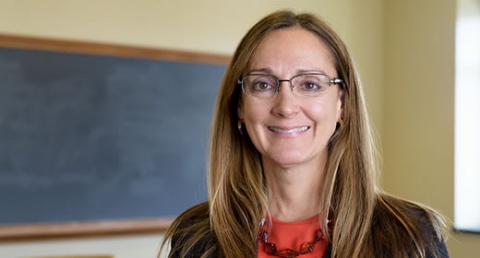
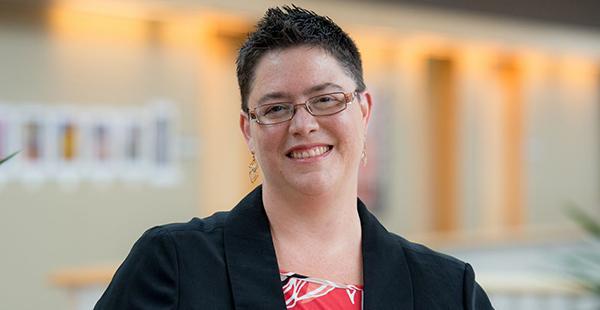
Emily Hannum is a Professor of Sociology and Education at the University of Pennsylvania's College of Arts & Sciences, where she also serves as Associate Dean for Social Sciences. She is affiliated with the Population Studies Center, Center for the Study of Contemporary China, Graduate School of Education, and Penn Development Research Initiative. Education: PhD in Sociology from University of Michigan (1998) Research Focus: Poverty and child welfare, gender and ethnic stratification, sociology of education Projects: Gansu Survey of Children and Families, climate-environment-childhood inequalities in LMICs Workshops: Co-organizer of Penn Education and Inequality Workshop Her research explores childhood poverty in China, demographic impacts on education systems, and climate risks affecting children's welfare. She investigates environmental hazards, educational disparities, and family separation effects across China, India, and low/middle-income countries. Recent publications analyze educational expansion in East Asia, climate crisis impacts on child health, and gender disparities in Latin America. She directs longitudinal studies on rural poverty and collaborates on cross-national projects related to environmental and educational equity. Scientific awards include the Stanley I. Sheerr Term Professorship in Social Sciences.
Anu Ramaswami is the Sanjay Swani ’87 Professor of India Studies and Professor of Civil and Environmental Engineering at Princeton, directing the M.S. Chadha Center. She leads research on sustainable, equitable urban systems, integrating infrastructure, food, energy, and water policies. Her work employs nexus modeling to co-produce decarbonization pathways with global cities, emphasizing health, equity, and resilience co-benefits. Recent projects analyze fine-scale urban metabolism and heat vulnerability in India. Awards include the AAEES Science Award (2022) for interdisciplinary impact. She chairs the Urban Nexus Lab, advancing data-driven urban transitions.
Dr. Miemie Winn Byrd is an Adjunct Professor at the Daniel K. Inouye Asia-Pacific Center for Security Studies (DKI APCSS), where she researches, teaches, and publishes on security dynamics in Myanmar/Burma & Southeast Asia, economics & security linkages, and organizational development. A retired US Army Lieutenant Colonel with 28 years of distinguished service, she brings extensive experience from military, private sector, and nonprofit organizations to her academic work. Dr. Byrd earned her educational credentials from prestigious institutions: Bachelor of Arts in Economics and Accounting from Claremont McKenna College Master of Business Administration with emphasis in Asia-Pacific Economics and Business from University of Hawaii Doctorate in Education Leadership from the University of Southern California Her research focuses on the complex interplay between security, economics, and social development in Southeast Asia, with particular expertise in Myanmar's political and security landscape. Dr. Byrd examines how civil-military operations, women's roles, and educational approaches impact socioeconomic development and security outcomes in the region. She investigates the strategic implications of Myanmar's internal conflicts for broader Indo-Pacific security dynamics, and analyzes how private sector engagement can contribute to poverty alleviation and stability. Dr. Byrd serves on multiple advisory boards that extend her influence in policy and research: Board of Governors of the Keck Center for International and Strategic Studies at Claremont McKenna College Regional Advisory Committee for Knowledge for Democracy Myanmar Initiative of the Asia Regional Office, International Development Research Centre The Oxford-Thanakha International based in Chiang Mai, Thailand Myanmar Policy Institute based in Washington, D.C. Her military career included significant roles such as Deputy Economic Advisor and Civil-Military Operations Plans Officer at U.S. Pacific Command, where she supported Operations Enduring Freedom. She served as a linguist and cultural advisor for U.S. delegations at the Association of Southeast Asian Nations Regional Forum and during POW/MIA recovery negotiations in Myanmar. Her civilian career spans 16 years in auditing, accounting, and financial management with multinational corporations.
Elisabeth R. Gerber serves as the Jack L. Walker, Jr. Professor of Public Policy at the University of Michigan's Gerald R. Ford School of Public Policy, where she also holds a courtesy appointment as Professor of Political Science and serves as inaugural Faculty Director of the Online Master of Public Affairs program launching in January 2026. She is a Faculty Associate at the Center for Political Studies, Institute for Social Research. Her educational background includes a PhD (1991) and MA (1989) in political science, and a BA (1986) in political science and economics—all from the University of Michigan, with her undergraduate degree earned with High Honors and High Distinction. Gerber's research examines regional governance structures through lenses of intergovernmental cooperation, sustainable development, and urban climate adaptation. Her work analyzes transportation policy, community-economic development linkages, and mechanisms for enhancing local fiscal capacity and political accountability in metropolitan contexts. She investigates how institutional design influences policy outcomes across fragmented governance landscapes. Her publication portfolio demonstrates consistent focus on urban political economy, with recurring themes of institutional incentives in transportation policy, mayoral leadership effects, and cooperative governance models. These works bridge political science, public administration, and urban studies through empirical analysis of regional planning and intergovernmental dynamics. No scientific awards were documented in the provided materials. Gerber co-leads the Detroit Metro Area Communities Study (DMACS), a longitudinal public opinion survey of Detroit residents, and founded ViewPoint—a software platform for educational role-play simulations. She actively contributes to Poverty Solutions, the Center for Local, State, and Urban Policy (CLOSUP), and the Program in Practical Policy Engagement (P3E), leveraging interdisciplinary approaches to address urban governance challenges.
Sai Balakrishnan is an Associate Professor of City and Regional Planning at the University of California, Berkeley. He serves as Co-Director of Global Metropolitan Studies and Chair of the Urban Studies undergraduate major. His research focuses on global urban inequalities, agrarian-urban land dynamics, and caste capitalism in India, particularly along economic corridors like the Mumbai-Pune Expressway. Balakrishnan holds a PhD from Harvard University and a Master’s from MIT. Education: PhD (Harvard), Master of City Planning (MIT) Research Interests: Balakrishnan examines land-use transformations in India, emphasizing how agrarian elites and urban firms negotiate property rights. His work highlights spatial politics of urbanization, including transfer of development rights (TDR) and the geographies of caste-driven development. Recent studies include a global comparative analysis of TDR systems in New York and Mumbai, and a book project on caste capitalism and uneven development in India since the colonial era. Publications: His 2019 book Shareholder Cities explores land conflicts and agrarian-urban transformations along India’s economic corridors. Key articles include analyses of land markets in Mumbai and Bangalore, and the intersection of highway infrastructure with decentralization challenges. Awards: William Holland Prize (2013), ACSP Gill Chin Lim Award (2014) Advising & Grants: Balakrishnan collaborates on interdisciplinary projects linking urban planning, political economy, and social justice. Ongoing work includes a book on caste capitalism and studies of land-based financing for infrastructure in India. Labs/Teams: Active in Berkeley’s Global Metropolitan Studies initiative, focusing on transnational urbanization processes.
Matthew Palm is an Assistant Professor in the Department of City and Regional Planning at the University of North Carolina at Chapel Hill, holding the Cities Pardue Fellowship. His research focuses on transportation equity, shift work commuting challenges, and mobility barriers affecting essential workers in 24-hour economies. He examines how transportation systems impact social participation, healthcare access, and economic opportunities while advocating for equitable planning solutions. Recent work explores post-pandemic transit trends, ride-sharing equity, and the intersection of transportation policy with marginalized communities. Palm collaborates with community organizations to co-create evidence-based solutions for mobility challenges. He currently holds a $1.09 billion grant reflecting North Carolina’s renewed interest in rail infrastructure. His research agenda includes three core areas: 1) analyzing how shift workers’ nighttime commuting affects social exclusion and family care logistics, 2) studying transportation affordability’s role in economic participation, and 3) evaluating transportation infrastructure’s dual potential to improve lives while mitigating negative externalities like pollution. He emphasizes participatory approaches to planning and has published extensively on pandemic-era transit usage shifts, accessibility metrics, and housing-transit linkages.
Leah K VanWey is Professor of Environment and Society and Sociology at Brown University, where she also serves as Dean of the School of Professional Studies. She holds affiliations with the Department of Sociology, Institute at Brown for Environment and Society, Population Studies and Training Center, Spatial Structures in the Social Sciences, and Department of Portuguese and Brazilian Studies. Previously, she served as Senior Deputy Director of the Institute at Brown for Environment and Society, Associate Director of the Population Studies and Training Center, and Associate Provost for Academic Space. VanWey completed her education at the University of North Carolina, earning a BA (1996), MA (1999), and PhD (2001). Her research focuses on social demography and environmental social science, particularly examining household responses to reforestation programs in Brazil's Atlantic Forest and the social/environmental impacts of frontier settlement in the Amazon. Her research interests include agricultural intensification, land use change, migration patterns, population-environment interactions, household dynamics, intergenerational support systems, and remittance economies, with a geographic focus on Brazil. She employs interdisciplinary approaches, collaborating with anthropologists, geographers, ecologists, and other social scientists. VanWey has secured significant research funding including grants from NSF, NIH, and NASA totaling over $2.5 million. Major projects include studying agricultural expansion in Brazil, climate variability impacts, land use change dynamics, and population-environment linkages. She mentors graduate students and postdoctoral researchers, including Trina Vithayathil. She teaches courses on human-environment interactions and research methods, including: Feeding Ten Billion, Methods for Interdisciplinary Environmental Research, Multivariate Statistical Methods, Fields and Methods of Social Research, and Professional Development seminars.
Professor Susan Goodwin is a leading academic at the University of Sydney, specializing in social policy, gender studies, and social justice. She holds a BA(Hons) from ANU and a PhD from the University of Sydney. Her work focuses on collaborative research projects with government and civil society organizations, emphasizing participatory methodologies to address poverty and inequality. Educations: PhD, University of Sydney BA(Hons), Australian National University Her research interests span social structures, gender relations, and community development, with a focus on policy analysis methodologies. Notable projects include participatory approaches to community revitalization in Australia and Hong Kong, and interrogating constructions of motherhood in Australia. Professor Goodwin is affiliated with the Sydney Policy Lab, Sydney Southeast Asia Centre, and the Charles Perkins Centre. Her awards include the 2016 Vice-Chancellor’s Award for Outstanding Research Supervision and a 2014 residency at Hong Kong Baptist University. Key Grants & Projects: ARC Linkage Project on participatory community development in public housing neighborhoods NSW Refugee Youth Policy Initiative Research on gender, social policy, and adolescent girls' sexuality in Indonesia She actively contributes to policy networks like the Social Policy Research Network and co-convenes the Sydney Social Justice Network. Her work bridges academic research with practical policy impact, emphasizing grassroots engagement and equity.
Dr. Daniel Carrión is an Assistant Professor of Epidemiology at the Yale School of Public Health, Department of Environmental Health Sciences. His work bridges climate science , energy transitions , and health equity , focusing on structural inequality’s role in exposure and health disparities. Education: PhD in Environmental Health Sciences (Columbia University, 2019); MPH in Environmental Health Sciences (New York Medical College, 2011); BA in Environmental Studies (Ithaca College, 2008). His research examines how home and neighborhood environments serve as intervention points for climate and health equity . Recent studies include modeling heat vulnerability in U.S. housing, geospatial analysis of lead water lines, and clean cooking interventions in Ghana. Articles span climate change , air pollution , and social determinants , with methodological focus on exposure science and case-crossover designs . Scientific honors include: Senior Fellow, Agents of Change in Environmental Justice (2022) Fellow, New York Academy of Medicine (2022) Senior Fellow, Environmental Leadership Program (2019) He contributes to community service as a member of the New York State Minority Health Council (2016–present) and the International Society for Environmental Epidemiology (2018–present). His work integrates satellite data , machine learning , and policy evaluation to address energy insecurity , racial segregation , and climate justice .
Dr Sumeet Jain is a Senior Lecturer at the University of Edinburgh, affiliated with the School of Social and Political Science (Social Work). His interdisciplinary research focuses on community mental health in low-income contexts, cultural psychiatry, ethnography, and global mental health policy, with regional expertise in South Asia. He has led projects funded by ESRC, Carnegie Trust, British Academy, Wellcome Trust, DFID, and World Bank, including studies on recovery-oriented mental health in India, poverty-mental health linkages, and evaluation of Scotland's alcohol/drug referral services. Research Interests: Community mental health systems in low-resource settings Critical analysis of psychiatric categories and local distress Qualitative/ethnographic evaluation of health programs Training of social workers in non-western mental health Global mental health policy and equity Publication Trends: Recent works emphasize participatory interventions, mutuality in mental health, caste identities, and critiques of scaling-up global mental health initiatives. His research spans South Asia, Malawi, Ghana, and the UK, blending sociocultural perspectives with public health outcomes. Scientific Awards: ESRC-Impact Accelerator Award Carnegie Trust funding for community mental health in India British Academy collaboration on caste and distress Wellcome Trust grant for London health inequalities study DFID/World Bank funding for poverty-stigma-mental illness research Dr Jain supervises postgraduate research in Global Mental Health and Social Work, contributes to undergraduate and postgraduate teaching, and co-edited The Palgrave Handbook of Sociocultural Perspectives on Global Mental Health (2017).
Tiago de Melo Cartaxo is a Senior Lecturer in Environmental Law at the University of Exeter’s College of Humanities and Social Sciences, Cornwall Campus. He founded the Exeter Centre for Environmental Law (ExCEL) and is part of Law and Business Cornwall (LAB/C). Current roles include Associate Director for External Engagement at the Environment and Sustainability Institute (ESI) and former Director of Postgraduate Research for Humanities and Social Sciences. His research focuses on environmental rights, climate resilience justice, circular economy, energy transition, and international environmental law. He holds a European PhD in Law from Universidade Nova de Lisboa, with postdoctoral work at the University of Surrey. Tiago has advised governments and international bodies, including the Portuguese Presidency of the EU Council, and chairs the World Public Sector Integrity Initiative (WPIEI). Education European PhD in Law, Universidade Nova de Lisboa (2015–2020) LLM in Environmental Law and Planning, University of Coimbra (2012–2014) Licenciatura in Law, University of Lisbon (2000–2005) Research Interests He explores legal frameworks supporting sustainability transitions, including governance of single-use plastics, nature markets, and climate adaptation. His work bridges environmental law with social equity, focusing on resilience justice, circular economy policies, and EU environmental law. He emphasizes transdisciplinary approaches to address socio-ecological challenges in urban contexts. Notable Contributions Coordinated ESI-funded projects on regulatory frameworks for nature markets Developed academic partnerships with the Portuguese Environment Agency Chaired WPIEI during Portugal’s EU Presidency Advised on post-2011 Portuguese economic reforms Awards & Affiliations Fulbright Scholarship (USA) FCT Fellowships (Portugal) Senior Fellow of AdvanceHE Member of ILA Committees on Sustainable Development, SDGs, and ICC Environment Commission Advising & Grants Tiago welcomes PhD/Masters supervision in Environmental & Climate Law. His grants include ESI funding and collaborations with international institutions. He leads the NOVA Law Green Lab and has advised Portuguese and EU policymakers on environmental compliance and energy transitions. Labs & Networks Founder of ExCEL and NOVA Law Green Lab; collaborates with Exeter Biodiversity & People Network, Exeter Food Policy, and Environmental Intelligence initiatives.
Parfait Martial Eloundou-Enyegue is a Professor in the Department of Global Development at Cornell University and serves as Section Head and President of the Recruitment, Tenure and Promotion Committee at Institut National D'Etudes Démographiques (INED, France). He also holds appointments at Cornell's Brooks School of Public Policy and leads the Cornell Institute of African Studies. His work spans demography, sociology, and development economics with a focus on reconciling micro- and macro-level social change analysis. Education : Doctorate and Master's from Pennsylvania State University; Ingenieur Agroeconomiste from University of Dschang (Cameroon) Research Interests center on demographic transitions, global inequality, education-development linkages, fertility-schooling relationships, and decomposition methods for social change. His work examines how population dynamics affect economic development, poverty, and policy in sub-Saharan Africa. Recent Articles explore demographic dividends, micro-macro integration in sociology, and global child inequality trends. Awards include Pennsylvania State University's Distinguished Alumnus (2020), multiple Comparative International Education Society recognitions, and UN-related policy engagements. Scientific Awards : 2020 Pennsylvania State University Distinguished Alumnus, 2018 Cornell CALS Science & Policy Award, 2008 Marilyn Emmons Williams Undergraduate Research Advising Award Teaching includes courses on social indicators, education inequality, and development empirics. He has consulted for UN, World Bank, and USAID, and led large-scale demographic training initiatives across Francophone Africa.
Marit Rosol is a Professor of Economic Geography at Julius-Maximilians-Universität Würzburg (since 2022) and an Adjunct Professor at the University of Calgary's Department of Geography (since 2022). She holds a Canada Research Chair (2016-2022) and has earned international recognition for her work on alternative food networks, urban governance, and critical political ecology. Education: Habilitation in Geography (Goethe-Universität Frankfurt, 2012), PhD in Geography (Humboldt-Universität Berlin, 2006), Dipl.-Ing. in Urban & Regional Planning (TU Berlin, 2001) Her research focuses on Critical Food Studies , exploring alternative economies in urban agriculture, post-political urban governance, and transformative food systems. She examines tensions between environmental and social justice in food initiatives, state-led gentrification, and participatory urban planning frameworks. Recent publications analyze: Urban-rural food system transformations Smart city justice frameworks Commons-based land access models Anthropocene food challenges Scientific awards include: Senior Fellow, Freiburg Institute for Advanced Studies (2022) Canada Research Chair Tier II (2016-2022) 2015 RIBA President's Award for Outstanding Urban Agriculture Research She has supervised: PhD students: Hanna Augustin Master students: Natalie Bakko, Abby Landon, Ricardo Barbosa Jr. Postdocs: Dr. Rebecca Laycock Pedersen, Dr. Charlotte Spring, Dr. Lauren Kepkiewicz Major grants from SSHRC, Hans-Böckler Foundation, and DAAD have supported her work on food insecurity linkages, urban food justice, and global comparative studies of food systems. She co-founded the Food Studies Interdisciplinary Research Group at the University of Calgary and serves on editorial boards for Canadian Food Studies and sub\urban .
Amity Doolittle is a Senior Lecturer II at the Yale School of the Environment (YSE), Yale University. Her research focuses on property rights, natural resource management, and the social and political processes shaping environmental inequities. She employs interdisciplinary methods from anthropology, political science, environmental history, and political ecology. Notable projects include historical land-use studies in New Haven, Connecticut, and analyses of indigenous rights in global climate policy. She teaches graduate courses on qualitative research methods, environmental justice, and property rights, emphasizing active, collaborative learning. Doolittle holds a B.A. from Harvard University and M.E.S./Ph.D. from Yale University. Her office is located in Kroon Hall, Yale’s environmental campus. Education: B.A., Harvard University; M.E.S., Ph.D., Yale University Her research interests include legal pluralism, historical resource conflicts, and the intersection of colonial and postcolonial discourses. Current projects examine urban land-use changes in New Haven and the rhetorical strategies of indigenous leaders in climate negotiations. She advises 10–12 master’s students annually on thesis projects and placements worldwide. Teaching highlights include Qualitative Research Methods , Environmental Justice , and Political Ecology of Tropical Forests . Her courses integrate hands-on methods, such as analyzing oral histories and policy documents. Labs/Teams: Collaborates with the Urban Resources Initiative (URI) on greenspace stewardship and community-led projects.
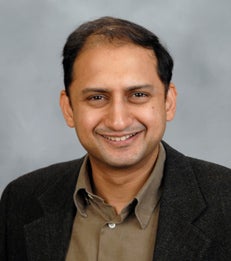
Viral V. Acharya is the C.V. Starr Professor of Economics in the Department of Finance at New York University Stern School of Business. He is a Research Associate at the National Bureau of Economic Research (NBER), a Research Affiliate at the Center for Economic Policy Research (CEPR), and a Research Associate at the European Corporate Governance Institute (ECGI). He previously served as Deputy Governor of the Reserve Bank of India (2017–2019), with responsibilities in monetary policy, financial markets, and financial stability. He is currently Director of Doctoral Education at NYU Stern (2025–), Advisor to the NYU Stern Henry Kaufman Initiative on Financial History (2023–2026), and a Scientific Advisor to the Sveriges Riksbank (2024–). He is also a member of the Climate-related Financial Risk Advisory Committee (CFRAC) of the Financial Stability Oversight Council (2023–2026), the Bellagio Group, and the Financial Advisory Roundtable of the Federal Reserve Bank of New York. Education: B.Tech. in Computer Science and Engineering, Indian Institute of Technology, Mumbai (1995) Ph.D. in Finance, New York University Stern School of Business (2001) His research focuses on systemic risk, financial regulation, sovereign and financial linkages, credit and liquidity risk, and the macroeconomic implications of financial frictions. He has also recently explored risks related to pandemics and climate change. His recent publications examine commercial real estate exposure in banks, spillover risks from non-banks, U.S. Treasury market dynamics, and industrial policy in India. The body of work consistently emphasizes financial stability, regulatory design, and the interaction between public policy and financial markets. Scientific Awards: Alexandre Lamfalussy Senior Research Fellowship, Bank for International Settlements (2017) Inaugural Banque de France – Toulouse School of Economics Junior Prize (2011) Senior Houblon-Norman Research Fellowship, Bank of England (2008) Clarivate Analytics Highly Cited Researcher (2020–2022) Acharya has held numerous editorial and leadership roles, including Editor of the Journal of Law, Finance and Accounting (2014–2016, 2020–), member of the Editorial Committee of the Annual Review of Financial Economics (2022–), Board Member of the American Finance Association (2024–), and Director of the Western Finance Association (2012–2015). He has served as an Academic Advisor to multiple Federal Reserve Banks and international institutions including the IMF, World Bank, and BIS. He advises on financial policy globally and is a frequent commentator in major media outlets. He is not known to advise specific students, but his leadership in doctoral education at NYU Stern underscores his role in mentoring the next generation of finance scholars. He is affiliated with research centers and policy initiatives focused on financial history, climate risk, and financial stability.