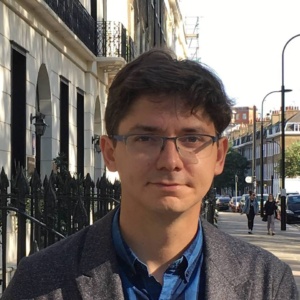
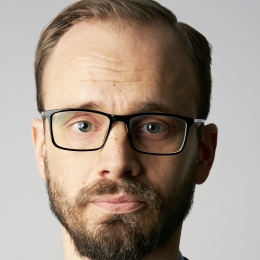
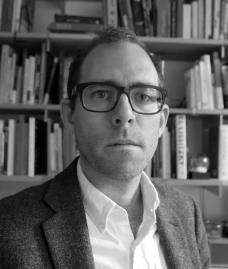
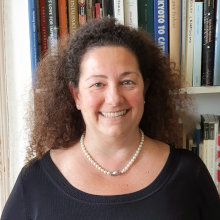
Lindsay Turner is an Associate Professor in the Department of English at Case Western Reserve University. A poet, critic, and translator, her work bridges creative writing, translation theory, and interdisciplinary research. Her prior role as Assistant Professor at the University of Denver’s Department of English and Literary Arts underscores her commitment to literary education. AB in English, Harvard College Masters in cinema studies, Université Paris III Sorbonne-Nouvelle MFA in poetry, New York University PhD in English, University of Virginia Turner’s research spans creative writing , transnational poetry , and gender studies , with a focus on the intersections of literature and labor. Her recent work examines gendered domestic and reproductive labor through poetic forms. Key trends in her publications include experimental translation , queer theory , and postcolonial philosophy . National Translation Awards Best Translated Book Awards French American Foundation recognition She has received grants such as the WPR Creative Grant from Harvard’s Woodberry Poetry Room and multiple French Voices Grants . Her translations have been praised by The New Yorker and The New York Times for their intellectual rigor and stylistic innovation.
Paul B. Kreitman is an Associate Professor at Columbia University's Department of East Asian Languages and Cultures. He specializes in 20th Century Japanese History, Environmental History, and the History of Science and Technology. 20th Century Japanese History Environmental History Commodity History Global Sovereignty Studies His research explores intersections between nature and sovereignty , with a focus on Japan's borderlands and trans-Pacific interactions. His 2018 article on Tokyo's wartime sanitation politics won the Leopold-Hidy Prize , and his 2023 monograph Japan's Ocean Borderlands redefines environmental sovereignty narratives. He teaches courses on Asian Mobilities , Indo-Pacific Geopolitics , and graduate seminars about Borderland Japan . Previously held positions include Junior Research Fellow at University of London's Institute of Historical Research and Senior Teaching Fellow at SOAS. Publications: Environmental History (2018), Cambridge University Press monograph (2023) Media Appearances: The Financial Times, The Japan Times, The New Statesman Current projects examine trans-Pacific border controls with emphasis on Japan-Hawaii connections. His work integrates environmental, technological, and geopolitical perspectives to reshape historical understanding of sovereignty dynamics.
Norman M. Naimark serves as the Robert & Florence McDonnell Professor of East European Studies and Professor of History at Stanford University, with courtesy appointments in German Studies. He holds senior fellowships at both the Hoover Institution and Freeman Spogli Institute for International Studies, and is affiliated with The Europe Center and the Center on Democracy, Development and the Rule of Law. Education: Ph.D. in History, Stanford University (1972) Naimark specializes in Soviet-era Eastern European history, with dual research pillars: Soviet policies in post-WWII Europe and 20th-century genocide/ethnic cleansing phenomena. His work bridges historical analysis with contemporary human rights discourse, emphasizing geopolitical power dynamics and systematic violence against civilian populations. Methodologically, he combines archival rigor with comparative frameworks across national contexts. His publication trajectory from 1979–2019 reveals evolving focus from Marxist movements in partitioned Poland to Soviet occupation mechanics, culminating in comprehensive genocide studies. The 2019 monograph on Stalin's postwar European sovereignty struggles synthesizes decades of research into Soviet imperial practices. Scientific awards: Officer's Cross of the Order of Merit of the Federal Republic of Germany (1996) Richard W. Lyman Award for outstanding faculty volunteer service (1995) Stanford Dean's Teaching Award (1991-92, 2002-3) Naimark's academic leadership includes directing Stanford's Global Studies Division, Bing Overseas Studies Program, and Center for Russian, East European, and Eurasian Studies. His research informs current policy discussions on authoritarianism and democratic resilience, as evidenced by recent engagements with Belarusian democracy movements and U.S.-Russia relations. He collaborates extensively through Stanford's interdisciplinary centers, particularly contributing historical perspectives to The Europe Center's sovereignty research and the Center on Democracy, Development and the Rule of Law's governance initiatives.
Karl Gustafsson is a Professor at Stockholm University within the Department of Economic History and International Relations. His work bridges security studies , collective memory , and digital research methods in international relations. Current Role: Professor of International Relations, Stockholm University Previous Positions: Post-Doc at Lund University, Researcher at Swedish Institute of International Affairs Visiting Appointments: University of Tokyo, Osaka University, Keio University, Academia Sinica, Nordic Institute of Asian Studies Research Focus: Karl specializes in memory politics , ontological security , and anxiety-driven international dynamics , particularly in Sino-Japanese relations and digital platforms . His studies explore how historical narratives and online memory construction influence state identity and policy. Awards & Grants: Recipient of the Wang Gungwu Prize (2014) and Stockholm University Association’s award (2011). Holds Swedish Research Council and Marianne & Marcus Wallenberg Foundation grants for projects on apologies in international politics and digital memory in East Asia . Publications: His work appears in journals such as International Studies Quarterly , European Journal of International Relations , and Memory Studies , addressing topics like narrative power in East Asia, anxiety’s role in policy change , and digital humanities applications in IR.
Craig Buckley is an Associate Professor in the Department of the History of Art and affiliated with the Yale School of Architecture. His research bridges modern architecture with visual arts and media, focusing on techniques like montage, collage, and screen-based practices. Education: BA (Trent University), MA (University of Western Ontario), PhD (Princeton University) His work examines how media such as print, film, and digital screens shape architectural culture. Key themes include cinema architecture, media theory, and the intersection of design with socio-political movements like 1968 protests. His recent articles analyze topics such as colonial-era cinema architecture, media façades, and pneumatic structures. He teaches courses on architecture’s relationship with media and print culture, often utilizing Yale’s special collections.
Dr. Silvia VESCO is an Associate Professor in the Department of Asian and North African Studies at Ca' Foscari University of Venice, where she specializes in Japanese art history, particularly Edo-period visual culture, ukiyo-e prints, illustrated books, and the works of Katsushika Hokusai. She is actively involved in research, teaching, and cultural curation, with a strong focus on Italian collections of Japanese art and cross-cultural artistic dialogues between Japan and the West. Education: PhD in History of Indian and East Asian Art, Ca' Foscari University of Venice (1999) Master in Art & Archaeology, SOAS, University of London (1995) Degree in Oriental Languages and Literatures, University of Venice (1993, with honors) Her research interests encompass Japanese aesthetics, museum studies, and the global reception of Japanese art. She has led major digitization projects for the Museum of Oriental Art in Venice and contributed to the development of its new museological framework. Her scholarly work reveals a consistent focus on Hokusai, Edo-period print culture, and the philosophical dimensions of Japanese visual forms. The recent publications highlight a deep engagement with Hokusai’s pedagogical works, the aesthetics of emptiness, and contemporary reflections on nature in post-Fukushima Japan. Her interdisciplinary approach bridges art history, cultural studies, and museum practice. Scientific Recognition: Finalist, Premio Nazionale per la divulgazione scientifica 'Giancarlo Dosi' (2020) Japan Foundation Fellowship (1997) Postgraduate scholarship from the University of Venice (1994) She has supervised numerous MA theses, served on PhD committees, and mentored students in Japanese art history. Her research has been supported by grants from the Japan Foundation and institutional collaborations with museums and cultural centers. She is a referee for VQR, Edizioni Ca' Foscari, and international journals, and serves on the scientific committees of several academic and museum publications. Labs and Teams: Scientific Committee, Museum of Oriental Art, Ca' Pesaro, Venice Scientific Committee, Edizioni Ca' Foscari Coordinator, Scientific Committee for Ca' Foscari Japanese Studies, Arts and Literature Member of the editorial board of 'Venezia Arti' and 'Quaderni del Polo museale del Veneto'
Dr. Thomas Brodie is an Assistant Professor in 20th Century European History at the Department of History, University of Birmingham. His academic career spans prestigious institutions including Oxford University, University of Leeds, and Jesus College, Oxford before joining Birmingham in 2018. Education: DPhil in History (The University of Oxford, 2014) MSt in Modern British and European History (The University of Oxford, 2010) BA in History (The University of Oxford, 2009) Fellowship of the Higher Education Academy (2020) Postgraduate Certificate in Higher Education (University of Birmingham, 2020) Dr. Brodie specializes in Modern European history with particular focus on Germany during the Nazi era and post-war periods. His research examines the intersection of religion, society, and war, with special attention to Catholic communities in Germany during WWII and the subsequent evolution of mourning practices and memory culture. His work combines theological analysis with social and cultural history using previously unused archival materials from church, state, and private collections. His recent publications demonstrate a clear trajectory from examining wartime religious communities to post-war memory practices, showing his evolving scholarly interests in how societies process mass bereavement and construct collective memory. The articles primarily focus on German religious history during and after WWII, with increasing attention to spatial dimensions of mourning and commemoration. Scientific Awards: Runner-up award for the Wiener Library's Fraenkel Prize (2014) AHRC award for doctoral research Hanseatic Scholarship for archival research in Berlin and German cities Dr. Brodie teaches a range of undergraduate and postgraduate courses including 'The Rise and Fall of the Third Reich' and 'Life After Death: Culture, Memory and Power in Postwar Europe.' He supervises BA dissertations and welcomes PhD students working on Modern German history or thematic interests in religion, war, and memory in European contexts since 1800. His current research project examines German society's responses to bereavement during WWII and its aftermaths through personal diaries, letters, artistic representations, and war memorials.
Kevin M. Kruse is Professor of History at Princeton University and Director of Undergraduate Studies. Specializing in 20th-century U.S. political, social, and urban history, his research examines conflicts over race, rights, and religion. Kruse earned his B.A. from UNC Chapel Hill and Ph.D. from Cornell University, joining Princeton after positions at the University of Virginia. His scholarship explores the civil rights movement, religious nationalism, suburbanization, and modern conservatism. Recent books analyze the corporate invention of Christian America and historical myths in American political discourse. Current projects include studies of civil rights lawyer John Doar and 'law and order' politics in New York City. Honored as a Guggenheim Fellow and Smithsonian Innovator, Kruse has received the Francis B. Simkins Award and Best Book in Urban Politics award. He teaches courses on civil rights, suburban history, and modern U.S. politics, and advises graduate students in 20th-century U.S. history. Kruse frequently engages public discourse through media appearances and collaborative projects with documentary filmmakers.
Takuya Tsunoda serves as Assistant Professor of Japanese Film and Media in the Department of East Asian Languages & Cultures at Columbia University, with prior teaching appointments at Colgate University and the University of Chicago. Currently on leave for spring 2022, he maintains his office in 416 Kent Hall (contact: (212) 854-5040, tt2101@columbia.edu). His academic credentials include: BA: Waseda University (2002), Columbia University (2005) MA: Columbia University (2008) PhD: Yale University (2015) Dr. Tsunoda's research centers on institutional-media interplay through historical and theoretical lenses, examining how technologies shape socio-cultural practices and knowledge formations. His seminal work investigates Iwanami Productions' evolution from educational/science film provider to New Cinema pioneer, arguing that Japan's 1960s cinematic revolution originated in institutionalized audio-visual pedagogy rather than political radicalism. Current explorations extend to media reflexivity, alpine photography, insect ecology, children's media engagement, and diegesis in contemporary visual culture. Teaching : Courses include East Asian Cinema, Japanese Contemporary Media Culture, Japanese New Wave Modernism, Documentary Film Studies, and Critical Approaches to East Asian Theory. His publication trajectory (2018-2022) reveals consistent focus on postwar Japanese media archaeology, connecting educational film, industrial cinema, and New Wave movements through archival analysis. Key themes include cross-medial academicism, mediascape transformations, and the socio-political dimensions of visual pedagogy in reconstructing cinematic modernism. Active research trajectories include transnational New Wave parameters, television documentary studies, and ecological media representations, with ongoing book project examining Iwanami Productions' institutional legacy.
Cathryn Carson is a Professor in the Department of History at the University of California, Berkeley. Her work bridges the philosophical, cultural, and political dimensions of 20th-century science, with a focus on theoretical physics, nuclear history, and the integration of social sciences and humanities into engineering education. Education: AB in History and Philosophy of Science from University of Chicago (1990) AM in Physics from Harvard University (1993) PhD in History of Science from Harvard University (1995) Her research explores the interplay between science and philosophy, particularly in Germany and the U.S., alongside the institutionalization of data science. She teaches graduate and undergraduate courses, including Berkeley’s Data Science major’s Human Contexts and Ethics of Data course. Scientific Awards: Berkeley Collegium Award for Excellence in Undergraduate Education (2017) Distinguished Service Award, Division of Social Sciences (2014) Carol D. Soc Distinguished Graduate Student Mentoring Award (2014) Fellow of the American Association for the Advancement of Science Fellow of the American Physical Society Mellon New Directions Fellowship NSF CAREER Award Alexander von Humboldt Foundation Research Fellowship Member, Institute for Advanced Study, Princeton Carson has served in multiple leadership roles, including Associate Dean of Social Sciences, founding Interim Director of the D-Lab (Social Science Data Laboratory), and Faculty Lead of Berkeley’s Data Science Education Program. She is currently accepting students for advising and contributes to campus governance through roles in the Academic Senate.
Hiromi Tsuchiya Dollase is an Associate Professor of Chinese and Japanese at Vassar College since 2003. Her research focuses on Japanese women’s literature, girls’ magazine culture, and manga, with a particular interest in integrating popular media into language education. She teaches courses such as 'Japanese Popular Culture and Literature' and 'The Gothic and the Supernatural in Japanese Literature.' Dr. Dollase holds a PhD in comparative literature (Japanese and American) from Purdue University (2003), an MA from Illinois State University, and a BA/MA from Baika Women’s College. She authored *Age of Shojo: The Emergence, Evolution and Power of Japanese Girls’ Magazine Fiction* (2019) and has contributed to numerous edited volumes and refereed journals. Her work spans topics like child abuse depictions in manga, sex education in historical fiction, and queer reinterpretations of classic narratives. She co-edited *Women’s Voices in Manga* (2024) and *Manga!: Visual Pop-Culture in ARTS Education* (2020). Her research bridges literary analysis with cultural studies, emphasizing the intersection of gender, media, and education. Dr. Dollase has been featured in media discussions about Japanese literary icons like Nobuko Yoshiya. She actively contributes to interdisciplinary programs in Asian Studies, Media Studies, and Women’s, Feminist, and Queer Studies at Vassar.
Kelly D Palmer is an Assistant Professor in the History, Geography and Legal Studies Department at The University of Tampa, within the College of Social Sciences Mathematics and Education. Her academic focus centers on modern European history, with particular expertise in French history, the Holocaust, and World War II humanitarian efforts. Her educational background includes: B.A. from Michigan State University (1991) M.A. from Korbel School of International Studies at the University of Denver (2002) Ph.D. from Michigan State University (2010) Professor Palmer's research delves into the history of modern Europe, with a concentration on France, the Holocaust, and European postwar historical memory. She is currently completing an article on the American Friends Service Committee and Jewish rescue in World War II France, and another on Roswell McClelland's work with the American Friends Service Committee and War Refugee Board. Her upcoming project examines women humanitarian workers in the American Friends Service Committee during WWII. Her teaching covers World History from 1500, the Holocaust, Twentieth-Century Europe, and other European history courses. Her notable scientific awards and grants include: Chosen as a university-wide applicant for the 2023 National Endowment of the Humanities Summer Stipends Program Pollock Research Grant (2021) Grant from the Undergraduate Research and Inquiry Committee for an inquiry-based course (2020) College of Social Sciences Mathematics and Education Award for Outstanding Teacher (2018-2019) UCDALI Professional Development Grant (Spring 2016) CU Online Course Development Grant (Fall 2015) Nominee for College of Arts and Letters at the University of Colorado of Denver, Teaching Excellence Award (2013-2014) Dissertation Completion Fellowship, College of Social Science, Michigan State University (2010) Kussy Scholarship for Study of the Holocaust, James Madison College, Michigan State University (2008) International Studies Program Pre-dissertation Research Fellowship, International Studies Program, Michigan State University (2007) Muelder-Lowe Graduate Award, Department of History, Michigan State University (2007) Summer Research Enhancement Fellowship, Department of History, Michigan State University (2007) Summer Research Fellowship, Department of History, Michigan State University (2006) Summer Research Language Fellowship, Department of History, Michigan State University (2005) Somers Award for Excellence and Creativity in Teaching, Center for Integrative Studies in the Arts and Humanities, Michigan State University (2005) Recruitment Fellowship, Department of History, Michigan State University (2003-2004) Professor Palmer has secured significant grant funding for her research and teaching. Notable grants include: Pollock Research Grant (2021) for her research on WWII humanitarian efforts. Undergraduate Research and Inquiry Committee Grant (2020) for an inquiry-based course. UCDALI Professional Development Grant (2016) CU Online Course Development Grant (2015) She also mentors students through an internship program with the Florida Holocaust Museum, facilitating student placements and collaborative educational events. Professor Palmer collaborates closely with the Florida Holocaust Museum, where she has developed an internship program for students and co-organizes speaker events and educational activities. This partnership serves as a key platform for her students' experiential learning and community engagement.
Nick Kapur is an Associate Professor in the Department of History at Rutgers University–Camden, within the School of Arts and Sciences. He specializes in modern Japan and East Asia, with a focus on transnational perspectives, US-Japan relations, environmental history, gender, and cultural studies including literature and film. His educational background includes a Ph.D. from Harvard University (2011), an M.A. from Stanford University (2003), and a B.A. from Stanford University (2002). Kapur's research examines the intersections of political economy, culture, and international relations in modern Japan, particularly in the postwar era. His acclaimed book, Japan at the Crossroads: Conflict and Compromise after Anpo (2018), analyzes the 1960 protests and their lasting impact on Japanese society and US-Japan relations. He has also published extensively on the Japanese student movement, environmental policy, and Meiji centennial celebrations. His recent and forthcoming articles reflect a sustained engagement with Cold War Japan, dissent, nationalism, and transnational history. Kapur is known for innovative teaching methods, including historical simulations on Pearl Harbor and samurai-era Japan. He is the founder of the Modern Japan History Association and has contributed significantly to digital humanities through projects like the Digital Archive of Japan’s 2011 Disasters and the development of educational apps. His publications from the past decade show a consistent focus on political protest, cultural memory, and international relations in 20th-century Japan. His scholarly contributions include numerous peer-reviewed articles, book chapters, translations, and book reviews in leading journals such as Diplomatic History , The Journal of Asian Studies , and The Asia-Pacific Journal . Kapur advises graduate students and teaches courses on Japanese, Chinese, and Korean history, World War II, and environmental history. He has played a leadership role in promoting Japanese studies globally and continues to be an active researcher with works forthcoming in 2025. His current projects include digital applications for historical education.
Dr. Sara Caputo is a British Academy Postdoctoral Fellow at the Department of History and Philosophy of Science and an Affiliated Lecturer at the Faculty of History, University of Cambridge. She serves as Director of Studies in History, History and Politics, and History and Modern Languages at Magdalene College. Her research spans transnational maritime history, the history of medicine, cartography, and imperial history. Education: PhD in History from the University of Cambridge (Robinson College), MSc in History from the University of Edinburgh, BA (Hons) in History from Cardiff University. Career Highlights: Lumley Junior Research Fellow (2019–2022), Senior Research Fellow (2022–present) at Magdalene College, Scouloudi Fellow (2018–2019), Lewis-AHRC Scholarship (2015–2018), Honorary Vice-Chancellor’s Scholar (2015–2018). Research Focus: Dr. Caputo explores maritime mobilities, knowledge exchange, and the instability of national boundaries in the British and European navies. Her work integrates transnational perspectives into the study of a quintessentially national institution, challenging notions of Britishness and foreignness. She combines qualitative and quantitative methodologies to analyze legal, social, and cultural contexts of naval service and cartographic practices. Notable Articles: Recent publications include studies on British naval medicine, the evolution of ship tracks into surveillance tools, and the transnational dimensions of naval exploration. Her articles span journals like Past & Present , English Historical Review , and Social History of Medicine , with chapters in edited volumes on transport history and postwar naval recruitment. Scientific Awards: Royal Historical Society Whitfield Prize (2024) British Commission for Maritime History Boydell & Brewer Prize (2020) Fachverband Medizingeschichte wissenschaftlichen Förderpreis (2022) International Committee for History of Technology Maurice Daumas Prize (2021) Scottish History Society Rosebery Prize (2020) Teaching and Outreach: Dr. Caputo teaches courses on the Global Eighteenth Century, Union and Disunion in Britain, and Mediterranean history. She actively participates in outreach programs with the Cambridge University Admissions Office and The Brilliant Club, focusing on widening participation in history education.
Peter C. Caldwell is the Samuel G. McCann Professor of History at Rice University and Director of the Program in Politics, Law, and Social Thought. He specializes in modern European history with a focus on Germany, constitutionalism, welfare state development, and political thought. His research spans Weimar Republic legal crises, postwar West Germany, and 19th/20th-century intellectual movements. Education: PhD (1993), MA (1989), and BA (1987) from Cornell University, New York University. Awards include the George R. Brown Award for Teaching (2016) and Humboldt Fellowship. He has authored/co-authored major works like Democracy, Capitalism, and the Welfare State (2019) and Germany Since 1945 (2018, 2023 revision). Teaching focuses on European political history, comparative welfare states, and 19th-century political thought. Current research examines democratic rhetoric in contemporary Mexican politics and authoritarian constitutionalism. Advised over a dozen undergraduate theses on topics ranging from Weimar Republic legal theory to Cold War historiography. Publications span German constitutional history, Cold War dynamics, and East German politics. His work bridges legal, economic, and cultural dimensions of modern European history with interdisciplinary approaches to political theory.