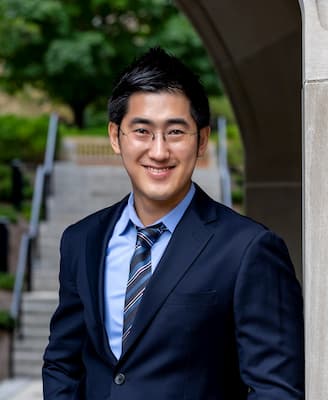
Dr. Joshua Byun is an Assistant Professor of Political Science at Boston College's Morrissey College of Arts and Sciences. His research focuses on grand strategy, alliance politics, and nuclear weapons, with a particular emphasis on how great powers manage their allies and adversaries. He holds a Ph.D. and M.A. from the University of Chicago and a B.A. from Korea University. Previously, he served as a postdoctoral fellow at the University of Pennsylvania's Perry World House and the University of Notre Dame's International Security Center. His work has been published in top journals like the American Political Science Review and International Studies Quarterly. Recent Publications: Black Troops, White Rage (APSR, 2025), Under No Circumstances? (ISQ, 2024) Teaching: International Security, U.S. Grand Strategy, Cold War Politics His research explores topics such as preventive war, nuclear deterrence, and the performative uses of violence. He has held fellowships from the Smith Richardson Foundation and the Charles Koch Foundation.
Jonathan Wheat is a Professor of Sport and Exercise Biomechanics and Associate Dean for Research and Innovation at the College of Health, Wellbeing and Life Sciences, Sheffield Hallam University. He leads the Biomechanics Research Group , focusing on developing innovative measurement systems using biomechanics, sensors, and motor learning principles. His work emphasizes affordable 3D imaging systems and cycling biomechanics, often collaborating across disciplines. Research interests revolve around Ecological Dynamics , movement variability, and biomechanical applications in sports and rehabilitation. Key projects include using consumer depth cameras for body morphology analysis and studying gait adaptations in runners. His interdisciplinary approach bridges biomechanics with engineering and computer science. Publications span biomechanical methodologies, sports equipment interactions, and injury prevention, reflecting his expertise in both theoretical and applied research. Notable recognition includes the EPSRC/Royal Academy of Engineering Rising Star award (2014). Awards: EPSRC/Royal Academy of Engineering Rising Star (2014) Advising: Supervised 14 doctoral students in biomechanics, sports engineering, and human movement analysis. Labs/Teams: Biomechanics Research Group, collaborating with SHU's sports and engineering departments.
Dr. Katherine Bain is an Assistant Professor in Health Professions at Shenandoah University. Her research focuses on anatomical sciences, chronic ankle instability, rehabilitation methodologies, and neurophysiological aspects of musculoskeletal injuries. Her work investigates the biomechanical, neurophysiological, and psychological dimensions of ankle injuries and rehabilitation. Research interests include chronic ankle instability mechanisms, neuroplasticity in injury recovery, balance interventions, and innovative rehabilitation technologies. Publications from 2021-2025 demonstrate consistent focus on ankle injury sequelae, with evolving research into neurophysiological correlates of chronic instability. Recent work expands into technology-assisted rehabilitation (VR, exergaming) and complex clinical decision-making frameworks. Bain received the 2023 Transformative Teaching Award for educational excellence. Her research integrates biomechanical analysis with clinical applications to improve rehabilitation outcomes for individuals with musculoskeletal injuries.
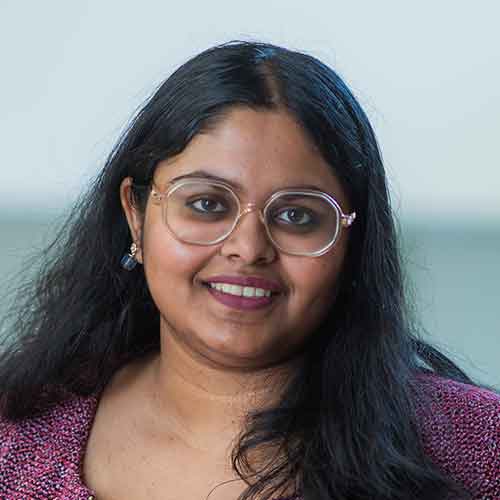
Dr. Susantha Herath is a Professor in the Information Systems Department at St. Cloud State University's Herberger Business School. He joined the department in Fall 2001 and has prior academic experience at the University of Aizu (1993-2001) and South West Texas State University (1990-1993). His primary teaching areas include Management Information Systems, Systems Analysis and Design, Security and Management of Operating Systems, IT Risk Management, and Research Methodology. Ph.D. in Electrical and Computer Engineering, Keio University, Japan, 1991 M. Eng. in Industrial and Computer Engineering, Electro-Communications University, Japan, 1987 B.S. in Business Administration, Sri Jayawardhanapura University, Sri Lanka, 1978 His research focuses on high-performance dependable systems, network security, natural language processing, and artificial intelligence. He explores probabilistic models for anomaly detection, statistical quality control approaches to intrusion detection, and interdisciplinary applications of computer forensics in accounting and healthcare. His work spans cybersecurity, machine learning, and educational innovations in information systems. Dr. Herath has received recognition as a Senior Member of IEEE. His publications demonstrate expertise in spam detection, economic modeling, and enhancing security curricula through active learning methodologies. He has also contributed foundational work in multilingual perception analysis and computer security laboratories.
Laurel Trainor is a Professor of Psychology, Neuroscience and Behaviour at McMaster University, where she holds multiple prestigious distinctions including Fellow of the Royal Society of Canada (FRSC), Fellow of the Canadian Institute for Advanced Research (CIFAR), and Fellow of the Association for Psychological Science. She is also a McMaster Distinguished University Professor and a Research Scientist at the Rotman Research Institute. Trainor earned her Ph.D. in Experimental Psychology from the University of Toronto in 1991, following an M.A. in the same field (1987) and a Bachelor of Music Performance (1981). Her pioneering research focuses on the neuroscience of auditory development and music perception, particularly how infants acquire musical systems similarly to language acquisition. Trainor has demonstrated that listening to a beat activates motor networks in the brain even without movement, reveals how predictive processes in rhythms shape communication between people, and shows that synchronous movement to musical beats increases prosocial behavior even in infants. Her work spans multiple disciplines including auditory neuroscience, cognitive development, and music therapy. Analysis of Trainor's recent publications (2023-2025) reveals a strong focus on infant and child development, particularly regarding rhythm processing, neural mechanisms of musical perception, and applications for developmental disorders. Her research increasingly incorporates advanced methodologies like machine learning for EEG analysis, online motion tracking, and live performance studies in the unique LIVELab environment. Key themes include the relationship between rhythm perception and motor coordination, cross-modal interactions in music processing, and the therapeutic applications of music. Fellow of the Royal Society of Canada (FRSC) Fellow of the Canadian Institute for Advanced Research (CIFAR) Fellow of the Association for Psychological Science McMaster Distinguished University Professor Lifetime Achievement Award from the Society for Music Perception and Cognition (2022) YWCA Woman of Distinction Award for Arts Culture and Design Co-holder of patent for the Neuro-compensator hearing aid Trainor has secured major funding from prestigious organizations including the Canadian Foundation for Innovation, Canadian Institutes of Health Research, Natural Science and Engineering Research Council of Canada, Social Science Research Council of Canada, and the Grammy Foundation. She is the founding and current director of the McMaster Institute for Music and the Mind (MIMM), which houses the LIVELab—a unique research-concert hall with high acoustic control equipped with multi-person motion capture and EEG systems. This facility enables groundbreaking studies on performer-audience interactions and music's role in health and well-being. Trainor is also an accomplished musician, serving as principal flute of the Burlington Symphony.
Dr. Jim McAuliffe is a Full-Time Professor and Dean of Graduate Studies and Research at Nipissing University's Schulich School of Education. He holds a PhD in Physical Education and Sports Studies from the University of Alberta and has over two decades of academic leadership experience, including roles at Lakehead University and Nipissing. His research focuses on visual attention, motor learning, and neurocognitive function, particularly in the context of sports-related concussions and safe return-to-play protocols. He has secured grants from NSERC, the Ontario Neurotrauma Foundation, and Auto21 Network. Education: HBA & MA (University of Western Ontario), PhD (University of Alberta) Leadership Roles: Director of BPHE Program, Vice-Dean of Schulich School of Education Research interests include visual attention mechanisms, autonomic nervous system responses, and driving safety. He has contributed to over 25 peer-reviewed publications, emphasizing interdisciplinary approaches to human movement science and clinical neurology. Dr. McAuliffe also serves on national sports organizations like Squash Canada and the Canadian Olympic Committee. His academic work bridges theoretical research and practical applications, such as improving sports safety protocols and optimizing cognitive assessments for athletes. He actively collaborates with institutions to advance concussion management strategies and youth sports safety.
Nidhi Seethapathi is the Frederick A. (1971) and Carole J. Middleton Career Development Assistant Professor of Brain and Cognitive Sciences and Electrical Engineering and Computer Science at MIT. She holds a shared affiliation with the Schwarzman College of Computing. Her research focuses on building predictive computational models to understand human movement, integrating theory, modeling, and experimental approaches. Key areas include analyzing computational objectives in movement decisions (e.g., energy, stability, time), studying internal variables guiding locomotion control, and developing theories of adaptive motor learning. Her lab emphasizes practical applications in neuromotor rehabilitation and explores strategies to enhance learning efficiency. They employ a 'nails-not-hammers' approach, letting scientific questions drive methodological choices rather than vice versa. Current projects include markerless motion capture for gait analysis and developing therapeutic tools for Parkinson's disease using magnetoelectric nanodiscs. Seethapathi is actively recruiting graduate students, postdoctoral researchers, and undergraduates. The lab collaborates across disciplines, combining neuroscience, engineering, and computer science to advance translational research in movement science.
Professor Frans Verstraten is the McCaughey Chair of Psychology at the University of Sydney's School of Psychology. He holds editorial roles for Perception and i-Perception and has led the School as Head from 2013-2022. His research focuses on visual perception, motion processing, and multisensory integration, with contributions to understanding how locomotion and self-motion influence visual detection and spatial awareness. He has authored influential books like *De wereld van onze Psyche* and co-edited key texts in cognitive neuroscience. Education: MSc (Radboud University Nijmegen, 1990), PhD (Utrecht University, 1994). His work bridges experimental psychology and neuroscience, addressing topics such as optic flow, binocular rivalry, and the neural basis of motion perception. He has secured grants for projects like 'Multisensory perception in active observers' (ARC DP 2020) and 'Contour synthesis' (ARC DP 2014). Research interests emphasize the interplay between perception, action, and environment. Notable findings include how walking modulates visual sensitivity via gait-phase effects and the role of vestibular signals in perceptual organization. His lab explores 'Homo Integralis' series studies on motion perception for moving observers and VR applications in education. Professional contributions include leadership in the Vision Sciences Society (2010-2015, President 2013-2014) and media engagements with Dutch TV (Hoe?Zo!) and SBS radio. His work appears in journals like *Nature Communications*, *Scientific Reports*, and *Acta Psychologica*. Grants and collaborations span multidisciplinary projects in Sydney's Brain and Mind Centre, with a focus on translating perception research to clinical and educational contexts. Current PhD opportunities investigate motion perception dynamics and VR's role in mental health diagnostics.
Dr. Martin Warner is an Associate Professor at the University of Southampton, specializing in musculoskeletal health, rehabilitation science, and neuromuscular physiology. His research focuses on injury prevention in military and athletic populations, stroke rehabilitation technologies, and space crew health monitoring. He leads multidisciplinary projects funded by EPSRC, MRC, and the Science and Technology Facilities Council. Key projects include developing wearable electrotherapy for joint pain management, evaluating virtual reality physiotherapy for knee osteoarthritis, and studying muscle adaptations during space missions. He collaborates across engineering, sports science, and healthcare domains through affiliations like the Institute for Life Sciences and Southampton Marine and Maritime Institute. His recent work explores telerehabilitation protocols for stroke survivors and biomechanical analysis of swimming techniques. Over 90 peer-reviewed publications reflect his contributions to musculoskeletal health innovation and clinical application.
Dr. Kathleen A. Horvath is an Associate Professor of String Education and Pedagogy at Case Western Reserve University's Department of Music, College of Arts and Sciences. She also serves as Director of Orchestras and Associate Provost for Academic Affairs. With a PhD in Music Education from The Ohio State University, her expertise spans music education, string pedagogy, and injury prevention through biomechanical techniques. Her educational background includes a Bachelor of Music in Double Bass from the Eastman School of Music, followed by a Master of Arts in Performance and String Pedagogy, and a PhD in Music Education from Ohio State. She has over seven years of K-12 teaching experience across multiple states and has held faculty positions at institutions like the University of Illinois and Eastman School of Music. Research focuses on preventing performance-related injuries via body positioning and pedagogical methods for adolescents. Key works include New Directions for Strings (co-authored) and articles in journals like Music Educators Journal . She frequently presents at national and international conferences, including ASTA and NSOA events. Horvath directs the Case/University Circle Symphony and Case Camerata orchestras, supervises student teachers, and conducts festivals nationwide. As a performer, she plays double bass with orchestras in Cleveland and beyond, blending scholarly and artistic contributions to music education.
Kathleen Cullen, PhD, is the Raj and Neera Singh Professor of Biomedical Engineering at Johns Hopkins University, with joint appointments in Neuroscience and Otolaryngology. She directs the Johns Hopkins Center for Hearing and Balance and founded the Systems Neuroscience and Neuroengineering Laboratory (SNNL). Her research focuses on understanding how the brain processes self-motion information through computational and neurophysiological methods, with translational applications in neural prosthetics and rehabilitation. Dr. Cullen received her bachelor’s degree in Biomedical Engineering and Neuroscience from Brown University, and her PhD in Neuroscience from the University of Chicago. Her postdoctoral training was at the Montreal Neurological Institute. She has held leadership roles including President of the Society for the Neural Control of Movement and membership on NASA’s Decadal Survey steering committee. She has authored over 250 lectures and serves on editorial boards of prestigious journals. Her lab’s three core research areas include: (1) fundamental neuroscience of self-motion prediction, (2) development of biomimetic neural prosthetics for vestibular dysfunction, and (3) advanced neurophysiological techniques to study vestibular pathways. Key achievements include demonstrating the cerebellum’s role in predictive motor control and advancing clinical applications of vestibular prosthetics. Dr. Cullen’s work bridges molecular neuroscience to clinical translation, with a focus on enhancing sensory-motor function through innovative technologies and rehabilitation strategies. Her contributions have been recognized through the William Dawson Chair in Systems Neuroscience and other accolades.
Dr. Wen K. Ling is Chair and Associate Professor of Physical Therapy at New York University's Steinhardt School of Culture, Education, and Human Development. She holds a PhD in Pathokinesiology from NYU and an entry-level physical therapy degree from National Taiwan University. Her research focuses on gait deviations, movement analysis in diverse populations (e.g., pregnant women, individuals with cerebral palsy), and clinical measurement methods for movement disorders. She has authored influential publications and textbooks, including Neuro Notes: Clinical Pocket Guide (2009). Dr. Ling's expertise spans neuromuscular disorder interventions, research design, and cultural competency in healthcare. Her work has been recognized with prestigious awards such as the 2003 Academic Keys of Who's Who in Education and the American Physical Therapy Association's Diversity 2000 and Beyond Award. She actively collaborates with colleagues on biomechanical studies, wearable technology applications, and military ergonomics research. Her academic contributions include over a decade of research on load carriage walking biomechanics and cross-cultural healthcare practices, alongside curriculum development initiatives in Taiwan's physical therapy education system.
Dr. Helco van Keeken is a Programme Leader for the Master's programmes in Sport Sciences and Human Movement Sciences, and a Leading Academic Teacher at the University Medical Center Groningen (UMCG) within the Faculty of Medical Sciences. He holds an affiliation with the Department of Human Movement Sciences. With a background in physical therapy and a PhD in medical sciences, his work focuses on prosthetic limb gait analysis, neuromechanical concepts, and the implementation of Exercise = Medicine in clinical care. Education: He graduated with a Physical Therapy degree from the Hogeschool van Amsterdam in 1997 and completed his PhD at the University of Groningen, focusing on postural control in amputees. His research has been published in biomedical engineering and physics journals, emphasizing mathematical modeling of prosthetic gait in transfemoral amputees. Research Interests: Van Keeken’s expertise spans rehabilitation engineering, prosthetics, and clinical exercise interventions. His recent work evaluates physical activity levels in healthcare settings and the effectiveness of physiotherapeutic exercises post-knee arthroplasty. He actively contributes to fostering interdisciplinary collaboration, as seen in projects like the Physicians Implement Exercise = Medicine consortium. Professional Contributions: He has organized events such as the ‘Publieksfestival Iedereen in beweging!’ and the Eindsymposium PIE=M, emphasizing public engagement. His accolades include first prizes for the ‘challAble’ project and third place in the 2013 Proefschriftprijs. Labs/Teams: His research leverages facilities like the CAREN lab for advanced movement analysis. He collaborates with clinicians and engineers to bridge theoretical models and clinical practice.
Andrew Chubb is a Senior Lecturer in the Department of Politics, Philosophy and Religion at Lancaster University. His research focuses on the interplay between Chinese domestic politics and international relations, with particular expertise in maritime disputes, strategic communication, and Chinese Communist Party history. He holds a PhD from the University of Western Australia. His work examines how public opinion shapes PRC foreign policy, particularly in contested maritime regions like the South China Sea. Key publications include Chinese Nationalism and the Gray Zone (2021) and PRC Overseas Political Activities (2021), analyzing China's geopolitical strategies and influence operations. Chubb advises PhD students on Asia-Pacific regional politics, Chinese foreign policy, and digital media's role in shaping political narratives. He has led projects such as Domestic Public Opinion and International Escalation (2019–2022), exploring crisis management and cross-strait dynamics. Active in research groups like the Richardson Institute for Peace Studies and the Centre for War and Diplomacy, his work bridges academia and policy analysis.
Dalton Lin is an Assistant Professor at the Sam Nunn School of International Affairs, Georgia Institute of Technology, and a member of the Center for International Strategy, Technology, and Policy. He holds a Ph.D. in Political Science from the University of Wisconsin-Madison and previously served as a Postdoctoral Research Fellow at Princeton University. His research focuses on international relations theory, particularly the dynamics between major and smaller states, with a regional focus on China and East Asia. Lin’s work examines geopolitical bargaining, patron-client relationships, and cross-Strait security dynamics, including the evolving 'One China' framework and the Belt and Road Initiative’s strategic implications. Lin has received prestigious awards, including the 2024-2025 Faculty Excellence in Research Award and multiple teaching recognitions from Georgia Tech. He is the founder of the Taiwan Security Issues initiative and a research associate with the China Research Center. His publications span peer-reviewed journals like The China Quarterly and Orbis , as well as policy-oriented outlets such as The Diplomat and The Cipher Brief . Education: Ph.D. in Political Science, University of Wisconsin-Madison Key Research Themes: Geopolitical patronage, Sino-U.S. competition, cross-Strait relations, and strategic stability Recent Work: Explores China’s BRI as a tool for agenda-setting power and the challenges to the 'One China' framework’s longevity Lin’s research and teaching address contemporary issues such as U.S.-China power dynamics, Taiwan’s security dilemmas, and the geopolitical implications of China’s economic statecraft. His interdisciplinary approach bridges theory and policy, offering insights into global strategic challenges.