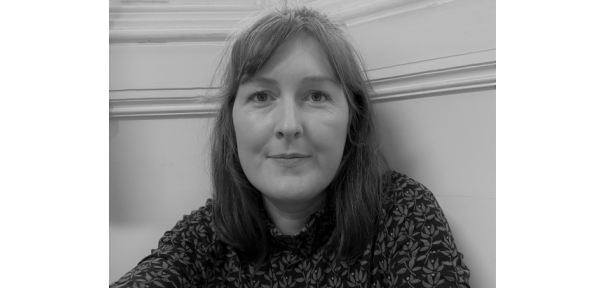
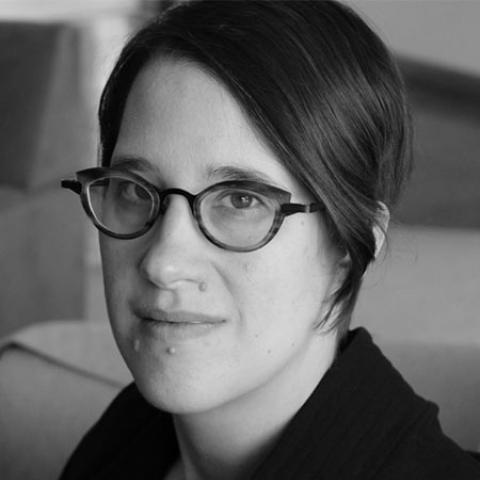
Dr. Laura McMahon is an Associate Professor in Film and Screen Studies at the Faculty of Modern and Medieval Languages and Linguistics , University of Cambridge. She is currently on sabbatical leave and will return in Easter Term 2024. Her research explores intersections between film and philosophy , with a focus on French and Francophone cinema , decolonial approaches , feminist theory , and ecocritical perspectives . Dr. McMahon’s work examines how contemporary feminist filmmakers like Onyeka Igwe and Khady Sylla engage with archives to reframe history through speculative reimagining . She also investigates ecological themes in Claire Denis’s films and the ethics of animality in global art cinema. Her monograph Animal Worlds: Film, Philosophy and Time (2019) and edited collections like Animal Life and the Moving Image (2015) highlight her contributions to debates on nonhuman representation and deconstructive aesthetics . Her recent publications analyze documentary practices , postcolonial archives , and critical repurposing in moving image work. She welcomes inquiries from MPhil and PhD students working on related topics. Her teaching and research are affiliated with the Cambridge Film and Screen initiative and the Cambridge Italian Research Network (CIRN).
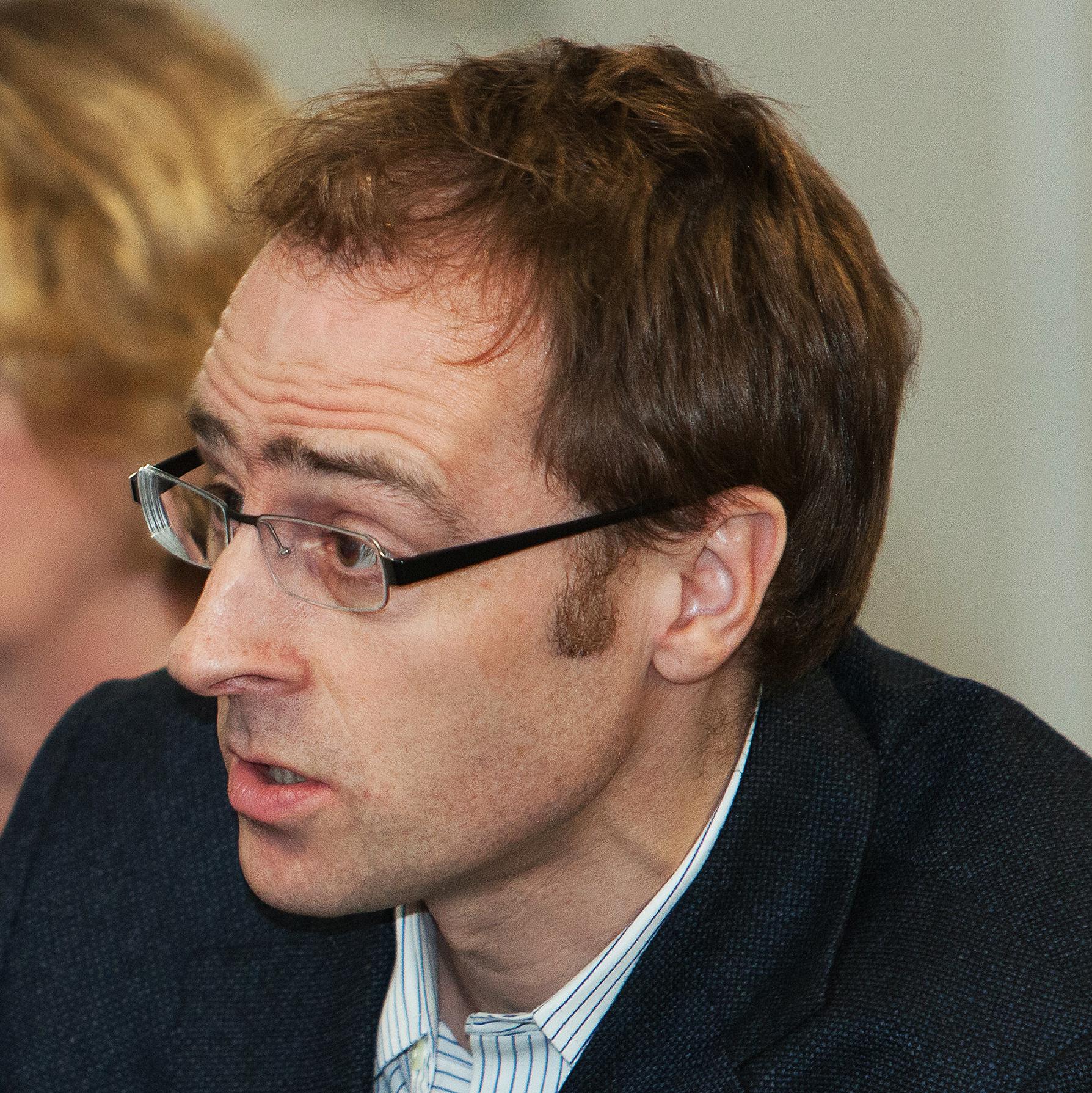
Dr. Michael R. Griffiths is a Senior Lecturer in English Literatures at the University of Wollongong, where he has been teaching since 2014. He serves as the Internationalisation Director in the School of the Arts, English and Media, managing global collaborations including UOW's campuses in Hong Kong and Dubai. Previously, he was a Postdoctoral Fellow at Columbia University's Institute for Comparative Literature and Society from 2012-2014. His educational background includes: PhD in English from Rice University (2012) Griffiths's research focuses on postcolonial literary theory, settler colonial studies, and Indigenous literatures, with a growing emphasis on decolonial thought. His work critically examines representations of Aboriginal people and culture in Australian literature, the politics of authorship in anticolonial thought, and intersections between critical animal studies and ecocriticism. In his scholarship, Griffiths explores how literature engages with questions of identity, difference, and belonging in settler colonial contexts, often challenging conventional approaches to cultural appropriation and representation. His recent publications demonstrate a clear trajectory toward examining the intersections between poststructuralist literary theory and anticolonial thought. The publication of his 2025 book The Death of the Author and Anticolonial Thought represents a significant contribution to understanding how thinkers like Edward Said and Édouard Glissant responded to Roland Barthes's "death of the author" thesis. His earlier work, particularly his 2018 monograph The Distribution of Settlement: Appropriation and Refusal in Australian Literature and Culture , established him as a scholar examining representations of Aboriginal people by non-Indigenous writers in Australian literature. Griffiths serves as Chair of the South Pacific Association for Commonwealth Literature and Language Studies (SPACLALS) and is on the editorial advisory board of Australian Literary Studies . He has also co-edited special issues of Continuum on freedom of speech debates, which received notable attention and was reprinted as a book titled Unsettled Voices . As a supervisor, Griffiths has mentored numerous PhD and Master's students through projects examining diverse topics including Indigenous Trinidadian theatre, hauntings in Chinese-Australian literature, and cosmopolitanism in Indian English fiction. His grant history shows consistent funding support for research on Australian literature, settler colonial studies, and international academic collaborations, particularly with Wuhan University in China. Griffiths contributes to several research networks focused on postcolonial studies and settler colonialism, including the South Pacific Association for Commonwealth Literature and Language Studies, which he chairs, and maintains active engagement with global scholarly conversations through his academic profiles and social media presence.
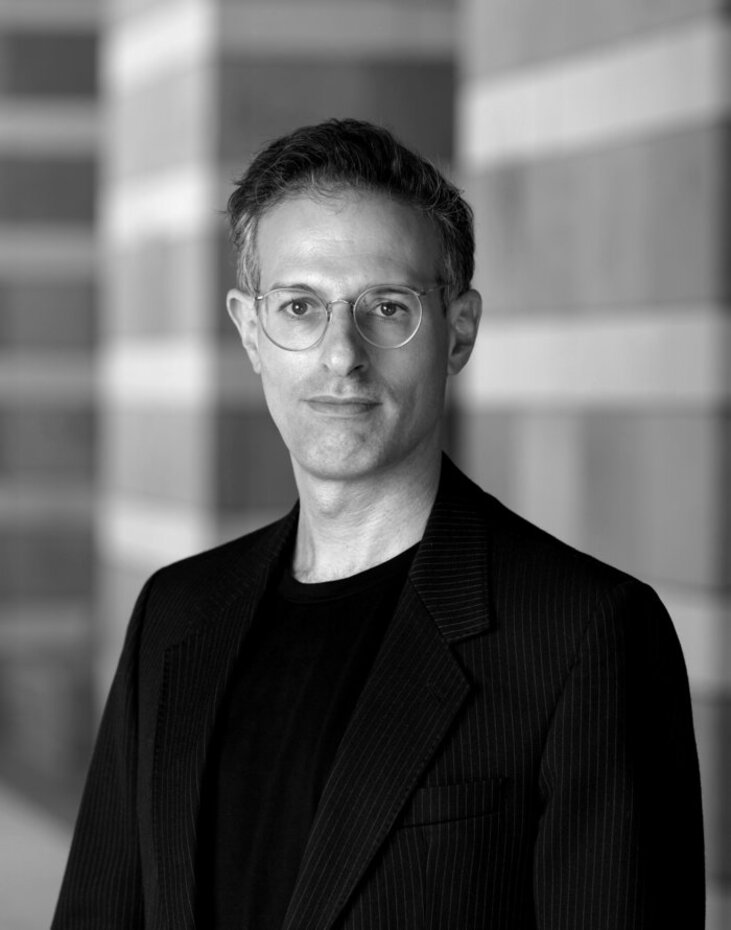
Timothy Bewes is the Owen F. Walker Professor of Humanities and Professor of English at Brown University , where he has taught since 2004. His research bridges contemporary fiction , poststructuralist theory , Marxist literary analysis , and postcolonial studies , with a focus on the politics and ethics of literary form . He has held fellowships at the Pembroke Center and Cogut Institute for the Humanities , and co-edits the Film-Thinking series. Education : DPhil and MA from University of Sussex , BA from University of North London . Bewes' scholarship interrogates the ontological status of fiction and the materiality of literary works , as seen in his National Book Critics Circle Award-winning book Free Indirect: The Novel in a Postfictional Age (2022). His recent articles explore intersections between novel theory , Black studies , and Deleuzean philosophy , emphasizing repetition , dialogicality , and anti-representational frameworks . Notable awards include the L. S. Dembo Prize (2015) and Chesler-Mallow Senior Faculty Research Fellowship (2012-13). He teaches courses such as The Terrible Century , Capitalism & its Metamorphoses , and Bakhtin and the Political Present .
Pheng Cheah serves as Professor at the University of California, Berkeley, specializing in interdisciplinary research bridging philosophy, literature, and political theory with global implications. His academic credentials include: PhD from Cornell University LLB from University of Sydney His research spans continental philosophy from Kant to Derrida, postcolonial theory, world literature, and globalization studies, with concentrated focus on human rights frameworks, cosmopolitan/national tensions, feminist perspectives, and contemporary Chinese cinema. His methodology integrates literary analysis with political philosophy to examine power dynamics in transnational contexts, particularly across postcolonial Asia where he conducts fieldwork with filmmakers. Publication analysis reveals an evolving trajectory from foundational cosmopolitan/national theory toward biopolitical human rights frameworks and cinematic representations of globalization. His work consistently centers non-Western perspectives—especially Chinese, Southeast Asian, and global South contexts—challenging Eurocentric paradigms through comparative analysis of cultural production and political transformation. No scientific awards are documented in available sources. Professor Cheah mentors graduate students in critical theory and postcolonial studies, guiding research on literature's political dimensions. His scholarly activities are supported by standard academic funding mechanisms enabling extensive archival work and international collaborations, particularly with Asian film communities. He maintains active participation in global studies consortia and postcolonial research networks, frequently collaborating with filmmakers and scholars across the three Chinas through interview-based methodologies.
Prof. Dr. Sami Khatib is a Professor for Political and Social Aesthetics at Karlsruhe University of Arts and Design since spring 2025, where he also serves as Vice-Rector for International Affairs and Cooperations. His academic career spans teaching at institutions including the American University of Beirut, American University in Cairo, Leuphana University of Lüneburg, Academy of Fine Arts Vienna, and Free University of Berlin. His research focuses on critical theory from the Global South, aesthetic theory, and continental philosophy. Key publication projects include the 2025 title Real Abstraction: The Birth of Aesthetics from the Spirit of Capitalism , and co-editing the 2025 posthumous collection of Irving Wohlfarth’s essays on Walter Benjamin. His 2013 monograph Teleology without End explores Benjamin’s reconfiguration of messianic thought. Khatib’s work bridges traditional arts with media technology, and he contributes to international academic collaborations through his administrative leadership. Current research trends show focus on capitalist systems, theological materialism, and critical theory methodologies.
Minwoo Jung is an Assistant Professor at Loyola University Chicago, jointly appointed in the Department of Sociology and Women's Studies and Gender Studies (WSGS). His research interrogates the intersections of gender, sexuality, neoliberalism, and globalization through decolonial and queer theoretical frameworks. Research interests include: Queer theory and its epistemological limits Decolonial approaches to globalization and rights Gender and sexuality in East and Southeast Asian contexts Neoliberal political economy and cultural critique Urban inequality in South Korea Transnational LGBTQ+ movements His recent scholarship examines contested cosmopolitanisms in queer activism, flexible masculinities in global Asia, and rights projects as relational sociological phenomena. Current work analyzes sovereignty imaginaries in Taiwan's marriage equality debates and neoliberal violence in global media like Squid Game . Scientific achievements include: Mary Griffin Essay Award Laura Bassi Scholarship Active in teaching and mentorship, Jung contributes to undergraduate and graduate programs in WSGS while maintaining a robust publication record.
Professor Daniel Katz is a faculty member at the University of Warwick's Faculty of Arts, affiliated with the English and Comparative Literary Studies program. His research focuses on modernism and its aftermath, with a special interest in poetry and poetics. BA (Reed College) PhD (Stanford University) His work spans psychoanalysis, critical theory, transatlantic literary studies, and multilingualism. He has published extensively on Jack Spicer, Samuel Beckett, and Ezra Pound, including the edited volume Be Brave to Things: The Uncollected Poetry and Plays of Jack Spicer (2021). Current projects include a monograph The Big Lie of the Personal: Poetry, Politics, and the Lyric Subject (Oxford UP, forthcoming). Recent publications analyze subjects such as sublimation in psychoanalysis, materialist poetics, and the politics of avant-garde movements. He is a founding editor of the Bloomsbury Studies in Critical Poetics series and co-directed Warwick's Centre for Research in Philosophy, Literature and the Arts. He supervises doctoral research in modernism (especially Beckett and Pound), American poetry, and critical theory, including psychoanalysis and post-Derridean thought. Teaching includes undergraduate modules like US Writing and Culture, Modern American Poetry, and Twentieth-Century Avant-Gardes, as well as MA options in American Poetry and Modernist Psychoanalysis. Office hours: Monday 14.30-15.30, Tuesday 13.00-14.00, and by appointment.
Ellen T. Armour is the E. Rhodes and Leona B. Carpenter Professor of Feminist Theology at Vanderbilt Divinity School and the Graduate Department of Religion, where she directs the Carpenter Program in Religion, Gender, and Sexuality. She holds affiliated appointments in the Department of Philosophy and the Women’s and Gender Studies Program at Vanderbilt and served as a Faculty Fellow at the Robert Penn Warren Center for the Humanities (2017–2018). B.A., Stetson University (1980) M.A., Ph.D., Vanderbilt University (1989, 1993) Her research focuses on feminist theology, contemporary continental philosophy, and theories of sexuality, race, gender, disability, and embodiment. Her work engages interdisciplinary approaches to religion, particularly through poststructuralist and queer theoretical frameworks. Key themes in her publications include the intersection of religion and digital visual culture, decolonial ethics in theology, and the application of Judith Butler’s performativity theory to religious discourse. Her notable books include Seeing and Believing (2023), Signs and Wonders (2016), and Bodily Citations (co-editor, 2006). Scientific Awards: Clarence Day Dean’s Award for Outstanding Teaching (1999) Jameson Jones Award for Faculty Service (2005) Armour has held leadership roles such as Chair of the Religious Studies Department at Rhodes College (1991–2006) and Associate Dean of Academic Affairs at Vanderbilt (2019–present). Her affiliations include St. Augustine’s Chapel (formerly Baptist) and the Robert Penn Warren Center for the Humanities.
Mark B.N. Hansen is the James B. Duke Distinguished Professor of Literature at Duke University, affiliated with the Trinity College of Arts & Sciences. He holds roles such as Director of the Literature Program and previously served as Director of Graduate Studies and Undergraduate Studies in Literature. His academic journey includes a Ph.D. from the University of California, Irvine (1994), an M.A. (1989), and a B.A. from New York University (1987). Hansen’s research explores the intersection of technology, human agency, and social life, spanning literary studies, media theory, phenomenology, and cognitive neuroscience. He emphasizes the role of technological exteriorization in defining human experience, with notable contributions to digital media aesthetics, media ontology, and the environmental turn in media studies. His publications reflect a focus on 21st-century media’s impact on perception, temporality, and embodiment. Recent works include analyses of deepfake technology, feed-forward agency, and technical feeling. Hansen’s teaching spans special topics in literature, visual studies, and computational media, reflecting his interdisciplinary approach. Recipient of prestigious awards like the National Humanities Center Fellowship (2014) and a Fulbright Senior Specialist designation (2012), Hansen also serves on editorial boards and professional organizations. His research has been supported by grants such as Duke’s Global Humanities Seed Grant (2022).
Professor Martin McQuillan is a prominent academic serving as Professor and Director of the Institute for Creative Enterprise (ICE). He is actively accepting PhD students and contributes to the Centre for Human Animal Studies. His research focuses on deconstruction theory, Jacques Derrida's philosophy, literary analysis, and contemporary cultural studies. Recent work explores themes like poststructuralist thought, the innocence of deconstruction, and obsolete technology's role in storytelling. McQuillan has supervised 2 academic works and engaged in interdisciplinary activities such as Re-membering obsolete technology (2021). Key Research Areas: Deconstruction, Postmodern Theory, Literary Criticism Affiliations: ICE Director, Centre for Human Animal Studies His publications span books, chapters, and peer-reviewed articles, emphasizing philosophical inquiry into literary and cultural texts. McQuillan's work bridges theoretical frameworks with creative practice, reflecting a commitment to interdisciplinary scholarship.
Dr. Michaela Ott is a retired Professor of Aesthetic Theories at the Hamburg University of Fine Arts (HFBK Hamburg). Her research interests span poststructuralist philosophy, aesthetics and politics, film theory, spatial theories, affect theory, and postcolonial studies. She has held teaching positions at the University of La Jolla, California, and the Zurich University of the Arts (ZHdK). Ott is the author of influential monographs such as Which Outside of Thinking? (2018) and Dividuations (2018), exploring themes like participatory practices and collective subjectivity. Her edited volumes, including Timing of Affect (2014), address epistemologies of emotion and transcultural migration. Ott’s work bridges philosophy, art, and cultural critique, with notable contributions to Deleuze studies and the aesthetics of film. Her publications span decades, from early works on Deleuze’s literary readings ( From Mime to Nomad , 1998) to analyses of Hollywood’s symbolic order ( Hollywood: Phantasma , 2005). Her 2004 article on 'Space' in aesthetic concepts remains a foundational text. Ott’s interdisciplinary approach has shaped debates on art knowledge, biennial research, and postcolonial visual culture. She has curated and participated in symposia, including discussions on counter-monuments and para-monuments in public space. Despite her retirement, her intellectual legacy continues to influence aesthetic theory and contemporary art discourse.
Michael Hardt serves as Professor of Literature at Duke University and Professor of Philosophy at The European Graduate School (EGS). His academic career bridges political philosophy and literary theory, with primary affiliations in Duke's Department of Literature within Trinity College of Arts & Sciences. Research interests center on globalization , immaterial labor , communist theory , and biopolitical resistance . His work critically examines contemporary power structures through the lens of Empire, Multitude, and Commonwealth—the trilogy co-authored with Antonio Negri that redefined 21st-century leftist thought. Key contributions include theorizing affective labor, the commons, and horizontal political organization, particularly through analyses of movements like Occupy Wall Street. His publication trends reveal a consistent focus on challenging neoliberal capitalism and reimagining democratic structures . Early works engaged with Deleuze and Italian autonomism, while recent scholarship addresses crisis-era politics, education, and the reclamation of common resources. Articles demonstrate interdisciplinary reach across political philosophy, cultural studies, and critical theory. Hardt's academic journey began unconventionally: after a B.S. in Engineering from Swarthmore College (1983), he shifted to Comparative Literature (M.A. and Ph.D., University of Washington). His activism during the 1980s Sanctuary Movement and Central American solidarity work deeply informed his theoretical development. Collaborations with Negri since the 1990s produced foundational texts analyzing global power as a decentralized 'Empire' network rather than traditional imperialism. His advisory work and institutional contributions include directing EGS lecture programs and participating in transnational academic networks. Current projects focus on love as political ontology and the 'common' as an alternative to capitalist property relations, continuing his exploration of radical democratic potential within contemporary global systems.
Nancy Glazener is a Professor of English and Gender, Sexuality, and Women's Studies (GSWS) at the University of Pittsburgh, affiliated with the Kenneth P. Dietrich School of Arts and Sciences. Her work bridges literary history, gender studies, and cultural analysis, focusing on US literature from the 18th century to the present and contemporary global fiction. She is the author of seminal works such as Literature in the Making (2016) and Reading for Realism (1997). Her research interests span interdisciplinary theories of gender/sexuality, institutional history of literary studies, affect theory, print culture, and the history of personhood. Current projects include a study of police procedural detective fiction’s intersections with policing, masculinity, and neoliberal work cultures. She also explores class politics, reception theory, and the role of literature in shaping societal ethics. Glazener’s scholarship critically examines the relationship between literary forms and social structures, particularly how marginalized voices and cultural dissent are represented in print and media. Her work has redefined understandings of 19th-century literary culture, feminist authorship, and the global dimensions of American realism. Her publications reflect a commitment to interdisciplinary approaches, blending historical analysis with contemporary theoretical frameworks. She actively participates in academic communities through teaching, mentoring, and contributions to scholarly discourse on gender, literature, and cultural history.
Andrea Bachner is a Professor of Comparative Literature at Cornell University’s College of Arts and Sciences. She served as Director of the East Asia Program (2019–2022) and contributes to transregional research through editorial and committee roles. Her work bridges Sinophone, Latin American, and European cultural productions. MA, Ludwig Maximilian University of Munich PhD, Harvard University Her research focuses on theories of interculturality, media studies (visuality/textuality), gender/sexuality, and transcultural queer theory. She examines how cultural comparison reshapes literary and media analysis, with attention to Sinophone diasporic and minor cultural expressions. Her recent publications explore Sinographic practices in global contexts, poststructuralist media theory, and cross-Pacific cultural projects. Key journals include Comparative Literature , Modern Chinese Literature and Culture , and Oxford Handbook of Modern Chinese Literatures . Notable awards include the 2002 Owen A. Aldridge Prize for her article in Comparative Literature Studies . She teaches courses on literary theory, Judith Butler, and global literature at Cornell.
Dr Nathalie Wourm is a Lecturer in Contemporary French Literature and Director of the Centre for French, Francophone and Comparative Studies (CFFCS) at Birkbeck, University of London. Her research focuses on 21st-century French poetic practices and poststructuralist thought, particularly Gilles Deleuze and Félix Guattari. Her career began in 1989 as a teaching assistant, later completing a D.Phil. at Oxford while working at Birkbeck. She has published a book, Poètes français du 21e siècle: entretiens (2017), and numerous articles exploring intersections between poetry, politics, and philosophy. Supervised PhD theses on rhizomatic poetry and feminist schizo-narratives Convenes BA modules on contemporary French literature, women's writing, and comparative studies Active in research clusters like CRIP (Centre de recherche internationale de poésie) and Society for French Studies