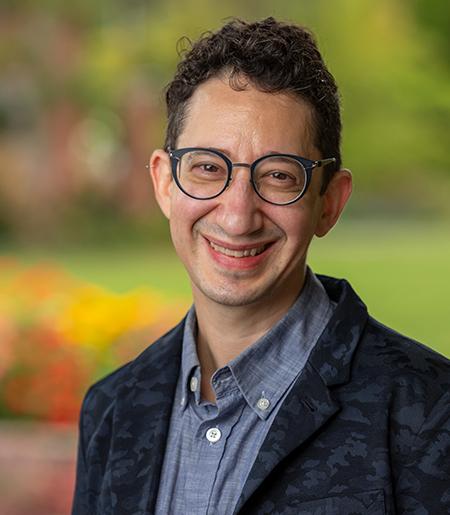
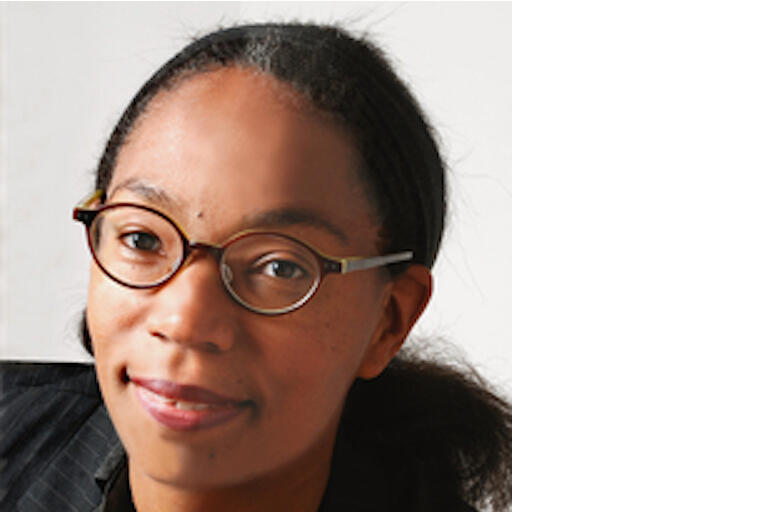
Zeyad El Nabolsy is an Assistant Professor of Philosophy at York University's Faculty of Liberal Arts & Professional Studies. His research examines African philosophy, Marxist theory, and decolonial epistemology through historical and critical frameworks. Education includes: Ph.D. and M.A. from Cornell University M.A. from McMaster University B.Eng from McMaster University Research focuses on modern African philosophy, analyzing thinkers like Paulin Hountondji, Amílcar Cabral, and James Horton to reconstruct intellectual traditions challenging Eurocentric epistemology. Work emphasizes scientific dependency, Marxist historiography, and critiques of racial ideology. Publications bridge classical German philosophy (Kant/Hegel), Marxian theory, and African thought, exploring how epistemological frameworks shape liberation struggles. Recent articles examine decolonial science studies and the weaponization of theory in anti-colonial movements.
Anne Meneley is a Professor in the Department of Anthropology at Trent University, Canada. She holds a PhD in Anthropology from New York University (1993) and an MA from the same institution. Her work focuses on sociocultural anthropology in the Middle East (Yemen, Palestine), with specializations in food studies, consumerism, walking, self-quantification, and human-nonhuman interactions in plant materialities. Education: BA, McGill University MA & PhD, Department of Anthropology, New York University Anthropologically, Meneley examines how olive oil circulates as both a material and symbolic good across Italy, Palestine, and the broader Mediterranean. Her research bridges ethnographic methods with analyses of international commodity flows, gender dynamics in the Arabian Peninsula, and the politics of academic collaboration. She has published extensively in journals like American Anthropologist , Current Anthropology , and Cultural Anthropology , with a focus on how quotidian practices like food consumption and walking reflect larger socio-political structures. Scientific awards include multiple SSHRC grants (2003-2026), Ford Foundation funding (2002-2003), and Trent University Merit Awards (2005, 2009, 2020). She has also served on editorial boards for Ethnos and American Anthropologist , and as a reviewer for SSHRC and international journals. Her advising spans postdoctoral fellows (FRQSC funded), PhD committees at Trent and the University of Toronto, and MA supervision. She has organized panels on topics like 'Circulation Interrupted' (2010 AAA) and 'Cosmopolitan Circulations of Emotions' (2007 AES), and conducted field research in Palestine (2006-2019), Yemen (1989-90, 1999), Italy (2000-2008), New York (2007, 2009, 2012, 2019, 2022), California (2007), and Toronto (2000-22).
Dr. Julian F. Henriques is a Senior Research Fellow at Goldsmiths, University of London, and a leading scholar in sound studies, cultural studies, and Caribbean research. With a PhD thesis (2008) on Reggae Sound System Crews, his work bridges music, technology, and embodiment through practice-based research. He has authored the book Sonic Bodies (2011) and co-edited Rhythm, Movement, Embodiment (2014). Currently, he explores fetal auditory environments through the Sonic Womb Exhibition (2026) and contributes to obstetric research on noise exposure. Research Interests: His scholarship focuses on the Jamaican sound system as a cultural technology, analyzing rhythm, affect, and sonic embodiment. He investigates intersections between popular culture, Caribbean diasporic practices, and the materiality of sound through theoretical frameworks like Afrofuturism (2015) and cosmopolitan theory (2020). Recent work combines computational acoustic modeling with ethnographic insights into prenatal soundscapes. Key Publications: Includes articles on fetal noise exposure (2025), Jamaican knowledge systems (2023), and rhythm analysis (2014). His edited works span Stuart Hall's legacy (2018) and sound studies companions. Collaborations with acoustic engineers (2025) demonstrate interdisciplinary reach. Collaborations: Works with institutions like University College London (2025), Tate Modern (2011), and the University of Munich (2014). Leads the Sonic Womb project with Pierre Gélat and Atau Tanaka.
Ulf Mellström is a Professor in Gender Studies at Karlstad University, Sweden. He holds a PhD from Linköping University (1995) and has held academic positions at Linköping University (1995-2009), Luleå University of Technology (2005-2011), and Karlstad University since 2011. His research focuses on gender and technology studies, masculinity studies, globalization, and higher education. Key areas include the political economy of global knowledge production, gendered professions in STEM, and the intersection of technology, risk, and security. Education: PhD in Technology and Social Change (1995), Linköping University. Major research projects include investigations into globalized eduscapes, corporate universities in Dubai/India/Brazil, and gender mainstreaming in Swedish rescue services. He collaborates internationally, serving on boards such as MSB's Scientific Board and the Norwegian Research Council's gender studies program. Research interests span ethnographically grounded studies of gendered knowledge production, global comparative perspectives on STEM fields (e.g., Malaysia's female-dominated computer science), and the cultural embeddedness of technology use. He has supervised multiple PhD students and teaches courses in gender studies, ethnographic methodology, and STS. Publications include influential works like Masculinity, Power and Technology: A Malaysian Ethnography (2003), and articles in journals such as Science, Technology & Human Values and International Journal of Gender, Science, and Technology . His recent work explores posthumanist masculinity, autonomous vehicles, and transnational bachelorhood.
Keith Johnson is a Professor of English at the College of William & Mary, specializing in modernist and contemporary literature. He holds a PhD from Boston University and focuses on intersections between literary theory, philosophy, film/media studies, and world literature. His work explores themes such as animism, ecological thought, and posthumanist discourses. Research interests include cyberpunk ecologies, geological imaginaries, and ethical frameworks in the Anthropocene. Notable publications include Jan Svankmajer: Animist Cinema (2017) and critical essays on Kafka, Coetzee, and Bataille. His scholarship bridges literary analysis with interdisciplinary topics like mineral ontology, trauma studies, and existential ethics. Johnson’s recent articles (2016–2023) trace shifts toward materialist critiques of capitalism, technological anxiety, and planetary crises. He participates in the Sara & Jess Cloud Lecture Series and contributes to William & Mary’s English Department’s emphasis on global literary traditions. His academic contributions span multiple disciplines: 15 recent articles demonstrate engagement with film theory, environmental philosophy, and postcolonial studies. Current research trends focus on redefining ethical frameworks for non-human entities in contemporary narratives.
Jih-Fei Cheng is Associate Professor and Chair of the Department of Feminist, Gender, and Sexuality Studies at Scripps College, where he teaches and researches at the intersection of science, media, surveillance, and social movements. He holds a PhD in American Studies and Ethnicity with an emphasis in Visual Studies from the University of Southern California, an MA in Asian American Studies from UCLA, and a BA in Communication from UC San Diego. His interdisciplinary scholarship engages feminist, queer, and decolonial theories to analyze the political economies of virology, global health, and racial capitalism. His research centers on the historical and transnational entanglements of science, empire, and social justice. Key areas include the institutionalization of queer politics, the geopolitics of HIV/AIDS, and the racialized foundations of virology. His co-edited volume AIDS and the Distribution of Crises (Duke UP, 2020) rethinks the pandemic as a network of overlapping crises shaped by colonialism and neoliberalism. He is currently working on a book project titled Materialist Virology , which historicizes virology within Euro-American empire. Cheng’s recent publications span journals such as History and Technology , Radical History Review , and GLQ , with 2025 articles on financial contagion and reservoirs signaling his continued engagement with interdisciplinary frameworks linking finance, disease, and history. His work often collaborates with artists and activists, exemplified by writings on Candice Lin’s art and co-organized dialogues on care and intravention during the pandemic. He has been recognized with multiple awards, including the Lavender Graduation Award (2023, 2016), Professional Development Grants (2019–2020, 2016–2017), and fellowships from USC and the American Antiquarian Society. His teaching and service reflect a deep commitment to LGBTQIA inclusion, racial justice, and community-based scholarship. Lavender Graduation Award for providing safe and inclusive spaces for LGBTQIA students, Queer Resource Center, The Claremont Colleges (2023) Professional Development Networks Grant at The Claremont Colleges (2019–2020) Diversity Teaching Award Nominee, The Claremont Colleges (2018) EnviroLab Asia Research and Conference Award (2017–2018) Lavender Graduation Award (2016) Professional Development Networks Grant (2016–2017) Research Fellow, Summer Institute for the Center for Historic American Visual Culture, American Antiquarian Society (2014) Visual Studies Summer Research Award, USC (2014) New Directions Fellow, USC Center for Feminist Research (2011–2012) Tritia Toyota Fellowship (2001–2002) Cheng has advised and collaborated with numerous scholars and activists, though no formal advisees are listed. His work is deeply rooted in community engagement, having previously worked in HIV/AIDS social services and served on the Board of Directors at the HIV League. He was managing editor of American Quarterly (2010–2013) and has taught at UCLA and Hunter College. His research is supported by interdisciplinary networks and collaborative projects, including digital humanities initiatives and art-theory praxis. He is involved in multiple collaborative research and publishing projects, often working with artists like Candice Lin and scholars such as Alexandra Juhasz and Nishant Shahani. His recent special issue on 'Reservoirs' brings together scholars from anthropology, media studies, and philosophy to rethink historical and ecological crises. His lab-like collaborative environments include feminist media praxis collectives and interdisciplinary workshops on crisis, care, and decolonial knowledge.
Steffen Dalsgaard is a Professor at the Technologies in Practice group at IT University of Copenhagen. As Head of Center for Climate IT, he leads initiatives exploring how digital technologies interact with climate change mitigation. He also contributes to the Center for Information Security and Trust. PhD in Anthropology and Ethnography (Aarhus University, 2010) Recipient of DFF Sapere Aude grant, ERC Consolidator Grant, and Carlsbergfondet funding Key research areas: climate data valuation, sociopolitical implications of IT, and comparative ethnography Research Focus: Investigates intersections between digital technologies, climate change, and sociocultural values through ethnographic studies in Denmark, Papua New Guinea, and Brazil. Examines carbon markets, environmental technoscience, and digital governance systems. Scientific Awards: ERC Consolidator Grant (DecouplingIT) DFF Sapere Aude grant Carlsbergfondet grant Key Collaborations: Works with Independent Research Fund Denmark, European Commission, and external bodies like the Academy for Technical Sciences (ATV). Leads multidisciplinary projects involving climate data analysis and sustainable technology implementation.
Clapperton Chakanetsa Mavhunga is a Professor of Science, Technology, and Society (STS) at the Massachusetts Institute of Technology (MIT), where he has taught since 2008. His research re-centers African knowledge production in the study of science, technology, and innovation, challenging colonialist frameworks that position Africa as a passive recipient of technologies. Key Research Areas: African environmental history, indigenous knowledge systems, mobility studies, postcolonial technoscience, and critiques of technology transfer narratives. Books: The Mobile Workshop (2018) examines the tsetse fly as a catalyst for African innovation, while Transient Workspaces (2014) explores everyday technological practices in Zimbabwe. He also edited What Do Science, Technology, and Innovation Mean from Africa? Recent Articles: Focus on mobility as analytical framework, African responses to zoonotic diseases, and the political ecology of pesticide use in colonial contexts. Scientific Awards: Honorable mentions from the European Society for Environmental History (Turku Prize) and African Studies Association (Herskivits Prize) in 2015. Mavhunga’s work bridges history, philosophy, and anthropology of technology, advocating for decriminalizing African practices and integrating them into global STI discourses.
Noah Tamarkin is an Associate Professor at Cornell University with joint appointments in Anthropology and Science & Technology Studies, and a Research Associate at Wits Institute for Social and Economic Research (WISER) in Johannesburg, South Africa. His work examines intersections of genetics, race, citizenship, and power through ethnographic studies in South Africa since 2004. PhD in Cultural Anthropology with Feminist Studies notation (UC Santa Cruz) MA in Cultural Anthropology (UC Santa Cruz) BA in Anthropology (Colorado College) Research focuses on genetic data's political and social implications, particularly in postapartheid South Africa. Key projects include analyzing DNA's role in ancestry testing, forensic databases, and trans health practices. He explores how marginalized communities rework genetic knowledge to assert belonging and challenge exclusionary technologies. Recent publications address indigenous DNA in practice, forensic genetics legislation, and bioinformation ethics. His 2020 book Genetic Afterlives won the 2022 Jordan Schnitzer Prize and received a Diana Forsythe Prize honorable mention. Supported by NSF, Wenner Gren, and Howard Foundation fellowships. 2024 George A and Eliza Gardner Howard Foundation Fellowship 2022 Jordan Schnitzer Prize (Association for Jewish Studies) 2022 Diana Forsythe Prize Honorable Mention 2015 AAA General Anthropology Division Prize Teaches courses on race/religion, carceral systems, biology/society, and genetic temporalities. Collaborates with feminist, STS, and African studies frameworks.
Donna V. Jones is an Associate Professor at the University of California, Berkeley, affiliated with the Department of Comparative Literature. She serves as Core Faculty for the Designated Emphasis in Critical Theory and the Science, Technology and Society Center, and is part of the Gender and Women's Studies program. Her research focuses on African Caribbean Critical Theory, narrative structures, and 20th- and 21st-century British biography, with recent projects exploring race, biopolitics, and historical pessimism in the Great War era. Jones' work bridges philosophy, literature, and postcolonial studies, examining themes like vitalism, temporality, and colonial discourse. Her publications include The Racial Discourses of Life Philosophy (2010) and articles in ELH , Journal of French and Francophone Philosophy , and Critical Theory . Key talks include discussions on 'Race, Time, and Difference' and 'The Poetics of Pessimism.' Jones advocates interdisciplinary approaches, blending literary analysis with cultural and scientific critique. She actively participates in global academic networks, engaging with institutions like Columbia University and Brown University.
Dr. Hemangini Gupta is a Lecturer in Gender and Global Politics at the University of Edinburgh's School of Social and Political Science. She holds a PhD in Women's Gender and Sexuality Studies from Emory University. Her research focuses on transnational feminisms, capitalist spaces, labor under startup capitalism in India, and the intersections of technology, urbanism, and decolonial theory. Her notable works include the book Experimental Time: Startup Capitalism and Feminist Futures in India , an ethnography of Bengaluru's tech-driven urban economy, and the co-edited textbook Feminist Studies: An Introductory Reader , which bridges foundational and contemporary feminist scholarship. She is also editing an anthology on Bangalore's urban dynamics with Smriti Srinivas. Her current research explores social reproduction under entrepreneurial capitalism and ecological costs of data projects. She is on sabbatical in Spring 2025 and part of the Gender Politics and International Political Economy Research Groups. Her work engages with postcolonial theory, queer activism, and global South urbanization.
Sunyoung Park is an Associate Professor at the University of Southern California, affiliated with the Department of East Asian Languages and Cultures and Gender and Sexuality Studies. Her research focuses on modern and contemporary Korean literature and culture, postcolonial studies, transnational anarchism and Marxism, feminism, and the cultural intersections of technoscience and science fiction. Ph.D. in English and Comparative Literature from Columbia University (2006) M.A. in English Literature from SUNY at Buffalo (1998) B.A. in Korean Language and Literature from Seoul National University (1995) Her work bridges literary analysis with broader cultural and political discourses, particularly examining science fiction's role in democratization, postcolonial themes, and leftist movements in Korea. Her publications span critical studies of Korean science fiction, feminist literature, and colonial-era narratives. Her recent academic contributions include co-developing courses like 'Science Fiction in East Asia' and 'Advanced Gender Theory,' alongside editing and translating award-winning works such as Readymade Bodhisattva and The Proletarian Wave . Her articles emphasize historical contexts, gender dynamics, and technoscientific themes. Uplifter Award (IAFA, 2024) Most Accessible Work Accolade (International Convention of Asian Scholars, 2017) Translation Grant (Korean Literature Translation Institute, 2015-2017) USC Mellon Graduate Mentoring Award (2015-2016) Park has held administrative roles such as Director of the Korean Studies Institute (2024–2027) and President of the Korean Literature Association (2023–2025), underscoring her leadership in academic communities.
Laura Meek is an Assistant Professor in the Department of Community, Culture, and Global Studies at the University of British Columbia, Okanagan, situated on Syilx Okanagan Nation Territory. She is a cultural and medical anthropologist whose research centers on counterfeit pharmaceuticals, bodily epistemologies, and the politics of healing in East Africa. Prior to joining UBC in 2022, she was a faculty member at the University of Hong Kong's Centre for the Humanities and Medicine. Dr. Meek received her PhD and MA in Anthropology from the University of California, Davis, an MA in Women's Studies from George Washington University, and a BA in Comparative Human Development from the University of Chicago. Her academic journey includes significant fieldwork experience in Tanzania and Hong Kong, with additional professional experience in the nonprofit sector focusing on prison abolition, women's empowerment, and environmental conservation. Her research interests span a wide range of topics including Africa, Black studies, bodily epistemologies, counterfeits, critical public health, cultural anthropology, decolonization, disease elimination, ethnography, feminist STS, fugitivity, global health, Hong Kong, leprosy, medical anthropology, ontology, pharmaceuticals, postcolonial technoscience, sensoriums, storytelling, Tanzania, temporality, and traditional medicine. Her work is characterized by a commitment to addressing structural inequalities in knowledge production and advancing liberatory social transformation. Dr. Meek's publications reveal consistent engagement with decolonial approaches to medical anthropology, pharmaceutical studies, and global health. Her recent work explores themes of fugitive science, bodily epistemologies, and the politics of healing across multiple contexts including Tanzania and Hong Kong. She has developed innovative frameworks for understanding counterfeit pharmaceuticals not merely as public health challenges but as sites of world-making innovation and radical uncertainty. 2021 MAE–MAT Early Career Paper Award 2021 Creative Ethnographic Prose Competition, 3rd Prize 2020 Early Career Scheme Grant & Award (Hong Kong) 2018 Outstanding Graduate Student Teaching Award 2017 Rudolf Virchow Graduate Student Award Dr. Meek supervises M.A. and Ph.D. students through UBC Okanagan's Interdisciplinary Graduate Studies programs in Global Studies, Power Conflict and Ideas, and Community Engagement, Social Change, Equity. She is also the Co-Director of Storying Otherwise: A Hub for Creative Ethnographic Writing and serves on the Steering Committee for the UBC-O Science and Technology Studies Collective. Her teaching encompasses cultural and medical anthropology, African & Africana studies, global health, embodiment, feminist/anti-racist/decolonial STS, global studies, and post/anticolonial theory.
Prof. Dr. Tanja Penter is a Professor of Eastern European History at Ruprecht-Karls-University Heidelberg since 2013. Her research focuses on 19th-20th century Ukraine/Russia/Soviet Union, Stalinism vs. National Socialism, Holocaust studies, transitional justice, and memory politics. She leads the DFG-GRK 2840 'Ambivalent Enmity' and directs the Research Centre on Antiziganism. Education/Positions: PhD (1999, Cologne), Habilitation (2008, Bochum), prior roles at Hamburg University and Humboldt University Berlin. Awards include the 2011 René Kuczynski Prize for her book Coal for Stalin and Hitler . Publications span over 70 works, including monographs on Odessa 1917 and Donbas labor history. Key areas include Nazi/Soviet collaboration trials, Holodomor legacy, and post-Soviet victim compensation. She advises on historical commissions (e.g., German-Ukrainian, German-Russian) and contributes to encyclopedic projects on Nazi genocide. Teaching: Exam authority across all history programs at Heidelberg. Consultation hours during lectures: Wednesdays 11:00-12:30.
Nicole Shukin is an Associate Professor in the Department of English at the University of Victoria (UVic), affiliated with the Cultural, Social, and Political Thought (CSPT) graduate program. She holds an MA from the University of Calgary and a PhD from the University of Alberta. Her research focuses on biopolitical theory, animal studies, and globalization, interrogating intersections between cultural representation and material processes of capital accumulation. Her landmark book Animal Capital: Rendering Life in Biopolitical Times (2009) theorizes 'rendering' as a conceptual framework linking animal commodification to biopolitical power structures. Shukin's recent work explores settler colonialism's zoopolitical dimensions, Indigenous futurisms, and climate change narratives. She teaches courses such as 'Indigenous and Diasporic Literatures in Canada' and 'The Politics of Nature in the Era of Pandemic Capital,' blending literary analysis with critical theory. Her interdisciplinary approach integrates poststructuralist, Marxist, and posthumanist methodologies to challenge anthropocentric frameworks in cultural studies. Her publications span edited volumes like The Edinburgh Companion to Animal Studies and journals including Postmodern Culture and Canadian Literature . Current research continues interrogating how colonial and capitalist systems shape human-animal relations through ecological crises and biopolitical governance.