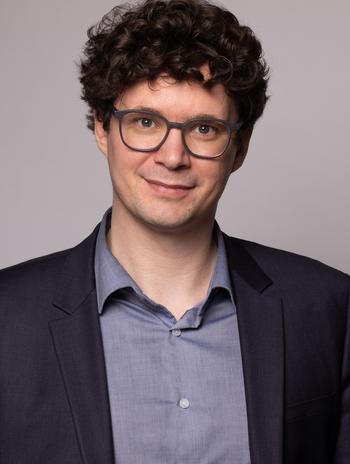
Prof. Stefan Rohdewald is a Professor of East and South-Eastern European History at the University of Leipzig since 2020. Previously, he held positions at Justus Liebig University Giessen (2013-2020), University of Passau (2003-2012), and University of Zurich (1998-2001). His research focuses on transregional histories, religious memory, and intercultural communication in Eastern Europe and the Ottoman sphere. Key roles include coordinating DFG’s Transottomanica program and leading the GiZo partnership with University of Zagreb. Education: PhD (2004, University of Zurich), Habilitation (2012, University of Passau). Research interests span memorial discourses, Ottoman-Europe relations, and sport history. Major projects include studies on Serbo-Bulgarian religious figures and transottoman mobility dynamics. He chairs conferences on minority politics and Ottoman Europe, contributing to over 70 peer-reviewed publications. Award-winning publications include Götter der Nationen (2014) and Vlad der Pfähler (2017). His work bridges Eastern European, Ottoman, and transnational histories through innovative methodological frameworks.
Prof. Dr. Ulrike Freitag is Director of the Leibniz-Zentrum Moderner Orient (Berlin) and holds a special professorship in Islamic Studies at Freie Universität Berlin. Her research focuses on social and cultural history of the Arab world, urban history, and transregional connections in the Indian Ocean. She has directed major projects like 'An Oasis Facing Globalisation: Hegra’s History since the 19th Century' and authored seminal works such as A History of Jeddah . Education: Habilitation (Islamic Studies, 2002, Bonn), PhD (1991, Freiburg), MA (1987, Freiburg). Key research stays include Damascus (1984-85, 1987-90), Yemen, and Southeast Asia. Research Interests: Urban development, migration networks, Ottoman heritage, Saudi state formation, and transregional Islamic dynamics. Current projects explore Jeddah’s urban history and transregional entanglements in the Arabian Peninsula. Engagement: Editorial roles for Journal of Arabian Studies , ZMO Studien , and advisory boards for institutions like the Leibniz Institute of European History. Awarded fellowships from Käthe-Hamburger Kolleg and LUCIS. Supervised over 20 doctoral theses on topics ranging from Ottoman governance to Gulf intellectual history. Publications: Over 150 articles, 8 monographs, and 6 edited volumes. Her work blends archival research with transregional perspectives, emphasizing marginalized voices and material culture. Recent focus on pandemic impacts and Saudi-Iranian geopolitical dynamics.
Rhenish Friedrich Wilhelm University of BonnGermany
Karoline Noack is a full Professor of Ancient American Studies and Ethnology at the Institute of Archaeology and Cultural Anthropology , University of Bonn, where she also directs the BASA Museum (Bonn Collection of the Americas). She has held this position since 2009 and is a leading scholar in Andean studies, museum ethnology, and colonial Latin American history. Her research interests are deeply interdisciplinary, focusing on: The Inca state and early colonial Andes, particularly in Peru, Bolivia, and Mexico Transculturation and gender in colonial contexts The history of ethnological knowledge, especially in the GDR Museum studies, collection ethics, and the decolonization of ethnographic museums Material culture and provenance research Her recent scholarly output centers on dependency and mobilization in the Inca Empire, the global history of resources (like cotton and coca), and the role of museums in knowledge production. She has led major projects such as 'Balancing the Center and the Local' in Cochabamba and the KOSMOS collaborative project on object-based knowledge. Her publications span museum ethics, colonial legal history, and transcultural exchange. Karoline Noack has received significant recognition, including: Membership in the German Archaeological Institute Fellowships from the Volkswagen and Gerda Henkel Foundations Membership in the DFG Review Board Leadership roles as Spokesperson for the Transdisciplinary Research Area 'Present Pasts' and Chair of BASS e.V. She advises and mentors students in ethnology and archaeology, and her work involves extensive collaboration with international scholars and institutions. Her research is supported by major German funding bodies and is published in leading academic venues. She is also deeply involved in public engagement through museum curation and exhibitions.
Prof. Dr. Ulrike Freitag is a distinguished scholar in Islamic Studies and social history of the Arab world, holding a Professorship at Freie Universität Berlin and serving as Director of the Leibniz-Zentrum Moderner Orient (ZMO) . Her work bridges urban history, transregional Islamic networks, and Arabian Peninsula studies within Indian Ocean and Red Sea contexts. Education : PhD in Islamic Studies (Freiburg, 1991), Habilitation (Bonn, 2002) Research : Focus on Ottoman urban violence, Saudi state formation, Hadhrami diaspora, and historical urbanism in Jeddah Her supervision of PhD projects spans topics from Moroccan Sufi sanctußen to Yemeni Jewish communities. Recent scientific awards include fellowships at Leiden University and Käthe-Hamburger Kolleg. She contributes to public discourse through Tagesspiegel op-eds and international conferences.
Sebastian Conrad is a Professor of Modern History and Global History at the Friedrich Meinecke Institute, Freie Universität Berlin. He earned his academic credentials through training in German and Japanese history, later expanding into colonial/postcolonial and global history. His roles include directing the MA program 'Global History' and the graduate school 'Global Intellectual History,' alongside leading the Cluster of Excellence 'Temporal Communities.' Research focuses on global history frameworks, including colonialism, nationalism, and the Enlightenment's global dimensions. Notable works include What is Global History? (2016) and Die Königin: Nofretetes globale Karriere (2024), exploring cultural globalization and historical iconography. He has held fellowships at institutions like the Institute for Advanced Study in Berlin and has authored over 20 books and numerous articles. Advises PhD projects on topics like veterans' movements, waste moralities, and Ottoman political communities. Awards include membership in the Berlin-Brandenburg Academy and Academia Europaea. His work bridges historical scholarship with contemporary debates on memory, colonial restitution, and global interconnectedness.
Florian Zemmin is a Professor at Freie Universität Berlin's Institute of Islamic Studies , serving as Co-Director of the Berlin Graduate School Muslim Cultures and Societies (BGSMCS). His research focuses on Islamic reformism , Middle Eastern conceptual history , and Arabic sociologies of religion within broader debates about modernity and secularity . Current affiliations: Freie Universität Berlin (since 2020) Previous affiliations: Universität Bern (2010-2020), Universität Leipzig (2015-2021) His research interests examine how Islamic traditions intersect with modern secular concepts through: Historical conceptual analysis in Arabic and Ottoman contexts Comparative secularisms beyond Western frameworks Postcolonial critiques of Eurocentric theory Sociological approaches to Islamic knowledge production Current projects include: Das soziokulturelle Leben soziologischer Konzepte – creating a critical lexicon of 60 sociological terms in Arabic Global Secularity: A Sourcebook – co-editing a 7-volume series on secular formations across regions Arabic Sociologies of Religion – challenging Eurocentric sociology through Arabic theoretical work Key publications address: Conceptual transfers in Islamic modernism Secularism in Islamic intellectual history Arabic sociology of religion Ottoman conceptual transformations Islamic responses to global social theory
Dorothea Schulz is a Professor of Anthropology at the Institute of Ethnology, University of Münster, where she has been serving since March 2018. She is a Principal Investigator in the Cluster of Excellence, a member of the Board of Directors, and a member of the General Assembly. Her research focuses on religious diversity and legal-political unity, with particular emphasis on Muslim communities in Africa. She leads two major projects: B3-48 on 'The role of social identities in interreligious arrangements' and B3-20 on 'Testing and contesting religious pluralism in Uganda'. Professor Schulz received her academic training at several prestigious institutions: 2005: Postdoctoral Degree (Habilitation), Institute of Social and Cultural Anthropology, Freie Universität Berlin 1991-1996: PhD in Anthropology, Yale University 1984-1990: Study of Anthropology, Sociology and Biology, Johannes Gutenberg-Universität Mainz 1990: Master of Arts in Anthropology, Sociology and Biology, Johannes Gutenberg-Universität Mainz 1982-1983: Study of Art History, Université Paul-Valéry, Montpellier Dorothea Schulz's research spans several interconnected fields within anthropology and religious studies. Her work primarily examines the dynamics of religious diversity, particularly focusing on Muslim communities in Africa. She investigates how religious identities intersect with political structures, social formations, and media technologies. Her anthropological approach emphasizes the lived experiences of Muslim communities, especially regarding gender relations, youth aspirations, and educational systems. Professor Schulz has made significant contributions to understanding how religious pluralism functions in contemporary African contexts, with particular attention to Uganda and Mali. Her research on media and religion explores how digital technologies reshape religious practice and authority in African Muslim communities. Professor Schulz has received numerous recognitions for her scholarly work: 2016: Fellow, Center for African Studies – Harvard University 2010: Teaching Prize – Faculty of Arts and Humanities, University of Cologne 2005: Fellow – Society for the Humanities, Cornell University 2000: Visiting Scholar – Department of Anthropology, University of Chicago 1996: Frobenius Society's Research Award – Johann Wolfgang Goethe-Universität, Frankfurt am Main Throughout her career, Professor Schulz has been actively involved in mentoring students and securing research funding for her projects. She has served on numerous academic committees and editorial boards, contributing significantly to the development of her field. Her leadership as Academic Director of the Research and Teaching Unit 'Media, Culture and Society' at the University of Cologne (2008-2018) demonstrates her commitment to interdisciplinary research collaboration. She currently oversees major research projects examining religious pluralism in African contexts, which involve international teams of researchers and provide opportunities for doctoral students. Professor Schulz co-leads research initiatives within the Cluster of Excellence, working with interdisciplinary teams to investigate religious diversity and legal-political unity. Her projects B3-48 and B3-20 bring together scholars from anthropology, religious studies, political science, and African studies to examine how social identities shape interreligious arrangements and how religious pluralism is tested and contested in specific African contexts, particularly Uganda.
Katrin Bromber is a German Researcher at the Centre for Modern Oriental Studies in Berlin, where she has led the research group "Progress and its Discontents: Ideas, Practices, Materiality" since 2014. Her career spans senior research roles at ZMO and academic teaching positions at the University of Vienna. Nationality: German. Language skills: Native German, fluent English/Swahili, moderate Amharic, good reading knowledge in French/Russian, basic Tigrinya. Habilitation (2009–): African Studies, University of Vienna PhD (1993): African Linguistics, University of Leipzig MA (1988): Swahili Studies, University of Leipzig Katrin Bromber's research interrogates intersections of body politics , sports history , Swahili linguistics , and Ethiopian modernity . Her work traces how physical culture, media representation, and colonial/imperial narratives shape national identities across Africa and Asia. Current focus: "Progress" as contested concept in Ethiopian and Gulf urbanism. Key article trends reflect her translocal methodology: 2017 studies on Ethiopian stadiums and fitness culture ; 2014-2013 publications analyzing East African military press , sports branding in the Gulf , and Swahili poetry ; 2007-2000 works on colonial linguistic politics , Indian Ocean slavery , and German colonial Swahili promotion . Recurring sub-fields: body as political text, translocal modernity, media historiography. Scientific Awards: Research Grant of the Berlin City Council (1999-2000): Gendered Slavery study Service to the Scientific Community: Chairwoman, Academic Association for Horn of Africa Studies (2012–) Editorial Advisory Board - Stichproben. Vienna Journal of African Studies (2015–) Editorial Advisory Board - Studies of Department of African Languages and Cultures (2015–) Teaching Experience: Textlinguistics, Mediacommunication, African Linguistics, Swahili (elementary/advanced), Swahili Literature, Swahili in Arabic Script at Leipzig, Humboldt-Berlin, Free Berlin, and Vienna universities Anthropology of the Body at Mekelle University Summer School Field Research: Tanzania (1993-2003): Swahili Poetry, Intellectual History Kenya (2005): Indian Ocean WW2 UAE/Bahrain (2009): Sports and Body Cultures Ethiopia (2009-2015): Sports, Body Politics
Pamela Klassen is a Professor and Chair in the Department for the Study of Religion at the University of Toronto, with a cross-appointment in the Department of Anthropology. She has taught at the University of Toronto since 1997 and has been a full professor since 2011. Her academic leadership includes serving as Chair & Graduate Chair of her department (2020-present) and as Vice-Dean, Undergraduate & International in the Faculty of Arts & Science (2016-2020). In 2022-2023, she served as the William Lyon Mackenzie King Visiting Professor of Canadian Studies at Harvard University. Professor Klassen's research focuses on colonialism, treaties, museums, and public memory. Her work spans several interconnected areas: Anthropology of religion, secularism, and mediation (including digital humanities) Christianity, colonialism, and land in North America & Turtle Island Religion, ritual, and public memory (including museum studies) Religion, spirituality, and gender Her scholarship demonstrates a consistent engagement with how religious practices, memories, and institutions intersect with questions of power, land, and identity in settler colonial contexts. Klassen's work often bridges historical and ethnographic approaches, examining both contemporary religious practices and their historical formations. Professor Klassen's publications reveal a trajectory of increasingly focused attention on the intersections of religion, land, and colonialism, with recent work emphasizing Indigenous perspectives and decolonial approaches to religious studies. Her scholarship moves fluidly between theoretical interventions in religious studies and concrete engagements with public memory projects. Scientific Awards & Honors 2022-2023: William Lyon Mackenzie King Visiting Professor of Canadian Studies, Harvard University 2019: Fellow of the Royal Society of Canada 2015-2020: Anneliese Maier Research Award, Alexander von Humboldt Foundation 2015: Northrop Frye Award of Excellence for Integration of Research and Teaching 2014-2017: Distinguished Visiting Professor in Anthropology of Modern Religion, University of Tübingen 2012: American Academy of Religion Award of Excellence for Spirits of Protestantism Professor Klassen has successfully secured significant research funding, including the prestigious Anneliese Maier Research Award which supported her collaborative work with the Kay-Nah-Chi-Wah-Nung Historical Centre. She has supervised numerous graduate students in religious studies and anthropology, with many going on to successful academic careers. Professor Klassen leads several major collaborative projects including Kiinawin Kawindomowin Story Nations, a digital storytelling initiative with the Rainy River First Nations, and Treaty Conversations, an educational resource about treaty relationships in Ontario. These projects exemplify her commitment to community-engaged scholarship that bridges academic research with public education and reconciliation efforts.
Prerna Agarwal is a Research Fellow at the Leibniz-Zentrum Moderner Orient and holds a Marie Skłodowska Curie Action Fellowship at the Centre for Modern Indian Studies, University of Göttingen . Her work bridges Modern South Asian History , Global Labour History , and Postcolonial State Formation . Education : PhD in History (King’s College London, 2013-2018), MSc in Political Economy of Development (SOAS, 2011-2012), MA in Philosophy (University College London, 2009-2010), BA (Honors) in Economics (Miranda House, University of Delhi, 2006-2009). Her research explores the interplay between labour politics and state authoritarianism in postcolonial India, with a focus on events like the 1974 railway strike and the 1975 Emergency . She situates these within broader frameworks of crisis in the Third World and labour welfarism . The 2022-2024 period dominates her recent publications, covering topics from Calcutta dockworkers to plague responses . These works intersect social history , political economy , and authoritarianism studies . Scientific Awards : Marie Skłodowska Curie Action Fellow (2023-2026) Gerda Henkel Fellow (2022-2023) Teaching Fellow (Ashoka University, 2020) LSE Fellow (2017-2019) Prerna has taught courses on historical methods , European history , and economic history at institutions including the Indian Institute of Science , Ashoka University , and London School of Economics . Her research is funded by prestigious organizations, and she contributes to debates on democracy vs. authoritarianism in India.
Prof. Dr. Rachid Ouaissa serves as University Professor and Head of the Department of Middle Eastern Politics at the Center for Near and Middle Eastern Studies (CNMS), Philipps University of Marburg since March 2009. He concurrently holds affiliations with the Center for Interdisciplinary Religious Studies and Center for Conflict Research at the same institution, and maintains active roles in Berlin-based research networks including EUME and the Wissenschaftskolleg zu Berlin. His academic formation includes a PhD from the University of Leipzig (2004) supervised by Prof. Hartmut Elsenhans, preceded by undergraduate studies at Martin-Luther-Universität Halle-Wittenberg (1994-1999) where he received the DAAD-Preis in 1997. His scholarly trajectory includes a Visiting Scholarship at Dalhousie University (2008) and prior research positions at the University of Leipzig. Ouaissa's research program centers on Middle Eastern and North African political dynamics with four interconnected pillars: cultural-identitarian political movements (comparing BJP in India and Algerian parties), moderate Islamist parties as potential EU partners, state-class behavior during resource scarcity (Iraq case study), and fundamentalist movement development (FIS in Algeria vs. Mahdia in Sudan). His conceptual innovation emphasizes blocked middle classes mobilizing religious identity to challenge state power, while his recent work develops 're-configuration' frameworks for understanding post-Arab Spring transformations. His publication trajectory from 1999-2021 reveals evolving scholarly priorities: early work focused on Algerian state formation and political Islam, shifting toward comparative cultural-identitarian movements (2007-2009), then moderate Islamist parties' foreign policy (2009-2012), with contemporary research addressing Hirak protests and theoretical re-configuration models. The corpus demonstrates consistent engagement with Algeria while expanding to regional comparative frameworks, particularly through co-edited volumes on Maghreb entanglements and MENA transformation processes. His scientific recognition includes: DAAD-Preis der Martin-Luther-Universität (1997) Friedrich-Ebert-Stiftung PhD Fellowship (2000-2002) Friedrich-Ebert-Stiftung Scholarship (1998-1999) Professor Ouaissa has secured major research funding including two German Research Foundation (DFG) projects: 'New Cultural-Identitarian Political Movements' (2007-2009) and 'Moderate Islamist Parties as EU Partners' (2009-2012). He actively mentors emerging scholars through the Friedrich-Ebert-Stiftung's doctoral programs and serves on its selection committees, while his policy engagement manifests through frequent media contributions analyzing Algerian protests and regional dynamics for outlets including Le Monde, El Watan, and Deutsche Welle. He leads the Department of Middle Eastern Politics at CNMS while contributing to the university's interdisciplinary research infrastructure through the Center for Interdisciplinary Religious Studies and Center for Conflict Research. His international scholarly integration is evidenced by co-editing the book series 'Politik und Gesellschaft des Nahen Ostens' and 'Studien zur Geschichte und Zeitgeschichte Westasiens und Nordafrikas', alongside editorial leadership of the journal META (Middle East Topics and Arguments).
Benjamin Kohlmann serves as Professor of English Literature and Culture at the University of Regensburg, where he has held a full professorship since November 2020. Previously, he was Assistant/Associate Professor at the University of Freiburg (2011-2019) and held visiting positions at Columbia University, Cambridge University, UC Davis, and Queen Mary University of London. An elected member of Academia Europaea and the International Association of University Professors of English, Kohlmann maintains an active international research profile with current visiting fellowships at Clare Hall, Cambridge (2024-25). Education Habilitation in English Literature, University of Freiburg (2011-2017) PhD in English Literature, Lincoln College, University of Oxford (2007-2010) MA in Philosophy/English Literature, University of Freiburg and Yale University (2004-2007) Undergraduate Studies in Philosophy/English Literature, University of Freiburg (2001-2004) Research Focus Professor Kohlmann specializes in British literature and culture from 1860 to the present, with particular expertise in the relationship between literature and politics. His scholarship explores the literary and cultural histories of socialism and communism, politicized modernism of the interwar years, the prehistory of the welfare state (c.1860-1940), literary histories of populism, and global approaches to literature. His theoretical work examines how literature conceptualizes political structures and revolutionary events, bridging historical analysis with contemporary theoretical concerns. Publication Trends Kohlmann's research trajectory reveals a consistent engagement with literature's political dimensions across historical periods. Early work focused on modernist political aesthetics, particularly in the 1930s, as seen in his monograph Committed Styles (2014). Recent scholarship demonstrates increasing attention to global revolutionary narratives and the bildungsroman as political form, culminating in his British Literature and the Life of Institutions (2021) and the forthcoming Revolutionary Subjects . His most recent publications show sophisticated integration of theoretical frameworks with historical analysis, particularly in examining how literature processes revolutionary events and conceptualizes institutional frameworks. The 2023-2025 publications reveal heightened focus on contemporary political formations while maintaining historical depth. Scientific Recognition Heisenberg Programme grant from German Research Foundation (2020-2025) Heinz Maier-Leibnitz Prize (2018) Feodor Lynen Fellowship from Alexander von Humboldt Foundation Elected Life Member of Clare Hall, University of Cambridge Member of Academia Europaea Academic Leadership Professor Kohlmann has supervised numerous PhD theses including Nikolina Hatton's award-winning work on decommodified things in 18th-19th century novels and current projects examining democratic essay forms and literary histories of collective resistance. He serves on editorial boards for Critical Quarterly and CUSP , co-edits the Oxford UP book series "Literature and Politics," and has organized multiple international conferences on literature and political thought. His research leadership includes directing the "Writing Collectivity" research group at Regensburg and coordinating international collaborations through the Heisenberg grant. Research Environment At Regensburg, Kohlmann contributes to a vibrant research environment within the Department of English and American Studies, collaborating on interdisciplinary projects examining literature's relationship to political economy and social structures. His "Thinking Revolution" project connects with global scholarly networks through visiting fellowships at Cambridge and other institutions. The department's research focus on British literary history benefits from Kohlmann's leadership in organizing international conferences and securing substantial research funding, creating a dynamic environment for graduate students and junior researchers working at the intersection of literature and political thought.
Prof. Anja Müller-Wood holds a Professorship in English Literature at Johannes Gutenberg University Mainz since 2003. She earned her Ph.D. (1995) from Philipps-Universität Marburg and completed her Habilitation (2002) at the University of Trier. Her research focuses on early modern English literature (16th-17th centuries), 19th-20th century English literature, and interdisciplinary fields like narratology, stylistics, and literary linguistics. She teaches advanced BA/MA courses on these topics and co-leads core modules like 'Introduction to Literary Studies' and 'Colloquium' for literature and education students. Her work explores intersections between literature and cultural identity, particularly in post-Reformation religious dynamics and narrative form. She actively supervises theses aligned with her research areas. Her recent publications include analyses of Jacobean drama, cognitive approaches to narrative, and studies on Angela Carter and Ian McEwan. She serves on the editorial board of the International Journal of Literary Linguistics and maintains academic profiles on ResearchGate and academia.edu. Research emphasizes cognitive narratology, examining how literary forms interact with human cognitive processes. She also investigates transnational cultural exchanges in early modern and modern British literature, blending historical analysis with contemporary theoretical frameworks.
Dr. Peter Mainka is a part-time lecturer at the Chair of Modern History at the University of Würzburg, with a focus on Early Modern European history and colonial contexts. He holds a PhD in Modern and Contemporary History from Würzburg and has extensive experience in German-Brazilian academic collaborations. Education : History, German Studies, and Ancient Greek at the University of Würzburg and Vienna. Research Interests span colonial history, Ibero-American studies, enlightened absolutism, and the role of religious orders in colonial contexts. His work often intersects with educational history and cultural exchange. His recent publications emphasize the Portuguese Empire, Jesuit missions in Brazil, and Early Modern political philosophy. Notable awards include the Wissenschaftspreis der Stiftung Ostdeutscher Kulturrat (2nd Place, 1995). He has led student excursions to Brazil and the Netherlands, fostering cross-cultural academic engagement. Teaching activities at Würzburg include seminars on the Portuguese seaborne empire, Ibero-American colonialism, and the Thirty Years' War. Since 2014, he has been a pedagogical staff member at the Würzburg Adult Education Center (vhs).
Prof. Dr. Tobias Berger is Junior Professor of Political Science with a focus on Transnational Politics of the Global South at the Otto Suhr Institute for Political Science, Freie Universität Berlin. He is also a Principal Investigator in the Excellence Cluster 'Contestations of the Liberal Script' (SCRIPTS). His work bridges international relations, political sociology, and legal anthropology, with a strong emphasis on the Global South. University: Free University of Berlin School: Otto Suhr Institute for Political Science Department: Department of Politics and Social Sciences Position: Junior Professor Education: PhD, Berlin Graduate School for Transnational Studies MPhil in Political Theory, University of Oxford BA in Politics & Development Studies, School of Oriental and African Studies (SOAS), University of London His research interests center on international political sociology , human rights beyond liberalism , legal pluralism , and transnational politics of South Asia . He employs ethnographic and interpretative methods to explore how global norms are translated in local contexts, particularly in Bangladesh and across the Global South. The recent articles reflect a strong trend toward critical approaches to human rights , translation theory , non-Western security practices , and post-liberal political orders . His work interrogates the liberal script in global governance, especially in education, security, and constitutionalism, often from a decolonial and relational perspective. Scientific Awards: No specific awards mentioned in the text. As a Principal Investigator in the SCRIPTS excellence cluster, he leads major research initiatives such as 'De-Centering Human Rights', 'Negotiating the Future of Education', and 'Security Doctrines in a Changing World'. He has collaborated with institutions like UNESCO and the OECD and has secured funding for interdisciplinary, transregional research. He has advised on development and humanitarian projects in Cambodia and worked with indigenous communities in Ecuador. He has edited influential volumes like World Politics in Translation (2018) and special issues on transnational non-state actors. He is affiliated with research networks across Europe and the Global South and contributes to debates on global governance, norm contestation, and epistemic justice.