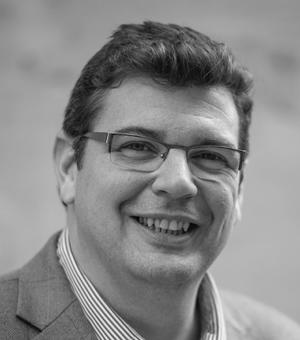
Dr. Renata Iwicka is a researcher at Jagiellonian University's Department of Comparative Civilization Studies, Faculty of Oriental Studies. Specializing in Japanese and Sinology within literary studies, she holds a PhD in Cultural Studies and maintains significant translation work of Japanese literature from the Taishō period, particularly focusing on Akutagawa Ryūnosuke. Key Research Areas: Nationalism in East Asia, Japanese-Korean cultural relations, social media impact on national identity, and demonology in historical contexts. Academic Contributions: Edited volumes on male image representations, explored post-war reconciliation mechanisms through media, and analyzed the evolution of masculinity in Korean television. Publications Trend: Recent works focus on internet-era nationalism (Kamikakushi, Dokdo disputes) and cultural cross-pollination between Japan and Korea, with methodological approaches combining narrative analysis, cultural anthropology, and media studies. Awards: Pro Arte Docendi Award (2016/17), ID.UJ research funding (2023) Projects: Neonationalism on the Internet, Zainichi ethnic minority studies, and historical analysis of Japanese demonology. Her non-scientific interests include physics and toxicology, while maintaining active research trips and interdisciplinary approaches blending literary analysis with cultural theory.
Gerwin van Schie is an Assistant Professor in New Media and Digital Culture at the Department of Media and Culture Studies , Faculty of Humanities , Utrecht University. His work critically examines the intersections of datafication, race/ethnicity, and governance in digital societies. Education: BA in Theater, Film and Television Studies (Utrecht University), MA in New Media and Digital Culture (cum laude, Utrecht University) Van Schie's research focuses on how societal institutions datafy immigrant populations, exposing biases in systems like CBS statistics. He employs postcolonial and critical data studies frameworks to analyze algorithmic governance, digital colonialism, and green metaphors in technology. His recent work explores the "greenwashing" of digital colonialism in blockchain-based forest conservation. Key research outputs include studies on racialization in data systems, the role of "roots" and "clay" metaphors in Dutch governance, and historical discourse networks. His scholarship contributes to debates on open societies, sustainable development, and institutional ethics. Van Schie actively engages in academic events, including co-organizing the 2024 Symposium on Measuring Racial Representation in Dutch Universities . He collaborates with blockchain researcher Inte Gloerich and participates in the Utrecht Data School.
Philip Uko Effiong is an Associate Professor of Theatre Studies and Integrative Humanities at Michigan State University, with over 25 years of college-level teaching experience. He joined MSU in Spring 2017 after teaching at institutions across Nigeria, Ghana, and the United States. PhD in Drama (University of Wisconsin-Madison) MA in Literature of the African Diaspora (University of Calabar) Bachelor’s in English (University of Calabar) His research focuses on interdisciplinary approaches to African and African diasporic performance, including: Performance as resistance in Caribbean communities (Jamaican Maroons, Garifuna) Influence of Greek tragedy on African drama Post-Biafran identity and historical narratives Fela Kuti’s music and political critique African diasporic communities in India and the Philippines His publications span African theatre, diasporic literature, and cultural resistance. Key themes include political power, postcolonial identity, and artistic activism. He also collaborates on documentaries exploring marginalized histories and has written a memoir on the Nigeria-Biafra War. Notable awards include: Tip of the Hat Award for Teaching Excellence (2016) Fulbright Scholar (1988-1994) Certificate of Recognition for Scholarly Activity (2012) He teaches courses such as Contemporary Theatre in Historical Context, African American Drama, and African & African Diaspora Literature, integrating drama, history, and interdisciplinary humanities.
Professor Dr. Johannes Ismaiel-Wendt is a faculty member at the Institute for Music and Musicology , part of the University of Hildesheim ’s School of Cultural Studies & Aesthetic Communication. He earned a doctorate in cultural studies, sociology, and musicology from the University of Bremen (supervised by Prof. Dr. Sabine Bröck and Prof. Dr. Alexander Weheliye) with his dissertation tracks'n'treks. Popular Music and Postcolonial Analysis (2011). Ismaiel-Wendt is a certified educator, known for blending research with live drum machine performances and sound lectures. From 2012 to 2018, he served as Junior Professor for Systematic Musicology and Music Sociology before being appointed University Professor in 2018.
Dr. Gareth Robert Millington is a Reader (Associate Professor) in the Department of Sociology at the University of York, where he leads multiple significant research projects including a five-year Leverhulme Trust-funded initiative titled 'Archiving the Inner City: Race and the Politics of Urban Memory' and British Academy/GCRF projects focused on urban infrastructure in Lagos and religious urbanization in Africa. Millington received his PhD in Sociology from the University of Essex in 2006, with ESRC-funded doctoral research on hostility toward asylum seekers. His academic journey includes studies at University of Salford and Goldsmiths, University of London. Prior to joining York in 2012, he taught at University of Roehampton and University of Essex, and worked as a schoolteacher in Essex and London. His research spans urban sociology, race studies, and visual representations of cities, with fieldwork conducted across London, Paris, Philadelphia, Lagos, and Kinshasa. Millington examines how urban infrastructures are provided by religious organizations, the politics of urban memory, and cinematic depictions of urban life. His work combines theoretical frameworks with empirical studies of urban dynamics across diverse cultural contexts. Millington has authored two monographs: 'Race, Culture and the Right to the City: Centres, Peripheries, Margins' (2011) and 'Urbanization and the Migrant in British Cinema: Spectres of the City' (2016). He co-authored 'Urban Criminology: The City, Disorder, Harm and Social Control' (2019) and is currently working on 'Decline and the Sublime in Modern Urban Culture' with Daryl Martin. Leverhulme Trust five-year project on urban memory British Academy/GCRF projects on Lagos infrastructure and religious urbanization Member of Centre for Urban Research (CURB) Co-convenes 'Archiving the City' in Centre for Modern Studies Millington teaches a third-year module 'Cinema, Cities and Historical Sociology' that bridges his research interests with pedagogy, and actively supervises PhD students in urban sociology, race studies, and related fields.
Richard Martin Walsh is a Professor at the Department of English and Related Literature, University of York. As a prominent narrative theorist, he is renowned for his work on fictionality, narrative cognition, and interdisciplinary approaches bridging literature, cognitive science, and complex systems. He founded the British and Irish Association for Narrative Studies (2020) and directs the Interdisciplinary Centre for Narrative Studies (ICNS), leading projects like the Narrative and Complex Systems Group (NarCS). His research spans narrative theory, fictionality, and the cognitive foundations of storytelling, with a focus on narrative's role in sensemaking across disciplines. Key publications include The Rhetoric of Fictionality (2007), co-edited volumes Narratology and Ideology (2018) and Fictionality in Literature (2022), and special issues on fictionality in Style (2020). His recent articles address narrative dynamics in complex systems, robot narratives, and interdisciplinary models. Scientific awards include the Institute of Advanced Study Research Fellow at Durham University (2016). He supervises PhD students in narrative theory, innovative fiction, and interdisciplinary studies, teaching modules on American literature, narrative theory, and cognitive approaches to storytelling.
Laura Di Nicola is Associate Professor of Contemporary Italian Literature at Sapienza University of Rome, Department of Modern Literature and Culture. She is an active faculty member with scheduled office hours through 2025 and is currently leading multiple international research projects. Her research follows three main lines of interest: 1) The question of the "canon" and the "classic" in both national and international perspectives; 2) The critical-theoretical debate and the role of intellectuals in the second half of the twentieth century, with particular emphasis on journals in the immediate aftermath of the Second World War; 3) Narrative forms in the second half of the twentieth century. More broadly, her work encompasses twentieth-century historiographical issues, literary canons, twentieth-century classics from European and international perspectives, political and cultural debates between the Resistance and the new Republic, construction of research sources and tools, author libraries and literary archives, and the interdisciplinary intersection of psychoanalysis and literature. Professor Di Nicola's recent publications (2020-2025) demonstrate a strong focus on Italo Calvino studies, with numerous articles examining his work through spatial narratives, international reception, literary archives, and urban literature. Her work also extends to studies of other Italian authors like Alba de Céspedes, with particular attention to gender, exile, and transnational literary connections, especially between Italy and Cuba/Latin America. She has published in both specialized Italian journals and international publications. She has coordinated and participated in numerous research projects, including Italian classics Research Sources, Tools, and Methods (2016-2020) and Alle origini della Repubblica (2018-2021). She currently directs several Calvino-related projects including Enciclopedia Calvino, Biblic, and Calvino qui e altrove, and is Director of the Laboratorio Calvino which coordinates activities between Sapienza University and other international institutions. Member of Teaching and Scientific Council for Master's in Publishing, Journalism and Cultural Management Membres Associés of CRIX - Études Romanes (Université Paris Nanterre) since 2023 Scientific coordinator for Letteratura e psicoanalisi project (since 2017) Member of Research Committee for journals "Bollettino di italianistica" and "Narrativa" Coordinator of PhD curriculum in Historical Literary and Gender Studies (2016-2023) Member of PhD program in Italian Studies (since 2023) Professor Di Nicola is also responsible for international agreements including the cultural agreement with the University of Havana and Erasmus+ agreements with several European universities. She has established research collaborations with institutions worldwide including universities in Tokyo, Paris, New York, Australia, Brazil, Spain, Poland, and the UK. She coordinates cultural enhancement activities for the Ministry of Foreign Affairs and International Cooperation in the network of Italian Cultural Institutes worldwide.
Joseph Metz is an Associate Professor in the Department of World Languages and Cultures within the College of Humanities at the University of Utah, where he has held continuous faculty appointments since 1999. He earned his PhD in Germanic Languages and Literatures from Harvard University in 1999, progressing from Instructor (1999) to Assistant Professor (1999-2006) before attaining his current rank in 2006. His research centers on German literary theory with emphases on postcolonial discourse, Jewish studies, and aesthetics. Metz examines colonial dynamics within Habsburg and German contexts, Jewish identity formation in Central European literature, and gendered constructions of the body in canonical authors like Rilke, Stifter, and Kafka. His methodology frequently intersects Marxist theory, semiotics, and critical race studies to dissect power structures embedded in 19th-20th century Germanic texts. Metz's publications reveal consistent engagement with literary form as political expression. His monograph The Feeling of the Form (2025) synthesizes empathy studies with aesthetic philosophy across Büchner to Rilke, while earlier articles demonstrate how texts like Stifter's Die Narrenburg expose 'inner colonialism' in the Habsburg Empire and how Kafka's Der Verschollene navigates cultural Zionism through diasporic doubles. His work consistently reveals how literary form mediates historical trauma and identity politics. Post-Tenure Research Assignment (College of Humanities, 2013) Metz actively contributes to institutional service including organizing the Faculty Learning Community on Empathy (2014), which brought together University of Utah and Salt Lake City community members to develop empathy-focused projects. His teaching portfolio demonstrates deep engagement with German studies, regularly offering courses including German language instruction, Literary Theory, Great Books, and Special Topics seminars focused on comparative thinking and contemporary criticism. His scholarly trajectory reflects sustained commitment to uncovering how Germanic literature negotiates cultural trauma, colonial legacies, and identity formation.
Dr Timothy Clack serves as the Chingiz Gutseriev Research Fellow in Archaeology and Anthropology at the University of Oxford, where he is Director of Studies for undergraduates at St Peter's College and co-convenes the MSc Archaeology of Colonialism. His research spans East Africa, South Atlantic, Central Asia, and the Caucasus regions, focusing on the interplay between past and present through material culture. His core research investigates how the past is choreographed in the present to legitimize contemporary power structures. Key themes include: Culture and conflict dynamics in modern warfare Heritage identity construction among semi-nomadic communities Pastoralist cultural heritage preservation Media representations of archaeological narratives Material legacies of colonial conflict Methodologically, he integrates archaeological fieldwork with anthropological theory and experiential landscape approaches. Recent publications (2022-2025) reveal a pronounced shift toward climate-conflict intersections, particularly through the Climate Change & (In)Security Project. His work examines heritage destruction in Ukraine/Afghanistan, Falklands War archaeology, and cultural property protection frameworks, establishing critical links between environmental change, security threats, and material heritage. Dr Clack actively mentors doctoral researchers while securing major funding from the Arts and Humanities Research Council, British Academy, and Boise Fund. His collaborative projects demonstrate exceptional interdisciplinary reach: Current Supervision: Kristen Barrett-casey (Iraq/Afghanistan heritage reconstruction), Yuxin Fu (Sacred heritage in China/Singapore), Beth Timmins (Conflict impacts on communities) Major Projects: Falklands War Mapping Project (Glasgow University), Mursiland Heritage Project (Cambridge/Florida State), Roots of Divided Societies (Lancaster University) His leadership spans multiple international teams investigating cultural heritage in conflict zones, with particular emphasis on decolonization frameworks, endangered heritage preservation, and climate security applications. Project outputs include digital battlefield reconstructions, policy recommendations for cultural property protection, and community-based heritage initiatives across Africa and the South Atlantic.
Ananda Cohen-Aponte is an Associate Professor of History of Art at Cornell University , affiliated with the Archaeology Program , Latina/o Studies Program , and the College of Arts and Sciences . She earned her Ph.D. from the CUNY Graduate Center and a B.A. from the University of Michigan–Ann Arbor . Her research focuses on the visual culture of pre-Hispanic and colonial Latin America , particularly the Andes , examining racial formation , cross-cultural exchange , and legacies of colonialism in contemporary Latinx art . Her current book project, Insurgent Imaginaries: The Art of Rebellion in the Colonial Andes , analyzes visual culture’s role in Indigenous and Afrodescendant resistance against Spanish colonialism. She has published extensively in journals like Colonial Latin American Review , The Americas , RES: Anthropology and Aesthetics , and Latin American and Latinx Visual Culture , with her work appearing in edited volumes from Brill , Pontificia Universidad Católica del Perú , and Haynanka Ediciones . Notable awards include the Association for Latin American Art (ALAA) Article Prize (2017) for 'Decolonizing the Global Renaissance,' an Honorable Mention for the Franklin Pease G.Y. Memorial Prize (2013–2014) , and the 2019 Robert A. and Donna B. Paul Academic Advising Award . She co-authored the influential 'A Call to Action' (2019) in Art Journal and co-edited the Latin American and Latinx Visual Culture dossier on diversity in art history. A cross-disciplinary researcher, she collaborates with Dr. Ella Maria Diaz, Dr. Jolene Rickard, and artist Sandy Rodriguez on projects like From Invasive Others Toward Embracing Each Other , exploring hemispheric art-ecology-migration intersections . Funded by Global Cornell and the Mellon Foundation's Just Futures Initiative , this project creates immersive learning environments for BIPOC student recruitment and place-based knowledge . She served a nine-year term as President of the Association for Latin American Art , shaping disciplinary diversity initiatives.
Oona Hatton is an Associate Professor at the Department of Communication Studies within the College of Social Sciences at San Jose State University. Her research and practice intersect performance studies, race, and social justice, focusing on ethnographic work in community theatre, carceral settings, and pedagogy. Current Projects: Developing creative works with Davis Repertory Theatre, including a play on wildfires and a virtual storywalk with Indigenous communities. Research Focus: Critiques systemic racism in performance practices, exploring reparative methodologies in teaching and scholarship. Teaching Philosophy: Emphasizes embodied knowledge and equity-driven practices. Her recent scholarship addresses the impact of hate crimes on university communities and the role of theatre in confronting white supremacy. She is committed to fostering face-to-face aesthetic experiences in an increasingly digital and polarized world. Notable collaborations include co-facilitating SJSU's ODEI Whiteness & Race faculty series (2017-2018). Her work is guided by the principle of becoming 'good ancestors' as articulated by Judge Abby Abinanti.
Franca Tamisari is a Full Professor in the Department of Humanities at Ca' Foscari University of Venice, specializing in Demoethnoanthropological disciplines. She serves as coordinator of the Master's program in 'Cultural Anthropology, Ethnology, Ethnolinguistics' (ACEL) since 2020. Her research interests span Indigenous Australian studies, anthropology of performance, dance anthropology, cosmology, epistemology, and anthropology of art. She has conducted extensive fieldwork among the Yolngu people in Northeast Arnhem Land, Northern Territory, Australia since 1990, and has recently expanded her research to include ecological knowledge of fishermen and hunters in the Venice lagoon. Tamisari's recent publications reveal a strong focus on enacted knowledge, relationality, and performance in Indigenous Australian contexts. Her work examines how knowledge is performed rather than merely represented, with particular attention to dance, music, and sensory experience as vehicles for cultural transmission and continuity. Her academic career includes teaching positions at the University of Sydney (1996-2001) and the University of Queensland (2002-2005) before joining Ca' Foscari University of Venice. BA and PhD in Social Anthropology from the London School of Economics and Political Science (1994) Research among Yolngu people since 1990 Coordinator of MA in Cultural Anthropology, Ethnology, Ethnolinguistics since 2020 Tamisari teaches Cultural Anthropology, Ethnographies of Oceania, Indigenous Art and Performance, and Cross Cultural Communication across multiple degree programs including Cultural Anthropology, Hospitality Innovation, Philosophical Sciences, History, and History of Arts.
Dr. Greg Dvorak is Professor of International Cultural Studies at Waseda University in Tokyo, holding dual appointments in the Graduate School of International Culture and Communication Studies (GSICCS) and the School of International Liberal Studies (SILS). His scholarly work focuses on Japanese and American postcolonial histories in Oceania, with particular emphasis on transoceanic intersections of art, gender, and militarism in popular culture. Born in Philadelphia but with extensive personal and professional experience across the Marshall Islands, Japan, United States, and Australia, Dvorak brings unique transnational perspectives to Pacific Islands Studies. His educational background includes a B.A. from Rutgers University, M.A. from University of Hawai'i at Mānoa, and Ph.D. from Australian National University. His academic journey reflects deep engagement with Pacific studies, particularly through his dissertation research on Pacific Islands History. Dvorak's research interests span postcolonial studies, cultural anthropology, gender studies, and art history with specific focus on Micronesia, Marshall Islands, and broader Oceania. His work critically examines the intersections of militarism, environmental change, and cultural representation, revealing how Pacific Islander communities navigate and resist colonial legacies through artistic expression and cultural practices. His recent publications demonstrate consistent scholarly productivity with significant contributions to both academic journals and art publications. His work shows evolving trends toward examining contemporary art activism as resistance to nuclear legacies and climate change, with increasing emphasis on transoceanic connections between Pacific Islander communities and Japanese contexts. Waseda University e-Teaching Award (Good Practice) 2020 Toyota Foundation Joint Research Fellowship 2010 JSPS Postdoctoral Fellowship 2008 Japan Foundation Postdoctoral Fellowship 2008 Wenner-Gren Postdoctoral Fellowship 2008 Australian National University Postgraduate Award 2004 Norman Meller Award for Outstanding Pacific Scholarship 2004 East West Center Degree Fellowship 2002 Dvorak supervises doctoral and master's students in cultural studies topics while coordinating the culture study plan at Waseda. His teaching innovations earned recognition with the Waseda University e-Teaching Award during the pandemic. His current research projects include "Collective De/Fence: Demilitarization and Climate Change Activism through Art in the Contemporary Indo-Pacific" (2023-2026) funded by KAKENHI, examining art's role in resistance to militarization and climate change. As founding director of project35 (Project Sango), Dvorak has established a transnational network connecting Pacific Islander and Japanese artists and scholars. This initiative has facilitated numerous collaborative projects including the "AM/NESIA: Forgotten 'Archipelagoes' of Oceania" program at the Yamagata International Documentary Film Festival and co-curation of the "Air Canoe" exhibit at the 10th Asia Pacific Triennial. His work bridges academic research with practical cultural exchange, creating spaces for Pacific Islander voices in Japanese cultural institutions.
Professor Masayuki Manabe of Waseda University's Faculty of Letters, Arts and Sciences specializes in modern and contemporary Japanese history, with particular focus on Meiji period political ideologies, human-animal relationships, and Japanese university history. He serves as Director of Waseda University's History Museum and Associate Dean of the Cultural Affairs Division. Doctor of Literature (2009), Waseda University Master of Arts (1998), Waseda University Bachelor's degree, Department of Economics (1996), Waseda University His research explores cats as cultural symbols in Japanese history, demonstrated in works like Modern Japanese History of Cats . He leads the 150 Years of Waseda University History compilation project and investigates cross-cultural aspects of animal cenotaphs in East Asia. His methodology combines archival analysis with comparative studies between Japan and Europe. Recent publications address cat domestication processes, Meiji political turmoil, and animal memorials in postwar Taiwan. He has received the Nishimura Shigeki Research Paper Award twice. Manabe collaborates internationally, with lectures at Shanghai International Studies University and research activities in Belgium comparing Japanese and European cat cultures. Hosts visiting scholars at Waseda University Chair of Japanese History Course at Graduate School of Letters, Arts and Sciences (2012-2018) Active member of Nihon Rekishi Gakkai and Japanese Society for the Study of Old Documents Contributor to NHK programs and major newspapers
Professor Tomoaki Hara works at the Faculty of Human Sciences, School of Human Sciences at Waseda University. His research spans cultural anthropology and folklore, with a focus on cultural sustainability, community development, and the interplay between media and identity. Education: PhD (Literature), Waseda University (2003) Master's and Bachelor's in Letters, Arts and Sciences, Waseda University Research Interests include: Cultural Sustainability Symbiotic Development Media Anthropology Postcolonial Studies in Okinawa and Hawaii Community-based Cultural Policies His article trends show expertise in analyzing cultural identity through historical and contemporary lenses, addressing military base impacts, multicultural policies, and digital ethnography. Awards include the 2009 Fulbright Scholarship. He leads the Hara Laboratory , which emphasizes ethnography, comparative research, and interdisciplinary approaches to sustainable development.