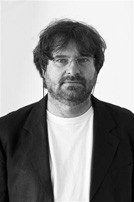
Homi K. Bhabha is the Anne F. Rothenberg Professor of the Humanities at Harvard University. His work spans colonial and postcolonial theory, cultural change, cosmopolitanism, and human rights within aesthetic contexts. He has been a pivotal figure in the Department of Comparative Literature since its inception as a graduate program in 1904. Education BA (1970) - University of Bombay MPhil/MA/DPhil (1990) - Christ Church, Oxford Bhabha's research focuses on cultural hybridity , ambivalence in colonial discourse , and postcolonial ethics . His theoretical frameworks analyze authors like Joseph Conrad, Walter Benjamin, and Toni Morrison through lenses of identity, power, and globalization. While his recent works On Art and A Global Measure await publication, his seminal texts like The Location of Culture (1994) and Framing Fanon (2005) remain foundational in postcolonial studies. These works explore sub-fields including: Transnational memory frameworks Psychoanalytic colonial critique Decolonizing discourse Visual culture in postcolonialism Temporal suspensions in cultural production Global trauma narratives
Mrinalini Sinha is the Alice Freeman Palmer Professor of History and Professor of English Language and Literature at the University of Michigan. Her research focuses on Colonial India, the British Empire, World History, and South Asian Studies with particular attention to Colonialism, Imperialism, Global Studies, and Women's Studies. She is affiliated with the Center for South Asian Studies and the International Institute. Dr. Sinha holds a Master's degree from Jawaharlal Nehru University, New Delhi, and a PhD from the State University of New York at Stony Brook. Her work bridges historiography, gender studies, and postcolonial theory, examining themes such as nationalism, colonial governance, and feminist movements in South Asia. Recent publications explore oral histories in Pakistan, gendered nationalism, and contested colonial reforms like the Ilbert Bill controversy. Her academic contributions include seminal works on colonial masculinity, the intersection of feminism and nationalism, and critiques of imperial social formations. She actively engages with global debates on empire, race, and the legacies of colonialism through her teaching and research.
Akanksha Mehta is a Lecturer in Gender, Race and Cultural Studies at Goldsmiths, University of London , where she co-directs the Centre for Feminist Research. She joined Goldsmiths in September 2018 after lecturing at the School of Global Studies, University of Sussex (2016-2018). Research Focus: Intersections of gender, sexuality, race, and everyday politics/violence; affective and material structures in nationalist movements; decolonial pedagogies. Key Projects: Co-founded the 'Mind the BAME Gap' initiative at Sussex; ongoing book project on right-wing women's mobilizations. Recognition: Recipient of the EISA Best Dissertation Award (2018) and Rachel Tanur Memorial Prize (2016). Publication Trends: Her work spans feminist critiques of Hindutva, queer rights in post-377 India, ethnographic analyses of right-wing women, and decolonial pedagogical frameworks. Recent outputs engage with racial justice in universities, affect theory, and visual sociology. Scientific Awards: Best Dissertation Award, EISA (2018) Rachel Tanur Memorial Prize, ISA (2016) Collaborative Work: Engages with decolonial visual practices, collective complaint mechanisms in academia, and intergenerational feminist dialogues through the podcast 'The F Less Travelled'.
Arthur Weststeijn is an Assistant Professor in Political History at Utrecht University, specializing in the history of the Dutch Republic and its colonial empire, the history and contemporary politics of Italy, and the history of Spain and Latin America. He is affiliated with the Department of History and Art History within the Humanities faculty and is part of the Research Institute for History and Art History, focusing on International and Political History. Dr. Weststeijn's educational background includes: PhD in History, European University Institute, Florence (2010) RMA in History, European University Institute, Florence (2006) MA in Philosophy, University of Amsterdam (2005) MA in History, University of Amsterdam (2004) Erasmus Exchange, Universidad de Sevilla (2000-2001) His research focuses on the intellectual history of power, particularly examining ideas that express and contest political authority through two main themes: colonialism (how ideas have shaped European colonialism and resistance against it) and republicanism (how resistance to autocratic rule has given rise to ideas of liberty, citizenship, and democracy). His work spans early-modern Dutch colonialism, anticolonial thought, the history of democracy, and connections between ancient and modern forms of settler colonialism. He has published extensively on early modern republicanism, the political uses of classical heritage, and the making of modern Italy. Weststeijn's scholarly output demonstrates a consistent focus on the intersections between political thought, colonial history, and republican theory. His work often examines how historical ideas continue to shape contemporary political discourse, particularly regarding democracy, citizenship, and colonial legacies. He frequently engages with both European and transatlantic intellectual traditions, showing particular expertise in Dutch and Italian political thought. His notable awards and fellowships include: Fellow, Huntington Library, San Marino, California (Summer 2022) Fellow, John Carter Brown Library, Providence, Rhode Island (Spring 2019) Director of Historical Studies, Royal Netherlands Institute in Rome (2011-2017) Dr. Weststeijn has served as a visiting researcher at prestigious institutions including the Cambridge Centre for Political Thought, University of Southern California, University of Wisconsin at Madison, and University of Padua. He frequently appears as an expert commentator on Italian culture and politics in Dutch media and maintains an active public intellectual presence. He is involved in multiple research initiatives including the IOS research themes on Contesting Governance, Futures of Democracy, and Longtermism and Institutional Change. His work often involves interdisciplinary collaboration with archaeologists, classicists, and scholars from various humanities disciplines.
Andrew J Fleck is an Associate Professor in the English and Comparative Literature Department at San José State University, affiliated with the College of Humanities and the Arts. He has been teaching since 2001, specializing in Early Modern British Literature with a focus on Dutch-English cultural relations between 1588-1688. Fleck holds a PhD from Claremont Graduate University (2000). His research explores how Dutch figures influenced English literary and cultural imagination, including studies on John Donne, Thomas Nashe, and early modern drama. He has published widely in journals like Studies in Philology and Journal of British Studies , with a particular emphasis on textual analysis, historical narratives, and cross-cultural exchanges. Fleck’s work spans from examining the role of Dutch language performances in early modern theater to analyzing the representation of national identity in texts like The Shoemaker’s Holiday . His recent publications (2013) include studies on John Donne’s engagement with astronomical themes and global adaptations of Macbeth . He maintains an active presence in academic encyclopedias, contributing entries on Milton’s Dutch connections and Renaissance authors. His scholarship bridges literary analysis with historical context, often highlighting how literature reflects political, religious, and cultural tensions of the period. Fleck’s teaching and research reflect a commitment to interdisciplinary approaches, integrating historical, linguistic, and cultural methodologies.
Julie Rak is the HM Tory Chair and Professor in the Department of English and Film Studies at the University of Alberta. She holds a BA and PhD from McMaster University and an MA from Carleton University. Her research focuses on auto/biography, life writing, and nonfiction in North America, with specialties in gender, Canadian literature, and publishing studies. She has authored or co-edited numerous books, including False Summit: Gender in Mountaineering Nonfiction (2021) and The Routledge Introduction to Auto/biography in Canada (2023). Rak’s academic roles include interim Chair of the EFS Department (2023–2024) and leadership in the Stories of Change research group. She has received prestigious awards such as the J. Gordin Kaplan Award (2023) and the Killam Annual Professorship (2017–2018). Her research explores marginalized narratives, including Inuit literature and digital life writing, with a commitment to inclusivity and community engagement. Her teaching spans undergraduate and graduate courses on autobiography, gender theory, and Canadian literature. She actively supervises research projects and supports student initiatives like the Roger Smith Undergraduate Research Award. Rak’s work bridges academic rigor with public scholarship, with over 90 media engagements. Education: PhD in English, McMaster University MA in Canadian Studies, Carleton University BA in English, McMaster University Grants & Projects: SSHRC Insight Grant for Government Agents, Literary Agents: Inuit Books and Government Intervention, 1968–1985 Leadership in the Stories of Change initiative Awards & Honors: Fellow of the Royal Society of Canada (2022) Henry Marshall Tory Chair (2019–2025) 2024 Visiting Professor at Merton College, Oxford
Andreas Eckert is Professor and Chair of African History at Humboldt University Berlin, where he also serves as Director of the International Research Centre "Work and Human Life Cycle in Global History" since 2009. Previously, he was Head of Department at the Institute of Asian and African Studies (2008-2009) and Dean of the Faculty of History and Philosophy at the University of Hamburg (2004-2006). His academic career includes visiting professorships at Harvard University, Maison des Sciences de l'Homme in Paris, and Indiana University. Professor Eckert's research focuses on African history in the 19th and 20th century , with particular emphasis on the history of the state, urbanization, and historiography. His scholarly work extends to comparative history of colonialism , history of work/labour history , and global history . His approach combines deep regional expertise in African contexts with transnational and comparative perspectives that challenge traditional historical narratives. Eckert's publication record demonstrates a consistent engagement with themes of state formation, labor relations, urban development, and historical methodology in African contexts. His work spans from detailed case studies of specific regions like Douala and Tanzania to broader conceptual explorations of how Africa fits into world historical narratives. A notable trend in his scholarship is the examination of entangled histories that connect local African experiences with global processes of colonialism, decolonization, and postcolonial state formation. His notable achievements include: 2012 Guest Fellowship at Freiburg Institute of Advanced Study Election as chairperson of "Forum Transregionale Studien" (2011) Major Grant from the German Ministry for Research and Education for the Institute "Work and Human Life Cycle in Global History" (2009) Election as chairperson of "Arbeitskreis für Moderne Sozialgeschichte" (2007) Managing Editor of the Journal of African History (2004-2011) Fellowship in the Royal Historical Society (2000) As Director of the International Research Centre "Work and Human Life Cycle in Global History," Eckert has secured significant funding including a major grant from the German Ministry for Research and Education (2009-2015). He has also served on the Board of the International African Institute in London and has been actively involved in scholarly organizations including the "Forum Transregionale Studien" and "Arbeitskreis für Moderne Sozialgeschichte." Under Eckert's leadership, the International Research Centre "Work and Human Life Cycle in Global History" brings together scholars from multiple disciplines and countries to examine the historical dimensions of work and human life cycles from a global perspective. The center serves as a hub for innovative research that transcends traditional geographic and disciplinary boundaries.
Professor Fionnuala Dillane is a leading scholar in nineteenth-century British literature and culture, periodical studies, memory studies, and gender, based at the School of English, Drama and Film, University College Dublin. She holds the academic rank of Professor and is actively engaged in research, teaching, and academic leadership. She currently serves as Academic Director of the UCD Writing Centre and Chair of the UCD Press Editorial Board, and previously served as Associate Dean for Arts and Humanities (2017–2020). Her collaborative research spans institutions including Ghent University, Newcastle University, and the University of Iceland. Her research interests include: Nineteenth-century British literature and culture Periodical studies and media history George Eliot and Marian Evans Memory studies and trauma Gender and sexualities Contemporary crime fiction Her recent publications explore affect in periodical encounters, editorial identities, transnational periodical research, and the literary afterlives of George Eliot. The trends in her work reveal a sustained engagement with print culture, narrative form, emotional communities, and the politics of memory. She is currently editing the Handbook of Transnational Periodical Research (Brill, 2026). Her scientific awards include: University Award for Outstanding Contribution to Student Learning, UCD (2017) Shortlisted for European Award in Teaching Excellence (2017) College of Arts and Humanities Outstanding Contribution to Student Learning (2017) Dillane has secured significant research grants, including from the Irish Research Council for her project on George Eliot and the Periodical Press, 1846–60 , and on The Future of Data Humanities . She has supervised doctoral students such as David Mitchell and mentors emerging scholars in periodical studies and trauma fiction. She has pioneered innovative teaching initiatives, including the first internship programmes for UCD Arts and Humanities undergraduates and the development of the UCD Writing Centre, now permanently funded. She is also deeply involved in national and international advocacy for the humanities, serving on editorial and advisory boards such as the Journal of Victorian Culture , the Memory Studies Association, and the European Society for Periodical Research.
Kent A. Ono is a Distinguished Professor in the Department of Communication at the University of Utah, where he has held faculty appointments since 2012. Previously, he served as Department Chair (2012-2017) and has held leadership positions including Director of Asian American Studies at UIUC (2002-2007) and Director of Cultural Studies at UC Davis (1999-2002). He earned his PhD in Rhetorical Studies from the University of Iowa (1992), MA from Miami University (1988), and BA from DePauw University (1987). Professor Ono's research examines critical media analysis through frameworks of race, gender, sexuality, and nation. His work spans rhetorical theory, intercultural communication, and cultural studies, with emphasis on: Representations of Asian Americans in media Immigration discourse and border rhetoric Postcolonial media criticism Critical race methodologies Transnational cultural flows His recent publications demonstrate sustained focus on immigration rhetoric, racial representation in media, and critical intercultural communication. Thematic analysis reveals consistent engagement with power structures, identity negotiation, and resistance narratives across 30+ years of scholarship, with emerging work on K-pop globalization and digital culture. Awards & Honors: Presidential Citation, National Communication Association (2024) Fellow, International Communication Association (2021) Douglas W. Ehninger Distinguished Rhetorical Scholar (2018) Distinguished Scholar Awards from NCA (2015, 2022), WSCA (2020) Teachers on Teaching Award, NCA (2015) He has held editorial leadership positions including Editor of Communication and Critical/Cultural Studies and co-editor of NYU Press's Critical Cultural Communication series. As NCA President (2020), he advanced equity initiatives and disciplinary transformation. Ono founded the Asian American Cultural Politics Research Cluster at UC Davis and secured grants including 'Portraits of Courage: Photographs by Shane Sato' (2019). He teaches graduate seminars in Rhetorical Studies and International Communication.
Tong Lam is an Associate Professor in the Department of Historical Studies and the Graduate Department of History at the University of Toronto, where he also directs the Dr. David Chu Program in Asia-Pacific Studies at the Asian Institute. His research sits at the intersection of media studies, environmental history, and science and technology studies (STS), focusing on the politics and aesthetics of mobilization in China’s special zones across socialist and postsocialist eras. Employing interdisciplinary methodologies, his work explores themes such as state-precipitated violence, industrial ruination, and the socio-political implications of technology. He is a visual artist whose lens-based projects interrogate military violence, surveillance, and postindustrial landscapes. His recent scholarship analyzes postsocialist urbanism, digital governance, and the temporalities of infrastructure. While the absence of explicit scientific awards or student advisement records in the provided text precludes their inclusion here, his publications and creative practice reflect a sustained engagement with critical historical inquiry and contemporary socio-technological challenges.
Rebecca Dyer is a **Professor of English** at **Rose-Hulman Institute of Technology**, where she has been affiliated since 2002. Her academic career includes teaching Technical and Professional Communications, film, and literature courses, with a focus on transnational, postcolonial, and British studies. She holds a PhD in English from the University of Texas at Austin (2002), an MA from the University of Tulsa (1995), and a BS in Journalism from Oklahoma State University (1989). Her research explores class, power, and anticolonial dynamics in literature and film. Notable projects include analyses of works by Graham Greene, Harold Pinter, Mahmoud Darwish, and filmmakers like Jean-Luc Godard. She conducted Fulbright-funded research in Lebanon (2007–08), producing scholarship on servant narratives and Lebanese cultural studies. Her work frequently intersects with migration, displacement, and transnational identities. Dr. Dyer’s awards include the **Fulbright Traditional Scholars Award** (Lebanon) and **Rose-Hulman’s Scholar of the Year Award** (2007). Her teaching and research span global literatures, with a particular emphasis on British and Arabic texts. She has also taught at France’s Université d’Orléans (2015–16) and contributed to cultural studies courses abroad. Her publications address themes like servant-worker depictions, postcolonial cinema, and memorialization of conflicts. Current research includes forthcoming analyses of Bong Joon Ho’s *Parasite* and Steven Zaillian’s *Ripley* series, exploring parasitic power dynamics.
Prof. Dr. Ulrike Freitag is a distinguished scholar in Islamic Studies and social history of the Arab world, holding a Professorship at Freie Universität Berlin and serving as Director of the Leibniz-Zentrum Moderner Orient (ZMO) . Her work bridges urban history, transregional Islamic networks, and Arabian Peninsula studies within Indian Ocean and Red Sea contexts. Education : PhD in Islamic Studies (Freiburg, 1991), Habilitation (Bonn, 2002) Research : Focus on Ottoman urban violence, Saudi state formation, Hadhrami diaspora, and historical urbanism in Jeddah Her supervision of PhD projects spans topics from Moroccan Sufi sanctußen to Yemeni Jewish communities. Recent scientific awards include fellowships at Leiden University and Käthe-Hamburger Kolleg. She contributes to public discourse through Tagesspiegel op-eds and international conferences.
Prita Meier is an Associate Professor of Art History at New York University's College of Arts & Science , affiliated with the Department of Art History & the Institute of Fine Arts. Her work bridges African art history, Indian Ocean world studies, and global modernity frameworks. Education: Ph.D. (2007) in History of Art, Harvard University M.A. (2000) in History of Art, University of Iowa B.A. (1996) in Art History, University of Florida Research Interests focus on the visual and architectural cultures of Africa, particularly Swahili Coast port cities, exploring globalization's cultural dimensions, Islamic art, and photography histories. Her work interrogates spatial-temporal dynamics in African modernity and colonial art frameworks. Scientific Awards include CASVA Senior Fellowship, NEH Implementation Grant (with Allyson Purpura), Mellon Collaborative Grant (with Kenny Cupers), Clark Art Institute Residential Fellowship, and Andrew W. Mellon Postdoctoral Fellowship. Notably, she declined the National Humanities Center Fellowship and Stanford Humanities Fellows Program. Publications highlight Indian Ocean trade networks, Swahili Coast architecture, and photography's global circulation. Recent works (2020-2017) examine infrastructure as identity, oceanic materiality, and itinerant art historiography. Earlier articles (2016-2009) analyze porcelain trade, modernist discontents, and Swahili funerary practices. Contact: spm9@nyu.edu | 100 Washington Square East, New York, NY 10003
Timo Kaartinen serves as Professor of Social and Cultural Anthropology and Vice Dean for Research and Doctoral Education at the University of Helsinki 's Faculty of Political Science . Since 1992, he has conducted extensive research in Southeast Asia with a focus on Indonesia, exploring communicative practices, narratives, and cultural responses to uncertainty. His teaching spans social change in bachelor's, master's, and doctoral programs, covering environmental anthropology, political anthropology, cosmologies, religions, and linguistic anthropology. PhD in Anthropology, University of Chicago (2001) Docent (Adjunct Professor), University of Helsinki (2011) Research interests center on ethical discourse in Indonesian Islamic universities, resource politics in oil palm estates, and linguistic anthropology with emphasis on storytelling, folk poetry, and minority language revitalization. His work combines ethnographic focus on Southeast Asia with theoretical contributions to frontier studies and postcolonial anthropology. Recent publications examine frontier temporalities (2020-2025), Islamic transformations (2019), and oral narrative structures (2017-2013). Key projects include ARCTIC Research Centre (2025-2029), Diversity in Society and Life (DIVSOL) (2025-2030), and Religious Movements in Ethical Life (2019-2023). Grants from the Academy of Finland and University Profiling Funding support these initiatives. Academic activities include keynote speeches at international conferences (e.g., Empowering Local Wisdom 2014, Labor Migration in Asia-Pacific 2013) and editorial roles. He has conducted fieldwork in Indonesia since 1992, focusing on Bandanese cultural heritage and Maluku religious dynamics . His methodological approach combines ethnographic fieldwork with historical document analysis .
Judit Bodnar is a Professor in the Department of Sociology and Social Anthropology at Central European University (CEU), affiliated with the Doctoral School of History. Her research spans urban theory, political economy of globalization, public space, and the cultural dimensions of capitalism. She actively contributes to academic discourse through publications and editorial roles. Research Interests: Urban theory and history Modernity and capitalism (comparative and historical) Uneven development Public space and public art Political economy and culture of globalization Sharing economy and digital platforms Food and politics Her recent work focuses on the transformation of public and private boundaries in the context of digital platforms like Airbnb and home restaurants, as well as the racial and spatial segregation of Roma communities in urban Europe. She critically examines the legacies of 1968 as a global moment and the gentrification of urban spaces such as Chicago’s Cabrini Green. The publication trends reflect a deep engagement with urban sociology, political economy, and cultural critique, especially in the context of neoliberalism, digital transformation, and global inequality. Her work bridges historical analysis with contemporary urban challenges. Editorial Role: Co-editor, Critical Historical Studies , University of Chicago Press Academic Events: Privacy Goes Public: Airbnb, Home Restaurant and the Reconfiguring of Public and Private in the Sharing Economy (November 24, 2021) Racial Cities: The Segregation of Roma in Urban Europe (October 5, 2017) She advises doctoral students in the Doctoral School of History and supervises research on urban and historical sociology. Her work is supported by interdisciplinary collaborations and engagement with global scholarly networks. She is involved in critical urban research, often linking theory with social justice concerns. Labs and Research Groups: Active participant in urban sociology and globalization research clusters at CEU Contributor to transnational dialogues on the right to the city and urban commons