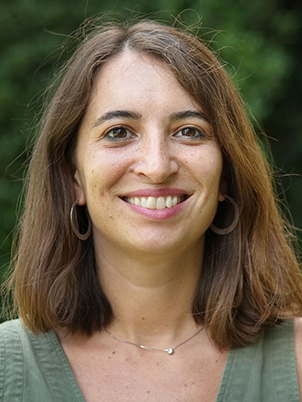
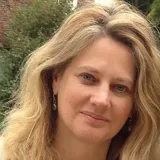
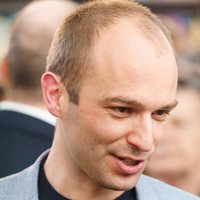
Eleonora Cappuccilli is a Researcher at the Department of Philosophy, History of Ideas and Art, and Classical Languages at the University of Oslo . Her academic interests focus on English political thought in the early modern period, particularly women's political discourse based on the public sphere , constitutional history , prophecy as a concept , and early modern European political theology . She also explores current feminist theory . Education: PhD in Politics, Institutions and History (2016) from the University of Bologna, MA in International Relations (2012), and BA in International Studies (2009). Experience: Post-doctoral fellow at I Tatti (2022-2023), University of Oslo (2018-2021), Edith Saurer Foundation (2018), and Filippo Burzio Foundation (2018). Her research examines prophetic women in early modern Europe, analyzing their roles in religious reform and political theology . She investigates gender and authority through case studies like Mary Ward, Domenica da Paradiso, and Caterina da Racconigi. Her recent works explore cross-confessional practices , spiritual discipline , and transnational prophetic networks . Her publications span topics from 16th-century prophetic encounters to 17th-century gender conflicts , with a focus on Italian and English Renaissance contexts . She collaborates with scholars like Roberta Ferrari on intersections of feminist theory and Marxist critique , particularly concerning patriarchal structures and social movements . Projects include “Women's prophecy in early modern European religion” , analyzing the subversive expressions of female prophets. Her work appears in journals like Renaissance Studies and edited volumes from Amsterdam University Press and Brill .
Tully O'Neill is a Lecturer in Criminology at La Trobe Law School, La Trobe University (since July 2022). Previously, they held academic positions at The University of Melbourne and Victoria University. Their PhD from RMIT University (2020) earned the RMIT Prize for Research Excellence. Education: PhD in Criminology, RMIT University (2020) Research focuses on sexual and gender-based violence, digital justice, and anti-queer violence. Key themes include: Technology's role in harm and justice Queer and feminist theoretical frameworks Public survivor narratives post-#MeToo Media representations of violence Publications span digital criminology, technology-facilitated violence, and survivor disclosure practices. Recent work emphasizes digital justice mechanisms and the intersection of technology with trauma. Awards include the 2020 RMIT Prize for Research Excellence. Supervises Master's and PhD students in criminology. Engaged with media and digital platforms for public dialogue on justice issues. Affiliated with La Trobe Law School's criminology research unit, contributing to interdisciplinary projects on digital justice and survivor advocacy.
Eralp Demir is a Post-Doctoral Researcher at the Department of Engineering Science, University of Oxford. His research focuses on materials mechanics, crystal plasticity, and finite element methods. He holds a PhD from RWTH Aachen University and has conducted research at institutions including Carnegie Mellon University, Max Planck Institute, and Cornell University. His current work involves developing the OXFORD-UMAT framework for fusion energy materials in collaboration with UKAEA. He specializes in in-house finite element code development and commercial software integration (e.g., Abaqus, MSC Marc). His expertise spans computational materials modeling, microstructural analysis, and experimental validation using techniques like 3D XRD. Education: PhD in Engineering Science, RWTH Aachen University Advanced Studies at Carnegie Mellon University (Mechanical Engineering), Cornell University (MAE), and others Research Interests: Crystal plasticity modeling, fusion energy materials, finite element method development, microstructural mechanics, and additive manufacturing. His work bridges computational simulations with experimental techniques to understand material behavior under extreme conditions. Labs/Teams: Collaborates with the Tarleton Research Group at Oxford and UKAEA on fusion energy projects. Active in developing open-source tools for material modeling.
Alena Ledeneva is a Professor of Politics and Society at the School of Slavonic and East European Studies (SSEES) at University College London (UCL). She holds a PhD in Social and Political Theory from Cambridge University (1996) and has been at UCL since 1999. Her research focuses on informal governance systems, corruption, and networks in post-Soviet societies, particularly in Russia and Southeast Europe. She leads major EU-funded projects like ANTICORRP.eu and MARKETS, and founded the UCL FRINGE Centre and Global Informality Project. Education: PhD in Social and Political Theory, University of Cambridge (1996) MPhil, University of Cambridge (1992) BA, Novosibirsk State University (1986) Research interests include informal institutions, blat networks, systemic corruption (sistema), and cross-cultural informality. She has authored landmark books such as How Russia Really Works and Can Russia Modernize? , and edited the Global Encyclopedia of Informality series. Her work bridges political science, sociology, and organizational behavior. Key contributions include analyzing the 'dark and bright sides' of informal networks, modeling costs of informal practices in the Western Balkans, and critiquing global corruption paradigms. She advises on anti-corruption strategies and runs interdisciplinary research hubs. Labs/Teams: FRINGE Centre for Social and Cultural Complexity Global Informality Project (in-formality.com) Her art explores sociopolitical themes, displayed at alenaledeneva.com/art .
Alexei Yurchak is a Professor in the Department of Anthropology at the University of California, Berkeley. His research focuses on Soviet and post-Soviet societies, with particular attention to cultural practices, political transformations, and the intersection of history and anthropology. He is renowned for his work on late socialism, the collapse of the USSR, and the cultural legacies of Soviet ideology. Yurchak’s scholarship bridges anthropology, history, and political theory, exploring themes such as parody, memory, and the paradoxes of power in authoritarian systems. Key contributions include his book Everything Was Forever, Until It Was No More: The Last Soviet Generation , which examines the cultural identity of the final generation raised under Soviet rule. His research also delves into post-Soviet Russia’s political dynamics, ethnographic analyses of systemic change, and the role of cultural forms like music, art, and media in shaping societal narratives. His articles span topics from Soviet music culture and the aesthetics of parody to contemporary Russian politics. He critiques the interplay between ideology and everyday life, emphasizing how cultural practices reveal deeper political and social structures. Yurchak’s interdisciplinary approach has positioned him as a leading scholar in postsocialist studies and critical anthropology.
Professor Andrew Kirkman holds the Peyton and Barber Chair of Music at the University of Birmingham's Department of Music. He leads the Centre for Early Music Performance and Research, directing the University Chamber Orchestra and professional ensemble The Binchois Consort. His roles include teaching Renaissance music, 1960s music studies, and supervising PhD topics ranging from post-communist Poland to late medieval music historiography. Research focuses on fifteenth-century sacred music’s cultural context, particularly the Mass Ordinary in late medieval Europe. His 2010 book The Cultural Life of the Early Polyphonic Mass and 2020 monograph on Saint-Omer’s music culture exemplify this. Recent work explores music-alabaster intersections and late-medieval liturgical practices. His recordings with The Binchois Consort earned Gramophone awards, including the 2017 'Early Music Recording of the Year.' Notable performances include Music for the Hundred Years' War (2017) and collaborations with pianist Clipper Erickson. Awards reflect both scholarly and performative excellence. Advising emphasizes late medieval/renaissance music, while grants supported research on Saint-Omer’s musical legacy. He co-founded The Binchois Consort in 1995, producing Hyperion recordings that revive rarely performed repertoires. His work bridges performance, scholarship, and interdisciplinary cultural studies.
Guillaume Soulez is a Professor of Cinema, Audiovisual Studies, and Communication at the Sorbonne Nouvelle - Paris 3 University, specializing in the Department of Cinema and Audiovisual. He holds an HDR (2009) and a PhD in Rhetorical Mediation (1998). His research focuses on the 'deliberation of images,' analyzing how audiences interpret cinematic and audiovisual works through formal and pragmatic frameworks. He leads the 'Renaissance of Television' research group at IRCAV and co-directs the international 'Cinema and Visual Culture Colloquium Series' with institutions like NYU and Duke University. Recent projects include Innov'zone (Labex ICCA) exploring experimental zones in cinema and the Pierre Schaeffer Archive Project. His work bridges media morphology, reception studies, and intermediality, with publications in Théorème , CiNéMAS , and Communication & Langages . Key research themes include: the fragmented cinema, media formats, TV series seriality, and the legacy of the ORTF Research Service (1960-74). He has directed the Cinema and Audiovisual Department (2014-2016) and IRCAV (2016-2021), fostering collaborations with institutions like the Ministry of Defense and La Poste. His publications emphasize theoretical models like 'format analysis,' 'pragmatic interpretation,' and 'intermedial dialogue.' Recent works include Uses of Interpretation, Interpretations of Use (2023) and Le Cinéma Éclaté (2018). He actively engages in public scholarship through radio interviews and educational outreach.
Shion Guha is an Assistant Professor at the University of Toronto's Faculty of Information, cross-appointed to the Department of Computer Science. He directs the Human-Centered Data Science Lab and is affiliated with the Schwartz Reisman Institute for Technology and Society and the Data Sciences Institute. His research focuses on integrating technical methodologies with critical social science approaches to address algorithmic biases in public sectors like child welfare, healthcare, and policing. Key roles include coordinating the Human-Centred Data Science concentration in the Master of Information program and advising national policies on AI ethics. Education: PhD in Information Science and Statistics, Cornell University (2016) MS in Information Science, Indian Statistical Institute (2010) Bachelor of Business Administration, Jadavpur University (India) Research Interests: Human-Centered Data Science, AI ethics, public policy, healthcare systems, algorithmic accountability, and marginalized communities' interaction with technology. His work emphasizes participatory design and real-world impact, addressing high-stakes decisions in public services. Recent Trends in Articles: Focus on participatory AI design in public sectors, algorithmic harms in child welfare, and cultural biases in NLP tools. His studies explore the intersection of technical systems and societal values, advocating for equity and transparency in algorithmic decision-making. Awards: Way-Klingler Early Career Award (2019) Connaught New Researcher Award (2021) Schwartz-Reisman Institute Faculty Fellowship (2023–2025) Grants & Advising: Secured funding from NSERC, CIFAR, and others for projects like the Responsible AI for Health Systems (RAIHS) framework. Advises PhD students through cross-departmental programs and collaborates with organizations like Parkview Health and the ACLU. Current supervisees include Ramaravind Kommiya Mothilal and Seh Young Moon. Labs & Initiatives: Leads the Human-Centered Data Science Lab, contributing to interdisciplinary research on AI ethics. Active in policy advocacy, including work with the Canadian government’s AI Policymakers Expert Group and the CIFAR AI Solutions Network.
Professor Timothy P. Bender is a distinguished faculty member at the University of Toronto, holding a primary appointment in the Department of Chemical Engineering and Applied Chemistry with cross-appointments in the Department of Chemistry and the Department of Materials Science and Engineering. His research laboratory focuses on developing novel organic electronic materials for applications in sustainable energy technologies, particularly organic solar cells and light-emitting devices. Professor Bender earned his B.Sc. and Ph.D. from Carleton University before joining the University of Toronto faculty in 2006. Prior to his academic appointment, he was a research staff member at the Xerox Research Centre of Canada from 2000-2006, where he filed over 65 US patents and published numerous peer-reviewed papers. His industrial research experience provides valuable perspective on the commercialization pathway for academic discoveries. Professor Bender's research program centers on the design, synthesis, and engineering of new materials for organic electronic devices, particularly organic photovoltaics (OPVs) and organic light-emitting diodes (OLEDs). His group has made significant contributions to the understanding and application of boron subphthalocyanines (BsubPcs) and silicon phthalocyanines (SiPcs), establishing methodologies for tailoring their chemical structure to optimize device performance. The Bender Lab employs a comprehensive 'applied chemistry-device continuum' approach, integrating computational modeling, synthetic chemistry, physical characterization, and device engineering to establish molecular structure-property relationships. Their research spans fundamental chemistry to applied device engineering, with strong emphasis on sustainability considerations throughout the materials development process. Analysis of Professor Bender's recent publications reveals a strong focus on developing BsubPcs as triplet harvesting materials in organic photovoltaics, engineering silicon phthalocyanines for enhanced electron transport, and exploring halogen bonding to control solid-state arrangements of these materials. His work demonstrates how molecular engineering can overcome traditional limitations in organic electronic materials, particularly regarding solubility, charge transport, and environmental stability. The research shows consistent progression toward higher efficiency devices with improved longevity. 2008 Professor Diran Basmadjian Teacher of the Year Award from the Department of Chemical Engineering and Applied Chemistry Corporate Special Recognition Award from Xerox Corporation for photoreceptor technology that enabled 'life of machine' parts Professor Bender actively mentors a diverse team of highly qualified personnel (HQP), including undergraduate students, graduate students, and post-doctoral fellows. His laboratory fosters cross-disciplinary collaboration between chemists, materials scientists, and chemical engineers, allowing students to engage with the complete research cycle from molecular design to environmental testing. He has secured funding from NSERC, SABIC Corporation, and other sources to support his research program, which maintains strong industrial partnerships with companies including SABIC Corporation, Siltech Corporation, and Xerox Corporation. His research bridges fundamental academic discoveries with practical commercial applications in the growing field of organic electronics. The Bender Laboratory maintains comprehensive infrastructure for organic synthesis, materials characterization, and device fabrication. Their facilities enable complete development cycles from molecular design to environmental testing of organic electronic devices. The lab's 'applied chemistry-device continuum' approach ensures that fundamental discoveries are rapidly translated into practical device applications, with particular emphasis on sustainability considerations throughout the materials development process. Current research directions include accelerated materials development, sustainable chemical processes, and life cycle analysis of organic electronic devices in real-world environments.
Scott Barnes is Head of the Department of Linguistics and Course Director of the Master of Speech and Language Pathology at Macquarie University. He leads the Macquarie Linguistics Conversation Analysis Lab with Joe Blythe, supervising research on communication disabilities, speech pathology assessment, and cross-linguistic interaction analysis. His teaching focuses on acquired communication disorders, language analysis, and speech pathology foundations. Barnes researches acquired communication disabilities (aphasia, TBI) using conversation analysis and interactional linguistics. Key interests include: Everyday communication practices in clinical populations Turn-taking and repair organization across languages Multimodal interaction analysis Speech pathology assessment frameworks Cross-cultural communication disorders His publications demonstrate consistent focus on clinical conversation analysis, with recent work examining: Therapeutic interactions in mental health settings Multimodal communication in Mandarin and Indonesian contexts Auditory processing in post-stroke communication Repair strategies in dysarthria and aphasia As external accreditor for Speech Pathology Australia (2021-2026), he shapes professional education standards. He directs multiple active grants including projects on bilingual education, communication breakdowns in noise, and voice visualization technology.
Nikolaus (Nik) Fortelny is a Group Leader in Computational Biology at the University of Salzburg, Austria, where he leads the Computational Systems Biology research group within the Department of Biological Sciences & Medical Biology. His research focuses on understanding biological systems at the molecular level through advanced computational approaches. Dr. Fortelny's research interests include: Computational Systems Biology Multi-omics data integration and analysis Single-cell and spatial biology Machine learning applications in biology Network science approaches to biological regulation Immune system modeling His recent publications demonstrate a strong focus on applying computational approaches to understand complex biological systems, particularly in immunology and cellular regulation. His work often involves collaboration with experimental biologists to generate and analyze large-scale datasets from multi-omics experiments collected at single-cell or spatial resolution. Dr. Fortelny is actively involved in research recruitment and is currently hiring for professor positions in Medical Systems Biology and Animal Physiology at the University of Salzburg, with an application deadline of April 19th, 2025. His group regularly seeks students, PhD candidates, postdocs, and staff scientists to join their team.
Cristina Cerami is a Research Director (DR2) at the French National Centre for Scientific Research (CNRS), affiliated with the SPHERE laboratory (UMR 7219) and the Center for the History of Arab and Medieval Sciences and Philosophies (CHSPAM). She holds leadership roles as Deputy Director of SPHERE, Director of CHSPAM, and head of multiple research axes including 'History of Philosophy from Antiquity to the Classical Age' and 'Metaphysics and Science'. She has been a prominent figure in the French academic research landscape since 2008. Her research interests lie at the intersection of philology and theoretical philosophy, focusing on ancient and medieval Arabic philosophies. She specializes in Aristotle, Averroes, and Greco-Arab peripateticism, with particular expertise in physics, cosmology, metaphysics, logic, and the theory of demonstration. Her methodological approach combines meticulous textual analysis with deep philosophical interpretation, emphasizing the interplay between logic, natural philosophy, and metaphysics in reconstructing Aristotelian and post-Aristotelian systems. The trends in her publications show a sustained focus on reconstructing the philosophical systems of Averroes and Avicenna through detailed commentary and comparative analysis. Her work frequently explores the transmission and interpretation of Aristotelian texts in the Arabic tradition, the epistemological foundations of demonstration, and the metaphysical implications of physical theories. She has contributed extensively to understanding the structure of Aristotelian natural philosophy and its reception across Greek, Arabic, Hebrew, and Latin traditions. Scientific Awards: Gilberto Bernardini Prize for best doctoral thesis (2006/2007) Emilio Bocca Prize for best doctoral thesis (2006/2007) Cerami has been actively involved in research leadership and academic service , coordinating international projects like PHYSIKA, serving on editorial boards of major journals including Arabic Sciences and Philosophy and Documenti e Studi sulla Tradizione Filosofica Medievale , and participating in numerous national selection committees. She has organized several international colloquia and seminars, demonstrating strong academic networking and community building. Her teaching includes lecturing at Sorbonne University and the University of Paris. She is also Deputy Secretary of SIHSPAI (International Society for the History of Arab and Islamic Sciences and Philosophy). Her work is supported by major research institutions and centers, including CNRS and international collaborations, reflecting her standing as a leading scholar in the history of Arabic and medieval philosophy.
Prof. Dr. Kenny R. Cupers is Professor of Architectural History and Urban Studies at the University of Basel , affiliated with the Department of Social Sciences in the Faculty of Humanities and Social Sciences . He co-founded and leads the Urban Studies division, focusing on the intersections of architecture, urbanism, colonialism, and planetary design in African and European contexts. PhD, Harvard University (2010) M.Sc. and B.Sc. in Architecture, Catholic University of Leuven Studies in Visual Culture and Urban Theory, Goldsmiths College, London His research centers on architectural modernism, housing, infrastructure, and decolonization . Key themes include the planetary politics of design, coloniality of infrastructure, and the role of architecture in state transformation. He is currently working on two book projects in Kenya: one on unmaking the plantation system through arts and architecture, and another on post-independence Nairobi’s urban history. Recent publications include The Earth that Modernism Built: Empire and the Rise of Planetary Design (2024) and The Social Project: Housing Postwar France (2014). He leads the Sinergia project Governing through Design (2020–2025) and previously directed the SNF-funded How Infrastructure Shaped Territory in Africa (2018–2022). His work appears in journals such as e-flux Architecture , Antipode , and Architectural Theory Review . Scientific Awards: No specific awards listed in the provided text. As an educator, Cupers promotes engaged pedagogy and collaborative research, co-editing What is Critical Urbanism: Urban Research as Pedagogy (2022). His public research projects include Swiss Corporate Coloniality and Lamu Futures . He has advised multiple PhD and Master’s students, though specific names are not listed. He is part of a vibrant research team including Dr. Ernest Sewordor, Dr. Laura Nkula-Wenz, and Dr. Prita Meier. Laboratories and Research Teams: Urban Studies, University of Basel Critical Urbanisms Program Sinergia Project: Governing through Design How Infrastructure Shaped Territory in Africa (completed) Infrastructure Space and the Future of Migration Management (completed)
Dr. Natasha Kuhrt is a Senior Lecturer in International Peace and Security at King's College London's Department of War Studies, housed within the School of Security Studies. Her academic affiliations include membership in BISA, Chatham House, ISA, ASEN, and BASEES. She holds a PhD from UCL and has taught extensively on international law, intervention, and security studies. Her research focuses on Russian foreign policy in Asia, regionalism in Eurasia/Asia-Pacific, nationalism, and the Responsibility to Protect (R2P). Education: BA (Hons) in Russian & German from School of Slavonic and East European Studies (UoL), MA in Soviet Studies (SoSlavonic), PhD (UCL) on Russian policy toward China/Japan. Research interests span Russian security policy, international law applications in conflict zones, and the nexus between memory discourse and foreign policy. She co-leads the BISA Working Group on Russian & Eurasian Security and collaborates on ESRC UK-Japan projects on populism. Current book projects include co-authored volumes on Russian foreign policy and Russia-China relations. Her work appears in outlets like Journal of Global Faultlines , Asian Survey , and Australian Journal of Defence and Strategic Studies . She advises multiple PhD students and engages in public commentary via BBC, Al Jazeera, and academic conferences on Ukraine-Russia dynamics, China-Russia relations, and UN peacekeeping. Labs/Teams: Co-director of War Crimes Research Group and Centre for Grand Strategy, focusing on historical conflict analysis and strategic diplomacy.
Luke Cooper is an Associate Professorial Research Fellow in the Department of International Relations at the London School of Economics and Political Science (LSE), where he is affiliated with the Conflict and Civicness Research Group. He serves as Director of PeaceRep’s Ukraine programme, leading interdisciplinary research teams across six global institutions and a broader network of scholars in Ukraine and the region. His academic work sits at the intersection of historical sociology, political theory, and international relations. His research interests include nationalism, authoritarianism, democracy, uneven and combined development, conflict, and systemic societal transformation. Dr Cooper’s work combines theoretical innovation with empirical analysis, drawing on both historical and contemporary case studies to examine processes of social and political change. His recent publications explore themes such as the global threat of authoritarian contagion, the historical evolution of national identity in the British Atlantic, and the political imaginaries in science fiction literature. These works reflect a consistent engagement with macro-historical processes and structural transformations in global politics. Authoritarian Contagion; the Global Threat to Democracy (2021) Imagined communities: from subjecthood to nationality in the British Atlantic (2022) Worlds beyond capitalism: images of uneven and combined development in Kim Stanley Robinson’s Mars trilogy (2021) Dr Cooper has been involved in significant policy advocacy and public engagement, co-founding the campaign group Another Europe Is Possible and co-hosting the Another Europe podcast. He has led projects on Brexit impacts and international solidarity with Ukraine. He previously served as a visiting fellow at the Institute of Human Sciences (IWM) in Vienna and has taught at Anglia Ruskin University, Richmond American University London, and the University of Sussex. He leads multiple funded research initiatives, including PeaceRep’s Ukraine programme, which conducts evidence-based policy analysis on Ukraine’s war economy and investigates the broader phenomenon of global fragmentation beyond traditional geopolitics. His work emphasizes transnational interconnections in the defense of national sovereignty. Dr Cooper completed his PhD in International Relations at the University of Sussex, holds an MSc in Comparative Politics from LSE, and a BA in Political Studies from the University of Leeds.