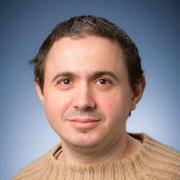
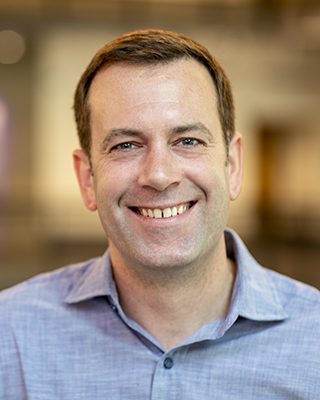
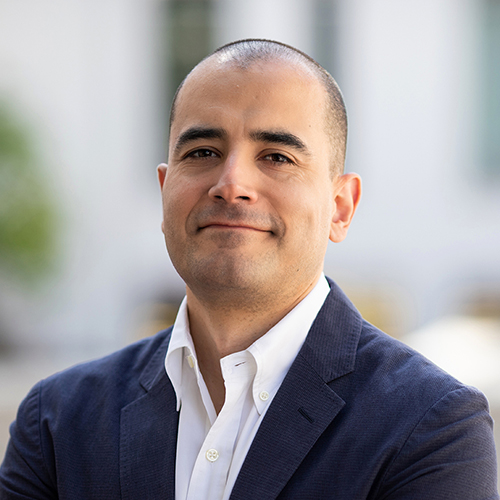
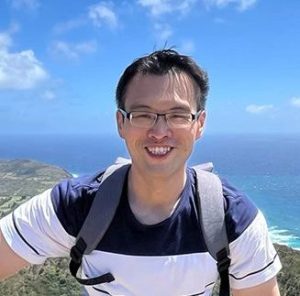
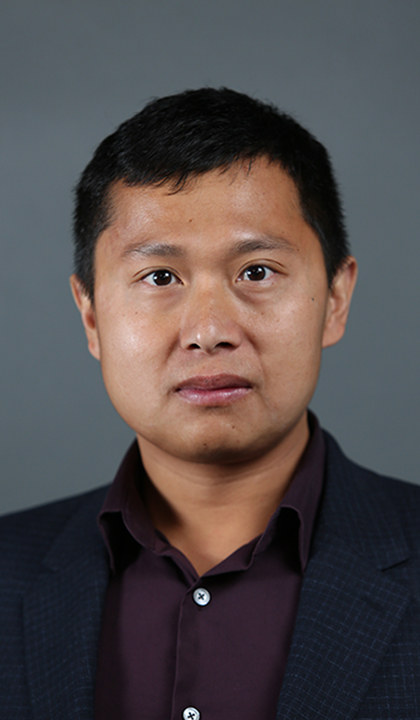
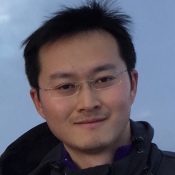
Xuming He serves as the inaugural Chair of the Department of Statistics & Data Science at Washington University in St. Louis. Previously the H.C. Carver Collegiate Professor at University of Michigan, he holds a PhD in Statistics from University of Illinois. His research focuses on robust statistical methods with applications across bioinformatics, public health, and atmospheric science. As President (2023-2025) of the International Statistical Institute, he promotes interdisciplinary data science research globally. Education: BS in Applied Mathematics, Fudan University MS in Mathematics, University of Illinois PhD in Statistics, University of Illinois
Prabir Burman is a Professor in the Department of Statistics at the University of California, Davis, with a career spanning over three decades. His research focuses on nonparametric function estimation, model fitting/selection, image analysis, time series, and discrete data. Education: Ph.D. (1982) and Master of Statistics (1977) from University of California, Berkeley; Bachelor of Statistics (1976) from Indian Statistical Institute, Calcutta. His work bridges theoretical statistics and applied problems, including ecological studies (e.g., coyote parasites, mountain lion tracking), biomedical research (e.g., metabolic syndrome in bipolar patients), and time series forecasting. He has secured multiple NSF and NSA grants for projects on multivariate analysis, shape modeling, and covariance estimation. Recent publications highlight his expertise in predictive model fitting, stock return analysis, and stroke survivor studies. While not explicitly listing awards, his editorial roles (e.g., Journal of Multivariate Analysis) and collaborative grants underscore his academic leadership.
Louis Du Plessis is a Lecturer at ETH Zürich's Department of Biosystems Science and Engineering in Basel, Switzerland. His research focuses on computational evolution with particular emphasis on infectious disease dynamics and genomic analysis. He maintains an active research profile with numerous high-impact publications in top-tier journals. Dr. Du Plessis completed his doctoral studies at ETH Zürich in 2016 with a thesis titled 'Understanding the spread and adaptation of infectious diseases using genomic sequencing data,' building upon his 2011 Master's work on evolutionary rate variation. His current research sits at the intersection of computational biology, epidemiology, and evolutionary genetics. His research interests span computational epidemiology, phylodynamics, viral evolution, and infectious disease modeling. He has made significant contributions to understanding pandemic dynamics, particularly regarding influenza and SARS-CoV-2, using genomic and epidemiological data integration. His methodological work includes developing computational approaches for estimating epidemic dynamics and viral transmission patterns. Analysis of his recent publications reveals a strong focus on how pandemics disrupt normal viral circulation patterns, with particular attention to influenza evolution during the 2009 H1N1 and COVID-19 pandemics. His work often combines phylogenetic analysis with epidemiological modeling to extract maximum information from genomic and case count data. Dr. Du Plessis has received research funding from European Commission projects including 'From Foundations of Phylodynamics to new applications in Cell Biology' (grant 101001077) and 'MOnitoring Outbreak events for Disease surveillance in a data science context' (grant 874850). He is actively involved in developing computational tools for analyzing pathogen genomic data and has contributed to several software packages used in the field. His work has significant implications for public health surveillance and pandemic preparedness.
Nicola Nicolici is a Professor in the Department of Electrical and Computer Engineering at McMaster University. His research focuses on methods and algorithms for the design of digital integrated circuits and systems, with significant contributions in manufacturing test, post-silicon validation and debug. His work has expanded to include embedded systems, low-energy computing, and custom hardware-accelerated computing systems. Professor Nicolici's research interests span multiple areas of digital system design and validation. His early work focused on manufacturing test methodologies and power-aware testing strategies for integrated circuits. More recently, he has made significant contributions to post-silicon validation techniques, including constrained-random stimuli generation, trace signal selection, and bit-flip detection. His research has evolved to address emerging challenges in embedded computing systems, low-energy design, and specialized hardware acceleration for various applications including deep neural networks and signal processing. His recent publications reveal a strong trend toward hardware acceleration for specialized computing tasks. The research spans matrix multiplication algorithms (Strassen and Karatsuba), memory system optimization (DDR5 calibration), FPGA-based radar processing, and neural network acceleration. His work consistently bridges theoretical algorithm development with practical hardware implementation considerations, particularly focusing on precision analysis, fault tolerance, and energy efficiency. The research demonstrates a clear progression from traditional digital circuit testing to more complex system-level validation and acceleration techniques. Professor Nicolici has been actively involved in teaching courses related to system-on-chip design and test, digital systems, and embedded systems. His teaching portfolio includes advanced courses such as System-on-Chip (SOC) Design and Test and Digital Systems Design , reflecting his expertise in the field. While specific grant information isn't detailed in the provided text, his extensive publication record suggests ongoing research funding support. His research has contributed significantly to the fields of digital circuit testing, post-silicon validation, and hardware acceleration. The work has practical applications in semiconductor manufacturing, embedded systems design, and specialized computing architectures. His recent focus on neural network acceleration and memory system optimization reflects the evolving landscape of computer architecture research.
Qixuan Chen, PhD, is an Associate Professor of Biostatistics at Columbia University Mailman School of Public Health. She obtained her PhD from the University of Michigan in 2009, with dual expertise in biostatistics and survey sampling. Education: BA in Economics (Nankai University), MS in Applied Statistics (Bowling Green State University), PhD in Biostatistics (University of Michigan) Her research focuses on advanced statistical methods for complex surveys, causal inference, and handling missing data. Key contributions include developing Bayesian predictive inference frameworks using machine learning and regularized regression for integrating administrative records with survey samples. Recent publications emphasize environmental health applications, including measurement error correction for immunoassays and variable selection in multiply imputed data. Her work bridges biostatistics with computational methods for data integration. Scientific Awards: NIEHS Career Development Award, Teaching Award, Calderone Research Prize, Bryant Scholarship, Hutzinger Award She actively contributes to public health through dashboards like the New York City Neighborhoods COVID-19 tracker and PRIME radiology diagnostics platform. Grants such as R01ES035784 support her ongoing work in exposure-response analysis.
Byron Boots is the Amazon Professor of Machine Learning in the Paul G. Allen School of Computer Science and Engineering at the University of Washington, where he directs the UW Robot Learning Laboratory. He also serves as a Principal Research Scientist in the Seattle Robotics Lab at NVIDIA Research and co-chairs the IEEE Robotics and Automation Society Technical Committee on Robot Learning. Dr. Boots received his Ph.D. from the Machine Learning Department in the School of Computer Science at Carnegie Mellon University, where he was a member of the Sense, Learn, Act (SELECT) Lab co-directed by Carlos Guestrin and his advisor Geoff Gordon. Prior to joining the University of Washington faculty, he was an Assistant Professor in the School of Interactive Computing within the College of Computing at Georgia Tech, and before that, he completed a post-doc in the Robotics and State Estimation Lab directed by Dieter Fox at the University of Washington. Professor Boots' research focuses on the intersection of machine learning, artificial intelligence, and robotics, with particular emphasis on developing theory and systems that tightly integrate perception, learning, and control. His work spans computer vision, state estimation, localization and mapping, high-speed navigation, motion planning, and robotic manipulation. His group develops algorithms drawing from deep learning and neural networks, nonparametric statistics, graphical models, nonconvex optimization, quantum physics, online learning, reinforcement learning, and optimal control. The research demonstrates a strong theoretical foundation while maintaining practical relevance to real-world robotic systems. His recent publications reveal a clear trend toward integrating advanced machine learning techniques with robotics, particularly in model predictive control, motion planning, and learning-based approaches to robot control. His work shows increasing focus on developing theoretically grounded methods that can handle the complex, nonlinear dynamics of real-world robotic systems while maintaining computational efficiency. The publications span top venues including ICRA, CoRL, IROS, and NeurIPS, demonstrating broad impact across multiple subfields of robotics and AI. Finalist for Best Systems Paper at Conference on Robot Learning (CoRL-2021) Multiple papers selected for oral presentations at top robotics conferences Work recognized for theoretical contributions and practical applications in robot learning As director of the UW Robot Learning Laboratory, Boots leads a vibrant research group focused on fundamental and applied research in robot learning. The lab maintains strong collaborations with NVIDIA Research and has produced numerous high-impact publications that bridge theory and practice. Professor Boots teaches courses in autonomous robotics, machine learning, and reinforcement learning, contributing to both undergraduate and graduate education at the University of Washington.
Irina Rish is a Full Professor at the Université de Montréal and a core academic member of Mila – Quebec Artificial Intelligence Institute, where she leads the Autonomous AI Lab. She holds a Canada Excellence Research Chair (CERC) and a CIFAR AI Chair, reflecting her leadership in foundational AI research. Her work is supported by major initiatives, including the U.S. Department of Energy’s INCITE project on Summit and Frontier supercomputers. PhD in AI, University of California, Irvine MSc in AI, University of California, Irvine MSc in Applied Mathematics, Moscow Gubkin Institute Her research focuses on machine learning, neural scaling laws, emergent behaviors in foundation models, continual learning, robustness, and neuroscience-inspired AI . She explores how AI systems can become more general, flexible, and aligned with human cognition. Her recent work investigates training dynamics in large language models, efficient pruning techniques, and the development of time-series foundation models. The analysis of her recent publications reveals a strong focus on scaling behaviors, continual adaptation, and robustness in AI systems . Her work spans theoretical understanding of training dynamics (e.g., zero-sum learning), practical optimization methods, and applications in climate modeling and mental health. She emphasizes open science, leading open-source projects and co-founding Nolano.ai to build efficient, compressed foundation models. Canada Excellence Research Chair (CERC) CIFAR AI Chair IBM Eminence & Excellence Award (2018) IBM Outstanding Innovation Award (2018) IBM Outstanding Technical Achievement Award (2017) IBM Research Accomplishment Award (2009) Irina Rish advises a large group of PhD and Master’s students across Université de Montréal, McGill, and Concordia. She leads major research grants and collaborates internationally on HPC-based AI research. She is also the co-founder and CSO of Nolano.ai, driving innovation in efficient AI systems. She leads the Autonomous AI Lab, which focuses on building large-scale foundation models, understanding neural scaling laws, and developing bio-inspired learning systems. She actively organizes reading groups on scaling, continual learning, and out-of-distribution generalization, fostering a collaborative research environment.
Cynthia Sturton serves as Associate Professor and Peter Thacher Grauer Scholar in the Department of Computer Science at the University of North Carolina at Chapel Hill. She leads the Hardware Security @ UNC research laboratory focused on developing formal verification tools for hardware security analysis. Her educational background includes a Ph.D. (2013) and M.S. from UC Berkeley, and a B.S.Eng. from Arizona State University. Her research centers on hardware security, applied formal methods, and symbolic execution techniques for identifying security vulnerabilities in processor designs before fabrication. Sturton's research demonstrates consistent innovation in hardware security verification, particularly through tools like Sylvia (symbolic execution for Verilog) and SylQ-SV (SystemVerilog analysis with query caching). Her work bridges theoretical formal methods with practical security applications, addressing critical challenges like path explosion and security property generation at scale. Nominated for Best Paper award at IEEE/ACM MICRO 2018 Intel Hardware Security Academic Award, 2nd place ($50,000) at IEEE Symposium on Security and Privacy 2020 Selected as Top Picks in Hardware and Embedded Security 2021 She advises multiple graduate students including Rui Zhang and Calvin Deutschbein, and has secured significant research funding from NSF (Grants 1816637, 651276), Semiconductor Research Corporation, Intel, Google, and UNC Chapel Hill. Her Hardware Security @ UNC lab develops critical tools for security property generation and vulnerability detection in hardware designs.
Miguel R. Rueda is an Associate Professor in the Department of Political Science at Emory University, specializing in electoral manipulation, civil conflict, money in politics, and political methodology. He holds a PhD from the University of Rochester (2014), an M.Sc. in Economics, and a B.Sc. in Economics and Mathematics from La Universidad de los Andes. Before Emory, he was a visiting scholar at Princeton University's Center for the Study of Democratic Politics (2013–2014). In Fall 2024, he will serve as a Visiting Associate Professor at Vanderbilt University. His research has been published in top journals like the American Political Science Review , American Journal of Political Science , and Journal of Conflict Resolution . Key themes include electoral fraud mechanisms, civil war dynamics, and the intersection of political methodology with empirical policy analysis. Rueda's work spans theoretical models of strategic behavior (e.g., foreign aid allocation, partisan poll-watching) and applied analyses of electoral systems, conflict outcomes, and governance challenges. His methodological contributions address econometric issues like post-instrument bias and omitted variable effects. Contact: miguel.rueda@emory.edu , 315 Tarbutton Hall, Emory University, Atlanta, GA 30322.
Ye Wang is an Assistant Professor in the Department of Political Science at the University of North Carolina at Chapel Hill since 2022. He previously held postdoctoral and predoctoral research positions at UC San Diego’s School of Global Policy and Strategy (2020–2022). His research bridges political methodology and comparative politics, focusing on statistical tools for policy spillover effects, research transparency, and social learning under non-democratic regimes. He also explores electoral dynamics in contentious political contexts. Ye earned a PhD in Political Science from New York University (2021), with a committee including Nathaniel Beck, Matthew Blackwell, Adam Przeworski, Cyrus Samii, and Joshua Tucker. He holds an MA in Economics from Peking University (2014) and a BS in Mathematics from Fudan University (2011). He withdrew voluntarily from a concurrent PhD in Economics at the University of Wisconsin-Madison (2014–2015). His research interests emphasize causal inference methodologies and their application to understanding political phenomena in non-democratic settings. He develops statistical techniques to address interference in temporal, spatial, and networked data, while also studying how protests and international tensions impact political systems and scientific collaboration. Recipient of the John T. Williams Dissertation Prize (2020), Chiang Ching-kuo doctoral fellowship (2020), and NYU’s MacCracken fellowship (2015–2020). In advising and teaching, Ye has served as a teaching assistant for courses in political methods, comparative politics, and quantitative methods at NYU and the City University of Hong Kong. He has also taught workshops on quantitative methods at Renmin University and contributed to academic seminars at institutions like Yale and Tsinghua. His programming skills include C++, R, Python, GIS, and Stata, complementing his work in methodological research.
Dr. Sudhir R. Paul is a Professor in the Department of Mathematics and Statistics at the University of Windsor, Faculty of Science. He holds a Ph.D. from Wales and has received prestigious awards including Fellowships from the American Statistical Association (2006) and the Royal Statistical Society (1982). His research focuses on Biostatistics and Statistical Inference, with expertise in areas such as Generalized Linear Models, Clustered/Longitudinal Data Analysis, and Categorical Data Analysis. He has supervised numerous graduate students and maintains an active research program addressing topics like risk difference estimation, bias correction in statistical models, and applications in environmental and medical contexts. Education: Ph.D. (Wales). Research interests span advanced statistical methodologies, including zero-inflated models, measurement error correction, and dose-response modeling. His work bridges theoretical development and practical applications in epidemiology, clinical trials, and environmental studies. His publications reflect contributions to clustered data analysis, interval estimation, and generalized estimating equations. Awards highlight his impact in advancing statistical science through teaching, research, and service. Advising: Over 30 M.Sc. and Ph.D. students have been supervised, with current students engaged in doctoral and master’s research. Postdoctoral fellows include experts in statistical theory and applications.
Reed Essick is an Assistant Professor at the Canadian Institute for Theoretical Astrophysics (CITA), University of Toronto. His research focuses on experimental gravity, astrophysical signals, and nuclear physics, with particular emphasis on neutron stars, black holes, and gravitational waves. He develops advanced statistical methods like hierarchical Bayesian inference and nonparametric analysis for interpreting observational data from pulsars and gravitational wave detectors. Dr. Essick collaborates extensively with international observatories such as LIGO, Virgo, and KAGRA, contributing to cutting-edge projects like multimessenger astronomy and precision cosmology. His work bridges computational astrophysics with observational techniques, addressing fundamental questions about dense matter and strong-field gravity. Key contributions include studies on gravitational wave equation-of-state constraints, pulsar timing analysis, and the application of machine learning to detector data. His research leverages both ground-based interferometers and space-based observations to explore extreme astrophysical environments.
Olga Vitek is a Professor at Northeastern University's Khoury College of Computer Sciences, with affiliated faculty status in the Department of Chemistry and Chemical Biology. Her research bridges statistical science and machine learning with mass spectrometry-based proteomics and systems biology, focusing on developing open-source software tools like MSstats and Cardinal for quantitative proteomic analyses and imaging. Education: PhD in Statistics (Purdue University), Postdoc at the Ruedi Aebersold Lab (Institute for Systems Biology) Leadership: Director of the Barnett Institute for Chemical and Biological Analysis Her work emphasizes: Statistical experimental design Signal detection in complex mass spectrometry data Causal inference in biomolecular networks Reproducible computational infrastructure Recent publications highlight advancements in quantitative proteomics , mass spectrometry imaging , and causal modeling , with applications spanning cancer research, immunology, and clinical diagnostics. Notable trends include deep learning integration for image analysis and open-source tool development for scalable, transparent workflows. Scientific accolades: Elected Fellow of the American Statistical Association 2021 Gilbert S. Omenn Computational Proteomics Award NSF CAREER award Chan-Zuckerberg Essential Open-source Software award Senior Member, International Society for Computational Biology
Kenan Li, Ph.D., is an Associate Professor in the Department of Epidemiology and Biostatistics at Saint Louis University’s College for Public Health and Social Justice. He joined SLU in August 2022 and teaches courses such as Statistical Learning, R for Spatial Analysis, and Environmental Determinants of Health. His research bridges data science, GIS, and public health, focusing on spatial computation, environmental exposures, and community resilience. Ph.D. in Environmental Sciences, Louisiana State University M.S. in Environmental Sciences, Louisiana State University B.S. in Environmental Sciences and Applied Mathematics, Nankai University, China Dr. Li’s research interests lie at the intersection of spatial computation, environmental health, and community resilience . He develops geo-AI frameworks , integrated geo-cyber-infrastructures , and biostatistics algorithms using big data, deep learning, and sensor data. His work emphasizes understanding human-environment interactions, urban sustainability, and health disparities. His recent publications from 2023 to 2015 reveal a strong trend in spatial modeling of population dynamics , machine learning for environmental exposure analysis , and resilience assessment in vulnerable coastal regions. He has pioneered methods like Dynamic Time Warping Self-Organizing Maps and Wavelet-based Shapelet Discovery to extract meaningful patterns from high-frequency sensor data. His scientific awards include the Taylor Geospatial Institute Seed Grant (2023) , the Saint Louis University 2023 Health Research Grant , and selection for the Scholarly Undergraduate Research Grants and Experiences . He has secured funding from NSF, NIH, USC Keck School of Medicine, and the US Army Corps of Engineers. Dr. Li has advised and collaborated on numerous research projects, particularly in interdisciplinary teams studying the Mississippi River Delta and urban health interventions. He has been involved in NIH/NIBIB-funded projects and led research on emergency management of trail systems in Los Angeles County. He is actively involved in building research labs and teams focused on spatial data science and public health analytics , having previously worked at USC’s Spatial Sciences Institute and Population and Public Health Sciences Department.
Peng Ding is an Associate Professor in the Department of Statistics at the University of California, Berkeley. He holds a B.S. in Mathematics and B.A. in Economics from Peking University, followed by an M.S. in Statistics from the same institution. He earned his Ph.D. in Statistics from Harvard University in 2015 and completed a postdoctoral fellowship at Harvard T.H. Chan School of Public Health. His research focuses on causal inference, missing data, Bayesian statistics, and applied statistical methods in biomedical and social sciences. Ding is particularly known for his work on improving the robustness of causal inference in observational studies and randomized experiments through sensitivity analysis and design-based approaches. His research interests include methodologies to address contaminated data (e.g., missing values, measurement errors), factorial experiments, and sensitivity analysis for unmeasured confounding. He has contributed to theoretical advancements in rerandomization, regression adjustment, and instrumental variable techniques. His work emphasizes practical applications in fields such as epidemiology, social sciences, and public health. Peng Ding teaches courses on causal inference, statistical theory, and linear models. His most recent courses include Data, Inference, and Decisions and Linear Models . He actively mentors graduate and undergraduate students through directed study programs. His research has been published in top-tier statistical journals and presented at international conferences.