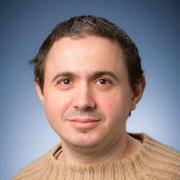
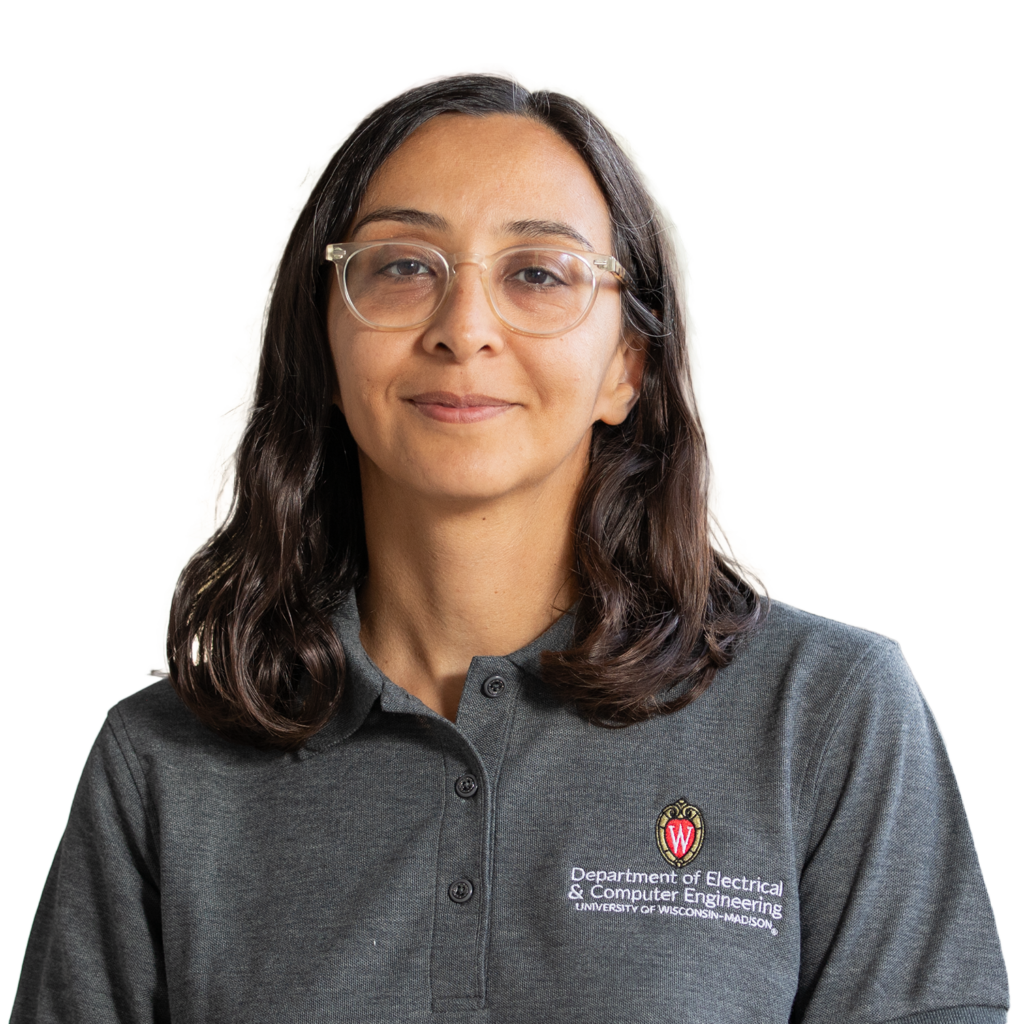
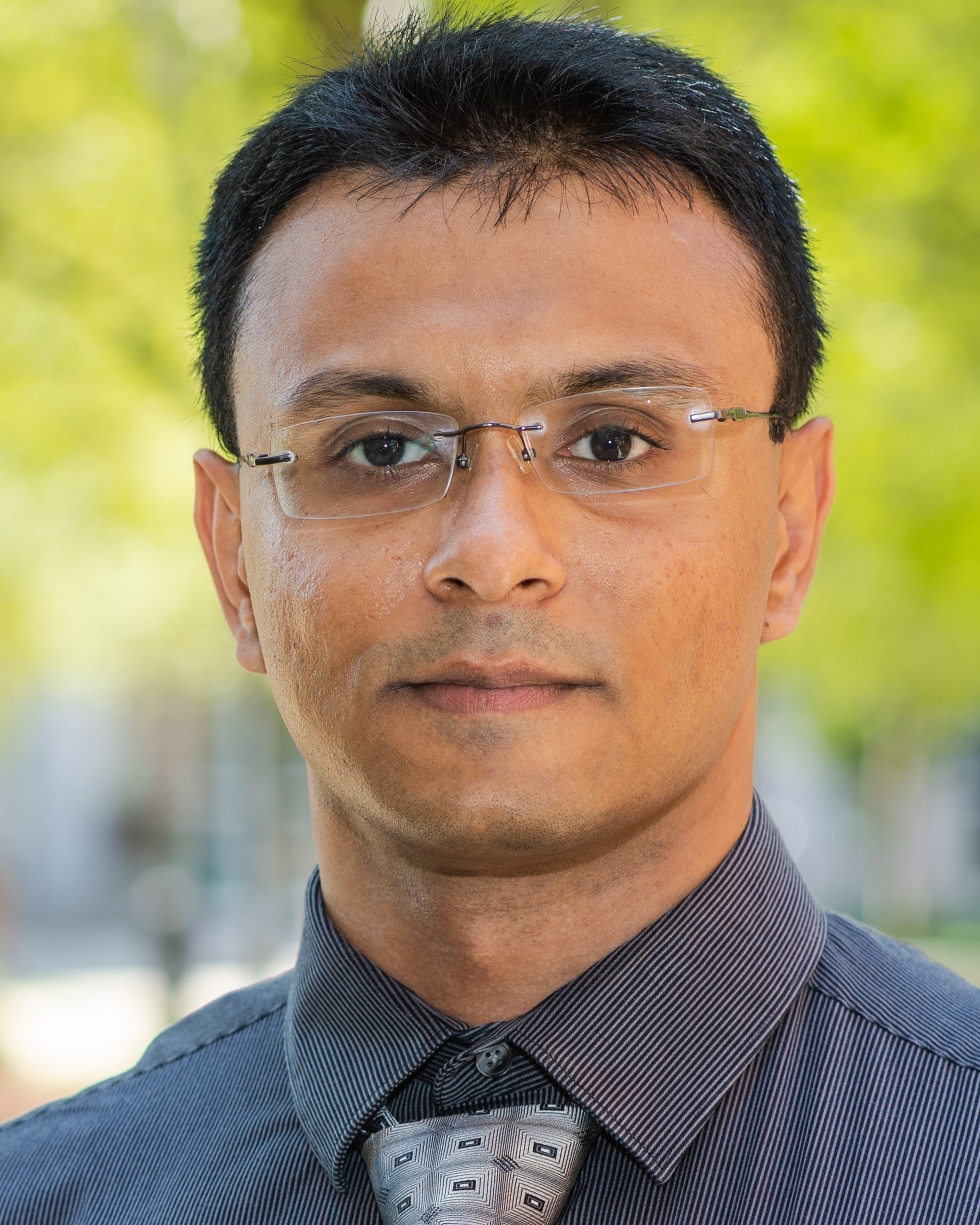
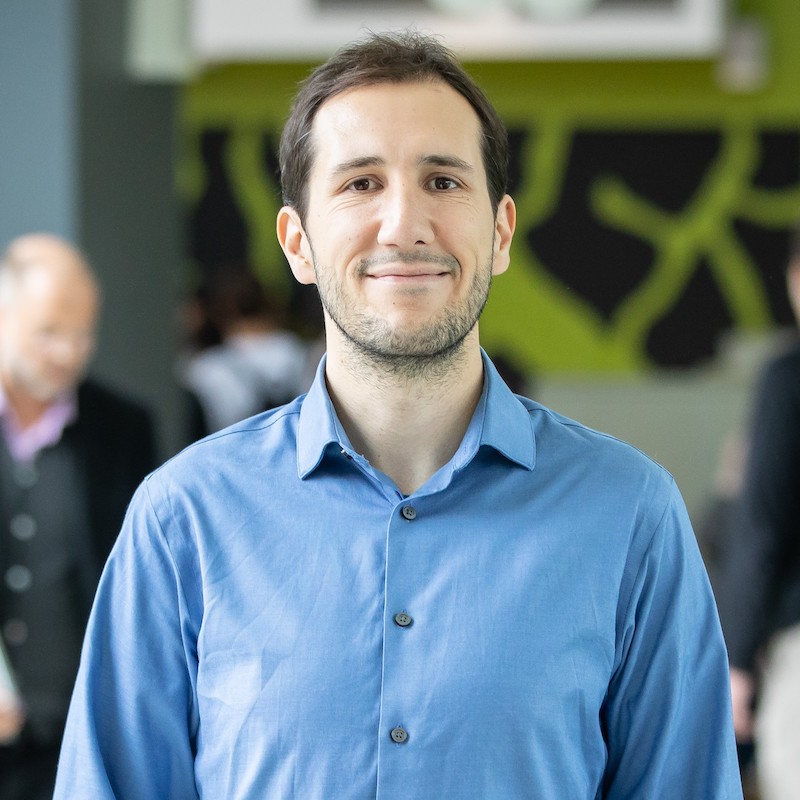
Debjit Pal is a Post-Doctoral Associate at the School of Electrical and Computer Engineering, Cornell University, and a member of the Computer Systems Laboratory. His research focuses on machine learning techniques for hardware verification, SoC validation, and FPGA optimization. Education: Ph.D. in Computer Engineering (University of Illinois at Urbana-Champaign, 2019) M.S. in Computer Science (IIT Kharagpur, 2012) B.E. in Electronics Engineering (Jadavpur University, 2008) Research Interests: Machine Learning for Electronic Design Automation (EDA) System-on-Chip (SoC) Verification Edge Intelligence as a Service Compiler Optimizations for Reconfigurable and High-Performance Computing Scientific Awards: IEEE CEDA Student Research Award (2016) Best Paper Nomination (ICCAD 2015, DAC 2018, ASP-DAC 2019) E. J. McCluskey Best Doctoral Thesis Competition Semi-Finalist (2020) Travel Grants for ICCAD/DAC/ASPDAC (2018-2019) Professional Roles: Technical Program Committee Member (DAC, VLSID), Reviewer (IEEE TVLSI, DATE, ICCAD). Collaborates with researchers like Zhiru Zhang and Shobha Vasudevan.
Nicola Nicolici is a Professor in the Department of Electrical and Computer Engineering at McMaster University. His research focuses on methods and algorithms for the design of digital integrated circuits and systems, with significant contributions in manufacturing test, post-silicon validation and debug. His work has expanded to include embedded systems, low-energy computing, and custom hardware-accelerated computing systems. Professor Nicolici's research interests span multiple areas of digital system design and validation. His early work focused on manufacturing test methodologies and power-aware testing strategies for integrated circuits. More recently, he has made significant contributions to post-silicon validation techniques, including constrained-random stimuli generation, trace signal selection, and bit-flip detection. His research has evolved to address emerging challenges in embedded computing systems, low-energy design, and specialized hardware acceleration for various applications including deep neural networks and signal processing. His recent publications reveal a strong trend toward hardware acceleration for specialized computing tasks. The research spans matrix multiplication algorithms (Strassen and Karatsuba), memory system optimization (DDR5 calibration), FPGA-based radar processing, and neural network acceleration. His work consistently bridges theoretical algorithm development with practical hardware implementation considerations, particularly focusing on precision analysis, fault tolerance, and energy efficiency. The research demonstrates a clear progression from traditional digital circuit testing to more complex system-level validation and acceleration techniques. Professor Nicolici has been actively involved in teaching courses related to system-on-chip design and test, digital systems, and embedded systems. His teaching portfolio includes advanced courses such as System-on-Chip (SOC) Design and Test and Digital Systems Design , reflecting his expertise in the field. While specific grant information isn't detailed in the provided text, his extensive publication record suggests ongoing research funding support. His research has contributed significantly to the fields of digital circuit testing, post-silicon validation, and hardware acceleration. The work has practical applications in semiconductor manufacturing, embedded systems design, and specialized computing architectures. His recent focus on neural network acceleration and memory system optimization reflects the evolving landscape of computer architecture research.
University of North Carolina at Chapel HillUnited States
Cynthia Sturton serves as Associate Professor and Peter Thacher Grauer Scholar in the Department of Computer Science at the University of North Carolina at Chapel Hill. She leads the Hardware Security @ UNC research laboratory focused on developing formal verification tools for hardware security analysis. Her educational background includes a Ph.D. (2013) and M.S. from UC Berkeley, and a B.S.Eng. from Arizona State University. Her research centers on hardware security, applied formal methods, and symbolic execution techniques for identifying security vulnerabilities in processor designs before fabrication. Sturton's research demonstrates consistent innovation in hardware security verification, particularly through tools like Sylvia (symbolic execution for Verilog) and SylQ-SV (SystemVerilog analysis with query caching). Her work bridges theoretical formal methods with practical security applications, addressing critical challenges like path explosion and security property generation at scale. Nominated for Best Paper award at IEEE/ACM MICRO 2018 Intel Hardware Security Academic Award, 2nd place ($50,000) at IEEE Symposium on Security and Privacy 2020 Selected as Top Picks in Hardware and Embedded Security 2021 She advises multiple graduate students including Rui Zhang and Calvin Deutschbein, and has secured significant research funding from NSF (Grants 1816637, 651276), Semiconductor Research Corporation, Intel, Google, and UNC Chapel Hill. Her Hardware Security @ UNC lab develops critical tools for security property generation and vulnerability detection in hardware designs.
Eldrin F. Lewis, MD, MPH is the Simon H. Stertzer, MD, Professor of Medicine and Chief of the Division of Cardiovascular Medicine at Stanford University School of Medicine. He holds a University Medical Line Professorship within the Department of Medicine - Cardiovascular Medicine and is a member of the Cardiovascular Institute. Dr. Lewis earned his medical degree from the Perelman School of Medicine at the University of Pennsylvania (1995), completed his Internal Medicine Residency (1998), Cardiovascular Disease Fellowship (2001), and Heart Transplant Fellowship (2002), all at Brigham and Women's Hospital in Massachusetts. He maintains board certification in Cardiovascular Disease (2024) and Advanced Heart Failure and Transplant Cardiology (2025) through the American Board of Internal Medicine. As an internationally recognized expert in heart failure, heart transplant, and quality of life for heart failure patients, Dr. Lewis' research focuses on patient-reported outcomes, quality of life assessment, and the integration of digital health technologies into cardiovascular care. His fundamental principle is that "there is more to life than death," emphasizing that cardiovascular care should help patients not only survive but also enjoy the best possible quality of life. His extensive publication record includes nearly 200 peer-reviewed articles in top journals including the New England Journal of Medicine, Journal of the American College of Cardiology, Circulation, JAMA Cardiology, and JAMA Internal Medicine. His recent work (2024-2025) demonstrates strong focus on heart failure treatment optimization, diversity in clinical trials, pulmonary congestion assessment, and the implementation of quadruple medical therapy for heart failure patients. Joel Gordon Miller Award for community service and leadership from the University of Pennsylvania School of Medicine Minority Faculty Development Award recognizing research potential of young physicians Robert Wood Johnson Foundation grant for quality of life assessment research Fellow of the American College of Cardiology Member of the American Heart Association Research Committee Dr. Lewis serves as a Postdoctoral Faculty Sponsor for Phenesse Dunlap and has received significant research support from the National Heart, Lung and Blood Institute, National Institutes of Health, and the Robert Wood Johnson Foundation. He is deeply committed to expanding clinical research initiatives at Stanford, forming partnerships with community cardiologists, and leveraging Silicon Valley's digital technology expertise for patient monitoring and treatment optimization. His leadership includes serving on the AHA Founders Affiliate Board of Directors, chairing the Council on Clinical Cardiology, and participating in the FDA Task Force for Standardization of Definitions for Endpoint Events in Cardiovascular Trials.
Cormac Fay is a Research Fellow in Artificial Intelligence for Smart Cities at the School of Computing and Information Technology (SCIT), University of Wollongong, within the Faculty of Engineering and Information Sciences. His roles include affiliations with the SMART Infrastructure Facility and the ARC Centre of Excellence for Electromaterials Science. Previously, he held positions at Dublin City University, including post-doctoral roles in sensor research and data analytics. He holds a PhD in Engineering from Dublin City University (2013), an M.Eng. in Telecommunications Engineering (2007), and a B.Eng. in Mechatronic Engineering (2005). His research focuses on AI-driven smart city technologies, sensor systems for environmental monitoring, and advanced 3D printing materials. Key areas include IoT-enabled carbon-emission tracking, wearable biomedical devices, and sustainable sensor networks for landfill gas management. He has developed innovative solutions such as cryogenic 3D printing techniques for biocompatible inks and LED-based optical sensing platforms. Dr. Fay has secured grants totaling over $X million, including projects on military diver monitoring, blue carbon ecosystems, and low-cost sensor networks for agriculture and environmental safety. His work integrates interdisciplinary approaches, bridging materials science, biomedical engineering, and environmental engineering. Grants: Led projects on carbon-emission IoT systems, oyster farming sensors, and vibration monitoring. Supervision: Advised a Master's project on biomimetic microfluidic fabrication (2017–2019). Labs/Teams: Collaborates with the SCIT, SMART Infrastructure Facility, and global institutions like École Polytechnique Fédérale de Lausanne.
Azadeh Davoodi is a Vilas Distinguished Achievement Professor and Associate Chair of Undergraduate Studies in the Department of Electrical and Computer Engineering at the University of Wisconsin-Madison. Her research focuses on Electronic Design Automation (EDA), integrated circuit debug, and machine learning applications in VLSI design. She holds editorial roles in journals like IEEE TCAD and ACM TRETS, and has chaired major conferences such as ISPD 2015 and served on technical program committees for DAC, ICCAD, and others. Education: PhD in Electrical Engineering, University of Maryland-College Park (2006) Research Interests: Machine learning for VLSI chip design VLSI design automation for machine learning IC-CAD for emerging nanotechnologies Hardware security Recent Research Trends: Her work bridges machine learning and hardware design, with publications on neural network optimization, distributed inference, and explainable AI for circuit design. She emphasizes energy-efficient CNNs, latency reduction in edge computing, and security in split manufacturing. Awards: 2025 DATE Best Paper Candidate 2024 Vilas Distinguished Achievement Professor 2015 ACM Best Paper Award 2011 NSF CAREER Award Service and Grants: Leads NSF-funded projects on explainable ML for CAD and holds grants for distributed neural network synthesis. Her service includes roles as IEEE HKN member and editorial board positions. Labs/Teams: Engages in interdisciplinary research teams at UW-Madison, focusing on EDA innovation and hardware-software co-design.
Jonathan Viventi is the Hawkins Family Associate Professor of Biomedical Engineering at Duke University, with additional appointments as Assistant Professor in Neurosurgery and Neurobiology, and as a Faculty Network Member of the Duke Institute for Brain Sciences. His research focuses on developing flexible, high-resolution neural interfaces for diagnosing and treating neurological disorders, particularly epilepsy, and advancing brain-machine interfaces. Education: Ph.D. in Engineering from the University of Pennsylvania (2010). Research Interests: Dr. Viventi's work centers on flexible electronics for high-resolution brain interfacing . Key areas include: Micro-electrocorticography (μECoG) arrays with thousands of channels Wireless, fully implantable neural prosthetics for speech restoration Real-time seizure detection and prediction systems Chronic biointegration of soft electronic materials Translational applications in epilepsy, stroke, and Parkinson's disease Scientific Awards: MIT Technology Review Innovators Under 35 (2014) Popular Science Brilliant 10 (2014) Grants & Funding: Dr. Viventi leads multiple NIH-funded projects including: A Wireless µECoG Prosthesis for Speech (2021-2026) Neuro-CROWN: Optimized Ultra-Flexible CMOS Electrode Arrays (2021-2025) Next-Generation Wireless Intracranial Arrays for Post-traumatic Epilepsy (2021-2025) Laboratory & Teams: His lab develops cutting-edge neural interface technologies, collaborating across engineering, neuroscience, and clinical departments at Duke to translate flexible electronics into therapeutic devices.
Carlos Cifuentes is an Associate Professor in Human-Robot Interaction at the Bristol Robotics Laboratory (BRL) , part of the University of the West of England (UWE Bristol) . He also serves as the Deputy Director of the VIVO Hub , a £13.4M UK-funded research initiative (2024-2030) focused on robotics for rehabilitation and healthcare. His research spans Human-Robot Interaction , Rehabilitation Robotics , Healthcare Robotics , and Socially Assistive Robotics , with applications for conditions such as cardiac diseases , post-stroke recovery , spinal cord injuries , cerebral palsy , Parkinson's disease , musculoskeletal disorders , and autism spectrum disorder (ASD) . Carlos has over 15 years of experience and 200+ publications in robotics for rehabilitation and assistive technologies. His recent work explores smart walkers with multimodal feedback, soft prosthetics using polymeric optical fiber sensors , and machine learning models for fatigue and stress estimation. He also investigates inclusive design for social robots in global contexts , including a CASTOR Robot for ASD therapy and collaborative design processes with Colombian communities. Carlos serves as an Associate Editor for IEEE Robotics and Automation Magazine (since 2021), ICRA , and IROS (since 2023). He leads projects integrating wearable sensors , deep learning , and haptic feedback to enhance mobility, autonomy, and quality of life for individuals with disabilities. As Deputy Director of the VIVO Hub, he focuses on long-term deployment of robotic systems in real-world healthcare settings, emphasizing collaboration with clinicians , caregivers , and neurodiverse communities . His work bridges robotics , biomedical engineering , and human-centered design .
Kanad Basu is an Associate Professor in the Department of Electrical, Computer, and Systems Engineering at The University of Texas at Dallas, Jonsson School of Engineering and Computer Science. He leads the Trustworthy and Intelligent Embedded Systems (TIES) lab, focusing on hardware security, reliability, and emerging computing paradigms. His research spans AI hardware, quantum computing, functional safety, and hardware-based security validation. Research Interests: His work emphasizes improving the trustworthiness of modern hardware systems. Key areas include hardware security (e.g., side-channel analysis, hardware trojans), functional safety in AI accelerators, quantum computing security and verification, and post-silicon validation techniques. He combines formal methods, machine learning, and hardware design to address vulnerabilities in SoCs, DNN accelerators, and quantum systems. Publication Trends: Recent publications (2023–2025) show a strong focus on interdisciplinary research, integrating AI/ML with hardware security, quantum computing, and functional safety. There is a growing emphasis on using large language models for assertion generation, symbolic execution for hardware fuzzing, and graph neural networks for quantum circuit analysis. His work frequently appears in top venues like DAC, DATE, HOST, ISVLSI, and IEEE journals. Scientific Awards: NSF CAREER Award, 2025 IEEE Top Picks in Test and Reliability, 2024 and 2023 Multiple Hack@DAC Prizes (2nd and 3rd) Best Paper Award at VLSI Design 2011 Assistant Professor Award at UTD Jonsson School, 2024 Nominated for Blavatnik Awards for Young Scientists, 2019 Advising and Grants: Dr. Basu has mentored numerous PhD, MS, and undergraduate students, many of whom have published in top-tier venues. He leads the TIES lab, which has received significant recognition, including the NSF CAREER Award. He actively collaborates across disciplines, advising students on topics ranging from quantum computing to AI hardware and functional safety. His lab produces high-impact research with real-world applications in automotive, cloud, and embedded systems. Labs and Teams: He leads the Trustworthy and Intelligent Embedded Systems (TIES) lab at UT Dallas, which fosters innovation in hardware security and reliability. The lab has produced award-winning work, including second prize at HACK@DAC 2025. He also serves on technical committees for IEEE DATE and HOST, and acts as Hardware Hacking Chair for IEEE HOST, indicating strong leadership in the hardware security community.
Glenn Daehn is the Mars G. Fontana Professor of Metallurgical Engineering at The Ohio State University , where he has served as faculty since 1988. His work bridges materials science , advanced manufacturing , and STEM education , with leadership roles in initiatives like the Ohio Manufacturing Institute and NSF's HAMMER Center. Ph.D. & M.S., Materials Science & Engineering, Stanford University B.S., Materials Science & Engineering (departmental honors), Northwestern University Professor Daehn specializes in impulse-based manufacturing , focusing on plastic deformation , impact welding , and solid-state joining of dissimilar materials. His research drives innovations in lightweight materials, aerospace manufacturing, and biomedical device fabrication. His publications reveal a strong emphasis on dynamic material processing , robotic manufacturing , and sustainable materials systems . Recent work explores orbital cold welding and AI-enhanced surgical plate bending systems. ASM Marcus A. Grossman Young Author Award (1990) Army Research Office Young Investigator Award (1992) 2022 ASM Gold Medal Award Ranked top 2% of scientists worldwide (2021) Daehn has received multiple Lumley Research Awards and led groundbreaking projects including Metamorphic Manufacturing and Hybrid Autonomous Manufacturing . He maintains active collaborations with industry through initiatives like the Center for Design and Manufacturing Excellence .
Mehdi Sadi is an Assistant Professor of Electrical and Computer Engineering at Auburn University's College of Engineering. He holds a Ph.D. from the University of Florida, an M.S. from the University of California-Riverside, and a B.S. from Bangladesh University of Engineering and Technology. His research focuses on secure and reliable system-on-chip design, AI/ML-driven VLSI CAD/EDA, neuromorphic hardware, and emerging post-CMOS computing technologies. Notable achievements include earning the NSF CAREER Award for chiplet-based design optimization and a $175k NSF grant for magnetic RAM research. His work integrates machine learning with hardware co-design to enhance AI accelerators' performance, energy efficiency, and security. Recent projects include adversarial attack mitigation on AI hardware and reliability analysis of neuromorphic systems. Dr. Sadi's contributions span chiplet architecture, memory systems (e.g., STT-MRAM/SOT-MRAM), and fault-tolerant computing. He actively publishes on topics like skyrmion logic gates and TRNG implementations using MRAM. His work bridges theoretical machine learning advancements with practical hardware implementations, addressing critical challenges in next-generation computing systems.
Sam Pagliarini is a Professor in the Department of Electrical and Computer Engineering (ECE) at Carnegie Mellon University (CMU), where he leads research in hardware security and trustworthy integrated circuit design. Prior to joining CMU in 2024, he directed the Centre for Hardware Security at Tallinn University of Technology (2019–2023). He holds a Ph.D. in Electrical Engineering from Télécom Paris (France, 2013), an M.S. in Microelectronics from Universidade Federal do Rio Grande do Sul (Brazil, 2011), and a B.S. in Computer Engineering from the same institution (2008). His research focuses on securing hardware design pipelines, including EDA tools for secure chips, countermeasures against hardware trojans, and obfuscation techniques to protect intellectual property. He has pioneered work on reconfigurable-based obfuscation (ReBO), layout-effect-based security mechanisms, and post-quantum cryptographic accelerators. Recent efforts include collaborations on post-quantum cryptography vulnerabilities and silicon demonstrations of hardware trojan insertion methods. Prof. Pagliarini's work spans academia and industry, with contributions to both theoretical frameworks (e.g., SCARF framework for chip security) and applied solutions like the G-GPU ASIC accelerator generator. His research has addressed emerging threats in the IC supply chain and explored trade-offs between security, performance, and design complexity in post-silicon manufacturing.
University of California, Los AngelesUnited States
Jenn-Ming Yang is a Distinguished Professor in the Department of Materials Science and Engineering at the University of California, Los Angeles (UCLA), holding the Collins Aerospace Term Chair for Excellence. His work focuses on advanced composite materials for aerospace and transportation applications, with significant contributions to high-temperature material systems. Professor Yang's research centers on fundamental problems in processing, microstructure development, and mechanical behavior of high-temperature composites. His investigations target critical applications in aerospace structural systems and ground transportation, with emphasis on material durability, failure mechanisms, and performance under extreme conditions. This work bridges materials science, mechanical engineering, and aerospace engineering through experimental and analytical approaches. His recent publications (2007-2008) reveal a concentrated focus on composite material systems, including titanium-based laminates, carbon nanotube reinforcements, ultra-incompressible transition metal diborides, and ceramic composites. Key research themes involve mechanical property characterization, failure analysis, and microstructure-property relationships, with direct applications to aircraft structures, propulsion systems, and energy storage technologies. Professor Yang's scientific achievements have been recognized through numerous prestigious awards: Scholars Award from National Engineering Research Center for Composite Manufacturing Science & Engineering (1987) Faculty Career Development Award (1989) Presidential Young Investigator Award from the National Science Foundation (1990-1995) Alcoa Foundation Award (1992) Ford Foundation Award (1993) Best Paper Award from the Japan Society of Mechanical Engineers (2007) His research program addresses critical challenges in advanced material systems for next-generation aerospace and transportation applications, with ongoing investigations into novel composite architectures and high-temperature material solutions.
Sinead O'Keeffe is a Research Fellow at the University of Limerick in the Faculty of Science and Engineering , specifically within the Department of Electronic and Computer Engineering . Her research bridges the technical domain of optical fiber sensor development with critical applications in radiation therapy and sports medicine. Primary Research Themes Medical radiation dosimetry using optical fiber sensors Brachytherapy dose monitoring systems Sports injury prevention in Gaelic football and running Mental health literacy in rural farming communities Key Technical Contributions Development of scintillation-based dosimeters Characterization of perfluorinated polymer fibers 3D printed sensor systems for clinical and rehabilitation applications Interdisciplinary Applications Prostate cancer radiotherapy dose measurement Mental health intervention programs for athletes Work-family conflict analysis in Irish farming Email: sinead.okeeffe@ul.ie
Houpeng Chen is a Research Professor at the Chinese Academy of Sciences, specifically affiliated with the School of Microsystem and Information Technology in the Department of Microelectronics. With over two decades of research experience since the early 2000s, Chen has established himself as a leading expert in memory systems and circuit design, particularly in the areas of Phase Change Memory and neuromorphic computing. Chen's research primarily focuses on advanced memory technologies, with particular emphasis on Phase Change Memory (PCM) systems, neuromorphic computing architectures, and analog circuit design for memory applications. His work spans from fundamental circuit design for memory systems to advanced computing architectures that leverage novel memory technologies. A significant portion of his recent work explores in-memory computing paradigms and brain-inspired computing systems, demonstrating a strategic shift toward next-generation computing architectures that address the limitations of traditional von Neumann systems. Analysis of Chen's publication record shows a clear evolution from traditional circuit design toward more innovative memory-based computing architectures. His recent work demonstrates strong expertise in 3D cross-point memory systems, in-memory computing, and neuromorphic hardware implementations. The research shows consistent quality with publications in top-tier IEEE journals and conferences, indicating strong recognition within the semiconductor and memory research community. As evidenced by the authorship patterns in his publications, Chen has successfully mentored numerous graduate students and junior researchers who have gone on to become first authors on significant publications. His collaborative network includes extensive work with Zhitang Song, Qian Wang, and Xi Li, suggesting a well-established research group with strong internal collaboration.