Massachusetts Institute of TechnologyUnited States
Tomas Palacios is a Professor of Electrical Engineering at the Massachusetts Institute of Technology (MIT) , where he directs the Center for Graphene Devices and 2D Systems and leads the Microsystems Technology Laboratories (MTL). His research focuses on pushing the boundaries of microelectronics through novel semiconductor materials and device architectures, including Gallium Nitride (GaN) and 2D materials like graphene and molybdenum disulfide (MoS2). Professor, MIT Electrical Engineering and Computer Science Director, MIT Center for Graphene Devices and 2D Systems Clarence J. LeBel Professor, MIT Faculty Director, Northeast Microelectronics Internship Program (NMIP) Research Interests span multiple cutting-edge domains: High-frequency electronics (>300 GHz) for 6G and quantum applications High-voltage power devices (600V–10kV) for energy conversion Post-silicon logic devices using 2D materials High-temperature electronics (e.g., Venus rover applications) Distributed neural networks on large-area 2D materials Graphene-based biosensors and chemical detection systems Scientific Contributions include: Double recipient of the IEEE George Smith Award for groundbreaking GaN transistor work Co-invented first MoS2 electronic circuits Developed world’s first Wi-Fi-to-electricity conversion antenna Led MIT’s Microsystems Technology Laboratories since 2021 Advising Philosophy emphasizes cross-layer expertise, with students gaining experience from materials synthesis to system-level prototyping. His lab has incubated startups like Vertical Horizons , focused on GaN power devices for AI and EVs.
Massachusetts Institute of TechnologyUnited States
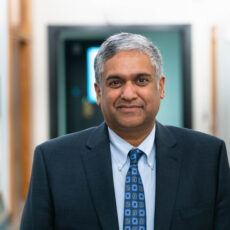
Anantha Chandrakasan is the Vannevar Bush Professor of Electrical Engineering and Computer Science at MIT, serving as Dean of the MIT School of Engineering and Chief Innovation and Strategy Officer. His research focuses on energy-efficient integrated circuits, medical devices, and AI hardware security. He leads the MIT Energy-Efficient Circuits and Systems Group, developing systems for biomedical applications, wireless communication, and quantum computing. He holds appointments at MIT's Microsystems Technology Laboratories and has contributed to collaborations like the MIT-Takeda Program in AI-driven healthcare and a partnership with GlobalFoundries for energy-efficient AI chips. His work spans implantable drug delivery systems, conformable ultrasound patches, and secure edge computing architectures. Chandrakasan's innovations include ultra-low-power circuits for IoT devices, cryptographic processors for post-quantum security, and AI accelerators for edge applications. He emphasizes interdisciplinary research bridging electrical engineering with biomedical and quantum fields, supported by leadership roles in MIT's strategic initiatives. His contributions to energy-efficient computing have led to advancements in wearable health monitors, batteryless sensors, and secure communication protocols for medical devices. Ongoing projects include THz integrated systems and AI-enhanced analog circuit design optimization.
Morteza Fayazi is an Assistant Professor in the Department of Electrical and Computer Engineering at the University of Utah, with an adjunct position in the Kahlert School of Computing. His research focuses on Electronic Design Automation (EDA), applying machine learning to automate analog and mixed-signal circuit design, and developing high-performance computing systems. He holds a B.Sc. from Sharif University of Technology, and M.S.E./Ph.D. degrees from the University of Michigan. His research interests include AI-driven EDA, RF/circuit automation, and energy-efficient processors. Key achievements include the MEDAL lab’s work on terahertz radars, systolic-array processors (e.g., DAP and Versa), and open-source frameworks like FASCINET and Tablext. He has received awards such as the 2024 College of Engineering Dean’s ETR Fund and the 2017 Outstanding Undergraduate Thesis Award. Teaching responsibilities include multiple iterations of the Digital System Design course (ECE/CS 3700). His work spans over 15 peer-reviewed articles in IEEE Transactions, ACM, and top conferences like ICCAD and VLSI-SOC, emphasizing automation, efficiency, and AI integration in hardware design.
Charles Ahn is the John C. Malone Professor of Applied Physics & Materials Science at Yale University. His research focuses on fabricating and studying novel complex oxide materials using advanced techniques like molecular beam epitaxy and synchrotron x-ray scattering. His work addresses multifunctional oxides, nanofabrication, and nonvolatile logic switches for post-CMOS computing. Key research areas include electronic control of complex order parameters in correlated oxides and scanning probe microscopy-based nanofabrication. Education: Ph.D. in Applied Physics from Stanford University. Research interests span the physics and technology of complex oxides, with emphasis on electronic and structural control at the nanoscale. His group develops next-generation materials for computing and electronics, leveraging interdisciplinary approaches in materials science and condensed matter physics. Notable awards include Fellow of the American Physical Society, AVS Peter Mark Memorial Award, David and Lucile Packard Fellowship, and Alfred P. Sloan Fellowship. His lab (Ahn Lab) actively explores cutting-edge applications in oxide electronics and quantum phenomena. Grants and patents include innovations in magnetoelectronic devices and ferroelectric-based technologies. He collaborates widely, bridging experimental materials science with theoretical modeling to advance functional oxide systems.
Debjit Pal is a Post-Doctoral Associate at the School of Electrical and Computer Engineering, Cornell University, and a member of the Computer Systems Laboratory. His research focuses on machine learning techniques for hardware verification, SoC validation, and FPGA optimization. Education: Ph.D. in Computer Engineering (University of Illinois at Urbana-Champaign, 2019) M.S. in Computer Science (IIT Kharagpur, 2012) B.E. in Electronics Engineering (Jadavpur University, 2008) Research Interests: Machine Learning for Electronic Design Automation (EDA) System-on-Chip (SoC) Verification Edge Intelligence as a Service Compiler Optimizations for Reconfigurable and High-Performance Computing Scientific Awards: IEEE CEDA Student Research Award (2016) Best Paper Nomination (ICCAD 2015, DAC 2018, ASP-DAC 2019) E. J. McCluskey Best Doctoral Thesis Competition Semi-Finalist (2020) Travel Grants for ICCAD/DAC/ASPDAC (2018-2019) Professional Roles: Technical Program Committee Member (DAC, VLSID), Reviewer (IEEE TVLSI, DATE, ICCAD). Collaborates with researchers like Zhiru Zhang and Shobha Vasudevan.
Nicola Nicolici is a Professor in the Department of Electrical and Computer Engineering at McMaster University. His research focuses on methods and algorithms for the design of digital integrated circuits and systems, with significant contributions in manufacturing test, post-silicon validation and debug. His work has expanded to include embedded systems, low-energy computing, and custom hardware-accelerated computing systems. Professor Nicolici's research interests span multiple areas of digital system design and validation. His early work focused on manufacturing test methodologies and power-aware testing strategies for integrated circuits. More recently, he has made significant contributions to post-silicon validation techniques, including constrained-random stimuli generation, trace signal selection, and bit-flip detection. His research has evolved to address emerging challenges in embedded computing systems, low-energy design, and specialized hardware acceleration for various applications including deep neural networks and signal processing. His recent publications reveal a strong trend toward hardware acceleration for specialized computing tasks. The research spans matrix multiplication algorithms (Strassen and Karatsuba), memory system optimization (DDR5 calibration), FPGA-based radar processing, and neural network acceleration. His work consistently bridges theoretical algorithm development with practical hardware implementation considerations, particularly focusing on precision analysis, fault tolerance, and energy efficiency. The research demonstrates a clear progression from traditional digital circuit testing to more complex system-level validation and acceleration techniques. Professor Nicolici has been actively involved in teaching courses related to system-on-chip design and test, digital systems, and embedded systems. His teaching portfolio includes advanced courses such as System-on-Chip (SOC) Design and Test and Digital Systems Design , reflecting his expertise in the field. While specific grant information isn't detailed in the provided text, his extensive publication record suggests ongoing research funding support. His research has contributed significantly to the fields of digital circuit testing, post-silicon validation, and hardware acceleration. The work has practical applications in semiconductor manufacturing, embedded systems design, and specialized computing architectures. His recent focus on neural network acceleration and memory system optimization reflects the evolving landscape of computer architecture research.
Yu Xia is a Post Doc at the Department of Chemistry, Stockholm University, Sweden. He is affiliated with the Tom Willhammar Research Group, focusing on advanced electron microscopy and diffraction techniques for structural characterization of materials. PhD (2019–2023) from a joint program between the University of Birmingham (UK) and the Southern University of Science and Technology (China). Research emphasizes fabrication of metallic nanoparticles with non-equilibrium structures and shapes using gas-phase condensation and thermal shock methods. Specializes in scanning transmission electron microscopy (STEM), in-situ heating experiments, and electron energy loss spectroscopy (EELS) for nanoparticle analysis. Current work prioritizes 4DSTEM imaging for electron beam-sensitive materials and Python-based post-processing of electron microscopy datasets. Yu Xia's research spans Materials Science , Nanotechnology , and Electrocatalysis , with applications in photocatalytic hydrogen evolution , graphene composites , and advanced electron microscopy techniques . His work often integrates computational image processing with structural characterization to optimize material properties. Publications highlight innovations in heterostructure engineering , metallic alloy catalysts , and electron beam-sensitive material imaging . No scientific awards are explicitly mentioned in the provided text. Yu Xia's technical expertise includes Python scripting for image analysis, in-situ electron microscopy , and multifunctional graphene-based materials .
Dr. Sumsun Naher is a Senior Lecturer in the Department of Engineering at City, University of London , where she has worked since 2013. Previously, she served as Lecturer and Research Development Officer at Dublin City University (2006–2013) and as Scientific Officer at Bangladesh Council of Scientific & Industrial Research (1998–2000). Her academic career includes a Post Graduate Diploma in Academic Practice from City, University of London. PhD , School of Mechanical & Manufacturing Engineering, Dublin City University MSc , Materials & Metallurgical Engineering, Bangladesh University of Engineering and Technology BSc , Materials & Metallurgical Engineering, Bangladesh University of Engineering and Technology Her research focuses on semi-solid processing , laser processing , simulation & modelling of materials technologies , and materials characterisation . Recent work explores cellulose nanofiber-based water filters for antibiotic removal and phase change materials in geothermal energy systems. Key article trends reveal expertise in: Laser Surface Modification of metals and composites Advanced Casting Methodologies and semi-solid metal forming Nanoparticle Reinforcement in metal matrix composites Thermal Modelling for energy systems Sustainable Material Solutions in water treatment and energy Computational Materials Science via finite element analysis Naher has received the DCU Invent Commercialisation Award (2011) and holds fellowships from IMechE , Institute of Materials, Minerals & Mining , and Advance Higher Education Authority . She actively reviews for funding bodies and examines PhD theses internationally. As an organiser of the ESAFORM Conference and co-organiser of its Additive Manufacturing symposium since 2017, she contributes to academic leadership. Her professional roles include Board of Directors for the European Association of Materials Forming and participation in EU COST Action projects (Thixoforming, Thixosteel, Nanostructured Materials).
Eldrin F. Lewis, MD, MPH is the Simon H. Stertzer, MD, Professor of Medicine and Chief of the Division of Cardiovascular Medicine at Stanford University School of Medicine. He holds a University Medical Line Professorship within the Department of Medicine - Cardiovascular Medicine and is a member of the Cardiovascular Institute. Dr. Lewis earned his medical degree from the Perelman School of Medicine at the University of Pennsylvania (1995), completed his Internal Medicine Residency (1998), Cardiovascular Disease Fellowship (2001), and Heart Transplant Fellowship (2002), all at Brigham and Women's Hospital in Massachusetts. He maintains board certification in Cardiovascular Disease (2024) and Advanced Heart Failure and Transplant Cardiology (2025) through the American Board of Internal Medicine. As an internationally recognized expert in heart failure, heart transplant, and quality of life for heart failure patients, Dr. Lewis' research focuses on patient-reported outcomes, quality of life assessment, and the integration of digital health technologies into cardiovascular care. His fundamental principle is that "there is more to life than death," emphasizing that cardiovascular care should help patients not only survive but also enjoy the best possible quality of life. His extensive publication record includes nearly 200 peer-reviewed articles in top journals including the New England Journal of Medicine, Journal of the American College of Cardiology, Circulation, JAMA Cardiology, and JAMA Internal Medicine. His recent work (2024-2025) demonstrates strong focus on heart failure treatment optimization, diversity in clinical trials, pulmonary congestion assessment, and the implementation of quadruple medical therapy for heart failure patients. Joel Gordon Miller Award for community service and leadership from the University of Pennsylvania School of Medicine Minority Faculty Development Award recognizing research potential of young physicians Robert Wood Johnson Foundation grant for quality of life assessment research Fellow of the American College of Cardiology Member of the American Heart Association Research Committee Dr. Lewis serves as a Postdoctoral Faculty Sponsor for Phenesse Dunlap and has received significant research support from the National Heart, Lung and Blood Institute, National Institutes of Health, and the Robert Wood Johnson Foundation. He is deeply committed to expanding clinical research initiatives at Stanford, forming partnerships with community cardiologists, and leveraging Silicon Valley's digital technology expertise for patient monitoring and treatment optimization. His leadership includes serving on the AHA Founders Affiliate Board of Directors, chairing the Council on Clinical Cardiology, and participating in the FDA Task Force for Standardization of Definitions for Endpoint Events in Cardiovascular Trials.
Paul M Thibado is a Professor in the Department of Physics within the College of Arts & Sciences at the University of Arkansas. With over 100 refereed publications and 51 patents worldwide, his work focuses on cutting-edge research in graphene physics and energy harvesting technology. He has secured over $12 million in external research funding from sources including NSF, DoD, and the Walton Foundation, with current support from the WoodNext Foundation. Education: Ph.D. in Physics, 1994, University of Pennsylvania, Philadelphia, PA B.S. in Physics, 1990, San Diego State University, San Diego, CA B.S. in Mathematics, 1990, San Diego State University, San Diego, CA Professor Thibado's primary research focuses on the physical properties of novel two-dimensional systems, particularly pristine freestanding graphene and chemically-functionalized graphene. His work investigates electronic, mechanical, electromechanical, spin-dependent tunneling, and transport properties. A significant portion of his recent research centers on developing multimodal energy harvesting technology using graphene, with power sources including kinetic, solar, thermal, ambient radiation, acoustic, and nonlinear thermal energy. His groundbreaking discovery that thermal fluctuations in graphene can be harnessed to generate usable electrical power represents a paradigm shift in nanoscale energy generation. Analysis of his recent publications (2023-2025) reveals a clear progression from fundamental studies of graphene properties to the development of functional energy harvesting devices. Key research themes include spectrum analysis of thermally driven curvature inversion in graphene ripples, transient thermal energy harvesting at single temperatures using nonlinearity, and creating arrays of graphene solar cells on silicon wafers. His work demonstrates how Brownian motion in two-dimensional materials can be converted into electrical energy through innovative device architectures. Scientific Awards: Senior Member of the National Academy of Inventors NSF CAREER Awardee ONR award recipient NSF MRSEC funding NSF FRG funding NSF MRI funding NSF REU funding NSF-EM funding NRC Post-doctoral Fellow, Naval Research Laboratory (1994-96) Master Researcher Award, Fulbright College (2014) Professor Thibado has successfully mentored numerous students and postdocs, including Dr. Vince LaBella who was elected APS Fellow for clicker development work. His research has been supported by over $12 million in external funding from diverse sources. His laboratory combines advanced scanning tunneling microscopy techniques with electrical measurements to study and harness the unique properties of two-dimensional materials. Future work appears directed toward scaling up graphene energy harvesting technology for practical applications and commercialization, with several patents recently granted for energy harvesting devices and sensors.
Cormac Fay is a Research Fellow in Artificial Intelligence for Smart Cities at the School of Computing and Information Technology (SCIT), University of Wollongong, within the Faculty of Engineering and Information Sciences. His roles include affiliations with the SMART Infrastructure Facility and the ARC Centre of Excellence for Electromaterials Science. Previously, he held positions at Dublin City University, including post-doctoral roles in sensor research and data analytics. He holds a PhD in Engineering from Dublin City University (2013), an M.Eng. in Telecommunications Engineering (2007), and a B.Eng. in Mechatronic Engineering (2005). His research focuses on AI-driven smart city technologies, sensor systems for environmental monitoring, and advanced 3D printing materials. Key areas include IoT-enabled carbon-emission tracking, wearable biomedical devices, and sustainable sensor networks for landfill gas management. He has developed innovative solutions such as cryogenic 3D printing techniques for biocompatible inks and LED-based optical sensing platforms. Dr. Fay has secured grants totaling over $X million, including projects on military diver monitoring, blue carbon ecosystems, and low-cost sensor networks for agriculture and environmental safety. His work integrates interdisciplinary approaches, bridging materials science, biomedical engineering, and environmental engineering. Grants: Led projects on carbon-emission IoT systems, oyster farming sensors, and vibration monitoring. Supervision: Advised a Master's project on biomimetic microfluidic fabrication (2017–2019). Labs/Teams: Collaborates with the SCIT, SMART Infrastructure Facility, and global institutions like École Polytechnique Fédérale de Lausanne.
Dr. Iftikhar Ahmad serves as an Assistant Professor in the Department of Electrical Engineering at the University of South Carolina's Molinaroli College of Engineering and Computing. He joined the faculty in 2018 after eight years in industry as a Senior Scientist developing ultra-wide bandgap materials for UV-LEDs, and prior post-doctoral and research professor roles at USC. His expertise lies in the growth and characterization of wide bandgap semiconductors for advanced electronic and optoelectronic applications. Dr. Ahmad earned his M.Sc. from Govt. College Lahore (ranking first in the state) and completed his M.S. and Ph.D. at Texas Tech University in 2003 and 2005, focusing on wide bandgap semiconductors. He furthered his training with post-doctoral work at Virginia Commonwealth University in MBE and MOCVD growth techniques. His educational background established the foundation for his current research in semiconductor materials engineering. His research centers on ultra-wide bandgap semiconductors, especially gallium oxide and boron nitride, for applications in deep UV LEDs and high-power electronics. He explores novel MOCVD growth methods for these materials and their integration with traditional III-nitrides (AlGaN) to advance device performance in optoelectronics and power electronics. Current projects focus on defect engineering, phase stabilization, and device fabrication for next-generation semiconductor technologies. Analysis of his recent publications reveals a strong emphasis on β-Ga2O3 and h-BN for next-generation devices. Key themes include MOCVD growth optimization, defect characterization, and device integration for radiation detectors, high-temperature transistors, and UV emitters. His work bridges materials science and electrical engineering to address critical challenges in wide bandgap semiconductor technology, with increasing focus on computational modeling and industrial applications. No scientific awards or fellowships were mentioned in the provided materials. Regarding advising, while specific students are not listed, Dr. Ahmad teaches core courses including Introduction to Microelectronics (ELCT 363) and Advanced Semiconductor Materials (ELCT 874), indicating active engagement in graduate and undergraduate education. Grant details are not specified, but his laboratory operations suggest external funding support for semiconductor research. Dr. Ahmad leads the Ultrawide Bandgap Semiconductor Laboratory, equipped with an MOCVD growth system, Oceanoptics spectrometer, and comprehensive characterization tools for electrical, optical, and atomic force microscopy. The lab supports research in materials growth, device fabrication, and testing, fostering innovation in semiconductor technology through collaborations with industry and government research programs.
Professor Timothy P. Bender is a distinguished faculty member at the University of Toronto, holding a primary appointment in the Department of Chemical Engineering and Applied Chemistry with cross-appointments in the Department of Chemistry and the Department of Materials Science and Engineering. His research laboratory focuses on developing novel organic electronic materials for applications in sustainable energy technologies, particularly organic solar cells and light-emitting devices. Professor Bender earned his B.Sc. and Ph.D. from Carleton University before joining the University of Toronto faculty in 2006. Prior to his academic appointment, he was a research staff member at the Xerox Research Centre of Canada from 2000-2006, where he filed over 65 US patents and published numerous peer-reviewed papers. His industrial research experience provides valuable perspective on the commercialization pathway for academic discoveries. Professor Bender's research program centers on the design, synthesis, and engineering of new materials for organic electronic devices, particularly organic photovoltaics (OPVs) and organic light-emitting diodes (OLEDs). His group has made significant contributions to the understanding and application of boron subphthalocyanines (BsubPcs) and silicon phthalocyanines (SiPcs), establishing methodologies for tailoring their chemical structure to optimize device performance. The Bender Lab employs a comprehensive 'applied chemistry-device continuum' approach, integrating computational modeling, synthetic chemistry, physical characterization, and device engineering to establish molecular structure-property relationships. Their research spans fundamental chemistry to applied device engineering, with strong emphasis on sustainability considerations throughout the materials development process. Analysis of Professor Bender's recent publications reveals a strong focus on developing BsubPcs as triplet harvesting materials in organic photovoltaics, engineering silicon phthalocyanines for enhanced electron transport, and exploring halogen bonding to control solid-state arrangements of these materials. His work demonstrates how molecular engineering can overcome traditional limitations in organic electronic materials, particularly regarding solubility, charge transport, and environmental stability. The research shows consistent progression toward higher efficiency devices with improved longevity. 2008 Professor Diran Basmadjian Teacher of the Year Award from the Department of Chemical Engineering and Applied Chemistry Corporate Special Recognition Award from Xerox Corporation for photoreceptor technology that enabled 'life of machine' parts Professor Bender actively mentors a diverse team of highly qualified personnel (HQP), including undergraduate students, graduate students, and post-doctoral fellows. His laboratory fosters cross-disciplinary collaboration between chemists, materials scientists, and chemical engineers, allowing students to engage with the complete research cycle from molecular design to environmental testing. He has secured funding from NSERC, SABIC Corporation, and other sources to support his research program, which maintains strong industrial partnerships with companies including SABIC Corporation, Siltech Corporation, and Xerox Corporation. His research bridges fundamental academic discoveries with practical commercial applications in the growing field of organic electronics. The Bender Laboratory maintains comprehensive infrastructure for organic synthesis, materials characterization, and device fabrication. Their facilities enable complete development cycles from molecular design to environmental testing of organic electronic devices. The lab's 'applied chemistry-device continuum' approach ensures that fundamental discoveries are rapidly translated into practical device applications, with particular emphasis on sustainability considerations throughout the materials development process. Current research directions include accelerated materials development, sustainable chemical processes, and life cycle analysis of organic electronic devices in real-world environments.
Erica R.H. Fuchs is the Kavčić-Moura Professor in the Department of Engineering and Public Policy at Carnegie Mellon University (CMU), directing the Critical Technology Initiative (CTI). She holds courtesy faculty positions in Materials Science and Engineering and the Heinz College. Her research focuses on emerging technology development, commercialization, and global manufacturing, with emphasis on national policy implications. Fuchs leads interdisciplinary efforts at CTI to advance critical technology assessment frameworks, ensuring smart investments and policies for national security and economic competitiveness. Formerly, she directed the Manufacturing Futures Initiative, now an endowed institute at CMU. Education: She earned a Ph.D. (2006), M.Sc. (2003), and B.Sc. (1999) in Engineering Systems, Technology Policy, and Materials Science from MIT. Post-MIT, she was a UNIDO fellow in Beijing. Research Interests: Global innovation policy, technology commercialization pathways, and the intersection of technology with economic and security objectives. She authored influential works like the 2021 report *Securing America’s Future*, advocating for a National Technology Strategy to align multi-objective outcomes (security, equity, prosperity). Key Contributions: Catalyzed the National Network for Critical Technology Assessment, mobilizing 13+ universities to address technology gaps. Testified in Congress on supply chain resilience, EV battery policies, and semiconductor strategies. Advises entities like the National Semiconductor Technology Center and MIT’s Institute for Data, Systems, and Society. Affiliations: National Bureau of Economic Research (Research Associate), National Institute of Standards and Technology (NSTC Board), and Brookings Institution panelist. Her work is frequently cited in *Axios*, *Bloomberg*, and the *New York Times*.
Azadeh Davoodi is a Vilas Distinguished Achievement Professor and Associate Chair of Undergraduate Studies in the Department of Electrical and Computer Engineering at the University of Wisconsin-Madison. Her research focuses on Electronic Design Automation (EDA), integrated circuit debug, and machine learning applications in VLSI design. She holds editorial roles in journals like IEEE TCAD and ACM TRETS, and has chaired major conferences such as ISPD 2015 and served on technical program committees for DAC, ICCAD, and others. Education: PhD in Electrical Engineering, University of Maryland-College Park (2006) Research Interests: Machine learning for VLSI chip design VLSI design automation for machine learning IC-CAD for emerging nanotechnologies Hardware security Recent Research Trends: Her work bridges machine learning and hardware design, with publications on neural network optimization, distributed inference, and explainable AI for circuit design. She emphasizes energy-efficient CNNs, latency reduction in edge computing, and security in split manufacturing. Awards: 2025 DATE Best Paper Candidate 2024 Vilas Distinguished Achievement Professor 2015 ACM Best Paper Award 2011 NSF CAREER Award Service and Grants: Leads NSF-funded projects on explainable ML for CAD and holds grants for distributed neural network synthesis. Her service includes roles as IEEE HKN member and editorial board positions. Labs/Teams: Engages in interdisciplinary research teams at UW-Madison, focusing on EDA innovation and hardware-software co-design.