Dr. Seyed Mohammad Sadegh Khaksar is a Senior Lecturer in Technology Management at La Trobe Business School, specializing in digital transformation, innovation, and healthcare technology. He holds a PhD in Management and teaches courses like Project Management. As Head of the Project Management major, he employs innovative pedagogies such as blended learning and peer review to enhance graduate employability. His research focuses on digital excellence strategies in firms, with notable projects including an AUD 96k IoMT platform for rural healthcare and AUD 40k studies on aged care supply chain resilience. He advises startups and organizations on digital strategies, particularly in healthcare, oil & gas, and professional services. Key research areas include social robots in education and care, IoT applications, and agile-lean methodologies. He has secured over $300k in grants and serves on editorial boards like Technological Forecasting and Social Change . Awards include the 2024 Student Experience Award and 2021 Early Career Researcher Award. Current PhD supervision spans digital responsibility in healthcare and banking sectors, and IoT-driven service innovations. He leads funded projects on smart cities and pandemic logistics, reflecting his interdisciplinary impact across technology, healthcare, and education.
Dr. Laura Zizka is a Professor at the EHL Hospitality Business School, part of the HES-SO university network. She specializes in higher education strategies, crisis communication, and sustainability in hospitality and STEM sectors. Her research bridges academic theory with industry practice, focusing on organizational resilience during crises, digital education transformation post-pandemic, and embedding sustainability literacy in curricula. Education**: BSc HES-SO in Hospitality and Tourism Management Research Themes**: Crisis communication strategies in tourism and hospitality Digital transformation in higher education Pro-environmental behavior in hospitality operations Sustainability integration in STEM and business programs Her work emphasizes bridging educational practices with real-world challenges, such as pandemic communication, stakeholder engagement in sustainability, and employability skills for STEM graduates. Recent studies include analyzing Swiss hoteliers' pandemic communication evolution and exploring AI's role in academic writing through Microsoft Copilot case studies. Grants & Projects**: HES-SO Rectorate-funded project (2019–2020) on destination image and pictorial content impact (CHF 99,000) Longitudinal studies on student/faculty perceptions of digital education (2020–2023) Dr. Zizka collaborates with industry partners like KITRO (food waste tech) and actively contributes to conferences on topics ranging from trauma-informed pedagogy to blended learning models. She advocates for holistic sustainability education and has advised on CSR communication strategies for airlines and hospitality firms.
Lisa M. Lynch is the Maurice B. Hexter Professor of Social and Economic Policy at Brandeis University’s Heller School for Social Policy and Management. She currently serves as the Stone Visiting Scholar/Visiting Professor of Public Policy at Harvard Kennedy School’s Malcom Wiener Center for Social Policy (2025-2026). Lynch has held leadership roles including Provost and Executive Vice President of Academic Affairs at Brandeis (2014-2020), Interim President of Brandeis (2015-2016), and Dean of the Heller School (2008-2014). She leads the Institute for Economic and Racial Equity and directs the Heller School’s PhD program. Her education includes a BA in Economics and Political Science from Wellesley College, and an MSc and PhD in Economics from the London School of Economics. She has taught at Tufts University, MIT, Ohio State University, and the University of Bristol. Lynch’s research focuses on labor economics, organizational innovation’s impact on productivity and wages, racial and gender disparities in labor markets, youth unemployment, and school-to-work transitions. Her work often bridges academic research with policy-making, particularly in training, workplace practices, and economic equity. Her articles highlight trends in labor market adaptations to technological changes, pandemic effects on employment, and historical shifts in women’s roles in economics. She has received numerous awards, including MIT’s Teaching Award (1988), Tufts’ Outstanding Faculty Award (2000), and the Susan C. Eaton Scholar Practitioner Award (2007). Notably, she was elected to the National Academy of Social Insurance in 2023. Lynch advises through institutional roles like Director of the Retirement and Disability Research Center (UMBC, 2023-2025). She collaborates with labs/teams such as the National Bureau of Economic Research (NBER) and IZA (Institute for Labor Economics), contributing to interdisciplinary policy research.
Igor Rudan is Professor of International Health and Molecular Medicine at the University of Edinburgh, serving as Co-Head of the Centre for Global Health within the Usher Institute, part of the College of Medicine and Veterinary Medicine. His academic position is described as a 'Personal Chair of International Health & Molecular Medicine' at the Deanery of Molecular, Genetic and Population Health Sciences. His research interests include: Genome-Wide Association Studies Genetics and Genomics Genetic Divergence Meta-Analysis Single Nucleotide Polymorphism research Systematic Reviews in global health Epidemiology of respiratory diseases Health inequalities and social determinants of health Professor Rudan's recent publications reveal a strong focus on the intersection of molecular medicine and population health. His work spans genetic epidemiology, pandemic response research, and health equity studies, with particular emphasis on understanding how genetic, social, and environmental factors interact to influence health outcomes across diverse populations. His research frequently employs large-scale genomic analyses combined with population health approaches to address global health challenges. His scientific recognition includes: NIHR Impact Prize (2025) for respiratory disease research RSE Mary Somerville Medal (2023) Professor Rudan leads and collaborates on numerous international research projects including EQUI-RESP-AFRICA (improving respiratory health outcomes in Africa), the NIHR Global Health Research Unit on Respiratory Health (RESPIRE-2), and documentation of the EQUIST tool's global impact. His work often involves large-scale data analysis and international collaborations across multiple continents, positioning him at the forefront of global health research that bridges molecular medicine with population-level health interventions.
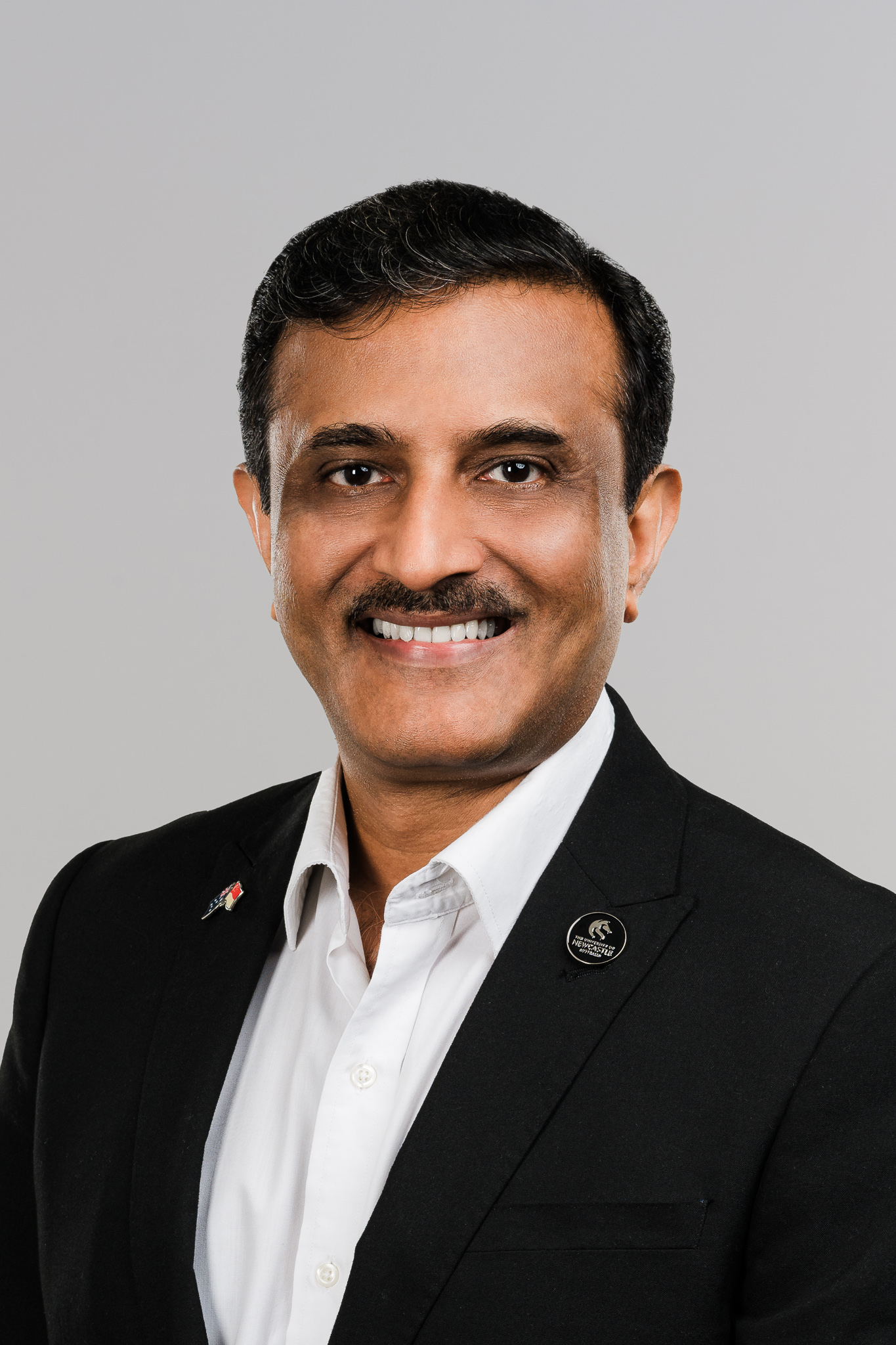
Professor Abhishek Singh Bhati is the Pro Vice-Chancellor and CEO at the Newcastle Australia Institute of Higher Education. He is a distinguished academic and administrator with a focus on tourism management and scholarship of learning and teaching. His research explores technology-driven tourism transformations, low-carbon tourism, and the alignment of tourism with United Nations Sustainable Development Goals (SDGs). Bhati’s work also emphasizes tourist behavior, resilience planning, and vandalism management in tourism settings. PhD (Tourism Management), James Cook University, Australia MBA (Marketing Management), Maastricht School of Management, Netherlands Bachelor of Arts (Economics), Bombay University, India Diploma in Adult and Continuous Education, Institute of Adult Learning, Singapore Graduate Certificate in Education (Tertiary Teaching), James Cook University, Singapore His research spans technology’s role in tourism, sustainable development, and educational innovation. Recent publications address energy-economic synergies, AI in tourism, and post-pandemic travel behavior. Bhati has secured grants from organizations like the World Wide Fund for Nature (WWF) and the Australian Government’s Office of Learning and Teaching (OLT). Scientific Honors: Fellow of the Higher Education Academy (FHEA)
Dr. Kathryn Lester is an Associate Professor in Developmental Psychology at the University of Sussex's School of Psychology. She leads internationally recognized research on childhood anxiety, focusing on intergenerational transmission, cognitive biases, and school mental health interventions. Her work includes developing evidence-based programs for emotionally-based school avoidance and evaluating whole-school approaches to mental health. She holds leadership roles in Sussex’s senior management team, including Subject Group Lead for Developmental Psychology and Deputy Director for Postgraduate Research. She co-leads the Sussex Foundation Partnership Trust School Mental Health Research Team Clinic and has secured funding from the National Institute for Health Research, ESRC, and The National Lottery Community Fund. Her academic journey includes a D.Phil. in Psychiatry from the University of Oxford (2008) and postdoctoral research at the University of Sussex and King’s College London. Key research interests include anxiety prevention, school-based interventions, and the impact of parenting behaviors on child mental health. She has collaborated with organizations like the Sussex Wildlife Trust and provided consultancy for educational content development, such as children’s book series on emotions and ITV’s ‘Planet Child’ series. Her research spans mixed-methods approaches, including participatory methods with children and caregivers. Notable projects include NIHR-funded studies on digital mental health toolkits and Kavli Trust-funded interventions to reduce anxiety transmission from parents to children. She actively engages in knowledge exchange and mentoring early-career researchers.
Dr. Yiting Xia is a tenure-track faculty member at the Max Planck Institute for Informatics (MPI-INF), leading the Network and Cloud Systems research group. She previously worked as a research scientist at Facebook and holds a PhD in Computer Science from Rice University (2018) and a B.S. in Telecommunications Engineering from Beijing University of Posts and Telecommunications and Queen Mary University of London (2011). Her research focuses on high-performance and energy-efficient networking for cloud computing, including reconfigurable data center networks, optical communications, and network protocols. Notable contributions include innovations in transport protocols, time synchronization for optical networks, and failure-resilient network design. Education: PhD in Computer Science, Rice University, 2018 M.S. in Computer Science, Rice University, 2014 B.S. in Telecommunications Engineering, BUPT & QMUL, 2011 Research Interests: Data center networking, optical communications, cloud systems, network protocols, distributed systems, and network security. Her work bridges theoretical contributions with practical implementations, addressing challenges in latency-sensitive flows, traffic engineering, and system reliability. Awards include the Ken Kennedy-Cray Fellowship and the N2Women Rising Star Award (2021). She has co-lectured courses on distributed systems and data networks at Saarland University and previously contributed to teaching at Rice University. Key projects include Aurora (for MoE inference optimization), Lighthouse (an open research framework for optical networks), and Occam (a reliable network management system). Grants & Projects: Focus on deployable optical network architectures and resilient backbone management during pandemic-driven traffic shifts. Labs/Teams: Leads the Network and Cloud Systems group at MPI-INF, collaborating with academia and industry on cutting-edge networking solutions.
Dr. Patrick Shane Crawford serves as Assistant Professor in the Department of Civil, Construction and Environmental Engineering at the University of Alabama's College of Engineering. Affiliated with the Center for Sustainable Infrastructure and Alabama Water Institute, his research focuses on enhancing community resilience to tornadoes, floods, and hurricanes through interdisciplinary engineering approaches integrating social science and policy perspectives. His educational background includes: B.S. in Civil Engineering (2012, University of Alabama) M.S. in Civil Engineering (2014, University of Alabama) Ph.D. in Civil Engineering (2018, University of Alabama) Dr. Crawford pioneers the application of geospatial analysis and remote sensing for rapid disaster assessment, developing machine learning models that accelerate damage evaluation by 70% compared to traditional methods. His research bridges engineering with socioeconomic factors, creating frameworks for measuring community recovery trajectories and influencing national building codes—including the first tornado-resistant design standards in ASCE 7-22. Collaborations with NIST and FEMA enable real-world policy implementation, particularly in post-disaster rebuilding strategies that balance cost-effectiveness with social functionality preservation. Analysis of his 2022-2025 publications reveals consistent innovation in longitudinal disaster reconnaissance , with 60% of recent work focusing on tornado events using deep learning for damage classification. Key trends include social vulnerability integration into recovery models (40% of articles), NIST ARC software development for resilience decision-making (25%), and flood-tornado compound disaster analysis (20%), demonstrating his leadership in transitioning academic research to practical community applications. Active in federal partnerships, Dr. Crawford's 2025 feature Confident but Exposed: How Prepared Are U.S. Homeowners for Extreme Weather? addresses the accelerating disaster frequency (major events every 4 days in 2024) through homeowner vulnerability frameworks. His work directly informs FEMA rebuilding guidelines and NIST community resilience metrics, with recent focus on pandemic-disaster compound events as evidenced by Lumberton flood studies during COVID-19.
Janille Smith-Colin is the J. Lindsay Embrey Trustee Assistant Professor of Civil & Environmental Engineering at Southern Methodist University (SMU), where she leads the Smith-Colin Research Group. As a licensed Professional Engineer (P.E.) and Jr. Editor for the ASCE Journal of Infrastructure Systems, her work bridges infrastructure management with social equity. She serves on the Transportation Research Board Standing Committee on Transportation Planning Analysis and Application (AEP15). Her educational background includes: Ph.D. in Civil and Environmental Engineering from Georgia Institute of Technology Master of Science in Civil and Environmental Engineering from University of Wisconsin-Madison Bachelor of Arts in Engineering Studies from Lafayette College Smith-Colin's research centers on sociotechnical systems modeling to advance equity, sustainability, and resilience in transportation infrastructure. She employs system dynamics and spatial analysis to examine transportation as a social determinant of health, with emphasis on underserved communities. Her engineering education work integrates community-based participatory research and design thinking to develop inclusive pedagogical approaches. Recent publications reveal a strong trend toward data-driven equity assessment, utilizing social media mining, mobile trajectory data, and spatial analytics to investigate infrastructure deserts, micromobility access, and health impacts. She pioneers social return on investment (SROI) frameworks for transportation solutions, connecting civil engineering with public health and disaster resilience through interdisciplinary methodologies. Scientific recognition includes: Best Poster Award, International Conference on Transportation & Development (2023) Golden Mustang Teaching Award, SMU (2023) National Academies Gulf Coast Research Program Early Career Fellowship (2021) ASCE ExCEED Teaching Fellow (2019) Her research is funded by the National Academies of Sciences, Engineering and Medicine, with grants supporting equity-focused transportation projects. While student advisees aren't explicitly listed, her community-based research approach indicates active mentorship in solving civil engineering challenges for marginalized groups. She also contributes to transportation policy through regional collaborations. The Smith-Colin Research Group develops evidence-based tools for infrastructure equity, conducting spatial analysis of transportation systems and health outcomes. Current projects involve system dynamics modeling for social sustainability, Twitter-based crisis response monitoring, and partnerships with Dallas-area agencies to map infrastructure deficiencies and mobility barriers.
Stuart Carroll is an Associate Professor of Elementary Education and Co-Chair of the Department of Elementary and Early Childhood Education at The College of New Jersey's School of Education. He also serves as Faculty Director of Global Graduate Programs, demonstrating his commitment to international education experiences. Dr. Carroll earned his Ph.D. in Teaching and Curriculum from Syracuse University (1999), an MEd in Teaching ESL from Trenton State College (1995), a Bed in Elementary Education from the University of Manitoba (1987), a J.D. from the University of Manitoba (1983), and a B.A. in History from the University of Manitoba (1981). Carroll's research focuses on inclusive education, particularly for students with intellectual disabilities, teacher preparation programs, global education experiences, and ESL teaching methods. His work examines how preservice teachers develop through experiences with diverse learners, especially those with disabilities, and how these experiences shape their professional identities. He has extensively studied the impact of inclusive classroom experiences on teacher development and has developed innovative approaches to teacher education that emphasize compassion and care, particularly in the post-pandemic educational landscape. His recent publications show a clear trajectory toward examining teacher preparation in challenging contexts, including the Ukrainian refugee crisis and pandemic recovery. His work consistently emphasizes the importance of inclusive practices, compassionate teaching, and global perspectives in teacher education. Dr. Carroll has received numerous honors including The College of New Jersey School of Education's Teacher of the Year (2015) and the Northeastern Association of Graduate Schools Graduate Teaching Award (2007). The College of New Jersey School of Education's Teacher of the Year (2015) Northeastern Association of Graduate Schools Graduate Teaching Award (2007) Dissertation award, Syracuse University (1999) Berj Harootunian Award for Outstanding Dissertation Proposal (1997) Carroll has coordinated the MAT Program (2002-2008) and the Global Student Teaching Program (2001-2007), demonstrating his leadership in teacher preparation. He has secured significant grant funding including a $96,000 grant from the Developmental Disabilities Council of the State of New Jersey (2008-2009) and participation in a federal TPSID grant with Bergen Community College (2018-2019). His service includes numerous committee memberships related to faculty excellence, certification, departmental awards, and curriculum development. Through his leadership of the Career and Community Studies Program and his extensive research on inclusive education, Carroll has established TCNJ as a leader in inclusive postsecondary education for students with intellectual disabilities. His work bridges theory and practice, creating meaningful opportunities for preservice teachers to learn alongside peers with disabilities.
Professor Maria Eriksdotter is a leading academic in geriatrics and dementia research at the Karolinska Institutet , holding the Department of Neurobiology, Care Sciences and Society . She also serves as a Senior Consultant in Themes Inflammation and Ageing at Karolinska University Hospital Huddinge and previously as Dean of KI South (2019–2023). Her work spans translational research, clinical trials, and national registry development, with a focus on Alzheimer's disease, cholinergic therapies, and aging. Her research group pioneered NGF cell therapy for Alzheimer's patients, demonstrating safety and cognitive stabilization in clinical trials. She chairs the SveDem registry , tracking over 100,000 dementia patients to refine diagnostics and care. Studies from SveDem revealed mortality reduction with cholinesterase inhibitors and highlighted pandemic-era diagnostic delays. Recent publications analyze dementia subtypes , comorbidities , and precision medicine in neurodegeneration. Her work intersects neuroimaging , epidemiology , and public health policy , addressing ageism and improving geriatric care systems. Collaborations span Karolinska University Hospital , NSGene Inc , and international institutions.
Lauri Väkevä is a Professor in the Department of Education at the University of Helsinki, specializing in educational sciences with a focus on performing arts, music education, and STEAM pedagogy. He actively supervises doctoral students in the Doctoral Programme in School, Education, Society, and Culture and leads the SKAPA project (2024–2026) on developing study paths in arts education. His research explores the intersection of artificial intelligence, creativity, and multimodal learning environments. Key Affiliations: Department of Education, Sibelius Academy collaboration, Gaudeamus publishing network Research Themes: AI in music education, safe spaces for artistic expression, responsible AI pedagogy, historical evolution of Finnish music institutions Recent Work Highlights : 2025: Generative AI as a Collaborator in Music Education (Action-Network Theory application) 2025: Voicing Responsible AI Pedagogy (Ethical frameworks for arts education) 2024: Changing Role of Sibelius Academy (Historical analysis of Finnish music education) Leadership & Engagement : Project Manager for SKAPA, organizing committee member for the 2024 Ainedidaktinen Symposium, and active participant in AI research events.
Dr. Grace Kim is an Associate Professor in the Department of Occupational Therapy at New York University's Steinhardt School of Culture, Education, and Human Development. She holds a PhD in Occupational Therapy from NYU (2016), an MA in Occupational Therapy from Columbia University, and a BA in Psychology from UC Davis. She is a clinician-researcher affiliated with the Rehabilitation Medicine department at New York Presbyterian/Weill Cornell Medical Center, specializing in upper extremity robotics, outcome measurement, and stroke rehabilitation. Education: Bachelor's in Psychology: University of California, Davis Master's in Occupational Therapy: Columbia University PhD in Occupational Therapy: New York University (2016) Research Focus: Intersection of technology and neurorehabilitation Client-centered care for stroke survivors Wearable/mobile technology applications Shared decision-making approaches Awards/Grants: Mitchell Leaska Dissertation Grant (2014) Steinhardt Faculty Challenge Grant (2017) NYU Provost Mega-Seed Grant (2018) American Occupational Therapy Foundation Grant (2021) Dr. Kim teaches courses in Evidence-Based Practice, Neurorehabilitation, and Ethics at NYU Steinhardt. She mentors students in Occupational Therapy, Rehabilitation Science, and the R25 Research Education in Cardiovascular Conditions program at NYU's Rory Meyers School of Nursing. Her work emphasizes affordable technology solutions to improve real-world outcomes for stroke patients, including remote self-training programs and home-based interventions.
Konrad Czernichowski is an Assistant Professor at the Department of World Economy and European Integration, Faculty of Economics, Maria Curie-Skłodowska University in Lublin, Poland. He also serves as a Visiting Professor at the Department of Economics, Mathematics and Statistics, Faculty of Commerce, Jordan University College in Morogoro, Tanzania. His academic career includes positions at the University of Wrocław and extensive research on African economic development. Dr. Czernichowski's research focuses on African economic development , particularly in East Africa and Tanzania. His expertise spans economic integration, banking systems, labor markets, and development challenges in Sub-Saharan Africa. He has conducted extensive research on the East African Community's integration processes, the impact of global crises on African economies, and regional monetary cooperation. His 18 publications demonstrate consistent research output with a focus on practical economic challenges facing African nations. The research shows a clear trajectory from theoretical integration models toward applied policy analysis, particularly regarding the East African Community's development. His work bridges academic research with practical policy implications for developing economies. Member of editorial board, Journal of Economic Integration (2024-2025) Member of board, Polish African Studies Society (since 2021) Member of editorial board, Afryka journal (since 2021) Member of editorial board, Business Education Journal (since 2022) Dr. Czernichowski actively engages with international academic communities through his editorial roles and maintains research connections with African institutions. His work with the 'Maitri' movement center in Lublin (2014-2021) demonstrates practical engagement with development issues. His multilingual abilities (Polish, English, French, German, and Swahili) facilitate direct research engagement across multiple African contexts.
Tālis Laizāns serves as a practical assistant professor and researcher at the Institute of Economics and Entrepreneurship, Riga Technical University (RTU), leveraging dual master's qualifications in economics and engineering to bridge academic theory with real-world business applications. His work significantly advances RTU's research in entrepreneurship, innovation, and economic policy development. His educational credentials include: Master of Economics (Mg.oec.) Master of Engineering (Mg.ing.) Laizāns specializes in venture capital, SME development, and social innovation financing, with strong emphasis on artificial intelligence applications and EU research frameworks. His interdisciplinary approach integrates economic analysis with engineering principles to address contemporary challenges in Latvian and European business ecosystems, particularly focusing on practical implementation pathways for startups and established enterprises. His 2019 publications analyze social innovation through multiple lenses: societal participation dynamics, international financing models, EU research project structures, and critical success factors. These works synthesize Latvia-specific case studies with broader European experiences, highlighting actionable insights for policymakers and business stakeholders in scaling social innovation initiatives. Professional recognition stems from substantial project leadership rather than formal awards, evidenced by his selection as Latvia's representative in high-impact EU initiatives. Laizāns actively secures and executes research funding across diverse domains: Latvia-Cambridge Venture Camp (2024) : Cultivating next-generation entrepreneurship through experiential learning in the UK. Shadow Economy Assessment in Construction (2024-2025) : Quantifying informal economic activities to inform regulatory frameworks. OpenFin Hackathon (2024) : Driving fintech innovation through international competition platforms. Learning and Research Academic Group (2024) : Advancing pedagogical methodologies and collaborative research practices. Post-Pandemic Economic Framework Project (2020) : Designing resilience strategies for Latvia's economic recovery. Climate Knowledge and Innovation Community (2016-2023) : Leading EIT-funded climate action through knowledge transfer. His earlier Horizon 2020 contributions include Bio-Based Industries JIT representation (2013-2017) and COPA-COGECA working group leadership on agricultural innovation (2010-2017). At RTU, Laizāns operates within the Innovation Economic Research Center while co-founding the 'Learning and Research' academic collective. His project portfolio demonstrates consistent engagement with interdisciplinary teams tackling societal challenges through evidence-based innovation, particularly in economic policy design and sustainable business model development.

.jpeg?h=700&iar=0&w=700&hash=ECBB86D790E7934E1AF1CA57FF156948)