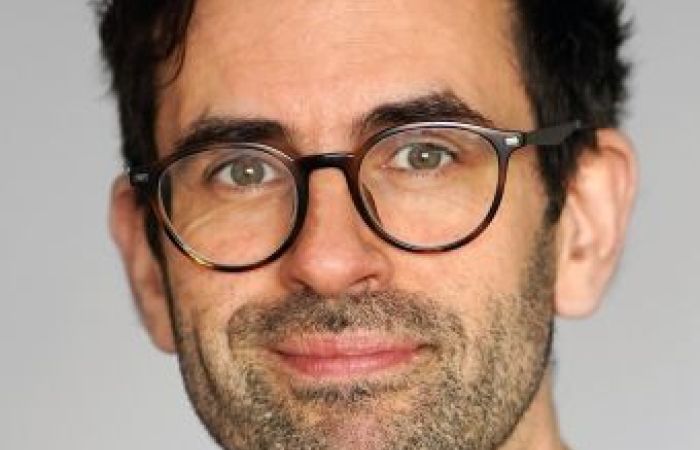
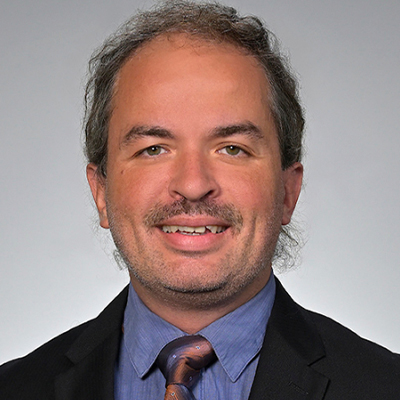
Jeffrey A. Cooper is a Professor of Law at Quinnipiac University School of Law , where he teaches courses in estate planning, wills and trusts, and taxation. He previously served as Associate Dean for Research and Faculty Development and is currently faculty adviser to the Quinnipiac Probate Law Journal . Education: AB from Harvard University, JD from Yale University, LLM from New York University Research Interests: His work focuses on tax policy , estate and gift taxation , and the intersection of federal tax law with state probate systems . He specializes in trust enforceability , uniform trust code , and historical analysis of tax legislation. Publications: Recent articles address perpetual trusts , state death tax decline , and curriculum reforms in estate planning education. His scholarship is widely published in national law journals and cited in casebooks. Scientific Awards: Academic Fellow, American College of Trust and Estate Counsel (ACTEC) Faculty Scholar, Quinnipiac University Professional Background: Before academia, Cooper practiced law for over a decade as a principal at Cummings & Lockwood, senior officer at United States Trust Company, and special counsel to Shipman & Goodwin. He also served as a senior adviser to Fiduciary Trust Company International.
Dr. Hassan Qudrat-Ullah is a Professor at the School of Administrative Studies, York University, and Coordinator of the Certificate in Logistics Management. He holds a PhD in Decision Sciences from NUS Business School and completed a post-doctoral fellowship at Carnegie Mellon University. His research focuses on dynamic decision making, system dynamics modeling, energy planning, and interactive learning environments. He teaches courses on quantitative methods, logistics, and decision analysis, informed by global industry experience across 20+ countries. Research interests include sustainability, climate change, systems thinking, and educational applications of decision sciences. He serves as Editor-in-Chief of the International Journal of Complexity in Applied Science and Technology and is a member of IEEE, DSI, and the International System Dynamics Society. His work has been published in Energy , Decision Support Systems , and others. Key projects include studies on 'structured-debriefing in dynamic decision making' and renewable energy policies in Africa. His recent articles (2023–2025) address AI integration in energy governance, system dynamics for supply chain resilience, and education for sustainability. Hassan advocates for systems thinking in K-12 education and enjoys traveling (visited 129 countries) and bird-watching.
Thomas Pape is a Professor at The Natural History Museum of the University of Copenhagen, specializing in the systematics, taxonomy, phylogeny, biogeography and evolution of Diptera (two-winged insects), with special emphasis on Calyptratae families including Sarcophagidae, Oestridae, and Calliphoridae. He has been a professor since 2025 after serving as an Associate Professor from 2004-2024. PhD from Copenhagen University (1990) Docent at Stockholm University (1998) Associate Professor at Danish Bilharziasis Laboratory (1990-1992) Research Entomologist at Naturhistoriska Riksmuseet, Stockholm (1994-2004) His research spans taxonomy, systematics, phylogeny, biogeography and evolution of Diptera with special emphasis on calyptrate families. He collaborates on Systema Dipterorum, conducts comparative larval morphology studies, and investigates the phylogeny of Calyptrata. His work includes Diptera nomenclature and large-scale biodiversity inventories. Analysis of his recent publications reveals a strong trend toward molecular phylogenetics (using RAD-seq and anchored phylogenomics), forensic entomology applications, and biodiversity informatics. His research spans entomology, systematics, evolutionary biology, and increasingly intersects with bioinformatics and conservation science, with significant contributions to understanding flesh flies, bot flies, and blow flies. President of the International Council of Zoological Nomenclature (since 2016) Chair of the Council for the International Congresses of Dipterology (2010-2018) Member of editorial boards for Entomotropica, Studia dipterologica, Stuttgarter Beiträge zur Naturkunde, and Tijdschrift voor Entomologie Dr. Pape teaches courses in Entomology (structure, phylogeny and biology of terrestrial arthropods), Field Biology II - Zoology, and Ecology and Evolution of East Africa (a 2-week field course in Tanzania with Nikolaj Scharff). He has served on scientific panels for SYNTHESYS and as chair of the scientific advisory committee for Museum Koenig in Bonn (2006-2009). His research group employs both morphological and molecular approaches to address evolutionary questions in Diptera, with particular expertise in calyptrate families. The laboratory maintains active international collaborations across multiple continents, as evidenced by his extensive publication record and research network.
Charlotte Jacobsen is a Professor and Head of the Research Group for Bioactives – Analysis and Application at the National Food Institute, Technical University of Denmark (DTU). Her research focuses on lipid oxidation, antioxidants, and sustainable utilization of marine resources. She leads multiple interdisciplinary projects and supervises PhD students in food science and technology. Research Interests: Antioxidant chemistry in food systems Oxidative stability of omega-3 fatty acids Valorization of fish and seafood by-products Microalgae as sustainable sources of bioactives Functional foods and nutraceuticals Green extraction technologies Recent Research Trends: Her recent publications (2021–2025) reflect a strong focus on sustainable food systems, including the recovery of bioactive compounds from fish side-streams, stabilization of omega-3 lipids, development of anti-obesity peptides from seaweed, and cultivation of microalgae using industrial waste streams. The work spans food chemistry, marine biotechnology, and green processing, with applications in functional foods and nutrition. Scientific Awards: Danisco Award, 2003 Edwin Frankel Best Paper Award, 2010 and 2011 La Médaille Chevreul, 2010 Marcuse Lecturer grant, 1999 Advising and Grants: Professor Jacobsen actively supervises PhD students and leads multiple funded research projects, including 'Utilization of fish side-streams for production of novel food ingredients' and 'Sustainable Production of Microalgae Proteins'. She is involved in national and international collaborations, securing research funding for projects on omega-3 extraction, microalgae cultivation, and seafood quality. Labs and Teams: She leads the Research Group for Bioactives – Analysis and Application at DTU, which is part of the DTU Microbes Initiative. The group specializes in analytical methods for bioactive compounds, lipid oxidation analysis, and development of sustainable food ingredients.
Prof. Dr. Peter Falkai is a Professor and Chair at the Department of Psychiatry and Psychotherapy, LMU University of Munich. He leads regular members of the Munich Cluster for Neuroscience (MCN) and Graduate School of Neuroscience (GSN), with affiliations to the Medical Faculty and various research groups, including the Psychotherapy and Social Neuroscience Research Unit and Center for Neurostimulation (CNS LMU). Primary research focus: Molecular & Developmental Neuroscience Secondary research focus: Behavioral & Cognitive Neuroscience Tertiary research focus: Cellular & Systems Neuroscience His research explores the neurobiological origins of psychotic disorders like schizophrenia, utilizing functional imaging, gene expression analysis in human post-mortem tissue, and lifestyle interventions. He coordinates cross-diagnosis studies, including EU-FP7 PRONIA, and collaborates on neurostimulation, addiction medicine, and precision psychiatry. Prof. Falkai served as President of the German Society for Psychiatry, Psychotherapy and Neurology (DGPPN) from 2010–2012 and on the European Psychiatric Association (EPA) Council of National Societies. He oversees clinical operations, including private wards, outpatient clinics, and specialized units for autism, bipolar disorders, and addiction medicine.
Matteo Bolner is a Post-Doctoral Research Fellow at the University of Bologna's Department of Agricultural and Food Sciences, specializing in livestock genomics and metabolomics. He holds a PhD in Agricultural and Food Sciences (defended March 2025) and an International Master in Bioinformatics from the University of Bologna. His research integrates genomic and metabolomic data to improve livestock sustainability, particularly in pig production systems. Key focuses include identifying metabolic pathways influencing production traits, analyzing pig viromes for disease outbreaks, and leveraging big data for One Health applications. His educational background includes a Biological Sciences degree (2018) and a bioinformatics master's (2021). He interned at CINECA's SCAI department, focusing on HPC software containerization. Current affiliations include membership in the Animal and Food Genomics group, where he explores genomic solutions for breed conservation and sustainable production. Research trends in his articles emphasize multi-omics integration to understand pig metabolism, stress responses, and breed-specific adaptations. He also applies genomics to authenticate food products and enhance conservation strategies for endangered livestock breeds like the Mora Romagnola pig. His work bridges animal science, computational biology, and agricultural sustainability. Notable contributions include developing genomic tools for honey bee population analysis and creating a catalog of mitochondrial insertions in pig genomes. Future directions involve advancing metabolomics-based precision livestock farming and applying big data analytics to livestock One Health challenges.
Teresa Bonacci is an Associate Professor in the Department of Biology, Ecology and Earth Sciences at the University of Calabria (UNICAL), where she conducts research and teaches in zoology with a focus on entomology. She is also the Scientific Director of the Zoology Museum within the university's museum system (SIMU). Her academic affiliations include membership in the PhD School of Life Science and Technology and leadership roles in degree program coordination. Laurea in Natural Sciences, University of Calabria PhD in Animal Biology, University of Calabria Socrates/Erasmus Scholarship, University of Kiel, Germany Research Grant (Assegno di ricerca), SSD BIO/05, University of Calabria National Scientific Qualification for Full Professor (I fascia) Her research spans applied and medico-veterinary entomology, forensic entomology, and conservation biology. She investigates saproxylic beetles (e.g., Cucujus spp.), pollinators (bees, flies, beetles), and insect behavior, especially in forensic contexts such as post-mortem interval estimation and myiasis. Her work integrates taxonomy, morphology, ecology, and chemical signaling, often in collaboration with chemists, legal experts, and conservation agencies. She has published extensively in high-impact journals, with over 80 scientific publications and strong citation metrics. The most recent articles reflect a multidisciplinary trend, combining taxonomy, forensic science, biodiversity monitoring, and veterinary entomology. Topics include the discovery of new insect species in Italy, the role of beetles in decomposition, insect damage in cultural heritage, and myiasis in domestic and wild animals. These works highlight her expertise in both fundamental zoological research and practical applications in forensics and conservation. Scientific Contributions: Over 80 scientific publications Scopus h-index: 15; Google Scholar h-index: 20 Key researcher in saproxylic beetle conservation Pioneer in forensic entomology studies in Southern Italy Active collaborator with legal and medical institutions She supervises numerous PhD and master's students and has directed over 90 theses. Her teaching responsibilities include courses in Zoology, Entomology, Forensic Entomology, and Medical-Veterinary Entomology. She is deeply involved in student mentorship, thesis supervision, and academic service, including examination boards and curriculum development. She also leads biodiversity monitoring projects in Calabrian national parks and has contributed to the development of machine learning tools for insect identification. Her research team collaborates with national and international institutions, including the CNR, University of Milan, and forensic pathology units. She leads projects on bioindicators, insect-plant interactions, and the impact of climate change on mountain species. The Zoology Museum under her direction supports both research and public outreach.
Gavin Schwarz is a Professor and Head of School at the School of Management and Governance within the UNSW Business School . He specializes in organizational change , organizational failure and inertia , and the dynamics of virtual teams , with a focus on how organizations fail during change processes and how to develop applied strategies for change management . His work spans diverse sectors including healthcare, technology, and education, with publications in leading journals such as Academy of Management Learning and Education and Administrative Science Quarterly . Education : PhD in Management (University of Queensland), MPhil (Hons) in Management (University of Auckland), BA in Management and English (University of Auckland). Grants : 2020 Brock University grant for "University communication in times of COVID-19" , 2020 UNSW Medicine grant for "Translation and change: Embedding effective change management in health" , and earlier Australian Research Council and Gordon J. Samuels Fellowship awards. His research explores the development of knowledge in organizational theories , with an emphasis on collective responses to change , HR management during crises , and technology strategy . He has contributed to understanding organizational communication , team innovation , and structural inertia . His 15 most recent publications cover topics from AI’s role in organizational change to pandemic-driven research adaptation, with keywords spanning management science , behavioral economics , and digital transformation . Scientific Awards 2021-2023 : Outstanding Reviewer Awards (Academy of Management Review) 2017-2020 : Best Reviewer Awards (Journal of Organizational Behavior) 2019, 2013, 2011 : Best Paper Finalist/Awardee (Academy of Management divisions) 2007, 2006 : Editorial Board Excellence (Academy of Management Journal) and Gordon J. Samuels Fellowship As an active supervisor in organizational change and HR development , his work supports healthcare innovation and digital transformation. He serves as Editor-in-Chief for the Journal of Applied Behavioral Science and is on the editorial boards of Academy of Management Review , Journal of Management , and Journal of Organizational Behavior . Contact: g.schwarz@unsw.edu.au
Robert Sharf is the D.H. Chen Distinguished Professor of Buddhist Studies in the Department of East Asian Languages and Cultures at the University of California, Berkeley . He also serves as Chair of the Numata Center for Buddhist Studies and Head Graduate Advisor for the Group in Buddhist Studies . With a PhD in Buddhist Studies from the University of Michigan (1995), he previously taught at McMaster University (1989-1995) and the University of Michigan (1995-2003). Research Interests: Medieval Chinese Buddhism (especially Chan) Japanese Buddhism Buddhist Art and Archaeology Ritual Studies Buddhist Modernism Philosophical Paradoxes Methodology in Religious Studies Critical Buddhist Discourse Publications & Collaborations: Author of Coming to Terms with Chinese Buddhism: A Reading of the Treasure Store Treatise (2002) Co-editor of Living Images: Japanese Buddhist Icons in Context (2001) Co-author of What Can’t Be Said: Contradiction and Paradox in East Asian Thought (2021) Co-author of How to Lose Yourself: An Ancient Guide to Letting Go (2025) Editor of Chinese translations of his works: Xiafu Chanxue zixuan ji and Xiafu Mijiao Yanjiu zixuan ji (2022) Academic Leadership: Director of the Group in Buddhist Studies Director of Religious Studies Chair of the Center for Buddhist Studies
Professor Zoran A. Ristić serves as Head of Department at the Department of Geography, Tourism and Hotel Management, Faculty of Natural Sciences and Mathematics, University of Novi Sad. With over 40 years of academic and professional engagement in wildlife management, he has established himself as Serbia's leading expert in hunting science and game biology. His research interests focus on Wildlife Management , Game Biology , and Hunting Tourism , with particular expertise in population dynamics of game species, hunting ground management, and sustainable utilization of wildlife resources. His work bridges academic research with practical applications through extensive collaboration with hunting associations across Serbia, Republika Srpska, and Croatia. Analysis of his recent publications reveals a strong trend toward integrating ecological monitoring with management practices , particularly in roe deer population genetics, habitat assessment using remote sensing, and disease surveillance in wildlife. His work consistently addresses practical challenges in game management while advancing methodological approaches. Silver Order of the Hunting Association of Yugoslavia (1986) Gold Order of the Hunting Association of Serbia (1995) University of Novi Sad Plaque for Best Rated Professor (2008-2013) Over 40 hunting association awards and diplomas Professor Ristić has mentored 1 doctoral student, 3 master's students, 15 specialist students, and 105 diploma students. His extensive grant portfolio includes leadership roles in over 15 major research projects funded by the Provincial Secretariat for Science, Ministry of Agriculture, and hunting associations, focusing on game population dynamics, habitat management, and wildlife health monitoring. He directs the Hunting Breeding, Protection and Scientific Research Commission of the Hunting Association of Vojvodina and serves on multiple editorial boards for hunting publications.
Lukas Engelmann is a Senior Lecturer at the University of Edinburgh , specifically within the Science, Technology and Innovation Studies department under the School of Social and Political Science . His research focuses on the history and sociology of biomedicine , with particular interest in epidemiological reasoning , visual cultures of disease , digital epidemiology , and decolonial approaches to medical history . The Epidemy Lab , which he founded, explores the historical development of epidemiology and its contemporary influence on data-driven public health and pandemic policy-making . Engelmann's work has been funded by prestigious grants including an ERC Starting Grant (2021-2025) for his research on the history of epidemiological reasoning, and support from the Wellcome Trust for projects examining the social dimensions of digital health . His book 'Mapping AIDS' (2018) established him as a leading scholar in medical visualization , while 'Sulphuric Utopias' (2020) with Christos Lynteris explores the technological history of maritime sanitation and its political implications. Recent publications emphasize the visual and data practices that have shaped epidemiology, including works on epidemic modeling during the COVID-19 pandemic , the history of plague mapping , and the ethical implications of digital phenotyping . He has also contributed to interdisciplinary discussions on syndemics , co-infection epistemology , and the commercialization of bacteriology in the early 20th century. His scientific contributions have earned recognition through editorial roles in journals like Big Data and Society , and collaborative projects such as 'Working with Diagrams' (2022) which investigates the epistemological role of visual tools in medical knowledge production. Scientific Awards and Funding: ERC Starting Grant (2021-2025) Wellcome Trust Institutional Support Fund British Academy/Leverhulme Small Research Grant Chancellor's Fellowship (University of Edinburgh) 'Sulphuric Utopias' listed in The Guardian's 30 Books to Understand the World (2020)
Prof. Dr. Martin Böse is a full Professor at the University of Bonn, holding the Chair of Criminal Law and Criminal Procedure Law as well as International and European Criminal Law. He is affiliated with the Faculty of Law and Political Science and serves at the Institute of Criminal Law. His contact email is sekretariat.boese@jura.uni-bonn.de. His primary research focuses on European and transnational criminal law , with expertise spanning: EU judicial cooperation mechanisms (mutual recognition, European Arrest Warrant) Human rights in criminal proceedings Corporate criminal liability and economic sanctions Cross-border evidence transfer and mutual legal assistance Jurisdictional conflicts in international law Analysis of his 15 most recent publications (2022-2024) reveals dominant themes: Evolution of ne bis in idem principles in transnational contexts EU institutional reforms (European Public Prosecutor, evidence directives) Digital-era challenges (cybercrime, electronic payments fraud) Fundamental rights tensions in mutual recognition instruments German criminal law doctrine in European harmonization contexts He leads the Working Group on European Criminal Law and has supervised doctoral and habilitation candidates. While no specific awards are mentioned, his editorial roles include the journals ZIS and ZJS (2013-2021). Third-party funded projects focus on improving judicial cooperation frameworks within the EU.
Antonio Simonetti is an Associate Professor at the University of Notre Dame in the Civil & Environmental Engineering & Earth Sciences department, affiliated with the College of Engineering. He leads the Isotope Geochemistry Laboratory and MITERAC facility, focusing on nuclear forensics, geochronology, and isotope geochemistry. His research spans high spatial resolution analysis of Earth materials, lunar studies, and bioarchaeological mobility tracing. Ph.D., Carleton University (1994) M.S., McGill University (1989) B.S., McGill University (1986) Research interests include: Nuclear Forensics: Developing microanalytical techniques for post-detonation materials and source attribution. Geochronology: Dating igneous and biogenic materials using U-Pb and other isotopic systems. Isotope Geochemistry: Investigating mantle-derived carbonatites and environmental pollution tracing. Bioarchaeology: Using Sr, Nd, Pb isotopes to study ancient human migration in Nubia and the Nile Valley. Recent trends in his publications highlight interdisciplinary applications of isotopic analysis across nuclear materials, lunar science, and archaeological studies. His group employs LA-MC-ICP-MS for high-resolution chemical and isotopic mapping. Students and collaborators span graduate, undergraduate, and international PhD candidates, with projects on uranium isotope signatures, carbonatite petrogenesis, and isotopic tracing of ancient civilizations. Current students include Julia Rufener (lunar KREEP analysis), Jiahua Wu (nuclear fuel cycle signatures), and Bennett Schmitt (REE mineralization in carbonatites). Labs and teams: Directs the Isotope Geochemistry Laboratory and MITERAC facility, supporting advanced ICP-MS and laser ablation analyses. Collaborates with institutions in Brazil, Turkey, China, and Ireland on geological and archaeological projects.
Michael J. Spivey is a Professor of Cognitive Science at the University of California, Merced, affiliated with the School of Social Sciences, Humanities and Arts. His research focuses on understanding human cognition through embodied and dynamic systems approaches, with particular expertise in eye-tracking methodologies and real-time language processing. As a faculty member in the Cognitive and Information Sciences department, he contributes to interdisciplinary research that bridges psychology, linguistics, and neuroscience. Dr. Spivey's educational background includes: Ph.D. in Brain and Cognitive Sciences from the University of Rochester (1996) M.A. in Brain and Cognitive Sciences from the University of Rochester (1995) B.A. from the University of California, Santa Cruz (1991) His research interests span psycholinguistics, visual perception, sensorimotor processing, embodied cognition, and dynamical systems theory. Dr. Spivey investigates how cognitive processes unfold in real-time through eye movements and other behavioral measures, challenging traditional modular views of cognition. His work emphasizes the continuous interaction between perception, action, and cognition, demonstrating how language processing is deeply embedded in our sensorimotor experiences. He has made significant contributions to understanding the time course of language comprehension, the role of visual context in linguistic processing, and the dynamic nature of cognitive representations. Analysis of Dr. Spivey's recent publications reveals a strong focus on embodied and dynamic approaches to cognition. His work spans diverse areas including eye-tracking and mouse-tracking methodologies, team cognition, creativity research, bilingual language processing, and the application of foraging theory to cognitive processes. A recurring theme across these publications is the investigation of real-time cognitive dynamics using continuous behavioral measures. His research increasingly incorporates ecological approaches, examining cognition in more naturalistic contexts while maintaining experimental rigor. The interdisciplinary nature of his work is evident in collaborations across psychology, linguistics, neuroscience, and even music cognition. Dr. Spivey is affiliated with the Center for Human Adaptive Systems and Environments and collaborates with researchers at Western University, Northwestern University, Brown University, and UCLA. His work with students likely focuses on training in advanced methodologies for measuring real-time cognitive processes.
Pavel P. Kuksa is a Research Assistant Professor in the Department of Pathology and Laboratory Medicine, specializing in bioinformatics, computer science, and functional genomics. His work focuses on high-throughput sequencing analysis, chromatin interaction data, and developing scalable software platforms for genomics research.