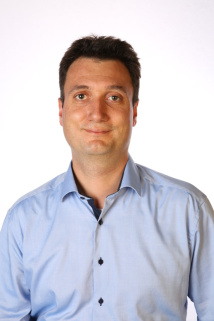
Professor Ralph Holz is a leading researcher in computer networks and security at the University of Münster, with a part-time affiliation at the University of Twente. His work focuses on empirical analysis of internet security technologies, policy implications, and interdisciplinary collaboration. PhD: Technical University of Munich Undergraduate/Postgraduate: Eberhard Karls University, Tübingen Research interests span global-scale internet measurement , security technology evaluation , and policy-driven cybersecurity solutions , with recent publications on LDAP vulnerabilities, TLS 1.3 deployment, and BGP hijacking. Teaching includes Empirical Security Analysis (MSc), Operating Systems (BSc), and seminars on internet measurement tools. Collaborations involve institutions across Germany, Netherlands, and Australia. Current team: PhD students: Gerrit Seifert, Nils Kempen, Gustavo Luvizotto, Bulut Ulukapi, Shyam Krishna Khadka, Matteo Liberato, Sousan Tarahomi, Niousha Nazemi Administrative support: Clara Wigger Contact: ralph.holz@uni-muenster.de | Einsteinstr. 62, Münster, Germany
Tarmo Lipping is a Professor in the Department of Computer Science and Engineering at the Faculty of Information Technology and Electrical Engineering, University of Oulu. His work bridges computing sciences with biomedical engineering, environmental modelling, and data-driven societal applications. Doctor of Science (Technology), Information Technology – Awarded 14 Feb 2001 Master of Science (Technology), Information Technology – Awarded 10 Sept 1993 His research focuses on electroencephalography (EEG) , mental workload assessment , depth of anesthesia monitoring , and machine learning applications in healthcare and human-computer interaction. He also contributes to environmental informatics , particularly in land uplift modelling and radionuclide transport , aligning with UN Sustainable Development Goals. Recent publications highlight trends in transformer networks for EEG analysis , wearable HCI systems , data-driven food safety , and participatory municipal governance . His work integrates deep learning, signal processing, and real-world deployment. Scientific awards include: CIMO opettajavaihto (2017) Lipping has supervised numerous master’s students and served as an examiner in diverse topics including data vault modelling , telecom revenue estimation , and EEG hyperscanning . He has evaluated funding applications, acted as a journal reviewer (65 times), and contributed to editorial work. His activities reflect strong engagement in academic service and interdisciplinary research mentorship. He has contributed datasets on Fennoscandian land uplift , lake isolation , and archaeological shorelines to PANGAEA, supporting open science in geosciences and environmental history.
Dr. Andrzej Ożadowicz is a University Professor at the Department of Power Electronics and Automation of Energy Conversion Systems within the Faculty of Electrical Engineering, Automatics, Computer Science and Biomedical Engineering at AGH University of Science and Technology in Kraków, Poland. His office is located in room 510, building C-1, with contact details including phone +48 12 617 50 11 and email ozadow@agh.edu.pl. He holds PhD, DSc, and Engineering degrees, reflecting his dual expertise in academic research and practical engineering applications. His research spans Power Electronics, Building Automation, Smart Grids, and IoT-driven energy systems. Key interests include energy efficiency optimization through digital twins and BIM, distributed energy resource integration , and AI-enhanced demand management . Notably, he pioneers applications of deep reinforcement learning in home energy systems and develops frameworks for Smart Readiness Indicator implementation. His work bridges theoretical innovation with practical case studies in building thermal modeling and dynamic façade systems. Recent publications (2021-2025) reveal three dominant trends: (1) Convergence of digital twin technology with building automation for real-time energy management; (2) Critical analysis of IoT security and interoperability in smart infrastructure; (3) Pedagogical innovations in engineering education through blended learning methodologies post-COVID-19. His scholarly output demonstrates consistent focus on energy transition challenges and smart grid evolution. Professor Ożadowicz actively contributes to the Discipline Council for Automation, Electronics, Electrical Engineering and Space Technologies at AGH. He is instrumental in the AutBudNet initiative —a network of certified laboratories for energy efficiency assessment that implements "learning by doing" principles in building automation education. His work with this consortium emphasizes practical validation of smart grid technologies and demand response systems.
Laila Shereen Sakr is an Assistant Professor of Film & Media Studies and Faculty Affiliate in Feminist Studies at the University of California, Santa Barbara. She co-founded Wireframe, a digital media studio focusing on critical game design, data visualization, VR/AR, and digital activism. Her research explores algorithmic culture, media theory/practice, and feminist Middle East studies through creative coding, data visualization, and immersive worldbuilding. Key projects include the VJ Um Amel data-body and R-Shief software system. Education: PhD in Media Arts + Practice (USC), M.F.A. in Digital Arts (UC Santa Cruz), M.A. in Arab Studies (Georgetown). Research interests span technocultural intersections, digital humanities, and global human rights. Her work examines social media's role in shaping virtual political identities and has been exhibited globally (e.g., SF MoMA, Jordan National Gallery of Art). She co-edits Media Theory and After Video , and collaborates with MIT's Global Media Technologies & Cultures Lab. Publications analyze Arab Spring media dynamics, digital dissidence in MENA, and feminist digital praxis. Her work has been featured in The Wall Street Journal , Science , and The Guardian . Her creative research bridges art and activism, emphasizing open-source Arabic localization. Current projects explore the ethical implications of data-driven narratives in post-revolutionary contexts.
Barbara Bigliardi is an Associate Professor at the Department of Engineering and Architecture, University of Parma, with national scientific qualification for full professor in Economic-Management Engineering (SSD ING-IND/35). She serves as President of the Management Engineering Program at University of Parma and Director of Bachelor's/Master's programs at University of San Marino, co-leading double-degree initiatives between the two institutions. Over 100 publications (57 SCOPUS-indexed) with H-index=20 Editorial roles: Cambridge Scholars Publishing (2019), MDPI Sustainability, Sci, European Journal of Innovation Management Key research areas: Open Innovation, Technology Transfer, Food Industry Innovation, Industry 4.0, Supply Chain Sustainability Recent Publications (2024-2025) demonstrate leadership in: Industry 4.0 integration with circular economy AI applications in public administration and healthcare Digitalization of food supply chains Green startup resource orchestration Simulation-based optimization in remanufacturing Sustainable additive manufacturing Scientific Recognition : 2005 Emerald Highly Commended Award 2013 Most Cited Paper in Trends in Food Science & Technology 2019 Highly Cited Paper in Review of Policy Research Research Leadership includes: National Observatory on Start-ups (President since 2021) National Observatory on Reputation (Vice President since 2019) INAIL-funded mobile risk assessment systems (2018-2020) INAF space technology transfer projects (2018-present) Academic Contributions : Supervised over 300 theses Deputy Coordinator of Industrial Engineering Doctoral Program Director of Management Engineering Programs (Parma & San Marino) Founder of academic spin-offs: Sistemi per il marketing di contenuto S.r.l. (2016-present), Univenture SrL (2006-2010)
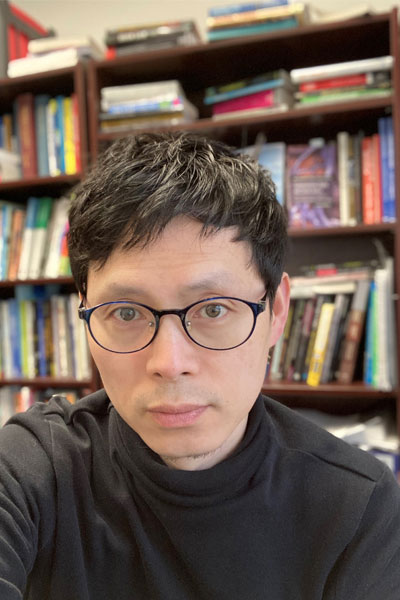
Kyong Yoon is a Professor at the University of British Columbia Okanagan in the Faculty of Creative and Critical Studies, with appointments across Cultural Studies, Digital Arts and Humanities, English and Cultural Studies, and Global Studies. He holds the prestigious Principal's Research Chair (Tier 1) in Trans-Pacific Digital Platform Studies and serves as Digital Arts & Humanities Theme Co-coordinator. Originally from Seoul, South Korea, Professor Yoon has established himself as a leading scholar on digital media, migration, and Korean popular culture globally. His research focuses on digital media, mobile communication, migration, Korean popular culture (particularly Hallyu or the Korean Wave), and youth culture. Professor Yoon examines how digital platforms transform cultural production, consumption, and identity formation, with special attention to transnational Korean communities and the globalization of Korean media. His work bridges media studies, cultural studies, and migration studies, offering critical perspectives on platformization, cultural hybridity, and diasporic identities. Professor Yoon's scholarly contributions reveal consistent engagement with evolving media landscapes, from early mobile communication studies to contemporary platform studies. His work demonstrates how Korean digital culture both shapes and is shaped by global media flows, with particular attention to audience practices, cultural translation, and the politics of representation across different national contexts. Editorial board member, Asiascape: Digital Asia Principal's Research Chair (Tier 1) in Trans-Pacific Digital Platform Studies Digital Arts & Humanities Theme Co-coordinator Professor Yoon teaches courses including CULT 215 Cultural Industries, CULT 312 Internet Culture, CULT 313 Transnational Asian pop culture, and CULT 410 Asian cinema, guiding students through critical examinations of media, culture, and technology in global contexts.
Anja Feldmann is Director at the Max Planck Institute for Informatics in Saarbrücken and Professor of Internet Network Architectures at Technische Universität Berlin (since 2006). Previously she held a full professorship at Technische Universität München (2002–2006) and conducted research at AT&T Labs Research , Saarland University , and Carnegie Mellon University , where she earned her Ph.D. in 1995. Education Ph.D. in Computer Science, Carnegie Mellon University, 1995 M.Sc. in Computer Science, Carnegie Mellon University, 1991 Diplom in Computer Science, Universität Paderborn, 1990 Research Interests Anja Feldmann’s research centers on measurement-driven understanding of the Internet. She tackles challenges such as software-defined networking , cloud-network interactions , performance debugging , and traffic characterization . A growing focus is the privacy and security of networked systems, evidenced by recent studies on online tracking, DNS security, and disinformation ecosystems. Her group designs scalable measurement platforms that combine passive and active monitoring , programmable data planes , and machine-learning analytics to dissect phenomena ranging from terabit-scale traffic to covert tracking on illegal streaming sites. Recent Publication Themes The 2021-2025 publications reveal a methodological evolution toward large-scale, longitudinal measurement . Topics include: Impact of global events (COVID-19, CrowdStrike outage) on Internet traffic Cross-country tracking ecosystems and privacy leaks DNS root and routing plane stability and security ML-driven real-time monitoring at terabit speeds Disinformation campaigns on encrypted messaging platforms Scientific Awards Gottfried Wilhelm Leibniz Prize (2011) – Germany’s highest research honor Berliner Wissenschaftspreis (2011) Elected Member of the German National Academy of Sciences Leopoldina (2009) Advising & Grants While individual student names are not listed, Prof. Feldmann leads a vibrant team at MPI-INF’s Internet Architecture department. She has supervised numerous doctoral candidates and post-doctoral researchers whose work is reflected in the co-authored papers. Funding sources include the German Research Foundation (DFG) via the Leibniz Prize and EU Horizon projects, although explicit grant numbers are not provided in the source material. Labs & Teams She heads the Internet Architecture department at MPI-INF, located at the Saarland Informatics Campus . The department operates state-of-the-art measurement infrastructure—including programmable switches, honeynets, and global vantage points—to support empirical network science.
Mohamed-Slim Alouini is a Professor of Electrical Engineering and Associate Dean of the Computer, Electrical and Mathematical Science and Engineering (CEMSE) Division at King Abdullah University of Science and Technology (KAUST) in Saudi Arabia. He also serves as the Associate Vice President for Research and holds the UNESCO Chair in Education to Connect the Unconnected. With over 500 journal publications and more than 46,000 citations, he is a world-renowned expert in wireless communications who was elected IEEE Fellow in 2009 at the age of 39. Education: PhD in Electrical Engineering, California Institute of Technology (Caltech), 1998 MS in Electrical Engineering, Georgia Institute of Technology (Georgia Tech), 1995 Diplôme d'Etudes Approfondies (DEA) in Electronics, Université Pierre & Marie Curie (Sorbonne University), 1993 Diplôme d'Ingénieur, École Nationale Supérieure des Télécommunications (Télécom Paris Tech), 1993 Habilitation, Université Pierre & Marie Curie (Sorbonne University), 2003 Dr. Alouini is a world-renowned expert in wireless communication and networking with research interests spanning diversity combining techniques, MIMO systems, multi-hop/cooperative communications, optical wireless systems, cognitive radio, UAV communications, and advanced modulation schemes. His current focus addresses the technical challenges of uneven information and communication technology distribution, particularly targeting rural, low-income, disaster-prone, and hard-to-reach areas through integrated ground-airborne-space networks. His work bridges theoretical foundations with practical implementations to solve real-world connectivity problems. His recent publications (2020-2024) demonstrate a clear research trajectory toward integrated communication networks combining terrestrial, aerial, and space components. There's growing emphasis on UAV communications, satellite systems, optical wireless technologies, and rural connectivity solutions, with increasing integration of machine learning techniques for network optimization. His work shows consistent focus on addressing the digital divide, with several publications specifically targeting 6G challenges for connecting underserved populations and recycling existing infrastructure for enhanced rural connectivity. Scientific Awards: Member of the European Academy of Sciences and Arts (2019) Fellow of the African Academy of Sciences (2018) IEEE Fellow (2009) Abdul Hameed Shoman Award for Arab Researchers (2016) OIC Science & Technology Achievement Award (2017) Multiple recognitions as Highly Cited Researcher NSF CAREER Award (1999) Dr. Alouini has mentored numerous successful students and post-doctoral fellows who have secured positions at top institutions worldwide including Harvard, Caltech, Imperial College, and faculty positions at Korea University, Hanyang University, and universities across the Middle East. His December 2018 PhD graduate Qurrat-Ul-Ain Nadeem received the prestigious Marconi Society Paul Baran Young Scholars award, while post-doctoral fellows have won IEEE ComSoc Young Professionals Best Innovation Award and attended the Lindau Nobel Meeting. His Communication Theory Lab at KAUST drives significant research in wireless communications with funding supporting extensive publication output and innovative projects. Dr. Alouini leads the Communication Theory Lab at KAUST and holds the UNESCO Chair in Education to Connect the Unconnected, focusing specifically on technical solutions for connecting underserved communities. His lab works on integrated ground-airborne-space networks to bridge the digital divide, with particular emphasis on rural, low-income, and hard-to-reach areas. The team develops practical solutions using UAVs, satellite communications, and recycled infrastructure to provide cost-effective connectivity where traditional approaches fail.
Kristine Stiles is the France Family Distinguished Professor of Art, Art History, and Visual Studies at Duke University since 2010, with joint appointments in Theater Studies (2021–Present) and previous roles as Associate Professor with Tenure (1995–2006) and Assistant Professor (1988–1995) in Art, Art History & Visual Studies. She holds a Ph.D. (1987), M.A. (1976) from University of California, Berkeley, and B.A. (1970) from San Jose State University. Her research interests span experimental art, performance and conceptual art, destruction and trauma studies, feminist theory, gender and race studies, and global art practices. She has contributed extensively to Fluxus studies, destruction art theory, and trauma's role in visual culture. Her publications from 2013–2022 reveal a focus on radical aesthetics, artists' writings, and sociopolitical contexts in performance art across Europe, Africa, and the U.S. Key subfields include trauma representation, anti-art movements, digital documentation, and feminist interventions in visual studies. Stiles has chaired or served on committees for over 20 doctoral students in Art History, Visual Studies, and related fields, including notable graduates like Camila Maroja (Brown University), Kency Cornejo (University of New Mexico), and Octavian Esanu (American University of Beirut). She has served on editorial boards for journals like Art and Documentation (2011–2014) and Transmission: Annual (2009), and delivered lectures globally at institutions including Stanford University, MoMA, and Royal Academy of Fine Arts/Ghent University.
Dr Emily Brayshaw is an Honorary Research Fellow and Casual Academic at the University of Technology Sydney's Faculty of Design, Architecture and Building. She combines scholarly work in critical costume studies with theatrical costume design and viola performance . Holding a 2016 PhD in Design from UTS and a BA (Hons) from the University of New South Wales, her research spans fashion history, performance costume, and material culture. Current Appointments: Honorary Research Fellow (2019-2026), Casual Academic in Design/Fashion History Research Themes: WWI dress, kitsch aesthetics, sustainability in costume, shoe studies, and body-garment dynamics Her interdisciplinary work connects fashion theory with theatre practice, examining costume's psychological and ethical dimensions. Publications since 2014 explore topics ranging from vaudeville's racialized costumes to contemporary footwear trends . She actively contributes to public discourse through The Conversation and maintains memberships in the Footwear Research Network and Association of Dress Historians . Recent scholarship reveals trends in 20th-century costume methodology , WWI fashion dynamics , and shoe symbolism across media. Articles like 'Dressing for the Viola' (2023) and 'From Caftan King to Peacock Pasha' (2024) demonstrate her focus on gendered performance wear and orientalist fashion . Her 2021 Journal of Aesthetics & Culture translation of Schlemmer's kitsch manuscript bridges historical avant-garde theory with modern practice. As a public intellectual, Emily has completed over 100 media interviews since 2020, covering topics like Crocs' cultural resurgence and vaudeville's legacy . Her teaching encompasses fashion theory, critical thinking, and costume history, while she simultaneously serves as principal viola for the Woollahra Philharmonic Orchestra.
Emre Salman is a Professor in the Department of Electrical and Computer Engineering at Stony Brook University (SUNY), where he directs the Nanoscale Circuits and Systems (NanoCAS) Lab. His research focuses on nanoscale IC design, energy-efficient computing, and biomedical electronics, with notable contributions to 3D integrated circuits and wireless energy harvesting for IoT and healthcare applications. Education : PhD in Electrical Engineering, University of Rochester (2009) MSc in Electrical and Computer Engineering, University of Rochester (2006) BSc in Microelectronics Engineering, Sabanci University, Turkey (2004) Research Interests : Salman’s work spans energy-efficient integrated circuits, secure IoT systems, and implantable medical devices. He pioneers techniques like charge-recycling logic and thermal-aware design for post-Moore computing. His group develops monolithic 3D ICs to address power/thermal challenges in AI accelerators and biomedical implants. Articles Trends : Recent publications highlight advancements in triboelectric energy harvesters for knee implants, thermal covert channel mitigation in 3D processors, and energy-efficient DNN accelerators. He emphasizes sustainability and security in emerging technologies like ReRAM-based computing and AC circuits for wireless IoT. Awards : 2023-2024 IEEE Distinguished Lecturer 2018 IEEE Region 1 Technological Innovation Award 2013 NSF CAREER Award Advising & Grants : Salman has directed multiple NSF, NIH, and industry-funded projects. He advises students on topics like hardware security and biomedical electronics, with a focus on translating research into commercializable technologies. Labs & Teams : The NanoCAS Lab collaborates with Brookhaven National Lab and industry partners (e.g., AMD, Samsung) to bridge academic research with real-world applications in energy-efficient computing and secure 3D ICs.
Zhu Yan serves as Professor at Tsinghua University's School of Economics and Management, Department of Management Science and Engineering. He concurrently holds leadership positions as Dean of Tsinghua's Internet Industry Research Institute, Director of the Advanced Information Technology Business Application Laboratory, and Executive Deputy Director of the Medical Management Research Center. Education: Postdoctoral Fellow (1998-2000) and Ph.D. in Nuclear Energy Technology (1994-1998) at Tsinghua University, Bachelor's in Engineering Physics (1989-1994) Professional Experience: Professor (2010-present), Associate Professor (2002-2010), Lecturer (2000-2002); Visiting Scholar at MIT Sloan, CUHK, and Lancelot Institute Professor Zhu's research spans digital transformation , industrial blockchain , and digital production relations , with emphasis on practical applications in healthcare, construction, and finance. His work bridges theoretical frameworks with industry implementation, particularly in China's digital economy evolution. Current projects focus on industrial internet integration and digital finance systems. His 15 most recent publications demonstrate strong interdisciplinary focus, connecting information systems with healthcare analytics (40%), industrial digitalization (35%), and economic policy (25%). The research shows increasing emphasis on AI-driven diagnostic systems and pandemic-responsive economic strategies since 2020. Beijing Philosophy and Social Sciences Excellent Achievement Award (2020) China Petroleum and Chemical Automation Association Science and Technology Progress Award (2010) Multiple Beijing Science and Technology Progress Awards (2001, 2005) Tsinghua University Outstanding Teaching Award (1999) As academic advisor to national initiatives, Professor Zhu leads the China Technology Economics Society's Blockchain Division and serves as Chief Academic Officer for Chengdu University of Information Technology's Blockchain Industry College. His industry partnerships include SAP Global HR Advisory role since 2000 and CCTV Financial Commentary position since 2015. Current research funding focuses on digital infrastructure development through the Industrial Digital Finance Technology Application Laboratory. He directs the Advanced Information Technology Business Application Laboratory, which develops enterprise digital transformation frameworks, and co-leads the Medical Management Research Center's AI diagnostic initiatives. Current projects include national blockchain infrastructure development and pandemic-resilient supply chain systems.
Andrea Appolloni is an Associate Professor at the Department of Management and Law, University of Rome Tor Vergata. His academic career focuses on Management with emphasis on Sustainable Supply Chain Management , Digital Transformation , and Circular Economy . His research explores the intersection of technological innovation and sustainability, particularly through topics like AI in Logistics , Green Procurement , and Policy Optimization . Publications span both theoretical frameworks and empirical studies in China, Italy, and Malaysia, with a strong focus on environmental impact and organizational performance. Recent work includes digital twin applications for human-AI collaboration, blockchain integration in sustainable supply chains, and analyzing barriers to circular economy adoption. His 15 most recent articles (2025-2022) demonstrate a trend toward combining Artificial Intelligence , Operations Management , and Environmental Governance .
Jeff Barda serves as Senior Lecturer in French Cultural Studies at the University of Manchester, joining in 2020 after a Junior Research Fellowship at Cambridge's Murray Edwards College. Awarded the Manchester Humanities Outstanding Teaching Award in 2020 and promoted to Senior Lecturer in 2023, he maintains active international affiliations including visiting positions at Bordeaux-Montaigne University and London's Institute of Languages, Cultures & Societies in 2024. His research centers on contemporary French poetic practice with emphasis on digital poetics, sound arts, and avant-garde traditions. Key interests include the intersection of media and literature, lettrism, and data-driven creative processes, reflected in his extensive publications on figures like Pierre Alferi and Christophe Tarkos. His second monograph Data Poetics: Contemporary French Poetic Practice in the Age of Digital Overload is under contract with Liverpool University Press. Dr Barda's scholarly impact is evidenced by the 2021 Literary Encyclopedia Book Prize for his first monograph Experimentation and the Lyric in Contemporary French Poetry . His recent publications demonstrate evolving focus from historical avant-gardes to contemporary digital poetics, with increasing attention to OSINT methodologies and cross-disciplinary practices like sports-literature intersections. Manchester Humanities Outstanding Teaching Award (2020) Literary Encyclopedia Book Prize (2021) As an active supervisor welcoming PhD inquiries, Dr Barda contributes to multiple research networks including Marge (Lyon), the European Neo-Avant-Garde Network (Ghent), and 'After Social Networks' (Paris). His teaching excellence complements substantial grant activity supporting international collaborations, particularly in digital humanities initiatives exploring poetic practice in public spheres. His research infrastructure includes affiliations with three major transnational networks examining contemporary creation, with recent projects focusing on image manipulation in poetry and OSINT applications in literary analysis.
Luca Barra is Full Professor of Television and Digital Media at the Department of Arts, University of Bologna. His research focuses on media studies, particularly television history and contemporary evolution, transnational circulation of content, serialization, and comic/humorous genres. He has coordinated the Master's Degree in Information, Cultures and Media Organization since 2021 and serves as editor-in-chief of VIEW. Journal of European TV History and Culture. University of Bologna, Department of Arts Research areas: Television History, Transnational Media, Digital Transformation, Italian TV Production Barra's work examines the international mediation of ready-made TV formats, Italian streaming partnerships, and the cultural implications of digital television. His recent articles analyze dystopian narratives, sitcom reception in Italy, and the redefinition of celebrity during the pandemic. He contributes to academic discourse through editorial roles in journals like SERIES and Comunicazioni Sociali. His publications include monographs on Italian television programming, sitcoms, and co-edited volumes exploring European premium TV fiction and digital media frameworks. Barra has led research projects such as ATLas and F-ACTOR, and collaborates with international institutions including Brown University and NECS.